Review · JAPAN
Asakusa Senso-ji Temple and Old Tokyo Walking Tour
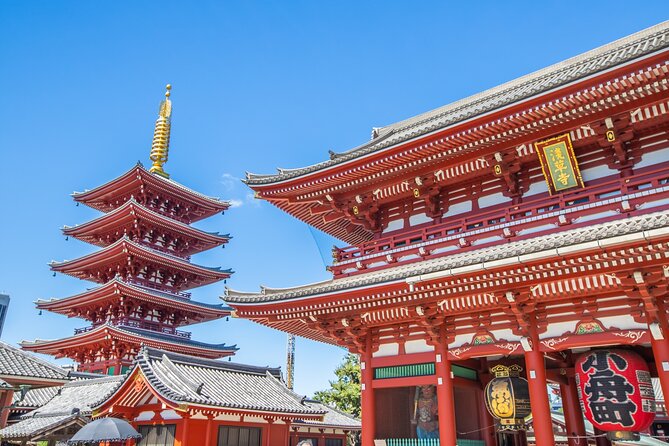
Senso-ji is one of Tokyo’s most rewarding first stops, but its crowds, gates, stalls, and religious customs can be a lot to take in at once. This two-hour small-group walk gives you a clear route through Asakusa, from Kaminarimon and Nakamise Shopping Street to the Sumida River.
I like two things in particular: guides explain how to purify yourself, draw a fortune, and pray at Buddhist and Shinto sites, and they add useful tips about food and shopping. The main consideration is the crowd. Finding your guide near the meeting point may take patience, and the walk leaves little time for a proper meal.
Key points at a glance
- Temple customs made clear: Learn the basic steps for purification, fortunes, and prayer without guessing.
- A useful first morning in Tokyo: The tour gives you cultural bearings before you explore the rest of Japan.
- Seven Asakusa stops: See Senso-ji, Asakusa Shrine, Hoppy Street, Shin Nakamise, and Azuma Bridge.
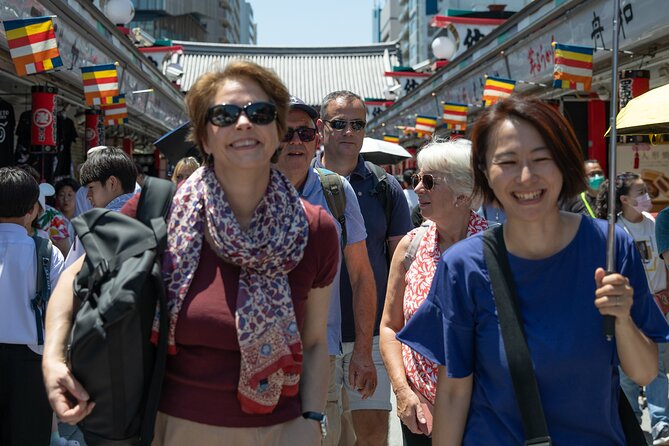
- Personal attention: Groups are capped at 12, so you can ask questions and hear the guide.
- Practical local advice: Guides such as Aya and Glenda are praised for food, shopping, and photo suggestions.
- Good value at $20: You receive two hours of guided context at no extra admission cost.
Why Asakusa works so well as a first Tokyo walk
Asakusa gives you a quick lesson in old Tokyo. The neighborhood centers on Senso-ji, but it also brings together shopping streets, small food stops, a Shinto shrine, lively pubs, and views across the Sumida River.
That mix makes the area useful on your first day. You are not only looking at a famous temple. You are learning how a Buddhist temple differs from a Shinto shrine, how to behave at each one, and how the district still functions as a place where people shop, eat, pray, and meet.
I especially like the format for solo visitors and first-time visitors to Japan. The guide supplies the basic cultural framework, then you can return later with more confidence. One especially practical approach is to take the tour early in your trip, then leave time afterward to revisit Nakamise or try one of the food recommendations.
The tour has a 4.8 rating from 561 ratings, with 96 percent recommending it. That strong response fits the experience described: the appeal is not luxury or elaborate transport, but a friendly guide who makes a crowded historic district easier to understand.
More Temple Walking Tours in Japan
- Tokyo: Asakusa Walking Tour with Sensoji Temple Visit
★ 4.8 · 1,583 reviews - Kyoto Arashiyama Walking Tour: Bamboo, Monkeys, Gardens & Secrets
★ 5.0 · 1,216 reviews - Tokyo: Meiji Shrine Walking Tour — Shinto & Imperial System
★ 4.9 · 266 reviews
Meeting at Kaminarimon and Nakamise Shopping Street
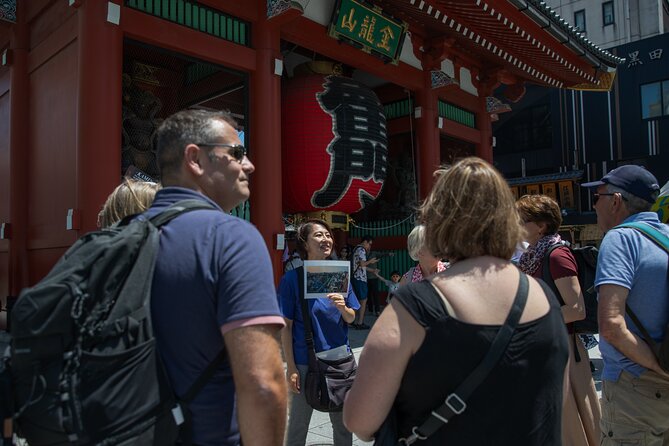
The walk begins at Tokiwado Kaminari-okoshi Honpo, at 1-chome-3-2 Asakusa. This is near Kaminarimon, the famous Thunder Gate that marks the approach to Senso-ji.
The meeting area can be crowded, so allow extra time to locate the guide. A last-minute booking may work well, but you should still check your phone carefully and arrive with the meeting details ready. The experience uses a mobile ticket and takes place near public transportation.
From Kaminarimon, the guide leads you onto Nakamise Shopping Street. You have about 10 minutes here, so think of this as an introduction rather than a full shopping session.
Nakamise is lined with traditional stalls and shops selling souvenirs, snacks, and items connected with Japanese culture. Your guide can point out what you are seeing and explain how this commercial approach fits with the temple beyond it.
The short stop has one clear benefit: you begin to understand the street before entering Senso-ji. The drawback is that you will not have much time to browse. If a particular snack or souvenir catches your eye, note it and return after the tour.
Senso-ji, where the explanation matters most
The main temple visit lasts about 30 minutes. Senso-ji is the star of the walk, and this is where a guide adds the most value.
Without context, you may see a large gate, incense smoke, statues, lanterns, and a busy worship hall. With a guide, those pieces begin to make sense. The explanations cover the temple’s place in Asakusa, its cultural importance, and the way it helped shape the district’s identity.
Several guides receive special praise for making this section easy to follow. Glenda is described as clear in English and prepared with a binder of visual pictures. Polina explains the history of Asakusa and Senso-ji in a way that connects the buildings to Japanese culture. Aya is praised for answering questions and making sure no one is left behind.
The tour also covers basic Buddhist customs. You may learn how to purify yourself, how to handle a fortune, and the proper way to pray at the temple. These instructions are useful because many first-time visitors hesitate at religious sites. You can take part respectfully instead of simply watching other people.
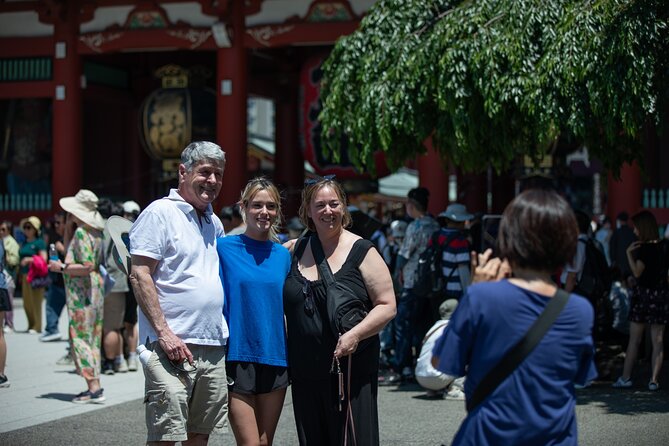
You may also be shown a good place for temple photographs. The guide may allow some free time to look around and take pictures, though this is still a group walk, not a dedicated photography tour.
Expect crowds, especially around the main approach. You may need to stay close to the guide and listen carefully. The small group helps, but Senso-ji is a public temple, not a reserved private space.
Asakusa Shrine and the difference between faith traditions
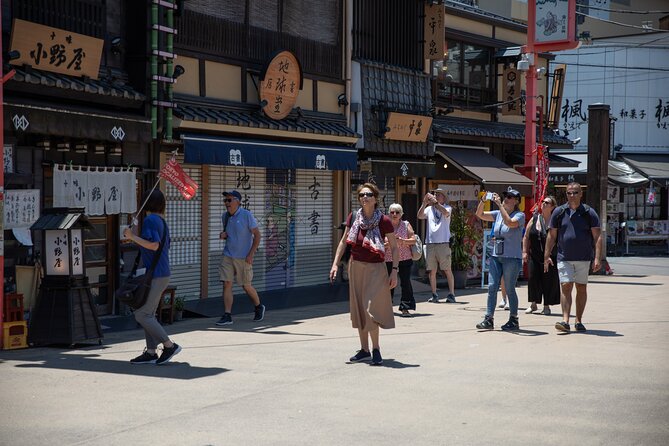
Next comes Asakusa Shrine, also called Sanja-sama. The shrine sits beside Senso-ji, making this one of the best places in Tokyo to compare Buddhism and Shinto within a few steps.
The shrine is dedicated to the three men connected with the founding of Senso-ji. Your guide explains its role and helps you understand why the temple and shrine stand next to each other while serving different religious traditions.
This is a short stop of about 15 minutes, but it may be one of the most useful parts of the tour. Guides explain Shinto customs and how to pray at a shrine, giving you a practical point of comparison with the Buddhist temple.
I like this section because it turns two famous sights into a lesson you can use throughout Japan. Once you know the basic difference between a Buddhist temple and a Shinto shrine, many later visits become easier to read.
More Meiji Shrine and Senso-ji Tours in Japan:
- Tokyo Panoramic 1 Day: Meiji Shrine, Asakusa, Odaiba and SKYTREE®
★ 4.5 · 1,222 reviews - Tokyo: Asakusa and Tokyo’s Oldest Temple Senso-ji Tour
★ 4.9 · 352 reviews - Tokyo: Meiji Jingu Shrine and Shinto Culture Walking Tour
★ 5.0 · 245 reviews - Tokyo: Meiji Shrine and Shinto Culture Walking Tour
★ 5.0 · 225 reviews
Hoppy Street and the food side of Asakusa
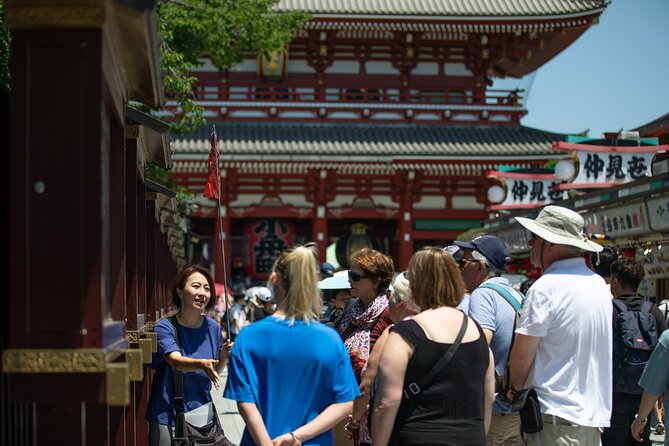
The walk then moves toward Hoppy Street, a lively pub area known for izakayas and the non-alcoholic beer-flavored drink called Hoppy. You spend about 10 minutes here.
This is a welcome change from temple architecture. Hoppy Street shows Asakusa as a place for casual eating and drinking, not only as a sightseeing district. The guide may explain local food and suggest places to try later.
Do not expect a food tour. Food and drinks are not included, and the schedule does not provide a full meal break. One visitor specifically wished for more time to sample food during the walk, while also noting that it was easy to return later.
That is the right way to use this stop. Ask the guide what to order or where to return, then plan a separate meal. Aya is often praised for useful dinner suggestions, and other guides give advice on local snacks and edible souvenirs.
Shin Nakamise, a modern side of the old district
The route also includes Shin Nakamise, an extension of Nakamise Shopping Street. Compared with the traditional approach to Senso-ji, Shin Nakamise has more contemporary shops and boutiques.
The stop helps you see that Asakusa is not a preserved museum district. It mixes old religious sites with everyday retail and modern life. This contrast is easy to miss if you visit only the temple grounds.
The supplied timing does not give a precise length for this stop, so the guide may treat it as a brief walk-through. Use the time to ask about shopping, snacks, or places you want to revisit.
Finishing at Azuma Bridge and the Sumida River
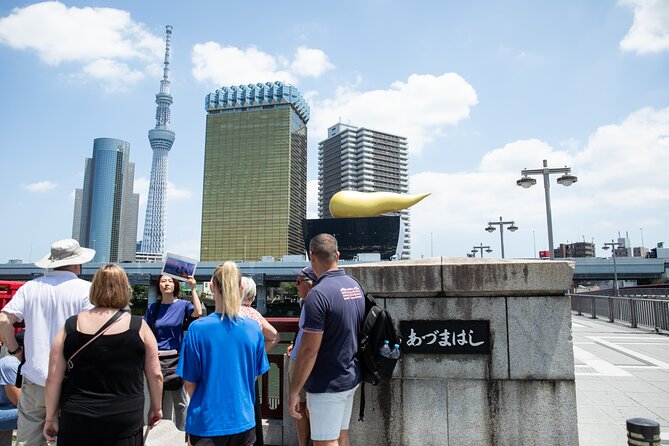
The tour ends near Azuma Bridge, at 2-chome-1-16 Kaminarimon. The walk from the temple area to the bridge gives the route a satisfying finish.
Azuma Bridge crosses the Sumida River and connects Asakusa with Kuramae. From here, you can see Tokyo Skytree and the Asahi Beer Hall building across the river. The views give you a wider sense of Tokyo after the close streets around Senso-ji.
The bridge is also a practical ending point. You are near the river, public transportation, and the rest of Asakusa, so you can continue exploring, stop for lunch, or return to Nakamise and Hoppy Street.
The route is not designed to bring you back to the starting point. Keep that in mind when planning your day. Finishing near Azuma Bridge is convenient if you want to continue outward, but less convenient if you left belongings near the original meeting area.
What the $20 price really buys you
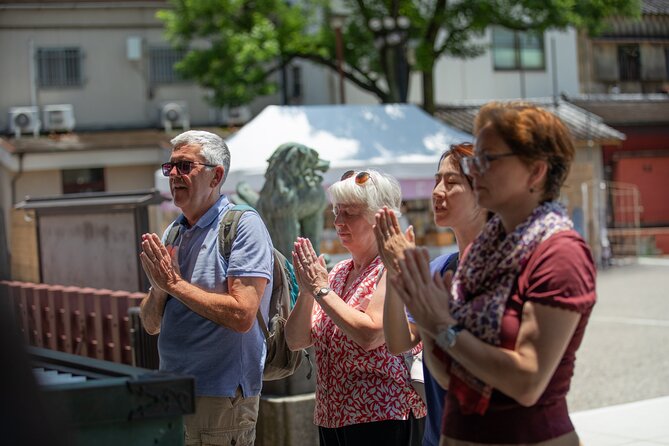
At $20 per person, this is a strong-value introduction to Asakusa. There are no separate admission fees listed for the stops, so your payment mainly covers the guide, route, explanations, and small-group format.
The value comes from interpretation rather than access. You can enter Senso-ji and walk Nakamise without paying for a tour, but you cannot easily recreate the guide’s explanations about temple customs, shrine rituals, local history, and food suggestions.
The maximum group size is 12. That is small enough for questions and personal attention, but not the same as a private tour. If the group fills, you may still be walking through crowded streets with other people around you.
The strongest benefit is time. In two hours, you cover several important parts of Asakusa without spending half the day working out the route. This suits a busy Tokyo schedule, especially if you want a compact orientation before exploring independently.
Guides, communication, and the human side of the walk
The guide assigned to your date may vary. Names praised in the supplied feedback include Aya, Polina, Keiko, Loc, Glenda, Mei, Miyu, Rio, Ayaka, Hiroko, and Nana.
Several qualities come up repeatedly: clear English, patience, friendly conversation, strong explanations of Buddhism and Shinto, and attention to individual questions. Aya is noted for taking photos and checking that everyone understood. Glenda is praised for speaking clearly and not too quickly. Loc receives praise for making Japanese history and customs accessible.
Those details matter more than a fixed script. A good guide can adjust when the group wants more temple explanation, more food advice, or extra help with customs.
The tour is also suitable for most participants, and service animals are allowed. Still, this is a walking activity through crowded streets and temple grounds. Wear comfortable shoes and expect to remain on your feet for much of the two hours.
Weather, cancellation, and planning advice
The experience requires good weather. If poor weather forces cancellation, you are offered another date or a full refund.
You can cancel for a full refund up to 24 hours before the start time. Changes or cancellations made less than 24 hours ahead are not accepted for a refund, so check your Tokyo schedule before booking.
Bring a charged phone for the mobile ticket and meeting details. Since the starting area can be hard to identify in a crowd, arrive early and keep the guide’s contact or meeting instructions easy to access.
I would also avoid placing a tight restaurant reservation immediately after the walk. The listed duration is about two hours, but crowded streets and group movement can make exact timing less predictable.
Who should book the Asakusa walk
I would choose this tour if you are visiting Tokyo for the first time, want a short introduction, or prefer having cultural customs explained before visiting temples and shrines on your own.
It also suits solo visitors. A guide gives you company, handles the route, and can suggest food and shopping without requiring a full-day commitment. Families and couples may appreciate the manageable length and the chance to ask practical questions.
You may want something else if you prefer complete independence, long photography stops, or a dedicated food experience. The tour does not include food, drinks, transportation, or a full meal break. It also moves at a group pace, and the crowds around Senso-ji can limit how freely you wander.
Should you book it?
Book it if you want clear cultural context in a short visit. The guide turns Senso-ji, Asakusa Shrine, and the surrounding streets into more than a sequence of photo stops, then leaves you near Azuma Bridge with useful ideas for the rest of your day.
The best plan is to take the tour early in your Tokyo stay, listen closely during the temple and shrine demonstrations, and keep your afternoon open for the food and shopping recommendations. At $20, it is an inexpensive way to get your bearings in one of Tokyo’s most important historic districts.
FAQ
How long is the Asakusa walking tour?
The tour lasts approximately two hours.
What places are included?
The route includes Kaminarimon and Nakamise Shopping Street, Senso-ji Temple, Asakusa Shrine, Hoppy Street, Shin Nakamise, and Azuma Bridge.
Where does the tour begin?
The meeting point is Tokiwado Kaminari-okoshi Honpo at 1-chome-3-2 Asakusa, Taito City, Tokyo 111-0032, Japan.
Where does the tour finish?
The tour finishes near Azuma Bridge at 2-chome-1-16 Kaminarimon, Taito City, Tokyo 111-0034, Japan.
How many people can join the tour?
The group has a maximum of 12 participants.
Is an English-speaking guide included?
Yes. An English-speaking local guide leads the walking tour and provides cultural and historical explanations.
Are food and drinks included?
No. Food, drinks, and personal expenses are not included.
Is the tour suitable for first-time visitors to Tokyo?
Yes. The tour is designed as an introduction to Asakusa and explains temple and shrine customs that may be unfamiliar to first-time visitors.
What is the cancellation policy?
You can cancel up to 24 hours before the experience for a full refund. Cancellations or changes made less than 24 hours before the start time are not refunded, and poor-weather cancellations offer a different date or a full refund.
Temple visits we reviewed lately in Japan
- From Asakusa: Old Tokyo, Temples, Gardens and Pop Culture★ 4.6 · 15 reviews
- Tokyo: Nagano Snow Monkeys and Zenkoji Tour with Temples★ 4.9 · 19 reviews
- Kamakura: Great Buddha, Hase Temple, & Komachi Street Tour★ 5.0 · 11 reviews
- Osaka Temple Head Spa &Matcha Facial – Refresh & Glow〈90min〉★ 5.0 · 24 reviews
- Osaka Temple :Warm Bamboo Oil Massage – Deep Restore〈60min〉★ 4.9 · 19 reviews
- Osaka: Temple Tour and Traditional Calligraphy Lesson★ 4.9 · 24 reviews
- Osaka: Sumiyoshi, Osaka’s Most Iconic Shrine – Private Tour★ 4.7 · 4 reviews
- Osaka Temple :Warm Bamboo Oil Massage – Deep Restore〈90min〉★ 5.0 · 14 reviews
Japan Temple Tours, compared.
Osaka/Kyoto:Kinkakuji,Arashiyama,FushimiInariShrine,NaraPark
Read our review →
Nikko: Kegon Falls, Lake Chuzenji & Toshogu Temple
Read our review →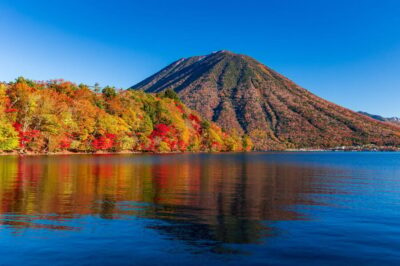
Tokyo: Nikko Toshogu Shrine and Kegon Waterfall Tour
Read our review →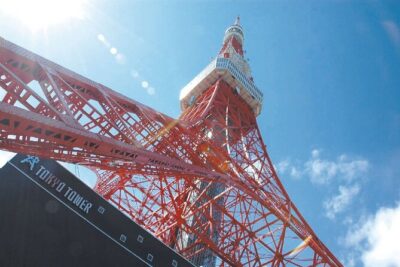
Tokyo Panoramic 1 Day: Meiji Shrine, Asakusa, Odaiba and SKYTREE®
Read our review →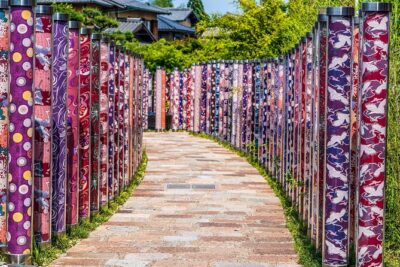
Kyoto Arashiyama Walking Tour: Bamboo, Monkeys, Gardens & Secrets
Read our review →
1-Day Snow Monkeys, Zenko-ji Temple & Sake in Nagano
Read our review →