
Review · OSAKA
Osaka: Temple Tour and Traditional Calligraphy Lesson
The most appealing part of this Osaka experience is the setting: you practice calligraphy inside Saishoji Temple, a quiet Zen temple only three minutes from Yotsubashi Station. A short breathing meditation helps you slow down before you pick up the brush, so this feels less like a craft class and more like a calm cultural pause.
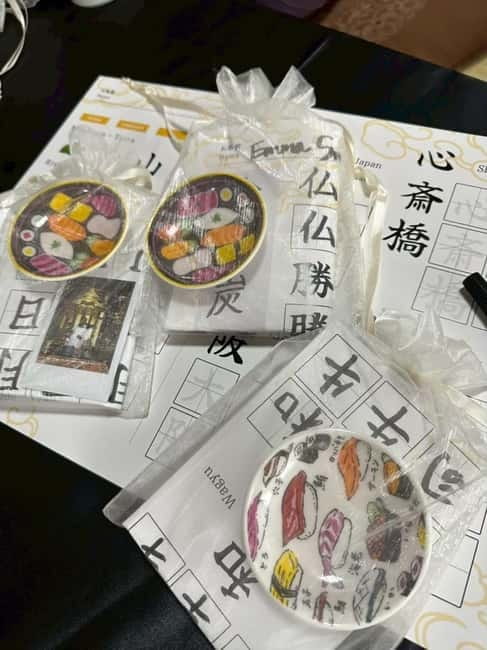
I like two things here. First, you leave with several personal souvenirs, including your kanji name card, a mini shikishi, and an 8-centimeter ceramic plate. Second, the English-speaking staff make the activity easy for first-timers, including solo visitors who want a peaceful hour without joining a large sightseeing group.
The main consideration is time. One hour is brief, so the history lesson, meditation, calligraphy, and possible tea activity are necessarily compact. If you want a long temple visit or advanced brush instruction, this will feel more like a friendly introduction than a full study session.
Key points at a glance
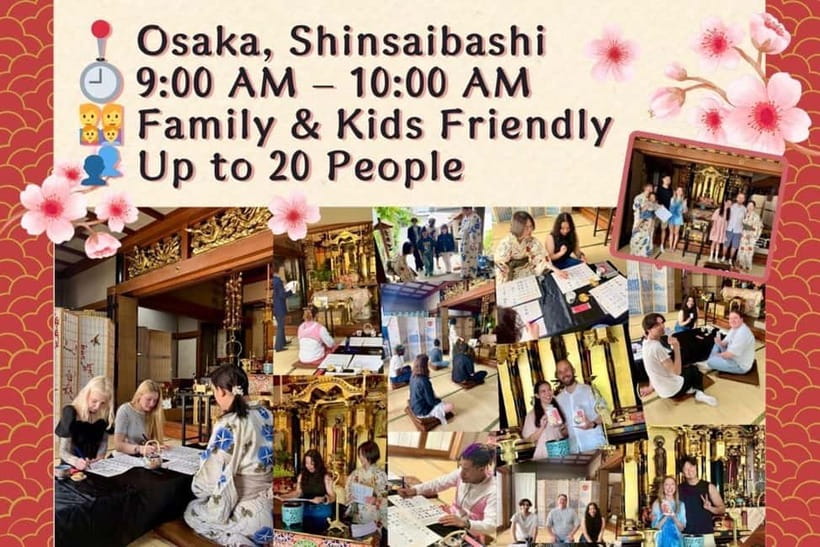
- Three minutes from Yotsubashi Station: Saishoji Temple is easy to reach from central Osaka.
- A quiet Zen setting: Breathing meditation and slow brushwork create a calm break from shopping streets.
- Beginner-friendly calligraphy: You practice basic strokes before writing one favorite kanji.
- Personal souvenirs included: Take home a kanji name card, mini shikishi, and small ceramic plate.
- English instruction: The lesson covers Japanese history, language, temple customs, and cultural expressions.
- Good value at $20: The price includes materials, instruction, and several take-home items.
A quiet temple stop beside Osaka’s shopping district
Saishoji Temple sits at 1-6-18 Kitahorie in Nishi-ku, close to the Yotsubashi and Shinsaibashi areas. That location matters. You can spend the morning around Osaka’s shops and restaurants, then step into a more restrained setting for an hour of concentration.
The temple is three minutes on foot from Yotsubashi Station, Exit 4, on the Osaka Metro Yotsubashi Line. From Shinsaibashi Station, allow about 10 minutes. Namba Station is roughly 15 minutes away on foot.
This is not a grand temple complex tour with a long list of buildings. The appeal is the chance to take part in a traditional activity in a sacred place. The contrast with nearby commercial Osaka gives the session much of its character.
At the start, expect a short introduction to the area and to basic Japanese cultural customs. The lesson covers Shinsaibashi, Yotsubashi, and Osaka Castle, along with the difference between a Buddhist temple and a Shinto shrine. That background is useful because visitors often see both types of sites in Japan but are not sure what separates them.
The language portion adds a practical touch. You learn conversational phrases and cultural expressions rather than receiving only a formal lecture. The exact balance between history, language, meditation, tea, and calligraphy can vary, so think of this as a compact cultural lesson rather than a fixed museum-style presentation.
More temple visits with a hands-on workshop in Osaka:
- Kyoto: Calligraphy class at Buddhist temple in city center
★ 5.0 · 167 reviews - Chinese Kungfu class in old temple beside Forbidden Ci
★ 4.8 · 53 reviews - Seoul: Vegan Temple Food Class, Jogyesa & Changdeokgung Tour
★ 4.6 · 34 reviews
Clearing your head before the brush touches paper
The session includes a short Zazen-style meditation or breathing exercise. You are guided to focus on your breathing and let distractions settle before beginning the writing practice.
This small step is important. Calligraphy is not simply copying attractive characters. The brush responds to pressure, speed, and the movement of your whole hand. If you rush, the strokes show it. The meditation gives you a chance to slow down and pay attention.
You do not need previous meditation experience. The activity is presented in an approachable way, and the staff are used to helping beginners. Several people who attended alone found the setting comfortable, which makes this a useful choice if you want an activity that does not depend on having a group of friends with you.
The quiet can also be the best part for anyone tired of a packed Osaka schedule. You are not asked to perform or compete. You simply sit, breathe, and prepare for the next activity.
Learning the basic strokes of Japanese calligraphy
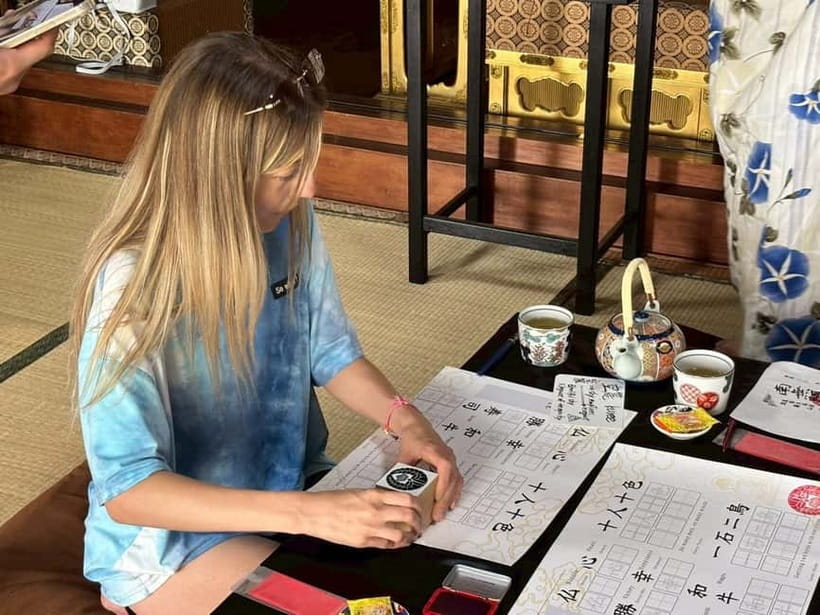
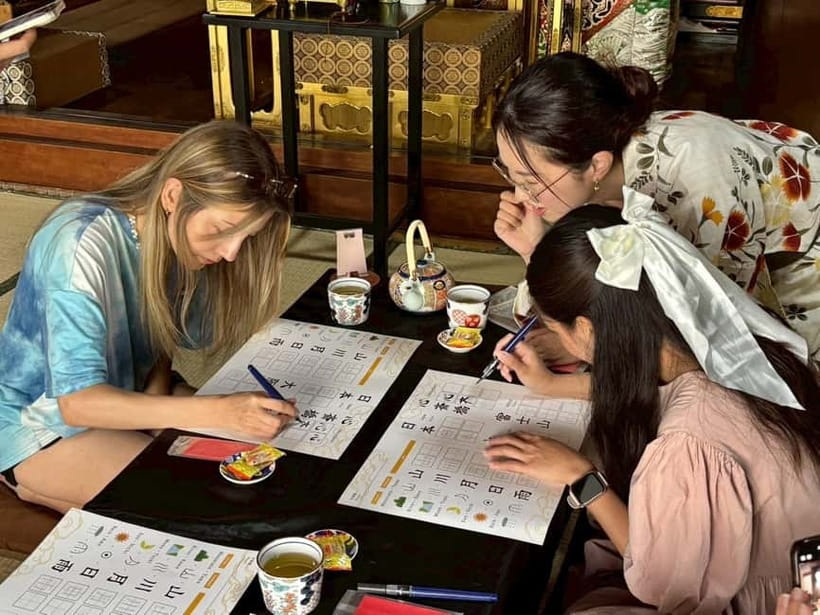
After the introduction and meditation, you practice basic calligraphy. The instructor explains how to hold and move the brush, then helps you work through the characters before you create your final piece.
The goal is not perfect handwriting. It is to understand the rhythm of the strokes and the care behind them. You may notice the smell of the ink, the soft resistance of the brush, and the need to pause at the right points. Those physical details help explain why calligraphy remains a meaningful practice rather than just a decorative art.
You then choose one favorite kanji to write on a mini shikishi. A shikishi is a small, firm presentation board traditionally used for calligraphy, poetry, and artwork. The finished piece is easy to pack and gives you a personal record of the session.
If you have never used a calligraphy brush, do not let that worry you. The activity is designed for beginners, and the instructions are described as clear and easy to follow. You will still need to accept that your first attempt may look uneven. That is part of the fun, and it is also a useful reminder that beautiful Japanese brushwork comes from practice.
The activity can also work well for families. The final kanji gives each person something distinct to take home, and the hands-on format is more memorable than simply looking at temple architecture.
Personal kanji and three small souvenirs
One thoughtful detail is the name card prepared with Japanese kanji and its meaning. This gives you a chance to connect a name or chosen word with Japanese writing. It is a modest souvenir, but it often has more personal value than a generic shop purchase.
You also receive a small ceramic plate measuring about 8 centimeters in diameter. It is a practical gift, though you should pack it with care. The size makes it easy to carry, but it is still ceramic.
Your calligraphy on the mini shikishi rounds out the set. Together, these items create three different memories of the activity: your chosen character, a name translated into kanji, and a small object connected to the temple visit.
Stamps and detailed designs have also been part of the experience, adding another visual reminder of the temple setting. The exact items and presentation may depend on the session, but the activity clearly offers more than paper practice alone.
At $20 per person, these inclusions strengthen the value. You are paying for an hour of instruction, access to a historic temple setting, all activity materials, conversation with resident monks, and several keepsakes. It is not the cheapest possible souvenir activity, but it is a fair price for a guided cultural session in central Osaka.
More Temple Tours around Osaka:
- Osaka: Minoh, Katsuoji Temple, & Minoh Falls Full-day Tour
★ 4.9 · 172 reviews - Full Day Kyoto Tour : Bamboo Forest, Golden Temple, Fushimi Inari
★ 5.0 · 84 reviews - Osaka Temple Cool Foot Bath & Matcha Experience〈45min〉
★ 4.9 · 82 reviews - Osaka: Mind & Spirit Balance Temple Reiki Healing
★ 5.0 · 41 reviews
Where matcha and language fit into the hour
The activity description includes a traditional matcha tea ceremony and cultural activities such as Zazen meditation and calligraphy copying. Since the total duration is only one hour, you should expect these elements to be brief rather than a long tea-school demonstration.
That is not necessarily a weakness. A short introduction can give you a taste of the ritual without requiring a large block of your day. You will learn how carefully arranged actions can create focus and calm, much like the brush practice.
The language lesson also gives the session a broader purpose. You are not only making something. You are learning how words, gestures, and manners fit into Japanese culture. The instructor teaches in English, so the activity is accessible even if you know only a few Japanese phrases.
If you are studying Japanese, the lesson may help you connect vocabulary with a real setting. If you are not, the cultural expressions still add context to your visit. You can ask questions about temples, shrines, local history, and the meaning of the kanji you write.
The one-hour limit means you should not expect a long conversation with a monk or a detailed history seminar. Still, the mix of instruction and hands-on practice keeps the session moving and gives you several ways to connect with Japanese tradition.
Why the atmosphere matters more than the sightseeing list
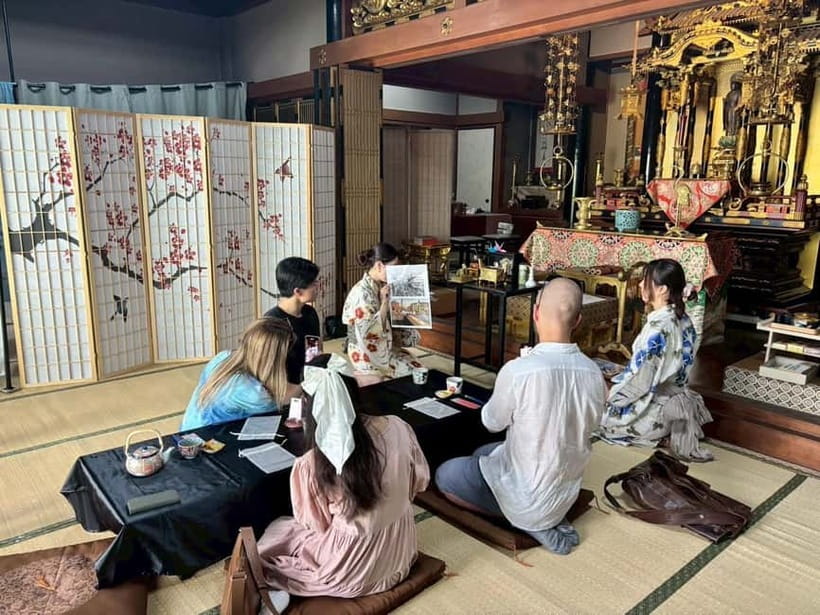
The strongest feature here is the mood. The temple setting gives you room to concentrate, and the brushwork rewards patience. Several individual attendees found they could relax quickly, even when arriving alone.
That makes this a good counterpoint to Osaka’s louder attractions. You will not spend the hour racing between sites or trying to photograph every detail. Instead, you focus on one movement at a time.
The staff are repeatedly described as polite, warm, and attentive. That matters for a first calligraphy lesson. A brusque instructor could make the activity feel like a test, while careful guidance lets you enjoy the process even if your strokes are imperfect.
The experience also suits people who want a cultural activity without dressing it up as a major spiritual event. You can appreciate the quiet, learn a little, make something, and return to the city. The tone is respectful but approachable.
Keep your expectations sensible. This is not a retreat, a formal religious training session, or a full-day temple program. It is a short introduction that uses meditation and calligraphy to help you pay attention to the place.
Who will get the most from this experience
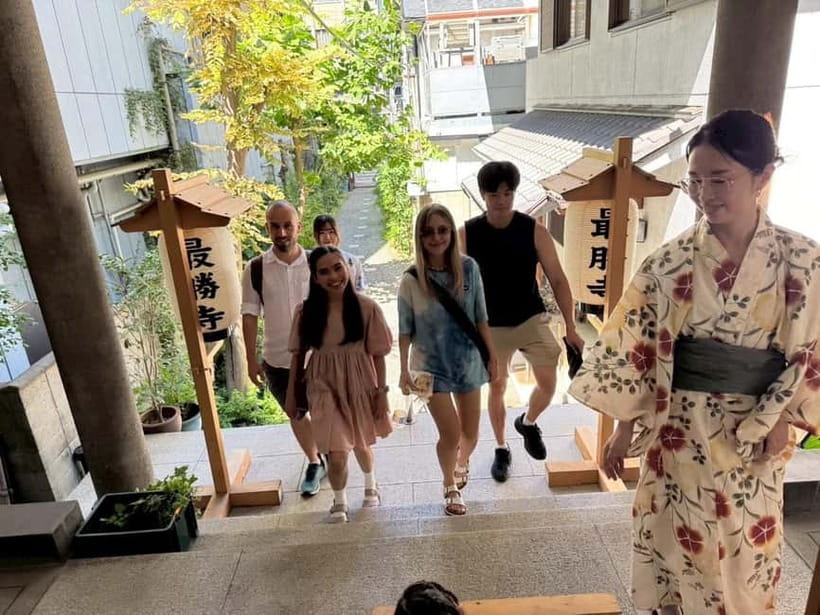
I would recommend it most strongly to:
- First-time visitors who want a simple introduction to Japanese calligraphy
- Solo visitors looking for a comfortable one-hour activity
- Families seeking a hands-on cultural experience
- Couples who want a quiet break near Shinsaibashi
- Visitors interested in the difference between Japanese temples and shrines
- People who prefer personal souvenirs to mass-produced gifts
- Anyone with a spare hour near Yotsubashi, Shinsaibashi, or Namba
It is also suitable for a range of language levels because the instruction is in English and the focus is practical. You do not need to arrive with Japanese study behind you.
I would choose a longer calligraphy course if your main aim is technical improvement. This session gives you a taste of the art and a finished piece, but one hour cannot cover advanced brush control, composition, or the wider history of Japanese calligraphy.
Timing, access, and booking details
The listed price is $20 per person, and the activity lasts one hour. Starting times depend on availability, so check the schedule before planning it between meals, shopping, or another timed tour.
The meeting point is Saishoji Temple, 1-6-18 Kitahorie, Nishi-ku, Osaka, 550-0014. Use Yotsubashi Station, Exit 4, if you want the shortest walk. Shinsaibashi and Namba are also practical starting points, but allow extra time on foot.
The booking terms are helpful for a changing Osaka schedule. You can cancel up to 24 hours before the activity for a full refund, and you can reserve now while paying later. Those terms reduce the risk of placing it too early in a trip when your plans may still shift.
The experience is offered in English. All materials needed for the activities are included, so you do not need to bring brushes, ink, paper, or a tea set.
Should you book the Saishoji Temple calligraphy experience?
Book it if you want a calm, affordable cultural activity that fits neatly into an Osaka itinerary. The combination of breathing practice, basic calligraphy, temple history, English instruction, and personal keepsakes gives you more substance than a quick souvenir workshop.
It is especially worthwhile for solo visitors, first-time calligraphers, and anyone staying near Shinsaibashi or Namba. The $20 price is reasonable for the setting and included gifts.
Skip it if you want an extended meditation, a serious calligraphy lesson, or a long temple tour. For everyone else, this is a smart one-hour pause: easy to reach, friendly for beginners, and personal enough to remember after the ink has dried.
FAQ
Where does the temple and calligraphy experience take place?
It takes place at Saishoji Temple, 1-6-18 Kitahorie, Nishi-ku, Osaka, 550-0014, Japan.
How far is Saishoji Temple from Yotsubashi Station?
The temple is a three-minute walk from Yotsubashi Station on the Osaka Metro Yotsubashi Line, using Exit 4.
How far is it from Shinsaibashi Station?
Saishoji Temple is about a 10-minute walk from Shinsaibashi Station on the Osaka Metro Midosuji Line.
How long does the experience last?
The activity lasts one hour.
What language is the instruction in?
The instructor teaches in English.
Do I need previous calligraphy experience?
No. The session includes basic instruction and is designed for beginners as well as more advanced language learners.
What will I write during the calligraphy lesson?
You practice basic calligraphy and then write one favorite kanji on a mini shikishi.
What souvenirs are included?
You receive a Japanese kanji name card with its meaning and a small ceramic plate measuring 8 centimeters in diameter. Your mini shikishi is also part of the calligraphy activity.
Are meditation and tea included?
The activity includes a guided breathing or Zazen meditation. A traditional matcha tea ceremony is also listed among the cultural activities, though the exact timing within the one-hour session may vary.
Can I cancel the booking?
You can cancel up to 24 hours in advance for a full refund. Reserve now and pay later is also available.
Temple visits we reviewed lately in Osaka
- Osaka Temple Head Spa &Matcha Facial – Refresh & Glow〈90min〉★ 5.0 · 24 reviews
- Osaka Temple :Warm Bamboo Oil Massage – Deep Restore〈60min〉★ 4.9 · 19 reviews
- Osaka: Sumiyoshi, Osaka’s Most Iconic Shrine – Private Tour★ 4.7 · 4 reviews
- Osaka Temple :Warm Bamboo Oil Massage – Deep Restore〈90min〉★ 5.0 · 14 reviews
- Osaka: Mind & Spirit Balance Temple Reiki Healing★ 5.0 · 41 reviews
- Osaka: Private Tour of Shitennoji, Osaka’s Oldest Temple★ 4.5 · 6 reviews
- Osaka Morning Tour: Shitennoji Temple, Shinsekai &Doutonbori★ 5.0 · 23 reviews
- Osaka: Japanese Zen Massage and Facial at the Temple/180-min★ 4.8 · 10 reviews
Osaka Temple Tours, compared.
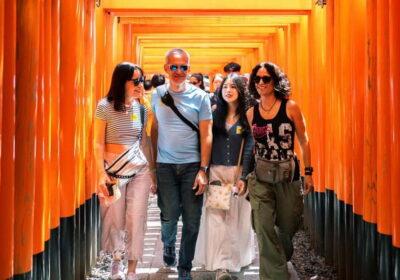
Kyoto: Full-Day English Guided Tour of Kyoto’s Highlights
Read our review →
Osaka: Minoh, Katsuoji Temple, & Minoh Falls Full-day Tour
Read our review →Full Day Kyoto Tour : Bamboo Forest, Golden Temple, Fushimi Inari
Read our review →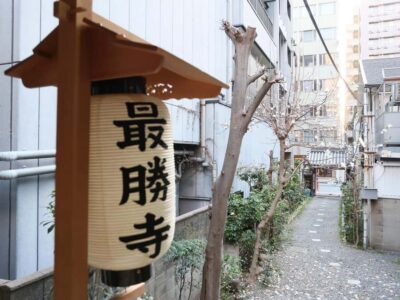
Osaka Temple Cool Foot Bath & Matcha Experience〈45min〉
Read our review →
Osaka: Mind & Spirit Balance Temple Reiki Healing
Read our review →
Osaka: Minoh Waterfall & Katsuo-ji Temple Half-Day Tour
Read our review →
Osaka Temple Head Spa &Matcha Facial – Refresh & Glow〈90min〉
Read our review →
Osaka Morning Tour: Shitennoji Temple, Shinsekai &Doutonbori
Read our review →This tour also ranks in