
Review · JAPAN
Fukuoka: Nanzoin Temple and Reclining Buddha Guided Tour
Nanzoin Temple’s giant reclining Buddha is the clear star here, but the walk around it gives you much more than a quick photo stop. You’ll move from the main hall to sacred statues, a waterfall, a mountain sanctuary, and rows of child-protection figures, with a guide explaining how to behave at each place.
I like the private-group format, which lets you ask questions instead of following a large crowd. I also like the choice of meeting in Hakata or at JR Kidonanzoinmae Station. The main caution is value: at $65 per person, the tour can make sense for first-time visitors, but you should check exactly what your booking includes, since transport arrangements differ by meeting point.
Key points to know
- The reclining Buddha is the centerpiece: See one of the world’s largest reclining Buddha statues and pay the separate admission included with the tour.
- The route goes beyond the famous statue: You’ll visit Fudo Myo-o, Okunoin, an interior waterfall, and Mizuko Jizo statues.
- Hakata pickup includes train transport: The train fare to and from JR Kidonanzoinmae Station is included when you choose the Hakata Station meeting option.
- Station pickup keeps the price and timing simpler: If you meet at JR Kidonanzoinmae Station, your transport to and from that station is not included.
- Guides bring different strengths: Chiyako received repeated praise for her insight, Erika for her warm manner, and Morry for Buddhist customs and local Fukuoka tips.
- Expect uneven walking: Comfortable shoes are essential, and the tour is not suitable for wheelchair users or people with mobility impairments.
Why the Reclining Buddha Makes This Visit Special
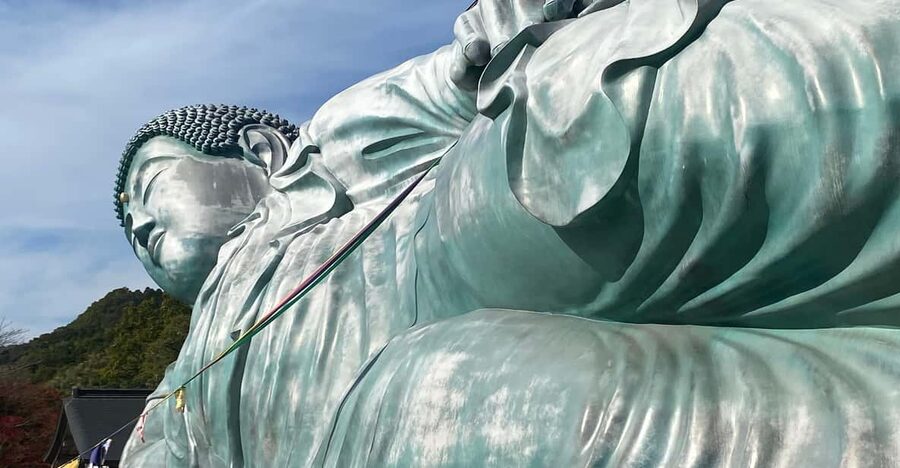
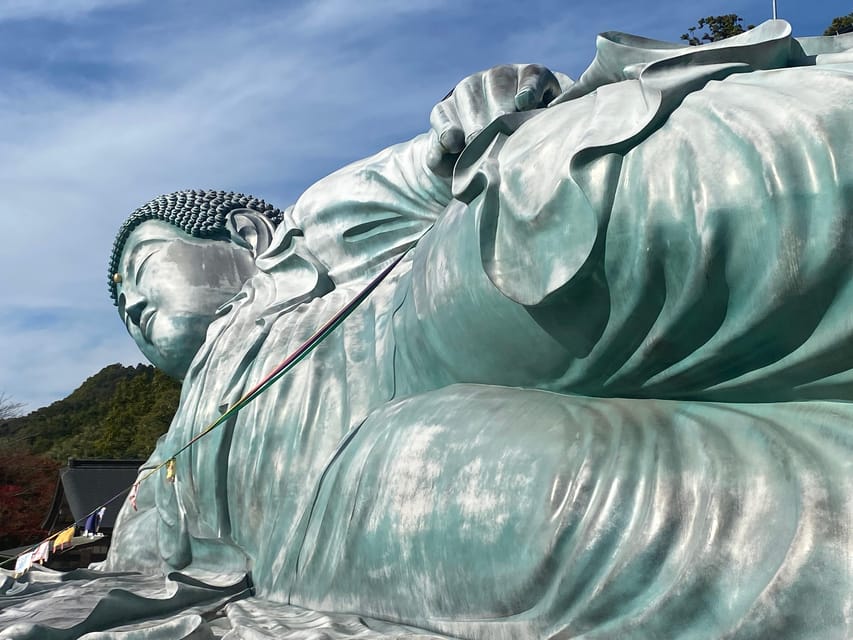
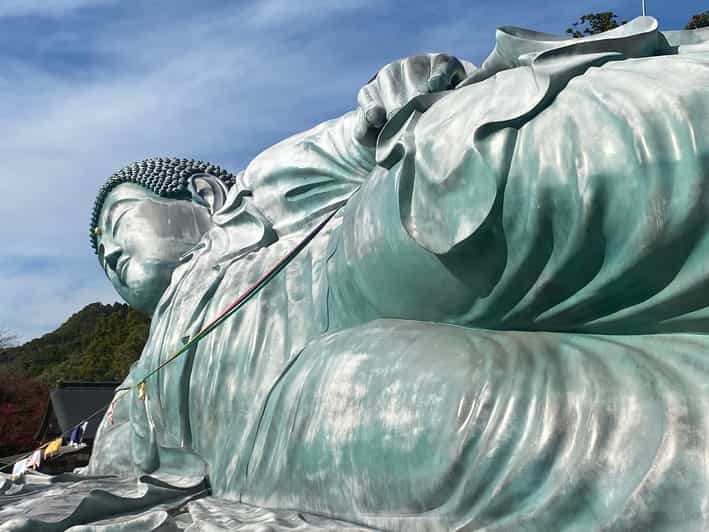
Nanzoin Temple is worth considering because its main attraction is unusual. Many Japanese temple visits center on a standing Buddha, a pagoda, or a grand hall. Here, the main figure is a massive Nehanzō, or reclining Buddha, shown resting on its side.
The statue’s scale gives the visit instant impact, but size is not the only reason to pay attention. Your guide can point out details in the figure and explain the religious setting around it. You can take photographs where permitted, and the tour includes admission to the reclining Buddha area.
You may also be able to enter the statue’s interior. That adds a more personal element to the stop, though you should follow the guide’s instructions and observe any rules for this sacred space. Flash photography is not allowed, and you should keep your camera discreet around worshippers.
I would allow time to look carefully rather than treating the Buddha as a fast photo opportunity. The statue is the part most likely to appear in your Fukuoka plans, but the surrounding route gives it context.
More Temple Tours around Japan:
- Kyoto: Tea Ceremony Ju-An at Jotokuji Temple
★ 4.9 · 3,207 reviews - Osaka/Kyoto:Kinkakuji,Arashiyama,FushimiInariShrine,NaraPark
★ 4.1 · 1,596 reviews - Tokyo: Asakusa Walking Tour with Sensoji Temple Visit
★ 4.8 · 1,583 reviews
Starting in Hakata or at JR Kidonanzoinmae Station
You have two meeting-point choices. The first is the Fukuoka Tourist Information Center at Hakata Station. The second is JR Kidonanzoinmae Station, the stop closest to the temple.
The Hakata option is easier if you are staying in central Fukuoka or want help with the journey. The listed schedule allows about 25 minutes by train each way, and the train fare to and from JR Kidonanzoinmae Station is included with this option.
The station option may suit you if you are already nearby or want to handle your own route. In that case, transportation to and from JR Kidonanzoinmae Station is not included. This distinction matters because a quoted tour price can look very different once you add rail costs for a family or group.
One practical point deserves attention: check the exact meeting location and inclusions shown for your selected option before paying. A family booking reported paying for train tickets despite expecting transportation to be covered. The stated terms specify that train transport is included only with the Hakata Station meeting option, so do not assume both choices work the same way.
The Train Ride Sets the Pace
The train portion takes around 25 minutes in each direction. That is not a long ride, but it means this is not a temple visit right beside Fukuoka’s central station.
I like the train arrangement because it gives the outing a clear shape. You leave the city, reach the station closest to the temple, spend about 90 minutes on the grounds, and return the same way. With transfers and walking, the total activity is advertised as lasting from two hours to 210 minutes, depending on the starting time and option.
A guide is especially useful here if you are not comfortable sorting out the route yourself. You can focus on the temple rather than worrying about when to change trains or where to go after arriving. If you prefer to travel independently and already understand the route, the guided format may feel less essential.
Walking From the Main Hall to the Buddha
Once you reach Nanzoin, the tour begins with the temple grounds and main hall. The route is not just a straight line to the reclining Buddha. You’ll see the architecture, take in views from the grounds, and learn about the customs expected at a Buddhist temple.
This is where a good guide can make a real difference. Morry, one of the listed guides, helped visitors understand how to wash their hands, bow, and pray correctly. Those small actions are useful because they let you participate respectfully instead of guessing at the entrance to each sacred area.
The main hall also gives you a chance to slow down before the most famous stop. You might find the setting more peaceful than the Buddha itself, especially if you appreciate temple buildings, hillside views, and quiet pauses between major sights.
The grounds can be uneven. You’ll need shoes that are comfortable for walking, and you should watch your step on the route. This is not a good choice for wheelchair users or anyone who has trouble walking over irregular surfaces.
Same sacred ground, another way to see it:
- Tokyo:Mt.Fuji,Kawaguchiko Oishi Park,Arakurayama Sengen Park
★ 4.4 · 2,682 reviews - Nikko: Kegon Falls, Lake Chuzenji & Toshogu Temple
★ 4.6 · 1,577 reviews - Tokyo: Nikko Toshogu Shrine and Kegon Waterfall Tour
★ 4.5 · 1,266 reviews - Tokyo Panoramic 1 Day: Meiji Shrine, Asakusa, Odaiba and SKYTREE®
★ 4.5 · 1,222 reviews
Fudo Myo-o and the Strength of the Sacred Route
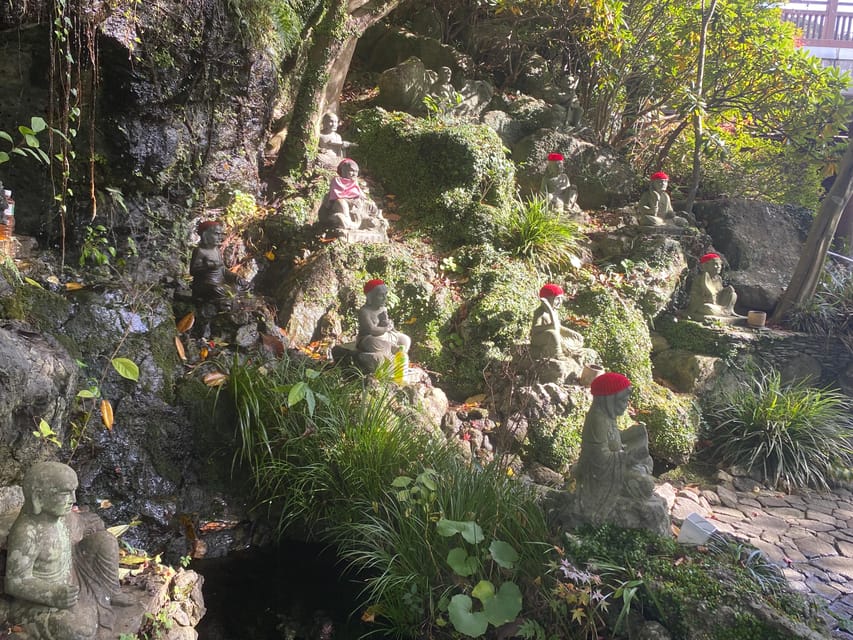
The tour continues to the Fudo Myo-o statue, a powerful Buddhist figure often associated with protection and firm resolve. You do not need a specialist background to appreciate the statue, but the guide’s explanation can help you understand why it feels different from the calm, resting form of the reclining Buddha.
This contrast is one of the best features of the tour. The Buddha offers a quiet, restful image, while Fudo Myo-o brings a more forceful presence. Moving between them shows how varied Buddhist imagery can be within one temple complex.
The quality of this section depends heavily on the guide’s ability to explain rather than simply point. Chiyako received especially strong praise for making the visit insightful and special, while Erika was noted for her warm manner and knowledge of the temple grounds. English ability may vary by guide. One booking specifically found the guide’s English weaker than expected, so travelers who need detailed English interpretation should keep that possibility in mind.
Okunoin and the Waterfall Stop
The path also reaches Okunoin, a quieter sanctuary within the temple grounds. This stop gives the visit a more reflective mood. Instead of focusing only on the large statue, you’ll have time to consider the religious purpose of the site and the way different spaces serve different forms of worship.
A waterfall inside the grounds adds another change of pace. It is a simple natural feature, but it helps break up the temple route and gives you a calm place to pause. You should not expect a large scenic attraction or a long nature walk. The value is in the peaceful setting and the contrast between water, forested surroundings, and religious buildings.
Photography is allowed, but you need to use common sense. Do not use flash, and avoid taking pictures when people are praying. The temple asks visitors not to smoke or litter, and you should treat statues and worship areas as places of worship rather than stage sets.
Mizuko Jizo and the Meaning of the Return Walk
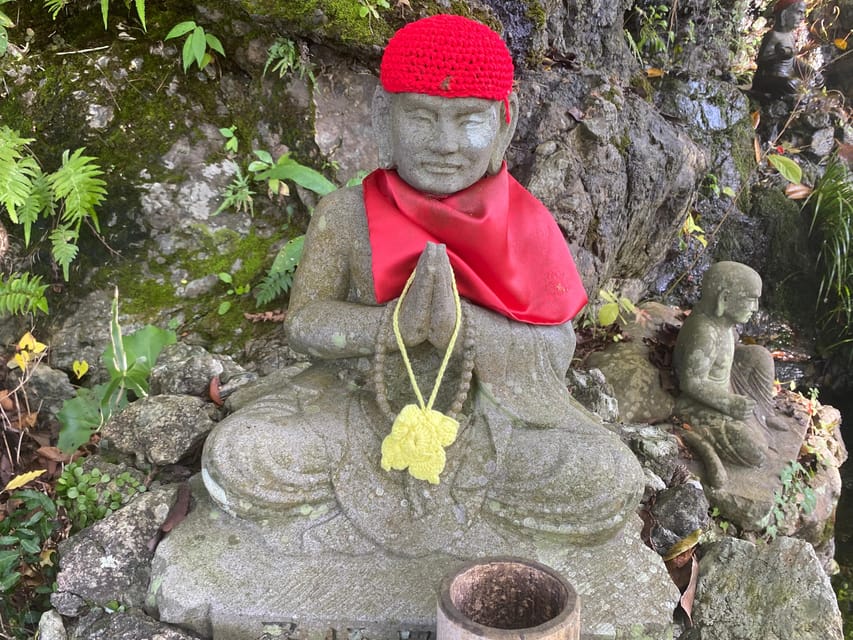
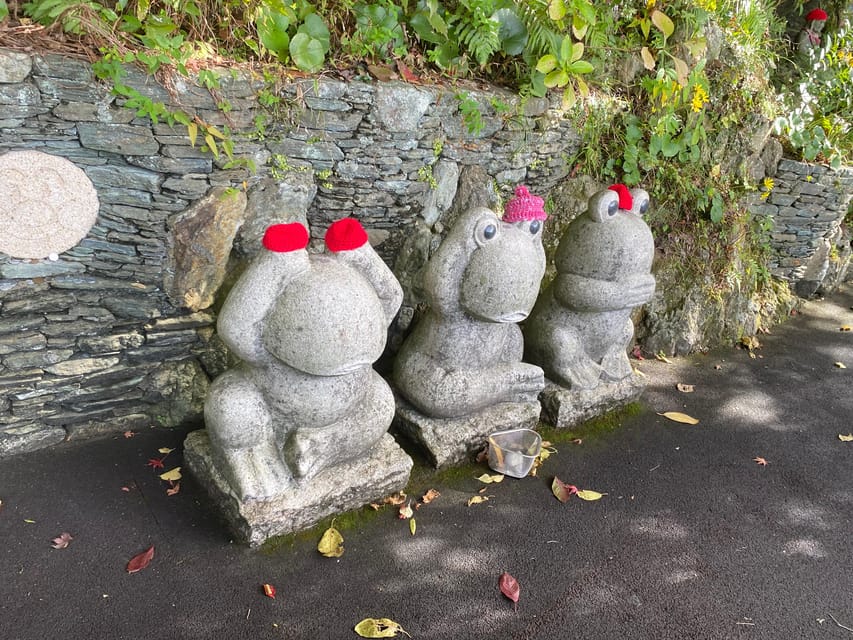
On the return route, you pass rows of Mizuko Jizo statues. These figures are connected with the protection of children and carry a more personal, emotional meaning than a standard sightseeing display.
The rows can be visually striking, but they are also a reminder that the temple serves spiritual needs beyond tourism. I would keep your voice low here and avoid treating the statues as a backdrop for casual portraits. The guide can explain the purpose of the figures and help you understand why this part of the route matters.
This final section gives the outing a thoughtful ending. You begin with a famous monument, but you finish among smaller figures tied to family, loss, and protection. That change in scale is one reason the tour feels fuller than a simple visit to the Buddha.
How Much Help Does the Guide Add?
The tour is sold as a private group experience with a live guide in Japanese or English. That format should suit you if you want to ask questions, move at a comfortable pace, or learn the proper customs without interrupting a larger group.
The strongest guide feedback centers on personal explanation and local warmth. Morry combined instruction about Shingon Buddhist practices with information about Fukuoka, Hakata, and the city’s food stalls. He also happens to be a magician, which added a playful touch for one group. Chiyako was praised more than once for being insightful and making the visit feel special. Erika was noted for her friendly manner and strong grasp of the temple grounds.
At the same time, the experience is not guaranteed to be equally strong with every guide. One English-language booking rated the guide’s effort positively but felt the spoken English needed improvement. If your main reason for booking is detailed religious interpretation, the guide’s language ability will matter more than it would on a simple sightseeing walk.
Is $65 a Fair Price?
At the advertised $65 per person, the tour can be fair value if you want transport help, a private guide, and cultural explanation in one package. The Buddha admission is included, and the Hakata option includes the train fare to and from the temple station.
The price is less compelling if you are comfortable arranging the train yourself and mainly want to see the statue. The temple itself does not require a general admission fee according to the booking information, so the payment is primarily for guiding, the included Buddha access, and transport where applicable.
This is why the meeting point matters. A person starting at JR Kidonanzoinmae Station does not receive the train fare to and from that station. A person starting at Hakata Station does. For a family, the difference can add up quickly, and one family booking felt the cost was too high for what was delivered.
My advice is simple: choose this tour for interpretation and ease, not merely for entrance access. If you want only the photograph, an independent visit may be better value. If you want someone to explain the washing ritual, prayers, statues, and layout while keeping the visit organized, the price is easier to defend.
Who Will Enjoy This Temple Tour Most?
This outing fits first-time visitors to Fukuoka who want to see an important religious site without planning every step. It also suits visitors who enjoy architecture, Buddhist art, quiet places, and unusual monuments rather than only city-center attractions.
Families can join, but the walking and uneven ground deserve attention. The supplied booking included children aged five and ten, yet the adults felt the cost was poor value for their group. Young children may enjoy the giant Buddha, but the slower spiritual stops may hold less interest.
You should also choose it if you want a private setting. A private group makes it easier to ask about customs or spend an extra moment at a statue. It is less suitable if you want a cheap, quick outing or prefer complete independence.
Bring comfortable shoes, water, and a camera. Keep photography respectful, never use flash, and remember that the temple is an active sacred place, not simply a sightseeing attraction.
Should You Book the Nanzoin Temple Tour?
I would book this tour if you are staying in Fukuoka, want a guide to explain Buddhist customs, and value a smooth trip from Hakata. The reclining Buddha is memorable, but the Fudo Myo-o statue, Okunoin sanctuary, waterfall, and Mizuko Jizo rows give the visit real substance.
I would skip the guided option if your budget is tight, you are happy to arrange the train, or you mainly want to see the Buddha and take photographs. In that case, an independent visit may provide better value.
Before booking, select the correct meeting point and confirm the transport terms. If you choose Hakata, train transport to and from JR Kidonanzoinmae Station is listed as included. If you choose the station meeting point, you pay for getting there yourself. With that detail clear, this is a thoughtful and manageable way to see one of Kyushu’s most distinctive temple sights.
FAQ
How long does the Nanzoin Temple tour last?
The activity is listed as lasting from two hours to 210 minutes. The temple visit itself takes about 1.5 hours, with train travel taking around 25 minutes each way when using the Hakata option.
Where can I meet the guide?
You can choose between JR Kidonanzoinmae Station and the Fukuoka Tourist Information Center at Hakata Station. The exact meeting point depends on the option you book.
Is train transportation included?
Train transportation to and from JR Kidonanzoinmae Station is included when you select the Hakata Station meeting option. It is not included when you meet at JR Kidonanzoinmae Station.
Is admission to the reclining Buddha included?
Yes. Admission to the reclining Buddha is included. The booking information does not list a general temple entrance fee.
What languages are available?
The live tour guide is available in Japanese or English.
Is this tour suitable for wheelchair users?
No. The experience is not suitable for wheelchair users or people with mobility impairments. The temple grounds can also be uneven.
Can I cancel the booking?
You can cancel up to 24 hours in advance for a full refund. A reserve-now, pay-later option is also available.
Temple visits we reviewed lately in Japan
- From Asakusa: Old Tokyo, Temples, Gardens and Pop Culture★ 4.6 · 15 reviews
- Tokyo: Nagano Snow Monkeys and Zenkoji Tour with Temples★ 4.9 · 19 reviews
- Kamakura: Great Buddha, Hase Temple, & Komachi Street Tour★ 5.0 · 11 reviews
- Osaka Temple Head Spa &Matcha Facial – Refresh & Glow〈90min〉★ 5.0 · 24 reviews
- Osaka Temple :Warm Bamboo Oil Massage – Deep Restore〈60min〉★ 4.9 · 19 reviews
- Osaka: Temple Tour and Traditional Calligraphy Lesson★ 4.9 · 24 reviews
- Osaka: Sumiyoshi, Osaka’s Most Iconic Shrine – Private Tour★ 4.7 · 4 reviews
- Osaka Temple :Warm Bamboo Oil Massage – Deep Restore〈90min〉★ 5.0 · 14 reviews
Japan Temple Tours, compared.
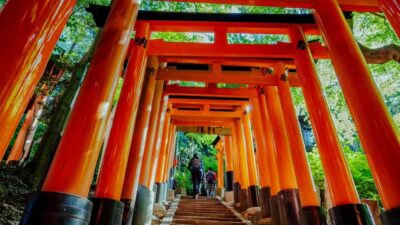
Osaka/Kyoto:Kinkakuji,Arashiyama,FushimiInariShrine,NaraPark
Read our review →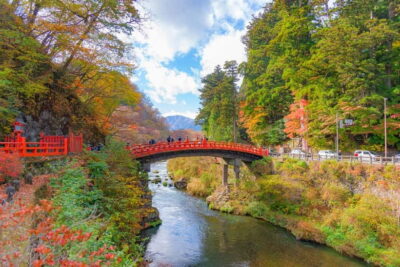
Nikko: Kegon Falls, Lake Chuzenji & Toshogu Temple
Read our review →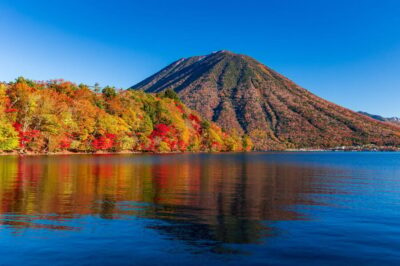
Tokyo: Nikko Toshogu Shrine and Kegon Waterfall Tour
Read our review →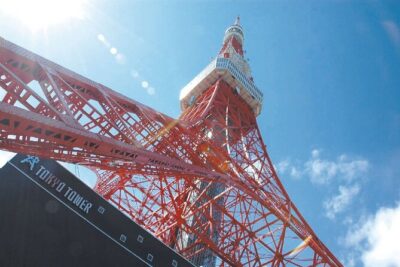
Tokyo Panoramic 1 Day: Meiji Shrine, Asakusa, Odaiba and SKYTREE®
Read our review →
Kyoto Arashiyama Walking Tour: Bamboo, Monkeys, Gardens & Secrets
Read our review →
1-Day Snow Monkeys, Zenko-ji Temple & Sake in Nagano
Read our review →
Arashiyama Bamboo, Temple, Monkeys, or Secret Sake Brewery
Read our review →This tour also ranks in