Review · TOKYO
Tokyo: Meiji Shrine Walking Tour — Shinto & Imperial System
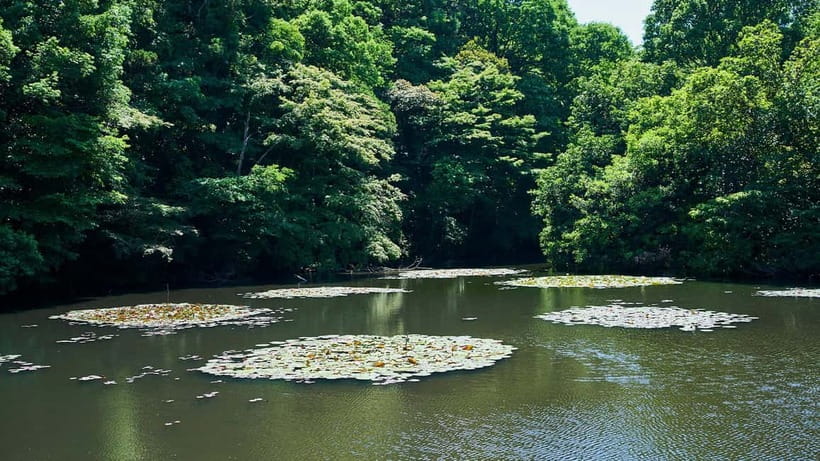
The most striking part of this tour is how quickly Tokyo disappears. From Harajuku Station, you enter a forest of about 100,000 trees, follow a shaded gravel path, and hear birds instead of traffic. Then comes the huge torii, made from 1,500-year-old Taiwanese cypress. It is a fine reminder that Meiji Shrine is not just a photo stop.
I like the small group, limited to 10 people, and the practical instruction on shrine manners. Guides such as Keiko, Yuuka, Yuki, and Ayaka are praised for explaining customs clearly, helping with offerings and fortunes, and answering questions without making the visit feel like a lecture.
The main thing to consider is the language limit. This is an English-only experience, with no Japanese-language support. The 90 to 135 minute length can also vary, so check the departure time and allow enough room in your day for the optional café and shopping stop.
Key points to know before you book
- The forest is the real opening act: Meiji Shrine gives you a quiet walk before the history lesson begins.
- The torii has serious age and scale: The largest wooden gate is about 12 meters high and uses ancient Taiwanese cypress.
- You learn how to behave, not just what to see: The guide explains where to walk, how to approach the shrine, and how to make an offering.
- Imperial history gets a human setting: Emperor Meiji and Empress Shoken are introduced through the shrine and its poetry.
- A small group makes questions easy: With no more than 10 people, you can ask about Shinto, the imperial system, or customs that puzzle you.
- The finale is relaxed: Café Mori no Terrace provides time for tea, light snacks, photos, and a look at the gift shop.
Why Meiji Shrine works so well as a first Tokyo visit
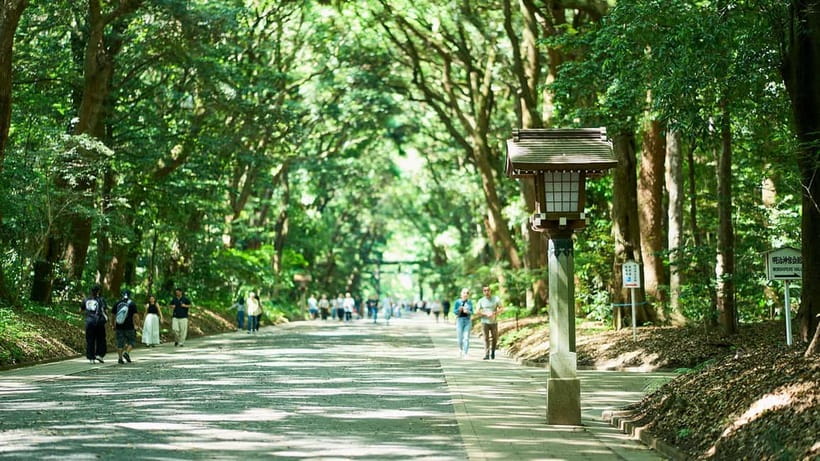
Meiji Shrine sits beside one of Tokyo’s busiest districts, yet its approach feels far removed from Harajuku’s shops and crowds. That contrast gives the visit its power. You do not need to travel out of the city to find a place where the pace slows down.
The shrine was dedicated to Emperor Meiji and Empress Shoken, figures tied to Japan’s transformation in the late 19th and early 20th centuries. The tour uses the site to explain more than architecture. You get an introduction to Shinto, the imperial system, and the country’s move from samurai rule into a modern state.
I find that context especially useful here. Without a guide, you can admire the trees, wooden buildings, sake barrels, and painted plaques, but much of the meaning stays hidden. The tour gives you a way to connect those details with Japanese customs and national history.
The route begins at Harajuku Station. The exact meeting point can vary by booking option, so check your confirmation carefully. The listed coordinates are 35.6700901, 139.7024662, but the most important practical detail is to identify the correct station-side meeting point before you arrive.
More Temple Walking Tours in Japan
- Tokyo: Asakusa Walking Tour with Sensoji Temple Visit
★ 4.8 · 1,583 reviews - Tokyo: Meiji Jingu Shrine and Shinto Culture Walking Tour
★ 5.0 · 245 reviews - Tokyo: Meiji Shrine and Shinto Culture Walking Tour
★ 5.0 · 225 reviews
The first torii and the change from city to forest
The first major stop is Meiji Jingu Ichino Torii, the entrance gate. Your guide uses this point to explain how the shrine grounds are arranged and how to enter with the right attitude.
One small but useful lesson concerns the path itself. In Shinto tradition, the center line, called seichu, is associated with the deities. You are encouraged to walk along the side rather than straight down the middle. It is easy to miss this on your own, and it is the kind of simple custom that helps you move through the grounds respectfully.
The walk from the city into the forest takes around 10 minutes at this early stage, with frequent stops for explanation and photographs. Wear shoes you can comfortably walk in. The tour is not a strenuous hike, but you will be on foot for most of the 90 to 135 minutes.
As you proceed, the city noise fades. That quiet is not an artificial show added for tourists. It is part of what makes Meiji Shrine meaningful for people who want a pause from Tokyo’s speed.
Sake barrels and the symbols you might otherwise miss
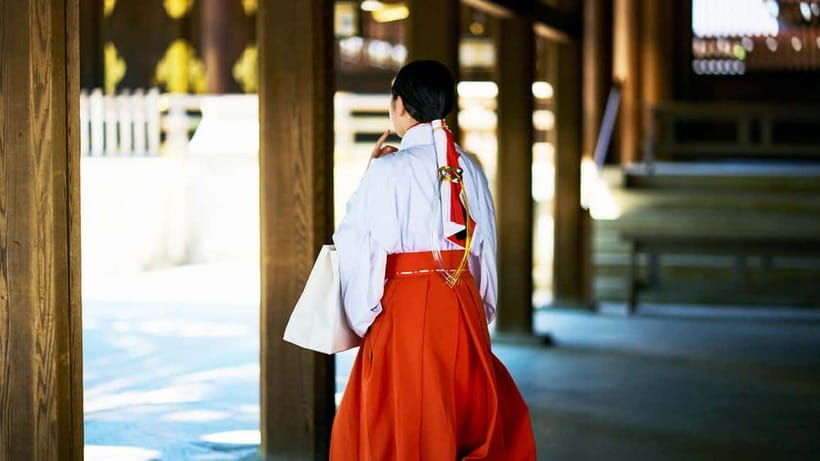
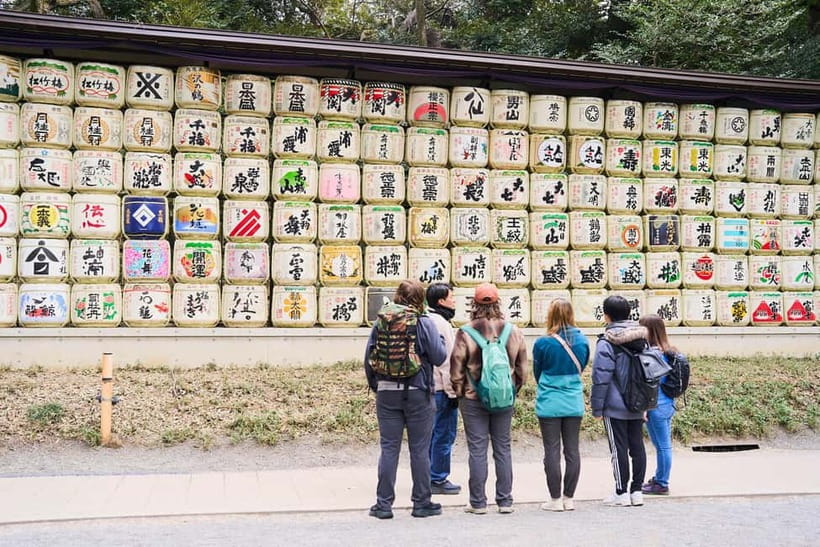
Along the route, you stop at the consecrated wine and sake barrels. These barrels are among the most photographed details at Meiji Shrine, and a guide helps you understand why they are displayed there.
The barrels reflect offerings connected with shrine tradition. Their colorful labels make good pictures, but the explanation gives them a purpose beyond decoration. You begin to see the shrine as a living place of worship, supported by customs and offerings, rather than simply an old building in a park.
The itinerary gives separate time to the consecrated wine barrels and sake barrels. That may sound repetitive on paper, but it lets the guide discuss the display without rushing. If you are mainly interested in architecture and photography, these stops are brief. If you want cultural context, they are useful early examples of how Shinto practice appears in everyday objects.
This is also a good point to ask questions. The guides regularly explain the difference between Shinto shrines and Buddhist temples, as well as the meanings behind common rituals. Nonoka, Ayaka, and Yuuka are among the guides praised for making those explanations easy to follow in English.
The big torii made from ancient cypress
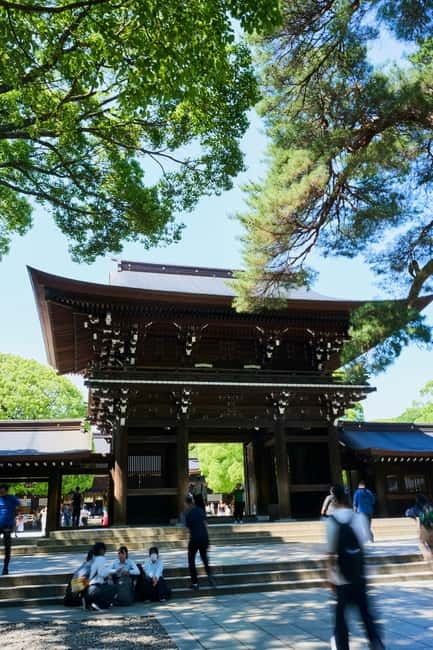
The large torii is the visual high point of the approach. At about 12 meters tall, it has the weight and presence you expect from a major national shrine. It was made from a 1,500-year-old Taiwanese cypress, a detail that adds another layer to the structure.
Your guide will again remind you to avoid the center of the path when passing beneath it. That instruction may seem minor, but it changes the way you look at the entrance. You are not simply walking through a gate for a photograph. You are crossing from ordinary city space into a sacred precinct.
This is one of the strongest reasons to choose a guided visit instead of a quick self-guided stop. The physical route is easy to follow, but the meaning behind it is not always obvious. A short explanation at the right moment can make the same gate, path, and courtyard far more memorable.
Same sacred ground, another way to see it:
- Tokyo:Mt.Fuji,Kawaguchiko Oishi Park,Arakurayama Sengen Park
★ 4.4 · 2,682 reviews - Nikko: Kegon Falls, Lake Chuzenji & Toshogu Temple
★ 4.6 · 1,577 reviews - Tokyo: Nikko Toshogu Shrine and Kegon Waterfall Tour
★ 4.5 · 1,266 reviews - Tokyo Panoramic 1 Day: Meiji Shrine, Asakusa, Odaiba and SKYTREE®
★ 4.5 · 1,222 reviews
Emperor Meiji, imperial history, and modern Japan
The tour is not limited to Shinto etiquette. A central theme is Japan’s 2,600-year-old imperial system and the role of Emperor Meiji in the country’s modern development.
You hear how Japan moved from a society shaped by samurai rule toward a modern state. The Meiji period is a major turning point, and the shrine offers a natural place to discuss it. The guide connects the emperor, the imperial institution, and the national changes that followed.
That subject deserves careful handling. The imperial system is not just a colorful historical detail. It remains part of Japan’s identity and public life, and the tour presents it through the shrine dedicated to Emperor Meiji and Empress Shoken.
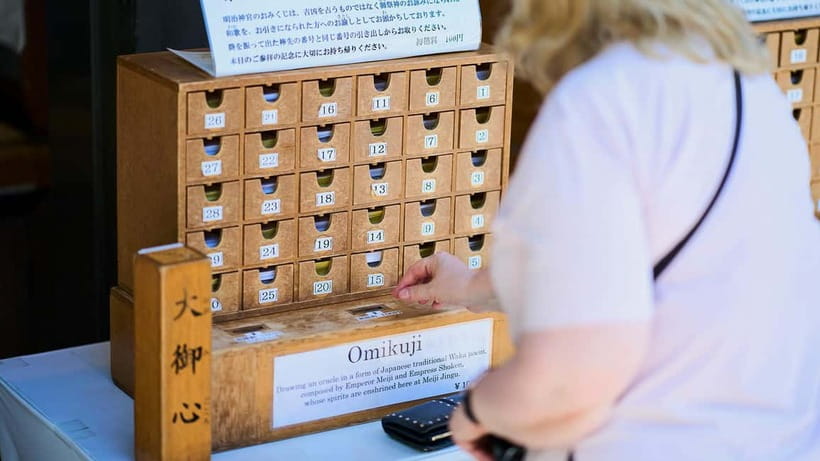
You also stop to learn about imperial poetry. The shrine offers a special fortune called Omigokoro, featuring poems written by Emperor Meiji and Empress Shoken. English translations are available, which makes this part approachable even if you do not read Japanese.
The poems give the visit a personal touch. Instead of thinking only about emperors as distant figures, you encounter their words in a small, readable form. If you enjoy literature, symbolism, or reflective moments during a tour, this is one of the more distinctive details.
The main shrine: what you will actually do there

The main Meiji Shrine visit lasts about 45 minutes, making it the longest portion of the tour. You have time for explanation, photographs, free time, shopping, and shrine activities.
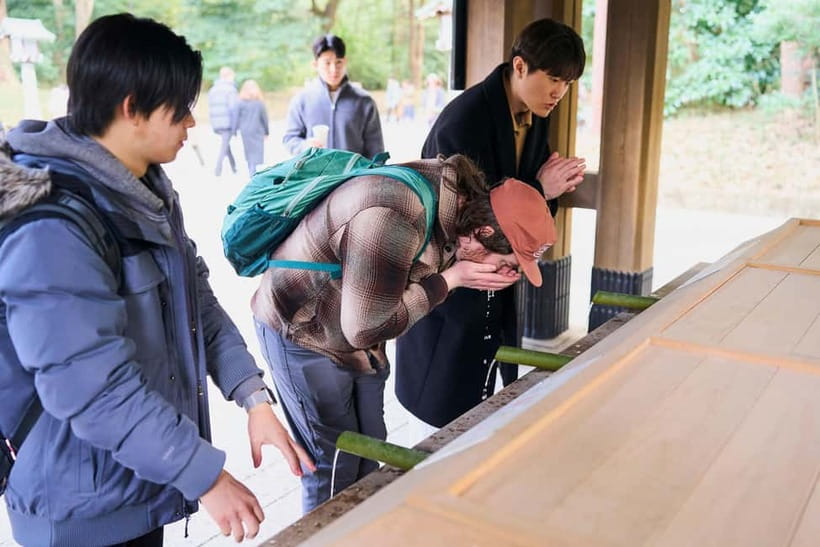
This is where the guide walks you through the basics of Shinto practice. You learn how to approach the shrine and how to make an offering. Some guides have even provided coins when a participant arrived without any, and they may help you handle the ritual respectfully.
You can purchase omamori, or protective charms, if you want a traditional keepsake. You can also try the Omigokoro fortune, whose translated poems make it more meaningful for many English-speaking visitors than a fortune you cannot read.
The guide’s role matters most here. Ayaka has been praised for explaining where to find fortunes and amulets, while Yuuka has helped people understand the reason behind the shrine, the customs, and the sake displays. Keiko has also been singled out for guiding people through ceremonies and helping with photographs.
Those details point to the practical value of the tour. You do not simply hear about Shinto. You receive enough instruction to enter and participate without worrying that you are doing something rude.
A wedding may take place during your visit, as it does at times at major shrines, but it is not promised. Treat it as a possible bonus, not part of the schedule.
Forest Terrace and Café Mori no Terrace
After the main shrine, the group heads to Forest Terrace Meiji Jingu and Café Mori no Terrace. This is a useful change of pace after the formal atmosphere of the shrine.
The stop lasts about 15 minutes. You can take photographs, browse the gift shop, and enjoy Japanese tea or light snacks while looking out at the surrounding setting. The café is not the main reason to book the tour, but it gives the experience a gentler finish.
The gift shop carries unusual souvenirs, including eco-blocks made from fragrant Japanese camphor and miniature barrels of sacred sake. These are more distinctive than generic Tokyo merchandise and are small enough to fit easily in your luggage.
The activity details do not say that tea, snacks, or gifts are included in the $23 price. I would treat this as an optional personal expense and bring a little cash or a payment method you normally use in Japan.
How much value do you get for $23?
At $23 per person, this is a modest price for a guided introduction to one of Tokyo’s major sights. Entry to the shrine itself is not the main expense here. You are paying for the guide’s time, the cultural explanation, the route planning, and help with customs that are easy to misunderstand.
The small group improves that value. Ten people is still large enough to meet other visitors, but small enough for the guide to hear questions and adjust the pace. Some departures may be smaller, and one person has even received what felt like a private tour when no one else joined.
The price is strongest for a first visit to Japan. If you already understand Shinto, shrine etiquette, and the Meiji period, you may prefer to walk through the grounds independently. Even then, the tour can add detail to a place you have seen before, especially if you want to understand the symbols and imperial connection.
The booking terms also reduce some risk. You can cancel up to 24 hours in advance for a full refund, and you can reserve now and pay later. Starting times vary, so check availability rather than assuming a fixed schedule.
What the guides do particularly well
The guide is the heart of this experience. The most praised qualities are clear English, warmth, patience, and the ability to turn facts into a conversation.
Names that have received especially strong praise include Yuuka, Yuki, Keiko, Ayaka, Nonoka, and Tomo. That does not mean you can request a particular guide or that every departure will have one of them, but it gives you a sense of the guide team’s strengths.
Yuki has been praised for explaining Shinto, the imperial system, ceremonies, and the move from samurai times to modern Japan. Yuuka is known for carrying old photographs that show what the area looked like before construction, a useful aid when discussing how the shrine came to be.
Nonoka has explained differences between shrines and temples, haiku and waka, and the customs that help you avoid disrespect. Keiko has been appreciated for her friendly style and willingness to answer many questions. These details suggest a tour that works best when you participate rather than simply follow along.
If you are shy about asking questions, the small group helps. You can ask about anything from offerings and fortunes to imperial poetry without stopping a large crowd.
Who should book this walk?
I would recommend it to first-time visitors who want cultural bearings early in a Tokyo trip. It is also a good choice if you have already seen Meiji Shrine but felt you were missing the point.
Families and mixed-age groups may appreciate the manageable length and the mix of walking, stories, ritual instruction, free time, and café rest. History fans will get the most from the sections on Emperor Meiji and Japan’s transition from samurai rule.
It also suits solo visitors. A small group gives you company without committing you to a long full-day excursion. The guides have shown flexibility when a participant arrives late, has particular interests, or needs help with shrine activities.
You should think twice if you want a silent nature walk with no commentary. The forest is peaceful, but this is a guided history and culture tour. You should also skip it if you need Japanese-language support, since the activity is conducted in English only.
Practical advice for a smooth visit
Meet at the Harajuku Station option shown on your booking confirmation, since the exact meeting point can vary. Arrive with enough time to find the guide, especially if you are unfamiliar with the station.
Wear comfortable walking shoes and dress for the weather. You will spend most of the experience outdoors, even though the forest provides shade. Keep your camera ready, but do not let photographs distract you from the explanations at the torii and main shrine.
If you want an amulet, fortune, tea, snack, or souvenir, plan for extra spending. The guide can help you understand what you are buying, but the $23 activity price covers the English guide and sightseeing rather than personal purchases.
The 9 a.m. departure has worked well for people who want an early start, while other times may suit a slower morning. Check the available start times and fit the tour around Harajuku and nearby Tokyo plans.
Should you book the Meiji Shrine walking tour?
Book it if you want more than a quick look at a famous shrine. For $23, you get a compact introduction to Shinto customs, imperial history, shrine etiquette, and the changing Japan of the Meiji period, all in a small English-speaking group.
The best reason to go is not one single fact about the torii or the sake barrels. It is the way a guide helps you understand what you are seeing and gives you confidence to take part respectfully.
Skip it if you prefer exploring alone, already know shrine customs, or need Japanese support. For most first-time visitors, though, this is a useful and fairly priced way to begin understanding Meiji Shrine and the culture around it.
FAQ
Where does the Meiji Shrine tour begin?
The tour offers a starting location at Harajuku Station. The exact meeting point may vary depending on the option you book, so check the booking details before arriving.
How long does the tour last?
The stated duration is 90 to 135 minutes. Available starting times can vary, so check the schedule for your chosen date.
Is the tour conducted in English?
Yes. The live guide and tour are in English only, and Japanese-language support is not available.
How large is the group?
The tour is limited to 10 participants, making it a small-group experience.
What is included in the $23 price?
The price includes an English guide and the sightseeing tour. Personal purchases such as charms, fortunes, tea, snacks, and souvenirs are not stated as included.
Can I buy a charm or fortune at Meiji Shrine?
Yes. You can purchase omamori protective charms and the Omigokoro fortune, which includes poems by Emperor Meiji and Empress Shoken with English translations.
Can I cancel the booking?
You can cancel up to 24 hours in advance for a full refund. The activity also allows you to reserve now and pay later.
More Temple Walking Tours in Tokyo
- Bangkok: City Highlights Temple and Market Walking Tour
★ 4.5 · 3,990 reviews - Bangkok: Grand Palace and Wat Phra Kaew Guided Walking Tour
★ 4.4 · 2,417 reviews - Bangkok: Wat Pho and Wat Arun Guided Walking Tour
★ 4.6 · 1,720 reviews - Chiang Mai: 3 Hour Old City and Temples Guided Walking Tour
★ 4.6 · 1,568 reviews
More Meiji Shrine and Senso-ji Tours in Tokyo
- Tokyo: Asakusa and Tokyo’s Oldest Temple Senso-ji Tour
★ 4.9 · 352 reviews - Tokyo History: Sensoji Temple & Asakusa District Private Tour
★ 5.0 · 28 reviews - Full Tokyo: Meiji Shrine, Imperial Palace, Asakusa & Skytree
★ 4.7 · 16 reviews - From Asakusa: Old Tokyo, Temples, Gardens and Pop Culture
★ 4.6 · 15 reviews
Temple visits we reviewed lately in Tokyo
- From Asakusa: Old Tokyo, Temples, Gardens and Pop Culture★ 4.6 · 15 reviews
- Tokyo: Nagano Snow Monkeys and Zenkoji Tour with Temples★ 4.9 · 19 reviews
- Nagano: Snow Monkeys, Zenkoji Temple & Sake Day Trip★ 5.0 · 4 reviews
- From Tokyo: Nagano, Zenkoji Temple, Snow Monkeys Day Trip.★ 4.3 · 4 reviews
- Tokyo/Nagano: private Tour with Snow Monkey Park & Temples★ 4.8 · 13 reviews
- Make a temple stamp book with artist★ 4.9 · 10 reviews
- Kamakura Temples Private Guided Tour from Tokyo★ 4.8 · 21 reviews
- Join a Unique Cultural Ceremony at Tokyo’s Meiji Shrine★ 5.0 · 9 reviews
Tokyo Temple Tours, compared.
Nikko: Kegon Falls, Lake Chuzenji & Toshogu Temple
Read our review →
Tokyo: Nikko Toshogu Shrine and Kegon Waterfall Tour
Read our review →
Tokyo Panoramic 1 Day: Meiji Shrine, Asakusa, Odaiba and SKYTREE®
Read our review →
Tokyo: Zen Meditation at a Private Temple with a Monk
Read our review →
Mt. Fuji Heritage Tour: Traditional Villages, Lakes & Shrine
Read our review →
Tokyo: Samurai Entertainment Night Show in Kanda Shrine
Read our review →
Tokyo: Asakusa and Tokyo’s Oldest Temple Senso-ji Tour
Read our review →