
Review · TOKYO
Full Tokyo: Meiji Shrine, Imperial Palace, Asakusa & Skytree
Tokyo in one day can feel like a puzzle of far-flung neighborhoods. This seven-hour guided tour solves much of that problem by linking Shibuya, Meiji Shrine, the Imperial Palace, Akihabara, Asakusa, and Tokyo Skytree by train. You get a useful first look at several sides of the city without working out every connection yourself.
I like the peaceful walk through Meiji Shrine and the final climb to Tokyo Skytree, where the city spreads out below you. I also like having train tickets and transfers handled by the guide. The main caution is pace: some stops are brief, and the Asakusa lunch and free-time period can feel rushed if the group is moving on a fixed schedule.
Key points to know before booking
- Six major Tokyo sights in seven hours: The route covers Shibuya, Meiji Shrine, the Imperial Palace, Akihabara, Asakusa, and Tokyo Skytree.
- Train travel is part of the experience: You make several city transfers by train, with tickets included.
- Skytree entry is option-dependent: The tour ends at Tokyo Skytree, but you can enter only if your booking includes and you have purchased admission.
- Lunch is optional: Choose the lunch option for a traditional Japanese meal in Asakusa, or use the time to explore on your own.
- English and Spanish guides: Guides such as Oliver, Jorg, Melody, George, and Burt have led this experience, though your guide will depend on the departure.
- Bring walking gear: Comfortable shoes, water, sunscreen, a hat, and a camera are sensible choices.
Starting at the Hachiko Statue in Shibuya
Your meeting point is next to the Hachiko Statue in Hachiko Square. This is a busy place, so allow enough time to find the statue and your guide. The tour begins with one of Tokyo’s most recognizable scenes, Shibuya Crossing.
You will see the crossing and the surrounding Shibuya streets, but this is not a long neighborhood tour. The published schedule gives about 40 minutes for the opening transfer and Shibuya section, yet the actual sightseeing time may be short. One particularly critical account described the crossing as more of a quick drive-by than a proper visit, so you should not book this tour expecting a long stop for shopping, cafés, or people-watching.
Still, Shibuya works well as an introduction. The crossing gives you an immediate sense of Tokyo’s scale and energy, while the Hachiko meeting point is easy to recognize. If you want your own photographs, keep your camera ready and do not wait until the group is already moving.
More Meiji Shrine and Senso-ji Tours in Tokyo:
- Tokyo: Asakusa Walking Tour with Sensoji Temple Visit
★ 4.8 · 1,583 reviews - Tokyo Panoramic 1 Day: Meiji Shrine, Asakusa, Odaiba and SKYTREE®
★ 4.5 · 1,222 reviews - Tokyo: Asakusa and Tokyo’s Oldest Temple Senso-ji Tour
★ 4.9 · 352 reviews
Meiji Shrine offers the tour’s quietest hour
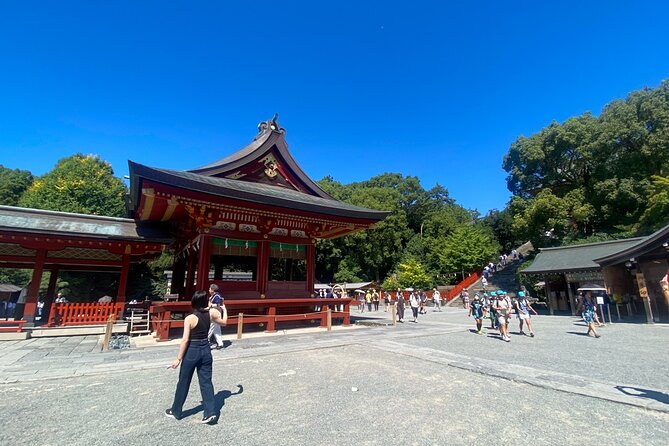
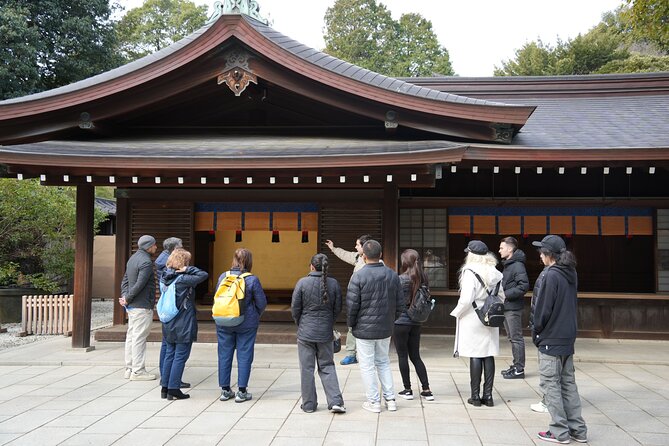
From Shibuya, the group travels by train to Meiji Shrine. The guided visit is scheduled for about 70 minutes, making this the most generous stop early in the day. That matters, since the shrine grounds are not a single building you can understand in five minutes. You walk through a large wooded approach before reaching the Shinto shrine itself.
This is where the tour’s rhythm improves. Tokyo’s traffic and tall buildings give way to a calmer setting, and your guide can explain basic Shinto customs, shrine etiquette, and the role of the site. The exact amount of explanation depends on the guide. Oliver, Jorg, Melody, George, and Burt are among the guides associated with recent departures, and feedback has singled out guides who explain Japanese culture clearly and help with practical travel questions.
An early start at 8 a.m. can be useful here. Meiji Shrine is easier to enjoy before the day grows crowded, and you will have more room for a quiet walk. Wear shoes with decent support, since this tour combines station walking, shrine paths, and several hours on your feet.
The Imperial Palace is mainly a photo stop
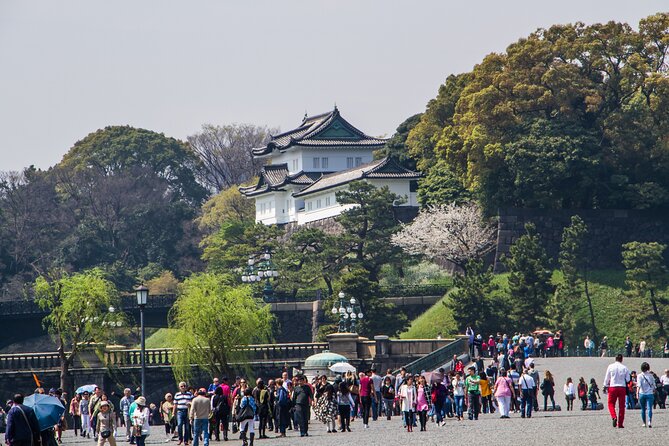
The next major sight is the Imperial Palace. The visit is focused on the exterior and surrounding area rather than a full palace interior tour. You will have time for photographs and a short guided explanation, but do not expect access to private palace buildings or a long garden visit.
The scheduled stop is about 30 minutes, although the supplied timing describes the palace portion in a way that may suggest a longer visit. One unhappy account reported only about 20 minutes at the palace. That difference is worth keeping in mind when setting expectations. This part of the tour is best for a quick introduction and photographs, not for a detailed study of the imperial grounds.
I like the contrast with Meiji Shrine. The shrine shows a living religious tradition in a wooded setting, while the Imperial Palace gives you a look at Japan’s modern imperial center and its formal exterior spaces. The stop makes sense on a first visit, but anyone who wants extensive palace gardens or historical detail should plan a separate visit.
Akihabara adds Tokyo’s modern side
The route then continues through Akihabara, Tokyo’s technology and pop-culture district. Here the experience is described as a scenic drive or passing view rather than a long walking visit. You may see the area’s colorful streets and electric atmosphere, but you will not have a dedicated block of time for electronics shops, arcades, anime stores, or themed cafés.
That limitation is important. Akihabara is too large and specialized to cover properly in a few minutes. On this tour, it works as a quick contrast to the shrine and palace. You see how Tokyo shifts from spiritual grounds and official buildings to a district linked with technology and popular culture.
If Akihabara is one of your main reasons for visiting Tokyo, this tour will not replace a separate stop. If you simply want to recognize the neighborhood while covering the city’s major districts, the brief pass-through is useful.
More Temple Tours around Tokyo:
- Nikko: Kegon Falls, Lake Chuzenji & Toshogu Temple
★ 4.6 · 1,577 reviews - Tokyo: Nikko Toshogu Shrine and Kegon Waterfall Tour
★ 4.5 · 1,266 reviews - Tokyo: Zen Meditation at a Private Temple with a Monk
★ 5.0 · 510 reviews - Mt. Fuji Heritage Tour: Traditional Villages, Lakes & Shrine
★ 4.5 · 509 reviews
Asakusa and Senso-ji are the day’s cultural center
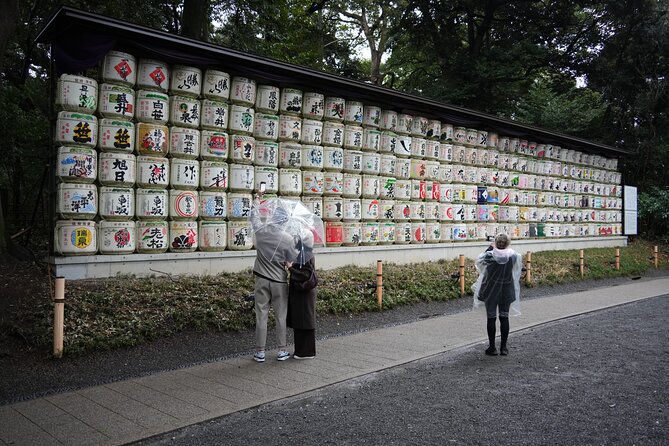
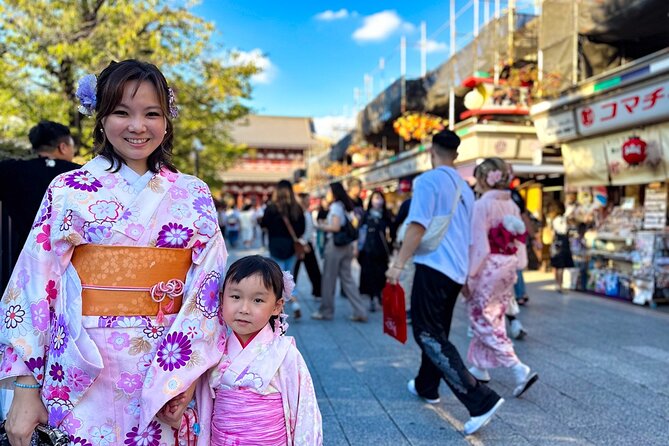
The longest section of the tour is in Asakusa, with about two hours for lunch and free time. This is the part of the day where you have the best chance to slow down, look around, and choose how to spend your time.
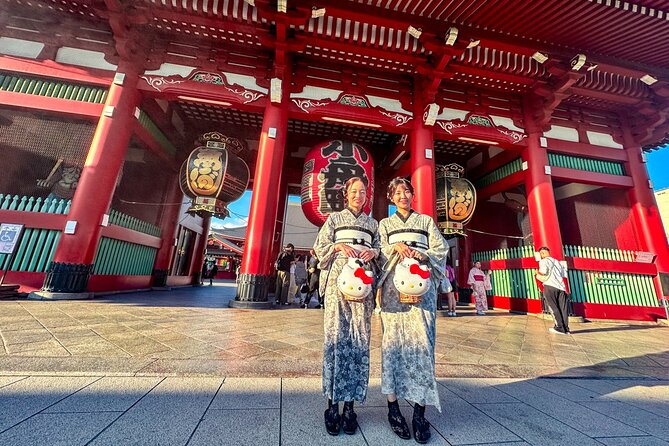
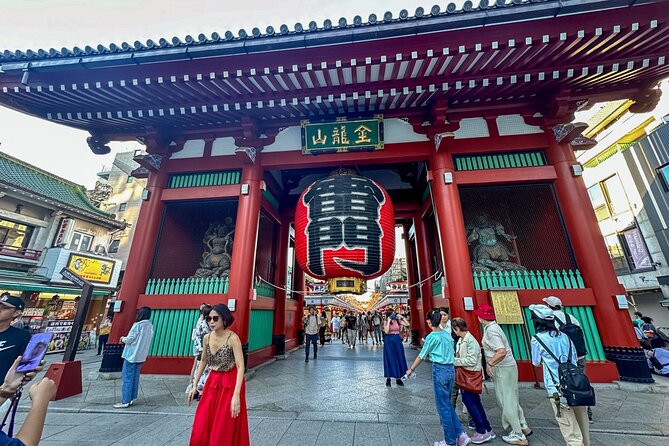
Senso-ji Temple is Tokyo’s oldest and most famous Buddhist temple. The approach, temple buildings, and surrounding streets give you a stronger sense of old Tokyo than the quick views in Shibuya or Akihabara. Your guide can point out the main features and explain the basic customs, though the amount of formal temple instruction may vary.
One practical criticism of the tour is that the Senso-ji visit may not receive enough guided attention. If you choose lunch, the meal and meeting schedule can reduce your time near the temple. One account described the lunch as satisfactory but rushed because the group had to reunite with people using their free time differently.
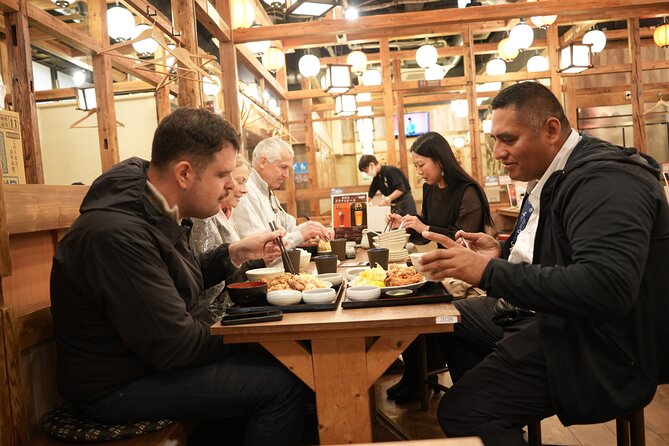
You therefore have a choice to make. The lunch option gives you a traditional Japanese meal at a local restaurant and removes the stress of finding food during a busy day. It was described as delicious and well served by one person who selected it. The tradeoff is less personal freedom and a tighter timetable.
If you skip lunch, you can explore Asakusa on your own during the two-hour period. That may suit you better if you want photographs, snacks, shopping, or extra time at Senso-ji. Drinks are not included, so carry water or budget for a purchase.
Tokyo Skytree gives the tour its big finish
The final transfer takes you to Tokyo Skytree, where the tour ends. With the correct option selected, you ride up to the observation deck for wide views across Tokyo. This is the most dramatic viewpoint of the day and gives you a useful sense of how enormous the city is after seeing its neighborhoods at street level.
The Skytree ticket is not automatically part of every booking. You can enter only if you have purchased the admission option in advance. This is the single most important booking detail to check. If your reservation does not include the ticket, the tour still ends at Tokyo Skytree, but you will not be able to go up as part of the experience.
The tour lists two possible drop-off locations, Tokyo Skytree and Asakusa. That gives you some flexibility at the end, but you should confirm the exact arrangement with your guide. If you have luggage, dinner plans, or a timed reservation afterward, allow extra time rather than treating the seven-hour duration as a precise arrival guarantee.
How the train transfers affect the day
Train travel is not just a practical detail here. It is a major part of the experience, with transfers listed at roughly 30 to 45 minutes between several stops. Tickets for the itinerary are included, and the guide handles the transfers. This can save you time and uncertainty, especially if Tokyo is your first Japanese city.
You will still walk through stations and between sights. This is not a coach tour that drops you directly at every entrance. The combination of trains and walking gives you a more local view of Tokyo, but it also makes comfortable shoes essential.
A guide can be especially useful when the group includes people moving at different speeds. One detailed account praised a guide for staying attentive to slower walkers while managing the train connections. That kind of help is valuable in a city where stations can be large and the timetable is tight.
The language choices are English and Spanish. Some guides have also handled more than one language during a departure, but you should book based on the language formally offered rather than assuming another language will be available.
What the $69 price really buys you
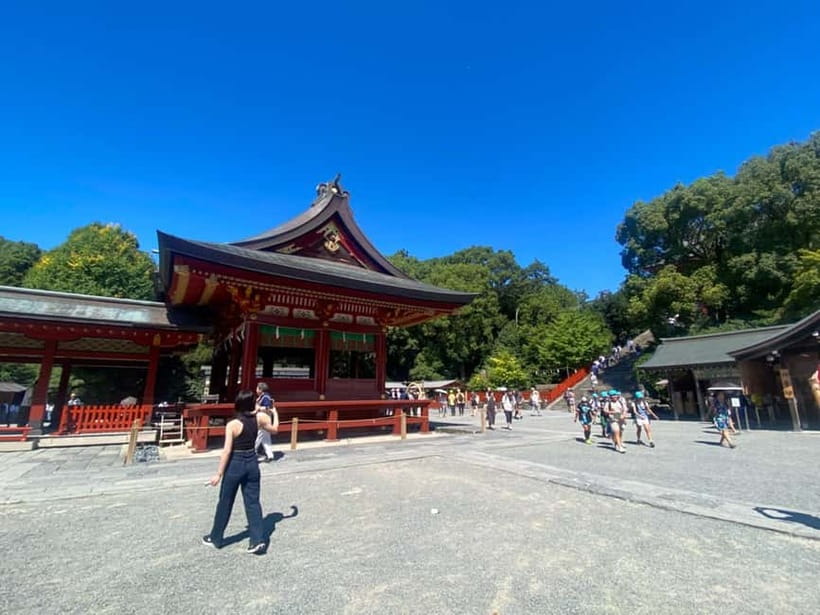
At $69 per person, the base price is appealing for a full day of sightseeing, especially with train tickets and a live guide included. You are paying for route planning, local explanations, transport between distant areas, and the convenience of seeing major sights without arranging each connection yourself.
The value is strongest if you are visiting Tokyo for the first time and want orientation. In seven hours, you can identify neighborhoods you may want to revisit, learn how the train system connects central Tokyo, and see both traditional and modern parts of the city.
The value is weaker if you want long visits at each sight. Shibuya, Akihabara, and the Imperial Palace are handled quickly, and Asakusa time may be divided between lunch and free exploration. You are buying breadth, not depth.
Lunch and Tokyo Skytree admission depend on the option selected. Compare the package details before booking, since the attractive headline price may not include the observation deck or meal. The tour allows cancellation up to 24 hours before departure for a full refund and offers reserve-now, pay-later booking, which helps if your plans are still shifting.
Who will enjoy this Tokyo tour most
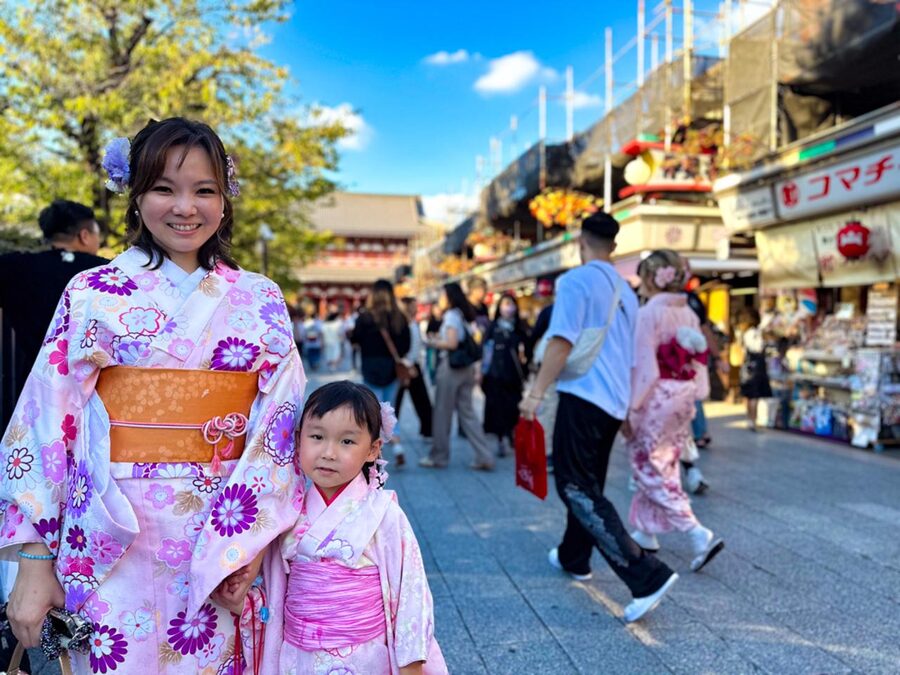
I would recommend this tour to a first-time visitor who wants a broad introduction and prefers not to manage Tokyo’s rail connections alone. It also suits you if you want a guide to explain cultural details at Meiji Shrine and Senso-ji while still seeing major city sights.
It is a good match for people who value efficiency over extended time at one attraction. The day moves from one district to another, and the changes in setting are part of the appeal.
You may want a different plan if you dislike fixed schedules, need a slow pace, or have mobility limits. The activity is not suitable for wheelchair users, and the mix of walking, stairs, stations, and timed meetups may be demanding. It is also not ideal if your priority is shopping in Akihabara, exploring the Imperial Palace grounds in detail, or spending half a day around Senso-ji.
Should you book it?
Book this tour if you want a practical first look at central Tokyo, appreciate help with trains, and are happy to trade depth for coverage. Choose the lunch option if you prefer a planned Japanese meal, and add Skytree admission if the observation deck is a must.
Skip it if you want a relaxed day with long visits, detailed temple instruction, or independent time in every neighborhood. The strongest parts are Meiji Shrine, the train-based route, the Asakusa block, and the Skytree view. The weakest parts are the short Shibuya, Imperial Palace, and Akihabara stops. Go in expecting a fast city sampler, not a slow cultural study, and the $69 price can make good sense.
FAQ
Where does the tour meet?
Meet your guide next to the Hachiko Statue at Hachiko Square in Shibuya.
How long does the activity last?
The tour lasts seven hours. Starting times vary, so check availability when booking.
Which languages are available?
The live tour guide is available in English or Spanish.
Are train tickets included?
Yes. Train tickets are included for the transfers between the itinerary points.
Is lunch included?
Lunch is included only if you select the lunch option. Drinks are not included.
Can I enter Tokyo Skytree without selecting the ticket option?
No. The tour ends at Tokyo Skytree, but you can enter the observation deck only if you purchased the Skytree ticket option in advance.
Temple visits we reviewed lately in Tokyo
- From Asakusa: Old Tokyo, Temples, Gardens and Pop Culture★ 4.6 · 15 reviews
- Tokyo: Nagano Snow Monkeys and Zenkoji Tour with Temples★ 4.9 · 19 reviews
- Nagano: Snow Monkeys, Zenkoji Temple & Sake Day Trip★ 5.0 · 4 reviews
- From Tokyo: Nagano, Zenkoji Temple, Snow Monkeys Day Trip.★ 4.3 · 4 reviews
- Tokyo/Nagano: private Tour with Snow Monkey Park & Temples★ 4.8 · 13 reviews
- Make a temple stamp book with artist★ 4.9 · 10 reviews
- Kamakura Temples Private Guided Tour from Tokyo★ 4.8 · 21 reviews
- Join a Unique Cultural Ceremony at Tokyo’s Meiji Shrine★ 5.0 · 9 reviews
Tokyo Temple Tours, compared.
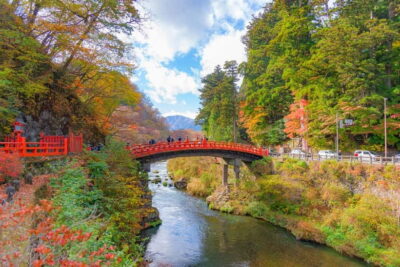
Nikko: Kegon Falls, Lake Chuzenji & Toshogu Temple
Read our review →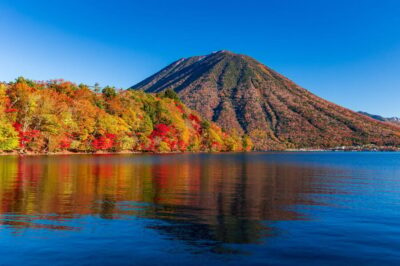
Tokyo: Nikko Toshogu Shrine and Kegon Waterfall Tour
Read our review →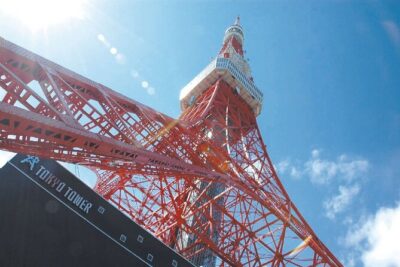
Tokyo Panoramic 1 Day: Meiji Shrine, Asakusa, Odaiba and SKYTREE®
Read our review →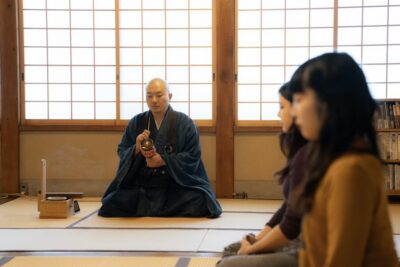
Tokyo: Zen Meditation at a Private Temple with a Monk
Read our review →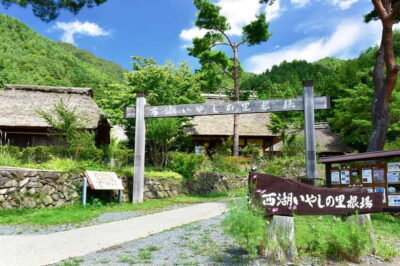
Mt. Fuji Heritage Tour: Traditional Villages, Lakes & Shrine
Read our review →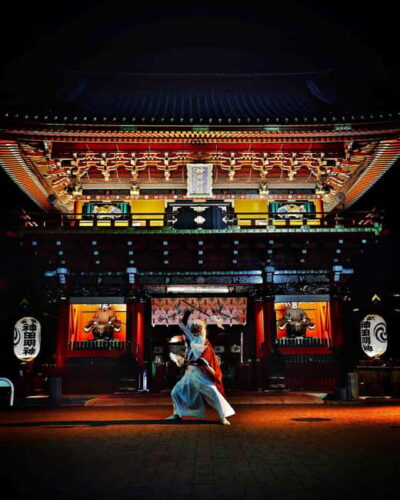
Tokyo: Samurai Entertainment Night Show in Kanda Shrine
Read our review →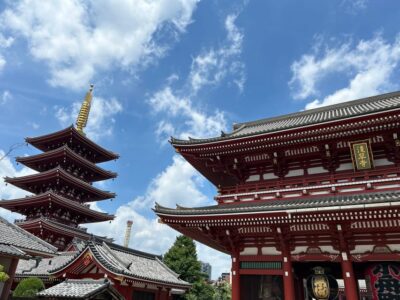
Tokyo: Asakusa and Tokyo’s Oldest Temple Senso-ji Tour
Read our review →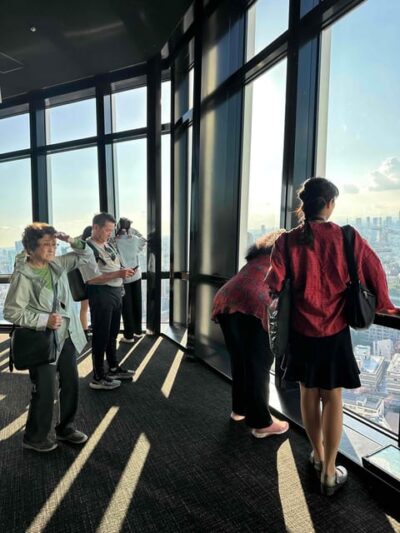
Tokyo: Imperial Palace, Sensō-ji Temple, & Tokyo Tower Tour
Read our review →This tour also ranks in