
Review · JAPAN
Nara City Tour | Explore Temples, Park & Local Highlights
Nara’s famous deer are only the beginning. This five-hour outing takes you from Osaka into Japan’s old capital, where temple roofs, quiet ponds, forested paths, and deer share the same city space. You’ll visit Tōdai-ji and Nigatsudō, then finish with time around Nakatanidō for snacks and local shopping.
I like the small group of up to eight, which makes train travel and questions easier. I also like the mix of major sights and simple pleasures: feeding deer, walking through Nara Park, and pausing in peaceful gardens. The catch is the pace. With nearly 10 kilometers of walking and transportation not included, this is not a soft stroll or an all-inclusive day out.
Key points at a glance
- Deer and temples in one compact day: Feed Nara’s famous deer, then visit Tōdai-ji and Nigatsudō.
- Nearly 10 kilometers on foot: Comfortable shoes are essential, especially with several long walks between stops.
- A small English-speaking group: The tour is limited to eight people, with guides such as Kota and Kenji praised for friendly service and clear English.
- A useful Osaka starting point: Meet underground in Namba Walk near exit B23, not in the subway area.
- Late October to mid-November bonus: Autumn leaves can add a fine burst of color to the park and temple grounds.
- Good value, with one cost to watch: The $83 fee covers the guide and five-hour walking tour, but meals, drinks, personal purchases, and transportation are extra.
Why Nara works so well as a day trip from Osaka
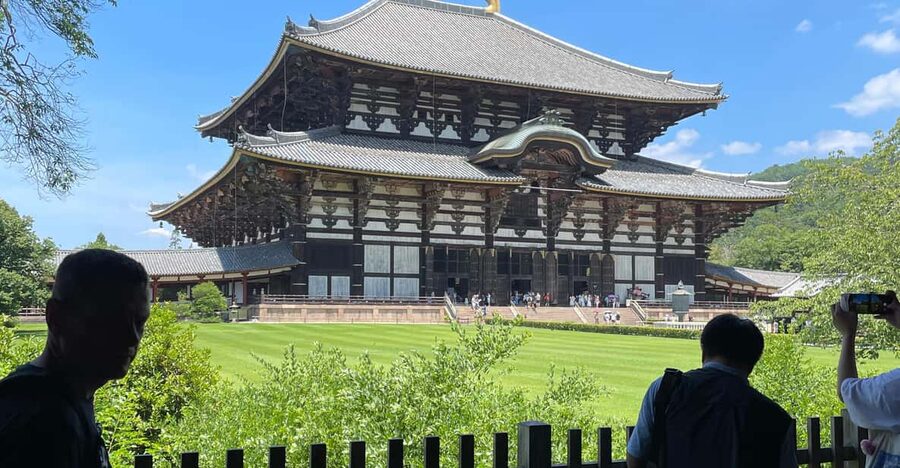
Nara was Japan’s first capital, and its old center feels less crowded with modern buildings than Osaka or Kyoto. The city’s appeal comes from the way its sights fit together. You can watch deer wander near temple grounds, pass through broad park paths, and reach centuries-old buildings without spending the day jumping between distant neighborhoods.
This tour gives you a guided introduction rather than a long list of unrelated stops. You start in Osaka, ride by train for about 50 minutes, and spend the main part of the outing on foot. That makes the trip easy to follow, but it also means you should treat it as an active walking day.
I especially like the balance between grand monuments and ordinary local moments. Tōdai-ji supplies the scale and ceremony. Nakatanidō gives you a chance to browse, snack, and see a more everyday side of Nara. The deer are the memorable link between the two.
More Temple Tours around Japan:
- Kyoto: Tea Ceremony Ju-An at Jotokuji Temple
★ 4.9 · 3,207 reviews - Osaka/Kyoto:Kinkakuji,Arashiyama,FushimiInariShrine,NaraPark
★ 4.1 · 1,596 reviews - Tokyo: Asakusa Walking Tour with Sensoji Temple Visit
★ 4.8 · 1,583 reviews
Meeting in Namba Walk near exit B23
The meeting point needs careful attention. You meet in the underground shopping area called Namba Walk, at the exit nearest B23. The meeting place is not in the subway area. Look for the store between Mizuno Shop and Docomo Shop.
This is the kind of detail that can save you from a rushed start. Namba has several underground passages and transport areas, so allow enough time to find the correct section. The tour begins with a train ride of about 50 minutes, and your guide will lead the group from Osaka toward Nara.
Transportation fares are not included in the $83 price. The activity information does not give the exact train fare, so set aside extra cash for the journey. Cash is also useful for deer crackers, snacks, drinks, and small purchases in the shopping area.
Nara Park: deer, open paths, and easy photo stops
Nara Park is the first major sightseeing stop, with about 30 minutes set aside for it. The park is best known for the deer that roam freely through the city, and this is your chance to get close, take photos, and feed them.
The deer are accustomed to people, but they are still animals. Follow the guide’s instructions, treat them with care, and do not crowd or tease them. Bring cash if you want to buy food for them, as cash is specifically recommended for the tour.
Thirty minutes is enough for a first look and a few photographs, but it is not a long, unhurried park visit. If you want quiet pictures, rain may change the experience in your favor. One guest found the wet weather brought fewer people, making it easier to move around and talk with the guide. On a rainy day, bring an umbrella or raincoat. The tour continues in wet weather.
Tōdai-ji and the scale of an ancient temple
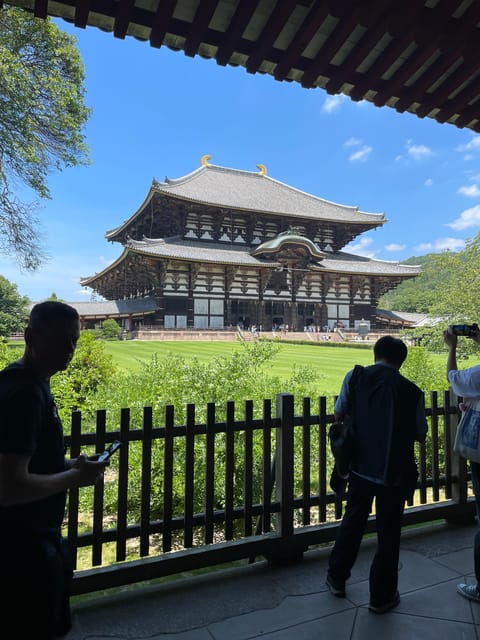
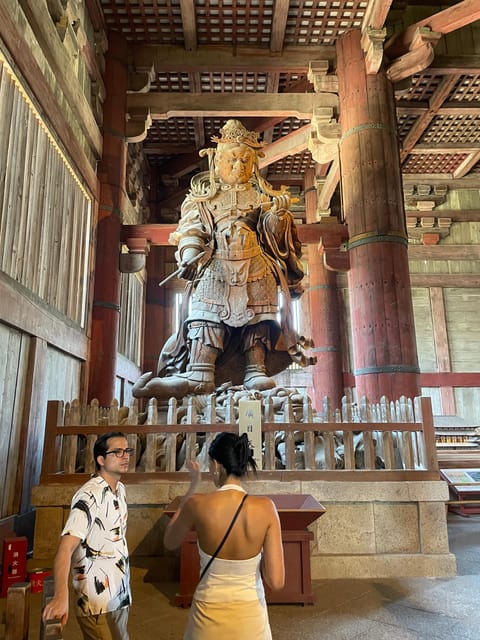
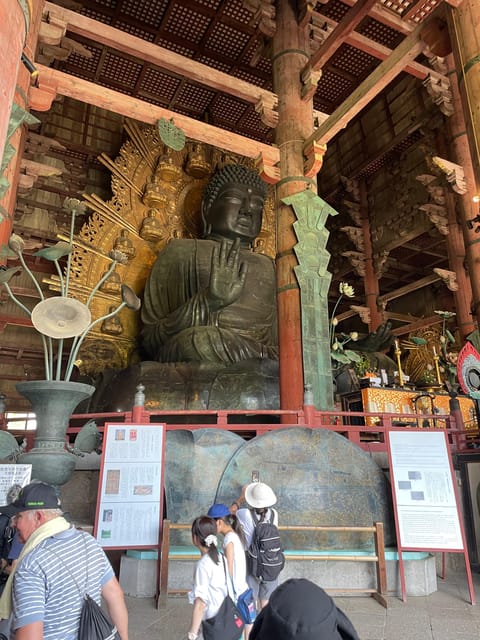
After about 15 minutes of walking, you reach Tōdai-ji for a visit of roughly 40 minutes. This is the tour’s major temple stop and one of Nara’s most important cultural sights.
The appeal here is scale, age, and atmosphere. The route takes you from the open park into an ancient religious setting, where the buildings and grounds give you a stronger sense of Nara’s past. Your guide can help connect what you see to the city’s place in Japanese history.
The amount of explanation may depend on your guide. Kota was praised for fluent English and for answering questions in detail, while Kenji was praised for being friendly and well informed. Another guest felt the tour included too little explanation at some sights, so if temple history matters greatly to you, ask questions as you go rather than waiting for a formal lecture.
That point is important. This is a guided walking tour, but it is not presented as a specialist art-history seminar. The guide handles the route, timing, and group movement, while the depth of interpretation may vary.
Same sacred ground, another way to see it:
- Tokyo:Mt.Fuji,Kawaguchiko Oishi Park,Arakurayama Sengen Park
★ 4.4 · 2,682 reviews - Nikko: Kegon Falls, Lake Chuzenji & Toshogu Temple
★ 4.6 · 1,577 reviews - Tokyo: Nikko Toshogu Shrine and Kegon Waterfall Tour
★ 4.5 · 1,266 reviews - Tokyo Panoramic 1 Day: Meiji Shrine, Asakusa, Odaiba and SKYTREE®
★ 4.5 · 1,222 reviews
Nakatanidō: a short break for food and shopping
A 10-minute walk brings you to Nakatanidō, where you have about 30 minutes for a break, free time, and shopping. This is a useful change of rhythm after the temple visit.
You can look for local crafts and delicacies, and you may want to use this pause for a snack or late lunch. One guide, Kota, knew a good place for a late lunch, which is useful if your schedule leaves you hungry by this point. Meals and drinks are not included, so plan to pay for anything you eat.
Thirty minutes is enough to browse, but not enough for a slow shopping session. If you are hoping to buy several gifts, keep an eye on the clock. The tour still has one more temple visit and a long walk before the return train.
Nigatsudō, or February Hall, for a quieter finish
The walk from Nakatanidō to Tōdai-ji Nigatsudō takes about 20 minutes. You then have around 30 minutes to visit this temple hall.
Nigatsudō offers a different mood from the larger Tōdai-ji stop. The route and setting encourage you to slow down, look at the buildings, and enjoy the calmer side of Nara. Gardens, ponds, and elevated temple viewpoints are part of the broader appeal of this area, though the exact amount of time at each feature depends on the guide and the group’s pace.
This stop also shows why comfortable clothing and shoes matter. By now you will have walked through the park, between the main sights, into the shopping area, and back toward the temple district. The extra walking gives the day a more local feel, but it can be tiring if you expected a short temple circuit.
What nearly 10 kilometers really means
The tour lists almost 10 kilometers of walking. That is the single most important practical detail before you book.
The schedule includes walks of about 15, 10, 20, and 25 minutes, plus the movement within the park and temple grounds. The final walk to the train takes about 25 minutes, followed by another 50-minute train ride back to Osaka. You should expect to remain active for most of the five-hour period.
Wear shoes you already trust. This is not the time to test new footwear. Comfortable clothes will also help, especially in warm weather or rain. People with mobility impairments, wheelchair users, those recovering from recent surgery, and people over 95 are advised not to join. Animal allergies are another concern because deer are a central part of the day.
The tour does not allow smoking. It proceeds in rainy weather, so a raincoat or umbrella is part of your preparation, not an optional extra.
Small-group guiding, with room for questions
A group capped at eight is a real advantage on a route that includes trains, busy temple grounds, and several walking sections. You spend less time waiting for a large crowd to regroup, and it is easier to ask about a detail you do not understand.
The guide language is English. Kota received especially strong praise for fluent English, useful answers, and a good lunch suggestion. Kenji was also singled out for a friendly and well-informed approach. Those names come from specific guide experiences, so they do not guarantee who will lead your departure.
The feedback also points to a fair limitation. One person found the guide kind but wanted more information about the sights. I would treat this as a tour where you should speak up. Ask about the temple buildings, Nara’s time as capital, the deer, or the gardens. A small group gives you a better chance to shape the conversation.
Is $83 a fair price?
At $83 per person, the tour’s value rests mainly in its guidance and structure. You get five hours with an English-speaking guide, a planned route from Osaka, help with the train journey, and visits to Nara Park, Tōdai-ji, Nakatanidō, and Nigatsudō.
The price does not cover transportation, food, drinks, or personal spending. That matters because the route begins and ends with train rides, and you may want deer food or a snack. Add those costs before comparing this with a self-guided visit.
For me, the tour makes the most sense if you want someone else to organize the route and help you get oriented in Nara. The small group also adds value if you prefer questions and conversation over following a large flag through the city. If you are comfortable navigating Japanese train stations and researching temple history yourself, you may find the guide fee less essential.
The flexible booking terms help if your Osaka plans are still shifting. You can cancel up to 24 hours in advance for a full refund, and you can reserve now and pay later. Check the available start times before booking, since the exact departure schedule is not fixed here.
Autumn color, rain, and the best time to go
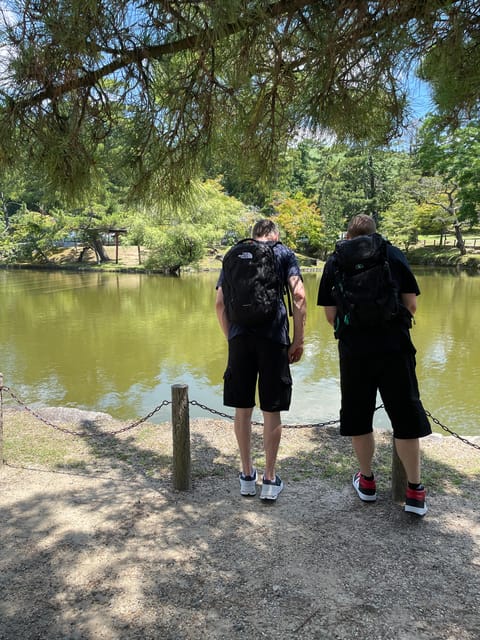
Late October through mid-November can add autumn color to the experience. The park and temple grounds should feel especially appealing at that time, with seasonal leaves giving the walks more visual interest.
The activity runs in rainy weather, so you do not need perfect skies to take part. Rain may mean fewer people and easier conversation, as one wet-weather outing showed. The tradeoff is slippery or damp walking, less comfortable photography, and the need to carry rain protection.
Summer can feel harder during a long walking day, while winter may require warmer clothing. The supplied details do not give exact temperatures or seasonal schedules, so check the forecast and choose clothing for the conditions on your date.
Who should book this Nara tour?
I would recommend it to a first-time Nara visitor staying in Osaka who wants the main sights covered in half a day. It is also a good fit if you like walking, want an English-speaking guide, and prefer a small group to a large coach excursion.
You will get the most from it if you enjoy a mix of famous landmarks and casual stops. The deer, temple grounds, shopping break, and garden-like spaces create a varied day without requiring you to plan each turn.
I would think twice if you need a slow pace, use a wheelchair, have a serious animal allergy, or dislike walking long distances. I would also choose another option if your top priority is detailed historical commentary at every stop. The guiding can be excellent, but the amount of explanation may differ.
My call: a strong active introduction to Nara
Book this tour if you want a practical route from Osaka, a small English-speaking group, and a full look at Nara’s best-known sights without planning the train trip and walking order yourself. The strongest points are the compact schedule, friendly guides such as Kota and Kenji, and the chance to combine deer, temples, gardens, and local shopping.
Skip it if you want a lazy afternoon or a highly academic temple tour. The nearly 10 kilometers of walking is no small footnote, and the extra train, food, and shopping costs belong in your budget. For an active visitor with sturdy shoes and reasonable expectations, $83 buys a well-shaped introduction to Nara.
FAQ
How long does the Nara City Tour last?
The tour lasts five hours, including the train journeys between Osaka and Nara.
Where do I meet the group?
Meet in the underground shopping area called Namba Walk, near exit B23. The meeting place is not in the subway area. The store is between Mizuno Shop and Docomo Shop.
Is transportation included in the price?
No. Transportation fees are not included. Meals, drinks, and personal expenses are also separate.
How much walking is involved?
The activity includes almost 10 kilometers of walking, with several walks between the main stops.
What language is the tour conducted in?
The tour is conducted in English.
How large is the group?
The group is limited to eight participants.
Does the tour operate in rainy weather?
Yes. The tour continues in rainy weather. Bring a raincoat or umbrella.
Is the tour suitable for wheelchair users?
No. The activity is not suitable for wheelchair users or people with mobility impairments. It is also not suitable for people with animal allergies or recent surgeries.
Temple visits we reviewed lately in Japan
- From Asakusa: Old Tokyo, Temples, Gardens and Pop Culture★ 4.6 · 15 reviews
- Tokyo: Nagano Snow Monkeys and Zenkoji Tour with Temples★ 4.9 · 19 reviews
- Kamakura: Great Buddha, Hase Temple, & Komachi Street Tour★ 5.0 · 11 reviews
- Osaka Temple Head Spa &Matcha Facial – Refresh & Glow〈90min〉★ 5.0 · 24 reviews
- Osaka Temple :Warm Bamboo Oil Massage – Deep Restore〈60min〉★ 4.9 · 19 reviews
- Osaka: Temple Tour and Traditional Calligraphy Lesson★ 4.9 · 24 reviews
- Osaka: Sumiyoshi, Osaka’s Most Iconic Shrine – Private Tour★ 4.7 · 4 reviews
- Osaka Temple :Warm Bamboo Oil Massage – Deep Restore〈90min〉★ 5.0 · 14 reviews
Japan Temple Tours, compared.
Osaka/Kyoto:Kinkakuji,Arashiyama,FushimiInariShrine,NaraPark
Read our review →
Nikko: Kegon Falls, Lake Chuzenji & Toshogu Temple
Read our review →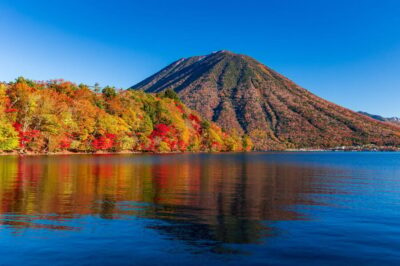
Tokyo: Nikko Toshogu Shrine and Kegon Waterfall Tour
Read our review →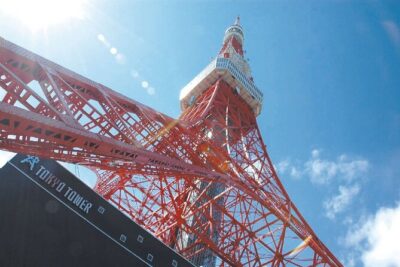
Tokyo Panoramic 1 Day: Meiji Shrine, Asakusa, Odaiba and SKYTREE®
Read our review →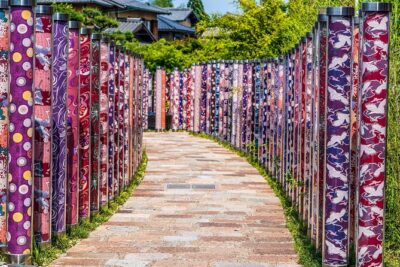
Kyoto Arashiyama Walking Tour: Bamboo, Monkeys, Gardens & Secrets
Read our review →
1-Day Snow Monkeys, Zenko-ji Temple & Sake in Nagano
Read our review →
Arashiyama Bamboo, Temple, Monkeys, or Secret Sake Brewery
Read our review →This tour also ranks in