
Review · JAPAN
Nara: Essential Private Tour with Deer Park and Temples
Nara’s best sights sit close together, but they make a powerful first introduction to Japan: huge temple halls, quiet gardens, stone paths, and deer wandering through the trees. This private walk gives you the cultural story behind each stop instead of leaving you to puzzle it out alone.
I like the private format, which lets you ask questions and set a comfortable pace. I also like the way the route combines major sights such as Tōdai-ji with smaller stops such as Himuro Shrine and Yoshikien Garden. The main drawback is time: three hours is enough for an excellent overview, but not enough for a slow visit at every place.
Key points at a glance
- Start beside Kintetsu Nara Station: The meeting point is easy to find near Exit 3 and the tourist information center.
- Learn how to handle Nara’s deer: Your guide can explain how to feed them without attracting too many at once.
- See Tōdai-ji with context: The one-hour stop gives the tour its main historical and architectural focus.
- Pair famous sights with quieter corners: Himuro Shrine and Yoshikien Garden provide a calmer counterpoint to the busy park paths.
- Expect practical help from Masa: He has assisted with translations, shop visits, ATM directions, umbrellas, and restaurant suggestions.
- Budget for extras: The $126 price includes the English-speaking guide and admission to temples and parks, but not drinks, souvenirs, or gratuity.
Why this three-hour Nara walk works
Nara was Japan’s first permanent capital, and its old center is unusually easy to explore on foot. The route moves from the modern station area into temple grounds, open parkland, a shrine, and a traditional garden. You get a clear sense of how Nara’s religious buildings and natural setting fit together.
The private format matters here. Nara can feel simple on a map, yet each temple has customs, stories, and details that are easy to miss. With your own guide, you can stop to ask why a statue looks a certain way, how to behave around the deer, or which part of a temple complex deserves your attention.
Masa is the guide named most often for this experience. His strengths are patience, careful explanations, and friendly conversation. He has also helped with practical matters, including translation in shops, finding an ATM, and suggesting a soba restaurant. One particularly thoughtful touch was bringing an extra umbrella for a guest.
The tour is not a private car excursion. You meet at Kintetsu Nara Station and walk between the stops. Wear shoes that are comfortable on paved paths and temple approaches, and bring water, sunscreen, and a hat. The route is best for people who can walk for three hours without wheelchair assistance.
More Private Temple Tours in Japan
- From Tokyo: Private Tour Snow Monkey Park & Zenko-ji Temple
★ 4.7 · 184 reviews - Tokyo Private Tour: Temples, Culture & Modern City Highlights
★ 5.0 · 56 reviews - Nagano/Tokyo: Snow Monkey and Zenkoji Temple Private Tour
★ 4.8 · 54 reviews
Meeting at Kintetsu Nara Station
Your starting point is Kintetsu Nara Station, a useful location for this route. After leaving through the East Gate, head toward Exit 3. Go up the stairs or the escalator beside them, then look near the tourist information center for your guide and a sign with the Get Your Guide logo.
This arrangement saves time at the start. You are not trying to find a hotel lobby or waiting for a vehicle. You begin close to the shopping street and can move into the historic district almost at once.
If you arrive early, keep the meeting instructions handy. The station has several exits, and the key detail is East Gate, Exit 3. The tour finishes back at the same station, which is convenient if you are continuing by train.
Higashimuki Shopping Street, a useful local introduction
The first guided stop is Higashimuki Shopping Street, with about 20 minutes set aside. This covered shopping area provides a gentle transition from station life to old Nara. It is also a practical place to notice local snacks, small shops, and the everyday side of the city before the temple grounds take over.
Twenty minutes is not long enough for serious shopping, and that is probably the point. You can get your bearings, ask your guide about food or souvenirs, and see how modern Nara serves people living alongside its ancient monuments.
Masa has helped guests with translation in shops, so this part can be especially useful if you want to ask about a product or communicate with a shopkeeper. Personal purchases are not included in the tour price, so treat this as an orientation stop rather than a shopping allowance.
Kōfuku-ji and the first temple lessons
Next comes Kōfuku-ji, with roughly 30 minutes for a guided visit. This is where the tour begins to explain Nara’s religious and political importance in a more direct way. Your guide can help you look beyond the buildings and understand why temple compounds were so central to the capital.
A half-hour is a sensible amount of time for a first visit. You can take in the main structures, hear about their purpose, and ask questions without using the entire tour at the first temple. If you want lengthy photography stops or a detailed look at every building, you may find the schedule brisk.
This is also a good moment to pay attention to etiquette. Flash photography is not allowed, and smoking is prohibited during the activity. Your guide can point out what to photograph and when it is better to simply observe.
Same sacred ground, another way to see it:
- Kyoto: Tea Ceremony Ju-An at Jotokuji Temple
★ 4.9 · 3,207 reviews - Tokyo:Mt.Fuji,Kawaguchiko Oishi Park,Arakurayama Sengen Park
★ 4.4 · 2,682 reviews - Osaka/Kyoto:Kinkakuji,Arashiyama,FushimiInariShrine,NaraPark
★ 4.1 · 1,596 reviews - Tokyo: Asakusa Walking Tour with Sensoji Temple Visit
★ 4.8 · 1,583 reviews
Nara Park and the deer
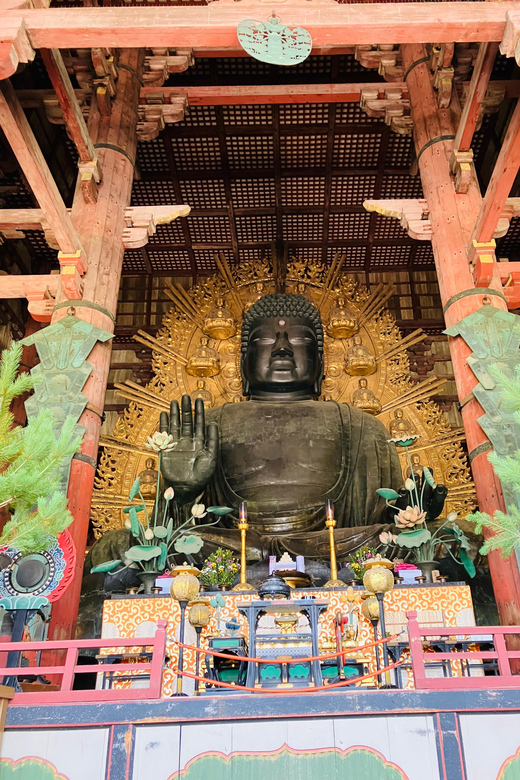
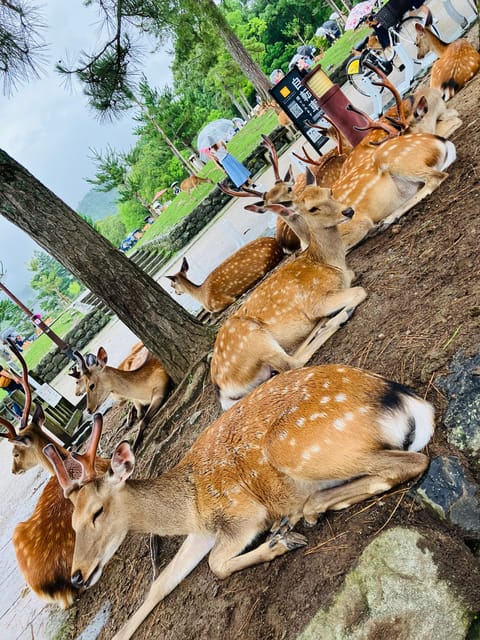
Nara Park receives about 30 minutes of guided attention. The park is famous for its free-roaming deer, but the useful part of this stop is learning how to behave around them. The animals are friendly, yet they can gather quickly when food appears.
Masa has explained how to feed and approach the deer without getting swarmed. That advice can make the difference between a pleasant encounter and a frantic search for an empty packet. Follow your guide’s instructions, keep food controlled, and pay attention to the deer rather than only to your camera.
The park also gives the tour breathing room. After temple courtyards, you are walking among trees and open paths, with wildlife sharing the same public space. I like this balance because Nara is not only a collection of monuments. Its appeal comes from the meeting of old buildings, wooded paths, and animals that have become part of the city’s identity.
People with animal allergies should think carefully before booking. The deer are central to the experience, not an optional side feature. A hat, sunscreen, and comfortable shoes are useful here, especially in warm weather.
Himuro Shrine, a quieter pause
The route then reaches Himuro Shrine, where about 20 minutes are devoted to a guided visit. Compared with the best-known temple areas, this stop offers a smaller and calmer setting. It gives your guide a chance to explain Shinto customs and show how a shrine differs from a Buddhist temple.
That contrast is valuable if you are new to Japan. In a short tour, it is easy to treat every sacred place as simply another beautiful building. A guide can help you notice the different atmosphere, forms, and traditions without turning the visit into a lecture.
Twenty minutes keeps the stop focused. You will not have time for an unhurried personal ritual or extended photography session, but you should have enough time to look around and ask questions. I see this as a welcome reset before the tour’s longest visit.
Tōdai-ji, the main event
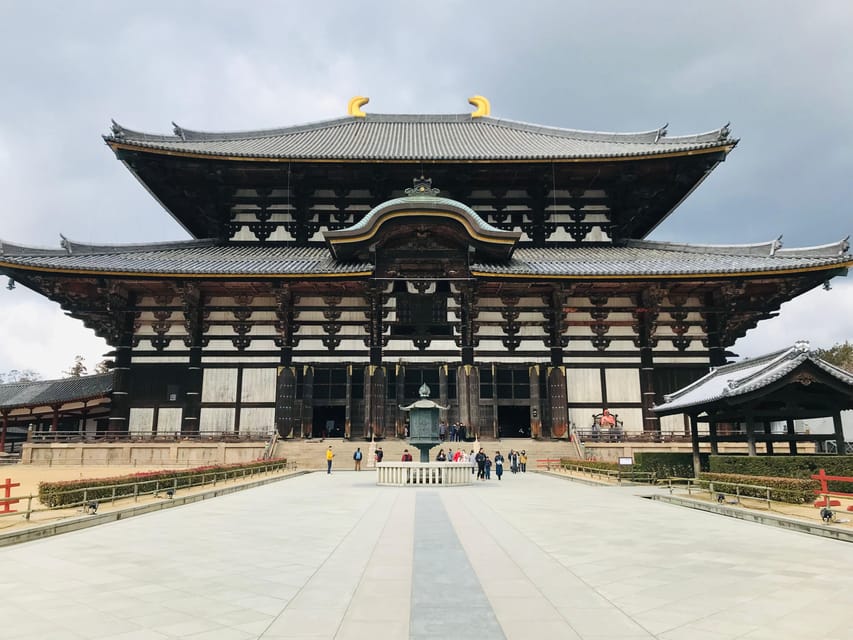
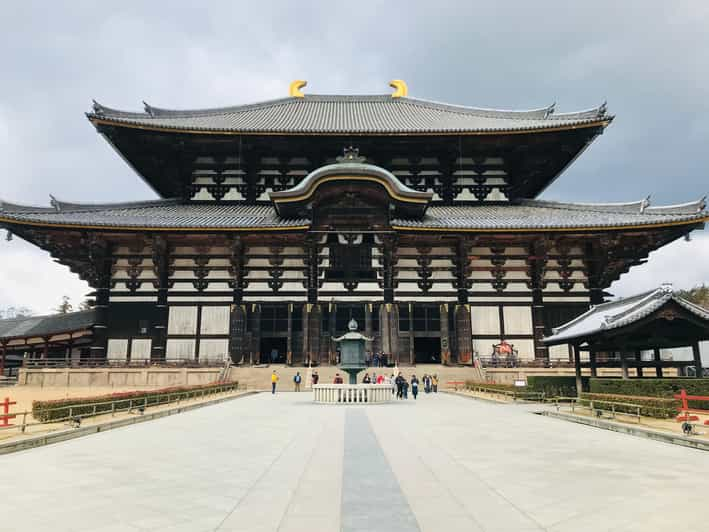
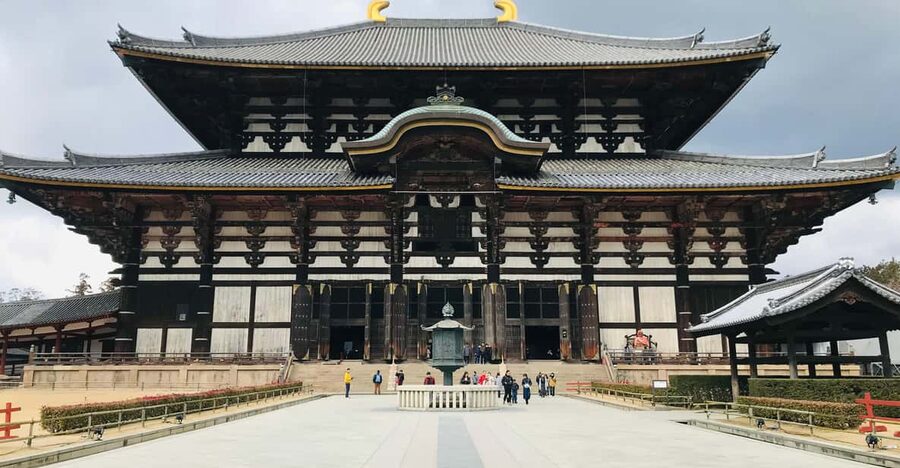
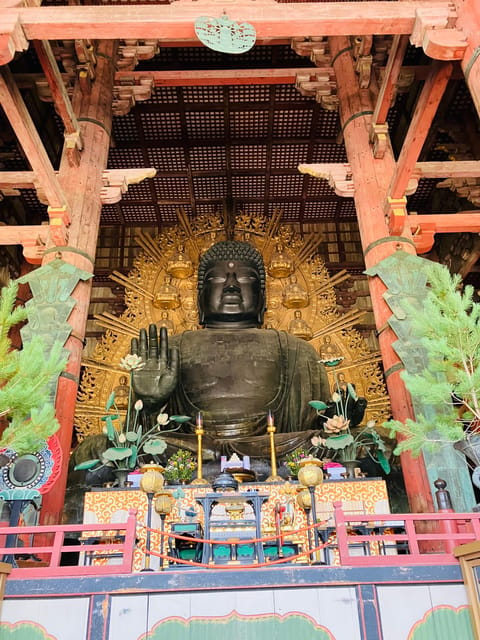
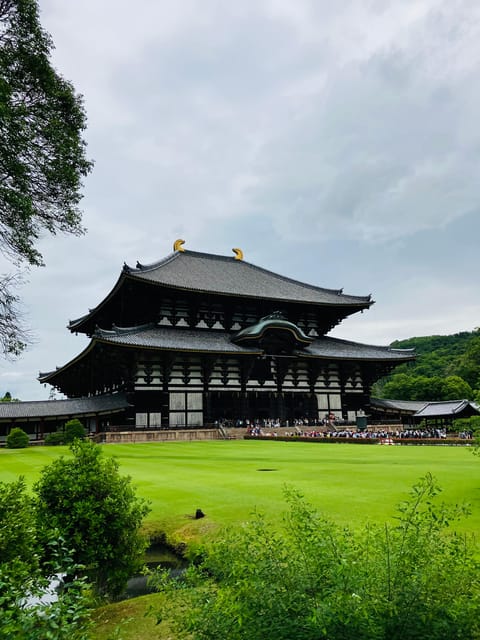
The tour allows one hour at Tōdai-ji, and that is the right place to spend the largest block of time. Tōdai-ji is the route’s major temple experience, known for its scale and its important statues. Even if you have visited other Japanese temples, the size of the main hall gives this stop a different impact.
A guide adds real value here. The building and statues are impressive on their own, but the story behind them gives the visit shape. Masa has explained both temple history and the meaning of the statues, answering detailed questions rather than rushing people through the hall.
This is also where you should manage your expectations. One hour includes walking, listening, looking, and taking photographs, so it will not cover every corner of the larger temple grounds. If Tōdai-ji is your main reason for coming to Nara, you may want to return independently after the tour for more time.
Flash photography is not allowed. Keep your camera ready for ordinary photographs, but give priority to the quiet mood of the interior and the instructions of your guide.
Yoshikien Garden and a gentle finish
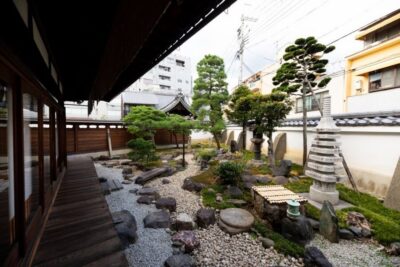
The final guided stop is Yoshikien Garden, with about 20 minutes before returning to Kintetsu Nara Station. This provides a softer ending than another large temple would. Gardens ask you to slow down and notice arrangement, water, plants, paths, and changing views rather than focus on monumental buildings.
The short visit means you are getting a taste, not a long garden study. Still, it rounds out the day well. You have seen the busy shopping street, major Buddhist sites, deer, a Shinto shrine, and now a more controlled natural setting.
The return to the station makes the tour easy to fit into a larger Japan itinerary. You finish where you began, without needing to arrange a pickup or figure out an unfamiliar return route.
What the $126 price gives you
At $126 per person, this is not the cheapest way to walk around Nara. The value depends on how much you want from a guide. The price includes an English-speaking guide and admission to the temples and parks, which removes some small costs and lets you focus on the visit.
For a private group, the price is easier to justify if you are traveling with a partner, family, or friends who want to share one guide. You receive personal attention, can ask questions freely, and may get practical help beyond the formal stops. Masa has assisted with shop translation, ATM directions, restaurant choices, and other small needs that can save time in an unfamiliar place.
The price is less compelling if you are happy to read signs, follow a map, and explore at your own pace. Nara’s central sights are walkable, and independent visitors can spend much longer at places that interest them.
Remember that personal expenses, drinks, souvenirs, and optional gratuity are extra. If your guide provides patient, detailed help, a tip is appreciated, but it is not required.
Who will get the most from this tour
I would choose this experience if you have one day or less in Nara and want the major sights arranged into a sensible walk. It is also a strong fit if you want historical explanations, help with temple customs, or support with English communication.
Families and couples may appreciate the private setup because the guide can respond to your interests. Food-focused visitors can ask for suggestions, and guests who are nervous about feeding the deer can learn how to do it more comfortably.
This is not the best choice for someone seeking a slow photography tour, a wheelchair-accessible route, or a full-day exploration. The activity is not suitable for wheelchair users or pregnant women, and people with animal allergies should avoid it. Three hours passes quickly once you include walking between stops.
The tour is conducted in English. Masa has also prepared translated materials in Korean and native-language materials for some guests, but you should confirm language needs before booking if English is not comfortable for you.
Practical advice before you go
Bring comfortable shoes, a hat, sunscreen, and a camera. The route includes station streets, park paths, and temple areas, so footwear matters more than dressing up.
Keep some money available for drinks, food, souvenirs, or an ATM stop. Those costs are not part of the booking, and the guide may be able to help you find an ATM if needed.
A small umbrella can be useful in changeable weather. Masa has carried an extra one for a guest, but you should not depend on that. The activity can be canceled up to 24 hours before departure for a full refund, and the reserve-now, pay-later option keeps your plans flexible.
Should you book it?
Book this tour if you want a well-paced introduction to Nara with a real person beside you, especially if you are visiting for the first time. The strongest reasons are the private format, the broad mix of temples and park scenery, and Masa’s practical style, from explaining statues to helping with shops and deer etiquette.
Skip it if you prefer total independence or want to spend a full day inside one or two sites. For most first-time visitors, though, $126 buys more than directions. It buys context, confidence, and a clear route through Nara’s biggest sights without losing the city’s quieter corners.
FAQ
Where does the Nara tour begin?
It begins at Kintetsu Nara Station. After using the East Gate, go toward Exit 3 and look near the tourist information center.
Where does the tour finish?
The tour returns to Kintetsu Nara Station.
How long does the tour last?
The tour lasts three hours.
Is the tour private?
Yes. It is offered for a private group.
What language does the guide speak?
The tour is conducted in English by a live English-speaking guide.
What places are included?
The route includes Higashimuki Shopping Street, Kōfuku-ji, Nara Park, Himuro Shrine, Tōdai-ji, and Yoshikien Garden.
Are admission fees included?
Yes. Admission to the temples and parks is included.
Is hotel pickup included?
No. Hotel pickup and drop-off are not included.
What should I bring?
Bring comfortable shoes, a hat, a camera, and sunscreen.
Can I cancel for a refund?
You can cancel up to 24 hours in advance for a full refund. You can also reserve now and pay later.
Temple visits we reviewed lately in Japan
- From Asakusa: Old Tokyo, Temples, Gardens and Pop Culture★ 4.6 · 15 reviews
- Tokyo: Nagano Snow Monkeys and Zenkoji Tour with Temples★ 4.9 · 19 reviews
- Kamakura: Great Buddha, Hase Temple, & Komachi Street Tour★ 5.0 · 11 reviews
- Osaka Temple Head Spa &Matcha Facial – Refresh & Glow〈90min〉★ 5.0 · 24 reviews
- Osaka Temple :Warm Bamboo Oil Massage – Deep Restore〈60min〉★ 4.9 · 19 reviews
- Osaka: Temple Tour and Traditional Calligraphy Lesson★ 4.9 · 24 reviews
- Osaka: Sumiyoshi, Osaka’s Most Iconic Shrine – Private Tour★ 4.7 · 4 reviews
- Osaka Temple :Warm Bamboo Oil Massage – Deep Restore〈90min〉★ 5.0 · 14 reviews
Japan Temple Tours, compared.
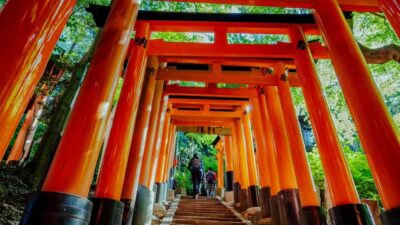
Osaka/Kyoto:Kinkakuji,Arashiyama,FushimiInariShrine,NaraPark
Read our review →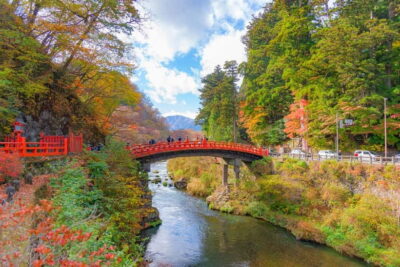
Nikko: Kegon Falls, Lake Chuzenji & Toshogu Temple
Read our review →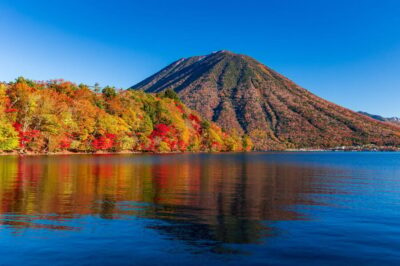
Tokyo: Nikko Toshogu Shrine and Kegon Waterfall Tour
Read our review →
Tokyo Panoramic 1 Day: Meiji Shrine, Asakusa, Odaiba and SKYTREE®
Read our review →
Kyoto Arashiyama Walking Tour: Bamboo, Monkeys, Gardens & Secrets
Read our review →
1-Day Snow Monkeys, Zenko-ji Temple & Sake in Nagano
Read our review →
Arashiyama Bamboo, Temple, Monkeys, or Secret Sake Brewery
Read our review →This tour also ranks in