
Review · JAPAN
Hiroshima: Itsukushima Shrine and Miyajima Summit Tour
Miyajima makes a powerful first impression because its religion is tied to both the sea and the mountain. This tour gives you the island’s two key viewpoints: Itsukushima Shrine, built over the water, and the summit area, reached by ropeway and a walk through the sacred hills. I like that the guide explains why these places belong together, rather than treating the shrine as a quick photo stop.
I also like the private-group format and the chance to ask questions about Japanese customs, Shugendo, and daily life. Guides Hine and Gordon Michasiw are named in the tour information, and Gordon is noted for giving cultural explanations that go well beyond the usual sightseeing script. The main drawback is the pace: five and a half hours includes several stops, a ropeway ride, and uphill walking, so the final part can feel tight and the climb is not easy for anyone with limited mobility.
Key points to know before you book
- Itsukushima Shrine is visited with admission included, so you can focus on the architecture and religious meaning rather than arranging tickets yourself.
- The ropeway saves energy, but you still walk uphill for about 20 minutes and should expect a moderate physical effort.
- The summit adds more than a view, with an introduction to mountain worship and Shugendo, a practice connected with ascetic training in the mountains.
- Senjokaku Pavilion and the five-story pagoda give you two very different architectural views of Miyajima near the end of the tour.
- The tour is conducted in English for a private group, making it a good fit if you prefer questions and conversation over a large scheduled group.
- At $179 per person, the value depends on how much you want cultural explanation and private guiding, not simply transport to the island.
Why Miyajima’s sea and mountain belong in one visit
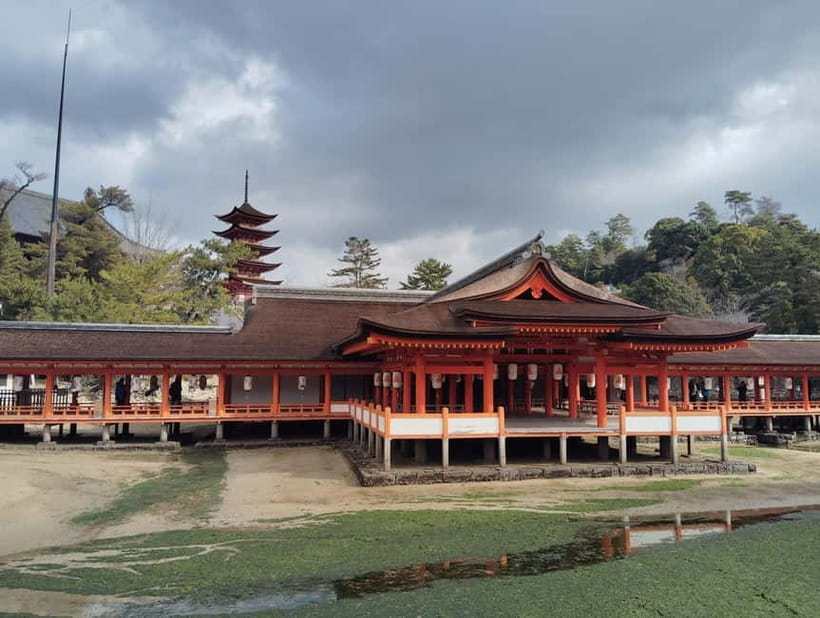
Miyajima is best understood as a sacred island, not simply as the setting for a famous gate. Its religious character comes from the relationship between the water around the island and the wooded mountain at its center. Itsukushima Shrine was built on stilts over the sea, helping preserve the island’s sanctity while allowing worship without heavily changing the natural setting.
That idea gives the tour a clear purpose. You begin at the shrine, where the water shapes the view, then move toward the mountain, where the focus shifts to walking, height, discipline, and quiet. The guide connects those two settings through the traditions of Shinto, Buddhism, and Shugendo.
I find this approach more useful than a standard sightseeing route. You are not just collecting the shrine, ropeway, pavilion, and pagoda as separate sights. You are seeing how the island’s geography helped shape its religious practices.
The tour lasts 330 minutes, or five and a half hours. That is long enough to cover the major sights without turning the outing into a rushed photo stop, although one account of the tour found the ending a little hurried. You should arrive ready to keep moving.
More Temple Tours around Japan:
- Kyoto: Tea Ceremony Ju-An at Jotokuji Temple
★ 4.9 · 3,207 reviews - Osaka/Kyoto:Kinkakuji,Arashiyama,FushimiInariShrine,NaraPark
★ 4.1 · 1,596 reviews - Tokyo: Asakusa Walking Tour with Sensoji Temple Visit
★ 4.8 · 1,583 reviews
Meeting your guide at Miyajima-guchi
The tour starts in front of the Miyajima-guchi Tourist Information Center. Look for the guide holding a yellow sign with the DeepExperience logo. This meeting point is on the mainland side, so you need to make your own way there. Hotel pickup and drop-off are not included.
Starting at Miyajima-guchi makes practical sense because it gives the group a clear place to gather before heading onto the island. It also means you should allow enough time to reach the meeting point without cutting things close. The supplied information does not state that ferry transportation is included, so confirm the exact arrangements when checking availability.
The tour finishes at the Miyajima ferry terminal. That is helpful if you plan to continue exploring the island after the guided portion, but it also means you should not expect a return to your hotel or to Hiroshima station as part of the service.
The private-group setup is one of the strongest features here. You can ask why the shrine is built over the water, how mountain worship developed, or what Shugendo means without waiting for a large group to catch up. Guides Hine and Gordon Michasiw are specifically associated with the experience. Gordon, in particular, is described as offering information about Japanese life, culture, and customs alongside the island’s main sights.
Itsukushima Shrine: starting with the water
The first major stop is Itsukushima Shrine, with about 30 minutes of guided touring. Admission is included.
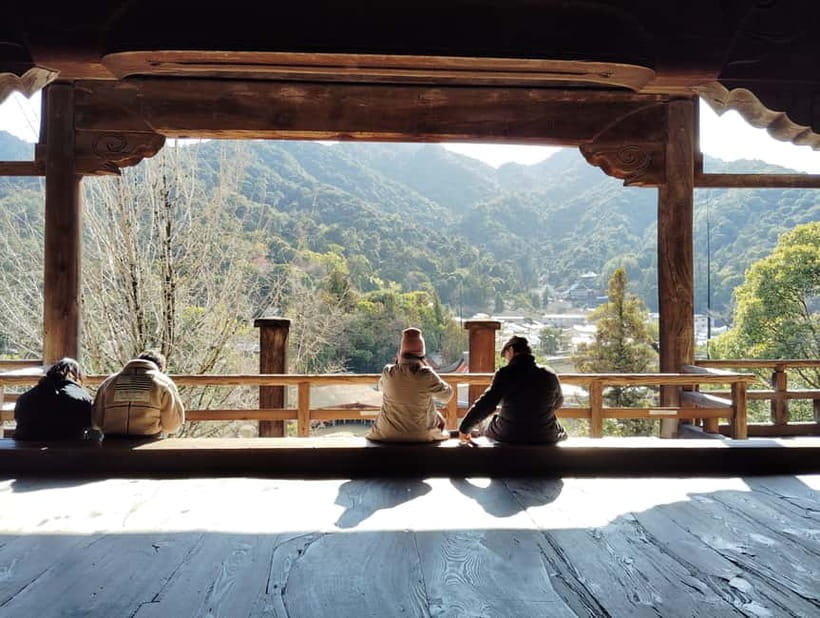
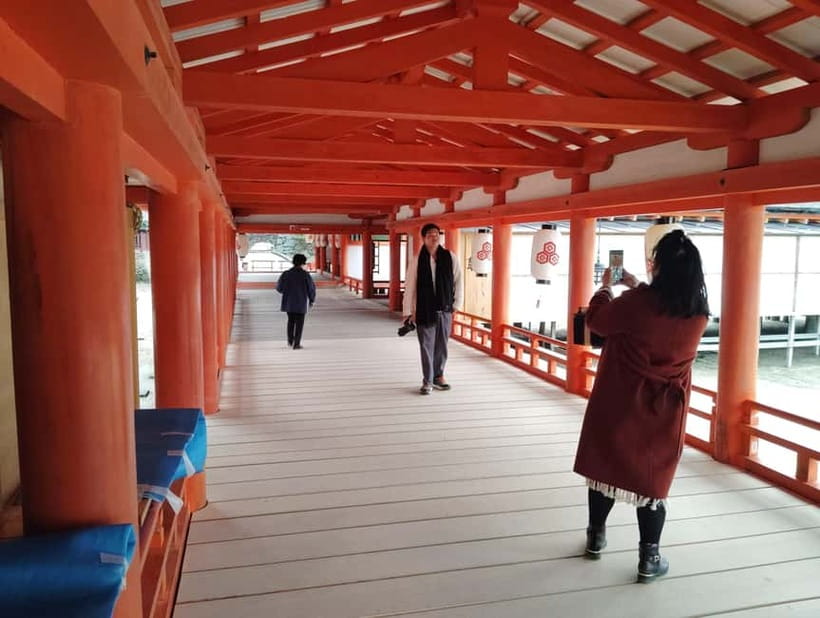
The shrine’s design is the point. Instead of sitting solidly on land, it reaches over the water on stilts. That arrangement reflects the belief that the island itself was sacred and should not be altered in an ordinary way. From the shrine, you can see how the sea is not just a backdrop. It is part of the religious setting.
Your guide can help turn familiar images into meaningful details. The shrine is one of Japan’s best-known sights, and it is easy to spend the whole visit chasing the famous view. A good explanation helps you notice the wider idea: worship here has long been shaped by the boundary between land and sea.
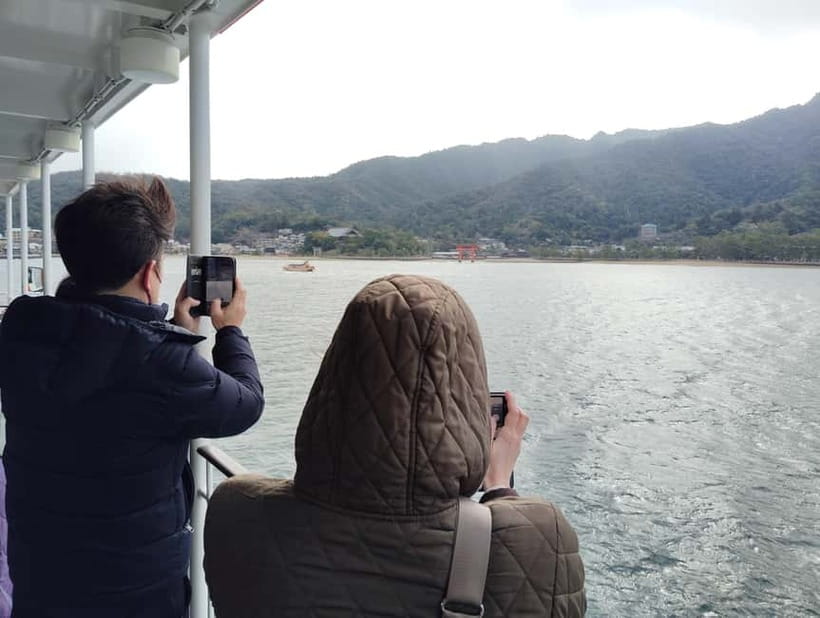
The tour information refers to the iconic torii gate set against the Seto Inland Sea. Tides affect how the gate appears from the shore, so the exact view depends on conditions during your visit. Do not treat one particular photograph as guaranteed. The attraction is the changing relationship between the gate, water, shrine buildings, and island.
Thirty minutes is enough for an introduction, but it is not an unhurried study of every corner. If you want extensive independent time at the shrine, ask the guide how the schedule works on the day. The later mountain section is a major part of the tour, so this is not designed as a shrine-only visit.
Ropeway views and the move into the mountains
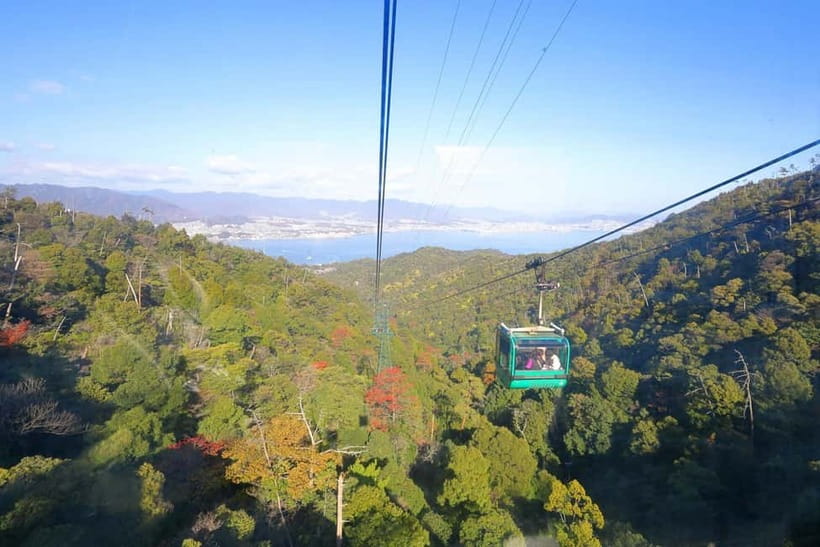
The next stage includes about 30 minutes on the cable car, described elsewhere as the ropeway and gondola. This is a welcome break from uphill walking and gives you a new view of Miyajima. The ropeway fee is included.
The ride also marks a change in mood. At the shrine, you are close to the water and formal religious buildings. As you rise, the island’s forested slopes and surrounding sea become the main subject. The scenery is one of the tour’s strongest rewards, particularly on a clear day.
A ropeway ride does not remove the physical demands of the tour. You still need to walk toward the summit, and one account puts the uphill section at roughly 30 minutes. The detailed schedule lists about 20 minutes on foot, so expect a moderate climb rather than relying on one exact duration.
Wear shoes with a secure sole. Bring water, sunscreen, and a hat, especially during warmer months. The route is not suitable for wheelchair users or people with mobility impairments, and anyone recovering from an injury should think carefully before booking. A guide may be able to offer practical help, but the tour still requires you to manage uneven or uphill walking.
Same sacred ground, another way to see it:
- Tokyo:Mt.Fuji,Kawaguchiko Oishi Park,Arakurayama Sengen Park
★ 4.4 · 2,682 reviews - Nikko: Kegon Falls, Lake Chuzenji & Toshogu Temple
★ 4.6 · 1,577 reviews - Tokyo: Nikko Toshogu Shrine and Kegon Waterfall Tour
★ 4.5 · 1,266 reviews - Tokyo Panoramic 1 Day: Meiji Shrine, Asakusa, Odaiba and SKYTREE®
★ 4.5 · 1,222 reviews
Miyajima summit and the traditions of Shugendo
The longest guided portion lasts about 75 minutes and takes place around the summit area. This is where the tour goes beyond the standard Miyajima checklist.
Mountain worship in Japan developed around the idea that high, difficult places could be sites of spiritual training. Shugendo blends elements of Buddhism, Shinto, and mountain ascetic practice. You learn how walking and physical effort became part of religious life, rather than simply hearing a short label attached to a forest trail.
The summit visit gives those ideas a physical setting. You are not only looking at a mountain from below. You are making your way upward and learning why the climb matters within the island’s traditions. That connection between effort and worship is one of the most interesting parts of the experience.
The views are another clear benefit. From the higher ground, you can look out across the surrounding area and the Seto Inland Sea. The tour information does not promise a particular visibility level, so weather will affect what you see. Still, the change in height gives the island a broader sense of place than the shrine alone.
The climb can be tiring. A German participant described the tour as highly recommendable but noted that reaching the mountain required effort. That is fair advice. You do not need to be a serious hiker, based on the information provided, but you should be comfortable with a moderate amount of uphill walking.
This section is best for you if you value explanation as much as scenery. If you want a quick ride to a viewpoint with minimal effort, the mountain portion may feel too demanding. If you want to understand why Miyajima has been worshipped for centuries, it is the heart of the tour.
Walking down to Senjokaku Pavilion
After the summit visit, the route continues on foot for about 20 minutes before reaching Senjokaku Pavilion. The walk gives the day a slower rhythm after the ropeway and guided mountain visit.
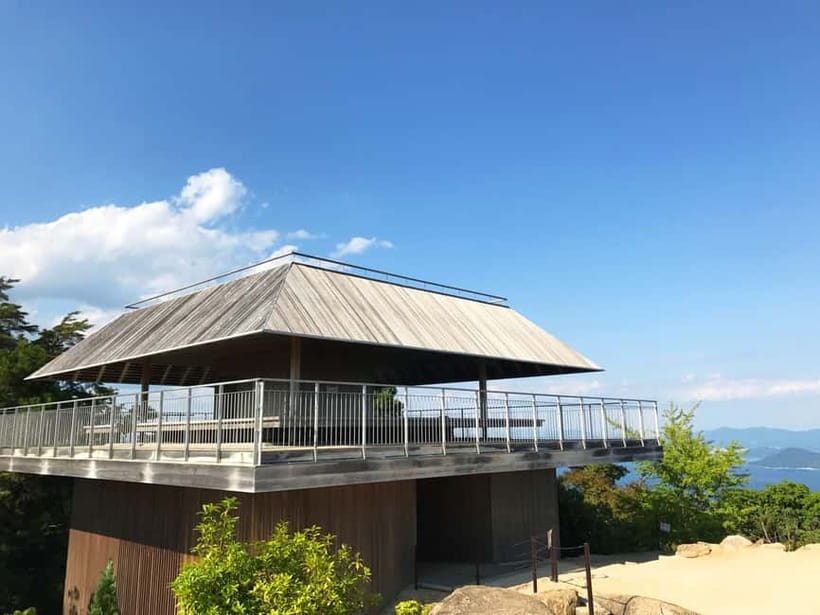
Senjokaku means the Pavilion of a Thousand Mats, a name that points to its broad interior space. The tour allows about 15 minutes here with the guide. This is a shorter stop, so expect a focused explanation and time to take in the open structure rather than a long architectural lecture.
The pavilion offers a different kind of encounter from Itsukushima Shrine. The shrine is closely tied to the sea and formal worship. Senjokaku feels more spacious and open, giving you a useful contrast as you move through Miyajima’s religious buildings.
The walk to this stop may be welcome if you enjoy seeing a place at ground level rather than moving only between transport points. It may also be the moment when tired legs begin to matter. Keep water handy and do not assume the ropeway has made the whole outing easy.
The five-story pagoda and final island views
The tour then visits Itsukushima Jinja Gojunoto, the five-story pagoda, for about 10 minutes. This is a compact stop, but the building adds another visual layer to the island’s religious architecture.
The pagoda’s tall form contrasts with the low, spread-out lines of the shrine and pavilion. Your guide can help explain how the buildings fit into the wider mix of Shinto and Buddhist influence found on Miyajima. The visit is brief, so use the time to look closely at the structure and its position above the surrounding town.
The final guided period includes about 15 minutes of free time before the tour ends at the ferry terminal. That is not a large block of independent exploration. Think of it as a chance to pause, take photographs, or gather yourself before continuing on your own.
One practical point matters here: the schedule contains many moving parts. Shrine visit, ropeway, summit touring, a walk, pavilion, pagoda, and final free time all fit into 330 minutes. If you stop often for photos or need a slower pace, the final section may feel compressed. The tour works best when you accept that it is a structured overview rather than a completely open-ended day.
What the $179 price includes
At $179 per person, this is not the cheapest way to see Miyajima. The price includes a professional English-speaking guide, admission to Itsukushima Shrine, the ropeway fee, and the guided summit visit. Meals, hotel pickup, and hotel drop-off are not included.
The value comes from the private guiding and the cultural focus. You could visit the shrine and ride the ropeway independently for less, but you would need to arrange your own route and make sense of the island’s religious traditions yourself. This tour gives you a single explanation linking the sea shrine, mountain worship, Shugendo, and the later buildings.
I would consider the price reasonable if you want a thoughtful guide and prefer not to manage the day alone. It is harder to justify if your main goal is a brief shrine visit, a few photographs, and a viewpoint. The tour’s strongest benefit is interpretation, not simply transportation.
You can cancel up to 24 hours before the activity for a full refund, and the reserve-now, pay-later option gives you some flexibility. Starting times depend on availability, so check the schedule before building the rest of your Hiroshima plans around it.
Who should book this Miyajima tour
I would recommend it to you if you want:
- A private English-speaking guide rather than a large group
- A clear explanation of Japanese religious traditions
- Both Itsukushima Shrine and the mountain summit
- Ropeway scenery combined with moderate walking
- A structured half-day outing from the Miyajima-guchi area
- Time to ask about Japanese culture, customs, and daily life
I would be cautious if you have mobility limitations, dislike uphill walking, or want a slow day with long stretches of free time. The tour is not suitable for wheelchair users, and comfortable walking shoes are essential.
It can also work well for couples or families who want a guide to adjust explanations to their interests. One guide, Hine, is noted for giving extra help to a person recovering from a fall, which suggests a caring approach, but you should not book on the assumption that the route can be substantially changed for limited mobility.
Should you book it?
Book this tour if you want Miyajima explained as a sacred island where sea worship and mountain practice meet. Itsukushima Shrine is the famous draw, but the summit walk and Shugendo discussion give the visit more depth. The ropeway, broad sea views, Senjokaku Pavilion, and five-story pagoda round out the day.
Skip it if you want the lowest-cost visit, dislike walking uphill, or need generous free time at each sight. At $179, you are paying for a private guide, included shrine admission and ropeway access, and a connected cultural story. For the right kind of visitor, that makes it a strong use of five and a half hours in Miyajima.
FAQ
Where does the tour start?
It starts in front of the Miyajima-guchi Tourist Information Center. The guide will hold a yellow sign with the DeepExperience logo.
Where does the tour finish?
The tour finishes at the Miyajima ferry terminal.
How long does the tour last?
The total duration is 330 minutes, or five and a half hours.
Is the tour conducted in English?
Yes. The tour has a live English-speaking guide.
Is this a private tour?
Yes. It is offered for a private group.
Are shrine admission and the ropeway included?
Yes. Admission to Itsukushima Shrine and the ropeway fee are included.
Are meals and hotel transfers included?
No. Meals, hotel pickup, and hotel drop-off are not included.
How much walking is involved?
You should expect a moderate amount of walking, including an uphill section toward the summit. Comfortable walking shoes, water, sunscreen, and a hat are recommended. The tour is not suitable for wheelchair users or people with mobility impairments.
Temple visits we reviewed lately in Japan
- From Asakusa: Old Tokyo, Temples, Gardens and Pop Culture★ 4.6 · 15 reviews
- Tokyo: Nagano Snow Monkeys and Zenkoji Tour with Temples★ 4.9 · 19 reviews
- Kamakura: Great Buddha, Hase Temple, & Komachi Street Tour★ 5.0 · 11 reviews
- Osaka Temple Head Spa &Matcha Facial – Refresh & Glow〈90min〉★ 5.0 · 24 reviews
- Osaka Temple :Warm Bamboo Oil Massage – Deep Restore〈60min〉★ 4.9 · 19 reviews
- Osaka: Temple Tour and Traditional Calligraphy Lesson★ 4.9 · 24 reviews
- Osaka: Sumiyoshi, Osaka’s Most Iconic Shrine – Private Tour★ 4.7 · 4 reviews
- Osaka Temple :Warm Bamboo Oil Massage – Deep Restore〈90min〉★ 5.0 · 14 reviews
Japan Temple Tours, compared.
Osaka/Kyoto:Kinkakuji,Arashiyama,FushimiInariShrine,NaraPark
Read our review →
Nikko: Kegon Falls, Lake Chuzenji & Toshogu Temple
Read our review →
Tokyo: Nikko Toshogu Shrine and Kegon Waterfall Tour
Read our review →
Tokyo Panoramic 1 Day: Meiji Shrine, Asakusa, Odaiba and SKYTREE®
Read our review →
Kyoto Arashiyama Walking Tour: Bamboo, Monkeys, Gardens & Secrets
Read our review →
1-Day Snow Monkeys, Zenko-ji Temple & Sake in Nagano
Read our review →
Arashiyama Bamboo, Temple, Monkeys, or Secret Sake Brewery
Read our review →This tour also ranks in