
Review · SOUTH KOREA
Gyeongju: UNESCO Heritage Tour Including Bulguksa Temple
Gyeongju is Korea’s ancient capital, and this tour gives you the smartest one-day route through its greatest Silla-era sights. You’ll move from grassy royal tombs to Buddhist temples, a mountain grotto, an old village, and a palace pond without wrestling with buses or figuring out distant taxi rides.
I especially like the comfortable van and hotel pickup, which matter because Gyeongju’s sights are spread across the city and surrounding hills. I also like the guides’ warm, practical approach. Sue has earned particular praise for clear stories and good humor, while Steve is known for adapting well to crowds and traffic.
The main drawback is the pace. Eight hours covers a great deal, but a late start or holiday traffic can shorten time at the final stops. At $189 per person, this is not a budget outing, though lunch, transport, guide service, and admission fees make the price easier to justify.
Key points to know before booking
- Six major historic stops in one day: See Bulguksa Temple, Seokguram Grotto, Daereungwon, Wolji Pond, Cheomseongdae, and Gyochon Village.
- Pickup from Busan or Gyeongju: You avoid arranging separate intercity transport and local taxis.
- English-speaking guides: Sue, Steve, Jina, and other guides have been praised for clear explanations and friendly help.
- Lunch and entrance fees included: The price covers more than a simple drive between sights.
- Private or small-group format: This suits families and couples who want help without a large coach crowd.
- Expect a full day on your feet: Temple courtyards, tomb paths, village lanes, and the grotto all involve walking.
Why Gyeongju works best with a planned day
Gyeongju was the capital of the Silla Dynasty for roughly a thousand years. Its old center is not arranged like a single museum complex. Instead, historic places appear across a wide area, with temples in the hills, tombs in open parks, old villages near the city center, and palace remains beside a pond.
That layout is the main reason I see value in a guided van tour. You are not spending your day waiting for a connection or trying to match bus schedules to opening hours. The route also gives you a useful mix of Korean history, Buddhist art, royal customs, science, architecture, and local food.
The tour lasts about eight hours and begins with pickup at your hotel or chosen location in Busan or Gyeongju. You travel in an air-conditioned van with an English-speaking guide. Group size can vary because private and small-group arrangements are available, so confirm the format when booking if personal attention is important to you.
More History Tours in South Korea:
- Chiang Mai: Historic Temples and City Guided Walking Tour
★ 4.7 · 650 reviews - Mt. Fuji Heritage Tour: Traditional Villages, Lakes & Shrine
★ 4.5 · 509 reviews - Malta: Prehistoric Temples, Limestone Heritage & Blue Grotto
★ 4.2 · 412 reviews
Gyochon Village and the old Choi family home
Gyochon Traditional Village offers a gentle start. Its hanok buildings and quiet lanes show how a prominent Korean family lived, with tiled roofs, wooden structures, courtyards, and a slower rhythm than the major temple sites.
The House of the Gyeongju Choi Clan is the central point of interest. The family is associated with local heritage and craftsmanship, and the visit helps put Korean social history into a more human frame. Instead of beginning with a grand monument, you see the setting of daily life and noble domestic culture.
When available, you may also try Gyeongju Gyodong Beopju, a traditional liquor associated with the area. This is a nice local touch, but it should be treated as an occasional tasting rather than a guaranteed part of every departure.
Allow yourself time to notice the details here. The village is not a huge open-air museum with endless exhibits. Its appeal comes from the lanes, house forms, and contrast between old buildings and modern Gyeongju around them.
Daereungwon Tomb Complex and Cheonmachong
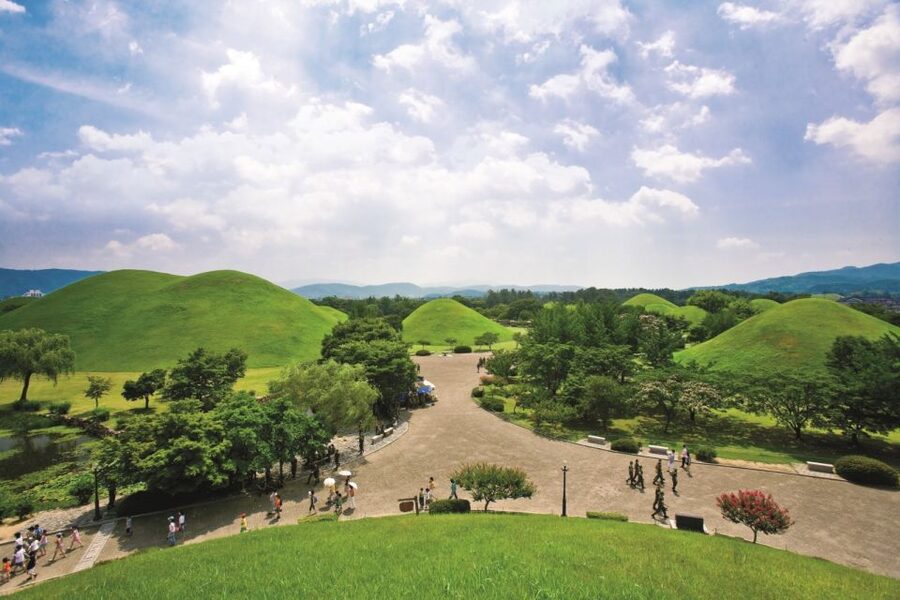
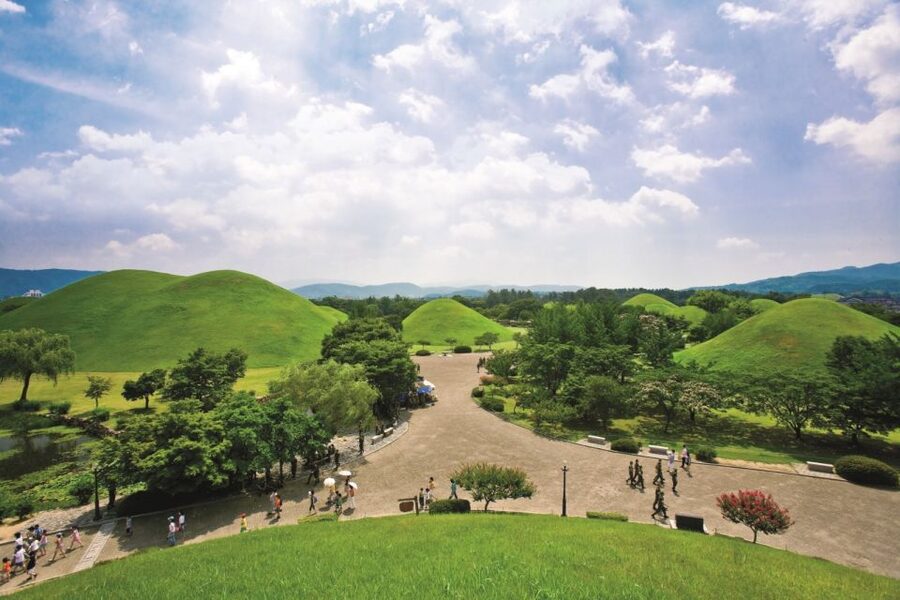
Daereungwon is one of the most memorable parts of the day. Large, rounded burial mounds rise from broad green grounds, giving the site an unusual calm. These are royal and aristocratic tombs from the Silla period, and their size gives you an immediate sense of the power held by the people buried inside.
Cheonmachong is the best-known tomb in the complex. It was excavated in the 1970s, and the famous ancient painting of a heavenly horse was found here. Depending on the route and timing, you may enter the tomb area and see how the burial mound was constructed and what was recovered from it.
Hwangnamdaechong is another major tomb, noted for its size and the high status of the people buried there. The open setting makes this stop especially pleasant for walking and photographs, though sun can be strong in warmer months and shade is limited.
I like Daereungwon because it does not feel like history locked behind glass. The mounds sit in the middle of the city, and you can read the scale of Silla power directly from the ground in front of you. The tradeoff is that the stop involves walking across open paths, so comfortable shoes and water matter.
Cheomseongdae, Silla science in stone
Cheomseongdae is a short stop, usually about 30 minutes, but it fills an important gap in the day. This stone tower is recognized as the oldest existing astronomical observatory in Asia and dates to the reign of Queen Seondeok.
Its shape is simple at first glance, yet the carefully arranged stones reflect the Silla court’s interest in astronomy and the calendar. Agriculture, royal ceremonies, and government decisions all depended on understanding the seasons, so the tower was tied to practical life as well as science.
You will not spend an hour here, and that is sensible. Cheomseongdae is best understood with a guide’s explanation, followed by a short look around the surrounding grounds. Steve has been praised for making historical details easy to follow, while other guides use stories and visual examples to bring the site into focus.
This is also a good place to ask questions. The tour is not only about royal battles and temples. Silla’s achievements in science and administration help explain why Gyeongju became such an important capital.
More Temple Tours around South Korea:
- Seoul: Palace, Temple and Market Guided Foodie Tour at Night
★ 4.9 · 750 reviews - Seoul: Mt Seorak + Naksansa Temple or Nami Island Group Tour
★ 4.7 · 422 reviews - Best Things to Do – Half Day Seoul Trip (Seoul Palace & Temple)
★ 5.0 · 190 reviews - Full Day Busan Tour Including Haedong Yonggungsa Temple
★ 4.5 · 71 reviews
Bulguksa Temple, the day’s centerpiece
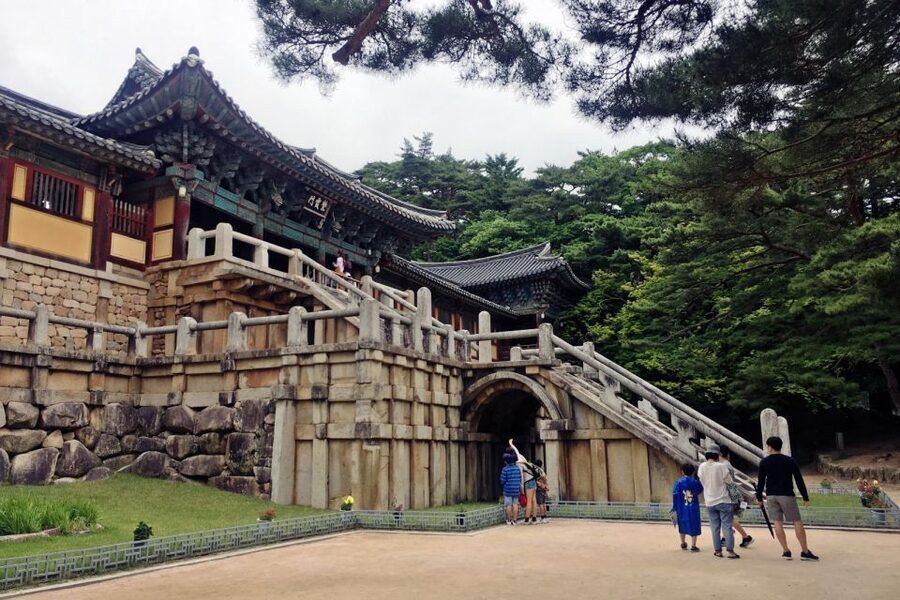
Bulguksa Temple is the major architectural stop and usually receives about an hour of guided attention. The temple is a UNESCO World Heritage Site, valued for its Buddhist art, stonework, layout, and connection to Silla religious life.
You’ll cross or view ancient stone bridges, enter courtyards, and see the famous Dabotap and Seokgatap pagodas. The two pagodas have different forms, and comparing them helps you see that the temple complex was designed with balance and contrast rather than as a random collection of buildings.
The setting adds much to the visit. Bulguksa sits in the foothills of Tohamsan Mountain, so the temple’s courtyards, trees, stone steps, and rooflines work together. Your guide can explain the Buddhist meaning behind the layout and point out details that are easy to miss when you are simply taking photographs.
An hour is enough for a useful introduction, but not for a slow study of every building. If you are especially interested in Korean Buddhism or temple architecture, you may wish for more time. The benefit of this tour is that Bulguksa is paired with Seokguram Grotto, giving you both a major temple complex and a remarkable Buddhist sculpture.
Seokguram Grotto on Tohamsan Mountain
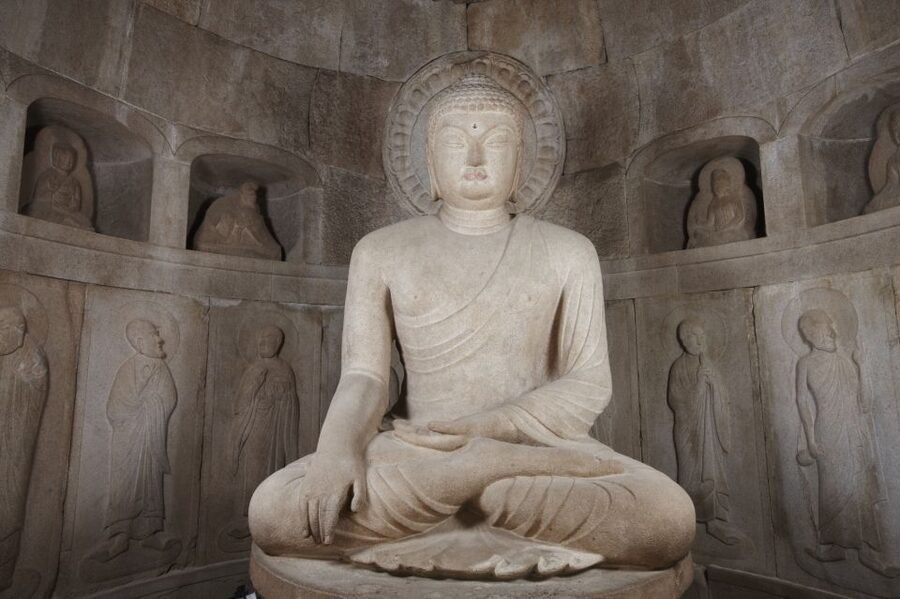
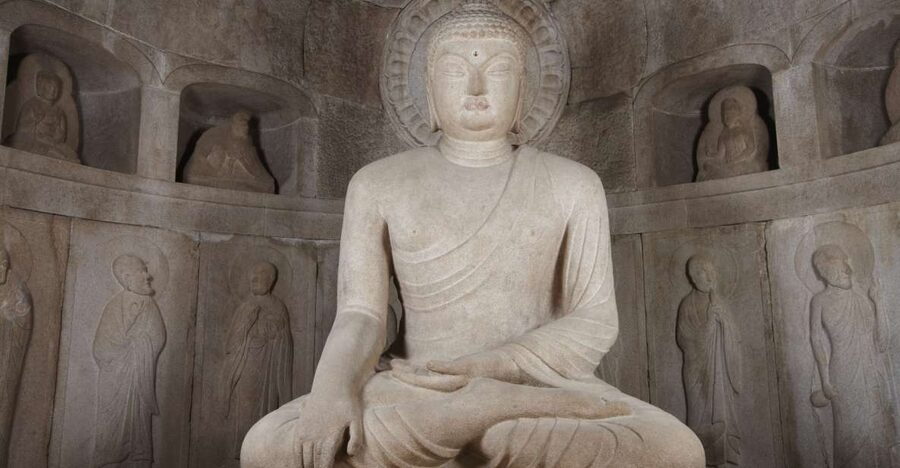
The van continues up Tohamsan Mountain to Seokguram Grotto, another UNESCO World Heritage Site and one of Korea’s most treasured cultural places. Inside, a granite Buddha sits among carved guardians and other figures, creating a small, powerful space devoted to Buddhist art.
The grotto is not simply a cave. It is an engineered shrine, carefully planned around the central Buddha and the figures surrounding it. The craftsmanship is impressive even if you do not have a strong background in Buddhist iconography. Your guide can explain what you are seeing and why the arrangement matters.
The visit generally lasts about an hour. The approach and viewing area can be busy, especially during Korean public holidays, and access through the grotto is controlled. Keep your expectations realistic: the interior is a place for quiet viewing rather than unrestricted photography or lingering.
The mountain setting also changes the feel of the day. After the open tomb grounds and busy temple courtyards, Seokguram offers a more focused experience. Some departures include a chance to try snacks sold by local women outside the grotto, though that should be viewed as a pleasant possibility rather than a promised inclusion.
Lunch and the practical side of the day
Lunch is included, which is useful on a packed schedule. Several people have especially enjoyed the meal, including traditional bibimbap in Gyeongju. One guide, Sue, has even joined the group at lunch, helping create a relaxed atmosphere rather than simply dropping people at a restaurant and disappearing.
The exact menu is not specified, so tell the operator about important dietary needs when you book. Do not assume that every departure will serve the same dishes or that special requests can always be met.
A bottle of water is included, and some guides have gone further by preparing iced water in hot weather. Still, I would bring extra water in summer, along with sun protection. The tour covers outdoor grounds, open tomb paths, and temple steps, so you should plan for regular walking throughout the day.
Wolji Pond, the best finish near dusk
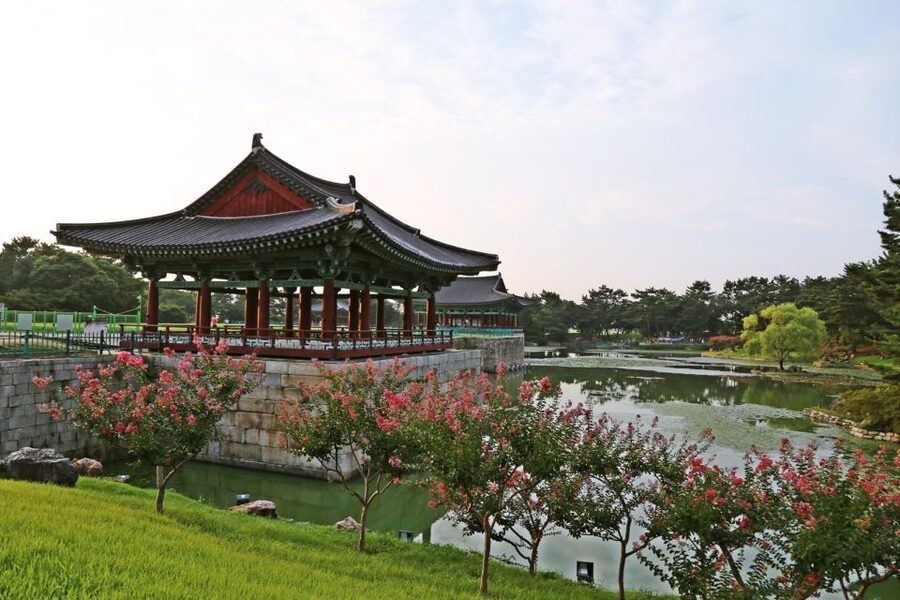
Donggung Palace and Wolji Pond is the final scheduled sightseeing stop. The pond was part of a palace complex built during the reign of King Munmu, and its pavilions were arranged to look across the water from carefully chosen angles.
This is one of Gyeongju’s most attractive places for a closing visit. The pavilions and trees reflect on the pond, and the light is often especially pleasing later in the day. If traffic or an unusually late start cuts into the schedule, this stop may receive less time or be missed, so ask about timing before departure if it is a priority for you.
The pond also provides a different kind of history from the tombs and temple. You are looking at a royal garden and ceremonial setting, where architecture, water, and views were part of court life. It is an easy place to understand why Gyeongju is often described as a museum without walls.
Transport, guides, and group size
The van is one of the strongest practical reasons to book. Busan to Gyeongju is a manageable trip, but once you arrive, the historic places are still scattered. Having a driver handle the roads saves energy and lets you focus on the guide.
The transport received a 96 percent perfect score for its comfort and quality. That fits the way the day is structured: several short rides connect stops that would be awkward to combine independently.
Guide quality can shape this experience. Sue has been singled out for warmth, humor, clear explanations, and careful attention to the group. Steve has been praised for handling crowds, traffic, and changes in the day. Jina has also been described as professional and helpful, especially when explaining Korea’s different dynasties.
That does not mean every guide will use the same style. Some explain through stories, some focus on dates and context, and some give more time for photographs. The strongest guides help you make sense of Silla culture rather than reciting names and years.
Is $189 good value?
At $189 per person, this is a premium day trip. You can reduce the cost by using public transport and visiting fewer places on your own. If you have plenty of time in Gyeongju and enjoy planning routes, the independent option may suit you better.
The price becomes more reasonable when you add up what is covered: pickup and drop-off in Busan or Gyeongju, an air-conditioned van, an English-speaking guide, lunch, bottled water, and all entrance fees. You are also paying for the ability to see major sites that sit in different parts of the area within a single day.
For a first visit, a short stay, a family group, or anyone based in Busan, I think the convenience is meaningful. For a solo budget visitor who wants long, quiet hours at one temple, it is harder to justify.
Who should book this Gyeongju tour?
I would choose this tour if you want a strong first look at Gyeongju without handling transport. It suits couples, families, older visitors who prefer a vehicle between sites, and anyone making a one-day trip from Busan.
It is also useful for people who want context. Bulguksa, Seokguram, the tombs, and Wolji Pond are much easier to appreciate when someone explains how religion, royal power, science, and daily life fit together.
I would hesitate if you dislike fixed schedules or want to photograph each site at your own pace. The day is full, and delays can force changes. One departure began late and skipped the final listed stop so the group could spend time at another village, a reminder that flexibility can be helpful but also means not every stop is guaranteed equal time.
Book it if your priority is seeing the major Silla sites efficiently, with lunch and transport handled. Skip it if your priority is the lowest price or a slow, self-directed visit. For most first-time visitors staying in Busan, this is one of the easier ways to make Gyeongju work in a single day.
FAQ
Where does the tour begin?
Pickup is available from locations in Busan or Gyeongju. The tour provider picks you up at your hotel or another chosen location.
Where does the tour end?
Drop-off is available in Busan or Gyeongju, at your hotel or preferred location.
How long is the experience?
The tour lasts about eight hours, including transportation and visits to the listed historic sites.
What language is the tour conducted in?
The live tour guide speaks English.
Which major sites are included?
The scheduled stops include Bulguksa Temple, Seokguram Grotto, Daereungwon Tomb Complex, Donggung Palace and Wolji Pond, Cheomseongdae, and Gyeongju Gyochon Traditional Village.
Is lunch included?
Yes. Lunch is included in the tour price. The specific menu is not stated.
Are entrance fees included?
Yes. Admission fees for the included attractions are covered.
Can I cancel the booking?
You can cancel up to 24 hours before the activity for a full refund. The reserve-now, pay-later option is also available.
Temple visits we reviewed lately in South Korea
- Seoul Sunrise & Sunset Hike + Temple & K-Food Adventure★ 4.8 · 6 reviews
- Seoul: UNESCO Sites tour: Palace, Shrine & Bukchon Village★ 4.8 · 26 reviews
- Seoul: War Memorial, Jogyesa Temple & Tapgol Park Tour★ 4.8 · 56 reviews
- Seoul: Vegan Temple Food Class, Jogyesa & Changdeokgung Tour★ 4.6 · 34 reviews
- Seoul: Temple & Starfield COEX Mall Gourmet Tour in Gangnam★ 4.7 · 22 reviews
- Seoul: Night Bongeunsa Temple Guided Tour★ 5.0 · 11 reviews
- Seoul: 4-Hour Guided Tour to Palace, Bukchon, Jogyesa Temple★ 5.0 · 3 reviews
- Gyeongbokgung Palace, Jogyesa Temple and Bukchon village★ 5.0 · 12 reviews
South Korea Temple Tours, compared.
Seoul: Palace, Temple and Market Guided Foodie Tour at Night
Read our review →
Busan’s Cultural Wonders with Beach Train & Gamcheon Village etc
Read our review →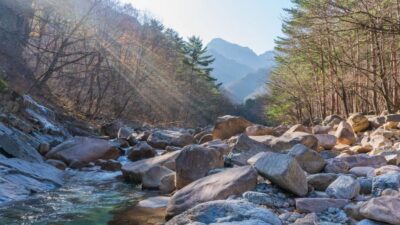
Seoul: Mt Seorak + Naksansa Temple or Nami Island Group Tour
Read our review →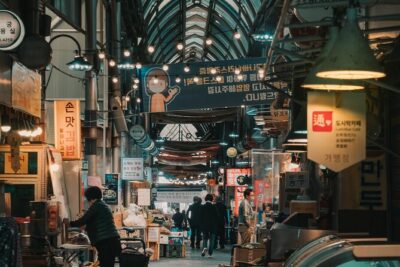
Seoul Night Palace & Market Food Tour with Vehicle
Read our review →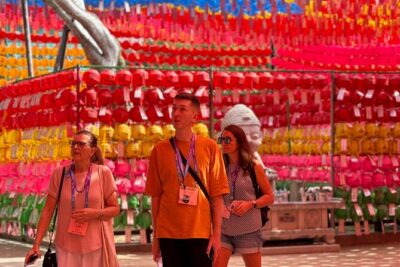
Best Things to Do – Half Day Seoul Trip (Seoul Palace & Temple)
Read our review →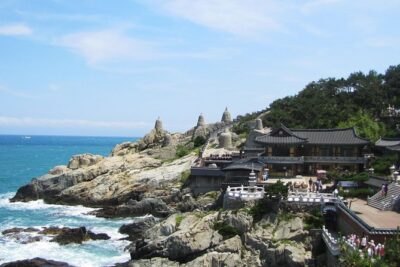
Full Day Busan Tour Including Haedong Yonggungsa Temple
Read our review →
Private Busan tour with gamcheon culture village and the temple (Customizable)
Read our review →
Seoul: War Memorial, Jogyesa Temple & Tapgol Park Tour
Read our review →This tour also ranks in