
Review · SEOUL
Seoul: Palace, Temple and Market Guided Foodie Tour at Night
Changgyeonggung Palace under night lighting is the star of this outing, but the real pleasure is the way the evening moves from royal courtyards to temple lanterns and then to sizzling market food. You get a quick lesson in Seoul’s past, its Buddhist life, and its street-food habits in one four-hour walk.
I especially like the palace after dark, when the buildings and gardens take on a quieter mood, and the market tasting, which gives you several Korean flavors instead of sending you to buy one snack on your own. The guides, including Mia, Kim, Jay, and Inha, are praised for clear history and friendly care.
The tradeoff is simple: this is an ambitious route with a moderate amount of walking. You move between several districts and stops, so cold weather, rain, or tired legs can change the evening. Live octopus is optional, but some of the food may still feel adventurous if you prefer familiar dishes.
Key points to know before booking
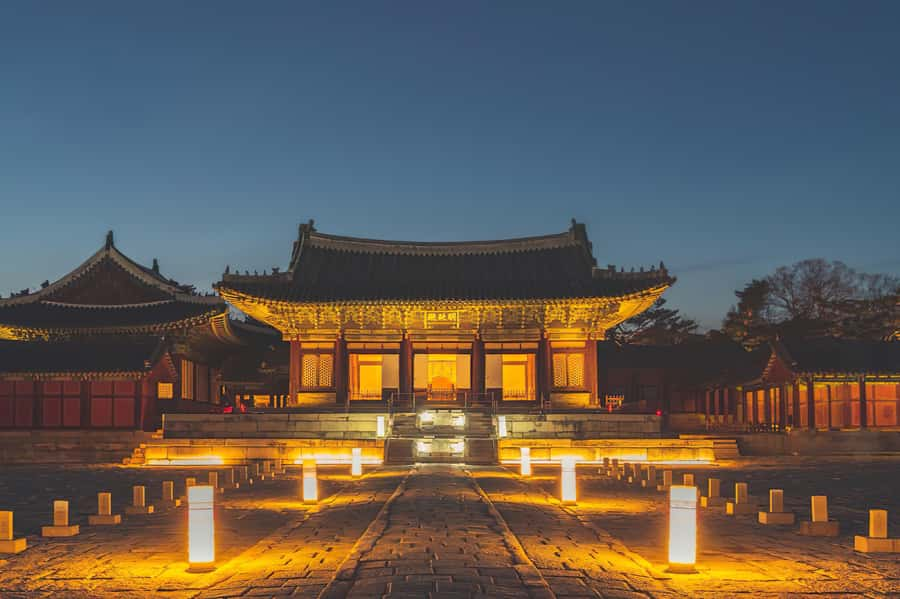
- Changgyeonggung after dark: Spend about an hour learning the story of this Joseon Dynasty palace while its grounds are lit for the evening.
- A proper market meal: Gwangjang Market includes makgeolli, several jeon fritters, chopped live octopus, and other local bites.
- Four neighborhoods in one walk: The route links Daehangno, Gwangjang Market, Jongro 3-ga, Ikseon-dong, and Jogyesa Temple.
- Warm, attentive guiding: Mia is often praised for patience and clear explanations, while Kim, Jay, Inha, J, Mindi, and Thomas have also led memorable outings.
- A flexible food approach: Vegetarian and halal options are available if you request them when booking, and eating the octopus is your choice.
- Good value at $60: Entrance, guiding, market food, makgeolli, jeon, and octopus are included, with no hotel transfer.
Why this night route works so well
Many Seoul sightseeing plans split palaces, temples, and food markets into separate outings. This tour connects them in a single evening, and that contrast is its main strength. You begin in the royal world of old Korea, walk through entertainment and dining districts, and finish among lanterns at a Buddhist temple.
That change of mood keeps the four hours moving. The route is not just a list of photo stops. At its best, it shows how Seoul layers old buildings, religious traditions, food stalls, nightlife, and modern city life within a fairly small part of Jongno.
You meet outside Hyehwa Station Exit 4, where the guide holds a Tripper sign. From there, the group passes through Daehak-ro, the arts district around Daehangno. You do not spend a long time here, but the walk gives you a look at one of Seoul’s theater and performance areas before the palace visit.
The tour ends back at the original meeting point. There is no hotel pickup or drop-off, so you need to reach Hyehwa Station on your own and plan your return afterward.
More temple and food outings in Seoul:
- Seoul Night Palace & Market Food Tour with Vehicle
★ 5.0 · 275 reviews - Seoul: Vegan Temple Food Class, Jogyesa & Changdeokgung Tour
★ 4.6 · 34 reviews - Seoul Sunrise & Sunset Hike + Temple & K-Food Adventure
★ 4.8 · 6 reviews
Changgyeonggung Palace under the night lights
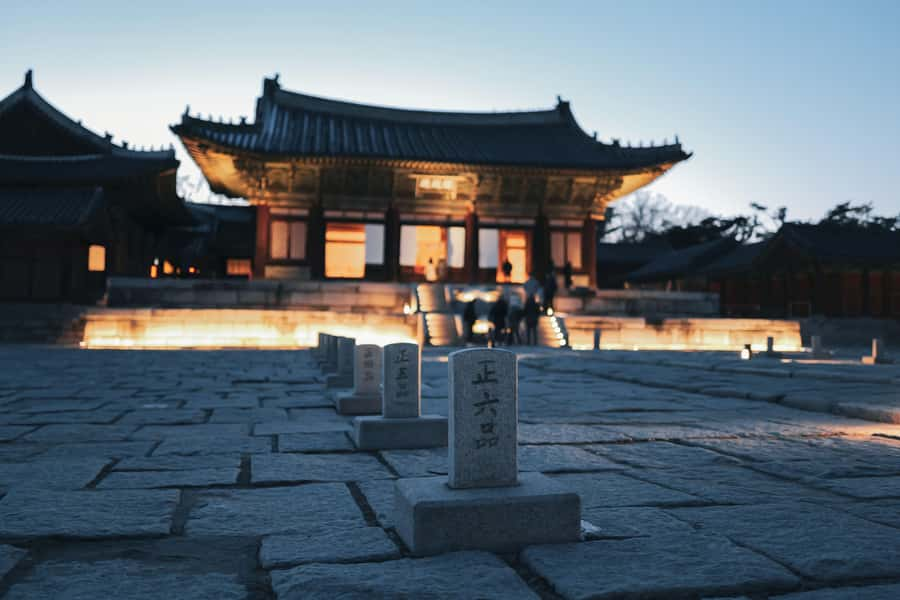
The palace visit lasts about an hour and is the most atmospheric part of the route. Changgyeonggung was built during the Joseon Dynasty, and the guide explains its role, architecture, and place in Seoul’s royal story as you move through the grounds.
At night, the palace feels different from a daytime palace visit. Lighting draws attention to rooflines, gates, courtyards, and the surrounding gardens, while the evening sky gives the site a calmer setting. You get time for photographs, but the guide-led explanation is what makes the stop worthwhile.
I would not book this as a replacement for a full daytime palace day if you want to study every building or spend hours wandering. The visit is focused and lasts around one hour. Still, it makes a strong first stop because you see a major Seoul landmark at a time when many visitors are settling into dinner.
The guide’s role matters here. Several guides have been praised for telling stories rather than reciting dry dates. Mia, in particular, is described as patient, engaging, and good at keeping a group together. Kim is also noted for connecting palace history with local culture and answering questions in clear English.
Bring a layer. The palace section is outdoors, and the temperature can drop once the sun is gone. One person specifically found the evening cold and rainy but still enjoyed the route, which is a useful warning: comfortable shoes and weather-ready clothing will help more than stylish footwear.
Walking from the palace to Gwangjang Market
After Changgyeonggung, you walk for about 10 minutes to Gwangjang Market. This is a manageable distance, but it is only the first part of the evening’s walking. You then continue through other districts, so think of the activity as a food walk with sightseeing rather than a seated dinner followed by short transfers.
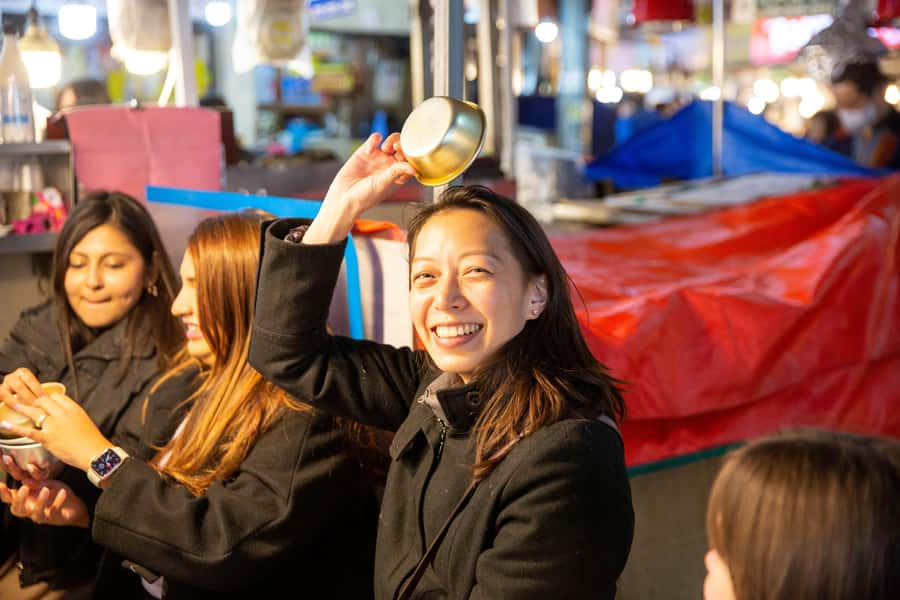
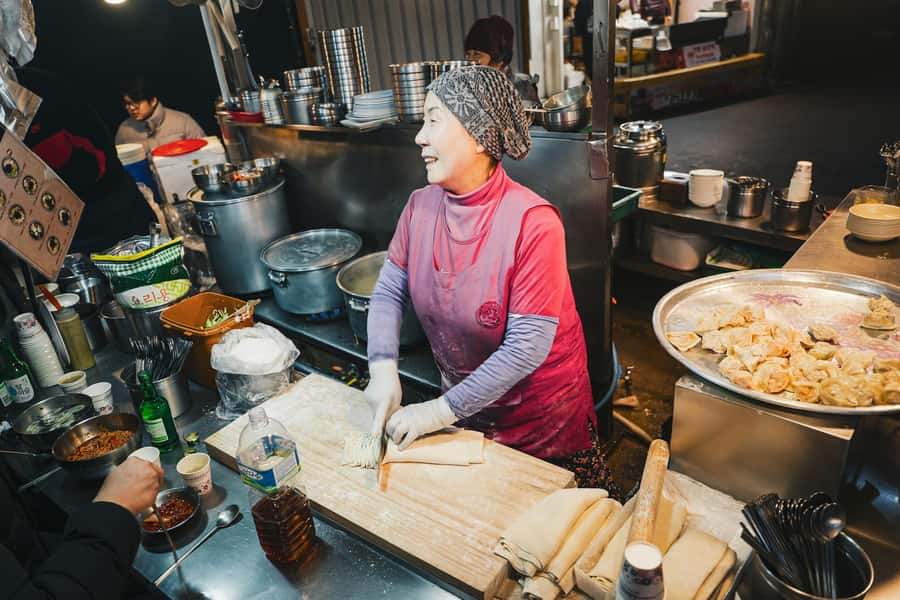
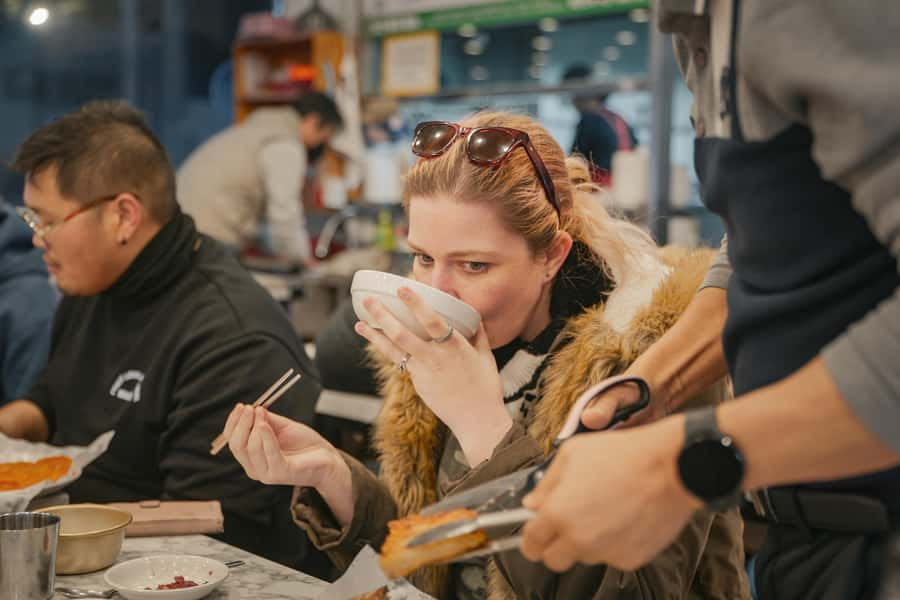
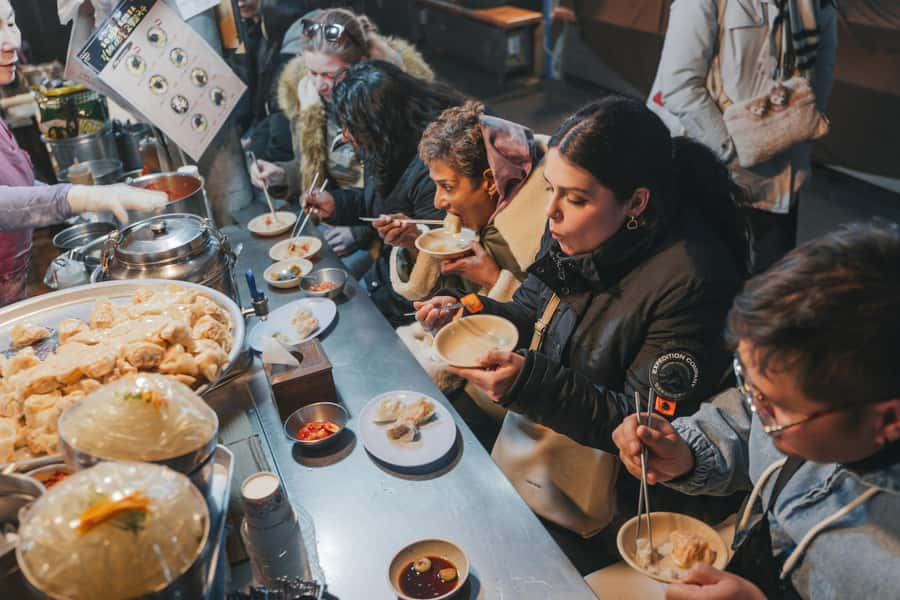
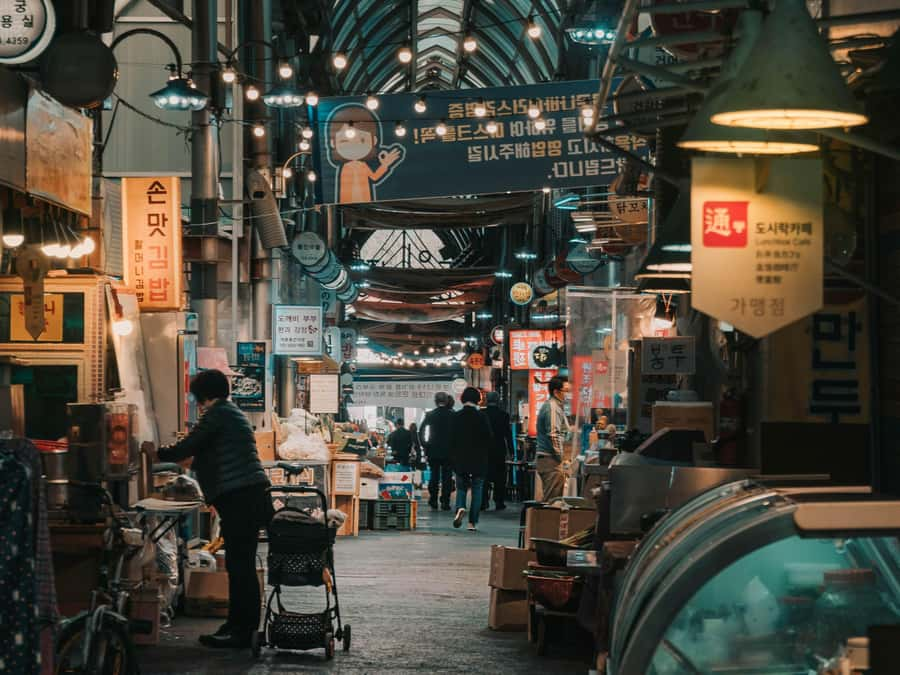
Gwangjang Market is where the tour becomes most hands-on. You spend about an hour on a guided food visit, sampling local snacks and eating a selection of dishes included in the price. The guide helps you understand what you are tasting and how the market fits into daily Seoul life.
The included food covers:
- Makgeolli, a traditional Korean rice wine
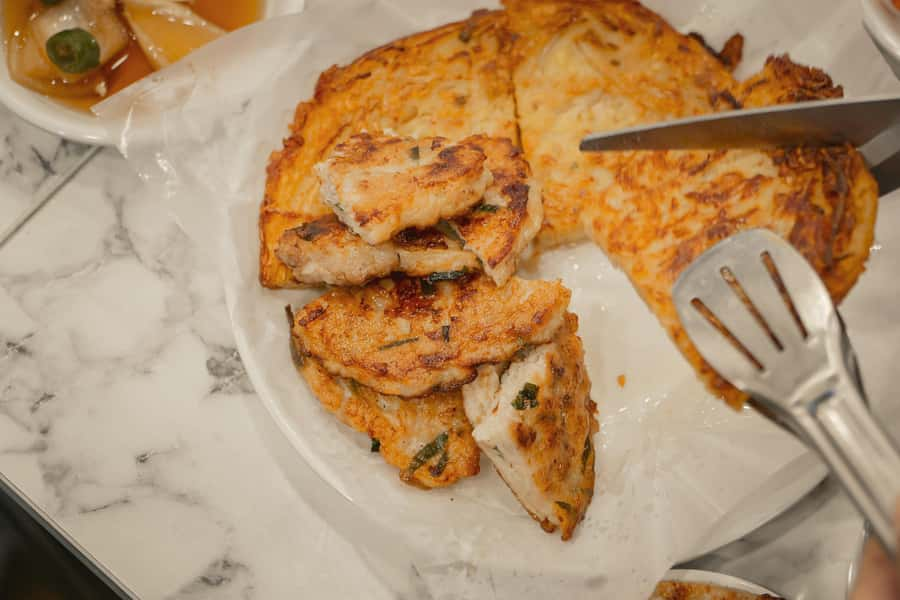
- Assorted jeon fritters, such as kimchi, tofu, and meat jeon
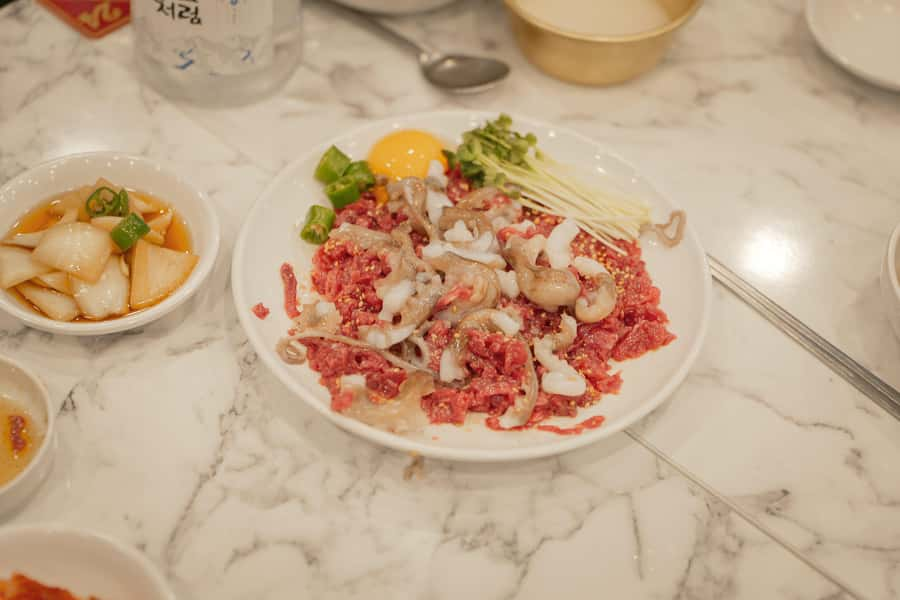
- Chopped live octopus
- Other market snacks, including the possibility of kkwabaegi, a twisted Korean donut
- Beef tartare as part of the food experience
The jeon is a good introduction for cautious eaters. These Korean pancakes are familiar enough in texture but offer different flavors depending on the filling. Kimchi jeon brings a sharper, spicier note, while tofu or meat versions may be easier for first-time tasters.
Makgeolli adds another distinctly Korean touch. It is part of the included tasting, so you do not need to order a separate drink to get a sense of the market’s traditional food culture. If you do not drink alcohol, ask about the arrangements when booking.
The chopped live octopus is the boldest item. You can try it or skip it, and there is no need to treat it as a test of courage. This detail matters because the experience is designed to introduce you to Korean food, not pressure you into eating something you dislike.
Kkwabaegi, the twisted donut, provides a sweet finish. The tour includes insider help for getting this popular snack without a long wait. That may sound minor, but at a crowded market, knowing where to go and how the queue works can save time and reduce guesswork.
One especially useful part of a guided market stop is portion control. On your own, you might fill up on the first dumpling or pancake you see. Here, the tasting format lets you sample more than one thing and still keep moving.
Jongro 3-ga and Ikseon-dong after dinner
From Gwangjang Market, the route continues on foot for about 15 minutes to Jongro 3-ga Pocha Street. The stop lasts around 15 minutes and is mainly for guided sightseeing. A pocha is a Korean-style tent bar or casual drinking spot, so this section gives you a look at another side of Seoul’s evening food culture.
Do not expect a long meal here. The point is to see the atmosphere and understand how informal late-night dining fits into city life. It is a short stop, but it helps connect the market meal with Seoul’s wider night scene.
The next stop is Ikseon-dong Hanok Village, also for about 15 minutes. You pass preserved traditional Korean houses, known as hanok, alongside small shops and eating places. The visit is brief, so you get an orientation and photo opportunity rather than a detailed architectural tour.
This is one place where expectations matter. Ikseon-dong is not the main food stop, and the schedule does not give you time to browse every lane. I like its place in the route because it provides a visual change after the market, but if you want extensive shopping or café time, plan a separate visit.
The combination of Jongro 3-ga and Ikseon-dong also shows why this tour feels efficient. You cover neighborhoods that have different personalities without spending time on a vehicle transfer. The downside is that the schedule stays fairly brisk.
More Market Visits in Seoul:
- Bangkok: City Highlights Temple and Market Walking Tour
★ 4.5 · 3,990 reviews - Mini Group Xian Day Tour to Terracotta Army, City Wall, Pagoda and Muslim Bazaar
★ 5.0 · 1,320 reviews - Bangkok: Railway and Floating Market Tour with Dragon Temple
★ 4.6 · 1,225 reviews - Bangkok: Night Bike Tour with Temples & Flower Market Visit
★ 4.8 · 751 reviews
Jogyesa Temple and its lantern-lit calm
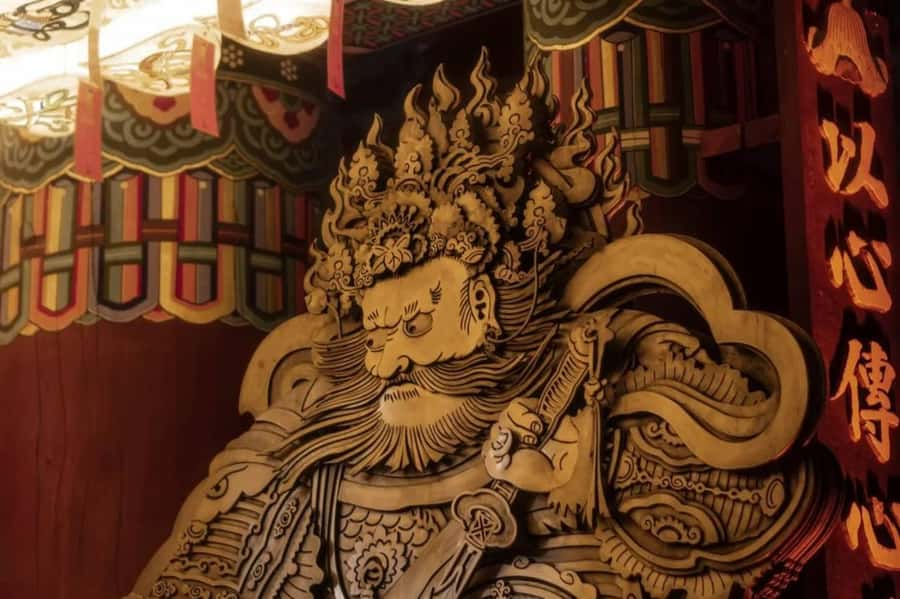
The final major stop is Jogyesa Temple, where you spend about 30 minutes. After the market’s noise and the busy streets, the temple offers a quieter finish. Lanterns light the grounds, and the guide explains Buddhist customs, the temple’s role, and what you are seeing.
This is more than a quick exterior photograph. Guides have taken extra time to explain Buddhism, and that can make the temple visit far more meaningful than a silent walk past the gate. Mindi and Mia are both praised for making the history and religious background understandable without turning the stop into a lecture.
The lanterns are especially striking at night. They give the temple a soft glow and create a strong contrast with the palace lighting earlier in the evening. The tour does not ask you to choose between royal Seoul and religious Seoul. You see both, then finish with the food culture that still shapes the city’s nights.
You should treat the temple respectfully. The guide can explain the setting, but this remains an active religious place rather than a themed attraction. Keep your voice low and follow any directions given during the visit.
What $60 includes, and what it does not
At $60 per person, the tour offers solid value if you want both sightseeing and a meal. The price includes all entrance fees, a history guide, Gwangjang Market food, makgeolli, assorted jeon, and chopped live octopus.
The value comes from the combination. A palace entrance alone would not create a full evening, and a market meal alone would not give you the historical context. Here, one booking covers the guide, the palace visit, the temple explanation, and several food tastings.
You are not paying for hotel transportation. There is no pickup or drop-off, so add the cost and time of getting to Hyehwa Station Exit 4. You also need to budget for any extra food or drinks you choose to buy beyond the included tastings.
The package works best for a first or second night in Seoul, when you want orientation without spending a full day on a formal history tour. It is also useful if you would rather have a local guide lead you through the market than decide what to order alone.
Walking, access, and food choices
The route is listed as wheelchair accessible, but it still involves outdoor walking between stops and time in a food market. Since the tour covers several Jongno attractions in one go, ask about your own comfort level before booking, especially if you have trouble walking for several hours.
The languages are Korean and English. The quality of the evening depends in part on the individual guide, but the guides praised by name are consistently described as attentive, friendly, and strong storytellers. Mia receives especially warm comments, while Kim is praised for cultural explanations, Jay for flexibility and local food suggestions, and Inha for making the route easier to enjoy.
Vegetarian and halal options are available if you specify your needs at booking. Do this in advance rather than waiting until the market stop. The standard food selection includes meat and seafood, so clear communication matters.
The octopus is optional. You can take part in the rest of the tasting without eating it. That makes the tour more approachable for people who want to try Korean food but are not ready for every specialty on the table.
Who should book this Seoul night tour?
I would recommend it to first-time visitors who want a compact introduction to Jongno. It suits you if you enjoy walking, prefer small tastings to one formal restaurant meal, and want a guide to explain what you are seeing.
It is also a good match for food-curious visitors. You try jeon, makgeolli, a twisted donut, and more unusual dishes in one evening. The route gives you enough variety to discover new favorites without asking you to organize several market stops yourself.
History fans will enjoy the palace and temple explanations, though the stops are not long enough for an in-depth study of either site. If you want hours at Changgyeonggung or a slow temple visit, choose a dedicated tour instead.
Families and mixed-interest groups may find the combination useful because the evening changes pace often. Still, young children or anyone who dislikes long walks may tire before the final temple stop. The same warning applies if you are visiting during a cold or rainy period.
Should you book it?
Book this tour if you want one well-packed evening that joins palace history, Buddhist culture, traditional neighborhoods, and Korean street food. The strongest parts are the illuminated Changgyeonggung visit, the guided tasting at Gwangjang Market, and the contrast between the noisy food streets and peaceful Jogyesa Temple.
Skip it if you want a slow meal, extensive shopping, or a short walking route. At four hours, it covers a lot, and that is both its appeal and its limitation. For most visitors who want an efficient first look at Seoul after dark, $60 is a fair price, particularly with admission, food, and makgeolli included.
FAQ
Where does the tour start?
Meet outside Hyehwa Station Exit 4 in Hyehwa-dong, Seoul. Look for the guide holding a sign that reads Tripper.
Where does the tour end?
The activity ends back at the original meeting point near Hyehwa Station Exit 4.
How long does the tour last?
The tour lasts four hours. Starting times vary, so check availability when booking.
What food and drinks are included?
The tour includes Gwangjang Market street food, makgeolli, assorted jeon fritters such as kimchi, tofu, and meat jeon, and chopped live octopus.
Do I have to eat the live octopus?
No. Tasting the chopped live octopus is optional, so you can decline it and still enjoy the other food included in the tour.
Are vegetarian and halal options available?
Yes. Vegetarian and halal options are available, but you should specify your needs when booking.
Is the tour available in English?
Yes. Live guiding is available in English and Korean.
More temple and market days in Seoul
- Seoul: Temple & Starfield COEX Mall Gourmet Tour in Gangnam
★ 4.7 · 22 reviews - 1-Day Mekong Delta Cai Rang Floating Market-Ancient House-Pancake
★ 5.0 · 653 reviews - Old Delhi Food-Spice Market-Temples Tour Soon Featured on NETFLIX
★ 5.0 · 304 reviews - Chiang Mai: Elephants, Sticky Waterfalls, Market and Temple
★ 4.9 · 227 reviews
Temple visits we reviewed lately in Seoul
- Seoul Sunrise & Sunset Hike + Temple & K-Food Adventure★ 4.8 · 6 reviews
- Seoul: UNESCO Sites tour: Palace, Shrine & Bukchon Village★ 4.8 · 26 reviews
- Seoul: War Memorial, Jogyesa Temple & Tapgol Park Tour★ 4.8 · 56 reviews
- Seoul: Vegan Temple Food Class, Jogyesa & Changdeokgung Tour★ 4.6 · 34 reviews
- Seoul: Temple & Starfield COEX Mall Gourmet Tour in Gangnam★ 4.7 · 22 reviews
- Seoul: Night Bongeunsa Temple Guided Tour★ 5.0 · 11 reviews
- Seoul: 4-Hour Guided Tour to Palace, Bukchon, Jogyesa Temple★ 5.0 · 3 reviews
- Gyeongbokgung Palace, Jogyesa Temple and Bukchon village★ 5.0 · 12 reviews
Seoul Temple Tours, compared.
Seoul: Mt Seorak + Naksansa Temple or Nami Island Group Tour
Read our review →
Seoul Night Palace & Market Food Tour with Vehicle
Read our review →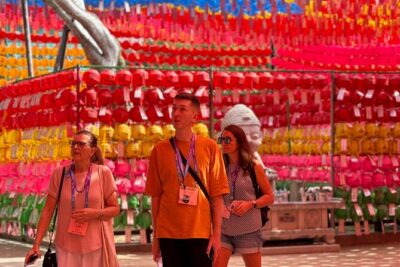
Best Things to Do – Half Day Seoul Trip (Seoul Palace & Temple)
Read our review →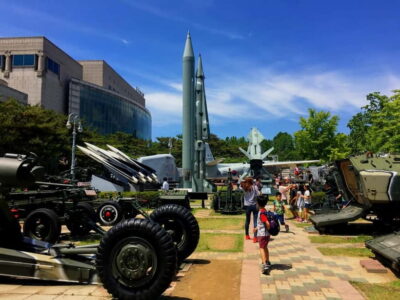
Seoul: War Memorial, Jogyesa Temple & Tapgol Park Tour
Read our review →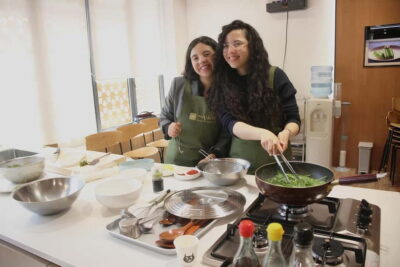
Seoul: Vegan Temple Food Class, Jogyesa & Changdeokgung Tour
Read our review →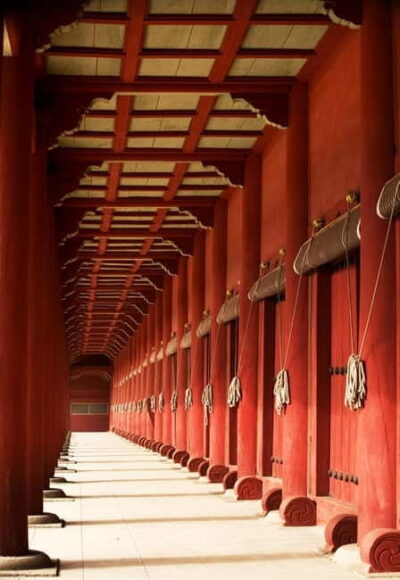
Seoul: UNESCO Sites tour: Palace, Shrine & Bukchon Village
Read our review →
Seoul: Temple & Starfield COEX Mall Gourmet Tour in Gangnam
Read our review →
Danyang Tour:Guinsa Temple & Bobaljae & Cheongpung Cable Car
Read our review →This tour also ranks in