Review · CHIANG MAI
Chiang Mai: Historic Temples and City Guided Walking Tour
Chiang Mai’s best introduction may be a slow walk through its old city, where temples, monuments, cafés, and everyday street life sit close together. This three-hour route links four important temples with the Three Kings Monument, giving you useful context before you begin exploring on your own.
I like the small group limit of 10, which gives you a fair chance to ask questions. I also like the easy pace and early start options, especially in hot weather. The main drawback is that you’ll walk in the sun, and the two paid temple entries cost an extra 100 THB in total.
Key points to know before you book
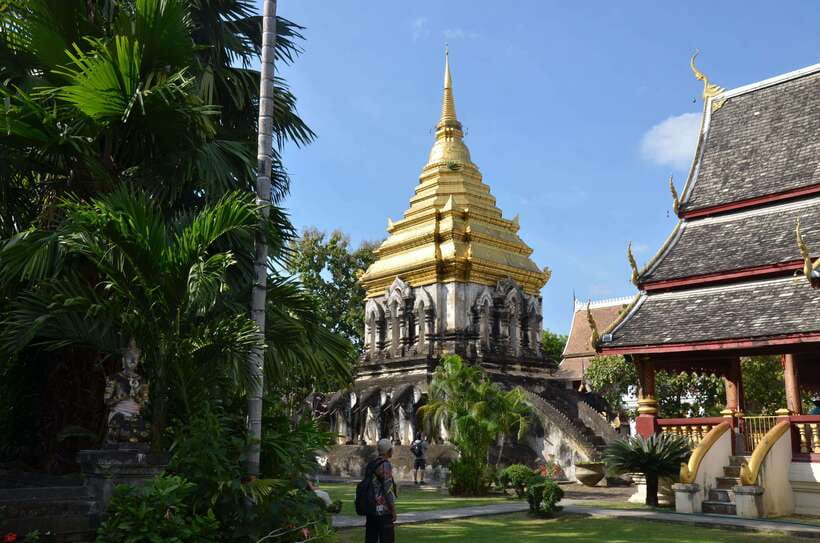
- Wat Chiang Man begins the story: Visit Chiang Mai’s oldest temple, founded in 1296.
- Four temples, one compact route: See Wat Chiang Man, Wat Phra Singh, Wat Phan Tao, and Wat Chedi Luang on foot.
- Local guides make the difference: Guides including Jen, Pun, Danny, and Faan explain Buddhist customs, Lanna culture, and city history in English.
- The teak hall is a highlight: Wat Phan Tao’s wooden viharn was built almost entirely from teak and was once connected to a royal palace.
- Budget-friendly pricing: The $21 fee includes the guide and water, while Wat Phra Singh and Wat Chedi Luang each charge 50 THB.
- Dress for temples, not just the heat: Your shoulders and knees must be covered, and shorts, short skirts, and sleeveless shirts are not allowed.
Why this walking route works so well
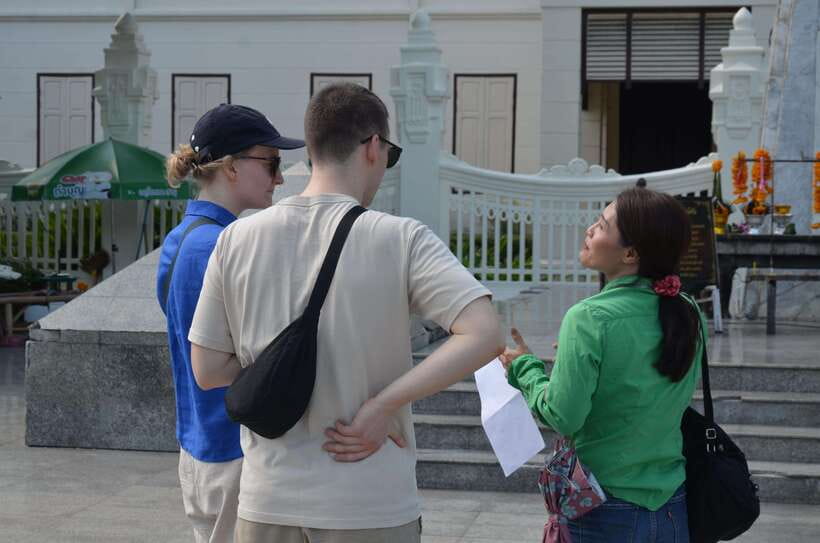
Chiang Mai’s old city is easy to picture on a map, but its story is easier to understand when you walk between the temples. The route moves from the city’s oldest religious site toward its political center, then on to some of its finest Lanna architecture.
The guide does more than point out gold roofs and carved doors. You’ll hear about Buddhism in northern Thailand, the old Lanna kingdom, local legends, and the meaning behind temple details. Several guides are praised for clear English, patience, humor, and practical help. Danny, for example, is a former monk of 12 years, which gives him a useful background when discussing Buddhist practice.
The small-group format matters. With no more than 10 people, you can usually hear the explanations without fighting for space near a doorway. You can also ask about details that catch your eye, from a Buddha image to a story about Chiang Mai’s rulers.
This is not a private tour, and your exact guide can vary. Jen, Pun, Danny, Jane, Faan, Jackie, and other guides lead the walks. The strongest descriptions of the experience point to a common quality: guides explain plenty without burying you in facts. That balance is important during a temple visit, when too much information can turn beautiful places into a list of dates and names.
More Temple Walking Tours in Chiang Mai
- Chiang Mai: 3 Hour Old City and Temples Guided Walking Tour
★ 4.6 · 1,568 reviews - Chiang Mai: Temple And City Walking Tour Part I
★ 4.7 · 244 reviews - Ex-monk city & temples walking tour: (3.5 hours / 1.7 km.)
★ 4.8 · 35 reviews
Starting at Wat Chiang Man, Chiang Mai’s oldest temple
Meet your guide inside the grounds of Wat Chiang Man and look for the Beyond Experience sign. This meeting point is central to the route, but give yourself enough time to find the correct entrance and guide. One person had trouble locating the sign, although the guide used WhatsApp to help with directions.
Wat Chiang Man was built in 1296, making it the oldest temple in Chiang Mai. It is a fitting starting point because the temple connects directly with the city’s foundation. Here, your guide sets the scene for Chiang Mai’s old city and explains why temples remain central to local life.
The visit lasts about 30 minutes. That is enough time to look at the buildings, hear the main stories, and take photographs without using up half the tour at the first stop. The grounds also give you an early sense of the route: this is a walking tour through active religious places, not a series of museum halls.
Bring respectful curiosity. You are visiting functioning temples, so keep your voice low and follow instructions about where to sit or stand. The supplied guidance requires covered shoulders and knees inside the temples. A scarf is useful if your clothing is borderline, but it should not replace proper coverage.
The Three Kings Monument and the old city center
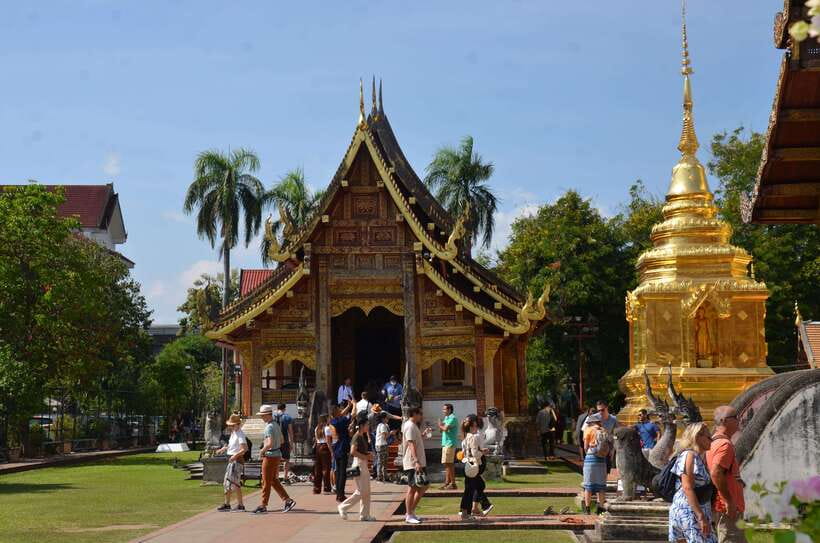
From Wat Chiang Man, the route continues west to the Three Kings Monument. This stop takes about 10 minutes and offers a quick look at one of the old city’s main public spaces.
The monument sits in a large open square at the heart of the walled city. It is less about entering a temple and more about understanding Chiang Mai’s civic story. Your guide can connect the monument with the city’s founding and the role of its rulers.
Ten minutes may sound brief, but that is sensible here. You get the setting and the explanation, then keep moving toward Wat Phra Singh. Along the way, you walk on smaller streets and pass shops and cafés. This is one of the tour’s practical pleasures: you see parts of the old city at street level instead of moving between attractions by vehicle.
The route also helps you get your bearings. After three hours, you should know where several major temples sit in relation to one another, which makes independent exploring easier later in your stay.
Wat Phra Singh and classic Lanna design
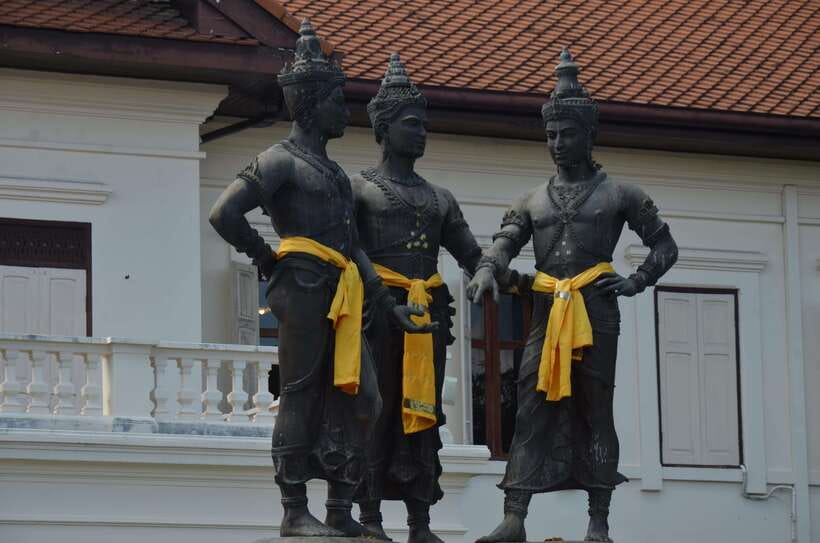
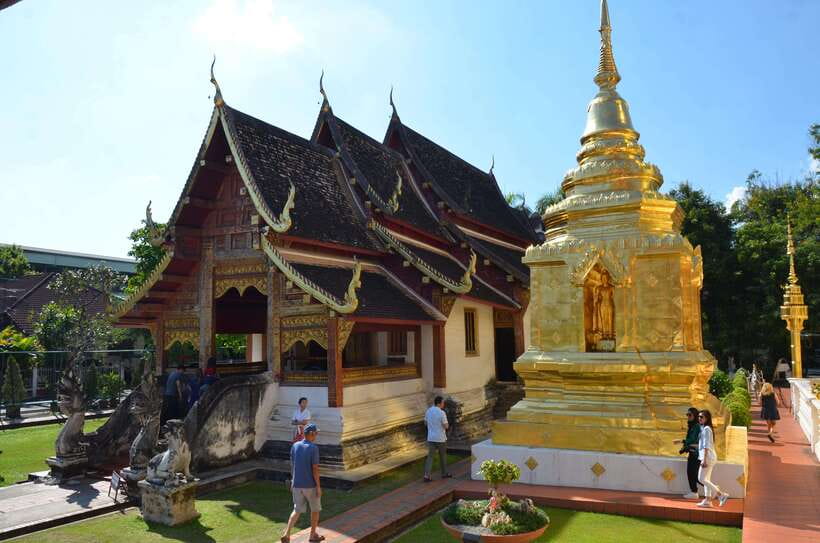
Wat Phra Singh receives the longest stop after Wat Chedi Luang, with about 40 minutes for a guided visit. It is known as one of the finest examples of classic Lanna temple architecture in Thailand.
This is where the guide’s explanation becomes especially useful. Lanna design is not simply a matter of pointed roofs and decorative details. The buildings, images, and layout reflect northern Thailand’s religious and royal traditions. A good guide helps you see the difference between decoration that looks pretty and design that carries meaning.
You’ll have time for photographs and for a closer look at the temple grounds. The guide can explain Buddhist stories and customs, then leave room for you to observe on your own. That mix works better than a nonstop lecture.
Wat Phra Singh requires a 50 THB entrance ticket, not included in the tour price. Carry cash, as cash is specifically listed among the items to bring. The cost is modest, but remember that it is separate from the $21 booking price.
This stop can feel warm, particularly during the middle of the day. Wear light, comfortable clothing that still covers your shoulders and knees. Comfortable shoes matter more than stylish ones. You will not be covering great distances by city standards, but you are on your feet for much of the three hours.
More Temple Walking Tours in Thailand
- Bangkok: City Highlights Temple and Market Walking Tour
★ 4.5 · 3,990 reviews - Bangkok: Grand Palace and Wat Phra Kaew Guided Walking Tour
★ 4.4 · 2,417 reviews - Bangkok: Wat Pho and Wat Arun Guided Walking Tour
★ 4.6 · 1,720 reviews - Bangkok: Grand Palace and Wat Arun Guided Walking Tour
★ 4.5 · 118 reviews
Wat Phan Tao, the quiet teak-wood highlight
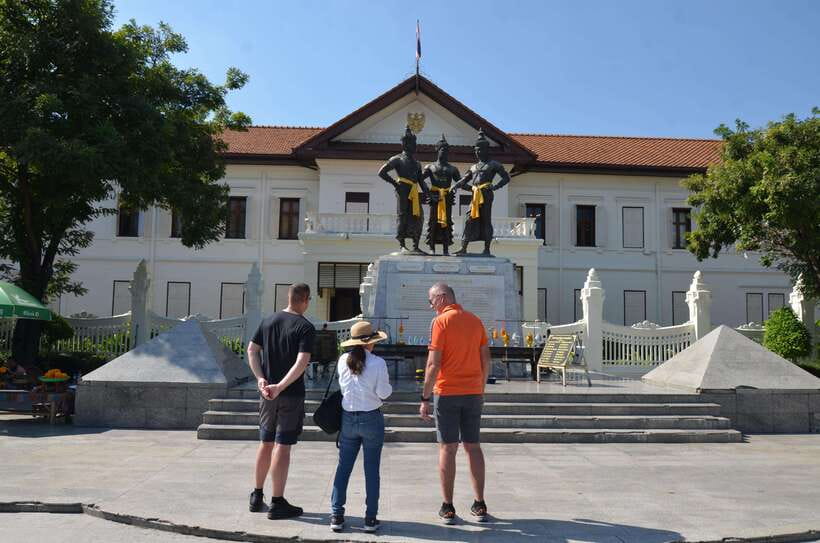
Wat Phan Tao is a shorter stop of about 15 minutes, but it may be the most distinctive building on the route. Its main ordination hall, or viharn, is made almost entirely of teak wood.
The hall includes a large teak throne once used by Chiang Mai’s rulers, and the building was originally part of a royal palace. That detail gives the visit extra weight. You are not simply seeing an old wooden hall. You are looking at a structure tied to the city’s royal past and religious life.
The shorter timing makes sense because Wat Phan Tao is more focused. Your guide can explain the building’s purpose and royal connection, while you take in the dark wood, carved surfaces, and different feel compared with the more ornate temple buildings.
I would pay close attention here. Visitors often hurry past wooden structures because they do not shine in the same way as a gilded temple. Wat Phan Tao rewards a slower look at materials and craftsmanship. Ask your guide about the hall’s former palace use if the topic does not come up.
Wat Chedi Luang and the ruined central chedi
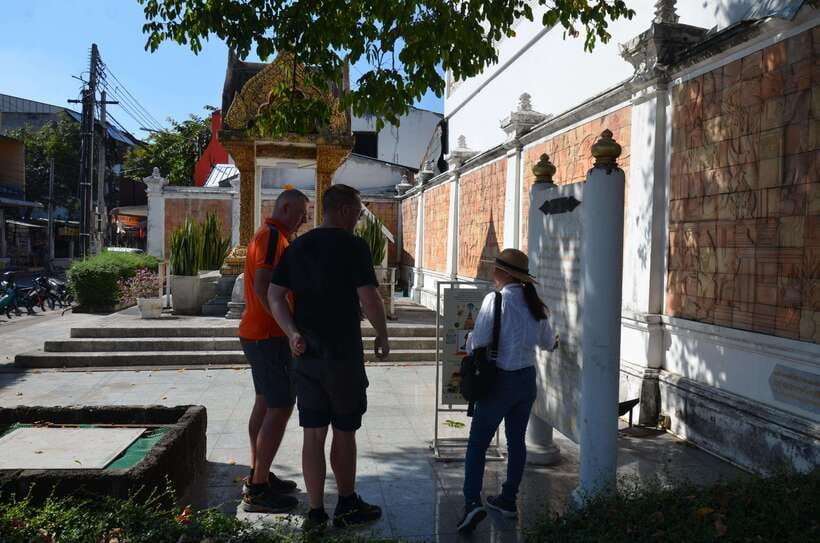
The final main stop is Wat Chedi Luang, with about 40 minutes for a guided visit. The temple is famous for its enormous ruined chedi, which gives the site a powerful, weathered character.
This is not polished perfection, and that is part of its appeal. The damaged chedi lets you see the scale and age of the structure in a way that a freshly restored building may not. Your guide can place the ruins within Chiang Mai’s wider story and explain why the temple remains such an important site.
Inside the main prayer hall, you’ll see a majestic standing Buddha. The image gives the stop a strong visual finish, especially after the darker teak hall at Wat Phan Tao. The route ends here at Watchediluang Varaviharn, so you can continue exploring nearby after the guide departs.
Wat Chedi Luang also charges a 50 THB entrance fee. Together with Wat Phra Singh, the additional cost is 100 THB. This is small compared with the tour price, but it is worth planning for so you are not caught without cash at the entrance.
The final stop can also be the busiest part of the walk. Stay close enough to hear your guide, especially near roads and entrances. One guide was praised for looking after older walkers, pointing out restrooms, and keeping the group safe around busy roads. That kind of care is useful, but you should still watch your footing and traffic.
What the $21 price really gets you
At $21 per person, this is a low-cost way to get an organized introduction to Chiang Mai’s old city. The price includes an English-speaking local guide and a bottle of water. It does not include the 100 THB in temple entrance fees or food.
The real value is the interpretation. You can walk past these temples for free, but you may miss the reasons they matter, the difference between Lanna buildings, and the stories behind the images and royal connections. The guide gives structure to what might otherwise be a pleasant but unfocused stroll.
The cost also compares well with the group size. A maximum of 10 people is small enough for questions and personal attention, though the actual group may be smaller. Some walks have had only two, four, or six people, creating a more personal feel without the price of a private tour.
Do not book this expecting an all-day cultural course. Three hours gives you a strong overview, not every detail of Chiang Mai’s religious life. You will see the major highlights, then need to do more reading or take another tour if you want a fuller study of Buddhism and Lanna art.
Timing, weather, and what to wear

An early start is a smart choice. One participant specifically appreciated beginning before the heat became intense, and the walking pace was described as relaxed. Check the available start times and choose the coolest practical option.
Chiang Mai is hot, and this tour keeps you outdoors for most of three hours. Bring sunscreen, a hat, water, and comfortable shoes. The tour provides a bottle of water, but you may want more for a warm day.
July through mid-October is rainy season in Thailand. Carry an umbrella or raincoat during this period. Rain can change the feel of the old city quickly, so a lightweight waterproof layer is more useful than hoping the forecast stays dry.
Temple clothing needs a little planning. Your shoulders and knees must be covered. Avoid shorts, short skirts, and sleeveless shirts. A scarf can help with coverage, but comfortable long trousers or a longer skirt are the simpler choice.
Large bags and luggage are not allowed. Leave your suitcase at your accommodation and carry only what you need for the walk. Pregnant people and those with back problems are advised not to take this experience, since it involves sustained walking and standing.
The kind of guide you may get
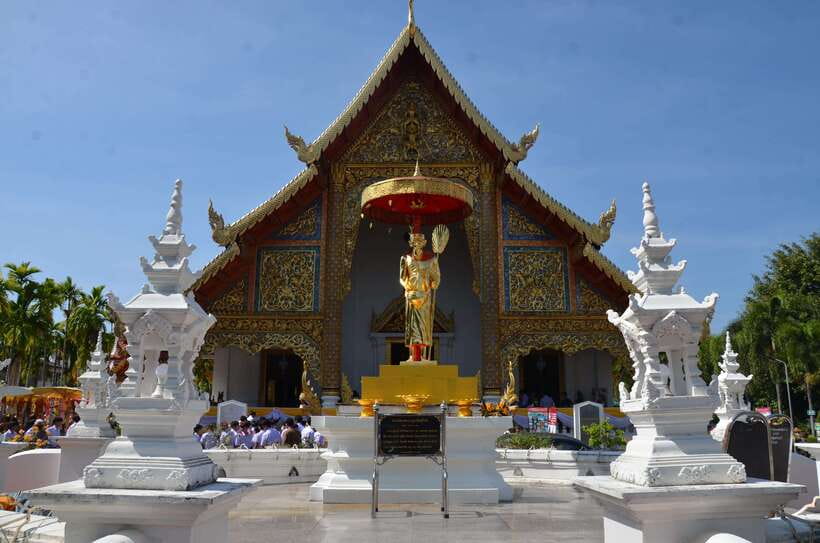
The guides are a major part of the experience, and names that appear among the tour staff include Jen, Pun, Danny, Jane, Faan, Jackie, and others. You cannot select a particular guide from the information provided, but the repeated strengths are clear: friendly delivery, strong English, patient answers, and useful local suggestions.
Jen is often described as enthusiastic, clear, and good at explaining Thai culture and Buddhism. Pun is praised for answering questions and making sure people understand the meaning of each site. Danny has a former monk background and is especially suited to visitors who want more context about Buddhist practice.
The guides also add small practical touches. Some help take group photographs, suggest coffee shops, or recommend local food. One person followed a guide’s advice and found an excellent bowl of khao soi afterward. These suggestions are not the main product, but they can make the tour feel connected to the rest of your time in Chiang Mai.
The quality of a walking tour depends on communication, and the available feedback points strongly toward clear explanations. Still, different guides have different styles. Expect a well-led group walk, not a scripted performance with identical wording at every stop.
Who should book this experience?
I would book this tour near the beginning of a Chiang Mai visit. It gives you a useful map of the old city and a basic understanding of Lanna culture before you visit more temples alone.
It suits first-time visitors, history fans, and anyone who wants help reading Buddhist architecture. It also works for people who prefer a gentle introduction rather than a packed day of attractions.
The tour may be less suitable if you dislike walking in heat, want a private guide, or prefer to spend a long time at one temple. You will visit several places in three hours, so each stop has a set rhythm. The guide explains, you look around, you take photographs, and then the group moves on.
It is also not designed for people with back problems or pregnant people. The walk may be manageable for many older visitors, but you should be comfortable standing and walking for most of the session.
Should you book it?
Book this Chiang Mai walking tour if you want good historical context at a modest price and prefer seeing the old city on foot. The route is well chosen, the group is limited to 10, and the temples offer plenty of variety: the city’s oldest temple, a civic monument, classic Lanna architecture, a royal teak hall, and a huge ruined chedi.
Skip it if you already know Chiang Mai’s temples well or want a slow, private visit with lots of time for photography. For most first-time visitors, though, the three hours should pay off. You leave with a better sense of where you are, what you are looking at, and why these temples matter.
FAQ
How long does the Chiang Mai temple walking tour last?
The tour lasts three hours.
Where does the tour begin?
It begins at Wat Chiang Man. Look for the Beyond Experience sign inside the temple grounds.
Where does the tour finish?
It finishes at Watchediluang Varaviharn, at Wat Chedi Luang.
Which temples are included?
The route includes Wat Chiang Man, Wat Phra Singh, Wat Phan Tao, and Wat Chedi Luang. It also stops at the Three Kings Monument.
Are temple entrance fees included?
No. Wat Phra Singh charges 50 THB and Wat Chedi Luang charges 50 THB. Food is also not included.
What language is the tour conducted in?
The live guide conducts the tour in English.
What should I wear?
You should wear comfortable clothing that covers your shoulders and knees. Shorts, short skirts, and sleeveless shirts are not allowed when entering the temples.
More History Tours in Chiang Mai
- Mt. Fuji Heritage Tour: Traditional Villages, Lakes & Shrine
★ 4.5 · 509 reviews - Malta: Prehistoric Temples, Limestone Heritage & Blue Grotto
★ 4.2 · 412 reviews - Day Trip From Addis Ababa See Historical Monastery,Stunning Nature,Animals,Birds
★ 5.0 · 303 reviews - “Porto: Fado Show with Guided Tour in a Historic Monastery”
★ 4.9 · 164 reviews
Temple visits we reviewed lately in Chiang Mai
- Red, Blue, White Temples & Hot Spring Trip from Chiang Mai★ 4.4 · 143 reviews
- Monk trails hike, Wat Phalat, Monk chanting, Wat Doi Suthep.★ 5.0 · 3 reviews
- Long Neck Village, Silver Temple & Chiang Mai Top Sites★ 4.7 · 17 reviews
- Lalita Cafe & Chiang Rai Temple(White+Blue) from Chiangmai★ 4.8 · 5 reviews
- Private : Sticky Waterfall & Secret Temple & Karen Village.★ 5.0 · 9 reviews
- Chiang Mai: Temples & Culture Tour★ 4.7 · 64 reviews
- Half Day Morning Wat Pha Lat & Wat Phra That Doi Suthep Tour★ 4.8 · 269 reviews
- From Chiang Mai: White Temple, Blue Temple & Black House★ 4.5 · 15 reviews
Chiang Mai Temple Tours, compared.
Chiang Mai: Chiang Rai Temples, Karen Tribe and Hot Springs
Read our review →
Chiang Rai White Temple and Blue Temple Day Tour
Read our review →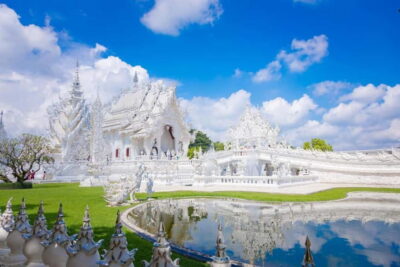
Chiang Mai: White, Red/Black & Blue Temples Tour with Lunch
Read our review →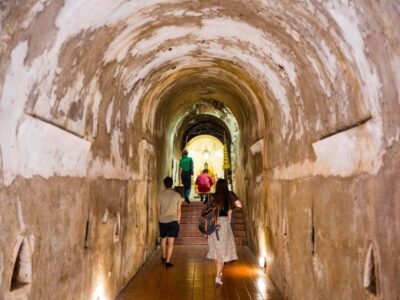
Chiang Mai: Doi Suthep and Wat Umong Enchanting Evening Tour
Read our review →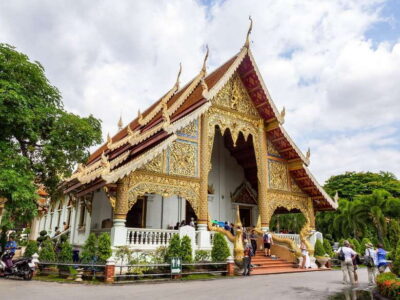
Chiang Mai: 3 Hour Old City and Temples Guided Walking Tour
Read our review →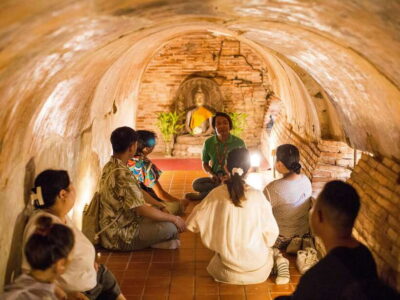
Chiang Mai: Doi Suthep, Wat Umong, and Pha Lat Sunrise Tour
Read our review →
Chiang Rai Temples: Private Tour from Chiang Mai
Read our review →