
Review · KYOTO
Kyoto: Calligraphy class at Buddhist temple in city center
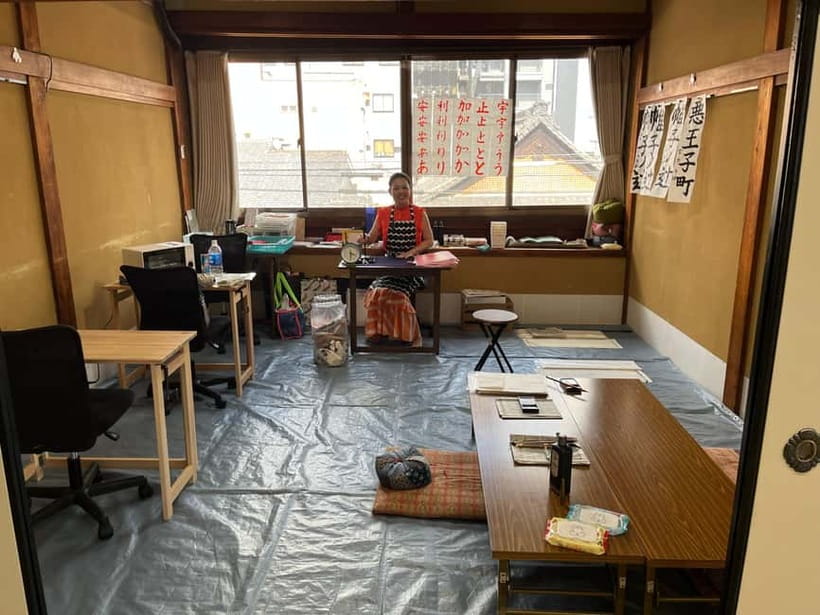
Kyoto’s city center gives you plenty of temples to photograph, but this class lets you step into one and use it as a place of learning. Inside Seigan-ji Temple, you’ll sit on tatami, handle traditional brushes and ink, and work with Imai Sensei, a Japanese calligrapher with more than a decade of experience.
I like the small group size, which allows for personal help, and the fact that you leave with a real piece of artwork rather than a mass-produced souvenir. The main consideration is practical: most of the class happens on the floor, and calligraphy takes more arm control than it first appears. Bring a few ideas for your kanji, and don’t practice until your hand is tired.
Key points at a glance
- A working lesson, not just a demonstration: You practice basic strokes, then create your own finished piece.
- A special setting: The class takes place in a traditional washitsu with tatami flooring inside a Buddhist temple.
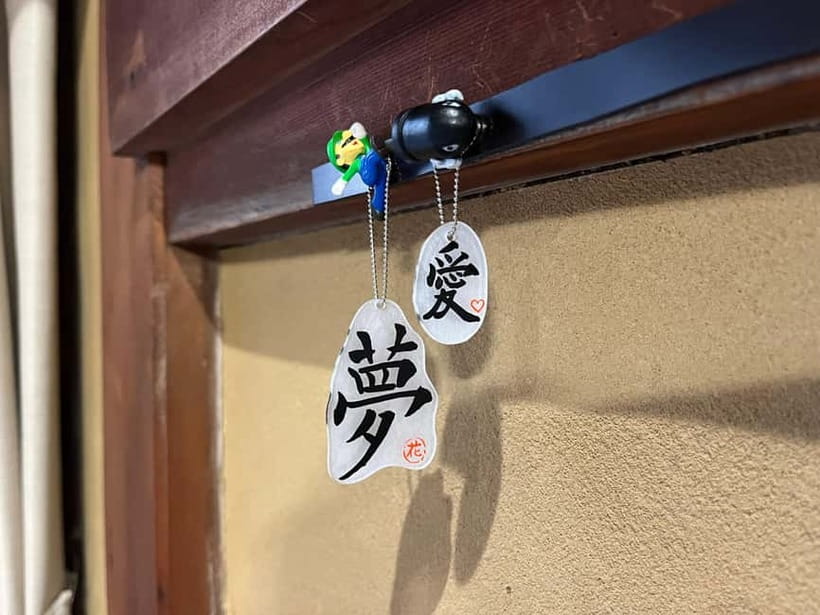
- A souvenir with meaning: Your chosen character goes on a shikishi, a square piece of presentation cardboard, and you also receive a personalized keychain.
- Helpful multilingual support: Instruction is available in English, Spanish, Japanese, and Dutch, with guides such as Jose and Saskia assisting with translation and photos.
- A compact Kyoto activity: The 70-minute session fits neatly between sightseeing, shopping, and a meal in the central Kyoto area.
- A few physical limits: Floor seating is standard, desks are limited, and the activity is not suitable for visually impaired participants.
Why this Kyoto calligraphy class feels different
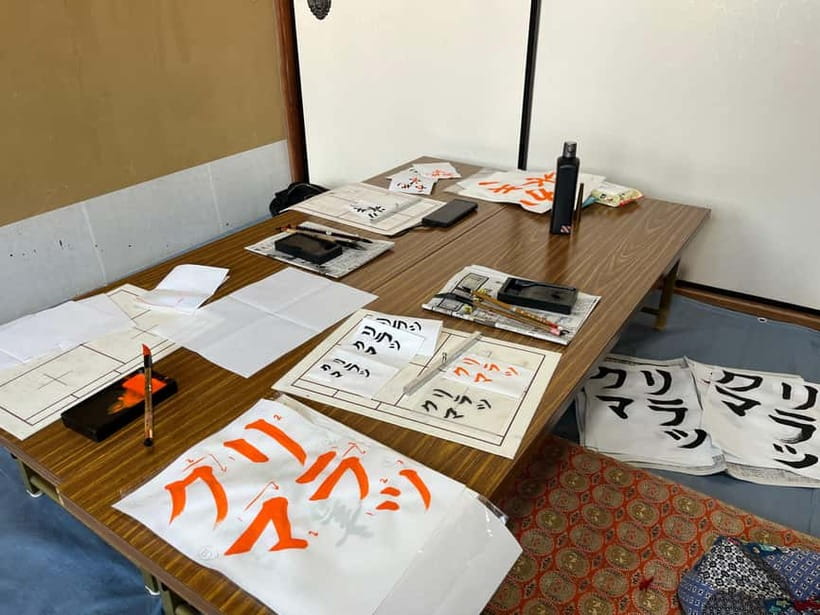
Calligraphy, or shodo, is not simply Japanese handwriting with a fancy brush. It brings together the form of a kanji, the order of its strokes, the pressure of the brush, and the empty space around the finished character.
That makes this class more useful than a quick cultural demonstration. You are not just watching an instructor produce a perfect character. You are learning enough of the process to understand why the strokes go in a certain order and how a small change in pressure alters the result.
I also like the setting. The lesson takes place in a Japanese-style room with tatami flooring, sliding doors, and the quiet feel of a temple interior. It is not a silent meditation session, since people ask questions and receive guidance, but the room usually settles into a calm rhythm as everyone concentrates.
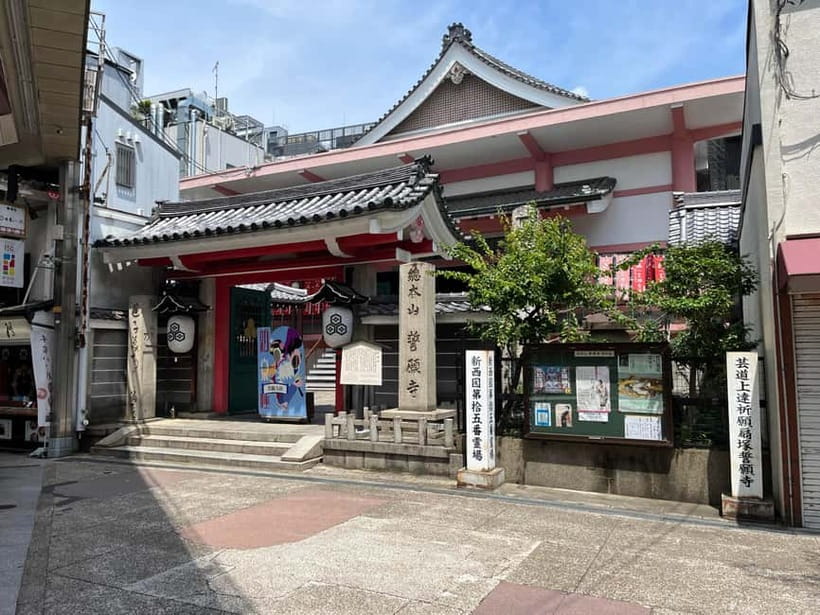
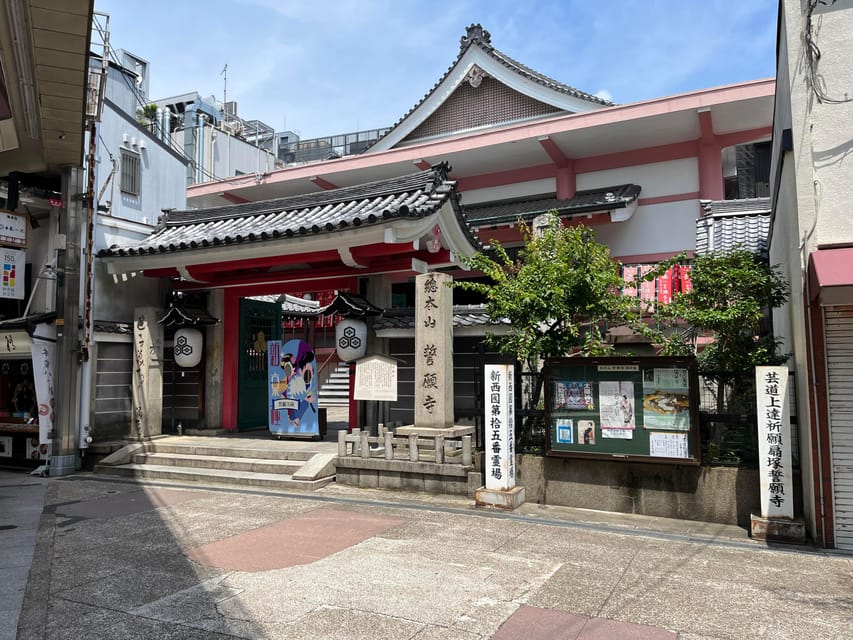
The class is held at Seigan-ji Temple in the Shinkyogoku shopping street area, right in central Kyoto. That location matters. You can pair the class with time around Nishiki Market and nearby shopping streets instead of spending much of your day crossing the city.
More temple visits with a hands-on workshop in Kyoto:
- Chinese Kungfu class in old temple beside Forbidden Ci
★ 4.8 · 53 reviews - Seoul: Vegan Temple Food Class, Jogyesa & Changdeokgung Tour
★ 4.6 · 34 reviews - Bali: Full-Day Private Water Temple Ritual & Yoga Class
★ 4.6 · 31 reviews
Finding the temple without bothering the monks
The meeting point is directly in front of Seigan-ji Temple, under the roofed shopping street. Look for the staff member holding a red lantern on a stick.
This instruction is worth taking seriously. Do not climb the stairs into the temple looking for the workshop, and do not ask the monks or temple workers if you are in the right place. Wait outside for the person with the lantern.
Your guide may be Jose, Saskia, or another member of the multilingual team, depending on the language and session. Jose is also often involved in taking photographs during the class, which is useful because your hands will be occupied with ink and paper.
Read the voucher carefully after booking. The meeting instructions are specific, and following them makes the start much easier.
The 70-minute lesson, from first brush to finished art
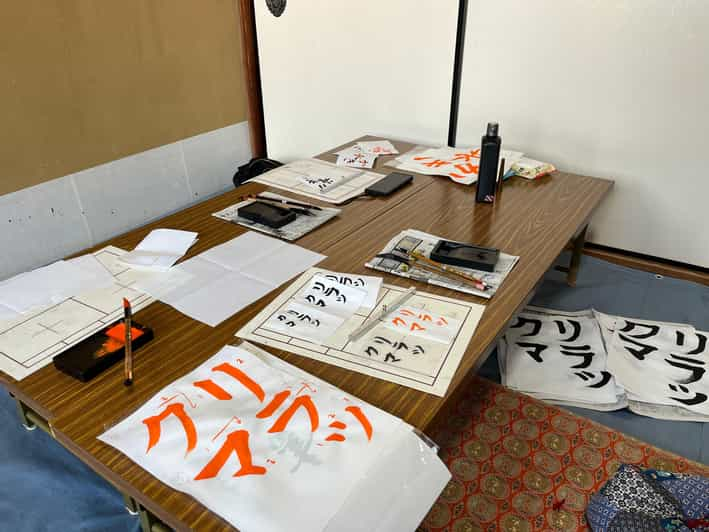
The class begins with introductions to the teacher and translator. You’ll learn how the session works, see the materials, and get a short explanation of calligraphy’s place in Japanese education and daily culture.
Next comes the most personal choice of the afternoon: selecting the word or kanji you want to write. Examples are available, but I strongly suggest arriving with two or three ideas. You might choose a character connected to a personal value, a name, a place, or a feeling you want to remember from Japan.
If you want to write a name or a word that does not have a direct Japanese equivalent, ask the instructor or translator for help. The class can guide you toward a suitable character, but a little advance thought gives you more time to focus on the writing itself.
The teacher then introduces the tools. The materials include washi paper, a brush, ink, a bunchi paperweight, and shitakami practice paper. You do not need to bring your own kit, and all the working supplies are provided.
You will practice basic lines before attempting your chosen character. This is where the class becomes hands-on. The instructor shows you how to control the brush, and the translator explains the points in your chosen language. English, Spanish, Japanese, and Dutch support is available.
The early exercises may look simple, but they are not quite as easy as they appear. A straight line depends on pressure, speed, and the angle of the brush. A rounded stroke can become too heavy, too thin, or uneven in a moment.
After the basic lines, you practice the character itself. The teacher and assistants move around the room, offering individual suggestions. The small maximum of six participants helps here. You are not lost in a large class, and you can receive help with a stubborn stroke before moving to the final paper.
Finally, you write the selected character on a shikishi. This is a special square cardboard format designed for display. It gives your work a more finished appearance than ordinary practice paper and makes a practical souvenir for a wall, shelf, or mantelpiece.
The teacher also makes a keychain featuring your chosen character. That small gift is separate from the main artwork, but it adds a personal touch and is easy to pack.
What the temple room adds to the experience
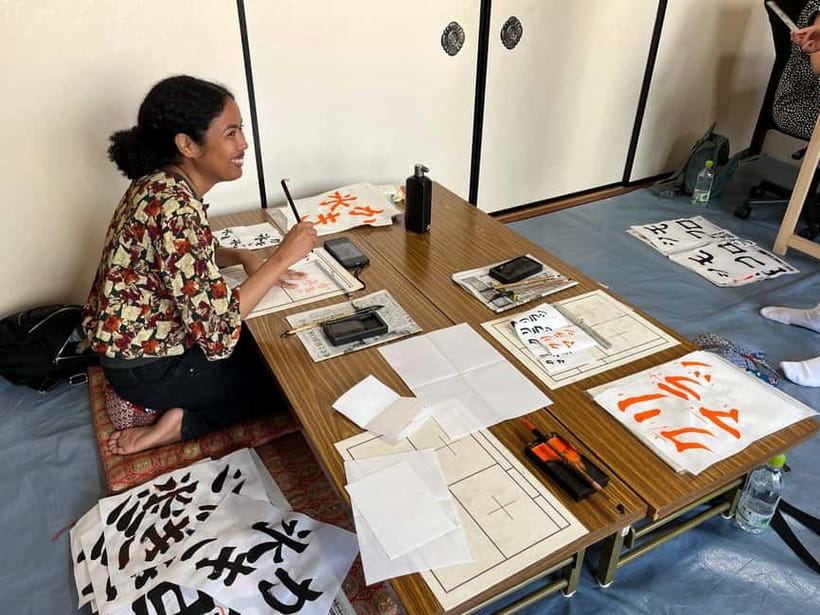
A calligraphy lesson could take place in a modern classroom, but the washitsu changes the mood. You remove your shoes before entering, so bare feet are not allowed, and you sit on a zabuton floor cushion in a room with tatami mats.
The room gives you a direct sense of Japanese interior design. You are not simply looking at a temple from outside or passing through a tourist route. You are sitting in a traditional space and using it for an art that has been part of Japanese education for generations.
The setting also encourages patience. Calligraphy rewards a slower pace, and the temple room makes it easier to focus on the brush rather than on your phone or the next sightseeing stop.
There is a tradeoff. Most seating is on the floor, and only a limited number of desks are available. If your knees, hips, or legs make floor sitting difficult, contact the operator before booking. The activity is listed as wheelchair accessible, but the normal class arrangement still relies heavily on floor cushions.
The experience is not suitable for visually impaired participants or very young children. The listed restrictions cover children under five, with separate age limits also given for children under two, three, and four. In practical terms, this is best for adults, older children, and families with children who can sit quietly and follow a short lesson.
More Temple Tours around Kyoto:
- Kyoto: Tea Ceremony Ju-An at Jotokuji Temple
★ 4.9 · 3,207 reviews - Osaka/Kyoto:Kinkakuji,Arashiyama,FushimiInariShrine,NaraPark
★ 4.1 · 1,596 reviews - Arashiyama Bamboo, Temple, Monkeys, or Secret Sake Brewery
★ 4.8 · 886 reviews - Kyoto: Arashiyama Bamboo Forest, Monkeys, Matcha & Temple Tour
★ 5.0 · 759 reviews
How much personal attention should you expect?
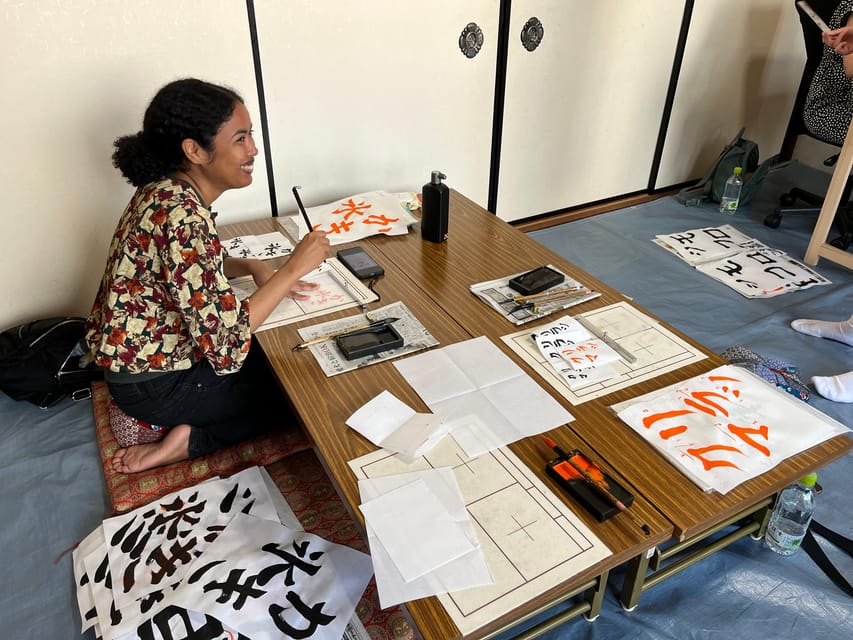
The teacher leads the technical side, while the translator makes the instructions understandable and helps you follow each step. That division works well for beginners because you receive both a visual demonstration and spoken guidance.
The teaching is patient rather than rushed. You are shown the lines, given time to practice, and corrected as you go. Guides also encourage you when a first attempt looks uneven, which is helpful because nearly everyone begins with a character that looks less graceful than the teacher’s version.
The class can be especially useful if you have never held a Japanese calligraphy brush. You learn the basic tools, stroke order, and brush movement in a short period. You will not become an expert calligrapher in 70 minutes, but you will understand why the art demands control and repetition.
Left-handed participants should expect an extra challenge. One participant found the work harder with the left hand and tried the right hand as well. That does not mean left-handed people should avoid the class, but you should be ready to adapt your grip and accept that the traditional technique may feel less natural at first.
There is also a sensible limit to practice. The class guidance warns that too much writing can tire your arm and hurt the quality of your final piece. I would rather produce a few thoughtful practice characters than fill every sheet and arrive at the shikishi with a shaky hand.
Is $55 a good value?
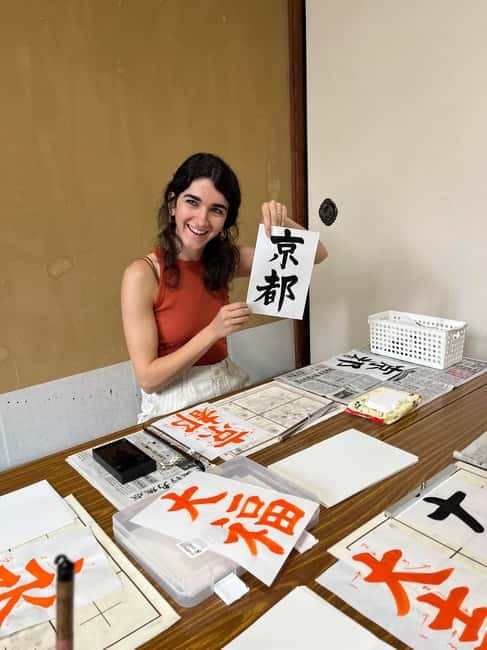
At $55 per person, this is not the cheapest one-hour activity in Kyoto. The value comes from the combination of instruction, materials, temple access, a finished shikishi, and the personalized keychain.
If you only want a quick souvenir, a shop-bought calligraphy print will cost less. But that misses the point. Here, the souvenir records something you learned and made yourself, even if the brush lines are not perfect.
The small group also matters when judging the price. A class limited to six gives you a fair chance of receiving individual tips rather than simply copying from a distance. The translator and teacher work together, and the guides may take photos while you practice, so you can keep a record without smearing ink on your phone.
Food and drinks are not included. You can buy drinks from vending machines outside the temple, so plan to eat before or after the session rather than expecting refreshments in the room.
The activity also has free cancellation up to 24 hours before the start time, and you can reserve now and pay later. Those policies make it easier to fit the class around weather, temple visits, and other fixed bookings.
Who will enjoy this most?
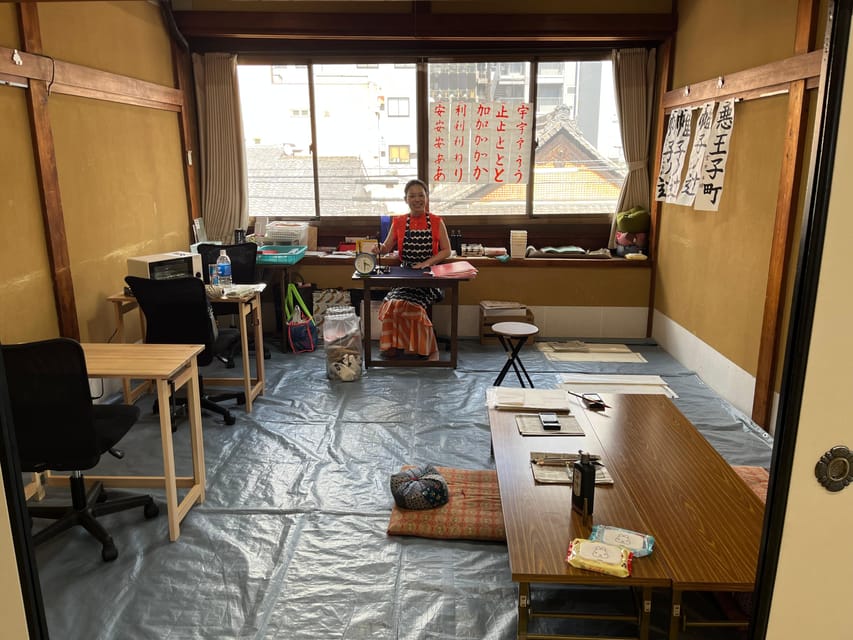
I would choose this class if you want a quieter, hands-on break from Kyoto’s major sights. It suits solo visitors, couples, families with well-behaved older children, and anyone who prefers making something over watching another presentation.
It is also a good choice for people who care about meaningful souvenirs. Your final piece can display a word that has personal importance, and the keychain gives you a smaller version to carry home.
You do not need artistic ability. In fact, beginners may get more from the session because every stroke teaches you something new. The class is structured so you begin with lines and examples before attempting the final work.
I would be more cautious if you dislike floor seating, have limited arm mobility, or want a fast, polished result with almost no practice. Calligraphy is a traditional discipline, not a craft project where everything comes out perfectly on the first try.
The atmosphere suits people who can work quietly for short stretches. You can talk with the guide and ask questions, but the room is mainly calm because everyone is trying to control the brush.
Practical tips before you book
Think of your word or kanji before you arrive. Bring a short list rather than relying on a last-minute decision, and choose something you would be happy to display at home.
Wear clean socks. Bare feet are not permitted in the temple setting, and shoes will be removed before entering the tatami room.
Allow a little extra time to find the lantern holder in the Shinkyogoku shopping street. The temple is central, but the covered arcade and nearby shops can make the meeting point easy to miss if you are hurrying.
Do not plan a meal inside the workshop. Food and drinks are not served, although vending machines are outside.
Keep your final shikishi flat during the rest of your day. The square format is easy to carry, but you will want to protect it from rain, crowded shopping bags, and accidental bends.
Should you book this Kyoto calligraphy class?
Yes, if you want a personal souvenir and a calm cultural activity in central Kyoto. The best parts are the temple room, the patient teacher, the multilingual support, and the chance to make a finished piece instead of watching a performance.
At $55, I see it as a fair value for a small-group lesson with materials and two take-home items. Book it when you want something more thoughtful than another photo stop, but be ready for floor seating, a little arm fatigue, and the humbling truth that beautiful calligraphy takes practice.
FAQ
How long does the calligraphy class last?
The class lasts about 70 minutes, including the introduction, tool explanation, basic stroke practice, chosen kanji practice, and final artwork.
Where do I meet the instructor?
Meet in front of Seigan-ji Temple in the Shinkyogoku shopping street. Look for the person holding a red lantern on a stick under the covered street.
Should I enter the temple to find the workshop?
No. Wait outside the front of the temple and do not climb the stairs or ask the monks and temple workers about the workshop.
What do I make during the class?
You practice basic lines and a selected word or kanji, then write your final character on a shikishi, a special square piece of cardboard. You also receive a keychain featuring your chosen character.
Are materials included?
Yes. The class provides washi, a brush, ink, a bunchi, shitakami, explanations, practice materials, kanji examples, and the materials needed for your souvenir.
Which languages are available?
The activity is available in English, Spanish, Japanese, and Dutch.
Is the class suitable for wheelchair users?
The activity is listed as wheelchair accessible, but most seating is on the floor with a zabuton and desks are limited. Contact the operator before booking if you need a specific seating arrangement.
Temple visits we reviewed lately in Kyoto
- Kyoto:Kiyomizu-dera Temple Rent a kimono and ride a rickshaw★ 4.8 · 7 reviews
- Kyoto: Zen Meditation at a Private Temple with a Monk★ 5.0 · 202 reviews
- KYOTO: Tempio Kiyomizu Pagode Gion “Geisya” (Guida Italiana)★ 4.7 · 17 reviews
- Kyoto: Kiyomizudera, Sanjusangendo, Ginkakuji and Higashiyama.★ 5.0 · 3 reviews
- Kyoto:Quiet Arashiyama and Sagano Temples★ 4.8 · 5 reviews
- Kyoto: Shakyo & Matcha in Historic Temple Garden★ 5.0 · 4 reviews
- Kyoto: Samurai Sword & Kimono Action Filming Experience★ 4.8 · 78 reviews
- Kyoto: Nara, Todaiji, Kasuga Taisha Shrine Private Full Day★ 4.9 · 18 reviews
Kyoto Temple Tours, compared.
Osaka/Kyoto:Kinkakuji,Arashiyama,FushimiInariShrine,NaraPark
Read our review →
Kyoto Arashiyama Walking Tour: Bamboo, Monkeys, Gardens & Secrets
Read our review →
Arashiyama Bamboo, Temple, Monkeys, or Secret Sake Brewery
Read our review →
Kyoto: Arashiyama Bamboo Forest, Monkeys, Matcha & Temple Tour
Read our review →
Osaka/Kyoto: Arashiyama, Nara & Fushimi Inari Shrine w/Lunch
Read our review →
Kyoto Zen Meditation & Garden Tour at a Zen Temple with Lunch
Read our review →This tour also ranks in