
Review · KYOTO
Kyoto:Quiet Arashiyama and Sagano Temples
Arashiyama is famous for bamboo, but its quieter side tells a more moving story. This private walk follows old streets and temple grounds where stories of lost love, abandoned dead, prayer, and daily faith give the scenery a human weight. Guide Masa explains the area in clear, narrative-style English and may demonstrate prayer and meditation customs.
I like the small-group format and the fact that temple admission is included in the $38 price. I also like the personal touch: Masa has helped visitors find artisan shops they might otherwise miss, and he has even adjusted plans when people arrived hungry. The main caution is pace. You cover a lot in three hours, so anyone who wants long, quiet pauses at each temple may find the route brisk.
Key points to know before you book
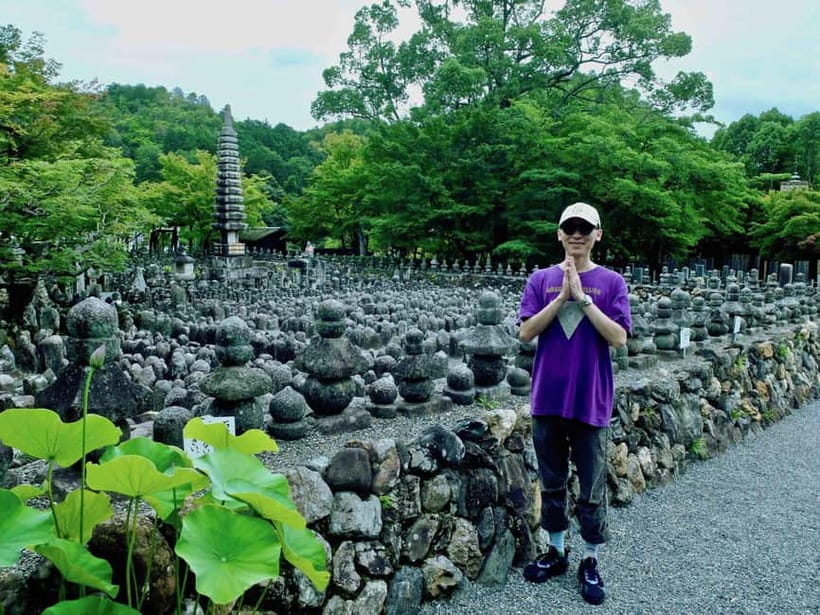
- Adashino Nenbutsu-ji gives the tour its emotional center, with thousands of stone figures linked to people who died without relatives to pray for them.
- Giou-ji adds a human story of love, rejection, and religious retreat, especially for visitors interested in women’s lives during the Heian period.
- Saga Toriimoto preserves an old suburban Kyoto streetscape, with farmhouses and machiya houses along the route.
- Masa’s hands-on explanations can include prayer and meditation traditions, not just dates and names.
- The $38 price includes temple admissions, a useful saving in Kyoto, where several paid sights can quickly add up.
- The route requires steady walking, and it is not suitable for wheelchair users or people with mobility impairments.
Why this Arashiyama walk feels different
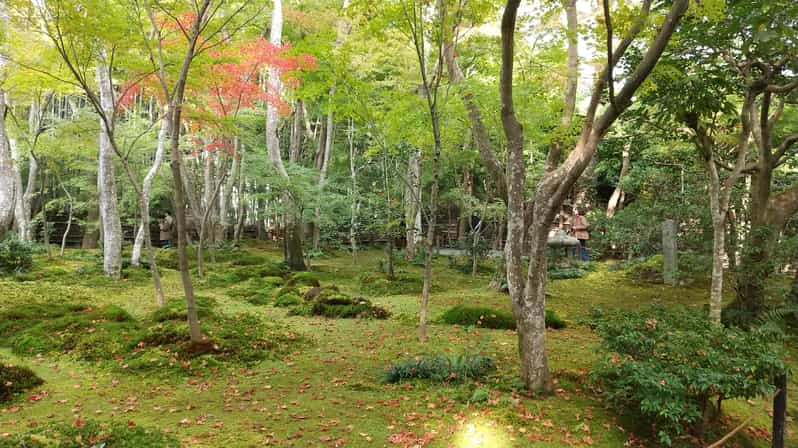
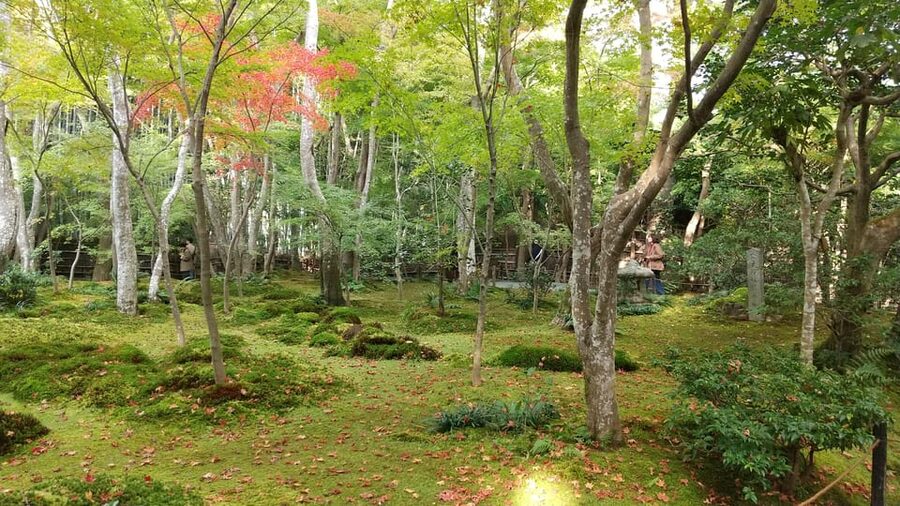
The usual Arashiyama visit can become a short loop between the train station, bamboo grove, and main temple. This tour takes a wider view. You still see the bamboo and Tenryuji, but you also walk into Sagano, where temples and old homes explain how this part of Kyoto developed beyond the postcard scenes.
The emphasis is on how people lived and thought. You hear about women who became nuns, monks who prayed for the forgotten dead, and communities that kept religious customs alive through simple rituals. That approach gives the three-hour walk more purpose than a string of photo stops.
Masa is the guide named in the experience details and in the feedback from past bookings. His strengths appear to be warmth, flexibility, and a willingness to show visitors more than the standard route. He has demonstrated prayer and meditation practices and pointed out artisan shops that are easy to miss.
The tour is private, so you are not trying to keep up with a large group or compete for the guide’s attention. That matters at temples, where a short question can help you understand a symbol or custom that would otherwise pass unnoticed.
More Temple Tours around Kyoto:
- Kyoto: Tea Ceremony Ju-An at Jotokuji Temple
★ 4.9 · 3,207 reviews - Osaka/Kyoto:Kinkakuji,Arashiyama,FushimiInariShrine,NaraPark
★ 4.1 · 1,596 reviews - Arashiyama Bamboo, Temple, Monkeys, or Secret Sake Brewery
★ 4.8 · 886 reviews
Starting at JR Saga-Arashiyama Station
Meet Masa at JR Saga-Arashiyama Station, outside the ticket gates in the plaza. He holds a sign with your name. Take care with the station name: this is not Hankyu Arashiyama Station or Randen Arashiyama Station.
Arrive 15 minutes early. The tour does not include transportation to the station, so you need to plan your own route there. Starting at JR Saga-Arashiyama places you on the northwestern side of the district, a useful position for reaching Sagano’s temples without first crossing the busiest central streets.
Wear shoes you can walk in for several hours. Bring water, sunscreen, and a hat in warm weather. A camera is welcome, though quiet temple spaces call for restraint. Smoking is not allowed during the activity.
Adashino Nenbutsu-ji and the meaning of the stone figures
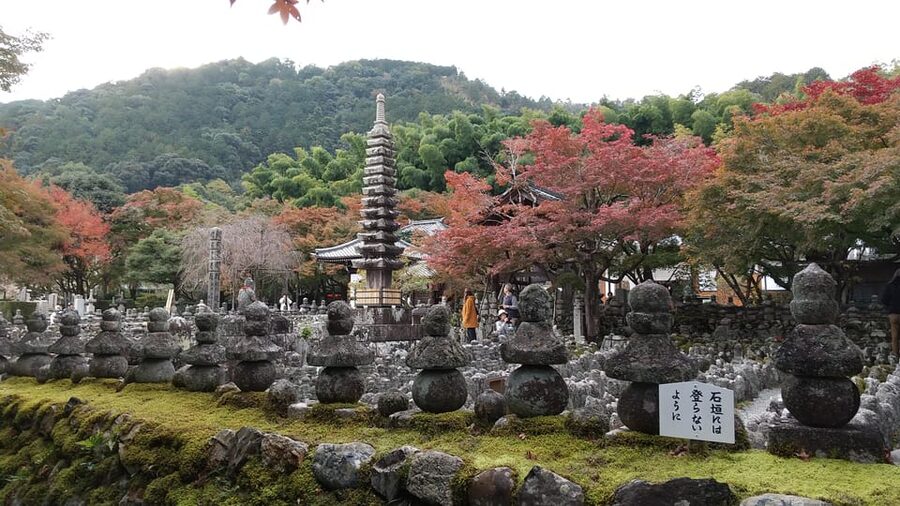
Adashino Nenbutsu-ji is one of the most serious stops on the route. The temple dates to the Kamakura period, in the 13th century, and is associated with Honen, the monk who taught nenbutsu, the practice of chanting the Buddha’s name.
The name Adashino is explained as meaning a vain or heartless field. The reason is grim. This area was once used for bodies that had been left without family care. In Buddhist terms, many of the dead were muen botoke, people without relatives to pray for them.
The temple gathered stone figures connected with those forgotten dead. Nearly 8,000 Buddhist statues now fill parts of the grounds. Their number changes the mood of the visit. One figure might feel decorative. Thousands make you think about memory, family, and what happens when a person disappears from ordinary life.
Masa’s explanation helps connect the statues to living practice. The annual Sento Kuyo ceremony in August lights thousands of candles and includes flower offerings. Even if you visit at another time, knowing about that ceremony gives the stone figures a stronger place in Kyoto’s religious life.
You should expect this stop to be reflective rather than lighthearted. It is also a place where a guide adds real value. Without context, the statues can look like a large collection of weathered stone. With the story, they become a record of people who had no one else to remember them.
The scheduled visit lasts about 45 minutes. That is enough time for an explanation and a proper look, but not for a slow, solitary meditation in every corner.
Giou-ji and a story of women at the edge of power
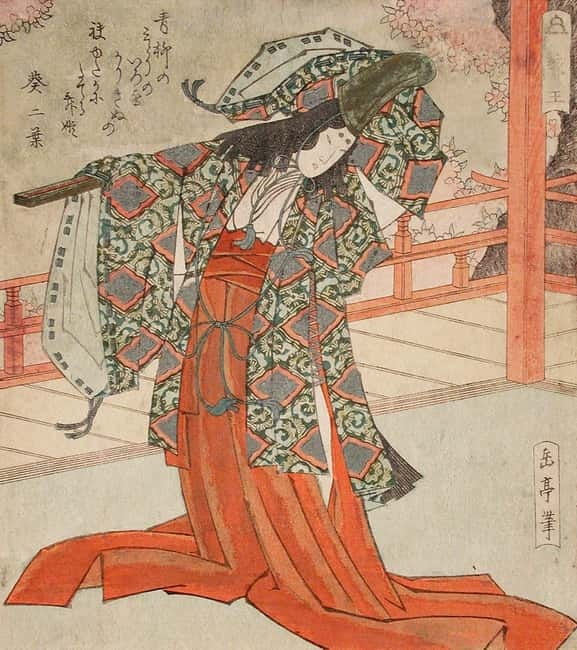
The tour also introduces Giou-ji, a small temple tied to the sorrows of women during the Heian period. Giou was a dancer favored by Taira no Kiyomori, a powerful military figure who lived from 1118 to 1181.
According to the story presented on the walk, Kiyomori first loved Giou, then turned his attention to another woman, Butsugozen. Giou was driven away and eventually became a nun. She lived at Giou-an with her sister and mother, where the three practiced Buddhism.
The story takes another turn. Butsugozen, the former rival, was also cast aside by Kiyomori. She became a nun and joined the others. Four women eventually practiced Buddhism together in the small house.
This is not simply a tale of romantic betrayal. It shows how women with little control over powerful men could withdraw from courtly life and create a different kind of existence through religion. The small scale of Giou-ji suits the story. It feels personal, domestic, and removed from the grander temple complexes elsewhere in Kyoto.
The tour description gives this temple particular attention, though the detailed stop list does not name it separately. Ask Masa at the start how Giou-ji fits into the day’s route. The walk is private, which makes that kind of clarification easy.
Same sacred ground, another way to see it:
- Kyoto Arashiyama Walking Tour: Bamboo, Monkeys, Gardens & Secrets
★ 5.0 · 1,216 reviews - Kyoto: Arashiyama Bamboo Forest, Monkeys, Matcha & Temple Tour
★ 5.0 · 759 reviews - Osaka/Kyoto: Arashiyama, Nara & Fushimi Inari Shrine w/Lunch
★ 4.4 · 754 reviews - Kyoto 1 Day Tour from Kyoto
★ 4.0 · 582 reviews
Saga Toriimoto, where old Kyoto continues along the road
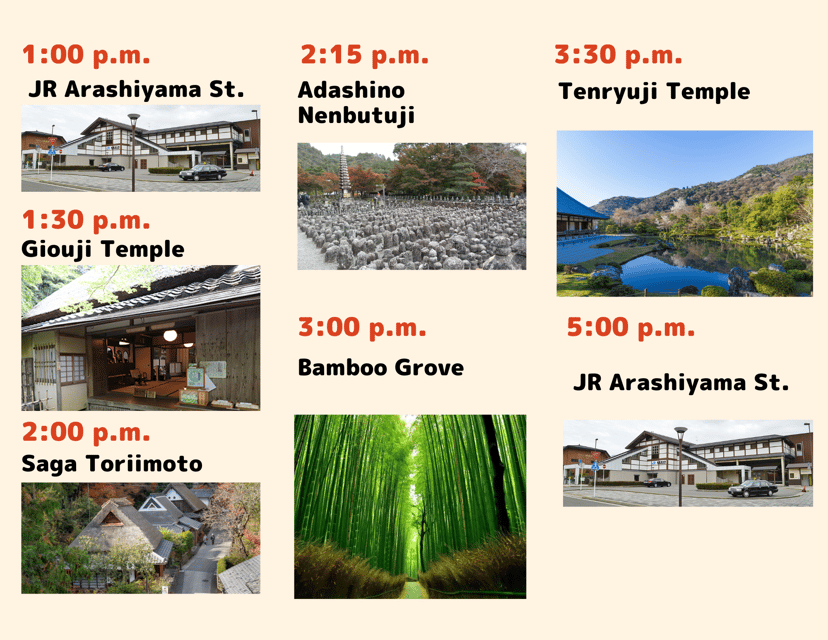
Between the temples, the route passes through Saga Toriimoto Preserved Street. This is one of the most useful parts of the walk for visitors who want to see how Kyoto looked outside its grand religious sites.
Farmhouses and machiya houses stand together along the old road. The mix creates a preserved suburban scene rather than a formal temple compound. You see the connection between religious destinations and the ordinary homes, shops, and working life that supported them.
The stop is listed as a 15-minute passage with scenic views, not a long guided visit. That is enough to notice the buildings and take photographs, but you should not expect an extended architecture lecture. If old houses interest you, keep your eyes on rooflines, entrances, and the difference between a working farmhouse and a town-style machiya.
This section also gives your legs a brief change of rhythm. The temple grounds involve gates, paths, and uneven surfaces. The old street offers a more straightforward walk before the route continues.
The bamboo grove without making it the whole trip
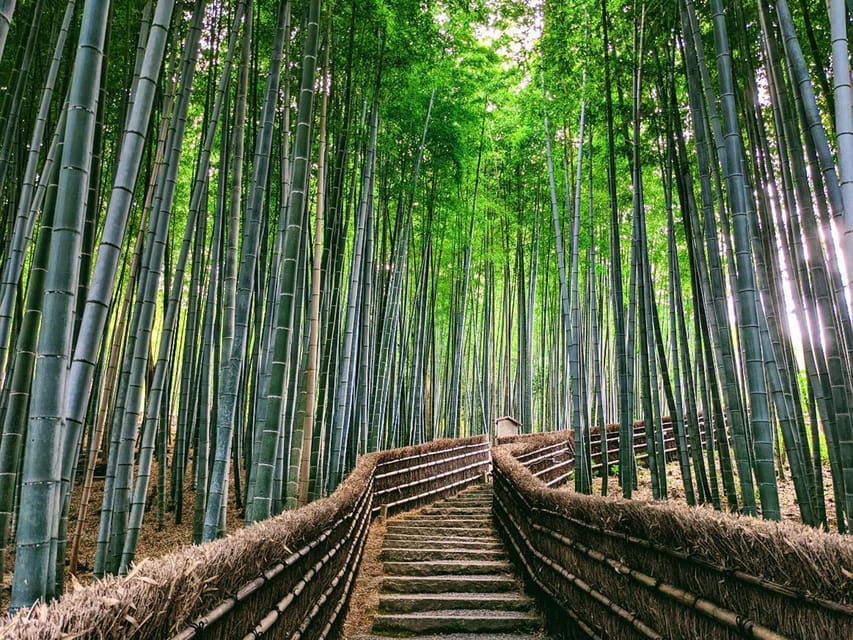
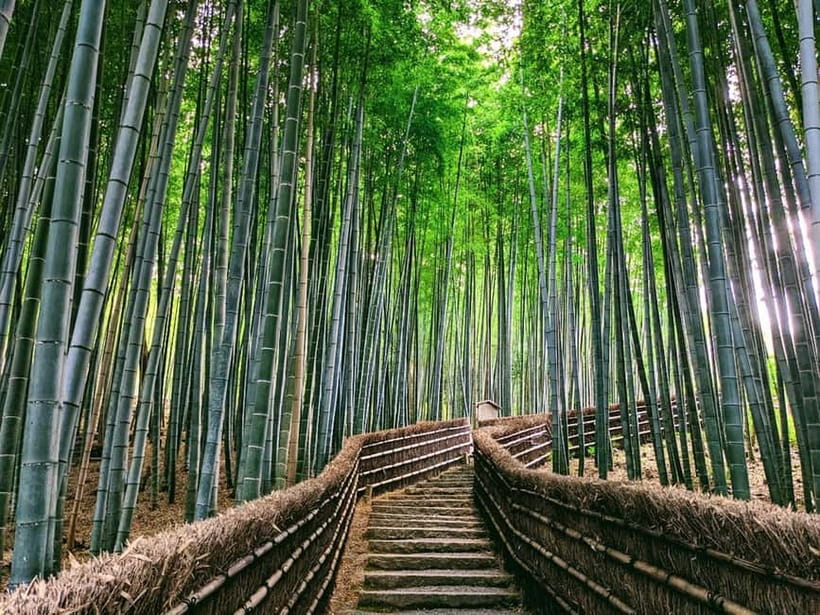
The Sagano Bamboo Grove is included as a scenic section lasting about 30 minutes. You get the familiar tall bamboo stems and narrow paths, but the grove is only one part of a broader walk.
That is good news if you want the bamboo without reducing Arashiyama to one famous photograph. The grove can be crowded, and the experience depends heavily on the time and conditions of the day. A private guide cannot control the number of other people on the path, but Masa can give the scene context and keep the visit connected to the rest of Sagano.
This is a place to slow down when possible. Look up at the height of the bamboo, listen to the movement of the stalks, and then let the guide’s stories pull you back into the area’s human past. The route’s overall schedule is fairly tight, so do not count on a long unstructured pause.
Tenryuji closes the route with a major temple visit
Tenryuji is the final major sight and the longest listed stop, with about 1.5 hours for a visit and guided explanation. Its larger scale provides a useful contrast to Giou-ji’s intimate setting and Adashino Nenbutsu-ji’s field of stone figures.
Here, you can take in a major Kyoto temple while still thinking about the themes introduced earlier: faith, time, gardens, religious practice, and the people who shaped the place. The visit is not only a final photo stop. It gives Masa time to explain what makes Tenryuji distinct from the smaller temples.
The itinerary then returns to JR Saga-Arashiyama Station. The listed stop durations add up to more than the advertised three-hour duration, so treat the times as rough guidance rather than a promise of a full, unhurried visit at every location. One booking review specifically wished the pace were slower. If you prefer lingering, tell Masa early and ask which stop should receive the most time.
What the $38 price really covers
At $38 per person, the price is reasonable for a private, English-language tour that includes admission to all temples visited. Kyoto’s temple fees can add up when you visit several paid sites independently, so included entry makes the cost easier to justify.
You are also paying for interpretation rather than just directions. The most valuable part is the connection between the places: Giou-ji’s story of women and retreat, Adashino Nenbutsu-ji’s care for the forgotten dead, the old homes of Saga Toriimoto, and Tenryuji’s larger religious setting.
The value is strongest for a first visit to western Kyoto or for anyone who wants cultural background without joining a large group. It is less compelling if you already know the temples well and mainly want free time for photography.
The private format can also help with practical needs. Masa has arranged lunch for a hungry group upon arrival, according to the experience feedback. That is not a scheduled meal or an included service, so do not book this as a food tour. It does show that the guide may be able to adjust sensibly when a small group has an immediate problem.
Who should book this walk
I would choose this tour if you want Kyoto explained through personal stories and religious customs rather than through architecture alone. It suits couples, families with older children, and small groups who value direct access to an English-speaking guide.
It is especially good for you if:
- You want a private group instead of a crowded shared tour.
- You are curious about Buddhism, prayer, and meditation.
- You prefer quieter Sagano streets to a short central Arashiyama loop.
- You want temple admissions handled as part of the price.
- You enjoy hearing the difficult human stories behind historic places.
I would hesitate if you have trouble walking, use a wheelchair, or need a slow pace. The activity is not suitable for wheelchair users or people with mobility impairments, and there is a lot of walking. It is also not ideal for someone who wants a long meal break, since food and drinks are not included.
Book with comfortable shoes and realistic expectations. This is a concentrated introduction to Arashiyama and Sagano, not a leisurely full-day retreat.
Should you book the Arashiyama and Sagano temple walk?
Book it if you want the area to feel like more than a bamboo grove and a famous temple. Masa’s stories give the route a strong human focus, and the private setting makes it easier to ask questions or adjust the emphasis.
The best reasons to go are the included admissions, the thoughtful stories at Adashino Nenbutsu-ji and Giou-ji, and the chance to see Saga Toriimoto between temple visits. The main tradeoff is speed. You see a lot in three hours, so tell Masa if you would rather spend extra time at one temple than cover every listed section.
For visitors with steady walking ability and an interest in Kyoto’s spiritual life, $38 is a fair price for a focused introduction to this corner of Honshu.
FAQ
Where does the tour begin?
It begins at JR Saga-Arashiyama Station, outside the station ticket gates in the plaza. The guide holds a sign with your name.
Is the meeting point at Hankyu or Randen Arashiyama Station?
No. The meeting point is JR Saga-Arashiyama Station, not Hankyu Arashiyama Station or Randen Arashiyama Station.
How long does the activity last?
The advertised duration is three hours. Starting times depend on availability.
What language does the guide speak?
The live tour guide speaks English.
Is this a private tour?
Yes. The group type is private.
Are temple admission fees included?
Yes. Admission to all temples visited is included in the activity price.
Does the price include meals or drinks?
No. Meals, drinks, transportation to and from the meeting point, and personal expenses are not included.
What should I bring?
Bring comfortable walking shoes, water, sunscreen, a hat, and a camera. Dress for the weather.
Is the tour suitable for wheelchair users?
No. The activity is not suitable for wheelchair users or people with mobility impairments.
Temple visits we reviewed lately in Kyoto
- Kyoto: Zen Meditation at a Private Temple with a Monk★ 5.0 · 202 reviews
- Kyoto:Kiyomizu-dera Temple Rent a kimono and ride a rickshaw★ 4.8 · 7 reviews
- Kyoto: Kiyomizudera, Sanjusangendo, Ginkakuji and Higashiyama.★ 5.0 · 3 reviews
- KYOTO: Tempio Kiyomizu Pagode Gion “Geisya” (Guida Italiana)★ 4.7 · 17 reviews
- Kyoto: Shakyo & Matcha in Historic Temple Garden★ 5.0 · 4 reviews
- Kyoto: Samurai Sword & Kimono Action Filming Experience★ 4.8 · 78 reviews
- Kyoto: Nara, Todaiji, Kasuga Taisha Shrine Private Full Day★ 4.9 · 18 reviews
- KYOTO: Tour guidato tra i tesori della città (in italiano)★ 5.0 · 5 reviews
Kyoto Temple Tours, compared.
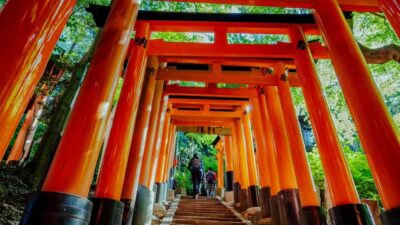
Osaka/Kyoto:Kinkakuji,Arashiyama,FushimiInariShrine,NaraPark
Read our review →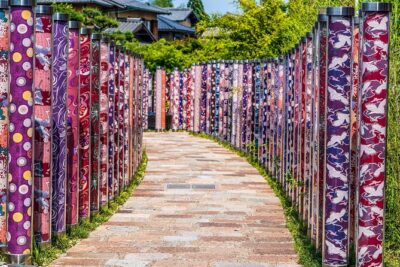
Kyoto Arashiyama Walking Tour: Bamboo, Monkeys, Gardens & Secrets
Read our review →
Arashiyama Bamboo, Temple, Monkeys, or Secret Sake Brewery
Read our review →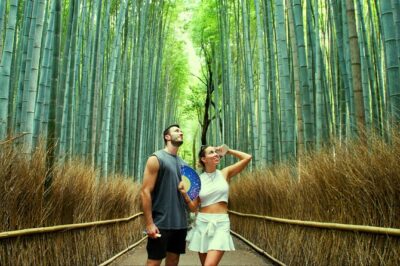
Kyoto: Arashiyama Bamboo Forest, Monkeys, Matcha & Temple Tour
Read our review →
Osaka/Kyoto: Arashiyama, Nara & Fushimi Inari Shrine w/Lunch
Read our review →
Kyoto Zen Meditation & Garden Tour at a Zen Temple with Lunch
Read our review →This tour also ranks in