
Review · KYOTO
KYOTO: Tempio Kiyomizu Pagode Gion “Geisya” (Guida Italiana)
Kyoto’s most famous old streets make much more sense when you know what you’re looking at. This five-hour tour links Kiyomizu-dera, Sannenzaka, and Ninenzaka with Gion and Pontocho, using an Italian-speaking guide to explain the religious customs, old pilgrimage routes, and cultural details that are easy to miss.
I like two things right away: transport and admission are included, so you are not stopping to work out fares and tickets, and the route covers several classic Kyoto sights without feeling like a bus tour from one distant attraction to another. The Italian guidance from Omae is another strong point, especially if you want to ask detailed questions about Japanese culture.
The main consideration is the price, $117 per person. That is reasonable for five hours with transport, entry fees, and a live Italian guide, but less attractive if you only want a quick look at Kiyomizu-dera or prefer exploring at your own pace.
Key points to know before booking
- Kiyomizu-dera is the main event: You get about an hour at Kyoto’s famous Buddhist temple with guided explanations.
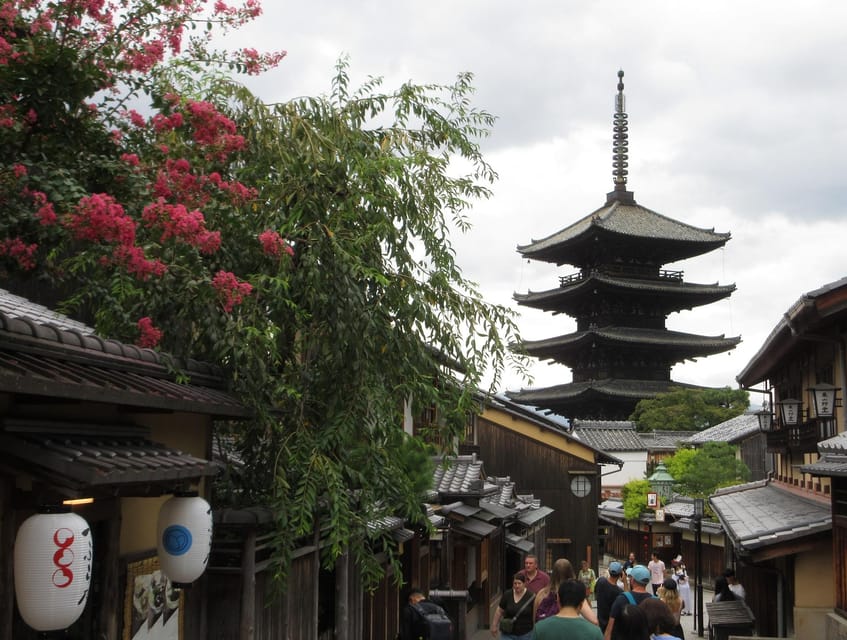
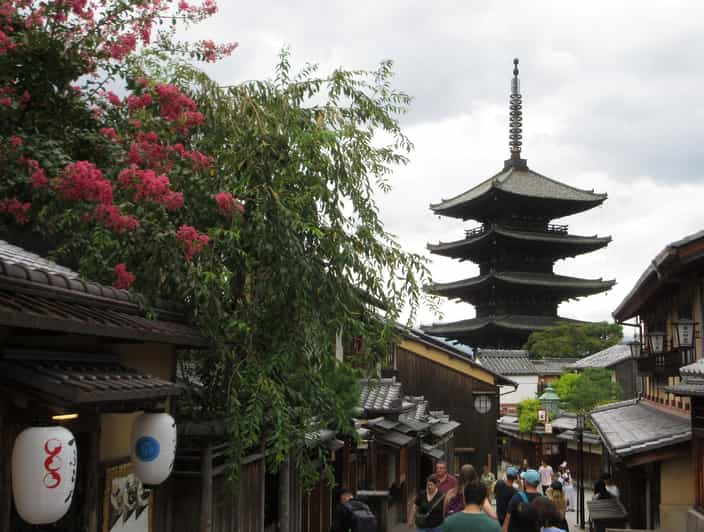
- The old streets come between the major sights: Sannenzaka and Ninenzaka are short walking sections lined with sweets, souvenirs, cafes, and traditional-looking buildings.
- Omae leads the tour in Italian: His clear explanations, friendly manner, and attention to questions are central to the experience.
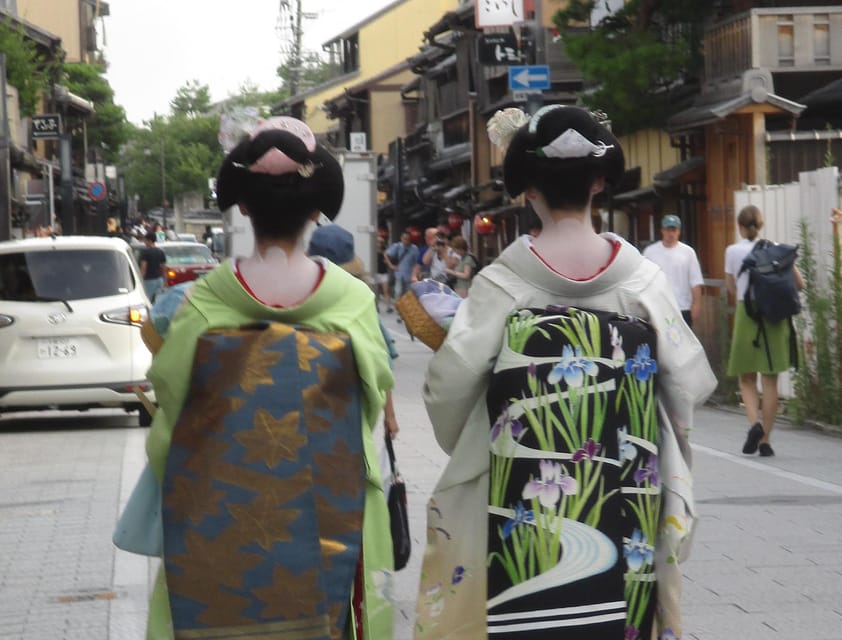
- Gion comes late in the route: The tour allows around 30 minutes to see Kyoto’s best-known geisha district.
- The route ends in Pontocho: This gives you a useful place to continue your evening near the Kamo River.
- Transport and admission are included: You pay for the main practical parts of the outing in advance.
Starting at Kyoto Station without a false start
The meeting point is outside Kyoto Station at the central north entrance, also called the Karasuma-Guchi side. Go toward the taxi terminal, not the bus terminal, and look for the open space between the four escalators.
Here is the useful visual clue: Kyoto Tower should be in front of you, toward the upper left from this meeting area, not the right. That small detail matters in Kyoto Station, where a wrong turn can quickly become a ten-minute hunt through a large transport hub.
You should receive a message by the day before confirming the meeting point. Still, I would arrive early. The tour begins with a roughly 15-minute bus ride, and a delayed meeting can cut into your time at the temple.
The start at Kyoto Station is practical rather than scenic. It lets you reach the eastern temple district without first trying to decode Kyoto’s bus network. Since transport is included, you can focus on the guide and the city instead of counting coins or checking a route map.
More Fushimi Inari Shrine Tours in Kyoto:
- Osaka/Kyoto:Kinkakuji,Arashiyama,FushimiInariShrine,NaraPark
★ 4.1 · 1,596 reviews - Osaka/Kyoto: Arashiyama, Nara & Fushimi Inari Shrine w/Lunch
★ 4.4 · 754 reviews - Kyoto: 3-Hour Fushimi Inari Shrine Hidden Hiking Tour
★ 4.9 · 270 reviews
The bus ride to Kyoto’s eastern temple district
The first transfer takes about 15 minutes by bus. This is a short part of the tour, but it has real value. Kyoto’s major sights are spread across the city, and Kiyomizu-dera is not directly beside the station.
You are not promised a narrated bus tour, so think of this as a useful connection rather than a sightseeing section. The guide’s presence should help with any practical questions before the walking route begins, including where the tour is heading and what to expect on foot.
The outing is described as suitable for wheelchair users. If you need particular assistance with the historic streets, slopes, or temple access, raise that request when booking. The provider offers necessary help during the route and can consider flexible plans when possible, but the exact details of every surface and access point are not provided.
Kiyomizu-dera and the old pilgrimage route
Kiyomizu-dera receives about an hour of guided sightseeing. The temple area developed from the eighth century onward, and the approach is part of the story. You are not simply dropped at a gate, shown a view, and sent back to the bus. The route follows old pilgrimage paths that still carry people toward the temple.
The value of an Italian guide is especially clear here. Religious buildings in Japan can be easy to admire without understanding. Omae can explain the Buddhist setting, the meaning of the spaces, and the cultural details that give the visit some shape. His role is not just to translate words. It is to answer the questions that come up when you see customs unlike those at home.
The temple is also one of Kyoto’s most popular sights, so expect a busy public setting. This is not a quiet private shrine visit. The reward is the chance to see one of the city’s major religious monuments while learning why it matters.
An hour is enough for an introduction, but not for every corner of the temple grounds. If you like to linger, take photographs, read every sign, or browse nearby shops, the pace may feel firm. The guide has several more stops to cover, so this tour works best when you want context and a well-planned route rather than unlimited temple time.
Sannenzaka and Ninenzaka, Kyoto’s most tempting detour
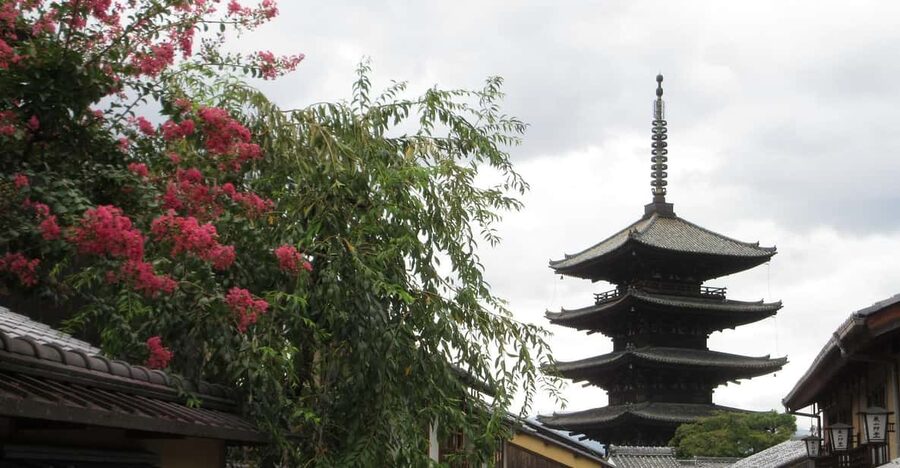
After Kiyomizu-dera, the group walks about five minutes to Sannenzaka. The actual walk through this section is listed at around three minutes, followed by another short walk and about two minutes in Ninenzaka.
The timing is brief, but these lanes are not filler. They form the historic approach to Kiyomizu-dera and are lined with souvenir shops, sweet shops, cafes, and places aimed at visitors of all ages. You can browse, snack, and watch the flow of people moving between the temple and the older neighborhoods.
Sannenzaka and Ninenzaka are attractive because they connect the religious visit with everyday Kyoto commerce. You see how pilgrimage routes became shopping streets while keeping much of their old character. A guide can point out details that would otherwise blur into a pleasant row of shops.
The drawback is that the route gives you only a short time here. If you want to buy gifts or sit down for a cafe break, you may need to choose quickly. I would treat this section as a guided orientation, then return later on your own if one of the lanes catches your attention.
This is also one of the more crowded parts of the tour. Stay close to the guide and keep the walking pace manageable. The streets are pedestrian friendly in feel, but they are still active public lanes with many people moving in both directions.
More Temple Tours around Kyoto:
- Kyoto: Tea Ceremony Ju-An at Jotokuji Temple
★ 4.9 · 3,207 reviews - Arashiyama Bamboo, Temple, Monkeys, or Secret Sake Brewery
★ 4.8 · 886 reviews - Kyoto: Arashiyama Bamboo Forest, Monkeys, Matcha & Temple Tour
★ 5.0 · 759 reviews - Kyoto Zen Meditation & Garden Tour at a Zen Temple with Lunch
★ 5.0 · 441 reviews
Walking from the temple district toward Gion
The route then takes about 15 minutes on foot toward Gion. This is long enough to make the neighborhoods feel connected, but short enough that you are not spending the day on foot.
The walk is part of the appeal. Kyoto reveals itself gradually between major sights. You leave the temple approach, pass through streets that belong to the modern city, and reach the district most often associated with geisha culture.
Do not expect every moment to be a postcard view. A good walking tour includes ordinary connections between famous places, and this section helps you understand the city’s layout. Comfortable shoes are a smart choice for the full five hours, especially after the temple and its approach.
The flexible scheduling policy may help if you have mobility needs or want to adjust the pace. Changes are offered on request as far as possible, not guaranteed, so discuss your needs before the day of the tour rather than assuming the route can be redesigned at the last moment.
Gion in 30 minutes
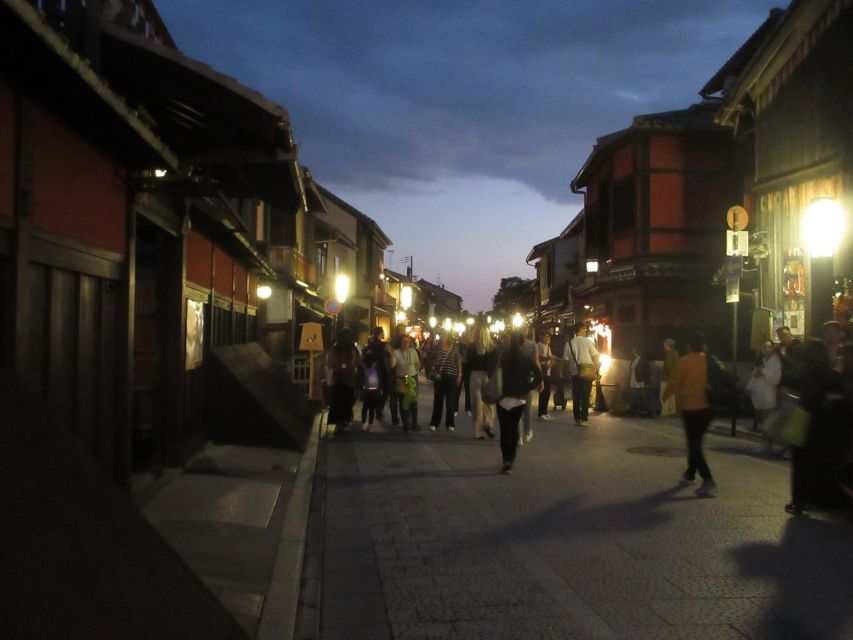
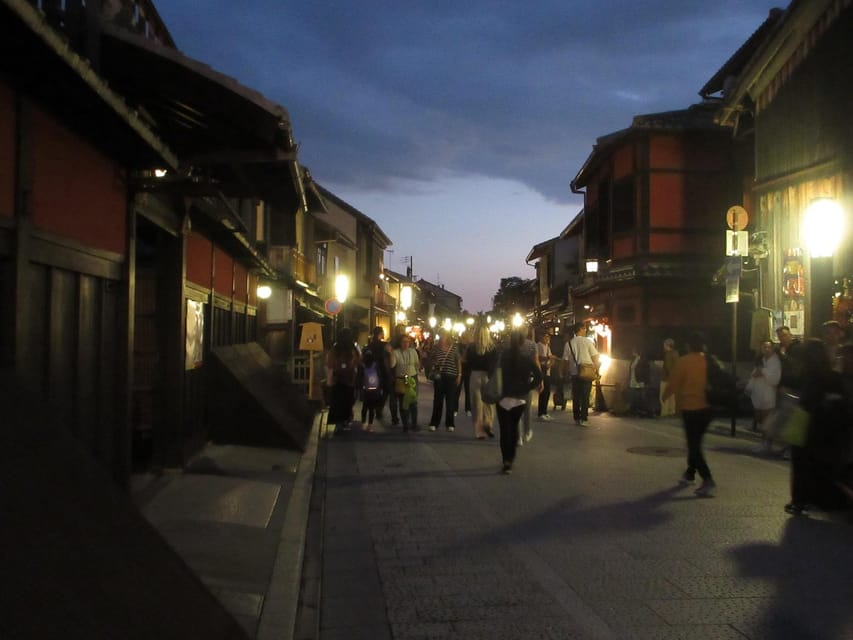
Gion receives about 30 minutes of guided sightseeing. This is a compact introduction to one of Kyoto’s best-known historic districts, where traditional entertainment culture remains part of the area’s identity.
This is where a guide can save you from shallow sightseeing. The word geisha often brings a bundle of outside assumptions, while the district has its own history, customs, and rules of conduct. Italian explanations let you ask what you really want to know instead of relying on a quick sign or a guidebook paragraph.
Thirty minutes will not cover all of Gion. It is enough for a focused look and an explanation of what makes the district important. If your main goal is to spend a long evening looking for a performance or wandering every lane, this tour will not replace independent time.
Use the visit as an introduction. Omae’s friendly, quick style is well suited to questions, and the strong praise for his Italian, accuracy, and attention to detail makes him an important part of the experience. The tour is not only about seeing Gion. It is about understanding what you are seeing.
A short look at Minami-za and the finish in Pontocho
After Gion, the route continues on foot for about five minutes and passes by Kyoto Minami-za, the city’s well-known kabuki theater. The stop is brief, roughly three minutes, so this is a passing view rather than a theater visit.
That distinction is worth keeping clear. You will not have a performance included, and the theater is not listed as a full stop. It functions as a cultural marker on the way to the final neighborhood.
The tour ends in Pontocho after another short walk of about three minutes. This is a useful finish because you are not returned to the station at the end of the five hours. You can continue your evening from a central entertainment area, look for food nearby, or make your own way onward.
The ending also gives the tour a sensible shape. It starts with Kyoto Station, climbs into the eastern temple district, moves through Gion, and finishes near one of the city’s classic dining streets. You get a route through several connected parts of old Kyoto instead of a single attraction in isolation.
How Omae’s Italian guidance changes the experience
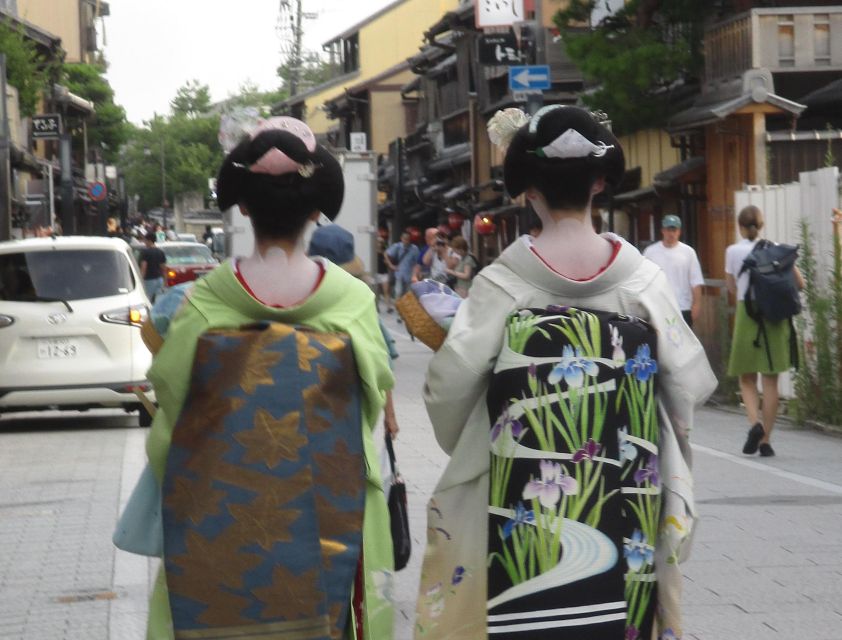
The named guide is Omae, a native Kyoto guide who leads the tour in Italian. The strongest praise attached to this experience focuses on his preparation, friendly manner, clear explanations, and ability to answer questions.
That combination matters. A guide can know a great deal and still make a tour feel stiff. Omae is described as both accurate and easygoing, which is useful when the subject shifts from temple customs to Japanese culture or practical questions about the city.
You should expect a live conversation rather than a recorded commentary. Ask about the religious details you notice, the traditions connected with Gion, or the changes Kyoto has experienced from its early development to the present. The tour is designed to provide assistance throughout the route, so it suits people who want more than a list of dates.
The experience can be arranged for a group or an individual. The exact group size is not specified, so do not book it expecting a private tour unless that is confirmed directly. Flexible schedules and routes can be requested as far as possible, but availability and the needs of the day will determine what changes can be made.
Is $117 a fair price?
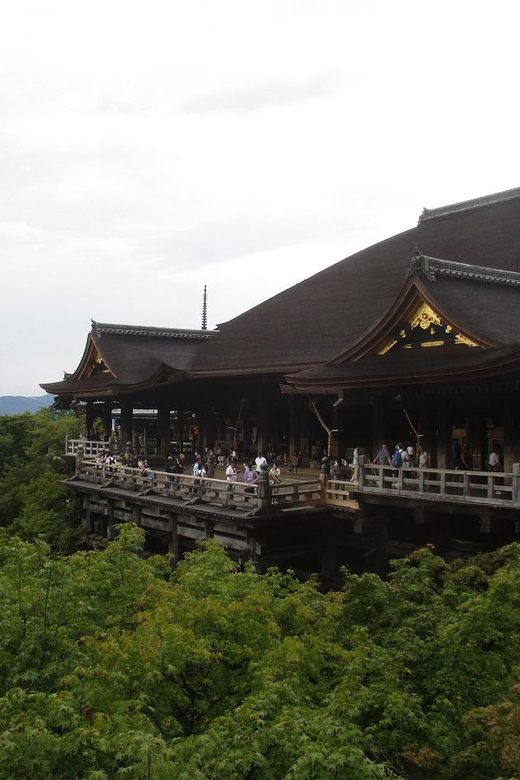
At $117 per person, the cost is not a budget walk. The useful comparison is not with a free self-guided route, but with what you would pay for five hours of help, transport, and admission while moving through Kyoto’s most visited eastern districts.
The price includes the transport used during the tour and entrance fees for the scheduled monuments. That removes two common expenses and also keeps the day moving. You are paying for a guide who can explain the setting in Italian, not only for access to Kiyomizu-dera.
I see the best value for someone visiting Kyoto for the first time, traveling with family, or wanting to ask cultural questions in Italian. It is also a good fit if handling buses, temple tickets, and neighborhood connections would take energy away from your day.
The value is weaker if you are comfortable navigating Kyoto, already know the temple and Gion districts, or want long unscheduled breaks. Sannenzaka, Ninenzaka, and Gion are easy places to linger, and this five-hour plan keeps moving.
Who should book this Kyoto walk?
I would choose this tour for an Italian-speaking visitor who wants a clear introduction to Kyoto’s major eastern sights. It suits people who appreciate historical and religious context, practical assistance, and a route that has already been organized.
Families may also like the mix of temple, shops, cafes, old streets, and cultural districts. The route offers enough variety to keep the day from becoming five hours of temple architecture.
It is less suitable for someone seeking a photography-only outing, a slow cafe crawl, or an in-depth visit to just one monument. The schedule gives each place a defined role. You get breadth, context, and help, but not unlimited time at any one stop.
The listed accessibility is a welcome feature. If you use a wheelchair or have specific walking requirements, ask about the precise route before booking, since the available details confirm accessibility but do not describe every surface, slope, or temple area.
Practical details that matter
You can cancel up to 24 hours before the start time for a full refund, and the reserve now, pay later option lets you hold a place without paying immediately. Starting times depend on availability.
Wear comfortable shoes and bring enough time for the full five-hour route. The tour includes walking between several districts, even though the individual walks are mostly short.
Meet at the north side of Kyoto Station, between the four escalators near the taxi terminal. Look for Kyoto Tower in front of you toward the upper left. Watch for the confirmation message sent by the day before, but do not rely on finding the group at the last second.
Should you book it?
Book this tour if you want Kyoto explained in Italian, with Kiyomizu-dera, the old approach streets, Gion, Minami-za, and Pontocho fitted into one sensible half-day. Omae’s friendly and careful style is a major reason to choose it, particularly if you enjoy asking questions instead of simply taking photographs.
Skip it if your priority is a slow, independent day or if $117 feels high for a route through places you already know. For a first visit, though, the included transport, admission, language support, and cultural guidance make the cost easier to justify.
FAQ
What language is the tour conducted in?
The live tour guide speaks Italian. The named guide is Omae.
How long does the tour last?
The tour lasts five hours.
Where does the tour meet?
Meet at Kyoto Station’s central north entrance, called Karasuma-Guchi. The meeting space is between the four escalators in front of the taxi terminal, not the bus terminal. Kyoto Tower should appear in front of you toward the upper left.
What places are included?
The route includes Kiyomizu-dera, Sannenzaka, Ninenzaka, Gion, a pass by Kyoto Minami-za, and a finish in Pontocho.
Are transport and entrance fees included?
Yes. The tour includes the listed transport costs and entrance fees for the monuments scheduled on the route.
Can the tour be changed for different timing or needs?
Flexible itineraries and schedules can be requested as far as possible. The activity is listed as wheelchair accessible, and assistance is available during the tour. Specific changes depend on what can be arranged.
Temple visits we reviewed lately in Kyoto
- Kyoto: Zen Meditation at a Private Temple with a Monk★ 5.0 · 202 reviews
- Kyoto:Kiyomizu-dera Temple Rent a kimono and ride a rickshaw★ 4.8 · 7 reviews
- Kyoto: Kiyomizudera, Sanjusangendo, Ginkakuji and Higashiyama.★ 5.0 · 3 reviews
- Kyoto:Quiet Arashiyama and Sagano Temples★ 4.8 · 5 reviews
- Kyoto: Shakyo & Matcha in Historic Temple Garden★ 5.0 · 4 reviews
- Kyoto: Samurai Sword & Kimono Action Filming Experience★ 4.8 · 78 reviews
- Kyoto: Nara, Todaiji, Kasuga Taisha Shrine Private Full Day★ 4.9 · 18 reviews
- KYOTO: Tour guidato tra i tesori della città (in italiano)★ 5.0 · 5 reviews
Kyoto Temple Tours, compared.
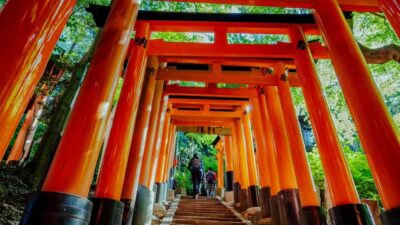
Osaka/Kyoto:Kinkakuji,Arashiyama,FushimiInariShrine,NaraPark
Read our review →
Kyoto Arashiyama Walking Tour: Bamboo, Monkeys, Gardens & Secrets
Read our review →
Arashiyama Bamboo, Temple, Monkeys, or Secret Sake Brewery
Read our review →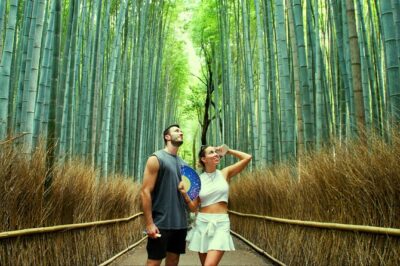
Kyoto: Arashiyama Bamboo Forest, Monkeys, Matcha & Temple Tour
Read our review →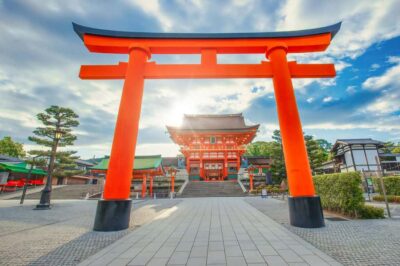
Osaka/Kyoto: Arashiyama, Nara & Fushimi Inari Shrine w/Lunch
Read our review →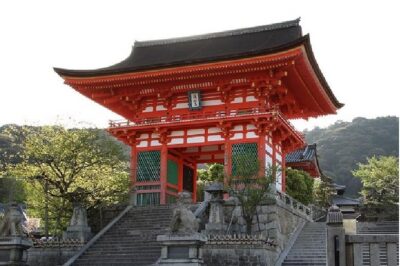
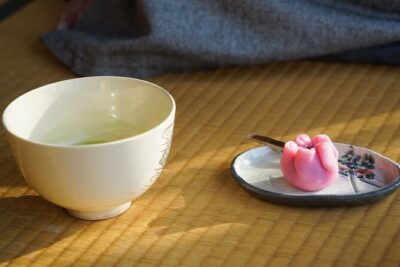
Kyoto Zen Meditation & Garden Tour at a Zen Temple with Lunch
Read our review →This tour also ranks in