
Review · TEMPLES WORLDWIDE
Day Trip From Addis Ababa See Historical Monastery,Stunning Nature,Animals,Birds
The best part of this day trip is the mix: you move from Debre Libanos monastery, one of Ethiopia’s oldest religious centers, to steep gorge views, a waterfall, and wild Gelada monkeys. It gives you a quick look at rural Ethiopia without requiring a separate overnight trip.
I like the personal touch of guides such as Sisay, also called Sis, who has been praised for his easy manner and care with guests. I also like the simple pleasures: a traditional Ethiopian lunch and coffee in a village setting, rather than a day spent only at formal sights.
The main caution is the long drive and uneven walking. Geladas are wild animals, not a guaranteed show, and the Portuguese Bridge has reportedly been under reconstruction at times. Ask about current conditions if either sight is your main reason for booking.
Key points to know before you book

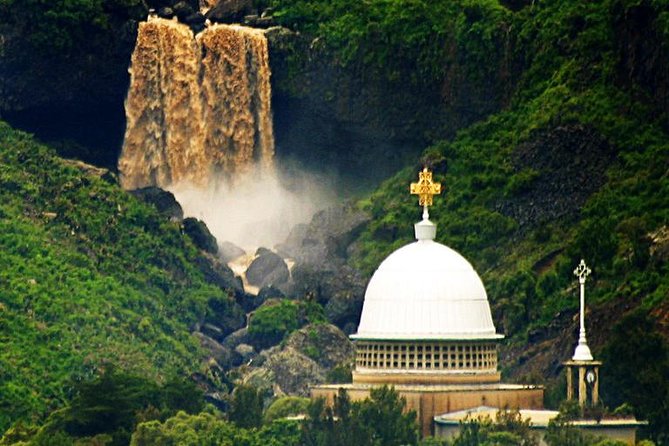
- Debre Libanos combines faith, history, and mountain scenery: You see the church over Saint Tekle Haymanot’s tomb, another church linked with a fragment of the True Cross, religious schools, and the cave where the saint is said to have prayed for 29 years.
- Gelada sightings depend on nature, not the schedule: You may see these Ethiopian endemic monkeys in the gorge, sometimes at close range, but sightings can be poor in some seasons.
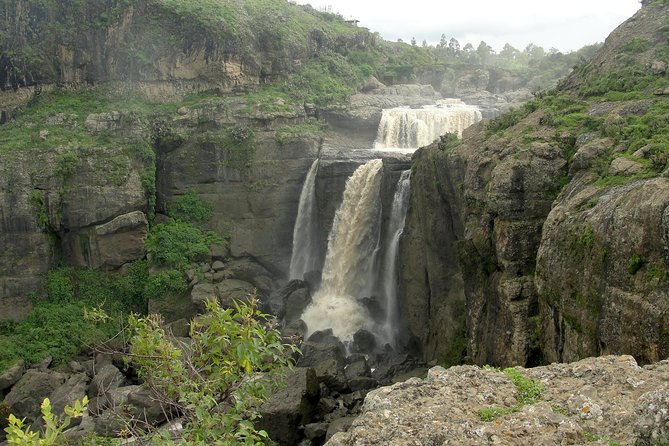
- The Portuguese Bridge requires a walk: Expect hilly, rocky ground, with a waterfall or rushing cascade below it depending on the season.
- The guides are a major part of the experience: Sisay, Freaw, Yihun, Jose, George, and Niko are among the names associated with the guiding and driving team.
- The $90 price covers the useful basics: Transport, entrance fees, bottled water, lunch, and coffee are included, which makes the price easier to justify.
- This works well as an Addis layover outing: Pickup is offered from Bole Airport, the group is capped at 15, and the total day runs about 8 to 9 hours.
Why this makes a strong day outside Addis Ababa
Addis Ababa is a useful base, but Ethiopia’s character changes quickly once you leave the city. This trip takes you toward Debre Libanos and the Jemma River area, where church tradition, farming country, cliffs, birds, and wild mammals all share one long day.
I like that the outing does not force you to choose between culture and nature. Many day trips offer one grand view and a quick photo stop. Here, the monastery gives the day a clear cultural purpose, while the gorge and bridge add walking, wildlife, and open views.
The experience lasts roughly 8 to 9 hours. That is a full day, not a casual half-day outing. You should expect time on the road, but the drive is part of the experience. Several routes and road sections can be rough, and one account described a particularly difficult stretch of road and traffic. A skilled driver matters here.
The group limit is 15 people. That is small enough for a more personal guide, though your exact experience will depend on the final group size and the guide assigned. Past guides connected with this outing include Sisay, Freaw, Yihun, Jose, George, and Niko.
More History Tours in the world:
- Chiang Mai: Historic Temples and City Guided Walking Tour
★ 4.7 · 650 reviews - Mt. Fuji Heritage Tour: Traditional Villages, Lakes & Shrine
★ 4.5 · 509 reviews - Malta: Prehistoric Temples, Limestone Heritage & Blue Grotto
★ 4.2 · 412 reviews
Debre Libanos, where the day begins with faith
Debre Libanos was founded in the 13th century by Saint Tekle Haymanot, according to Ethiopian tradition. The saint is said to have prayed and meditated in a nearby cave for 29 years. That story gives the visit a strong sense of place, because the cave is not treated as an abstract piece of church history. It is part of the surrounding cliffs and gorge.
The present church over Tekle Haymanot’s tomb was ordered by Emperor Haile Selassie in 1961. You also see the older Church of the Cross, where a fragment of the True Cross is said to be kept, along with five religious schools.
Do not expect a preserved medieval complex with all its first buildings intact. The original structures no longer survive. The power of the stop comes from the continuing religious life, the setting, and the stories attached to the site.
You have about two hours here, including the church visit and nearby religious sights. A local church guide may explain details that your main guide cannot cover in the same depth. One particularly praised church guide has been described as an excellent addition to the visit.
Dress matters. The operator lists a formal dress code, and this is a working religious site rather than a museum display. Choose respectful clothing and be prepared for a more serious atmosphere inside the church.
Walking to the Portuguese Bridge
The Portuguese Bridge is reached by a walk over hilly, rocky ground. This is one of the day’s most enjoyable parts if you bring proper shoes and accept that the route is not a smooth stroll.
The bridge is a narrow stone span in an old Portuguese style. Despite its popular name, the information supplied for the tour explains that it was built by Ethiopians around the turn of the 19th century, rather than being an actual 16th-century Portuguese construction. That distinction makes the site more interesting, not less. It reflects the way historic styles and outside influence were adapted locally.
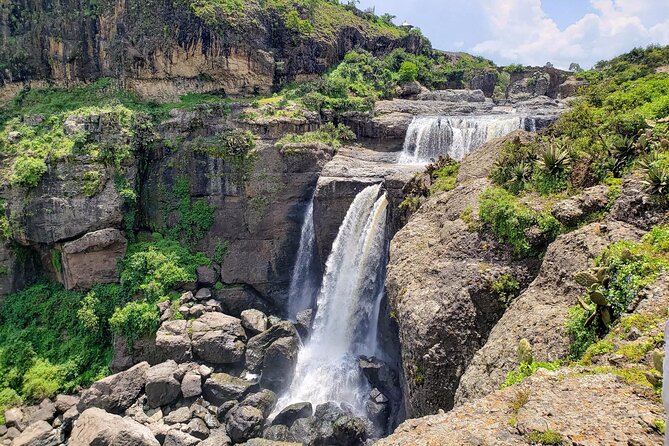
Below the bridge, a cascade can be especially impressive during the rainy season. Other accounts describe a waterfall in the same area, so water levels and the exact look of the stop will depend on recent weather.
There is one practical warning: the bridge has reportedly been under reconstruction at times. If the bridge itself is your top priority, confirm its current condition before departure. Even with restricted access, the gorge, path, and water views still give the walk value, but expectations should be realistic.
Wear sturdy walking shoes. The uneven ground is the clearest practical issue raised by the experience. You should also leave room in your day for a slower pace if you want photographs or need care on descents.
Geladas, birds, and the Jemma Gorge
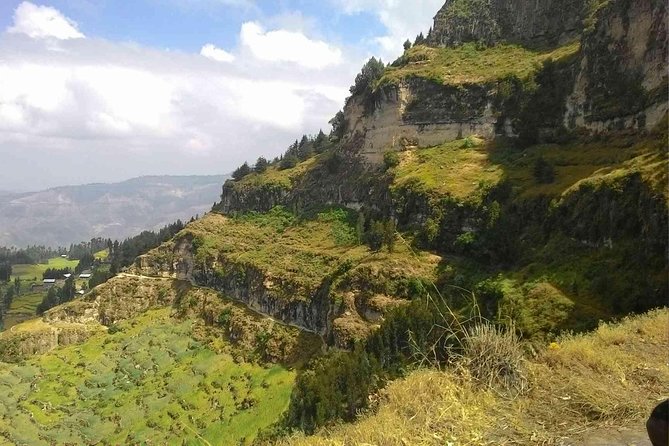
The wildlife portion is built around the Jemma Valley and nearby gorge. The main draw is the Gelada, an Ethiopian endemic primate sometimes called the bleeding-heart baboon because of the red patch on its chest.
Geladas are not baboons in the strict scientific sense, but the common name is widely used. You may see groups on the rocky slopes and grass-covered edges of the gorge. Some outings have brought them close enough for memorable photographs, with the valley behind them.
This is also the part of the day where you need to keep your expectations flexible. One disappointed visitor saw no Geladas and felt the trip lost its main purpose. That is a fair warning. The animals are wild, and the chance of seeing them changes with season, location, and ordinary luck. If Geladas are the only reason you want to go, ask the operator about recent sightings before you pay.
Birdwatching adds another layer. The Jemma Valley is known for bird tours, and possible sightings include Harwood’s Francolin, Banded Barbet, Black-headed Forest Oriole, White-billed Starling, Red-billed Starling, White-winged Cliff Chat, White-backed Black Tit, White-cheeked Turaco, and Hemprich’s Hornbill.
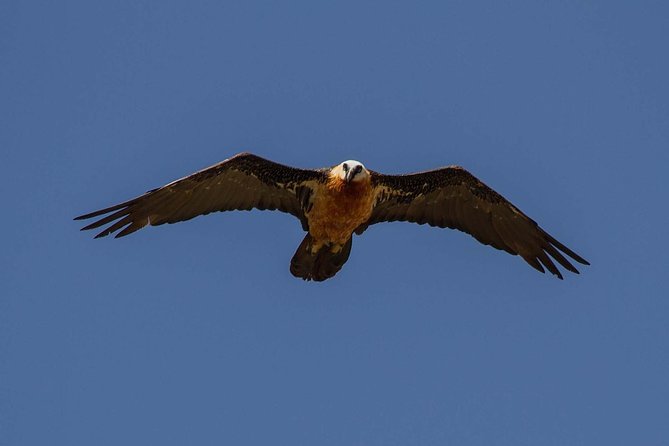
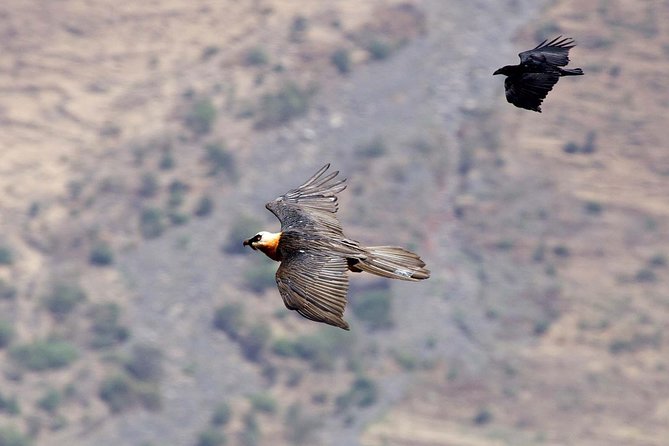
You may also see vultures, including Lamergeyer’s, Rüppell’s, and Lappet-faced Vultures. Bring binoculars if birds matter to you, though the tour is not presented as a specialist birding expedition. The guide can point out plants, birds, and scenery, but the pace also has to accommodate the monastery and bridge.
More Day Trips in the world:
- Athens: Cape Sounion & Poseidon Temple Sunset Half-Day Trip
★ 4.8 · 8,241 reviews - From Aswan: Abu Simbel Temple Day Trip with Hotel Pickup
★ 4.4 · 2,807 reviews - From Malta: Gozo Day Trip Including Ggantija Temples
★ 4.2 · 2,399 reviews - Montenegro: Durmitor, Tara & Ostrog Monastery Day Trip
★ 4.8 · 1,894 reviews
Coffee, lunch, and a taste of everyday Ethiopia
The food stops help keep this from feeling like a chain of viewpoints. Lunch is included, including an option for vegetarian or vegan food. That matters in Ethiopia, where a shared meal can tell you more about local habits than another explanation from a guide.
Coffee is also included, and you have a chance to experience a traditional Ethiopian coffee ceremony. One stop takes place in a small village setting, which gives the coffee a more grounded feel than a quick cup served from a hotel machine.
The supplied details are not fully consistent about dinner. The highlights refer to a traditional dinner and folk dancing, but the inclusions specifically say dinner is not included. Treat any evening meal or dancing as an extra or an activity that may vary, and confirm before booking if it is important to you.
Bottled water, coffee, tea, lunch, and attraction fees are included. Alcohol is not included. These details make the $90 price more useful than it first appears, particularly if you are coming straight from the airport and do not want to arrange separate transport, admissions, and meals.
What the $90 cost really buys you
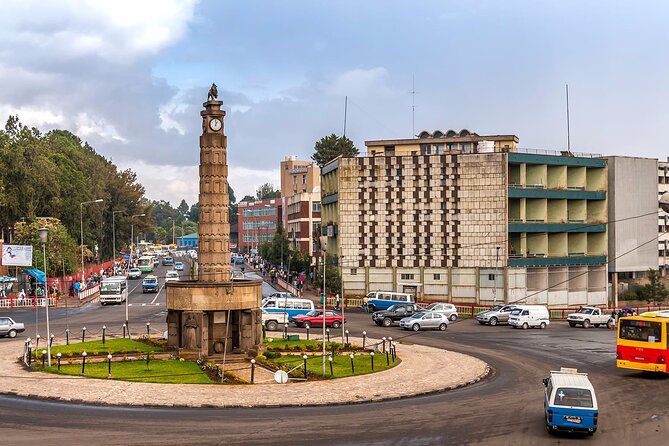
At $90 per person, this is not the cheapest way to leave Addis Ababa. It is a fair package price if you value convenience and a guide who can connect the sights.
The fee covers transport, entrance fees, bottled water, lunch, and coffee. It also takes care of the practical problem of reaching Debre Libanos, the bridge, and the gorge in a single day. Hiring separate transport and arranging entrance fees yourself could reduce the price, but it would also put the road, timing, and local explanations on your shoulders.
The strongest value comes if you have limited time in Ethiopia. A solo visitor with a one-day Addis layover can be collected at Bole Airport and see a monastery, gorge, bridge, wildlife area, and rural village before returning to the city. That is a lot of ground in one day.
The tradeoff is comfort. A long road day plus rocky walking is not the same as a gentle city tour. The 8 to 9-hour schedule may stretch if traffic, road conditions, or photo stops slow things down.
Airport pickup and the shape of the day
The listed meeting point is Bole Airport in Addis Ababa, and pickup is offered. This makes the outing useful for a layover, but you should still allow enough time between the tour and any onward flight. The tour length is approximate, and road traffic can be unpredictable.
Most people aged six and older can take part, though the rocky walk deserves honest consideration. The operator says service animals are allowed. The maximum group size is 15 people.
Free cancellation is available if you cancel at least 24 hours before the local start time. Changes or cancellations made inside that window are not refundable.
You should confirm the pickup details, expected return time, guide name, and bridge condition before the day begins. That small check can prevent the two biggest surprises: a late finish and a restricted bridge visit.
Who will enjoy this day most
I would choose this outing if you want a broad first look at Ethiopia outside Addis Ababa. It suits you if you like religious sites, open mountain views, short hikes, wildlife, and local food more than polished attractions.
It is especially useful for:
- First-time visitors with only a few days in Addis Ababa
- Solo visitors who want organized airport pickup and transport
- People interested in Ethiopian Orthodox culture
- Amateur birdwatchers and anyone hoping to see Geladas
- Couples who want a scenic day away from the city
- Families with older children who can manage uneven ground
I would think twice if you need a short, easy outing, dislike rough roads, or require a guaranteed wildlife sighting. I would also avoid booking on the assumption that the bridge will definitely be open or that folk dancing and dinner are included.
Is this Addis Ababa day trip worth booking?
For most people, yes. The combination of Debre Libanos, the Jemma Gorge, a traditional coffee experience, lunch, and a chance to see Geladas gives you a fuller picture of Ethiopia than a city-only schedule.
The guides are an important reason to book through an organized operator. Sisay, Freaw, Yihun, Jose, George, and Niko have all been associated with strong guiding or driving experiences, though you may not receive the same person. Ask for Sisay if he is available, since his name appears repeatedly in the strongest praise.
Book it if you can accept a long day, uneven walking, and wildlife uncertainty. Before paying, confirm the season for Gelada sightings and whether the Portuguese Bridge is open. With those points clear, this is a well-priced, culture-and-nature outing that makes good use of a spare day in Addis Ababa.
FAQ
How long does the tour last?
The experience lasts approximately 8 to 9 hours.
Where does the tour start?
The listed starting point is Bole Airport in Addis Ababa, and pickup is offered.
Is lunch included?
Yes. Ethiopian lunch is included, with food available for vegetarian and vegan diets.
Are entrance fees included?
Yes. Attraction fees are included in the tour price.
Is dinner included?
No. The inclusions state that dinner is not included, even though the tour highlights refer to a traditional dinner and folk dancing. Confirm the current evening arrangements before booking.
Can I cancel for a full refund?
Yes, if you cancel at least 24 hours before the experience start time. Cancellations or changes made less than 24 hours in advance are not refunded.
Temple visits we reviewed lately in the world
- Shanghai: Yuyuan, City God Temple Old City Tour-Tip Based★ 5.0 · 10 reviews
- Seoul Sunrise & Sunset Hike + Temple & K-Food Adventure★ 4.8 · 6 reviews
- Seoul: UNESCO Sites tour: Palace, Shrine & Bukchon Village★ 4.8 · 26 reviews
- Seoul: War Memorial, Jogyesa Temple & Tapgol Park Tour★ 4.8 · 56 reviews
- Seoul: Vegan Temple Food Class, Jogyesa & Changdeokgung Tour★ 4.6 · 34 reviews
- Seoul: Temple & Starfield COEX Mall Gourmet Tour in Gangnam★ 4.7 · 22 reviews
- SEMARANG SHORE TOURS: BOROBUDUR TEMPLE EXCURSIONS★ 5.0 · 3 reviews
- Seoul: Night Bongeunsa Temple Guided Tour★ 5.0 · 11 reviews