
Review · CHIANG MAI
Long Neck Village, Silver Temple & Chiang Mai Top Sites
Chiang Mai’s old city is best understood one temple at a time, and this tour links three important shrines with a visit to a Karen Long Neck Village. I like the traditional red Songthaew, which gives the outing a local feel, and I like the mix of grand temple architecture with living craft traditions.
The main catch is cost clarity. The advertised $22 covers the tour, transport, guide, and Long Neck Village entrance, but a recent booking note says the three temples may require 50 baht each. Bring cash, and remember that some temple areas may not be open to women.
Key points at a glance

- Four compact hours: You see three major temples and a Karen village without giving up a full day.
- Red Songthaew transport: You ride in Chiang Mai’s familiar shared taxi rather than a standard tour bus.
- Three different temples: Wat Chedi Luang, Wat Phra Singh, and Wat Sri Suphan each offer a distinct look at Lanna religious art.
- Local guides matter: Guides named Magie, Margareth, and Mosquito have been praised for clear explanations and friendly service.
- Cash is essential: Carry money for possible 50 baht temple fees, personal purchases, and local handicrafts.
- Dress for worship: Shoulders and knees must be covered at the temples.
Why this four-hour route works in Chiang Mai
This is a useful introduction to Chiang Mai when you have limited time. The route brings together the city’s old religious center, its best-known sacred temple, a striking silver-clad shrine, and a cultural village outside the ordinary temple circuit.
I like the way the schedule gives each place a clear role. Wat Chedi Luang shows you the scale and power of old Lanna construction. Wat Phra Singh focuses on Buddhist devotion, murals, and a revered Buddha image. Wat Sri Suphan brings the story into the hands of local craftsmen through detailed silverwork. The final stop changes the subject from temple architecture to Karen Padaung traditions, weaving, and village commerce.
At four hours, this is not a slow, reflective temple day. You will move along at a practical pace. That is helpful if you want to see a lot before lunch or before an afternoon activity, but it means you should not expect extended time for quiet study at every shrine.
The tour is also built around transport that feels tied to Chiang Mai. A red Songthaew is a shared taxi with open sides and bench seating. It is more characterful than a private minivan, though it may feel less comfortable if you have back problems. The experience is not suitable for wheelchair users or pregnant women.
More Temple Tours around Chiang Mai:
- Chiang Mai: Chiang Rai Temples, Karen Tribe and Hot Springs
★ 4.7 · 5,401 reviews - Chiang Rai White Temple and Blue Temple Day Tour
★ 4.6 · 3,366 reviews - Chiang Mai: White, Red/Black & Blue Temples Tour with Lunch
★ 4.2 · 2,017 reviews
Wat Chedi Luang and the great ruined stupa
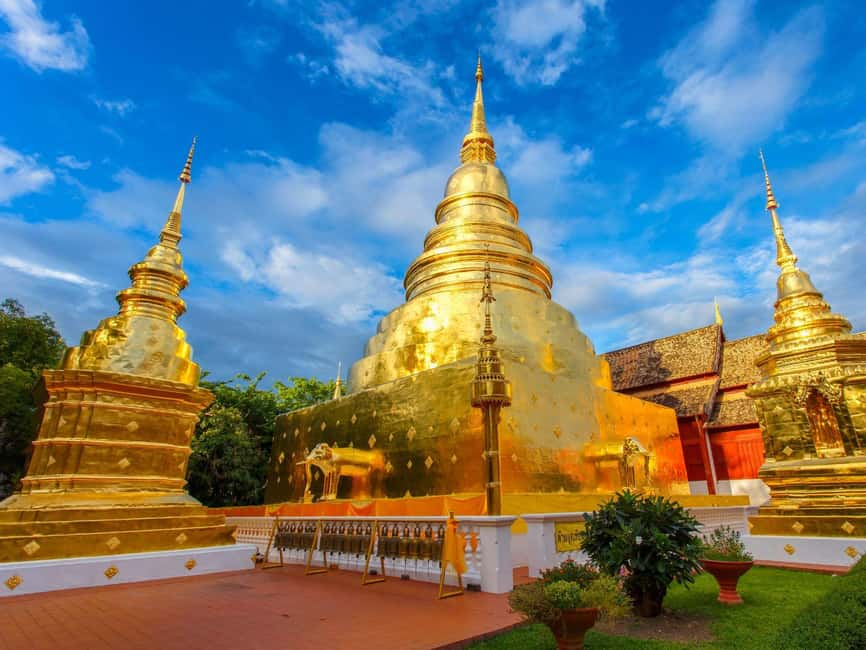
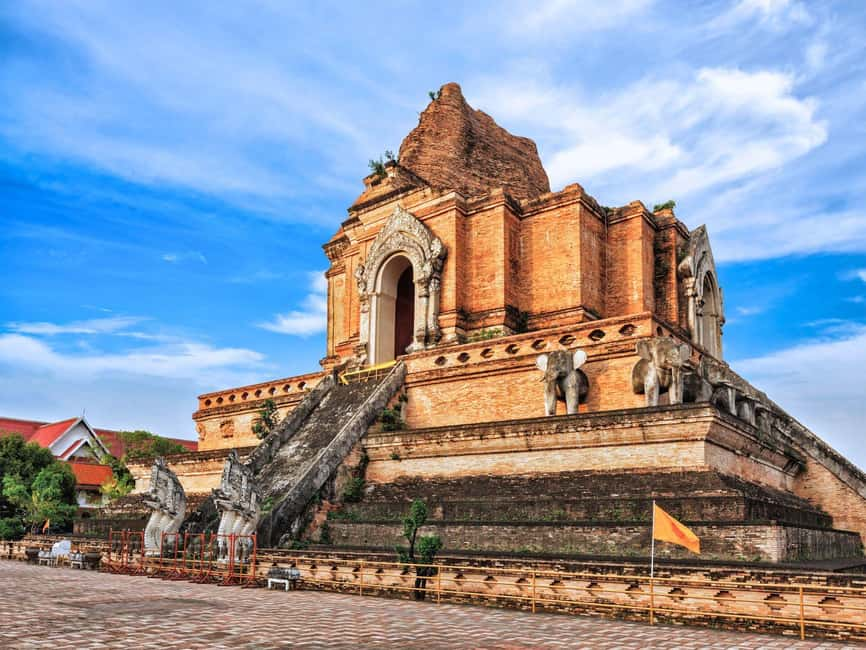
Wat Chedi Luang is an impressive first stop because the central chedi gives the temple a strong visual focus. The structure is partly ruined, yet its remaining bulk still tells you how important this religious site once was. Its name means Temple of the Great Stupa, and the scale of the chedi helps explain the name.
The temple is linked to the Emerald Buddha, one of Thailand’s most revered Buddhist images. The image was once housed here before moving elsewhere. That detail gives the site more weight than a simple photo stop. Your guide can help connect the damaged stonework, the temple’s former role, and Northern Thai religious tradition.
I would take time to look upward and outward rather than only at the most polished shrine buildings. The weathered chedi shows age in a direct way. Its rough surfaces and missing sections make it easier to picture Chiang Mai as an old Lanna capital, not just a modern tourist base.
Your clothing matters from the moment you arrive. Cover your shoulders and knees, and be ready to behave quietly around worshippers. This is an active religious place, not only an architectural monument.
One practical point is the possible entrance charge. The listed price includes the Long Neck Village entrance, but it does not clearly include all temple admission fees. A booking note states that the three temples may each charge 50 baht. That is a modest extra, but knowing about it prevents an awkward search for cash at the gate.
Wat Phra Singh and Chiang Mai’s sacred center
Wat Phra Singh gives the tour a different mood. It is one of Chiang Mai’s most sacred temples, known for golden pagodas, old murals, and the Phra Buddha Sihing image. The temple’s importance comes from both its religious role and its connection to Northern Thai artistic traditions.
I find this stop especially useful after Wat Chedi Luang because the two temples do not repeat the same lesson. Chedi Luang is dominated by a massive, weathered stupa. Wat Phra Singh offers more visual detail in its pagodas, painted scenes, and devotional spaces.
The Phra Buddha Sihing statue is a major point of interest. It is an important symbol of Northern Thai Buddhism, and your guide can give the image context that you might miss if you walk through on your own. The English-speaking guide is a real part of the value here. Guides such as Magie, also known as Margareth, and Mosquito have been praised for explaining the temples clearly and treating the group with care.
Time is the limitation. Four hours must cover transport, three temples, and the village, so you are unlikely to have unlimited time with the murals or pagodas. I would listen closely during the guide’s explanation, then use any free minutes for the details that catch your eye.
As at the other temples, dress respectfully. Shoulders and knees need to be covered. Temple rules can also limit access to certain interior areas. A recent practical note says women may not be permitted inside two of the temples, including the Silver Temple. That does not prevent you from seeing the exterior, but it is worth knowing before you book if interior access is important to you.
Wat Sri Suphan, Chiang Mai’s Silver Temple
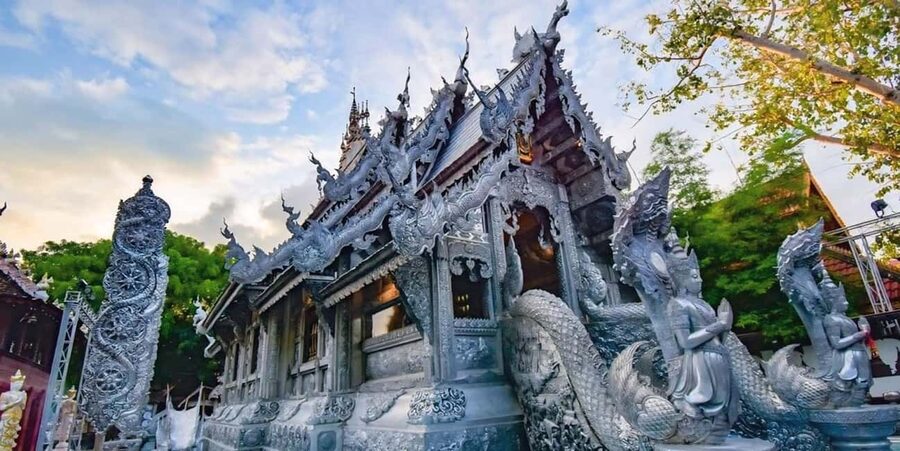
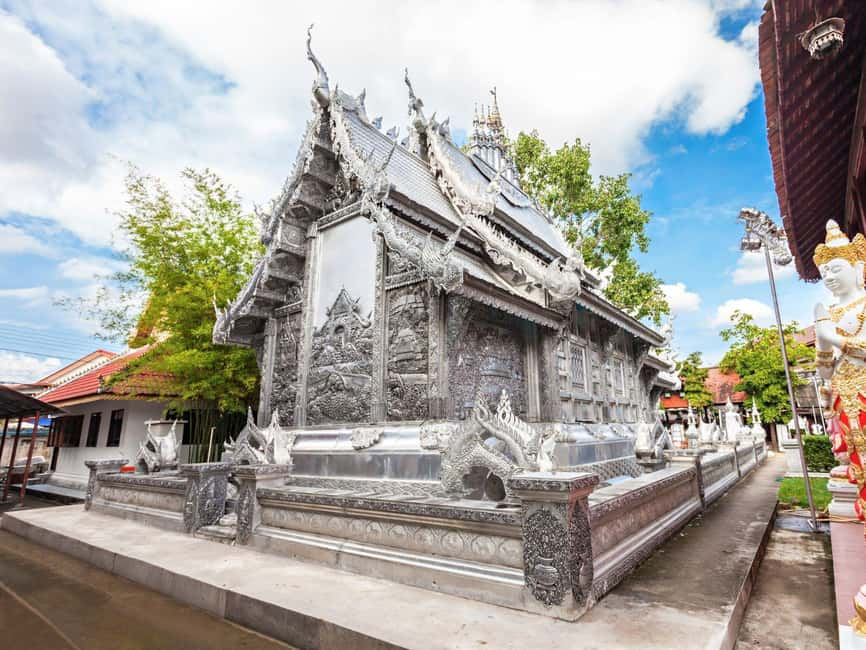
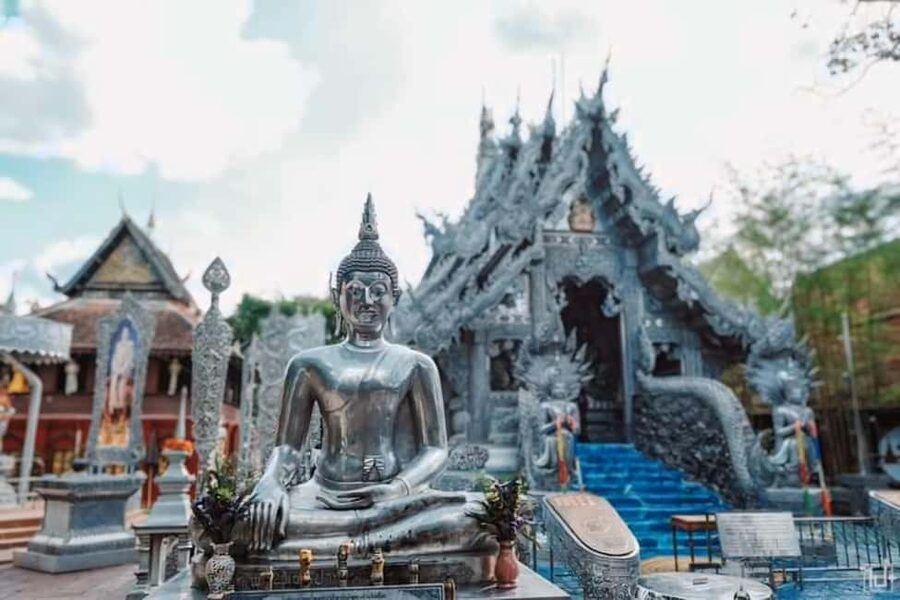
Wat Sri Suphan is the most visually unusual temple on this route. It is known as the Silver Temple because of the handcrafted silverwork that decorates its exterior. The metal panels show traditional Lanna artistry and Buddhist symbols in a form that feels more intricate and close-up than the great chedi at Wat Chedi Luang.
This stop rewards careful looking. Instead of simply photographing the whole building, study the patterns and small figures across the silver surface. The craftsmanship is the point. The temple shows how local religious art can be expressed through a material associated with skilled metalwork.
I also like that the tour connects the building with Chiang Mai’s craft traditions. The temple is not presented as a generic shrine. Its silver decoration points toward the work of local artisans and the continuing value of handcraft.
There is an important access note here. Women may not be allowed inside the main interior area, though the exterior remains available to view. The restriction is a drawback for anyone expecting a full indoor visit, but the outside silverwork is still the main reason to stop.
Again, keep cash in your pocket. Temple fees may be separate from the tour price, and the supplied details indicate 50 baht per temple for the three temples. Credit cards are not accepted everywhere, so Thai baht is the sensible choice.
Same sacred ground, another way to see it:
- Chiang Mai: Doi Suthep and Wat Umong Enchanting Evening Tour
★ 4.6 · 1,811 reviews - Chiang Mai: 3 Hour Old City and Temples Guided Walking Tour
★ 4.6 · 1,568 reviews - Chiang Mai: Doi Suthep, Wat Umong, and Pha Lat Sunrise Tour
★ 4.7 · 1,425 reviews - Chiang Rai Temples: Private Tour from Chiang Mai
★ 5.0 · 1,267 reviews
Meeting the Karen Padaung community
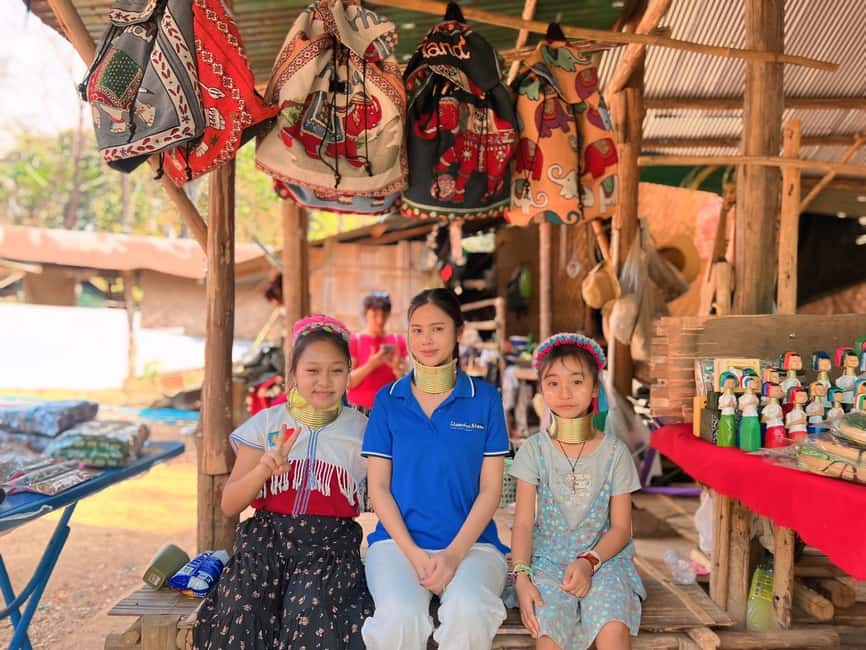
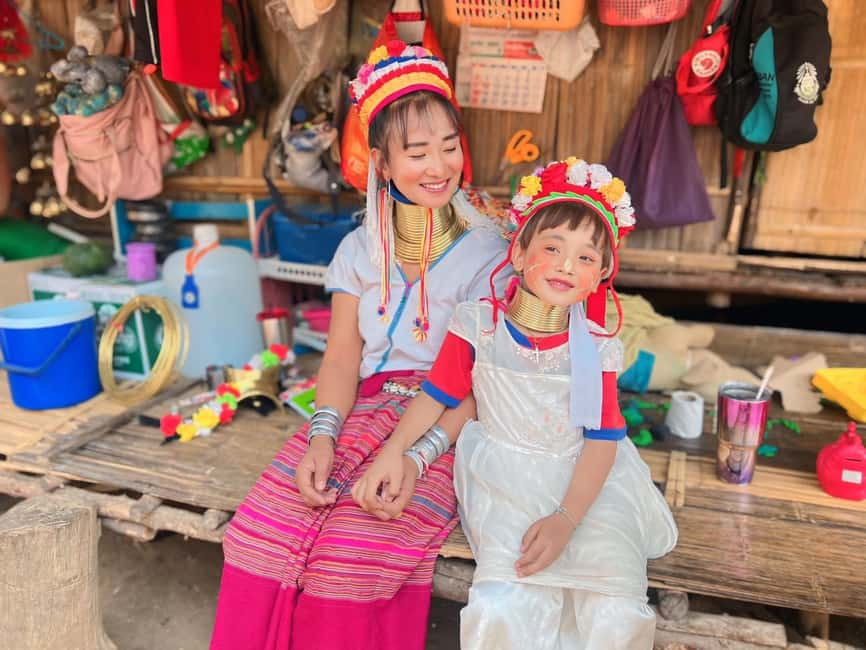
The final stop is the Karen Long Neck Village. Here the focus shifts from Buddhist buildings to the cultural traditions of the Karen Padaung people. You can learn about their history, see traditional weaving, and support local artisans through purchases.
The visit offers a chance to think about culture as something practiced, not just displayed in a museum. Weaving, clothing, and handmade goods connect the stop to everyday skill and local income. If you buy something, do so because you value the work, not simply because the setting feels unusual.
You may find traditional clothing and souvenirs for sale. The activity includes an opportunity to support local artisans, but shopping is not required. Bring cash if you want to purchase anything, since not every place accepts cards.
The wording around a Long Neck Village visit deserves a thoughtful approach. You are seeing a community whose traditions have often been presented to outsiders as a spectacle. A good guide should provide context and encourage respectful behavior. Ask before photographing people, avoid treating clothing or body adornment as a novelty, and listen to the explanations rather than rushing straight to the stalls.
This stop also adds variety to the day. After three temples, the village gives you a different window into northern Thailand. It is not another monument where you simply admire stone or paint. The value comes from learning about people, craft, and tradition.
The entrance fee for the village is included, unlike the possible temple charges. That makes the final stop easier to budget for, though you still need cash for personal purchases.
Riding the red Songthaew between stops

The red Songthaew is part of the character of this excursion. These vehicles are a familiar part of daily transport in Chiang Mai, and using one helps the trip feel connected to the city rather than sealed inside a tourist coach.
There is also a practical tradeoff. A Songthaew is not designed like a luxury vehicle. You may have bench seating and a less sheltered ride than you would in a private air-conditioned car. The tour is therefore a poor match for anyone with significant back problems, and the activity is not suitable for wheelchair users.
Pickup is included from hotels and accommodations in Chiang Mai’s old city or just outside the center. If you stay outside that area, you meet the group in front of the Burger King at Thapae Gate. Check your accommodation location before booking so you know which arrangement applies.
The meeting point is useful because Thapae Gate is a familiar landmark in central Chiang Mai. Still, do not assume that every hotel qualifies for pickup. If you are outside the stated area, plan around the gate meeting point.
What the $22 price really buys
At $22 per person, this is priced as a low-cost orientation tour rather than a private, slow-paced cultural day. You get four hours, red Songthaew transport, an English-speaking guide, and the Long Neck Village entrance fee.
The strongest value comes from combining several stops in one short outing. Transport between the temples can take time and planning if you arrange it yourself, especially if you want explanations instead of simply moving from gate to gate. Here, the guide gives the route a clear shape.
The price is less attractive if you want long visits at each temple or if you dislike shared transport. You may also pay extra for temple admission, with 50 baht per temple stated in a recent booking note. That means you should budget an additional 150 baht for the three temples, plus any shopping or personal expenses.
Meals and drinks are not included. Four hours is short enough that this is not a serious problem, but eat beforehand or plan a meal afterward. You should also carry water, though beverages are your own responsibility.
The booking terms are flexible: you can cancel up to 24 hours before the activity for a full refund, and you can reserve now and pay later. Those policies help if your Chiang Mai schedule is still shifting.
Who will enjoy this tour most
I would recommend this outing to a first-time visitor who wants a quick introduction to Chiang Mai’s temples and a cultural stop beyond the old city. It suits people who prefer a guide to explain what they are seeing and who enjoy moving through several places in one morning or afternoon.
It is also a good fit for budget-conscious visitors. The base price is modest, and the transport and guide reduce the need to arrange several separate rides. The Songthaew adds local flavor, though you should accept that it will not offer the comfort of a private vehicle.
The tour is less suitable for you if:
- You have back problems or need wheelchair access.
- You are pregnant.
- You want a slow, unhurried temple visit.
- You need guaranteed access to every temple interior.
- You prefer a private car and a flexible route.
- You do not want to carry cash for extra fees or purchases.
Bring comfortable clothing that covers your shoulders and knees. Pack cash, and use a respectful attitude at both the temples and the village.
Should you book this Chiang Mai temple and village tour?
Book it if you want a short, affordable introduction to Chiang Mai with a real mix of sights. The three temples are meaningfully different, the red Songthaew adds local character, and the Long Neck Village gives the route a cultural focus beyond architecture. Guides such as Mosquito, Magie, and Margareth have received especially warm praise for clear information and kind service.
Skip it if you want deep time at each shrine, guaranteed indoor access, or a more comfortable private ride. Also add the possible 50 baht fee at each temple to your budget, and remember that the Silver Temple may restrict women from entering its interior.
For most able-bodied first-time visitors staying in or near the old city, this is a sensible half-day introduction. Just dress properly, carry cash, and treat the village visit as a chance to learn and support local craft rather than a quick photo stop.
FAQ
How long does the tour last?
The tour lasts four hours.
What temples are included?
The route includes Wat Chedi Luang, Wat Phra Singh, and Wat Sri Suphan, also known as the Silver Temple.
Is the Long Neck Village entrance included?
Yes. Entrance to the Karen Long Neck Village is included.
Is transportation included?
Yes. Transportation is provided by traditional red Songthaew.
Where is pickup available?
Pickup is available from hotels and accommodations in Chiang Mai’s old city or just outside the city center. If your accommodation is outside that area, meet in front of the Burger King at Thapae Gate.
What should I wear?
Wear clothing that covers your shoulders and knees because the temples are sacred places.
Are temple entrance fees included?
The listed inclusions do not include temple entrance fees. A recent booking note states that the three temples may charge 50 baht each, so bring cash.
Temple visits we reviewed lately in Chiang Mai
- Red, Blue, White Temples & Hot Spring Trip from Chiang Mai★ 4.4 · 143 reviews
- Monk trails hike, Wat Phalat, Monk chanting, Wat Doi Suthep.★ 5.0 · 3 reviews
- Lalita Cafe & Chiang Rai Temple(White+Blue) from Chiangmai★ 4.8 · 5 reviews
- Private : Sticky Waterfall & Secret Temple & Karen Village.★ 5.0 · 9 reviews
- Chiang Mai: Temples & Culture Tour★ 4.7 · 64 reviews
- Half Day Morning Wat Pha Lat & Wat Phra That Doi Suthep Tour★ 4.8 · 269 reviews
- From Chiang Mai: White Temple, Blue Temple & Black House★ 4.5 · 15 reviews
- Chiang Mai: Chiang Rai Temples & Black House Discovery Tour★ 4.4 · 12 reviews
Chiang Mai Temple Tours, compared.
Chiang Mai: Chiang Rai Temples, Karen Tribe and Hot Springs
Read our review →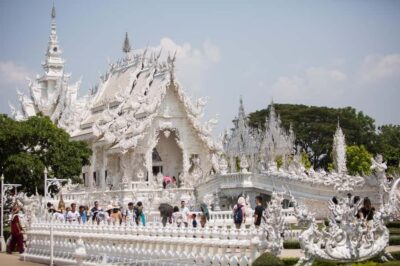
Chiang Rai White Temple and Blue Temple Day Tour
Read our review →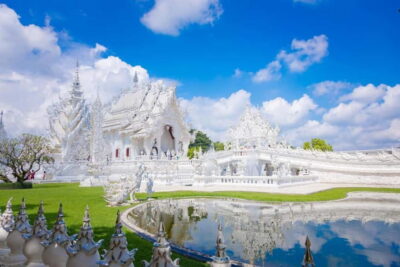
Chiang Mai: White, Red/Black & Blue Temples Tour with Lunch
Read our review →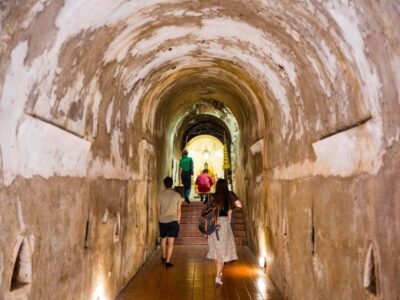
Chiang Mai: Doi Suthep and Wat Umong Enchanting Evening Tour
Read our review →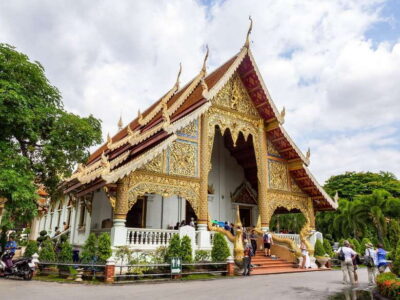
Chiang Mai: 3 Hour Old City and Temples Guided Walking Tour
Read our review →
Chiang Mai: Doi Suthep, Wat Umong, and Pha Lat Sunrise Tour
Read our review →
Chiang Rai Temples: Private Tour from Chiang Mai
Read our review →
Chiang Mai: Wat Pha Lat & Wat Phra That Doi Suthep Tour
Read our review →This tour also ranks in