
Review · CHIANG MAI
Chiang Mai: Temples & Culture Tour
Chiang Mai’s story comes into focus when you connect its temples with the old Lanna kingdom. This four-hour tour takes you from Wat Chiang Man, founded in 1297, to the royal-style Wat Phra Singh and the huge chedi at Wat Chedi Luang, then adds the Chiang Mai Arts & Cultural Centre for useful historical context.
I like the small group size, capped at nine, and the way the tour pairs major sights with a strong English-speaking guide. I also like the practical touches: central hotel pickup, a comfortable air-conditioned minivan, bottled water, and a refreshing towel in Chiang Mai’s heat.
The main consideration is the pace. You get a good introduction rather than a long, independent visit at each temple, and the tour is not suitable for wheelchair users or people with mobility impairments. Dress carefully, since shorts and sleeveless shirts are not allowed inside the temples.
Key points to know before booking
- Three important temples in one morning or afternoon: See Wat Chiang Man, Wat Phra Singh, and Wat Chedi Luang without arranging separate rides.
- A guide who adds meaning: Guides including Poongkie, Paul, Nong, and Po have been praised for clear explanations of Buddhism, Lanna history, customs, and local culture.
- The museum fills in the gaps: The Chiang Mai Arts & Cultural Centre helps explain what you have just seen at the temples.
- Comfortable city transport: A 9-seater VIP air-conditioned minivan, hotel pickup, drinking water, and a cold towel make the half-day outing easier.
- Useful for a first visit: You get a broad introduction to Chiang Mai’s religion, rulers, architecture, and city origins in four hours.
- Morning timing has an advantage: The early option can be cooler and quieter, especially if you want to walk around temple grounds more comfortably.
Why this four-hour route works for first-time visitors
Chiang Mai can look like a collection of beautiful temples until someone explains how the pieces fit together. This tour gives you that framework. You see the city’s oldest temple, one of its most revered Buddha images, the great chedi linked to Lanna power, and a museum that ties the story together.
I find that combination more useful than visiting three temples at random. The stops are not identical, so the route avoids the common problem of temple fatigue. Wat Chiang Man introduces the city’s founding period. Wat Phra Singh shows a more refined religious and artistic tradition. Wat Chedi Luang gives you scale and a reminder of the power once held by Chiang Mai’s rulers.
The museum visit is an especially good choice. It gives you time indoors, with air conditioning, after walking through temple grounds. It also gives you a chance to see historical artifacts from the ancient Lanna kingdom instead of relying only on the details a guide can point out during a short temple visit.
The $36 price is sensible if you value transport and explanation. Admission fees, hotel pickup and drop-off in the central area, a private or small-group format, an English-speaking guide, water, a towel, and accident insurance are included. If you visited the same places on your own, you could spend less on entry and local transport, but you would give up the historical thread that connects them.
More Temple Tours around Chiang Mai:
- Chiang Mai: Chiang Rai Temples, Karen Tribe and Hot Springs
★ 4.7 · 5,401 reviews - Chiang Rai White Temple and Blue Temple Day Tour
★ 4.6 · 3,366 reviews - Chiang Mai: White, Red/Black & Blue Temples Tour with Lunch
★ 4.2 · 2,017 reviews
Wat Chiang Man and the beginning of Chiang Mai
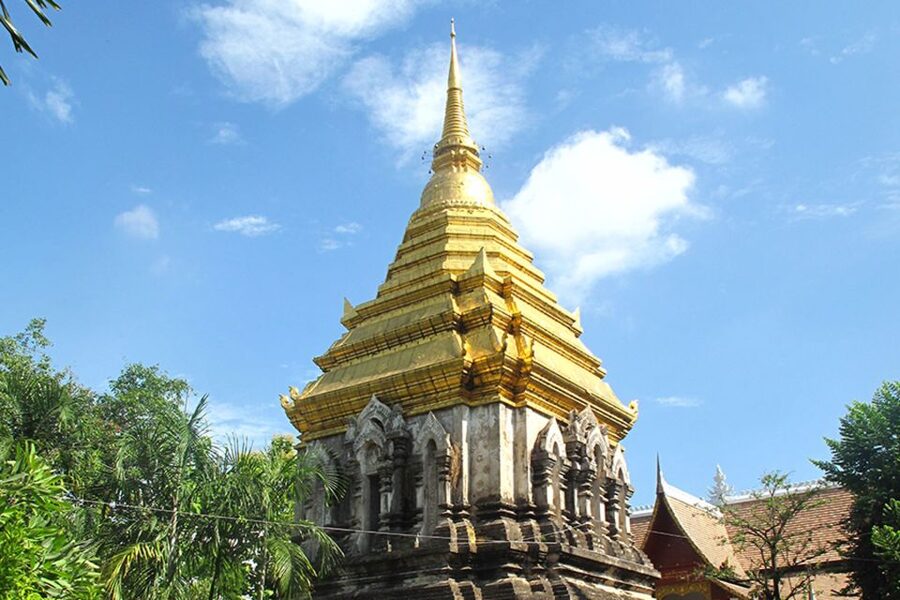
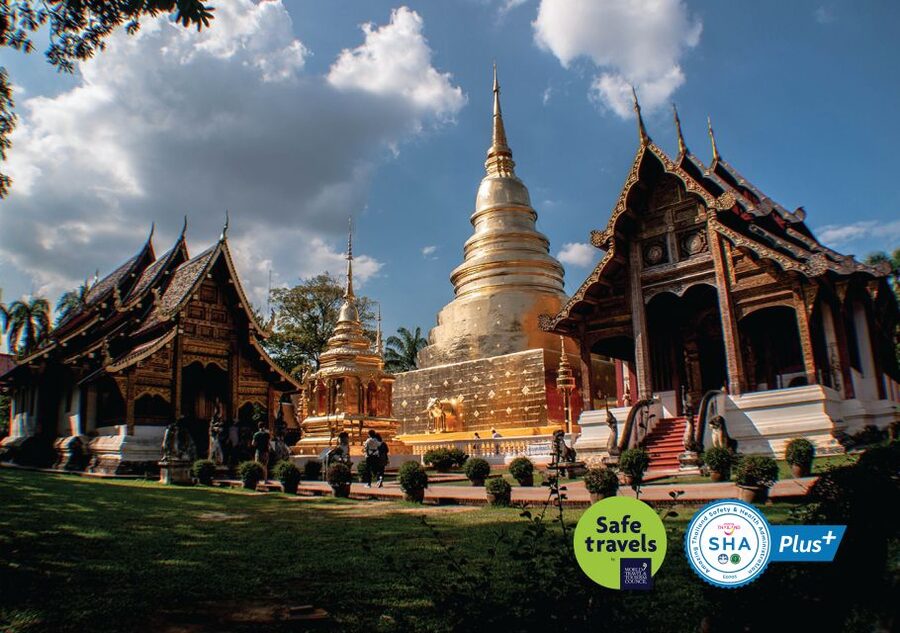
The route begins at Wat Chiang Man, the oldest temple on the program. Lanna king Mangrai built it in 1297, making this a natural place to start learning how Chiang Mai began.
You spend about 45 minutes here with a guide. That is enough time to walk around, look closely at the temple buildings, and ask questions without turning the stop into a rushed photo call. The value is less about checking off another wat and more about beginning with the city’s earliest royal foundation.
Your guide can help you look past surface details. Temple roofs, Buddha images, courtyards, and decorative work can blur together when you visit several sites in one day. At Wat Chiang Man, the date and connection to King Mangrai give you an anchor. You begin to see the temples as part of a political and religious story, not just attractive buildings.
You should wear shoes that are easy to remove. Temple visits require you to cover your shoulders and knees, and the rules apply throughout the day. Long pants and a long-sleeved shirt are the safest choices. Shorts and sleeveless shirts are specifically not allowed.
Wat Phra Singh and the Phra Buddha Sihing image
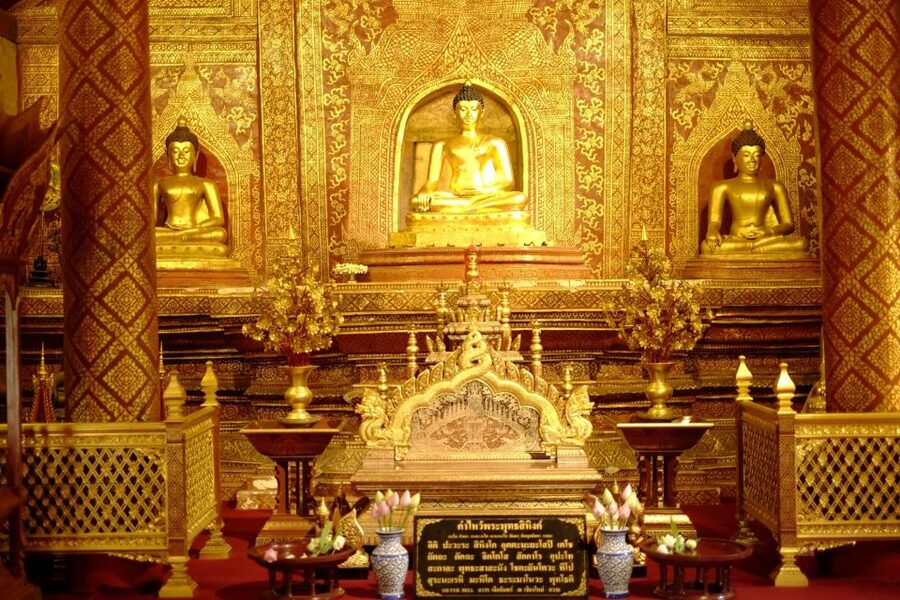
Wat Phra Singh brings a different mood and a more polished sense of royal devotion. The active temple is known for highly revered Buddha images, including the important Phra Buddha Sihing statue associated with the 14th century.
You have around 45 minutes here. That gives you time to examine the main religious spaces, listen to the guide explain the image and its place in Chiang Mai’s traditions, and notice how the temple remains an active place of worship rather than a silent historic monument.
This is one of the stops where an informed guide matters most. Without context, you may admire the image and architecture but miss why Phra Buddha Sihing is important. Guides such as Poongkie have been praised for making Lanna history and Buddhist customs easy to follow, while Paul and Po have also received high marks for keeping explanations clear and engaging.
The temple is still active, so you should behave as you would in any functioning place of worship. Keep clothing modest, follow instructions about where to stand or sit, and remember that the tour is not simply a sightseeing circuit. You are entering a religious space used by local people.
Wat Chedi Luang and the scale of Lanna power
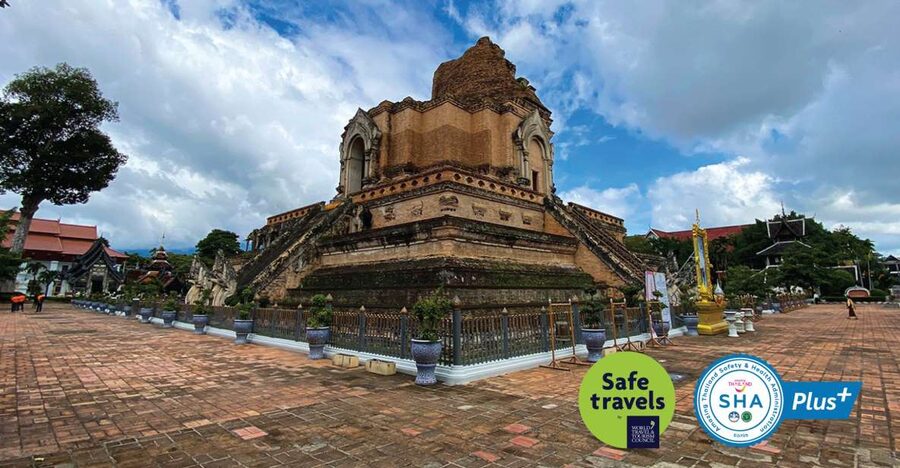
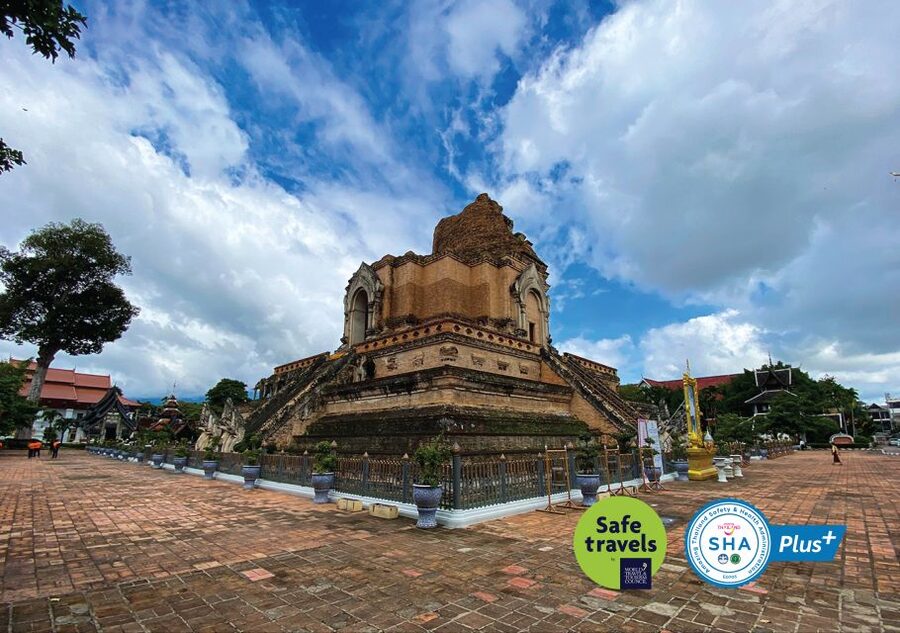
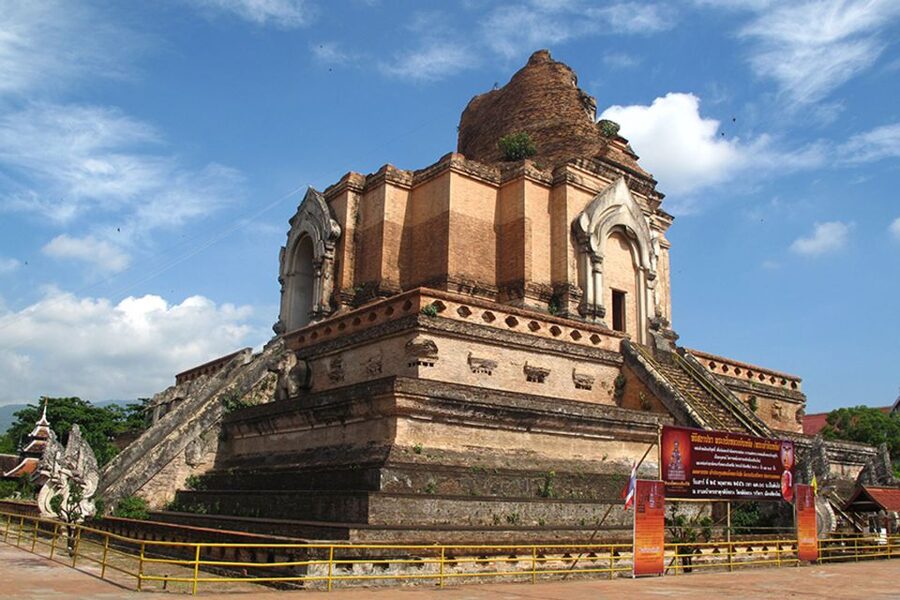
Wat Chedi Luang is the largest monument on the route and perhaps the most visually imposing stop. Its great chedi shows the scale of Chiang Mai during the Lanna period and gives your guide a natural place to explain the city’s former rulers.
Again, the visit lasts about 45 minutes. That is enough for a guided walk around the grounds and a proper look at the monument, but not an extended architectural study. If you are an enthusiast who wants to photograph every angle or sit quietly for a long time, the group schedule may feel limited.
For most people, the timing is fair. The guide can point out important features, explain the role of the temple, and answer questions while you move through the site. You also avoid spending the entire half-day at one location. The three temple visits work because each one adds a different piece to Chiang Mai’s past.
The heat is worth considering. Chiang Mai can be hot, and the tour includes walking outdoors at all three wats. Drinking water and a refreshing towel are included, which sounds like a small detail until you have spent several hours in the sun. Sunglasses, comfortable shoes, and modest clothing that is not too heavy will help.
Same sacred ground, another way to see it:
- Chiang Mai: Doi Suthep and Wat Umong Enchanting Evening Tour
★ 4.6 · 1,811 reviews - Chiang Mai: 3 Hour Old City and Temples Guided Walking Tour
★ 4.6 · 1,568 reviews - Chiang Mai: Doi Suthep, Wat Umong, and Pha Lat Sunrise Tour
★ 4.7 · 1,425 reviews - Chiang Rai Temples: Private Tour from Chiang Mai
★ 5.0 · 1,267 reviews
The Chiang Mai Arts & Cultural Centre puts the temples in context
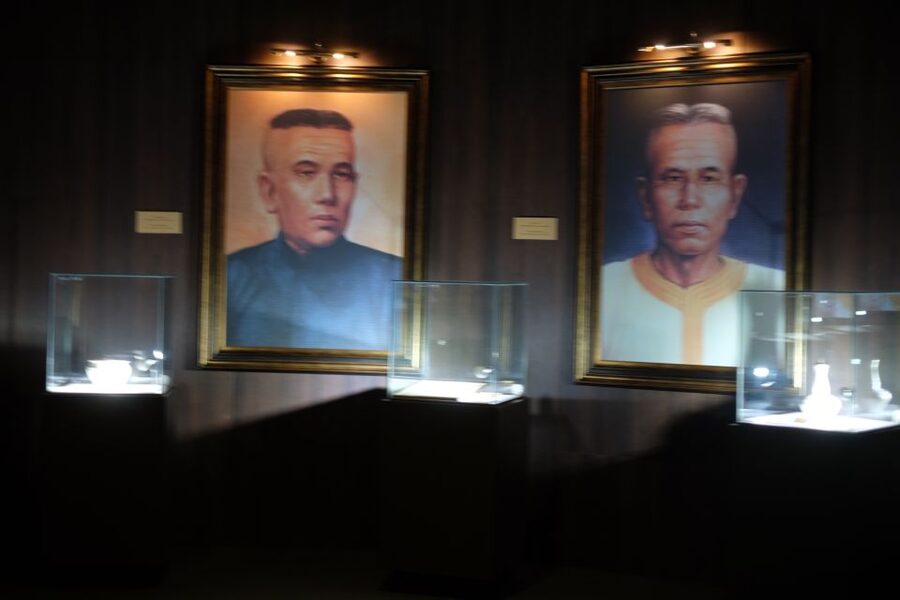
The final major stop is the Chiang Mai Arts & Cultural Centre, a traditional northern building with Lanna-style design. You spend about an hour and a half here, including guided time and some free time to look around.
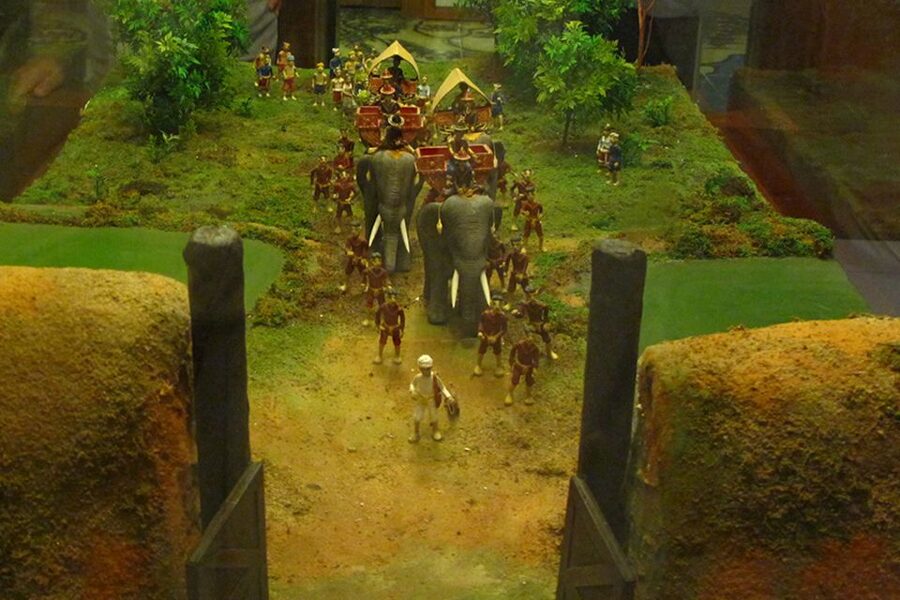
This longer stop gives the tour its wider purpose. The temples show the physical remains of Chiang Mai’s religious and royal past. The centre helps explain the city itself through historical artifacts and displays about the old Lanna kingdom.
I like the order of the day. By the time you enter the museum, you already have several concrete examples in mind. Terms such as Lanna, royal foundation, Buddhist tradition, and ancient rulers are easier to understand when you have just seen the sites connected to them.
The centre also gives you a break from outdoor walking. The air conditioning is welcome, especially on an afternoon departure. You can use the free time to revisit displays at your own pace, while the guide remains available for questions during the guided portion.
This stop may appeal most to people who want history rather than photographs alone. If you are mainly looking for dramatic temple architecture, the museum will feel slower. If you want to understand why Chiang Mai developed as it did, it is one of the most useful parts of the program.
What the small-group format adds
The group is limited to nine people, and the transport is a 9-seater VIP air-conditioned minivan. That is a practical middle ground between a private tour and a large coach excursion.
You get the convenience of a planned route without the scale that can make questions difficult. Several guides, including Poongkie and Nong, have been singled out for answering questions and explaining culture in an approachable way. One morning group even had the minibus to itself, but you should treat that as a possible bonus rather than something guaranteed.
Private options are also available. If you prefer a quieter day or want to ask many questions, private travel may be worth the extra cost if offered at the time of booking. The small-group option already keeps the experience fairly personal, though, and the price of $36 makes it attractive for solo visitors and couples who want guidance without paying for a full private vehicle.
Hotel pickup and drop-off are included in Chiang Mai’s central area, within 6 kilometers of the Three Kings Monument. Pickup farther out costs an extra 500 Thai baht each way for distances from 6 to 15 kilometers, or 1,000 baht each way for 16 to 30 kilometers. Check your hotel location before booking so the advertised price does not catch you by surprise.
Morning or afternoon: which departure should you choose?
The morning tour is the better choice if you want cooler conditions and a quieter start. An early visit can make the outdoor temple walks more comfortable, and you may have more energy for listening and asking questions.
The afternoon tour works well if you arrive in Chiang Mai later, prefer a slower morning, or want to pair the outing with another activity earlier in the day. The museum provides some indoor relief during the hottest part of the schedule.
You should allow flexibility after the tour. The advertised duration is four hours, but hotel pickups and city traffic can affect the exact return time. The experience ends back in Chiang Mai, and a guide may offer local suggestions. One guide, Nong, recommended trying khao soi after the morning tour, a useful idea if you want to continue exploring northern Thai food.
Practical details that affect your day
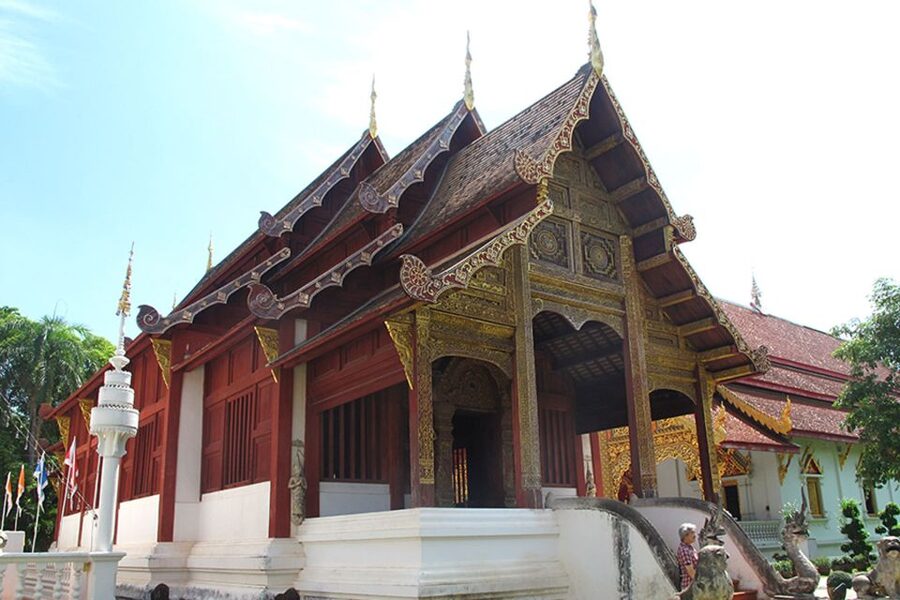
Wear long pants and a shirt with covered shoulders. You should also bring comfortable shoes and sunglasses. These are not just dress-code notes. You will walk at three temples, and the surfaces may not feel as easy as a flat city pavement.
The tour includes transport by air-conditioned minivan, an experienced driver, an English-speaking guide, entry fees, drinking water, a refreshing towel, and travel accident insurance. Meals are not included, so plan to eat before or after the tour.
The activity is not suitable for wheelchair users or people with mobility impairments. The schedule includes walking through temple grounds and museum spaces, so anyone who has difficulty walking should consider a different arrangement.
Cancellation is flexible up to 24 hours before the start time for a full refund, and you can reserve now and pay later. Your voucher is valid only on the date selected, so check the date and pickup location carefully.
The experience has a 4.7 rating from 64 ratings. The strongest pattern is clear: the guides receive the most praise. Poongkie, Paul, Nong, and Po are described as warm, well prepared, and able to explain religion, customs, and history without losing the group. The clean van, careful pacing, hotel service, water, and towel also receive repeated approval.
Who should book this temple and culture tour?
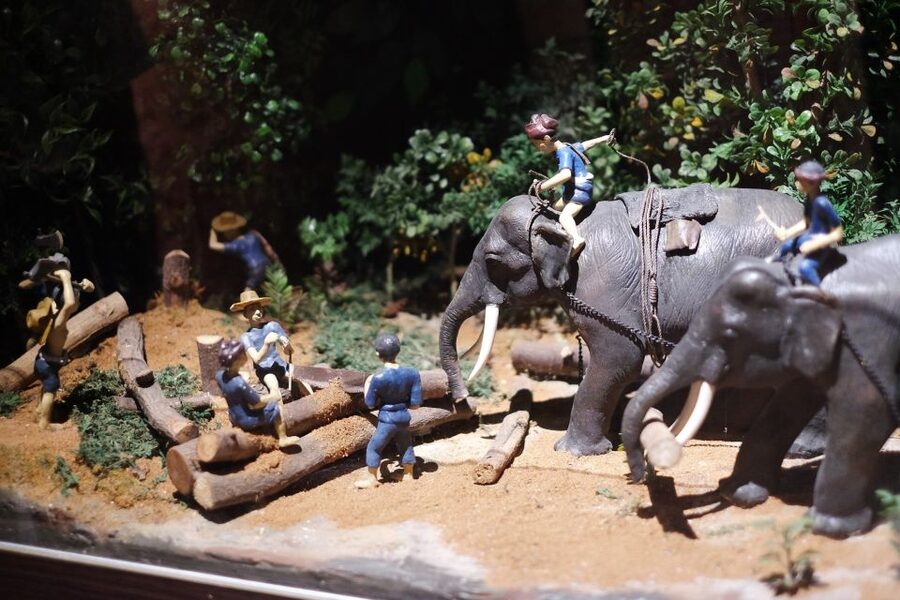
I would choose this tour for a first visit to Chiang Mai, especially if you have only a few days. It gives you a useful introduction in half a day and leaves the rest of your schedule open for markets, food, Doi Suthep, or another activity.
It also suits you if you enjoy asking questions. The guide is central to the experience, and the small group makes it easier to ask about Buddhism, Lanna rulers, temple customs, and local life.
You may want to skip it if you have already spent several days visiting Chiang Mai’s temples independently and prefer a slow, unstructured morning. It is also a poor fit if you need step-free access or cannot meet the clothing requirements.
Should you book it?
Book this tour if you want context as well as beautiful buildings. The three temples cover Chiang Mai’s origins, religious traditions, and Lanna power, while the Arts & Cultural Centre gives the city’s story a clear ending.
At $36, the value comes from the guide, transport, admissions, and efficient route rather than from any single stop. Choose the morning for cooler, quieter conditions, wear long pants and covered shoulders, and expect a steady four-hour introduction rather than an in-depth study of every temple. For a first look at Chiang Mai, that is a smart use of half a day.
FAQ
How long does the Chiang Mai temples and culture tour last?
The tour lasts four hours, including the temple visits, the Chiang Mai Arts & Cultural Centre, transportation, and hotel pickup and drop-off.
Which temples are included?
The route includes Wat Chiang Man, Wat Phra Singh, and Wat Chedi Luang. Each temple visit lasts about 45 minutes.
Is hotel pickup included?
Yes. Pickup and drop-off are included from hotels in Chiang Mai within 6 kilometers of the Three Kings Monument. Extra charges apply for hotels farther away, up to 30 kilometers from the centre.
What clothing should I wear?
You must cover your shoulders and knees when entering the temples. Long pants and a long-sleeved shirt are recommended. Shorts and sleeveless shirts are not allowed.
Is this a private tour or a group tour?
You can choose a private or small-group option. The small group is limited to nine participants and uses a 9-seater air-conditioned minivan.
Is the tour available in English?
Yes. The tour includes a live English-speaking guide. Guides such as Poongkie, Paul, Nong, and Po have led tours on this route.
Temple visits we reviewed lately in Chiang Mai
- Red, Blue, White Temples & Hot Spring Trip from Chiang Mai★ 4.4 · 143 reviews
- Monk trails hike, Wat Phalat, Monk chanting, Wat Doi Suthep.★ 5.0 · 3 reviews
- Long Neck Village, Silver Temple & Chiang Mai Top Sites★ 4.7 · 17 reviews
- Lalita Cafe & Chiang Rai Temple(White+Blue) from Chiangmai★ 4.8 · 5 reviews
- Private : Sticky Waterfall & Secret Temple & Karen Village.★ 5.0 · 9 reviews
- Half Day Morning Wat Pha Lat & Wat Phra That Doi Suthep Tour★ 4.8 · 269 reviews
- From Chiang Mai: White Temple, Blue Temple & Black House★ 4.5 · 15 reviews
- From Chiang Mai: Lamphun and Lampang Temples Tour★ 4.9 · 33 reviews
Chiang Mai Temple Tours, compared.
Chiang Mai: Chiang Rai Temples, Karen Tribe and Hot Springs
Read our review →
Chiang Rai White Temple and Blue Temple Day Tour
Read our review →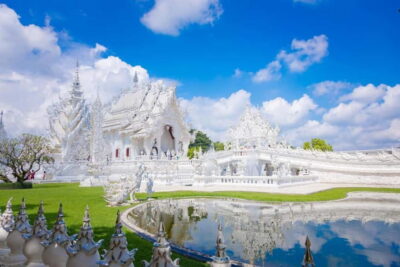
Chiang Mai: White, Red/Black & Blue Temples Tour with Lunch
Read our review →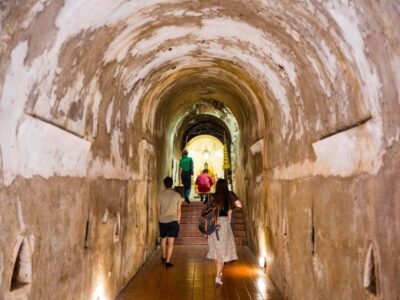
Chiang Mai: Doi Suthep and Wat Umong Enchanting Evening Tour
Read our review →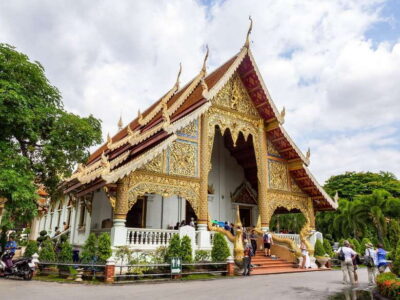
Chiang Mai: 3 Hour Old City and Temples Guided Walking Tour
Read our review →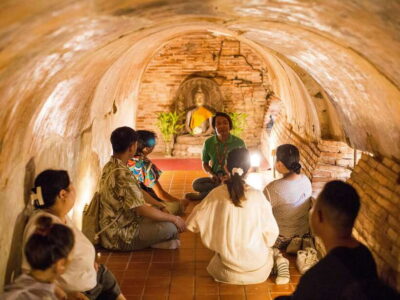
Chiang Mai: Doi Suthep, Wat Umong, and Pha Lat Sunrise Tour
Read our review →
Chiang Rai Temples: Private Tour from Chiang Mai
Read our review →
Chiang Mai: Wat Pha Lat & Wat Phra That Doi Suthep Tour
Read our review →This tour also ranks in