Review · KYOTO
Kyoto Tea Ceremony & Kiyomizu-dera Temple Walking Tour
Kiyomizu-dera is one of Kyoto’s must-see temples, but its steep lanes and maze of old shops can be hard to sort out on your own. This three-hour walk brings the temple, Otowa Waterfall, a traditional tea ceremony, and Kyoto snacks into one well-paced morning.
I like the small maximum of six people, which gives you room to ask questions and stay connected to your guide. I also like the practical touch of guide-taken photos, a detail Hide has handled especially well. The main drawback is the price, $109.39 per person, and the uphill walking on busy, sloping streets.
Key points to know before you book
- Kiyomizu-dera entry is included: You do not need to arrange a separate temple ticket.
- The group is capped at six: This is a more personal format than a large coach tour.
- Hide leads the walking portion: Expect explanations of Shinto, Buddhism, temple customs, and local sights.
- The tea ceremony is part of the main experience: Matcha, snacks, and the ceremony are included.
- The route is hilly: Kiyomizu-zaka, Sannenzaka, and Ninenzaka require steady walking and careful footing.
- The tour begins at 9:00 a.m.: Meet at Yasaka Shrine’s Western Tower Gate and return there after about three hours.
Why this morning works well in Kyoto
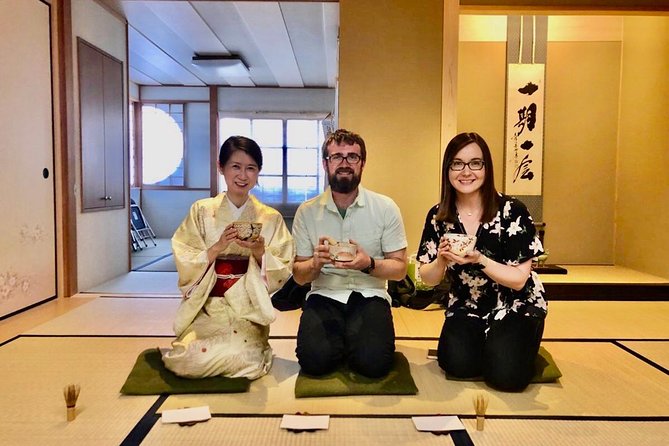
This experience combines three things that are often separated in Kyoto: a major temple, an old-fashioned shopping district, and a cultural activity where you can slow down. You get the broad view of Kyoto’s Higashiyama area, then a quiet tea ceremony that gives the morning a clear change of pace.
The route is also useful if you have just arrived in Kyoto. A guide can point out the streets leading toward Kiyomizu-dera instead of leaving you to study a map while climbing a hill. One participant found the walk helpful for getting oriented on a first day, and I can see why. Yasaka Shrine, Kiyomizu-zaka, Sannenzaka, Ninenzaka, and Kiyomizu-dera form a connected sightseeing area, but each section has a different feel.
The tour is led in a small group of no more than six. That matters here. The streets can be crowded, and a large group would be awkward on narrow slopes and near the temple gates. With fewer people, you have a better chance to hear explanations and ask about details that catch your eye.
More Temple Walking Tours in Japan
- Kyoto Arashiyama Walking Tour: Bamboo, Monkeys, Gardens & Secrets
★ 5.0 · 1,216 reviews - Kyoto: Fushimi Inari Shrine Walking Tour
★ 5.0 · 72 reviews - Kyoto: Fushimi Inari Taisha Shrine Walking Tour with Guide
★ 4.8 · 18 reviews
Meeting Hide at Yasaka Shrine
The morning starts at 9:00 a.m. at Yasaka Shrine’s Nishiromon Gate, also called the Western Tower Gate, at 625 Gionmachi Kitagawa in Kyoto’s Higashiyama Ward. The meeting point is near public transportation, but the exact gate matters. One person had trouble finding the guide at the start, so I would allow extra time and check the gate name before setting out.
Yasaka Shrine makes a sensible starting point. It places you near Gion and the eastern temple district, and it gives the group a clear landmark before walking toward the Kiyomizu area. Your guide, Hide, has been praised for explaining both Shinto and Buddhism in a friendly, easy-to-follow way. His style also includes humor, conversation about baseball, and plenty of help with photos.
That mix is worth noting. This is not only a procession from one attraction to another. Hide can explain the formalities of Japanese temples while keeping the mood relaxed. If you are unsure how to approach a shrine, where to bow, or how temple and shrine customs differ, this is a good setting to ask.
Kiyomizu-zaka and the old Kyoto streets
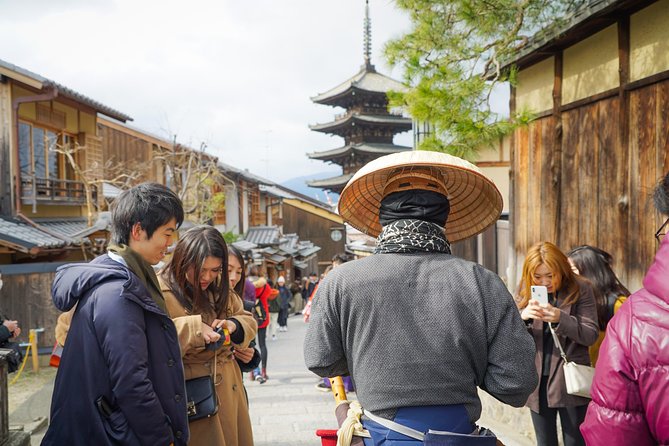
From Yasaka Shrine, the walk moves through streets with the traditional look many people hope to find in Kyoto. Kiyomizu-zaka refers to an area made up of several old-style lanes, with teashops, Japanese sweets shops, and stores selling traditional dried foods.
The street atmosphere is part of the attraction, but it is also part of the challenge. The route climbs, and the area can fill with people near the temple. Wear shoes you can walk in comfortably, and do not expect a flat stroll through a quiet neighborhood.
You might see people dressed in kimono, and the area is associated with maiko and geisha. The shops sell Kyoto specialties such as pickles and yatsuhashi, a familiar local sweet. Since additional food and drinks are not included, you can decide later if you want to buy more on your own.
A short stop at Yasakakoshindo adds a splash of color to the route. It is described as one of Kyoto’s most colorful temples and gives you something different from the grand wooden buildings at Kiyomizu-dera. Your guide can help connect these smaller places to the larger story of the district.
The climb to Kiyomizu-dera
Kiyomizu-zaka is the approach to one of Japan’s most famous temples. The route follows a roughly one-kilometer pilgrimage road toward Kiyomizu-dera, passing souvenir shops and traditional stores as the slope rises.
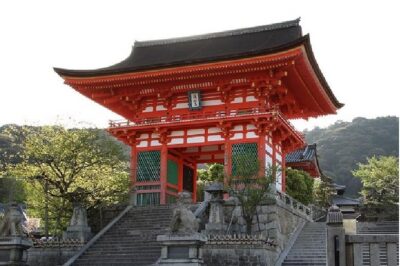
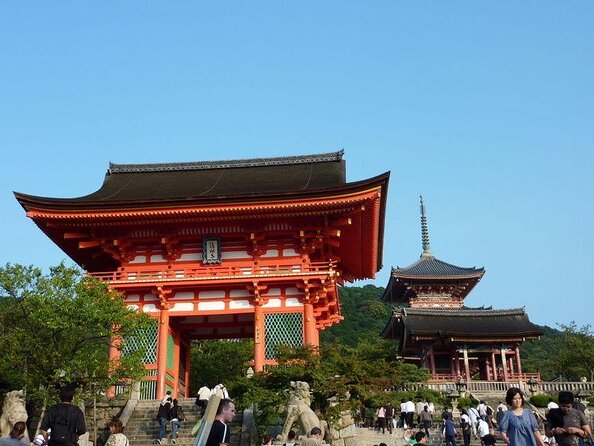
The lower part of the road is quieter, while the area closer to Gojozaka and the temple has more shops and foot traffic. Near the top, the Niomon Gate and three-story pagoda create a memorable entrance. The walk is not difficult for most people who are comfortable on hills, but it is worth pacing yourself, especially during Kyoto’s hot and humid summer.
Kiyomizu-dera was built on the site of Otowa Waterfall about 1,200 years ago. Its name refers to the waterfall’s pure water. That connection becomes clear when you reach the water below the temple’s main stage.
The temple is a UNESCO World Heritage Site, but the value of seeing it with a guide is not only the label. The grounds have religious customs and visual details that are easy to miss when you are focused on taking photos. Hide can explain how to worship and answer questions as you move through the site.
More Temple Walking Tours in Kyoto
- Kyoto: Private Walking Tour with Kiyomizu Temple & Gion
★ 5.0 · 7 reviews - Kyoto Tea Ceremony & Kiyomizu-dera Temple Walking Tour
★ 4.5 · 4 reviews
The wooden stage and Kyoto views
The famous wooden stage at Kiyomizu-dera rises about 13 meters above the ground. From here, you can look across the trees toward Kyoto. Cherry trees and maple trees give the view changing color at different times of year, though the tour information does not promise a particular seasonal display.
This is the photo stop many people picture when they think of Kiyomizu-dera. You will have a chance to take your own pictures, and the guide also takes photos during the tour. That is a useful extra for solo visitors or anyone who wants a record of the experience without constantly holding a phone.
The setting can be crowded, so do not expect long stretches of quiet on the stage. The advantage of arriving with a guide is that you can focus on the view and the temple customs rather than trying to figure out where to go next.
Choosing a stream at Otowa Waterfall
Otowa Waterfall is central to the identity of Kiyomizu-dera. Its water is divided into three streams, with each stream linked to a different benefit. You use a cup attached to a long pole to drink from the stream you choose.
The tour presents this as a chance to take part in Japanese worship rather than simply watch from the side. Your guide can explain the custom and help you understand what you are doing. It is a small ritual, but it gives the temple visit a more active quality.
The water stop is also a reminder to keep your expectations sensible. You are not receiving a private religious ceremony. You are taking part in a well-known custom at a major temple, alongside other people. Still, for many visitors, that simple act is more memorable than another quick photo of a building.
Sannenzaka and Ninenzaka
After the main temple visit, the route passes through Sannenzaka and Ninenzaka, two of the best-known old streets near Kiyomizu-dera. Their sloping stone lanes, traditional buildings, and shops make them pleasant places to explore, but they are not hidden or empty.
Sannenzaka has a famous warning attached to its name. A local legend says that falling on the slope can shorten your life by three years. The story may have helped encourage people to watch their step, since the road once led toward the Toribeno burial ground.
You do not need to take the legend literally, but you should take the slope seriously. Good walking shoes are more useful here than dress shoes. The area has souvenir stores, Kyoto sweets, pickles, and other small foods, so you may want to return later if you prefer shopping without the group’s schedule.
Passing through these streets also helps you see how Kyoto’s tourist areas connect. Kiyomizu-dera is not an isolated temple in a park. It is part of a living district filled with shops, religious sites, old roads, and daily movement.
The tea ceremony and matcha
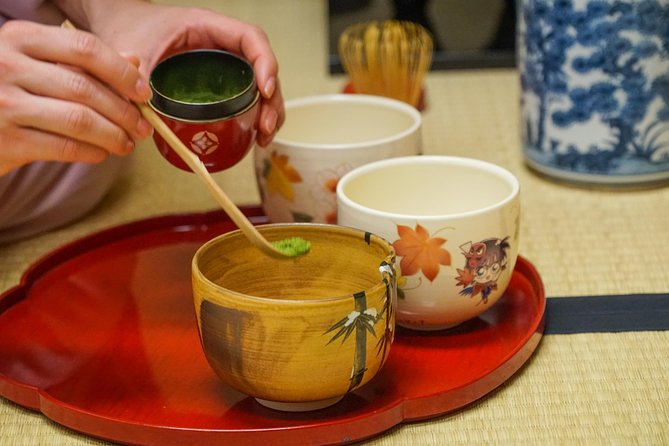
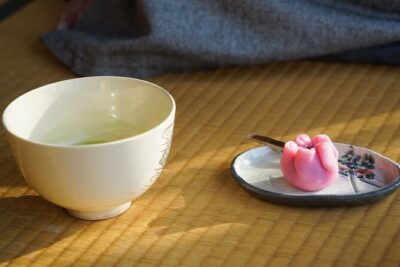
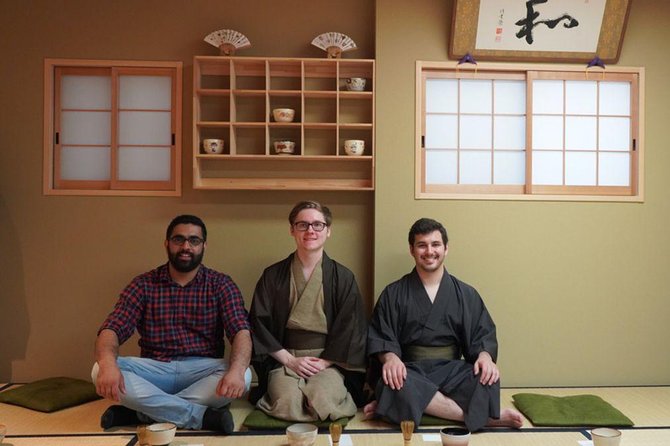
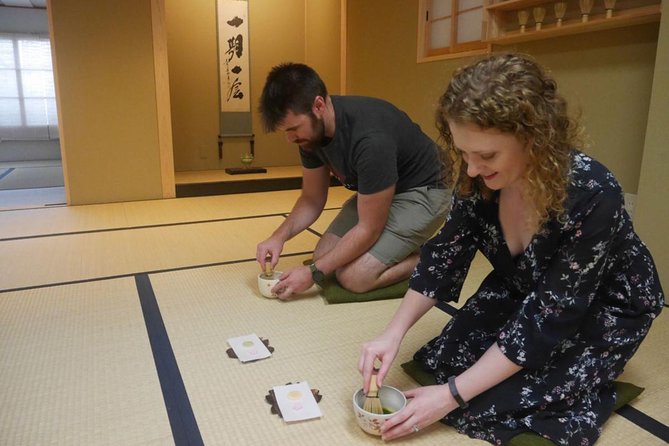
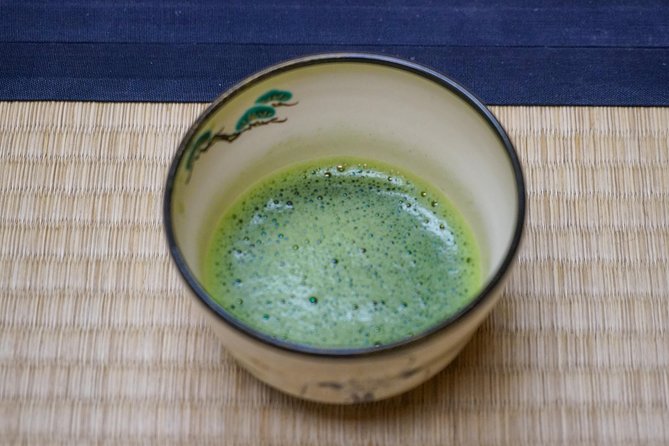
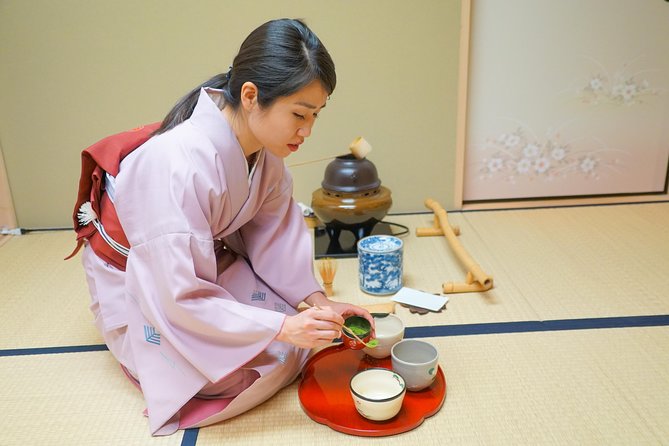
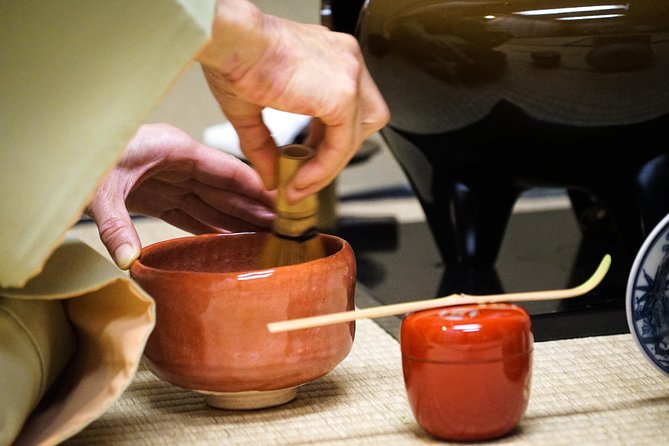
The tea ceremony is the cultural centerpiece of the second half of the experience. You receive matcha and snacks, and a tea host guides you through the ceremony’s formal movements.
The ceremony offers a different rhythm from the walk. At the temple, you are looking, climbing, listening, and taking photographs. During tea, you are asked to slow down and watch the careful preparation. The host explains the process and the manners involved, so you do not need prior knowledge.
Haruki has been described as a warm and entertaining tea host. Another tea ceremony host, a woman, was praised for showing the skill and artistry behind the performance. That detail matters because a tea ceremony can feel distant if you are only expected to sit silently. Here, the aim is to help you understand the care behind the gestures.
The snacks are included, along with the matcha. Additional food and drinks are not part of the price. Food allergies and dietary restrictions cannot be guaranteed, since the food is prepared in kitchens outside the operator’s control. Substitutions may not always be possible, so contact the operator before booking if this is important for you.
Is $109.39 a fair price?
At $109.39 per person, this is not a budget walk. The price includes Kiyomizu-dera admission, the tea ceremony, matcha, snacks, photos, and about three hours with a local guide.
I think the value depends on what you would otherwise arrange yourself. If you only want to enter Kiyomizu-dera and walk the surrounding streets, you can spend less by going independently. The tour earns its price through the combination of a small group, guided temple explanations, cultural instruction, included food samples, and the tea ceremony.
The six-person limit is especially important. A large group would make the tea experience and narrow streets less personal. If you want detailed explanations and the chance to ask questions, the premium is easier to justify.
The experience is less useful for someone who prefers to linger without a schedule. Three hours gives you a strong introduction, but not unlimited time for shopping, photography, or quiet temple wandering.
Who will enjoy this tour most?
I would recommend it to a first-time Kyoto visitor who wants a clear introduction to the Higashiyama area. It also suits solo visitors, couples, and small families with children aged six or older who prefer a guide rather than a self-guided route.
It is a good choice if you want both sightseeing and cultural context. Hide’s explanations of Shinto, Buddhism, temple manners, and local customs add more than a simple transfer between attractions.
You should think twice if you have difficulty with hills, hot weather, or long periods of walking. Children under six cannot join. Summer can be especially hot and humid, so bring water and wear a hat to reduce the risk of heat-related illness.
The tour returns to the original meeting point after about three hours. That makes it easy to continue sightseeing in Gion or the Higashiyama district afterward.
My recommendation
Book this tour if you want Kiyomizu-dera explained rather than simply photographed, and if the tea ceremony is an important part of your Kyoto plans. The combination of temple customs, Otowa Waterfall, old streets, matcha, snacks, and a group limited to six gives you a useful first look at eastern Kyoto.
Skip it if you want a slow, independent day or if $109.39 feels high for a three-hour activity. For most visitors who value personal guidance and a cultural activity they might not arrange alone, the price is reasonable. Just arrive early at the correct Yasaka Shrine gate, wear shoes suited to hills, and bring water in warm weather.
FAQ
How long does the Kyoto tea ceremony and Kiyomizu-dera tour last?
The experience lasts approximately three hours.
What time does the tour begin?
It begins at 9:00 a.m.
Where do I meet the guide?
Meet at Yasaka Shrine’s Nishiromon Gate, also called the Western Tower Gate, at 625 Gionmachi Kitagawa, Higashiyama Ward, Kyoto.
Where does the tour end?
The activity ends back at the original meeting point.
Is Kiyomizu-dera admission included?
Yes. The entrance fee to Kiyomizu-dera Temple is included.
Is the tea ceremony included?
Yes. The traditional tea ceremony, matcha, and snacks are included.
How many people can join the tour?
The activity has a maximum of six participants.
Can children under six join?
No. Children under six years old are not allowed on this tour.
Can the tour accommodate food allergies or dietary restrictions?
Allergy-free food and dietary substitutions cannot be guaranteed. The food is prepared in kitchens that do not belong to MagicalTrip, and substitutions may not be available at every stop.
Can I cancel for a full refund?
Yes. You can cancel up to 24 hours before the local start time for a full refund. Cancellations or changes made less than 24 hours before the start time are not accepted for a refund.
More Fushimi Inari Shrine Tours in Kyoto
- Osaka/Kyoto:Kinkakuji,Arashiyama,FushimiInariShrine,NaraPark
★ 4.1 · 1,596 reviews - Osaka/Kyoto: Arashiyama, Nara & Fushimi Inari Shrine w/Lunch
★ 4.4 · 754 reviews - Kyoto: 3-Hour Fushimi Inari Shrine Hidden Hiking Tour
★ 4.9 · 270 reviews - Kyoto: Fushimi Inari Shrine and Tofukuji Temple E-Bike Tour
★ 5.0 · 75 reviews
Temple visits we reviewed lately in Kyoto
- Kyoto: Zen Meditation at a Private Temple with a Monk★ 5.0 · 202 reviews
- Kyoto:Kiyomizu-dera Temple Rent a kimono and ride a rickshaw★ 4.8 · 7 reviews
- KYOTO: Tempio Kiyomizu Pagode Gion “Geisya” (Guida Italiana)★ 4.7 · 17 reviews
- Kyoto: Kiyomizudera, Sanjusangendo, Ginkakuji and Higashiyama.★ 5.0 · 3 reviews
- Kyoto:Quiet Arashiyama and Sagano Temples★ 4.8 · 5 reviews
- Kyoto: Shakyo & Matcha in Historic Temple Garden★ 5.0 · 4 reviews
- Kyoto: Samurai Sword & Kimono Action Filming Experience★ 4.8 · 78 reviews
- Kyoto: Nara, Todaiji, Kasuga Taisha Shrine Private Full Day★ 4.9 · 18 reviews
Kyoto Temple Tours, compared.
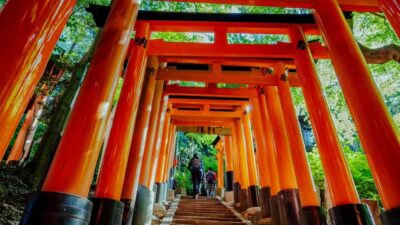
Osaka/Kyoto:Kinkakuji,Arashiyama,FushimiInariShrine,NaraPark
Read our review →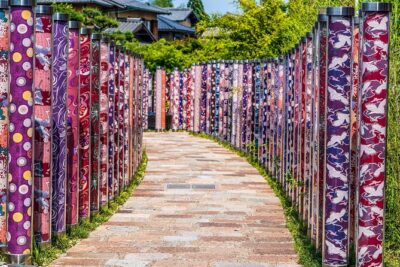
Kyoto Arashiyama Walking Tour: Bamboo, Monkeys, Gardens & Secrets
Read our review →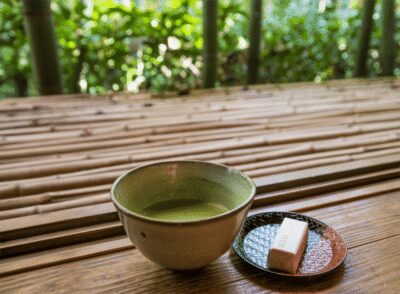
Arashiyama Bamboo, Temple, Monkeys, or Secret Sake Brewery
Read our review →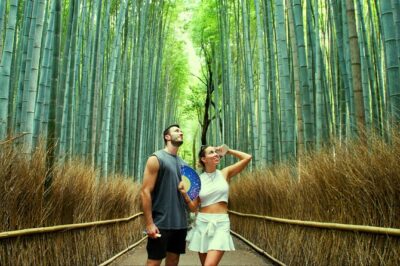
Kyoto: Arashiyama Bamboo Forest, Monkeys, Matcha & Temple Tour
Read our review →
Osaka/Kyoto: Arashiyama, Nara & Fushimi Inari Shrine w/Lunch
Read our review →