Review · KYOTO
Kyoto: Fushimi Inari Shrine Walking Tour
Fushimi Inari is famous for its thousands of orange-red torii gates, but the real reward is understanding what you are seeing. This two-hour evening walk explains Inari worship, fox statues, shrine customs, and the meaning behind the gates while leading you up the wooded mountain paths.
I like the small maximum group of 10, which makes it easier to hear the guide and stop for questions. I also like the mix of culture and walking: you get stories, rituals, forest paths, and Kyoto views instead of a quick photo stop.
The catch is the climb. Fushimi Inari can be crowded, even in the evening, and the route includes uphill walking. The tour suits you best if you can manage a steady walk and are willing to trade some comfort for a fuller understanding of Kyoto’s most famous shrine.
Key points to know before you book
- The tour begins at 6:00 pm, a useful time for seeing Fushimi Inari after the strongest daytime heat.
- The group is limited to 10 people, so you should have a better chance of staying close to the guide.
- The route includes uphill forest trails, not just the lower shrine buildings and torii gates.
- The guide explains Inari and fox symbolism, along with rituals and local shrine customs.
- Kyoto views appear higher on the route, giving the walk a clear payoff beyond the famous gate photos.
- The price is $39.64 per person, with shrine admission and an English-speaking guide included.
Why Fushimi Inari deserves more than a quick photo
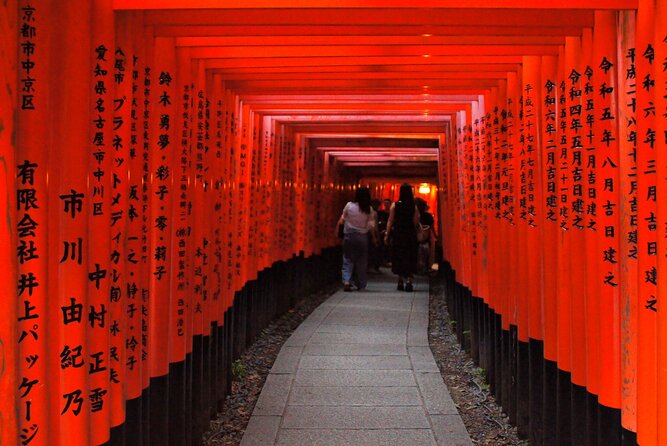
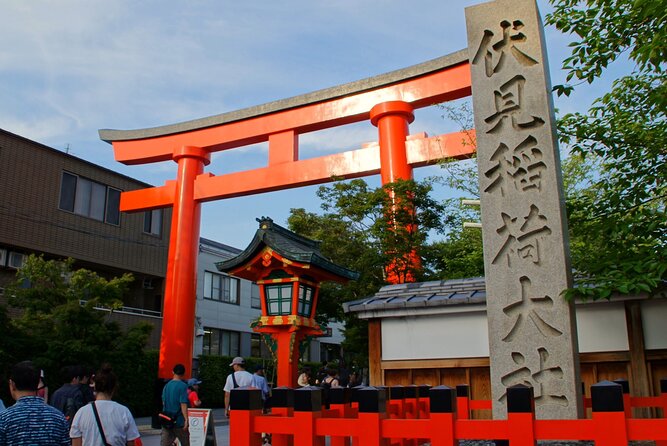
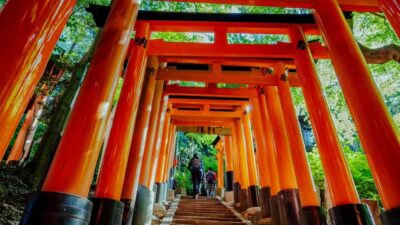
Fushimi Inari-taisha is one of Kyoto’s most recognizable sights. Its orange-red torii gates form long corridors through the trees, creating the scene that appears in countless photographs. Yet the gates are only the surface of the place.
A guide helps you connect the visual details to Inari worship. You learn about the fox deity associated with the shrine, the role of fox statues, and the traditional practices taking place around you. Without that context, it is easy to walk through the gates, take a few pictures, and leave without understanding why the shrine looks and feels the way it does.
I see this as the main reason to choose a guided walk. Fushimi Inari is free to enter, but free entry does not mean the site is simple. The shrine complex, torii paths, statues, ritual spaces, and mountain trails can feel confusing at first. Having someone else lead the way lets you focus on the setting rather than constantly checking where to go next.
The experience also takes you beyond the first famous stretch of gates. That matters because the lower section is usually the most crowded and the most photographed. As you climb, the route can feel quieter, with more forest and fewer people. The walk does not remove the crowds entirely, but it gives you a better chance to see another side of the shrine.
More Temple Walking Tours in Japan
- Kyoto Arashiyama Walking Tour: Bamboo, Monkeys, Gardens & Secrets
★ 5.0 · 1,216 reviews - Kyoto Tea Ceremony & Kiyomizu-dera Temple Walking Tour
★ 5.0 · 115 reviews - Kyoto: Fushimi Inari Taisha Shrine Walking Tour with Guide
★ 4.8 · 18 reviews
Meeting your guide near Fushimi Inari at 6:00 pm
The meeting point is the Daily Yamazaki Fushimi Inari Shrine at 93 Fukakusa Inarionmaecho, in Kyoto’s Fushimi Ward. The location is near public transportation, and the activity returns to the same meeting point at the end.
The start time is 6:00 pm. That timing shapes the experience in useful ways. Evening can be more comfortable for an uphill walk than the middle of a hot day, and the light may give the torii corridors a softer appearance. Still, the tour is not described as a night tour, so you should not book it expecting a fully after-dark visit.
Arrive with enough time to locate the meeting point and gather yourself before the walk begins. The provided details do not name the guide in advance, so the important promise is the English-speaking service and the small group size rather than a particular guide.
The tour lasts about two hours. That is long enough for a proper introduction and a meaningful section of the trails, but it is not an all-day hike or a full exploration of every path on Mount Inari. You should think of it as a guided cultural walk with some uphill exercise.
Entering the torii gates and learning the meaning behind them
The first part of the walk centers on the shrine’s most recognizable feature: its rows of torii gates. The gates create a series of covered passages that lead visitors into the wooded slopes. Their repeated form makes for excellent photographs, but the guide adds the details that a camera cannot provide.
You will learn about the shrine’s spiritual role and the symbolism connected with Inari. The tour also explains the fox deity and the meaning of fox images found around the grounds. Those stories give the statues more character and help you notice details you might otherwise pass without a thought.
The guide also discusses shrine rituals and traditional practices. This is especially useful if you are not familiar with Japanese shrine etiquette. You can watch what is happening around you with a clearer sense of what the actions mean, rather than treating the shrine as a decorative backdrop.
The lower gates can be crowded. That is the main drawback of this part of the visit. The famous entrance area draws people who are there for a quick photograph, and movement through the narrow corridors may slow down. The small group helps, but it cannot make a popular Kyoto sight private.
A good guide can help the group pause in suitable places without blocking the path. The feedback about this experience repeatedly emphasizes explanations of rituals, fox folklore, and symbolism. That suggests the strongest part of the tour is not simply reaching the gates, but learning how to read them.
Walking the forest trails toward Kyoto views
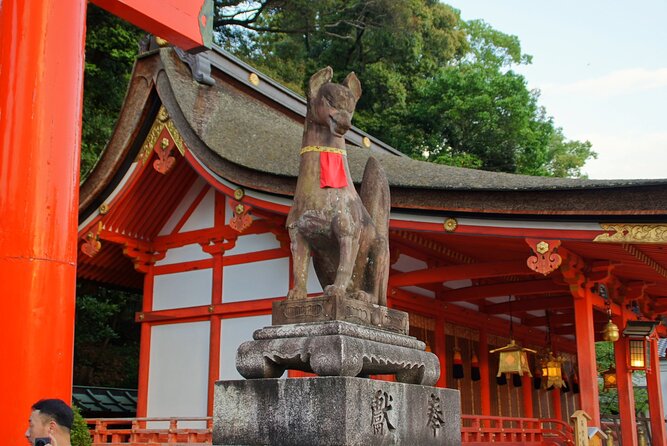
After the lower shrine area, the route continues along scenic mountain trails. This is where the experience becomes more than a shrine orientation. The forest setting brings a calmer mood, and the walk gives you a physical sense of how the shrine extends up the mountain.
The climb is an important consideration. The tour is described as a walking experience with an ascent, and one account specifically points out that it can be quite a climb. You should wear comfortable shoes and expect uneven or uphill walking. The information provided does not give an exact distance or accessibility rating, so anyone with mobility concerns should ask the operator before booking.
The reward is the chance to reach viewpoints with broad views over Kyoto. These outlooks give the walk a clear purpose. You are not climbing only to see more gates. You are also gaining a different view of the city and the wooded setting around the shrine.
The route can include quieter corners and spots suited to reflection. Several pieces of feedback describe peaceful paths, meditation areas, and viewpoints that many people miss when visiting alone. These details are valuable because Fushimi Inari is often treated as a fast stop near the station. A guide can slow the visit down and show you why the mountain setting matters.
The evening schedule may also help with pacing. You are not trying to complete the entire mountain in a short burst before midday sightseeing. Instead, you have a set two-hour window in which the guide can explain the site and lead the group at a manageable rhythm.
Still, do not mistake the word walk for an easy stroll. The route combines sightseeing with a climb. If your ideal evening means standing on level ground and taking a few pictures, this may feel more demanding than expected.
More Temple Walking Tours in Kyoto
- Kyoto: Private Walking Tour with Kiyomizu Temple & Gion
★ 5.0 · 7 reviews - Kyoto Tea Ceremony & Kiyomizu-dera Temple Walking Tour
★ 4.5 · 4 reviews
What the small group changes
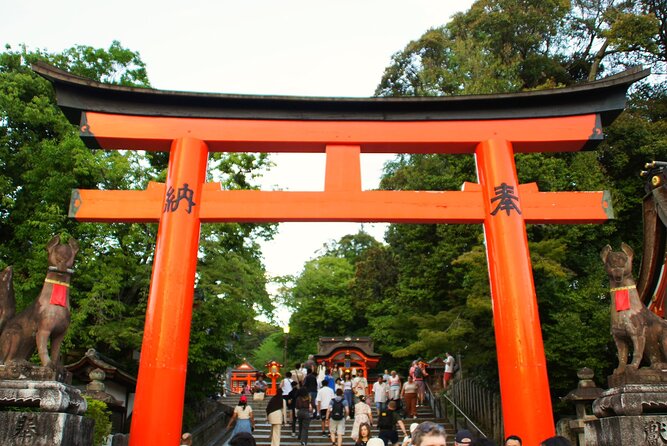
The maximum group size is 10 people. That is small enough to feel more personal than a large coach-style tour, while still keeping the price below that of a private guide.
A small group matters at Fushimi Inari because the site has narrow passages and many points where people stop for photos. With fewer participants, you are less likely to lose sight of the guide. It should also be easier to ask questions about customs, statues, or things you notice along the trail.
The personal side of the tour is one of its strongest features. The feedback repeatedly describes guides who took time to answer questions, explain rituals, and point out quieter places. One account compares the experience to having a local friend show you a favorite place. That is a useful way to picture the tour: not a lecture delivered from a fixed spot, but an ongoing conversation while you walk.
The group size does not guarantee silence or solitude. Fushimi Inari remains a major Kyoto attraction, and busy periods can affect the atmosphere. What the small group gives you is better contact with the guide, not exclusive access to the shrine.
Is $39.64 a fair price?
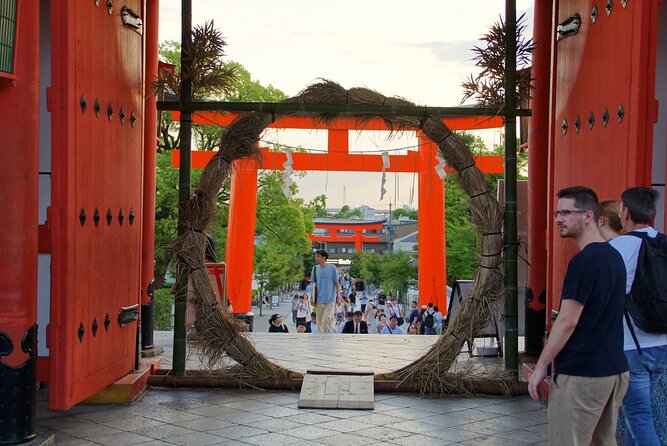
At $39.64 per person, this is a moderate cost for a two-hour guided experience. The shrine itself does not charge an admission fee, so the value comes from the guide, navigation, cultural explanation, and structure of the visit.
If you are already comfortable finding your way around Fushimi Inari and are happy to read about Inari worship on your own, you can visit the shrine without paying for a tour. The free entry makes independent sightseeing a realistic option.
I would consider the price more worthwhile if you want to understand what you are seeing or have limited time in Kyoto. The guide covers the shrine’s history and religious traditions, explains the fox symbolism, and leads you along the mountain paths toward viewpoints. That combination would take more effort to assemble by yourself.
The tour also saves you from deciding how far to walk, which trail to follow, and where to stop for context. For a first visit, that removes some of the uncertainty. You are paying for a clear route and interpretation, not for a special ticket or a private shrine opening.
Food and drinks are not included, and tips are optional. Plan to eat before or after the walk rather than expecting refreshments during the activity.
Who should book this Fushimi Inari walk
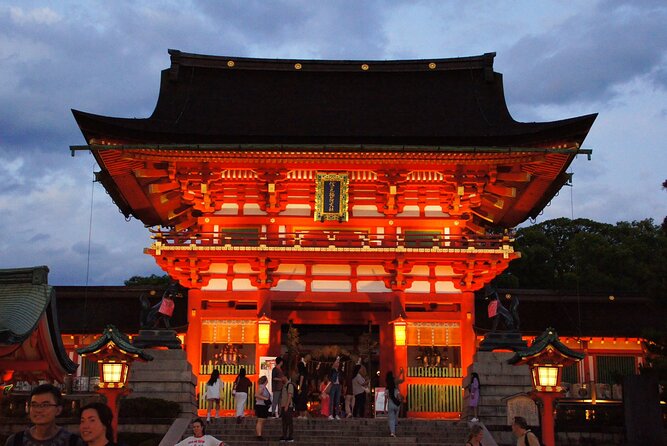
I would recommend this tour to you if you want a cultural explanation along with the famous scenery. It fits especially well into a first Kyoto visit, when you may recognize the torii gates but know little about Inari worship or shrine rituals.
It also suits you if you prefer a small group to a large sightseeing party. A limit of 10 people gives the guide room to respond to questions and makes it easier to stay together on the forest paths.
The tour is a good match for people who enjoy light hiking. You do not need an all-day mountain excursion, but you should be prepared for an uphill route. Comfortable footwear will make the experience much more pleasant.
You may want to skip it if you only want a short visit to the lower torii gates, if you dislike group tours, or if a climb would be uncomfortable. The two-hour format is focused, but it still asks you to walk beyond the easiest part of the shrine.
The 6:00 pm start may appeal to you if you want to visit after a day of sightseeing. It may be less suitable if you need an early evening meal, have small children who tire quickly, or want to see the shrine only in bright daylight. The supplied information does not specify a child policy, so check with the provider if that matters to your plans.
Practical details that affect the experience
Your booking confirmation is provided at the time of booking, and the tour accepts mobile tickets. The activity is near public transportation, which makes the meeting point practical for a Kyoto sightseeing day.
The tour includes:
- An English-speaking guide
- Historical insight into the district
- Entry or admission to Fushimi Inari-taisha
Food, drinks, and tips are not included. Tips are optional, so there is no required extra payment listed beyond the tour price.
Cancellation is flexible if your plans are still changing. You can receive a full refund when you cancel at least 24 hours before the local start time. Cancellations or changes made less than 24 hours before the start are not accepted for a refund.
The activity is operated by Traveling Kyoto. It is available daily according to the supplied schedule, with the start set for 6:00 pm.
Should you book it?
Book this tour if you want Fushimi Inari to mean more than a row of photogenic gates. The guide’s explanations of Inari, fox folklore, shrine rituals, and local customs are the real value, while the forest climb and Kyoto viewpoints add a welcome physical side to the visit.
At $39.64, it is a sensible choice for a first visit, a short Kyoto stay, or anyone who prefers a clear route through a busy site. Just be ready for crowds near the lower gates and a genuine uphill walk. If you are comfortable with both, this small-group evening tour offers a useful balance of scenery, exercise, and cultural context.
FAQ
Where does the Fushimi Inari walking tour begin?
It begins at the Daily Yamazaki Fushimi Inari Shrine, located at 93 Fukakusa Inarionmaecho, Fushimi Ward, Kyoto, 612-0881, Japan.
What time does the tour start?
The tour starts at 6:00 pm.
How long does the experience last?
The walking tour lasts approximately two hours.
Where does the tour end?
The activity ends back at the meeting point.
How large is the tour group?
The tour has a maximum of 10 travelers.
Is an English-speaking guide included?
Yes. An English-speaking guide is included.
Is admission to Fushimi Inari-taisha included?
Yes. Entry or admission to Fushimi Inari-taisha is included in the experience details.
Does the tour include food or drinks?
No. Food and drinks are not included.
Is public transportation available near the meeting point?
Yes. The meeting point is near public transportation.
Can I cancel for a full refund?
Yes, if you cancel at least 24 hours before the experience start time. Cancellations made less than 24 hours before the start are not refunded, and changes within that period are not accepted.
More Fushimi Inari Shrine Tours in Kyoto
- Osaka/Kyoto:Kinkakuji,Arashiyama,FushimiInariShrine,NaraPark
★ 4.1 · 1,596 reviews - Osaka/Kyoto: Arashiyama, Nara & Fushimi Inari Shrine w/Lunch
★ 4.4 · 754 reviews - Kyoto: 3-Hour Fushimi Inari Shrine Hidden Hiking Tour
★ 4.9 · 270 reviews - Kyoto: Fushimi Inari Shrine and Tofukuji Temple E-Bike Tour
★ 5.0 · 75 reviews
Temple visits we reviewed lately in Kyoto
- Kyoto: Zen Meditation at a Private Temple with a Monk★ 5.0 · 202 reviews
- Kyoto:Kiyomizu-dera Temple Rent a kimono and ride a rickshaw★ 4.8 · 7 reviews
- KYOTO: Tempio Kiyomizu Pagode Gion “Geisya” (Guida Italiana)★ 4.7 · 17 reviews
- Kyoto: Kiyomizudera, Sanjusangendo, Ginkakuji and Higashiyama.★ 5.0 · 3 reviews
- Kyoto:Quiet Arashiyama and Sagano Temples★ 4.8 · 5 reviews
- Kyoto: Shakyo & Matcha in Historic Temple Garden★ 5.0 · 4 reviews
- Kyoto: Samurai Sword & Kimono Action Filming Experience★ 4.8 · 78 reviews
- Kyoto: Nara, Todaiji, Kasuga Taisha Shrine Private Full Day★ 4.9 · 18 reviews
Kyoto Temple Tours, compared.
Osaka/Kyoto:Kinkakuji,Arashiyama,FushimiInariShrine,NaraPark
Read our review →
Kyoto Arashiyama Walking Tour: Bamboo, Monkeys, Gardens & Secrets
Read our review →
Arashiyama Bamboo, Temple, Monkeys, or Secret Sake Brewery
Read our review →
Kyoto: Arashiyama Bamboo Forest, Monkeys, Matcha & Temple Tour
Read our review →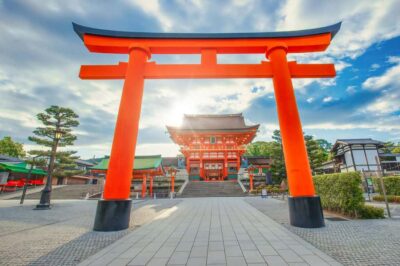
Osaka/Kyoto: Arashiyama, Nara & Fushimi Inari Shrine w/Lunch
Read our review →