
Review · OSAKA
Osaka: Japan’s Oldest Temple & Bone Buddha Walking Tour
Osaka’s most unusual religious sight is not a grand statue covered in gold. It is Isshinji’s Bone Buddha, formed from the cremated ashes of local people. This walking tour connects that modern, communal act of remembrance with Shitennoji, Japan’s oldest officially established Buddhist temple, founded in 593.
I like the clear story linking Prince Shotoku’s early promotion of Buddhism with the faith practiced in a modern city. I also like the small-group format, since an English-speaking guide can explain the symbolism of the Pure Land Garden and the Bone Buddhas without rushing you through.
The main consideration is timing. The advertised duration is two hours, while the detailed schedule describes about 1.5 hours at Shitennoji plus an additional hour of guided touring in Osaka. Confirm the exact schedule when you book, especially if you have a train or another activity afterward.
Key points to know before you book
- Shitennoji began in 593: Learn why Prince Shotoku and the Four Heavenly Kings matter to early Japanese Buddhism.
- The Pure Land Garden adds quiet meaning: Its design connects the setting sun with Amida’s Western Paradise and rebirth.
- Isshinji offers a striking contrast: Its modern gate leads to a temple with nearly 900 years of history.
- Bone Buddhas are made from ashes: More than two million ancestors of Osaka residents are associated with this tradition.
- The tour is private: You receive a live guide in English or Japanese rather than joining a large public group.
- The cost is $65 per person: That includes the guide and Shitennoji admissions, but not transport, food, or personal expenses.
Why these two Osaka temples belong together
This is not simply a walk between two religious buildings. It is a short lesson in how Buddhism changed over fourteen centuries.
At Shitennoji, you see Buddhism being introduced as a major force in early Japan. At Isshinji, you see a more personal and urban form of religious life, shaped by family remembrance and the practical needs of a crowded city. The two temples give you a useful before-and-after view.
I find that contrast more rewarding than visiting several temples that look and feel alike. Shitennoji presents an ordered, ceremonial vision of Buddhism. Isshinji feels more direct and personal. One explains the beginnings of a national religious tradition. The other shows how that tradition continues in everyday memorial practice.
You also get a break from Osaka’s food streets and modern entertainment districts. This is a quieter side of the city, but it is not detached from Osaka life. The ashes at Isshinji belong to generations of local families, while Shitennoji’s survival reflects the city’s long effort to preserve its religious foundations.
More Temple Walking Tours in Japan
- 1-Day walking tour in Osaka:Castle, temples and Ukiyoe
★ 5.0 · 4 reviews - Tokyo: Asakusa Walking Tour with Sensoji Temple Visit
★ 4.8 · 1,583 reviews - Kyoto Arashiyama Walking Tour: Bamboo, Monkeys, Gardens & Secrets
★ 5.0 · 1,216 reviews
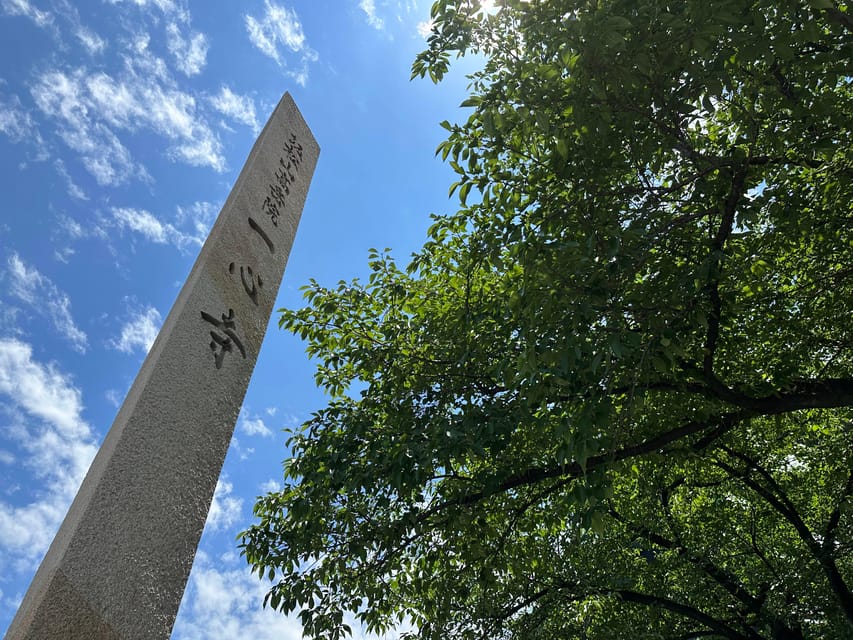
Meeting at Shitennoji’s stone torii
The tour starts at the stone torii gate, called the Ishidori, at Shitennoji’s main entrance. Your guide will hold a sign with your name. The meeting point is a short walk from Shitennoji-mae Yuhigaoka Station, so you do not need to arrange a separate taxi or hotel pickup.
This is a sensible starting place. The torii marks a clear entrance, and the approach gives your guide a natural chance to explain that you are entering one of Japan’s oldest established Buddhist temple sites. You begin with context instead of wandering around a large complex trying to work out what you are looking at.
Bring comfortable shoes. The experience is on foot, and the value comes from moving between the buildings, garden, and nearby temple rather than simply viewing a single interior. Transportation to the meeting point is not included, so plan that part yourself.
Shitennoji and the Buddhist beginnings of Japan
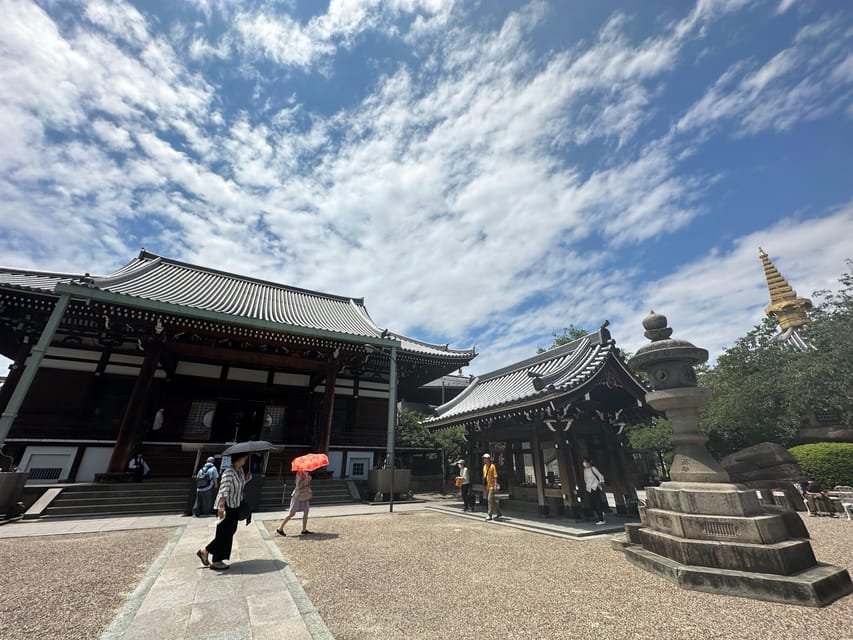
Shitennoji was founded in 593 by Prince Shotoku, a major figure in the early development of Japanese Buddhism. He helped promote Buddhist ideas at a time when the religion was becoming integrated into Japanese society.
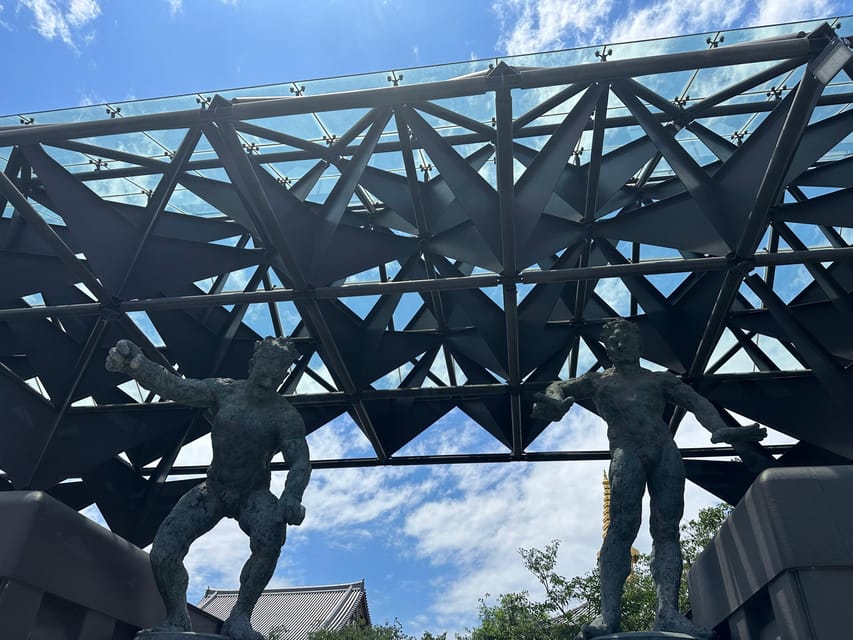
The temple is dedicated to the Four Heavenly Kings, known as the Shitenno. These guardian deities were believed to protect the nation. Their role helps explain why Shitennoji was not just a private place of worship. It represented a wider belief that Buddhism could protect and order the country.
Your guide will point out the temple’s symmetrical layout. This arrangement is a classic example of early Japanese Buddhist design, with the central buildings organized in a carefully ordered plan. That structure is worth your attention. It gives the site a sense of direction and hierarchy, with the layout itself expressing religious ideas.
Without guidance, you might notice the symmetry but miss its meaning. The guide connects the buildings to the larger story of early Buddhism, making the site easier to read. This is where the tour earns its price. You are not only looking at old architecture. You are learning why it was arranged that way.
Shitennoji has faced fires, wars, and repeated reconstruction. That means not every structure you see belongs to the sixth century. The important point is continuity. The buildings have been rebuilt, but the temple’s spiritual identity has continued.
I appreciate that distinction. Ancient Japanese temples are not always untouched relics. Many have survived because communities rebuilt them after damage. Shitennoji lets you consider preservation as an ongoing act, not a frozen moment in the past.
The main temple complex admission is included. Your guide leads you through the central precinct and explains the buildings rather than leaving you to sort out the layout alone.
The Pure Land Garden and the meaning of sunset
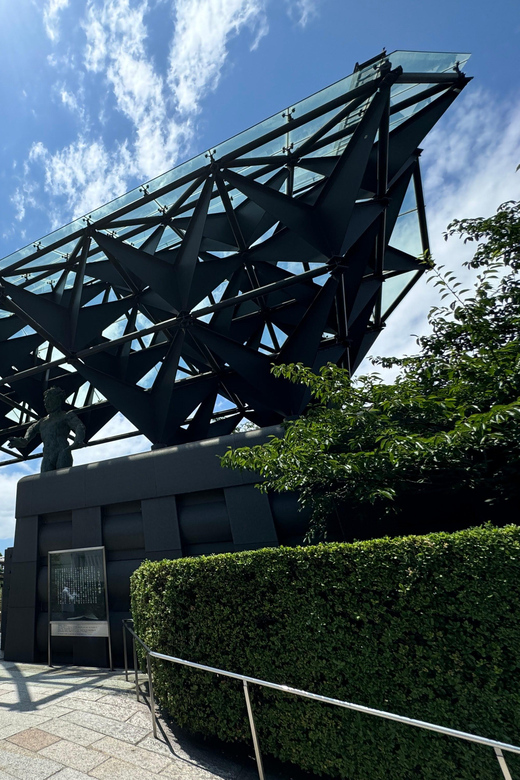
The tour also includes Shitennoji’s Pure Land Garden. This garden is inspired by Buddhist visions of the Western Paradise, the realm associated with Amida Buddha.
The guide explains the connection between the setting sun and the promise of rebirth in Amida’s paradise. That idea has a special link to this area of Osaka, which has long been associated with sunset views. The garden is therefore more than a pleasant green space. Its design carries a religious message about death, hope, and the next life.
You do not need a detailed background in Buddhism to follow the explanation. The guide’s job is to show how a physical feature, the setting sun, can become part of religious thought. This is one of the tour’s strongest teaching moments because it turns an abstract belief into something you can understand through place and light.
The garden also changes the pace of the visit. After the formal central precinct, it offers a quieter setting for discussing Pure Land thought. Allow yourself time to listen rather than treating it as a quick photo stop.
Admission to the Pure Land Garden is included. If gardens are your main interest, keep your expectations measured: the tour presents the garden as part of a larger religious story, not as a long garden-design tour. Its importance here is symbolic.
More Temple Walking Tours in Osaka:
- Bangkok: City Highlights Temple and Market Walking Tour
★ 4.5 · 3,990 reviews - Bangkok: Grand Palace and Wat Phra Kaew Guided Walking Tour
★ 4.4 · 2,417 reviews - Bangkok: Wat Pho and Wat Arun Guided Walking Tour
★ 4.6 · 1,720 reviews - Chiang Mai: 3 Hour Old City and Temples Guided Walking Tour
★ 4.6 · 1,568 reviews
Walking toward Isshinji’s modern entrance
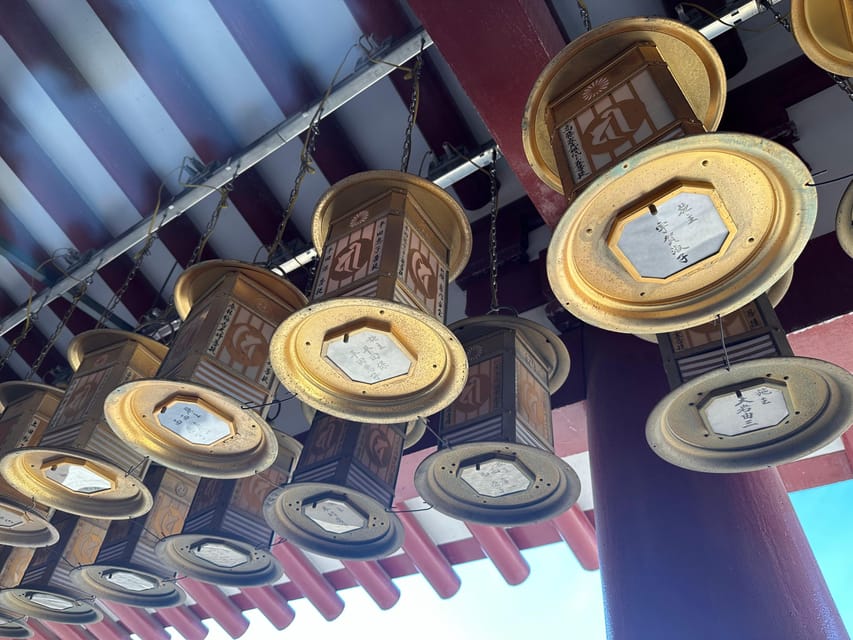
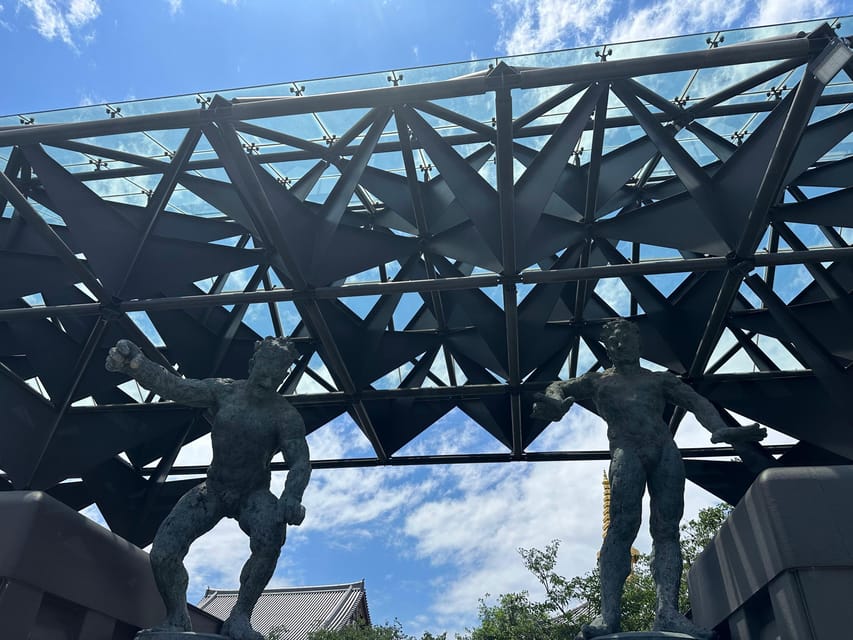
The second temple gives the experience a sharp change in tone. Isshinji has nearly 900 years of history, but its main gate is strikingly modern. The gate was designed by the current head priest, and it immediately signals that this is not a site trying to look frozen in the past.
That contrast is useful. Japanese religious sites can preserve old practices while using new architectural ideas. Isshinji makes the point before you even reach the temple’s most unusual feature.
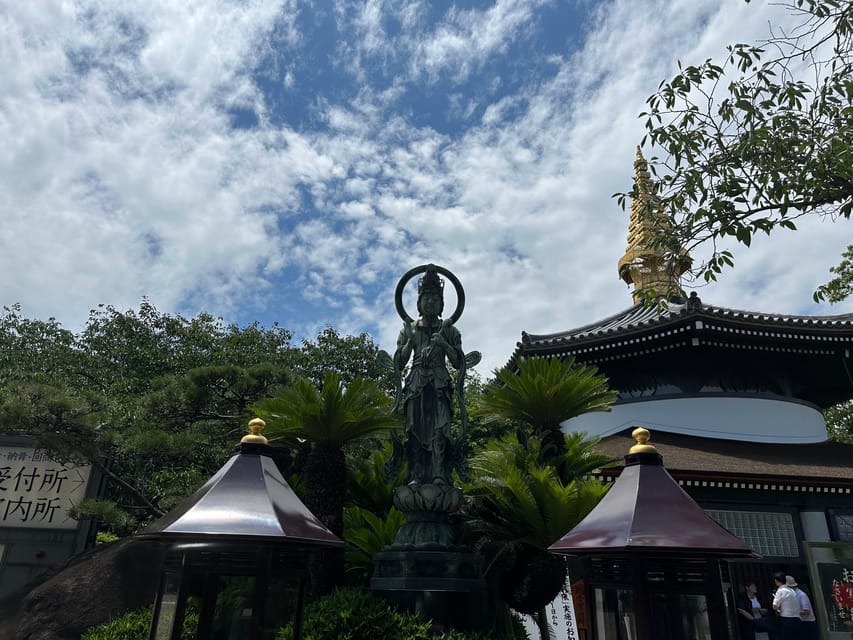
Your guide explains how Isshinji developed its tradition of handling cremated ashes. More than two million ancestors of Osaka residents are associated with the temple. Their remains are respectfully combined to create statues known as Bone Buddhas, or Kotsubotoke.
The practice may surprise you at first. It is also the reason this stop feels so different from a standard temple visit. You are looking at a physical form of communal memory. The statue is not simply a work of art or a relic from the distant past. It connects many families with one place of remembrance.
Approach this part with respect. The subject is death, cremation, and family mourning. The guide’s explanation matters because it gives the practice its proper setting and prevents the Bone Buddha from becoming a strange novelty.
What the Bone Buddha tradition tells you about Osaka
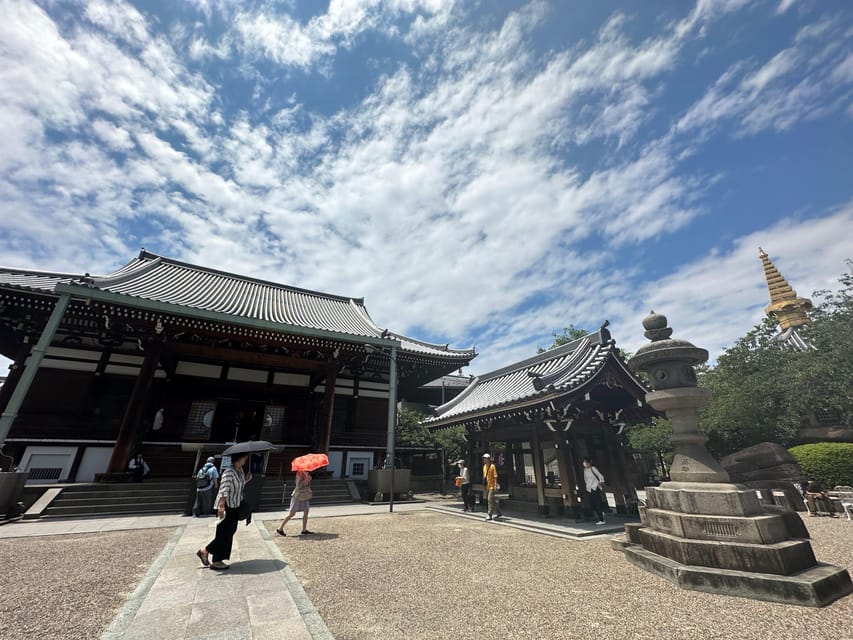
Isshinji’s Bone Buddhas reveal a distinctly urban side of Japanese Buddhism. In a large city, families and individuals may need a shared place to remember relatives across generations. The temple’s tradition brings those remains together in a communal religious form.
That idea adds emotional weight to the tour. Shitennoji shows Buddhism entering Japanese public life under Prince Shotoku. Isshinji shows Buddhism serving personal and family needs in an urban setting many centuries later.
I also find the use of ashes important because it challenges the way many Western visitors expect memorials to work. The remains are not kept only in separate private spaces. They become part of a shared Buddhist image and a wider community of remembrance.
The tour does not treat the Bone Buddhas as an isolated oddity. It explains how the tradition began and why it continues. That context is essential. Without it, you might see only an unusual statue. With it, you can consider how religion adapts to local customs, family structures, and city life.
The experience is especially suitable if you want to understand how Japanese Buddhism works beyond famous statues and scenic temple roofs. It gives you a direct example of belief expressed through architecture, ritual, and the handling of human remains.
What the guide adds to a two-hour visit
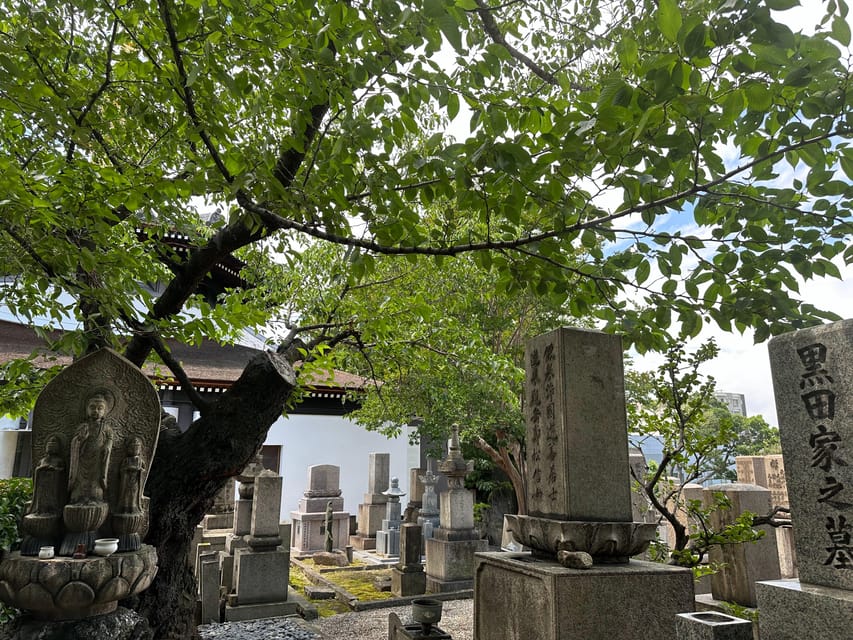
A guide is particularly useful here because the most valuable parts are not always obvious. Shitennoji’s symmetrical plan, the Four Heavenly Kings, the Pure Land Garden, and the Bone Buddhas all need explanation if you want more than a quick look.
The English-speaking guide provides that link. A Japanese-speaking option is also available. The guide explains Japanese culture and religion in a way that helps you place each temple in a larger story. One visitor described the guide as helping make Japanese culture and religion easier to understand, which is exactly the role this experience needs.
This is a private group tour. That matters if you prefer asking questions or setting the pace around a particular interest. You can focus more on architecture, Buddhist ideas, family memorials, or Osaka’s development as an urban center, depending on what you want to understand.
No guide name is provided, so you cannot request a specific person. The language options are English and Japanese.
The schedule needs a little care. The activity is advertised as two hours, but the detailed plan lists a 1.5-hour guided visit at Shitennoji and a one-hour guided tour in Osaka. Since those figures do not fit neatly inside two hours, ask for the exact start and finish times before booking if your day is tightly planned.
Is $65 a fair price?
At $65 per person, the tour is not the cheapest way to see a temple. You can visit religious sites on your own for less, and Osaka offers plenty of low-cost sightseeing.
The value here comes from interpretation and access to a private guide. You are paying to understand why Shitennoji was founded, how its layout works, what the Pure Land Garden represents, and how Isshinji’s Bone Buddhas relate to local families. Admission to Shitennoji’s main complex and Pure Land Garden is included.
That makes the price reasonable for someone who wants cultural context without arranging separate research or trying to decode Buddhist symbolism alone. It is less compelling if you only want quick photographs or prefer to explore temples silently at your own pace.
The tour does not include transportation, food, drinks, or personal expenses. Since it starts near Shitennoji-mae Yuhigaoka Station and finishes at Isshinji, you should allow for your own transport before and after the walk.
Free cancellation is available up to 24 hours in advance for a full refund. You can also reserve now and pay later, which helps if you are still adjusting your Osaka schedule.
Who will get the most from this temple walk?
I would choose this experience if you want a short but serious introduction to Japanese Buddhism. It suits first-time visitors who have seen Osaka’s modern side and want a better sense of the city’s religious roots.
It is also a good fit for:
- Visitors interested in religion, architecture, or Japanese social customs
- Couples or families who prefer a private guide
- People who want an experience beyond food streets and entertainment areas
- Anyone curious about cremation, ancestor remembrance, and communal memorials
- Visitors who appreciate clear historical explanation during a short walk
You may want to skip it if your Osaka schedule allows only a quick stop, if you dislike discussions of death and cremated remains, or if you prefer independent temple visits without a guide. The Bone Buddha tradition is meaningful, but it is not a light sightseeing stop.
Practical details for a smoother visit
Meet at the stone torii gate at Shitennoji’s main entrance. Look for the guide holding a sign with your name. Since the meeting point is a short walk from Shitennoji-mae Yuhigaoka Station, check your route before leaving your hotel.
The tour is listed as two hours, though the detailed timing suggests you should confirm the actual length. It is a walking experience, so wear shoes suited to time spent on temple grounds and city streets.
The guide speaks English or Japanese, and the group is private. Admission to Shitennoji’s main temple complex and Pure Land Garden is included. Isshinji is part of the guided visit, but the supplied details do not separately state an admission charge for that temple.
The experience has a perfect 5 rating from three verified bookings, including Francisca from Portugal, who praised the guide’s help in understanding Japanese culture and religion. That is the right measure of success here: not simply how many buildings you see, but how much more clearly you understand them afterward.
Should you book this Osaka temple tour?
Book it if you want the story behind the sights. Shitennoji gives you the early national history of Buddhism, while Isshinji’s Bone Buddhas show how the faith continues through family memory in a modern city.
The strongest reasons to go are the private English-speaking guide, the included access to Shitennoji’s central precinct and Pure Land Garden, and the unusual link between a sixth-century temple tradition and a modern memorial practice. The main caution is the unclear timing, so confirm the schedule before committing to another fixed activity.
At $65, this is best treated as a guided cultural lesson rather than a simple temple walk. For that purpose, it offers a thoughtful and unusual look at Osaka.
FAQ
Where does the tour start?
Meet your guide in front of the stone torii gate, called the Ishidori, at the main entrance of Shitennoji Temple.
How close is the meeting point to public transportation?
The meeting point is a short walk from Shitennoji-mae Yuhigaoka Station.
Where does the tour finish?
The tour finishes at Isshinji Temple.
How long is the experience?
The advertised duration is two hours. The detailed schedule lists 1.5 hours at Shitennoji and one additional hour of guided touring in Osaka, so confirm the exact timing when booking.
What languages does the guide speak?
The live guide is available in English or Japanese.
Is this a private tour?
Yes. The activity is arranged for a private group.
What is included in the price?
The price includes a professional English-speaking guide, guided visits to Shitennoji and Isshinji, admission to Shitennoji’s main temple complex, and admission to the Pure Land Garden.
Is transportation included?
No. Transportation to and from the meeting point is not included.
Is food included?
No. Food, drinks, and personal expenses are not included.
Can I cancel for a full refund?
Yes. You can cancel up to 24 hours in advance for a full refund. You can also reserve now and pay later.
Temple visits we reviewed lately in Osaka
- Osaka Temple Head Spa &Matcha Facial – Refresh & Glow〈90min〉★ 5.0 · 24 reviews
- Osaka Temple :Warm Bamboo Oil Massage – Deep Restore〈60min〉★ 4.9 · 19 reviews
- Osaka: Temple Tour and Traditional Calligraphy Lesson★ 4.9 · 24 reviews
- Osaka: Sumiyoshi, Osaka’s Most Iconic Shrine – Private Tour★ 4.7 · 4 reviews
- Osaka Temple :Warm Bamboo Oil Massage – Deep Restore〈90min〉★ 5.0 · 14 reviews
- Osaka: Mind & Spirit Balance Temple Reiki Healing★ 5.0 · 41 reviews
- Osaka: Private Tour of Shitennoji, Osaka’s Oldest Temple★ 4.5 · 6 reviews
- Osaka Morning Tour: Shitennoji Temple, Shinsekai &Doutonbori★ 5.0 · 23 reviews
Osaka Temple Tours, compared.
Kyoto: Full-Day English Guided Tour of Kyoto’s Highlights
Read our review →
Osaka: Minoh, Katsuoji Temple, & Minoh Falls Full-day Tour
Read our review →Full Day Kyoto Tour : Bamboo Forest, Golden Temple, Fushimi Inari
Read our review →
Osaka Temple Cool Foot Bath & Matcha Experience〈45min〉
Read our review →
Osaka: Mind & Spirit Balance Temple Reiki Healing
Read our review →
Osaka: Minoh Waterfall & Katsuo-ji Temple Half-Day Tour
Read our review →
Osaka Temple Head Spa &Matcha Facial – Refresh & Glow〈90min〉
Read our review →
Osaka: Temple Tour and Traditional Calligraphy Lesson
Read our review →This tour also ranks in