
Review · OSAKA
1-Day walking tour in Osaka:Castle, temples and Ukiyoe
Osaka’s story makes more sense when you see its castle, Japan’s first Buddhist temple, old market streets, and neon-lit Dotonbori in one day. This tour links those very different places by train and on foot, with guide Winki explaining the history along the way. I like the wide range of stops, from temple chanting and castle displays to street food and Japanese woodblock art. I also like that your train tickets and entry fees are covered, so you can focus on the day instead of working out every fare.
The main drawback is the pace. You will be outside and on your feet for hours, with several train rides and a full schedule from morning until late afternoon. Food is not included, and Kuromon Market can tempt you into spending more than planned. Still, for a first day in Osaka, this is a useful, well-packed introduction.
Key points to know before you book
- Osaka in one day: See the castle, a major Buddhist temple, Kuromon Market, Dotonbori, and Shinsaibashi without arranging each stop yourself.
- Guide Winki: Expect English explanations about Japanese history, religious traditions, local customs, and the places you are seeing.
- Public transportation included: The required train tickets are covered, but you must pay for any train travel before or after the tour.
- Ukiyoe experience: Your day includes a hands-on introduction to one of Japan’s best-known traditional art forms.
- Food is extra: Kuromon Market is your lunch stop, but all food and drinks are paid for separately.
- A proper walking day: Wear comfortable shoes and bring sun protection and rain gear when needed.
Why this route works for a first day in Osaka
I like tours that help you get the shape of a city before you explore it alone. This one moves from Osaka’s political past to its religious traditions, then into its food, shopping, popular entertainment, and art.
The route does not stay in one neighborhood. Osaka Castle is in the northern part of the city, while Shitennoji, Kuromon Market, Dotonbori, and Shinsaibashi take you through the southern center. The train rides are not just transfers. They give you a break from walking and show you how much ground Osaka covers.
You start at 9:25 in Akatsuki Plaza inside JR Osaka Station and return there at the end. That makes the tour fairly easy to fit into a larger Osaka trip. If you want to keep exploring after Shinsaibashi, you can also remain in the city center instead of riding back with the group.
The schedule is busy, but it has a useful rhythm. You get guided sightseeing at the major historic sites, free time at the market and Dotonbori, and a cultural activity later in the day. That mix keeps the tour from becoming a string of museum stops.
More Temple Walking Tours in Japan
- Osaka: Japan’s Oldest Temple & Bone Buddha Walking Tour
★ 5.0 · 3 reviews - Tokyo: Asakusa Walking Tour with Sensoji Temple Visit
★ 4.8 · 1,583 reviews - Kyoto Arashiyama Walking Tour: Bamboo, Monkeys, Gardens & Secrets
★ 5.0 · 1,216 reviews
Starting at JR Osaka Station without getting lost
The meeting point is Akatsuki Plaza, also called Akatsuki Square, on the first floor of the North Gate Building inside JR Osaka Station. It is just north of the Central Exit ticket gates, near the North Central Exit.
Look for a broad open area with two escalators, one on each side. Stay on the first floor and do not go up the escalators. The guide will hold a sign marked SNOW MONKEY RESORTS.
JR Osaka Station is large, so allow extra time if you are coming from another part of the city. From the Midosuji Subway Line, follow signs toward JR Osaka Station, then head for the Central Exit. Once you reach or pass the Central Exit gates, walk north toward Yodobashi Camera. Akatsuki Plaza is ahead on the first floor.
This is one place where arriving early pays off. Osaka’s stations can feel like small cities, and a last-minute search for the meeting point could make an otherwise easy morning stressful.
Osaka Castle and the changing face of power
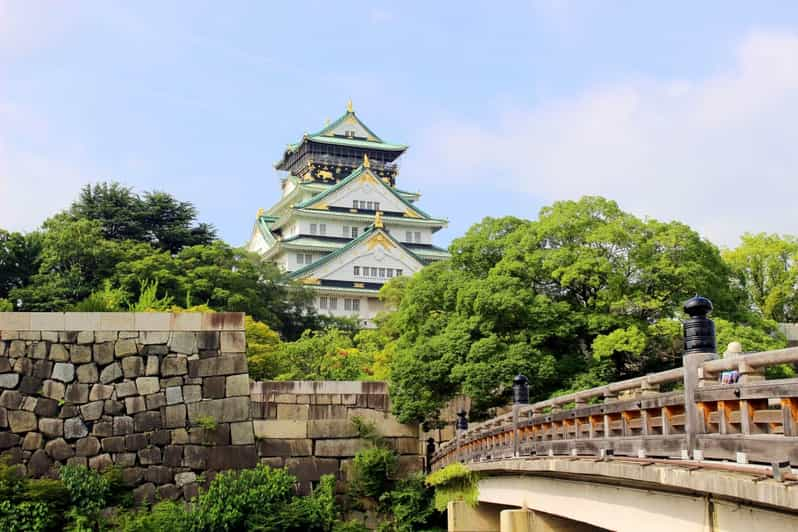
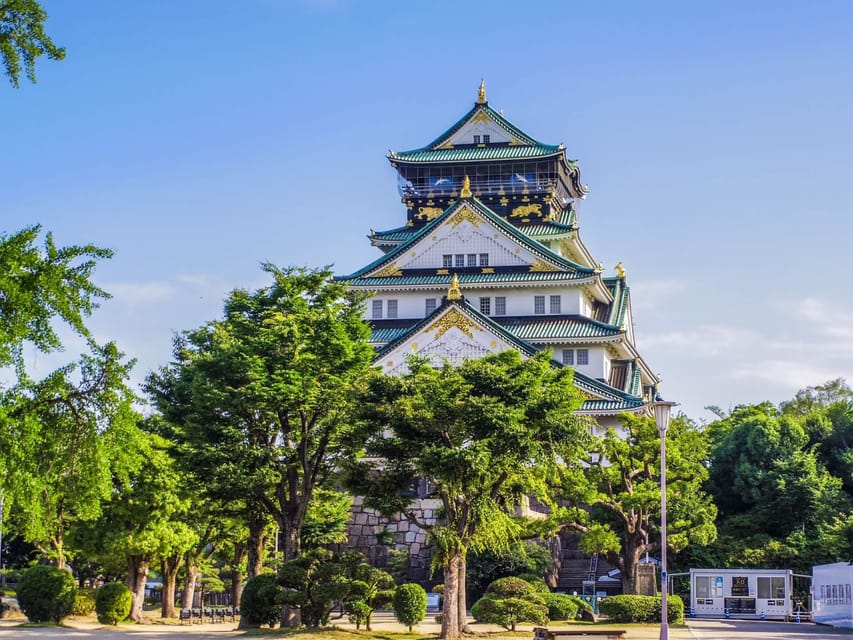
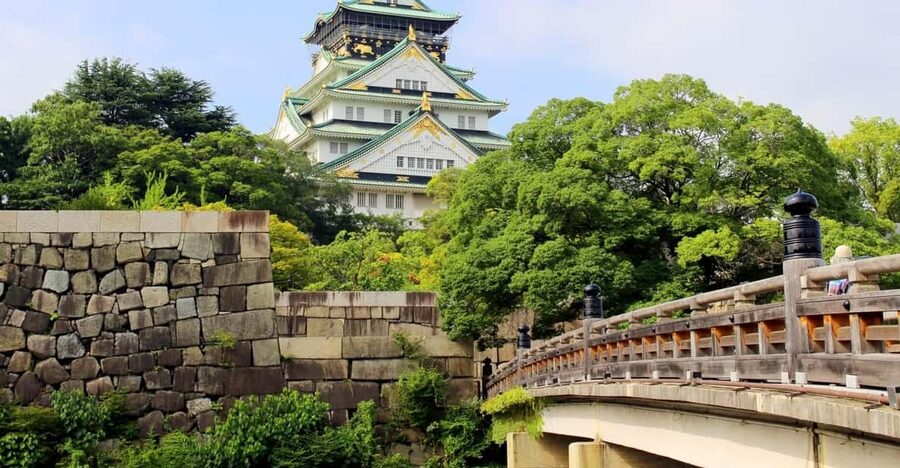
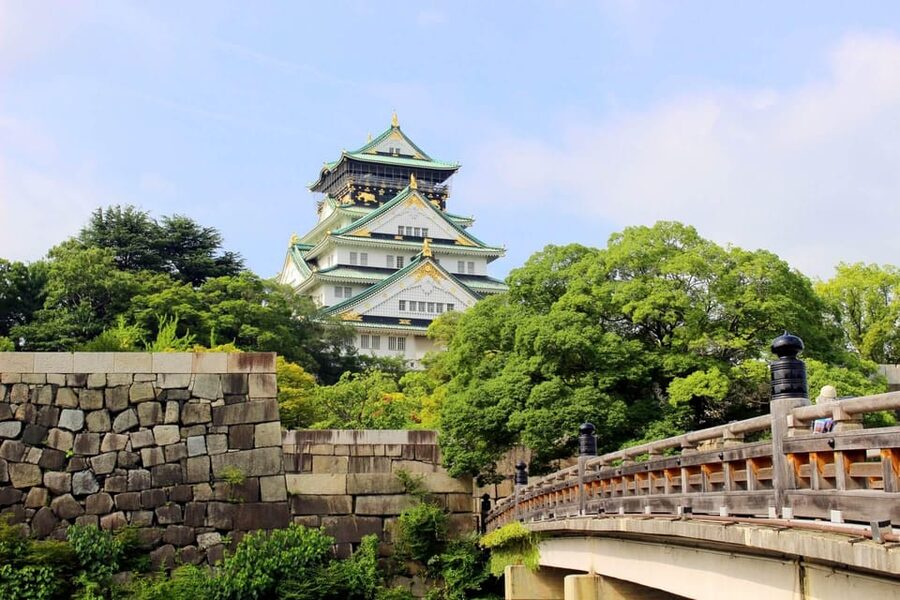
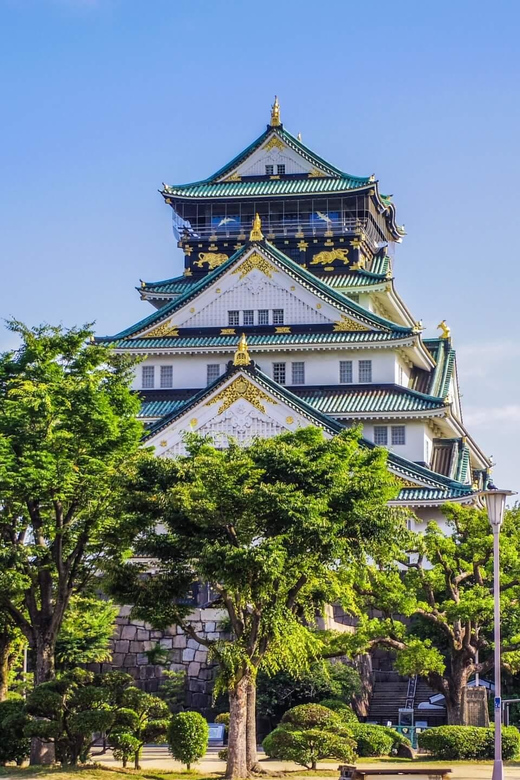
Osaka Castle is the first major stop. You spend about an hour visiting the castle museum and the surrounding grounds with the guide.
The castle was completed in 1597, but it has been destroyed and rebuilt several times. The present structure was rebuilt by the Japanese government in 1995, so it is not an untouched survivor from the sixteenth century. That detail matters. You are seeing a modern reconstruction with a long and dramatic past, not the exact building that first rose here.
Inside, the museum helps explain Osaka’s place in Japanese history and the castle’s role in the city. The guide can connect what you see in the displays with the larger story of the area. That makes the visit more useful than simply walking up, taking a photograph, and leaving.
I would treat the castle as both a history stop and a visual introduction to Osaka. You get a sense of how the city presents its past, while the grounds give you time outdoors before the next train.
The drawback is that the castle can feel polished and reconstructed rather than ancient. If you want a completely original fortress, adjust your expectations. The value here is the combination of the museum, the grounds, and the explanation that puts the building in context.
Shitennoji and the long journey of Buddhism
After Osaka Castle, the group takes a train for about 30 minutes to Shitennoji Temple. The guided visit lasts roughly 50 minutes.
Shitennoji is described as the first Buddhist temple in Japan. The stop gives you a clear way to think about how Buddhism traveled from India to China and then reached Japan thousands of years ago. Instead of treating the temple as a collection of buildings, the guide explains the movement of beliefs, art, and religious practice across Asia.
This is one of the most rewarding parts of the day if you want more than Osaka’s famous signs and shopping streets. You may see ceremonies, hear monks chanting prayers, and learn how visitors pay respects. The tour information also notes access to the top of the Buddhist temple to pay respects to a relic, adding a personal and religious element to the visit.
Keep in mind that this is an active place of worship, not just a sightseeing site. Follow the guide’s instructions and observe quietly during ceremonies. The atmosphere can change from busy city travel to a much more reflective experience within minutes.
The stop is not long, so you will not have unlimited time to explore every corner. That is the tradeoff for fitting so much into one day. You get a focused introduction rather than a slow, independent temple visit.
More Temple Walking Tours in Osaka:
- Bangkok: City Highlights Temple and Market Walking Tour
★ 4.5 · 3,990 reviews - Bangkok: Grand Palace and Wat Phra Kaew Guided Walking Tour
★ 4.4 · 2,417 reviews - Bangkok: Wat Pho and Wat Arun Guided Walking Tour
★ 4.6 · 1,720 reviews - Chiang Mai: 3 Hour Old City and Temples Guided Walking Tour
★ 4.6 · 1,568 reviews
Kuromon Market, where lunch becomes part of the sightseeing
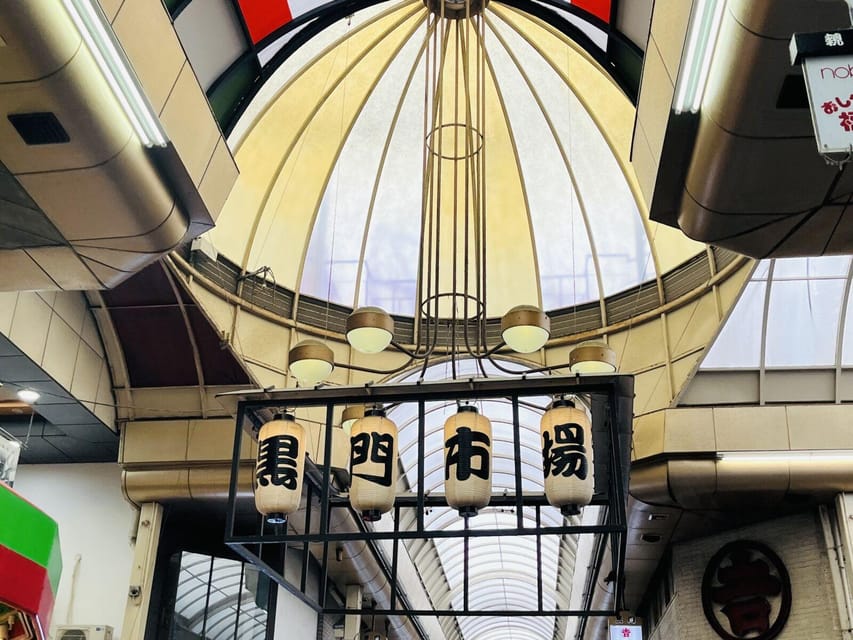
The next train ride takes about 30 minutes, followed by lunch and free time at Kuromon Ichiba Market. You have about an hour here.
Kuromon is one of Osaka’s major food markets, with about 150 shops spread along an area roughly 580 meters long. Vendors sell seafood, vegetables, fruit, prepared food, drinks, clothing, and other everyday goods. It is a good place to see how food shopping and casual eating fit into city life.
Food is not included, which is important when comparing the $136 price. You choose and pay for your own lunch, so your spending can stay modest or rise quickly depending on what you sample. The guide can help you understand what you are looking at, but you should not expect a prepaid meal.
I like the freedom here. You can try a small portion, buy something familiar, or simply watch the market work. It is also a useful break after the castle and temple visits. You are no longer just looking at history. You are handling the practical, delicious part of Osaka.
An hour goes quickly, especially if you want to browse the full market. Make a rough plan before you separate from the guide, and pay attention to the meeting time and place. The group receives instructions for free time, but it is your responsibility to remember them.
Dotonbori brings Osaka into full color
After lunch, the tour heads to Dotonbori for about two hours. This is the longest sightseeing stop, and it gives you time to see one of Osaka’s best-known entertainment and food areas.
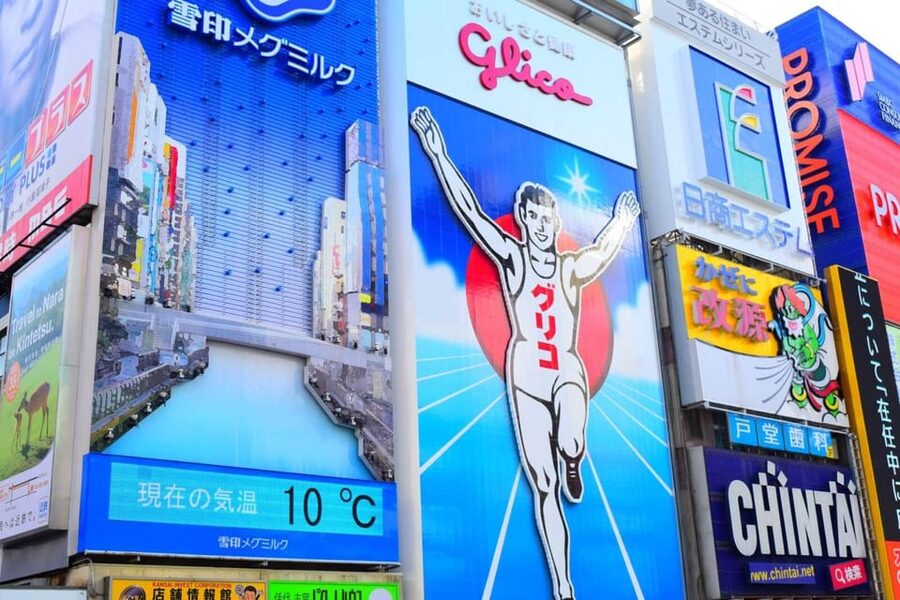
Dotonbori is the symbolic downtown district of Minami, lined with huge three-dimensional billboards and famous signs. It is the part of Osaka many people picture before they arrive: bright advertisements, crowded streets, restaurant fronts, and plenty of photo opportunities.
The guide does more than point out the biggest signs. You can hear about the area’s role in Osaka life and then move through nearby streets, including less obvious lanes and local corners. The tour information also mentions a unique shrine around this area, giving you a quieter religious stop amid the commercial setting.
That contrast is the point. Osaka’s character is not found in one grand monument. It comes from the meeting of old shrines, market food, giant advertisements, shopping streets, and narrow side routes. Dotonbori shows you the city at its most theatrical, while the nearby shrine and alleyways give the visit some balance.
You will have time to pose beside the famous billboard and take photographs. If you are traveling with children, this is likely to be one of the easiest parts of the day to enjoy, since the signs and food stalls provide plenty to look at. The downside is noise and crowds, especially around the best-known photo spots. Stay close enough to hear the guide and keep track of your belongings.
A hands-on introduction to ukiyoe
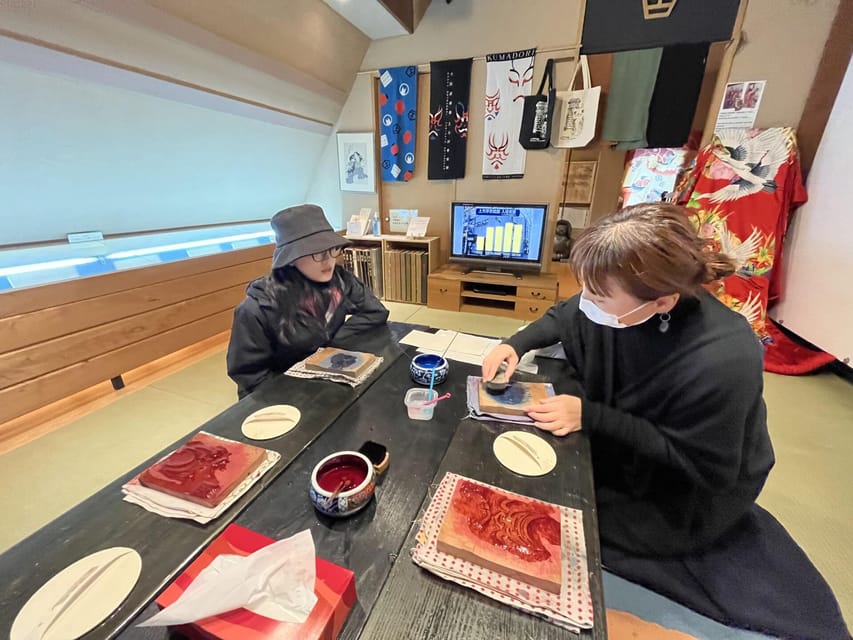
The Dotonbori portion also includes a ukiyoe experience. The fee is included, so you do not need to budget separately for this activity.
Ukiyoe began appearing in the 1670s and became especially important from the seventeenth through nineteenth centuries. Today, it is one of the images most closely linked with Japanese art. A practical experience helps you understand that these famous prints were not simply decorative pictures. They were part of a long tradition of making and sharing visual art.
The exact format and amount of time devoted to the activity are not specified, so I would expect an introduction rather than a full art course. That is suitable for a one-day city tour. You get a chance to make or handle something connected to Japanese tradition, then continue exploring the district.
This is also a good counterweight to the museum-style history earlier in the day. At Osaka Castle and Shitennoji, you mainly listen and observe. With ukiyoe, you take part.
Shinsaibashi and the final walk through Minami
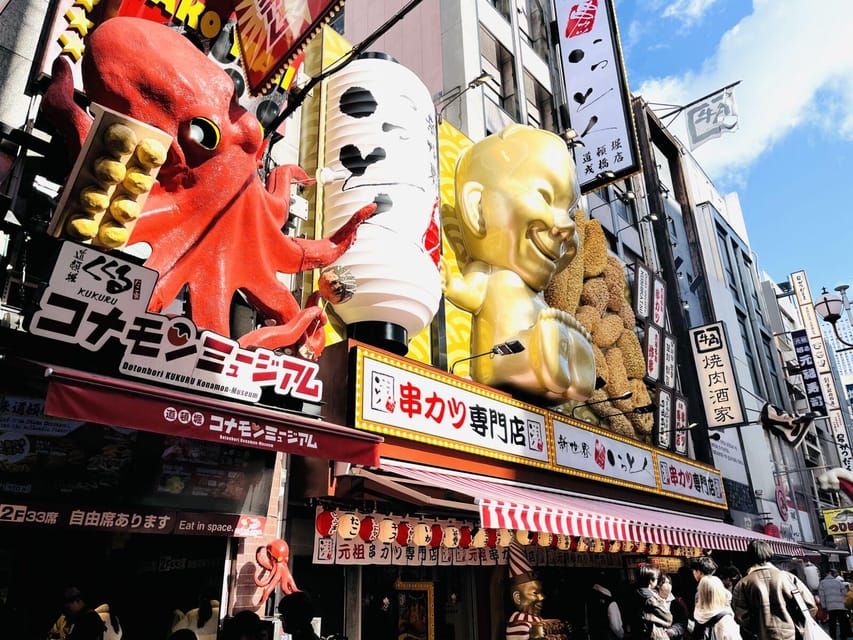
The final stop is Shinsaibashi, with about 30 minutes of guided walking.
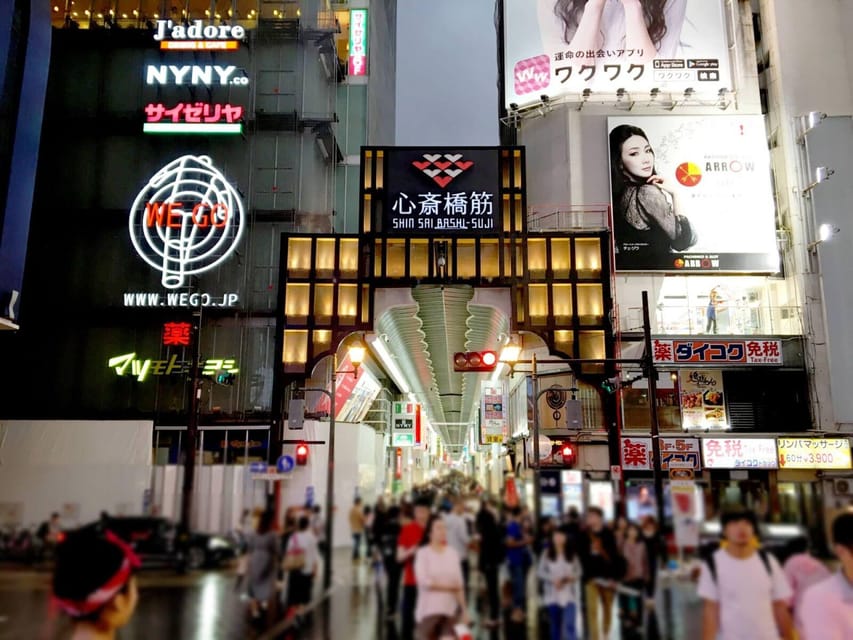
Shinsaibashi is a long-established commercial area and one of Osaka’s popular shopping streets. You will find Japanese local shops alongside overseas brands. The guide points out the famous Osaka billboard along the way, giving you another chance for photographs before the tour winds down.
Thirty minutes is enough for an introduction but not enough for serious shopping. If you see something you want to buy, note the location and return later. The tour can show you where to start, but this is not designed as a dedicated shopping expedition.
I like ending here because the district gives you a practical base for the rest of the day. After saying goodbye, you can continue shopping, eat nearby, or explore more of central Osaka on your own. The group returns to JR Osaka Station together, but you are welcome to remain in the center if that better suits your plans.
What the $136 price really covers
At $136 per person, this is not the cheapest way to see Osaka. The value depends on how much help you want with transport, explanation, and planning.
The price includes entry fees for the tour stops, the train tickets needed during the day, the ukiyoe experience, and an English-speaking guide. Food and drinks are extra, as are train tickets you need before the tour starts or after it ends.
If you arranged the same route independently, the train fares would not be the main expense. The real value is the time saved and the context provided by the guide. You do not have to work out which train to take between four different parts of the city, and you get historical explanations at places where a quick solo visit might leave you wondering what matters.
The cost makes the most sense if Osaka is new to you, your schedule is short, or you want a single day that combines major landmarks with local food, art, and shopping. It makes less sense if you prefer slow visits, dislike fixed schedules, or already know the city well.
Walking, weather, and the pace of the day
This is an outdoor walking tour with several hours on your feet. Comfortable shoes are essential. Bring a hat or other sun protection in bright weather, and carry rain protection when the forecast calls for it.
The listed times are only a guide. Weather and train conditions can change the schedule, so do not book a tight appointment immediately afterward. The tour includes free time, and the guide explains when and where to meet again. If you lose your way or forget the meeting point, call the tour provider promptly.
The day can work for families, but parents should consider the length. A five-year-old enjoyed the company of guide Winki, according to the tour information, but younger children may still find the walking and train transfers tiring. The guide is described as patient and attentive, which helps, but the route remains a full day.
English is the available tour language. If you want detailed explanations of Japanese history and religion without translating signs on your own, that is a clear advantage.
Who should book this Osaka day tour?
I would recommend this tour to a first-time Osaka visitor who wants a strong overview in one day. It is also a good fit for anyone who likes history but does not want a day spent only in museums. The combination of castle, temple, market, shrine, neon district, shopping street, and ukiyoe gives you a broad look at the city.
Families may appreciate the mix of visual stops, food choices, and an art activity. The guide’s patient approach is useful when children ask questions or need a slower explanation.
I would skip it if your ideal Osaka day means lingering for hours at one temple, eating a long lunch, or shopping without a schedule. You will cover a lot of ground, but you will not have unlimited time at each location.
Book it if you want efficient sightseeing with real historical context, and if you are ready for a long day of walking and public transportation. Skip it if you want complete independence. For the right visitor, $136 buys much more than admission tickets. It buys a ready-made route through several sides of Osaka, with a guide to explain why each stop matters.
FAQ
Where does the tour meet?
Meet at Akatsuki Plaza, or Akatsuki Square, on the first floor of the North Gate Building inside JR Osaka Station. It is just north of the Central Exit ticket gates and near the North Central Exit.
What time does the tour begin?
The journey begins at 9:25 at JR Osaka Station.
Which language is the tour conducted in?
The tour is conducted in English with a live English-speaking guide.
Are train tickets included?
Yes. Train tickets required during the tour are included. Train tickets needed before the tour starts or after it ends are not included.
Is lunch included in the price?
No. Lunch takes place at Kuromon Ichiba Market, but food and drinks are paid for separately.
What places will I visit?
The route includes Osaka Castle, Shitennoji Temple, Kuromon Ichiba Market, Dotonbori, and Shinsaibashi. It also includes a ukiyoe art experience and a visit to a shrine near the Dotonbori area.
What should I wear and bring?
Wear comfortable shoes and clothing because the tour includes extended outdoor walking. Bring sun protection and rain protection when needed.
More Day Trips in Osaka
- Athens: Cape Sounion & Poseidon Temple Sunset Half-Day Trip
★ 4.8 · 8,241 reviews - From Aswan: Abu Simbel Temple Day Trip with Hotel Pickup
★ 4.4 · 2,807 reviews - From Malta: Gozo Day Trip Including Ggantija Temples
★ 4.2 · 2,399 reviews - Montenegro: Durmitor, Tara & Ostrog Monastery Day Trip
★ 4.8 · 1,894 reviews
Temple visits we reviewed lately in Osaka
- Osaka Temple Head Spa &Matcha Facial – Refresh & Glow〈90min〉★ 5.0 · 24 reviews
- Osaka Temple :Warm Bamboo Oil Massage – Deep Restore〈60min〉★ 4.9 · 19 reviews
- Osaka: Temple Tour and Traditional Calligraphy Lesson★ 4.9 · 24 reviews
- Osaka: Sumiyoshi, Osaka’s Most Iconic Shrine – Private Tour★ 4.7 · 4 reviews
- Osaka Temple :Warm Bamboo Oil Massage – Deep Restore〈90min〉★ 5.0 · 14 reviews
- Osaka: Mind & Spirit Balance Temple Reiki Healing★ 5.0 · 41 reviews
- Osaka: Private Tour of Shitennoji, Osaka’s Oldest Temple★ 4.5 · 6 reviews
- Osaka Morning Tour: Shitennoji Temple, Shinsekai &Doutonbori★ 5.0 · 23 reviews
Osaka Temple Tours, compared.
Kyoto: Full-Day English Guided Tour of Kyoto’s Highlights
Read our review →
Osaka: Minoh, Katsuoji Temple, & Minoh Falls Full-day Tour
Read our review →Full Day Kyoto Tour : Bamboo Forest, Golden Temple, Fushimi Inari
Read our review →
Osaka Temple Cool Foot Bath & Matcha Experience〈45min〉
Read our review →
Osaka: Mind & Spirit Balance Temple Reiki Healing
Read our review →
Osaka: Minoh Waterfall & Katsuo-ji Temple Half-Day Tour
Read our review →
Osaka Temple Head Spa &Matcha Facial – Refresh & Glow〈90min〉
Read our review →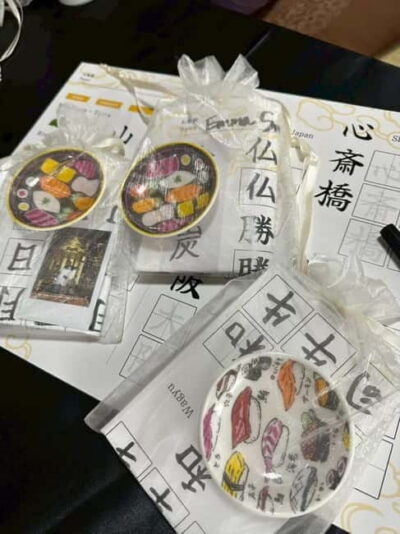
Osaka: Temple Tour and Traditional Calligraphy Lesson
Read our review →This tour also ranks in