
Review · KYOTO
Kyoto: Hidden Gems E-Bike Tour Through Backstreets & Temples
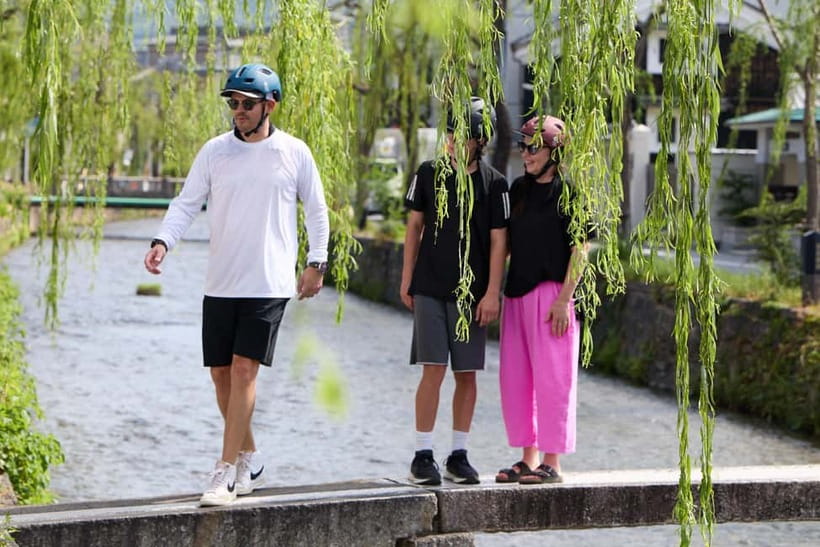
Kyoto’s best moments are often found between the famous sights. This four-hour e-bike tour uses quiet lanes and lower eastern hills to connect Gion with temples, shrines, waterways, and peaceful corners that are easy to miss on foot. The small group, limited to eight, keeps the ride personal.
I like the comfortable e-bikes and the way guides such as Ben, Yuki, and Kenji adjust the pace to the group. I also like the mix of major sights and quieter places, so you get a useful first look at Kyoto without spending the whole morning in a crowd. The main drawback is that this is still a city cycling tour, so you need confidence on a bike, and the ride may feel less relaxed in poor weather or busy traffic.
Five things that make this Kyoto ride worthwhile
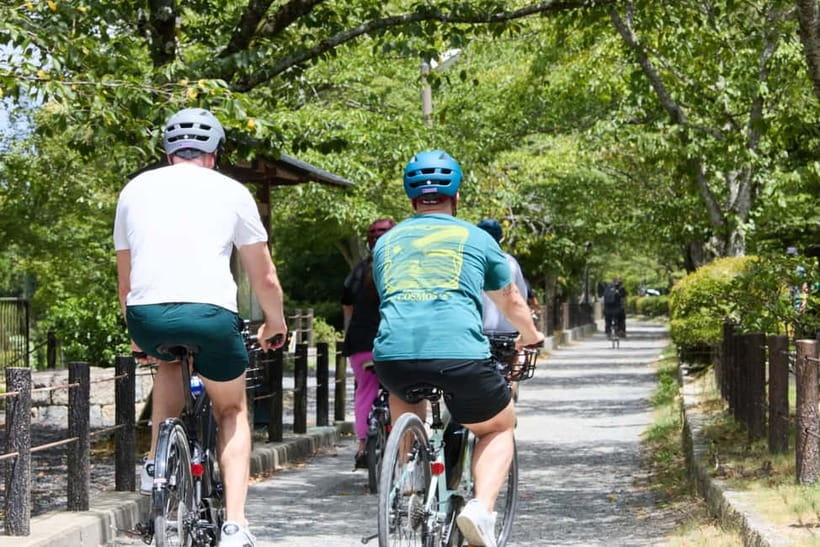
- A smart route through eastern Kyoto: Gion, Nanzenji, Heian Shrine, Philosopher’s Path, Shimogamo-jinja, and the Imperial Palace fit into one active morning.
- E-bikes for the lower hills: The motor assistance matters on parts of the eastern route, especially if you are not used to cycling for several hours.
- Small groups capped at eight: You can ask questions, hear the guide, and receive help without being lost in a large pack.
- Local guides with different strengths: Ben is praised for clear explanations and careful riding, while Yuki and Kenji are noted for local pride and adapting the route to the group.
- A useful first-day activity: You cover a broad section of Kyoto and pick up ideas for where to return later.
Why an e-bike is a smart way to see Kyoto
Kyoto rewards slow travel, but its sights are spread across a wide area. Walking between Gion, Nanzenji, the Philosopher’s Path, Shimogamo-jinja, and the Imperial Palace would take much longer than four hours, while public transport does not always place you close to the entrance you want.
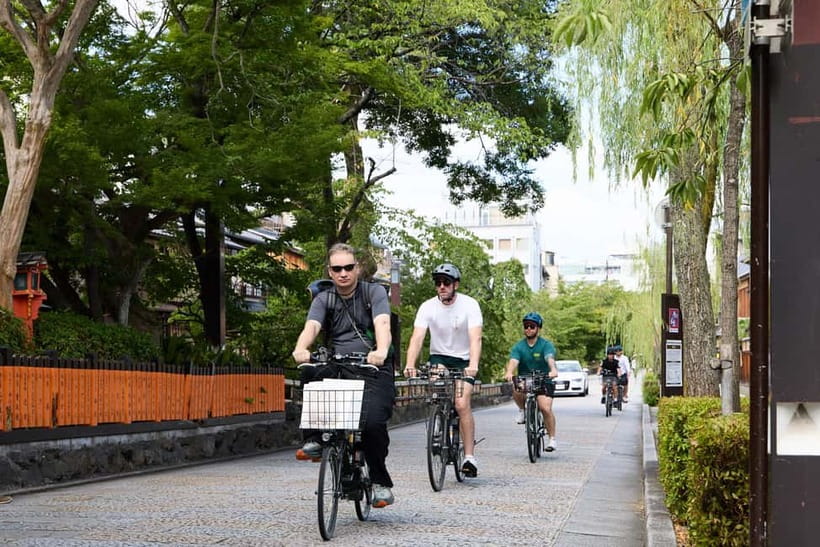
An e-bike gives you a practical middle ground. You still see the streets at ground level, but you can cover enough distance to connect very different parts of the city. The eastern side includes some lower hills, and the motor assistance keeps those sections from turning into a fitness test.
This is not a race. The best part of the ride is the change of pace: pedal through a neighborhood, stop at a temple or shrine, listen to a short explanation, then continue. The tour includes time to look around and take photos, rather than keeping you in the saddle for four straight hours.
You should still be comfortable riding a bicycle in a city. The group moves through narrow streets, and your guide needs to keep everyone together. Ben is praised for checking that riders were following safely, while other guides are described as patient with different skill levels. That matters more than speed.
More Cycling Tours in Kyoto:
- Kyoto: Fushimi Inari Shrine and Tofukuji Temple E-Bike Tour
★ 5.0 · 75 reviews - Bangkok: Temples, Canals & Local Life Bike Tour
★ 4.9 · 3,511 reviews - Bangkok: Night Bike Tour with Temples & Flower Market Visit
★ 4.8 · 751 reviews
Starting in Gion, where old Kyoto meets city life
The meeting point is in front of Kyoto Tourist Lounge Gion on Yamatooji Dori Street. Check the Google Map location carefully before setting out, since the starting point can be hard to identify from the street and there may not be a large sign announcing the tour.
Gion is a useful place to begin. It gives you an immediate sense of Kyoto’s traditional side, with historic streets and close access to the eastern temple district. You do not spend the entire tour here, though. After a short 20-minute visit, the ride moves toward quieter areas.
That opening stop helps frame the rest of the morning. Gion is one of Kyoto’s best-known districts, while later stops show how much more there is beyond its postcard streets. If you are staying nearby, this tour can be an efficient way to start the day. If you are coming from elsewhere in the city, allow enough time to reach the meeting point.
Nanzenji and the lower eastern hills
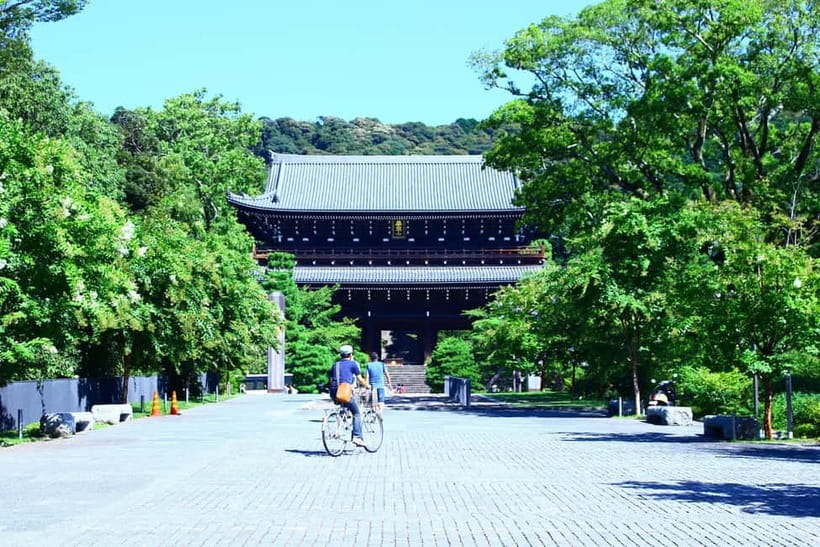
Nanzenji receives about 30 minutes, enough for a focused visit rather than a full temple study. The stop works well on a bicycle route because it gives you a calm, spacious place to leave the traffic behind and hear about Kyoto’s religious traditions.
The ride to this area is one reason the e-bike earns its keep. The eastern side is not brutally steep, but small climbs add up over a morning. You will appreciate the motor assistance most if you have not been cycling recently or if the weather is warm.
Do not expect a long private temple tour at every stop. Four hours and six main locations require a brisk rhythm. You will get an introduction, time to look around, and a chance to ask questions, but you may want to return to Nanzenji later if you prefer a slower visit.
Heian Shrine and a grand change of scale
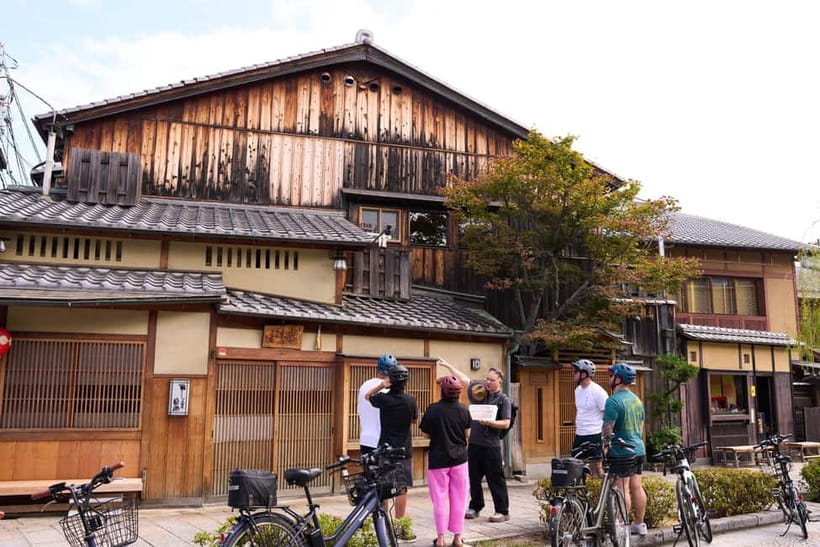
The 30-minute stop at Heian Shrine shifts the mood. After the quieter temple setting at Nanzenji, the shrine offers a broad, ceremonial space and a different view of Japanese religious architecture.
This is where a good guide adds real value. A short explanation about traditions, worship, and the role of the site can turn a quick photo stop into a more meaningful visit. Guides on this tour are praised for explaining religion and local customs without burying the group in long lectures.
You also get a useful contrast between Kyoto’s intimate lanes and its formal public spaces. The tour is not simply a list of temples. It shows several kinds of Kyoto, from old neighborhood streets to major religious landmarks and open civic grounds.
More temple runs by e-bike in Kyoto:
- E-Bike Nara Highlights – Todaiji, Knives, Deer, Shrine
★ 4.8 · 186 reviews - From Siem Reap: Angkor Wat Sunrise and Temples E-Bike Tour
★ 5.0 · 52 reviews - Naha: Guided E-Bike Tour of the 12 Zodiac Temples
★ 4.9 · 50 reviews - e-Bike Cycling Tour to Arkadi Monastery Full Lunch included
★ 5.0 · 26 reviews
Philosopher’s Path, best enjoyed at a steady pace
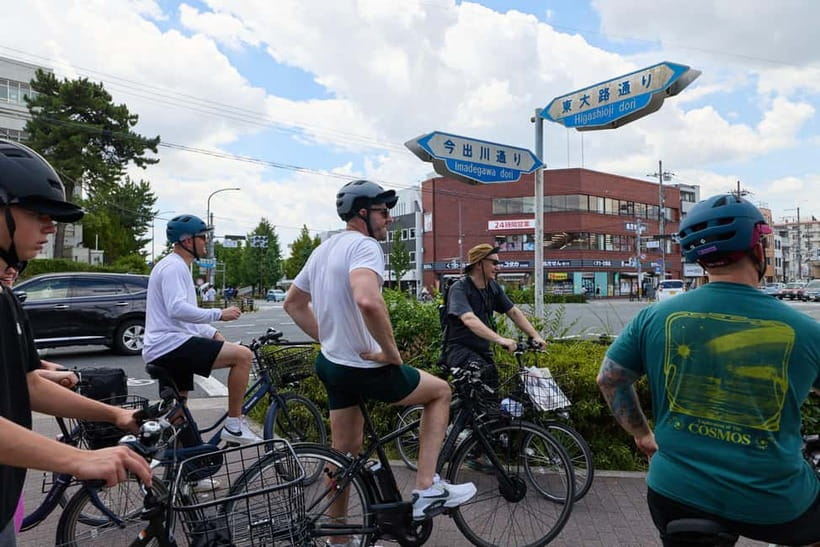
The Philosopher’s Path receives another 30-minute visit. This well-known walking route follows a canal and is especially appealing as a short cycling segment because the scenery changes gradually while you move.
The name may suggest a quiet footpath with no other people, but do not count on complete solitude. It is a popular part of Kyoto, and conditions vary by season and time of day. The value here is not a guarantee of emptiness. It is the chance to reach the route efficiently and enjoy it as part of a wider morning rather than spending a large block of your day getting there.
A guide can also help you notice details you might pass without context. The route becomes more than a pleasant ride when you understand how it fits into Kyoto’s temple district and residential streets.
Wear insect repellent if you are sensitive to bites. One rider specifically found it useful here, and the advice is sensible around water and greenery.
Shimogamo-jinja, a quieter northern turn
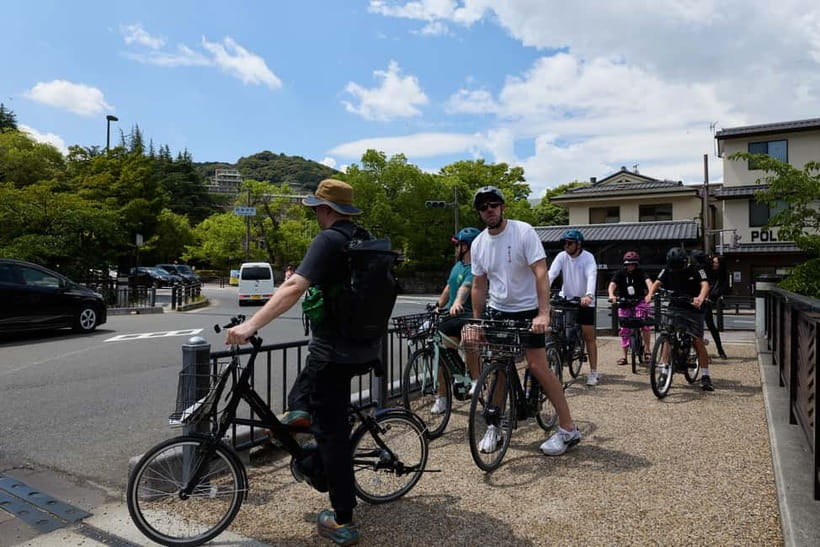
Shimogamo-jinja gets about 20 minutes, making it one of the shorter stops. That does not make it an afterthought. The shrine helps the route move north and gives you another side of Kyoto’s spiritual life, away from the busiest tourist corridors.
The shorter visit means you should focus your attention. Listen to the guide’s explanation, take a few photos, and enjoy the setting before the group moves on. If you are hoping to spend an hour at every shrine, this is not that kind of tour. The appeal is breadth, with enough time at each place to understand why it matters.
This is also the sort of stop that benefits from a local guide. Several guides are Kyoto residents or have strong local ties, and their comments help connect the visible site with everyday customs and the city’s identity.
Kyoto Imperial Palace, a broad final stop
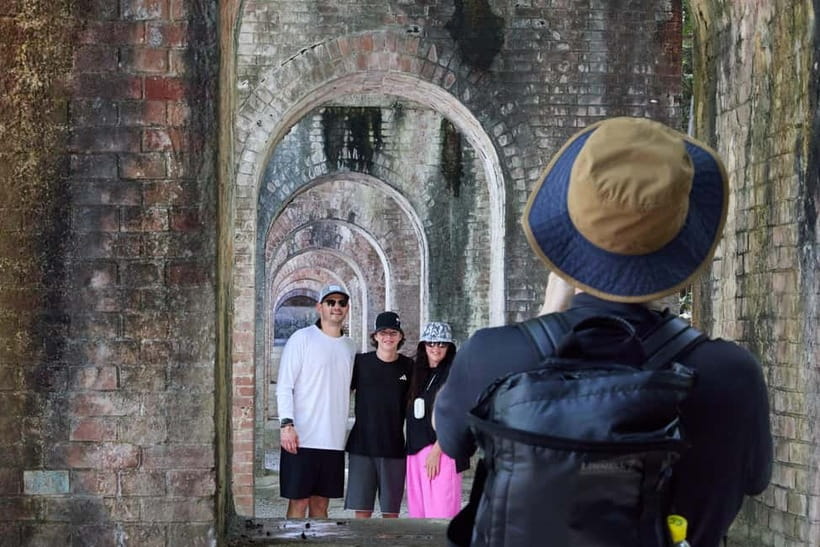
The tour spends roughly 30 minutes at Kyoto Imperial Palace before returning to Gion. The palace grounds give the final part of the ride a more spacious feel and provide a strong contrast with the narrow lanes earlier in the morning.
You will not see every part of the palace complex in half an hour. Think of this as an overview and photo opportunity, not a detailed palace study. The stop is still valuable because it places Kyoto’s imperial past within the modern city you have been cycling through.
By this point, you will have seen a substantial portion of Kyoto from the saddle. You have crossed between famous districts, religious sites, canal-side paths, and quieter streets without repeatedly figuring out buses or train connections.
What the guides add to the ride
The guide is the difference between a pleasant bicycle rental and a worthwhile guided experience. Ben is repeatedly praised for clear historical explanations, patience, safety checks, and a good sense of humor. Yuki is described as a Kyoto local who brings pride in his home city and takes groups to peaceful places. Kenji is noted for adapting the ride to the group’s interests and cycling ability. Yukio is praised for his English and his care on narrow streets.
Your guide will vary, so do not book on the assumption that a particular person is guaranteed. Still, the range of comments points to the qualities you should expect: English-language guiding, local context, attention to safety, and a willingness to answer questions.
The best guides also leave you some breathing room. You may hear the story of a place, explore for a few minutes, and have photos taken before moving on. Several people appreciated that balance. It keeps the tour from becoming either a silent bike convoy or a long classroom lesson.
The small-group format and pace
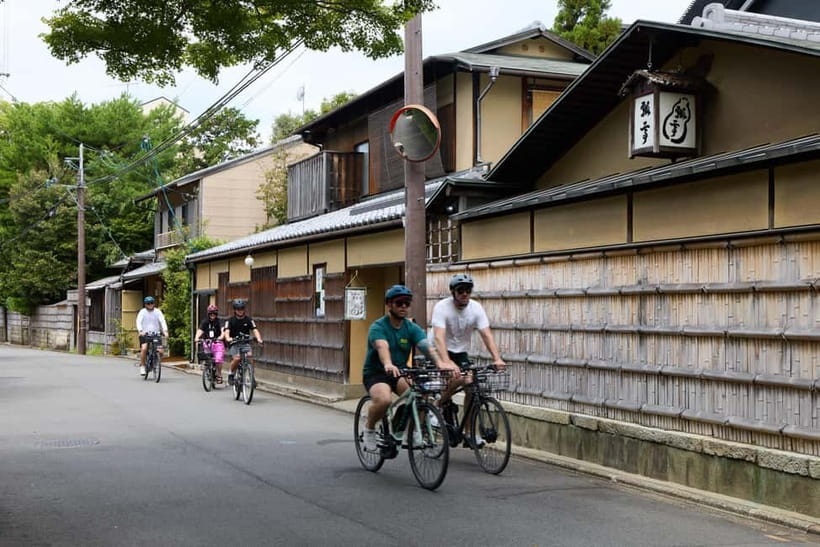
The group is limited to eight participants. That is a useful size for city cycling. You can hear instructions, ask about a shrine, and get help if your pace is different from someone else’s.
The route can also adapt to the people in the group. One guide adjusted the ride to match cycling skill and interests, while another extended the outing to include a peaceful temple away from the main roads. Such changes are not guaranteed, but the small group makes them more possible than a large coach tour.
Your pace will depend on the group, road conditions, and the guide’s plan. The tour is described as suitable for a relaxed or more adventurous ride, but it is not a private custom itinerary by default. Think of it as a guided route with room for sensible adjustments.
Rain does not automatically make the experience impossible. One rider enjoyed cycling through Kyoto in wet weather, and the company accommodated a date change in that case. Still, you should check the forecast and consider your own comfort. A sunny morning will make the photo stops more enjoyable.
Price, practical limits, and who gets the best value
At $87 per person, the tour costs more than renting a bicycle and finding the sights yourself. The price includes the e-bike, an English-speaking local guide, a small group, cultural commentary, and the planning needed to connect six major stops.
I think the value is strongest if you have only a short stay in Kyoto or want help understanding the city before exploring alone. You save time on route planning and avoid spending energy on the eastern hills. The guide also gives you context that a self-guided ride may not provide.
The value is weaker if you already know Kyoto well, prefer to stop for long periods, or want total control over your route. You will move on when the group moves on, and the four-hour schedule means some stops are introductions rather than full visits.
The tour is not suitable for children under 10 or babies under 1. Riders must be taller than 145 centimeters. Insurance is not included, so check your own travel cover before booking. Alcohol and drugs are not allowed, which is sensible for a cycling activity.
Free cancellation is available up to 24 hours before the start for a full refund, and you can reserve now and pay later. Starting times depend on availability.
Book this ride or choose another Kyoto day?
Book it if you want to see a wide slice of Kyoto without relying on buses, enjoy cycling, and value explanations from a local English-speaking guide. It is especially useful on your first day, when the route can help you understand where Gion, the eastern temples, the canal paths, and the Imperial Palace sit in relation to one another.
I would also recommend it to repeat visitors who have already seen the major tourist sights and want a quieter side of the city. The combination of e-bike assistance, small groups, and lesser-known stops gives the morning a different feel from a standard landmark checklist.
Skip it if you dislike city cycling, need long unhurried visits at each temple, or are not comfortable riding on narrow streets. For everyone else, $87 is a fair price for four hours of transport, guiding, local stories, and a carefully planned route. Bring water, use insect repellent if needed, check the weather, and arrive at the Gion meeting point with the map already open.
FAQ
How long is the Kyoto e-bike tour?
The tour lasts four hours, including visits to Gion, Nanzenji Temple, Heian Shrine, Philosopher’s Path, Shimogamo-jinja Shrine, and Kyoto Imperial Palace.
Where does the tour start and finish?
It starts and finishes at Kyoto Tourist Lounge Gion. The guide waits in front of the lounge on Yamatooji Dori Street.
What language is the tour conducted in?
The tour is conducted in English with a live English-speaking guide.
How many people are in the group?
The group is limited to eight participants, allowing for a more personal experience and easier communication with the guide.
Are e-bikes included in the price?
Yes. Comfortable e-bike rental is included.
Is the tour suitable for young children?
Children under 10 are not suitable for this activity, and babies under 1 are not permitted. Riders must be taller than 145 centimeters.
Is insurance included?
No. Insurance is not included in the tour price.
Can I cancel the booking?
You can cancel up to 24 hours in advance for a full refund. You can also reserve now and pay later.
Temple visits we reviewed lately in Kyoto
- Kyoto: Zen Meditation at a Private Temple with a Monk★ 5.0 · 202 reviews
- Kyoto:Kiyomizu-dera Temple Rent a kimono and ride a rickshaw★ 4.8 · 7 reviews
- KYOTO: Tempio Kiyomizu Pagode Gion “Geisya” (Guida Italiana)★ 4.7 · 17 reviews
- Kyoto: Kiyomizudera, Sanjusangendo, Ginkakuji and Higashiyama.★ 5.0 · 3 reviews
- Kyoto:Quiet Arashiyama and Sagano Temples★ 4.8 · 5 reviews
- Kyoto: Shakyo & Matcha in Historic Temple Garden★ 5.0 · 4 reviews
- Kyoto: Samurai Sword & Kimono Action Filming Experience★ 4.8 · 78 reviews
- Kyoto: Nara, Todaiji, Kasuga Taisha Shrine Private Full Day★ 4.9 · 18 reviews
Kyoto Temple Tours, compared.
Osaka/Kyoto:Kinkakuji,Arashiyama,FushimiInariShrine,NaraPark
Read our review →
Kyoto Arashiyama Walking Tour: Bamboo, Monkeys, Gardens & Secrets
Read our review →
Arashiyama Bamboo, Temple, Monkeys, or Secret Sake Brewery
Read our review →
Kyoto: Arashiyama Bamboo Forest, Monkeys, Matcha & Temple Tour
Read our review →
Osaka/Kyoto: Arashiyama, Nara & Fushimi Inari Shrine w/Lunch
Read our review →
Kyoto Zen Meditation & Garden Tour at a Zen Temple with Lunch
Read our review →This tour also ranks in