
Review · ITALY
Paestum: 2-Hour Greek Temples & Archaeological Museum
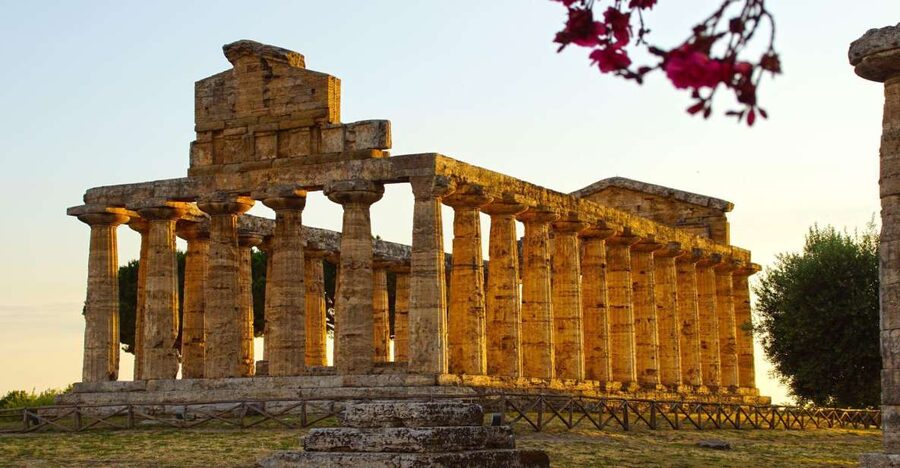
Paestum’s three Greek temples are the main event: huge, calm, and remarkably well preserved. Unlike many ancient sites where you spend half your time picturing the original buildings, here the columns and temple shapes still do much of the talking. A certified archaeologist guide adds the missing story, from Greek Poseidonia to Roman Paestum.
I like the private-group format, since you can focus on the questions that interest you instead of following a large crowd. I also like that the ticket covers both the archaeological park and the National Archaeological Museum, including the famous Tomb of the Diver. The main drawback is the short two-hour schedule, which leaves little room to linger, and the site is not suitable for wheelchair users or people with mobility impairments.
Key points
- Three sixth-century BC Doric temples: See the Temple of Neptune, Temple of Ceres, and the so-called basilica in one compact archaeological area.
- A guide with specialist training: Your certified archaeologist explains the Greek and Roman remains rather than simply pointing out the ruins.
- Roman Paestum beyond the temples: The route includes the forum, comitium, amphitheater, markets, and city walls.
- The Tomb of the Diver: The museum’s most famous work is a painted Greek tomb with an unusual and memorable scene.
- Private tour with tickets included: You avoid the ticket line and can choose from English, Italian, Spanish, French, or German.
- A strict two-hour visit: Plan to stay focused, since the temples and museum together offer far more than the schedule can cover in depth.
Why Paestum’s Greek temples are worth the trip
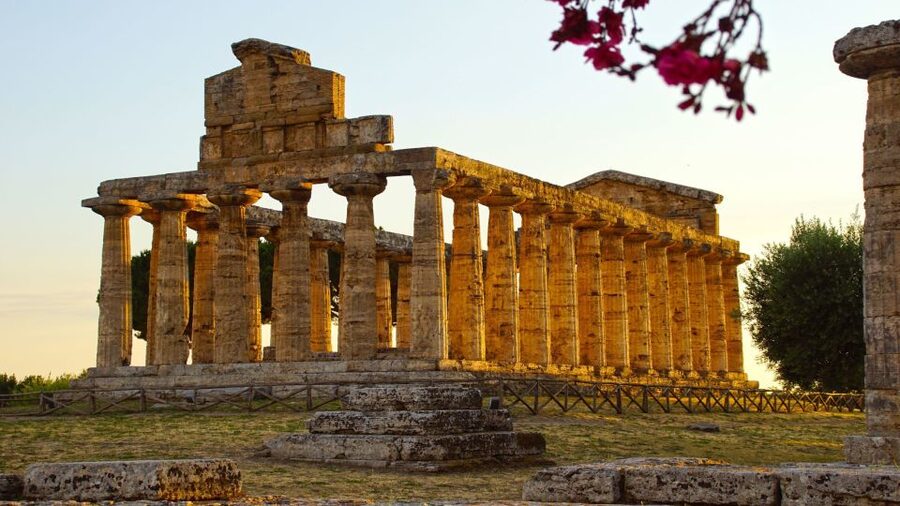
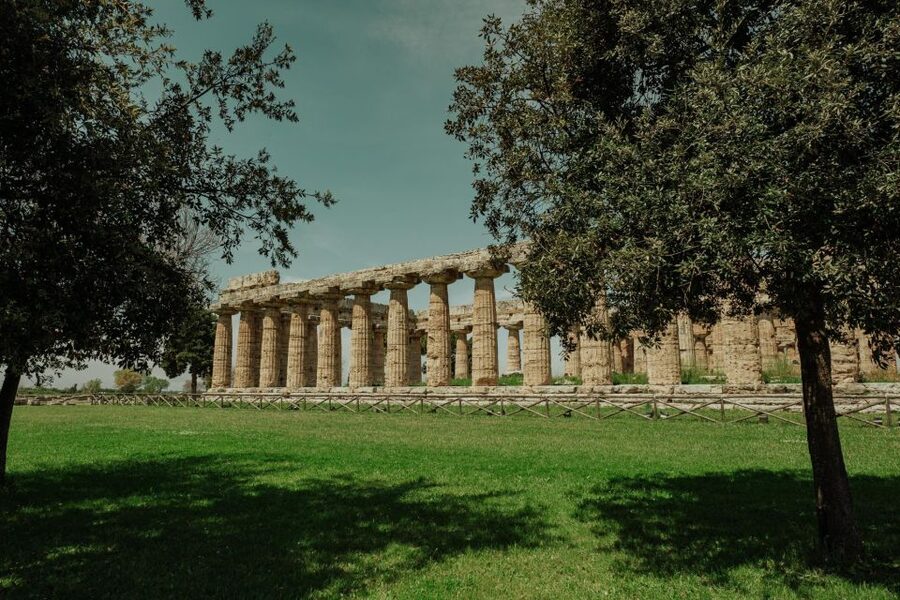
Paestum is one of Italy’s most rewarding ancient sites because the ruins are not reduced to a few broken stones. The former Greek city, founded as Poseidonia by Greek colonists, preserves three major Doric temples from the sixth century BC, along with later Roman remains.
The temples are the visual heart of the visit. Their tall columns and broad, orderly forms recall the Parthenon in Athens, but Paestum has a quieter feel. The ruins sit in the northern part of the Cilento region, near the Sele River and the Tyrrhenian coast. That setting gives the visit a welcome sense of space.
I especially like that you see several stages of the city in one walk. The temples reveal Greek religious life, while the forum, comitium, amphitheater, and markets show how the settlement changed under Roman rule. A guide can help you connect those pieces instead of treating each ruin as an isolated photo stop.
The tour costs $189.75 per person, which is a serious price for two hours. Its value depends on what you want. If you mainly want to walk among the temples and read signs at your own pace, the cost may feel high. If you want a private archaeological explanation, included entry, and a focused visit to both the park and museum, the price is easier to justify.
More Valley of the Temples Tours in Italy:
- Agrigento: Valley of the Temples Skip-the-Line Sunset Tour
★ 4.5 · 1,512 reviews - Palermo: Agrigento and the Valley of the Temples Day Tour
★ 4.2 · 1,240 reviews - Agrigento: Valley of the Temples Ticket & App Audioguide
★ 4.3 · 1,160 reviews
Meeting at the Neptune Temple entrance
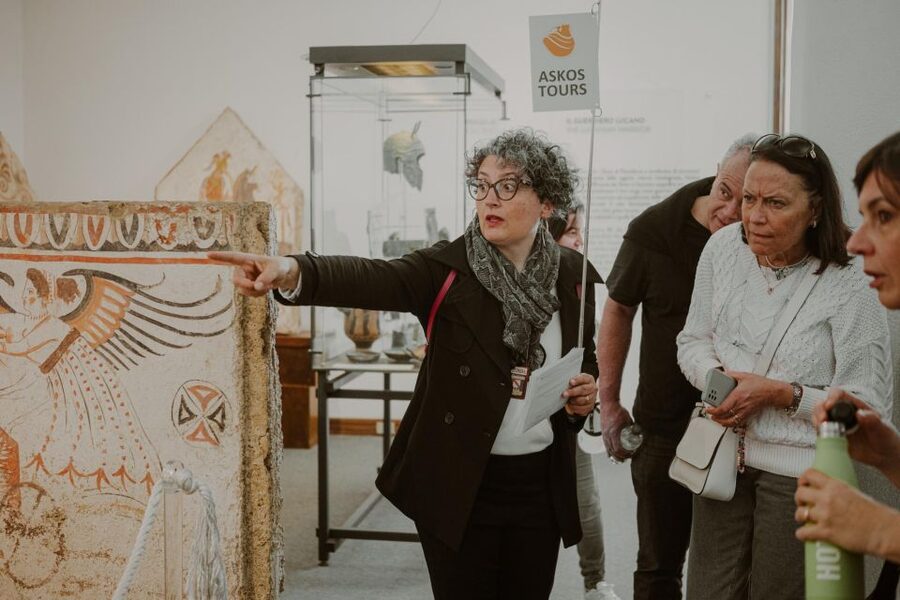
The guide meets you at the entrance to the Neptune Temple, holding a sign with your name. The listed starting location is Tempio di Hera II, so I would check the exact meeting instructions carefully before setting out. That small detail matters at a large archaeological site, especially if you arrive close to the start time.
The tour ends back at the meeting point. There is no hotel pickup or drop-off, and food and drinks are not included. You need to make your own way to Paestum and arrive ready to begin the walking tour.
Your guide leads a private group, not a large shared party. That can make the visit more direct. You can ask why one temple is called the Temple of Neptune, how the Roman public buildings worked, or what makes the museum’s painted tomb so unusual.
Tours are available in English, Italian, Spanish, French, and German. The advertised rating is 4.8 from 19 reviews, a strong result for a small, specialized archaeological experience. Since no individual guide names are provided, you should not expect to select a particular archaeologist when booking.
Walking through the Archaeological Park
The main guided visit lasts about two hours and covers the Archaeological Park of Paestum. The route brings together temples, public buildings, commercial areas, defensive walls, and Roman remains.
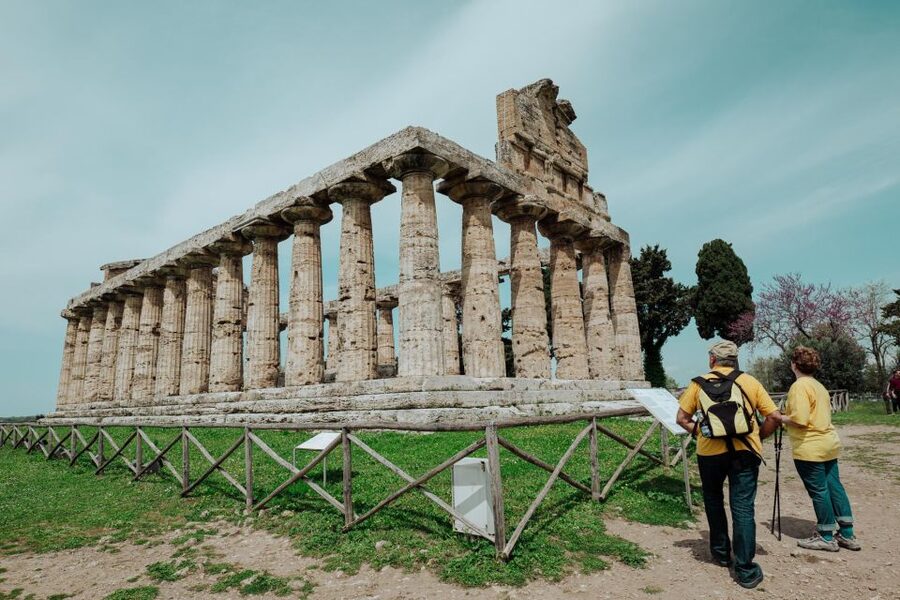
You begin with the Greek temples, the part most people have come to see. The Temple of Neptune is the grandest of the three and gives you the clearest sense of Greek monumental design. The Temple of Ceres, also called the Temple of Athena, is smaller but still important to the site’s story. The so-called basilica is another early Doric building, although its later name can confuse first-time visitors because it was not originally a Christian church.
A certified archaeologist guide is particularly useful here. The columns are impressive on their own, but the guide can explain how the temples fit into the Greek city and why their survival is unusual. You also get help separating ancient Greek construction from later Roman changes.
The route then shifts from sacred buildings to civic life. You see the forum, the political center of Roman Paestum, along with the comitium, where political assemblies took place. The amphitheater and markets add a more practical side to the city. These remains show that Paestum was not just a collection of temples. It was a working community with government, commerce, public entertainment, and defensive needs.
The city walls also help you understand the site’s size and organization. You may find that the walls are less instantly dramatic than the temples, but they provide useful context. They show the city as a planned settlement rather than a group of unrelated monuments.
The Temple of Neptune, Ceres, and the basilica
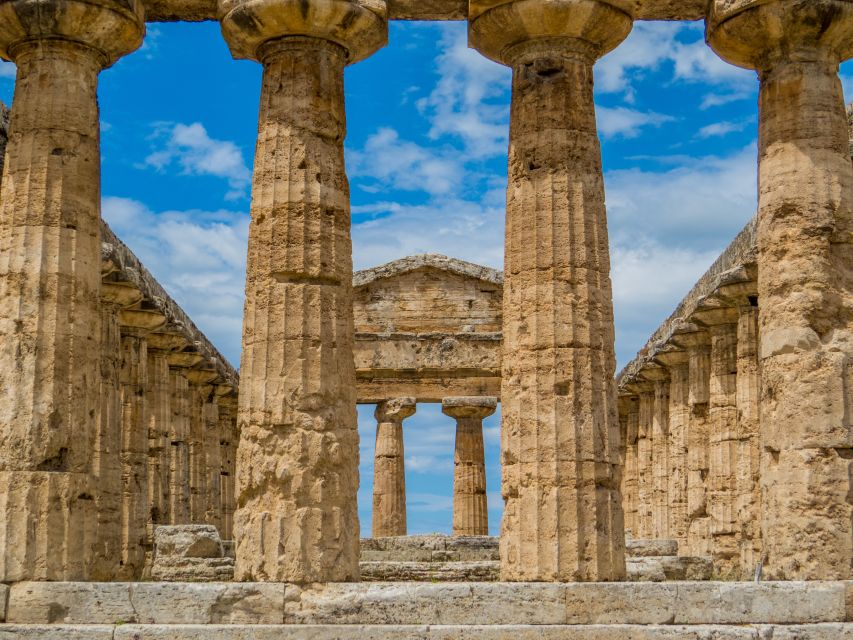
The three temples deserve close attention, even though the tour schedule is tight. Their survival gives Paestum a special advantage over many ancient sites in Italy. You can study the repeated rhythm of the columns, the heavy Doric proportions, and the shape of the buildings without relying entirely on a guide’s reconstruction.
The Temple of Neptune is the usual visual high point. Its height and strong lines make it easy to understand why Paestum is compared with Athens. The name is traditional, but the exact ancient dedication is not always as simple as modern labels suggest. This is the sort of point best handled by your archaeologist guide, who can explain what is known and what remains uncertain.
The Temple of Ceres is often valued for its smaller scale and different proportions. It helps you compare two Greek sacred buildings rather than seeing only one famous monument. The basilica offers another variation in early Greek temple design.
Because the tour is private, you can ask to pause briefly at the temples that interest you most. Still, the guide must keep the museum portion on schedule. If you want long stretches for photography or quiet observation, two hours may feel rushed.
More Museum Visits in Italy:
- Paestum: Private Tour of Greek Temples and Archaeological Museum
★ 5.0 · 60 reviews - Paestum: Temples and Museum Tour with Archaeologist Guide
★ 5.0 · 14 reviews - Montserrat Museum and Monastery Entry Ticket
★ 4.5 · 1,740 reviews - Lisbon: Belem, Jeronimos Monastery, and Coach Museum Tour
★ 4.8 · 478 reviews
Roman Paestum: forum, comitium, and amphitheater
Paestum did not end with the Greek period. The Romans took control of the city and reshaped parts of it, adding public buildings and changing how the urban center functioned.
The forum is important because it shifts your attention from religion to civic administration. The comitium, or political assembly hall, gives the Roman section a human scale. You can picture the city as a place where public decisions were made, not only where temples were built.
The amphitheater adds another layer. It reminds you that public entertainment was part of urban life, just as markets and political gatherings were. The remains may not have the same visual power as the intact temples, but they make the site more complete.
The markets help you think about ordinary activity: buying, selling, meeting, and moving through the city. A short guided explanation can bring these lower ruins into focus. Without context, you might walk past them quickly. With context, they help explain how the city worked day to day.
The National Archaeological Museum and the Tomb of the Diver
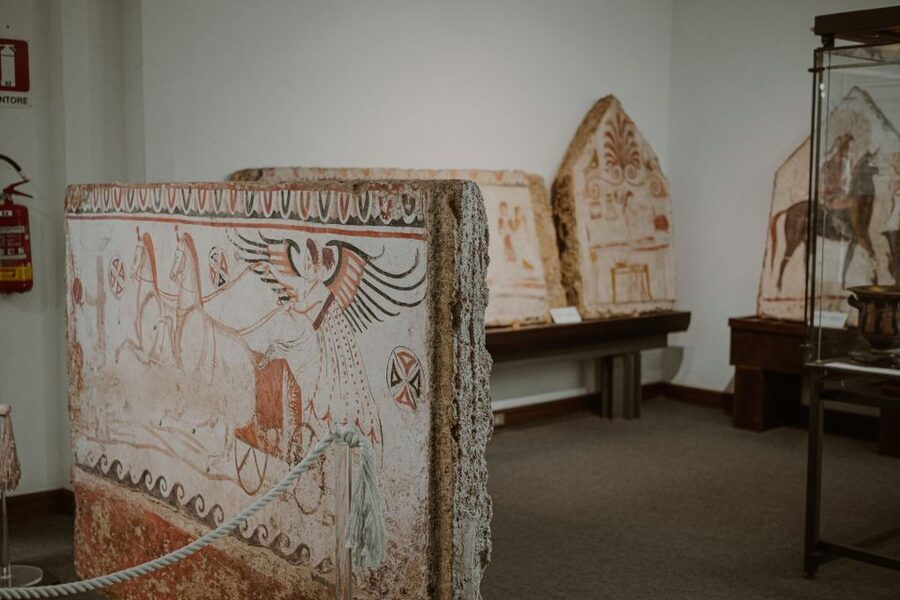
After the outdoor ruins, the tour continues to the National Archaeological Museum of Paestum. The museum has a collection of local Greek works dating from the seventh century BC, so it provides objects and paintings that cannot be understood from the stone buildings alone.
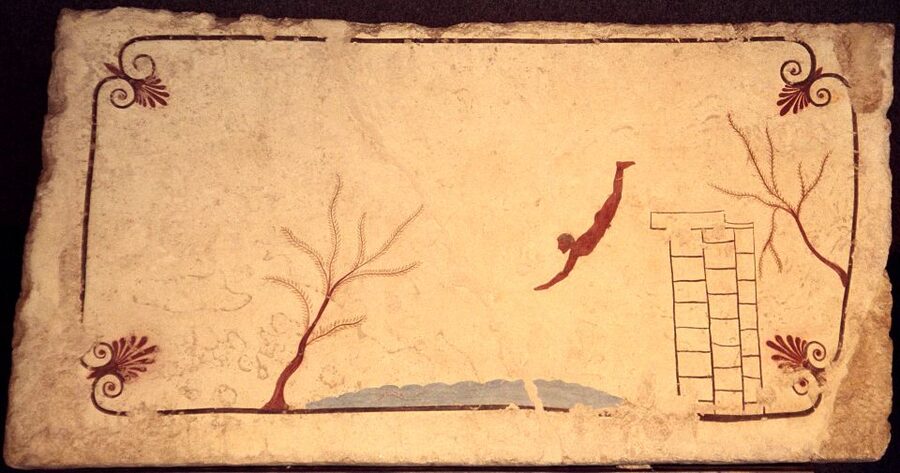
The museum visit is listed as a guided stop of about 30 minutes. That is enough for a focused introduction, but not enough for a slow examination of every display. The guide will direct attention to the most important works, with the Tomb of the Diver as the clear centerpiece.
The Tomb of the Diver is a painted Greek tomb with an image of a diver moving into water. It is unusual and memorable because painted Greek funerary scenes of this kind are rare. The image invites questions about death, transition, and the meaning of the scene, but you should let the guide explain the interpretation rather than assuming one fixed answer.
The museum also helps you see why Paestum matters beyond its temples. The park preserves architecture in place, while the museum preserves art, objects, and painted decoration connected with the ancient city and its surrounding area.
For many people, the museum will feel like the second half of the experience rather than an optional add-on. If you only visit the temples, you miss the artwork that gives a more personal view of the people who lived in the Greek city.
What the two-hour schedule really means
Two hours is efficient, but it is not generous. You are fitting a large outdoor archaeological park and a museum into one compact visit. The advertised plan includes about two hours at the Archaeological Park and a 30-minute guided museum stop, so confirm the exact timing when you check availability.
I would choose this tour if you want a strong introduction and have other plans in the area. The guide can organize the visit, identify the major buildings, and make sure you see the museum’s key work without wasting time at the entrance.
I would choose a longer visit if Paestum is one of the main reasons for your trip. The site has enough temples, Roman remains, and museum objects to reward a slower pace. A two-hour tour gives you the outline and the essential highlights, but not much spare time for quiet reflection, extended photography, or a second look at smaller remains.
The walking requirement also matters. The experience is not suitable for wheelchair users or people with mobility impairments. No other physical details are provided, so if you have concerns about walking on archaeological surfaces, contact the provider before booking.
Is $189.75 good value?
At $189.75 per person, this is not a budget sightseeing option. The cost covers a private group, a certified archaeologist guide, skip-the-line tickets, and all taxes. It does not cover transportation, hotel pickup, food, or drinks.
The private format is the key value. A shared tour can cost less, but you may have less control over the pace and fewer chances to ask questions. Here, the guide’s specialist background should help you understand both the Greek temples and the Roman city instead of simply touring the most photogenic ruins.
Skip-the-line entry is useful if there is a queue, though its value depends on how busy Paestum is when you visit. The included museum ticket also keeps the visit simple. You do not need to arrange separate admission for the park and museum.
For a couple or small group that values expert attention, the price may be reasonable. For solo visitors or budget-minded people, it is harder to recommend unless the private guide is especially important to you.
Who should book this Paestum tour?
I would recommend it to you if you want ancient history explained clearly, prefer a private group, and have only a short window at Paestum. It also suits anyone who wants both the temples and the museum covered in one organized visit.
It is a good match for first-time visitors who might otherwise miss the Roman forum, comitium, or Tomb of the Diver. The guide gives the site a logical shape, moving from Greek religious buildings to Roman public life and then to museum art.
I would be more cautious if you want an unhurried day among the ruins. The two-hour schedule is the main limitation, and the price is high for such a short experience. People with mobility impairments or wheelchair users should not book this activity because it is specifically listed as unsuitable.
Free cancellation is available up to 24 hours before the start time, and you can reserve now and pay later. Those policies make the booking less risky, but they do not change the basic question of value: are you paying for a quick, guided overview or a long, independent archaeological visit?
Should you book it?
Book this Paestum tour if you want the three Greek temples, Roman city, and National Archaeological Museum explained by a certified archaeologist in a private setting. The included tickets and skip-the-line entry simplify the visit, while the museum’s Tomb of the Diver adds an excellent final stop.
Skip it if your priority is low cost, a full day at the site, or independent exploration. For everyone else, this is a focused way to understand Paestum’s main treasures, provided you accept the tight schedule and arrive at the correct meeting point at the Neptune Temple entrance.
FAQ
How long does the Paestum tour last?
The advertised duration is two hours. The itinerary includes a guided visit to the Archaeological Park and a guided museum visit listed at about 30 minutes.
Where does the tour begin?
The guide meets you at the entrance to the Neptune Temple, holding a sign with your name. The listed starting location is Tempio di Hera II, so check the precise meeting instructions before arrival.
What does the tour include?
It includes guidance by a certified archaeologist, assistance for the full duration, skip-the-line tickets, and all taxes.
Is hotel pickup included?
No. Hotel pickup and drop-off are not included, and you must make your own way to the meeting point.
Which languages are available?
The tour is offered in English, Italian, Spanish, French, and German.
Is the tour suitable for wheelchair users?
No. The activity is listed as unsuitable for wheelchair users and people with mobility impairments.
More two-hour temple visits in Italy
- Ninh Binh Jeep tour:2 hours visit Bich Dong, Thai Vi temple
★ 3.8 · 38 reviews - Bangkok: 2 Hours Grand Palace & Wat Pho Private Tour
★ 4.9 · 15 reviews - Mumbai: 2 Hours Markets And Temple Tour
★ 4.7 · 6 reviews - 2 Hour Private Tuktuk Tour in Porto to Monastery and Cellars
★ 5.0 · 3 reviews
Temple visits we reviewed lately in Italy
- Rome: Temples, Squares & Markets Guided Walking Tour★ 4.8 · 26 reviews
- Rome underground hidden temples, ruins, and secret basilicas★ 3.7 · 21 reviews
- Rome: Tour of St. Clement’s Basilica Underground Temples★ 4.8 · 242 reviews
- Palermo to Siracusa: stop al Valley of Temples & Roman Villa★ 5.0 · 5 reviews
- Paestum Tour: Best Preserved Temples in the World (UNESCO)★ 4.5 · 11 reviews
- Paestum: Temples and Museum Tour with Archaeologist Guide★ 5.0 · 14 reviews
- Neustift Monastery: Admission with audio guide★ 4.6 · 9 reviews
- Monreale: Guided tour of Cathedral, Monastery and Mosaics★ 4.3 · 29 reviews
Italy Temple Tours, compared.
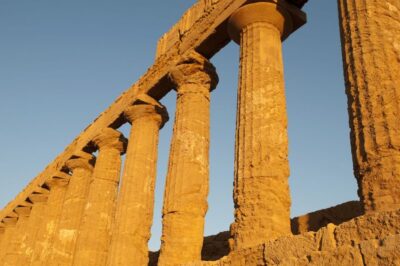
Agrigento: Valley of the Temples Skip-the-Line Sunset Tour
Read our review →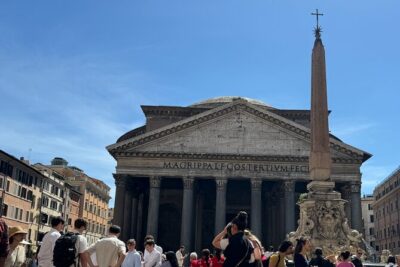
Pantheon Elite Guided Tour – Rome’s Iconic Ancient Temple
Read our review →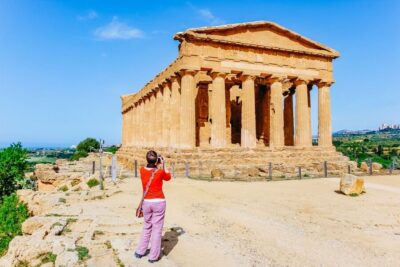
Palermo: Agrigento and the Valley of the Temples Day Tour
Read our review →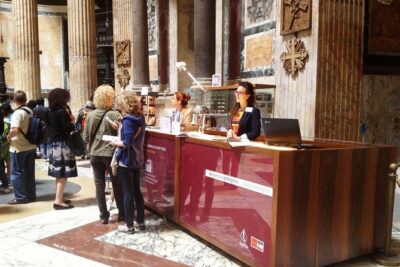
Rome’s Iconic Temple: Pantheon Audio Guided Tour with Fast Access
Read our review →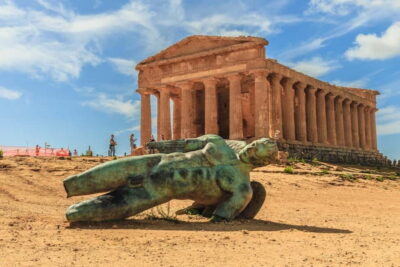
Agrigento: Valley of the Temples Ticket & App Audioguide
Read our review →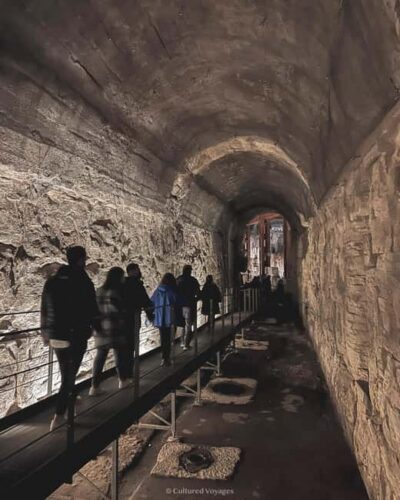
Colosseum Special Access Tour, with Ancient Temples & Tombs
Read our review →
Agrigento: Valley of the Temples E-Scooter Tour
Read our review →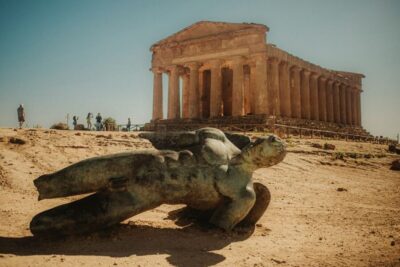
Palermo: Valley of the Temples and Scala dei Turchi Day Trip
Read our review →This tour also ranks in