
Review · ITALY
Paestum Tour: Best Preserved Temples in the World (UNESCO)
Paestum gives you something rare in Italy: three Greek temples still standing in remarkably complete form, with far fewer crowds than the country’s headline ancient sites. The two-hour private tour links those temples to the Roman forum, amphitheater, and museum, so you get both the grand view and the smaller archaeological details.
I like the clear architectural explanations, which matter here because Doric columns and temple plans can blur together without a guide. I also like the chance to ask questions in a private group, with tours offered in English, Italian, Spanish, French, and German.
The main drawback is cost. At $325.13 for a group of up to 25, this can be good value for a larger party, but less so for one or two people. You must also pay separately for admission and arrange your own transportation to Paestum.
Key points to know before you book
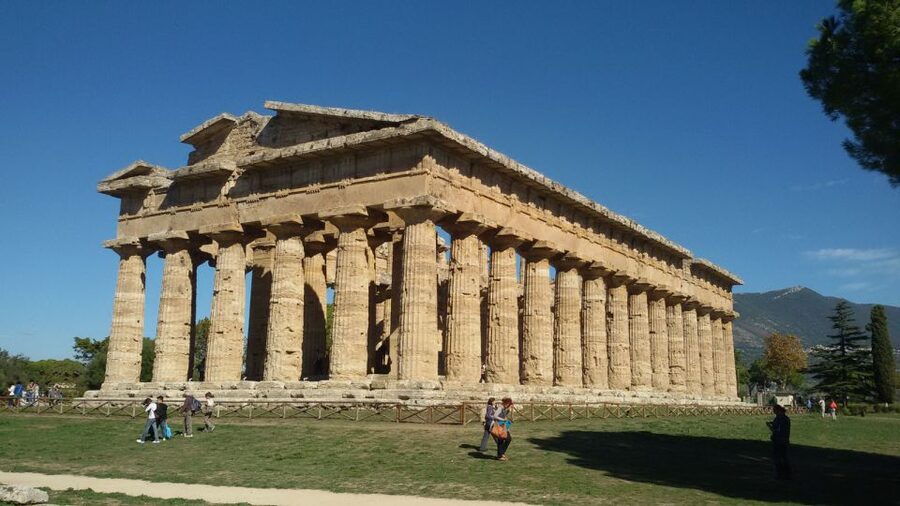
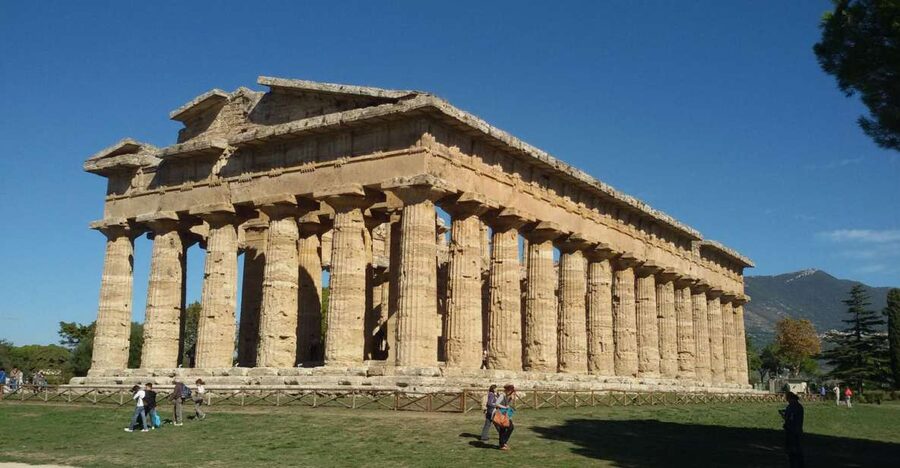
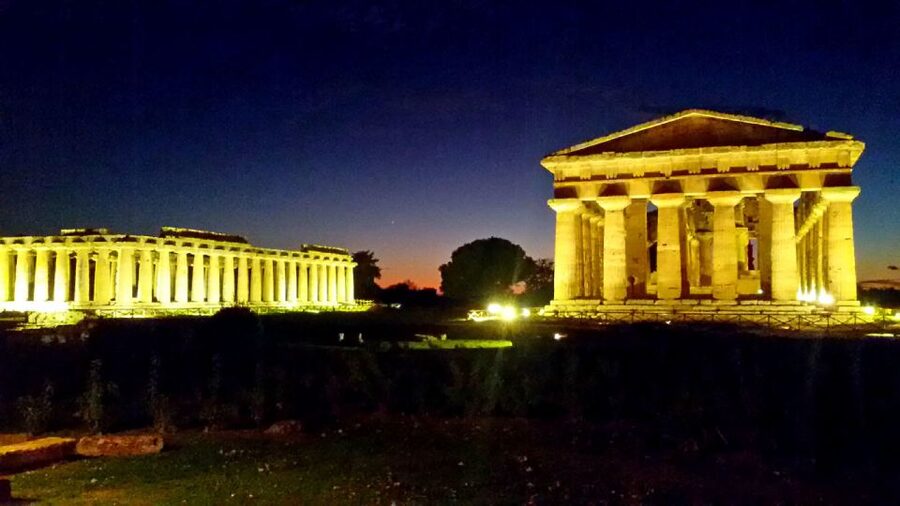
- Three exceptionally preserved Greek temples: See the Basilica of Hera, the Temple of Poseidon, and the Sanctuary of Athena, also called the Temple of Ceres.
- The Temple of Poseidon is the visual centerpiece: Built around 460 BCE, it is the largest of Paestum’s temples and has the heavy Doric design that makes the site so memorable.
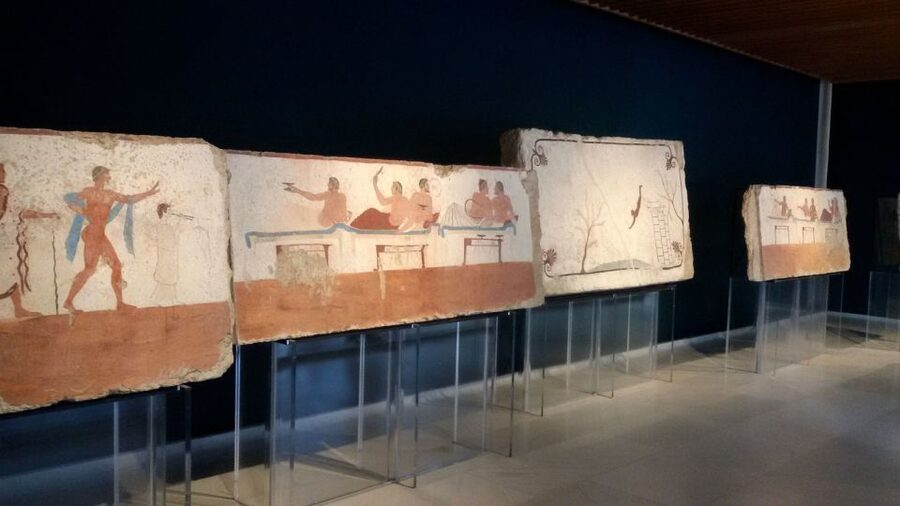
- The museum completes the visit: Look for Hera’s 33 metopes, a statue of Zeus, the Europa crater, and the famous Tomb of the Diver.
- A private group keeps the pace flexible: Your party can ask questions directly instead of following a large crowd.
- The tour begins and ends at the museum entrance: You need to reach Paestum independently, and entrance tickets are not included.
- Two hours is efficient but brisk: You will see the major monuments, but you may want extra time afterward for your own look around.
Why Paestum deserves a place on your Campania plans
Paestum was founded as Poseidonia by the Greeks and later became Paestum under Roman rule. The city was linked with Poseidon, but Hera and Athena also had major sanctuaries here. That mix of Greek religious life and later Roman urban planning is what makes the site more than a three-temple photo stop.
I find Paestum especially useful for understanding how a Greek city actually worked. The temples are the stars, but the roads, public spaces, and Roman additions help you picture an inhabited town rather than an isolated ruin.
The setting also changes the mood. You are not moving from one enclosed room to another. You walk between large stone buildings and open archaeological remains, then shift indoors to the museum for painted tombs and carved pieces. The contrast gives the visit a good rhythm.
This tour is a strong choice if you are staying in Campania and want an ancient site that feels different from Pompeii. It is also a smart stop for anyone interested in classical architecture, archaeology, or the meeting of Greek and Roman cultures.
More Valley of the Temples Tours in Italy:
- Agrigento: Valley of the Temples Skip-the-Line Sunset Tour
★ 4.5 · 1,512 reviews - Palermo: Agrigento and the Valley of the Temples Day Tour
★ 4.2 · 1,240 reviews - Agrigento: Valley of the Temples Ticket & App Audioguide
★ 4.3 · 1,160 reviews
Starting at the Archaeological Museum entrance
The meeting point is the entrance to the National Archaeological Museum in Paestum. The tour ends at the same place, which makes the route simple, but you need to plan your arrival carefully because pickup and drop-off are not included.
Starting at the museum may seem unusual if you are eager to see the temples first. In practice, it gives the guide a useful way to frame the ruins. You can see important objects before standing in front of the buildings that produced them.
The guide is licensed, and the tour is offered in English, Italian, Spanish, French, or German. The available language matters here. A good explanation can turn a row of columns into a readable building, showing you how the parts fit together and why the proportions look the way they do.
The group is private, with a maximum listed size of 25 people. A party of two gets the most direct interaction, while a larger family or organized group can spread the cost across many people. The price is one flat $325.13 rate per group, not a per-person fee.
The Basilica of Hera, Paestum’s oldest temple
Your first major temple is the one dedicated to Hera, often called the Basilica. It is the oldest of the three and follows the Doric style, with broad, sturdy columns and a strong horizontal shape.
Its dimensions are impressive: about 26 meters wide and 55 meters long. Those numbers become more meaningful when you see the building in person. The temple does not depend on delicate decoration to impress you. Its scale, repeated columns, and solid stone construction do the work.
The name Basilica can cause confusion. In Roman architecture, a basilica usually means a public building used for law, business, or civic activity. Here, the name is a modern label for the temple, not proof that it began as a Christian church.
This is where the guide’s explanations are most useful. The person leading the tour can point out details that are easy to miss, explain the temple’s Doric form, and answer questions about its use and design. The strongest praise for the experience centers on the guide’s architecture and history explanations, along with the cordial, useful question-and-answer exchange.
The Temple of Poseidon and its 460 BCE design
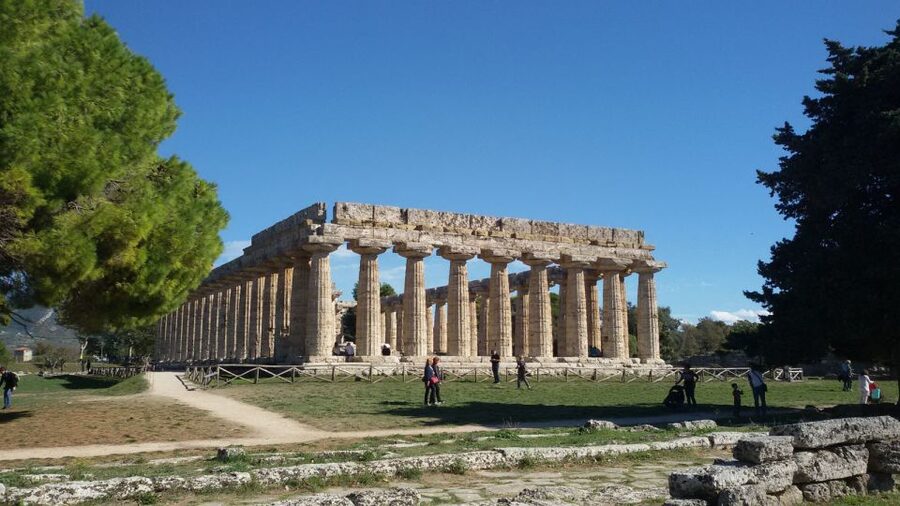
The largest temple is dedicated to Poseidon, though it is also called the Temple of Neptune. It was built around 460 BCE and is often compared with the Temple of Zeus at Olympia.
This is the moment when Paestum makes its biggest visual impact. The temple has the weight and order associated with mature Doric architecture. Its columns are not decorative accessories. They create the entire character of the building.
I would give this temple the most time if your schedule allows. A two-hour tour has to keep moving, and the guide will need to balance the explanation with the rest of the park. Still, pause long enough to look at the spacing of the columns, the surviving upper structure, and the way the temple reads as a complete building rather than a pile of fragments.
The name Poseidon connects the city to its Greek beginnings, while Neptune reflects the Roman period. The shifting names are a small reminder that Paestum was not frozen in one culture. It continued as a place of worship and civic life under changing rule.
More Temple Tours around Italy:
- Pantheon Elite Guided Tour – Rome’s Iconic Ancient Temple
★ 5.0 · 1,447 reviews - Rome’s Iconic Temple: Pantheon Audio Guided Tour with Fast Access
★ 4.0 · 1,188 reviews - Colosseum Special Access Tour, with Ancient Temples & Tombs
★ 4.8 · 747 reviews - Agrigento: Valley of the Temples E-Scooter Tour
★ 4.6 · 557 reviews
The Sanctuary of Athena, also called Ceres
The third temple is connected with Athena and is also called the Temple of Ceres. It is smaller than the Temple of Poseidon, but smaller does not mean unimportant.
Its more modest size gives you a helpful comparison. You can see how Greek temples varied in scale and setting, rather than assuming every sacred building followed the same plan. The guide can also explain how Paestum’s religious life included major sanctuaries for more than one deity.
This is one reason a private guide adds value. On your own, you may simply photograph the three temples and move on. With an explanation, the differences between the buildings become part of the story: age, scale, style, and religious role all begin to separate.
The Temple of Athena also helps prevent the visit from becoming a single-monument tour. Paestum is not just about the biggest temple. The relationship among the three sanctuaries is the point.
Walking the Via Sacra to the Roman forum
Between the temples, the tour follows the Via Sacra, the sacred road through the ancient city. This route leads you toward Paestum’s Roman remains, including the forum.
The forum gives the site a different feel from the Greek sanctuaries. Here, you are looking at the civic center of the Roman city, where public life took place. The exact details you notice will depend on the guide’s route and explanation, but the important idea is clear: Paestum changed over time rather than disappearing after the Greek period.
I like this part because it places the temples in a wider urban setting. You are not simply looking at religious monuments in isolation. You are walking through a city with sacred, political, and public spaces.
The Roman forum is also a reason to avoid rushing straight from one temple to the next. The most famous photographs come from the temples, but the forum helps you understand how the Romans adapted the city and gave it new civic functions.
The amphitheater and the ancient city beyond the temples
The archaeological park also includes an amphitheater. Its presence adds another Roman layer to the route and shows that public entertainment had a place in Paestum’s later life.
The amphitheater is not presented as a separate long visit. It forms part of the walk along the ancient city route, so expect a concise look rather than an extended exploration. If you have a strong interest in Roman public buildings, ask your guide about it while you are there.
This is one of the practical limits of the two-hour format. The itinerary includes three major temples, the Via Sacra, the forum, the amphitheater, and the museum. That is a lot for one guided visit. You will get the main story, but you may not have time to study every corner or read every display at leisure.
Still, the route is well chosen for a first visit. You see the major Greek monuments, connect them with Roman urban remains, and finish with the museum’s finest pieces.
The National Archaeological Museum and the Tomb of the Diver
The final part of the tour takes place in the National Archaeological Museum. This is not an optional add-on. It is where several of Paestum’s most important finds are gathered, including objects that cannot be understood by looking only at the ruins.
Among the highlights are the 33 metopes from the Temple of Hera Argiva. These carved panels help you picture the artistic program that once accompanied the sanctuary. You will also see a statue of Zeus and a crater decorated with the abduction of Europa.
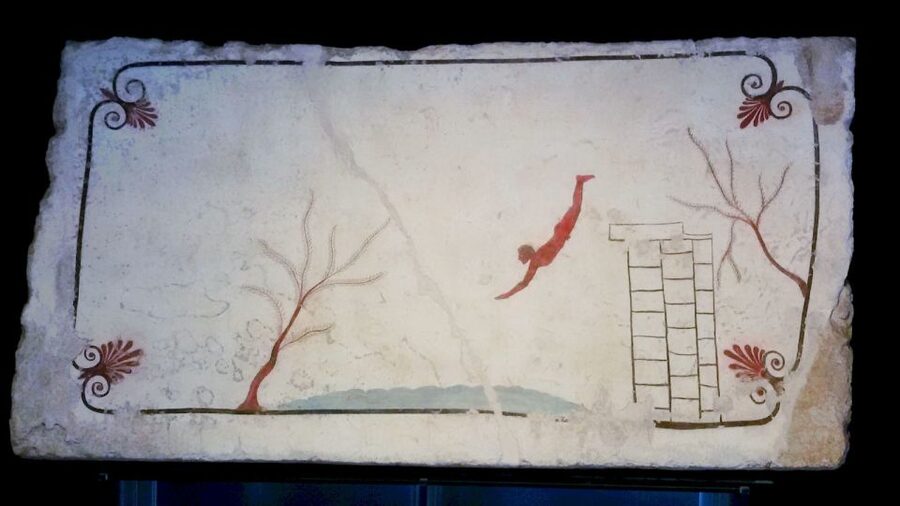
The museum’s most famous object is the Tomb of the Diver. It consists of five limestone slabs made from local travertine, plastered and decorated with figurative wall paintings using fresco technique.
The painting on the tomb’s upper slab shows a diver. That image gives the tomb its name and makes it one of Paestum’s most memorable objects. The museum visit is valuable because it brings human scale to the monumental temples. Outside, you see stone engineering. Inside, you see painted imagery, sculpture, and objects connected with the beliefs and daily life of the ancient community.
Do not treat the museum as a quick indoor finish. If the temples explain Paestum’s public face, the Tomb of the Diver and the other objects offer a more personal glimpse of the people who lived and died there.
What the $325.13 group price really means
The listed price is $325.13 per group of up to 25 people. That price covers the licensed guide, not admission tickets, food, or transportation.
For a large family, school group, or group of friends, the math can work well. Split among 10 people, the guiding cost is much easier to justify than it is for a couple. You are paying for a private visit and direct access to the guide, rather than joining an unknown group at a per-person rate.
For one or two people, the value is less automatic. The private format gives you a chance to ask questions and keep the explanation focused, but you should compare the cost with other guided options before booking.
Remember to add the entrance fees to your budget. The Archaeological Park and the National Archaeological Museum are not included, and you must also arrange your own way to Paestum. Food and drinks are not part of the experience either.
The best value comes when you care about interpretation. If you only want to walk among the ruins and read signs at your own pace, a guide may not be essential. If architecture and ancient history are your main reasons for coming, the explanation is the point of the purchase.
Timing, pace, and who will enjoy this tour
The tour lasts two hours, with starting times shown during the booking process. That makes it easy to fit into a larger Campania itinerary, but the short duration means you should arrive ready to begin.
You will cover outdoor ruins and an indoor museum in one visit. Wear practical footwear and be prepared for a walking route, though the supplied details do not specify the exact surface conditions or accessibility arrangements.
This tour suits you best if:
- You want the major highlights explained in one compact visit.
- You are traveling with a private group and can share the flat fee.
- You care about Greek temple design and want help reading the architecture.
- You want the museum and Tomb of the Diver included rather than seeing only the ruins.
- You prefer asking a guide direct questions in your chosen language.
It may suit you less if you want a slow, all-day archaeological study. Two hours is enough for an overview with substance, not unlimited time in every temple area and gallery.
The experience has a 4.5 rating from 11 reviews. The most useful pattern is the praise for very good explanations of architecture and history, clear answers to questions, and a cordial exchange that adds something beyond a memorized speech. That is exactly the kind of guide service Paestum needs.
Should you book the Paestum private tour?
Book it if you want the essential Paestum story delivered clearly and you can share the $325.13 group cost. The combination of Hera, Poseidon, and Athena, followed by the Roman forum, amphitheater, and museum, gives you a solid two-hour introduction to the site.
I would especially choose it for a larger private party or for anyone who wants help understanding classical architecture. The guide’s strongest role is turning impressive stones into readable buildings and connecting Greek sanctuaries with Roman civic life.
Think twice if you are visiting alone or as a couple and are watching every euro. Add admission and transport to the guide fee, then decide if the private format fits your budget. If it does, Paestum rewards the extra effort, and the Tomb of the Diver gives the visit a memorable finish.
FAQ
Where does the Paestum tour begin?
The tour begins at the entrance to the Archaeological Museum in Paestum.
Where does the tour end?
The activity ends back at the meeting point, at the Archaeological Museum entrance.
How long does the tour last?
The guided tour lasts two hours. Starting times depend on availability.
Which languages are available?
The live guide service is available in English, Italian, Spanish, French, and German.
Are entrance tickets included?
No. Tickets for the Archaeological Park and the National Archaeological Museum are not included in the tour price.
Is transportation included?
No. Transportation, pickup, and drop-off are not included.
Can I cancel the booking?
Yes. You can cancel up to 24 hours in advance for a full refund. You can also reserve now and pay later.
Temple visits we reviewed lately in Italy
- Rome: Temples, Squares & Markets Guided Walking Tour★ 4.8 · 26 reviews
- Rome underground hidden temples, ruins, and secret basilicas★ 3.7 · 21 reviews
- Rome: Tour of St. Clement’s Basilica Underground Temples★ 4.8 · 242 reviews
- Palermo to Siracusa: stop al Valley of Temples & Roman Villa★ 5.0 · 5 reviews
- Paestum: 2-Hour Greek Temples & Archaeological Museum★ 4.8 · 19 reviews
- Paestum: Temples and Museum Tour with Archaeologist Guide★ 5.0 · 14 reviews
- Neustift Monastery: Admission with audio guide★ 4.6 · 9 reviews
- Monreale: Guided tour of Cathedral, Monastery and Mosaics★ 4.3 · 29 reviews
Italy Temple Tours, compared.
Agrigento: Valley of the Temples Skip-the-Line Sunset Tour
Read our review →
Pantheon Elite Guided Tour – Rome’s Iconic Ancient Temple
Read our review →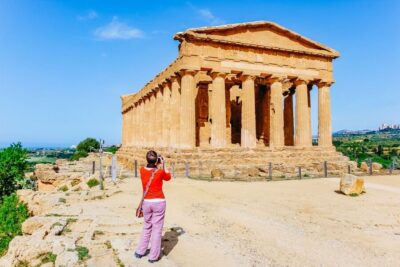
Palermo: Agrigento and the Valley of the Temples Day Tour
Read our review →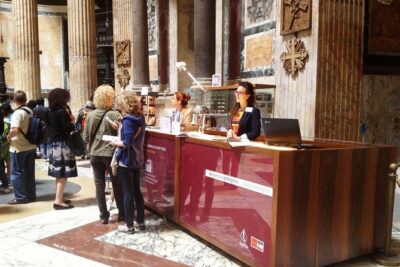
Rome’s Iconic Temple: Pantheon Audio Guided Tour with Fast Access
Read our review →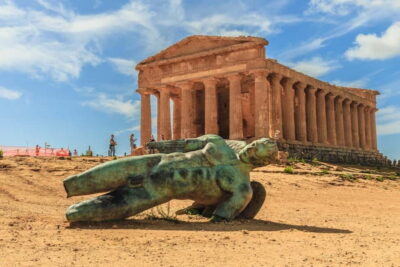
Agrigento: Valley of the Temples Ticket & App Audioguide
Read our review →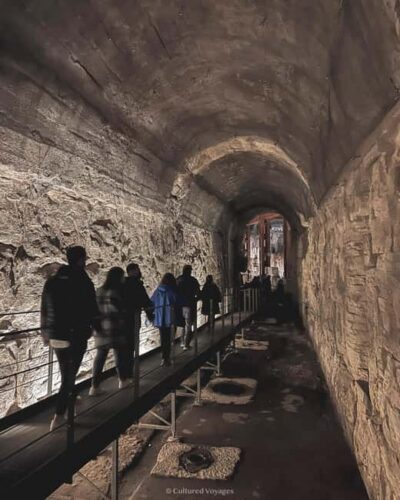
Colosseum Special Access Tour, with Ancient Temples & Tombs
Read our review →
Agrigento: Valley of the Temples E-Scooter Tour
Read our review →
Palermo: Valley of the Temples and Scala dei Turchi Day Trip
Read our review →This tour also ranks in