
Review · ITALY
Monreale: Guided tour of Cathedral, Monastery and Mosaics
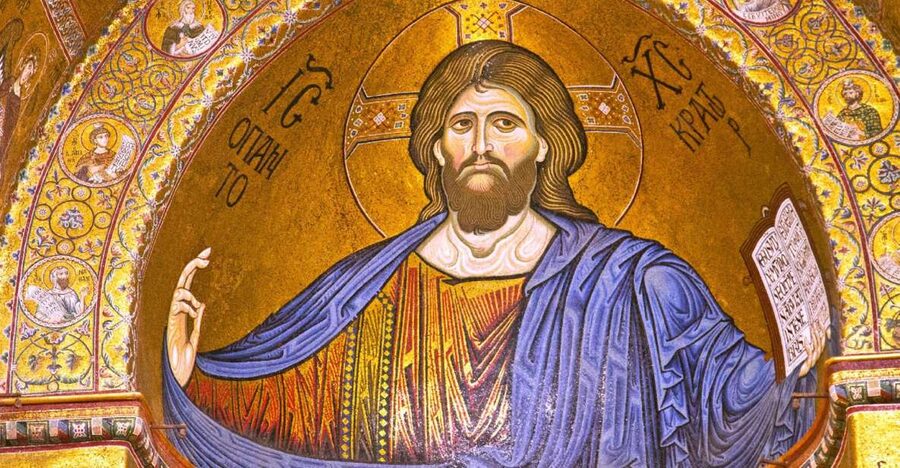
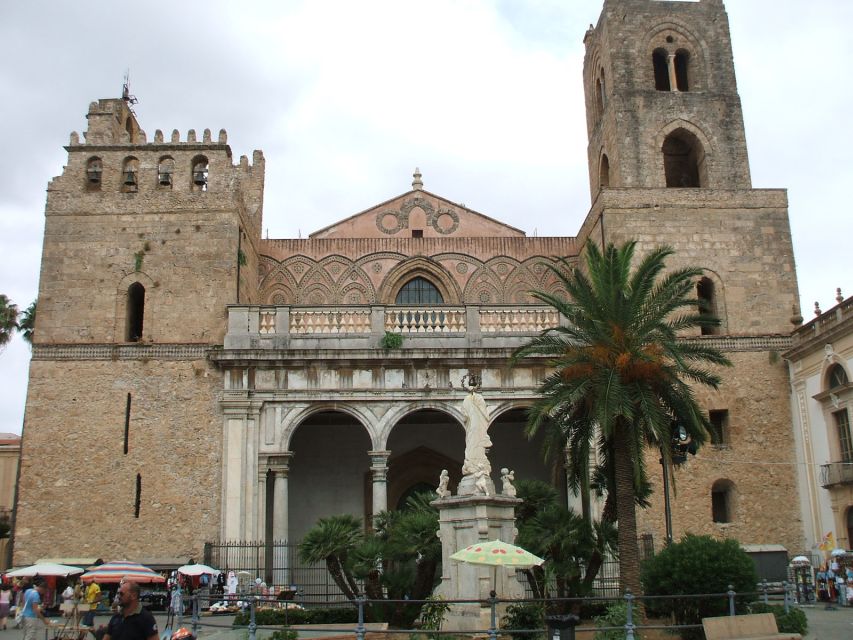
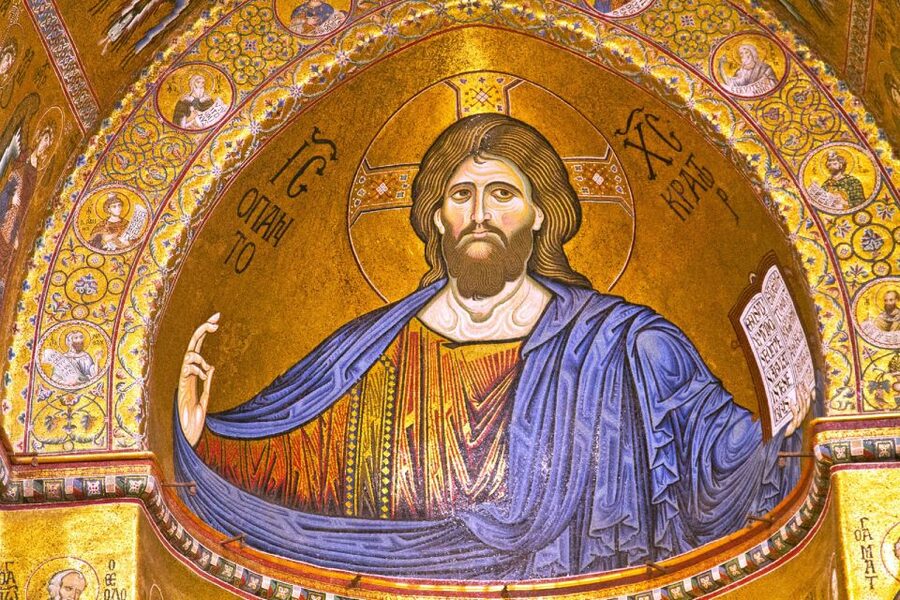
Monreale Cathedral saves its biggest surprise for the inside. Beyond the Norman exterior and bronze doors, the vast golden mosaics gather around Christ Pantocrator in the apse, where the image catches your eye from across the church. I like that the tour also includes the 12th-century Benedictine monastery and the cloister, rather than stopping at the cathedral entrance. I also like the private format, since a group of up to 25 can keep the visit focused on its own questions.
The main drawback is that the advertised price of $344.39 per group does not include the cathedral and cloister ticket. For a single person or couple, that can feel steep for a one-hour tour, though the cost becomes more reasonable when shared by a larger private group.
Key points at a glance
- Golden mosaics: See the Christ Pantocrator in the cathedral’s apsidal basin, the artistic high point of the visit.
- Norman, Romanesque, and Arabic design: Learn how several traditions meet in this 12th-century building.
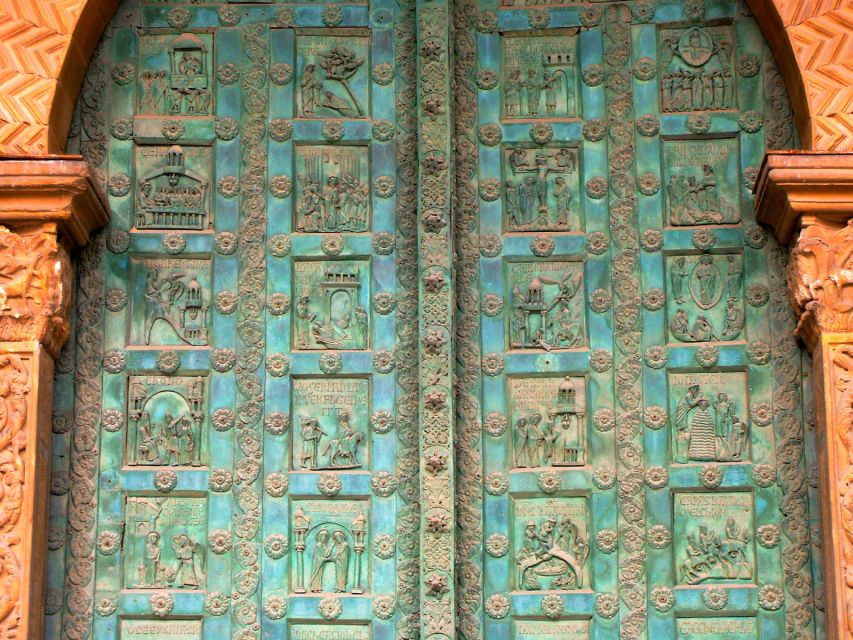
- Two historic bronze doors: Look for work by Bonanno da Pisa and Barisano di Trani.
- Benedictine cloister: Visit the monastery complex beside the cathedral, with its 12th-century setting.
- Conca d’Oro viewpoint: Finish with a view across Palermo’s famous basin of orange and citrus groves.
- Private multilingual guide: Tours are offered in English, Italian, French, or Spanish.
Why Monreale’s cathedral is worth the short trip from Palermo
Monreale sits about 5 kilometers from Palermo, on Mount Caputo at roughly 310 meters above sea level. That short distance makes it an easy addition to a Palermo stay, but the setting feels distinct from the city below. The town’s main prize is its cathedral, a UNESCO World Heritage monument since 2012.
You begin at Piazza Guglielmo II, directly by the cathedral entrance. That is useful because there is no long walk to find the guide or the main sight. The activity ends at the same meeting point, so you can continue exploring Monreale afterward or make your own way back toward Palermo.
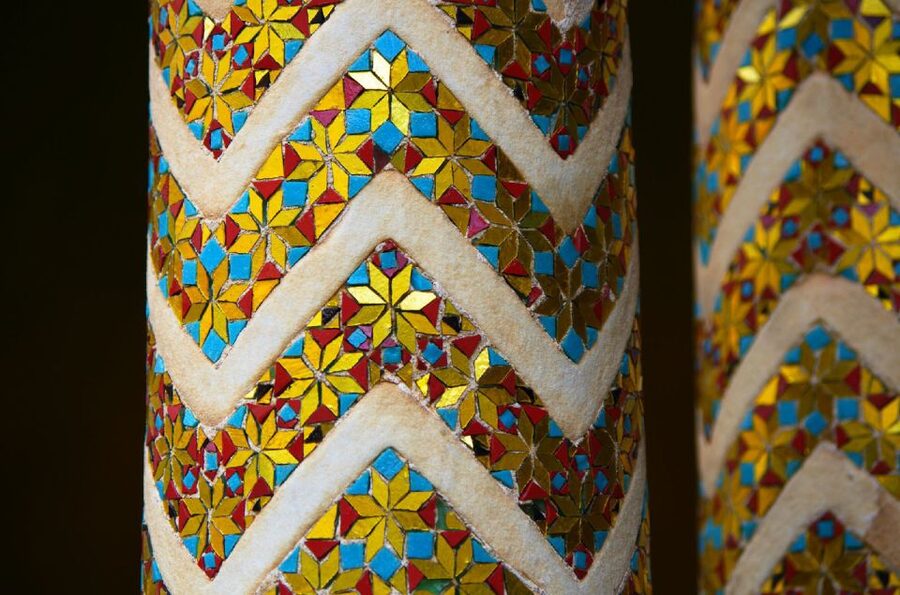
The cathedral dates from the 12th century and brings together several artistic traditions. Its design reflects northern European architecture, Romanesque art, and Arabic influence. The result is not a single, tidy style. Instead, you get a building shaped by the different cultures that influenced Sicily during the medieval period.
This is where a guide earns the fee. On your own, you can admire the gold and take photographs, but it is harder to understand why the cathedral looks the way it does. A good explanation helps you connect the building’s form with Sicily’s Norman past and the artistic influences around the Mediterranean.
More Temple Tours around Italy:
- Agrigento: Valley of the Temples Skip-the-Line Sunset Tour
★ 4.5 · 1,512 reviews - Pantheon Elite Guided Tour – Rome’s Iconic Ancient Temple
★ 5.0 · 1,447 reviews - Palermo: Agrigento and the Valley of the Temples Day Tour
★ 4.2 · 1,240 reviews
Reading the cathedral’s bronze doors
Before you focus on the mosaics, take time with the cathedral exterior. Two large bronze doors mark the entrance, and each is linked to a major medieval sculptor.
One set was made by Bonanno da Pisa. The other was made by Barisano di Trani, whose work also appears on the cathedrals of Ravello and Trani. These doors are not just grand entrances. They form part of the cathedral’s visual story, using carved scenes and decoration to prepare you for the art inside.
Your guide can point out the difference between the exterior and interior experience. Outside, the building presents weight, stone, and metal. Inside, the mood changes to light reflected from gold mosaic tesserae. That contrast is one of Monreale’s best features, and it helps you appreciate the interior rather than rushing straight toward the apse.
The visit is only one hour, so you should expect a focused introduction rather than a slow, detailed examination of every architectural feature. If bronze doors, medieval sculpture, or church architecture are major interests, use the guide’s time for questions that help you look more closely.
The golden mosaics and Christ Pantocrator
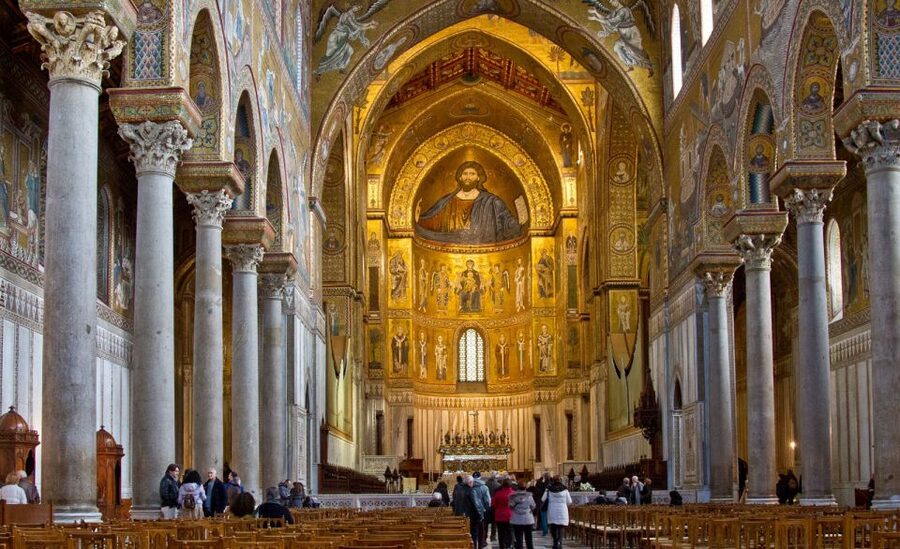
The cathedral interior is the tour’s main event. Gold mosaics cover much of the inside, and the decoration builds toward the image of Christ Pantocrator in the apsidal basin.
This central image gives the church its visual focus. The figure dominates the apse and represents the highest point of the cathedral’s figurative art. You will want to look upward and then step back when possible, since the scale matters. The mosaics are not a small collection of panels placed around the church. They create an extensive golden interior in which individual scenes form part of a larger religious program.
The guide’s role here is to help you read what you see. The mosaics can be dazzling at first, but a clear explanation of the historical setting and artistic choices gives the decoration more meaning. Margherita is specifically noted for explaining the historical importance of the site and the role of the Normans in Palermo’s past.
That detail matters because Monreale is not simply a beautiful church. It also shows how power, religion, and art worked together in medieval Sicily. The cathedral’s mixture of northern European, Romanesque, and Arabic elements reflects the island’s position at a crossroads.
You should also allow your eyes a moment to adjust. The gold is the obvious attraction, but the effect comes from the way the mosaics cover the interior and gather attention toward the apse. A hurried look from the doorway will not give you the full impression.
The 12th-century Benedictine monastery and cloister
After the cathedral, the tour continues into the ancient Benedictine monastery and its cloister. The monastery buildings flank the cathedral, so this part does not require a separate trip across town.
The cloister gives you a quieter counterpoint to the grand church. The cathedral aims your attention upward and outward through its scale and mosaics. The cloister is more enclosed and measured, allowing you to consider the daily religious setting connected to the cathedral.
The information provided does not specify every architectural detail of the cloister, so you should think of this part as a guided visit to the monastery complex rather than a promise of a particular feature or room. Your guide can explain how the monastery fits beside the cathedral and why the Benedictine presence matters to the site.
This stop is especially useful if you want more than a quick church visit. The cathedral supplies the visual drama, while the monastery gives the complex a human and institutional context. Together, they make the visit feel more complete.
Remember that the cathedral and cloister ticket is not included in the tour price. You will need to budget for that separately. Since the tour lasts one hour, check the current ticket arrangements and starting time when you book so you are ready at the meeting point.
Same sacred ground, another way to see it:
- Rome’s Iconic Temple: Pantheon Audio Guided Tour with Fast Access
★ 4.0 · 1,188 reviews - Agrigento: Valley of the Temples Ticket & App Audioguide
★ 4.3 · 1,160 reviews - Colosseum Special Access Tour, with Ancient Temples & Tombs
★ 4.8 · 747 reviews - Agrigento: Valley of the Temples E-Scooter Tour
★ 4.6 · 557 reviews
The view over the Conca d’Oro
The final highlight is the view over the Conca d’Oro, the broad basin associated with Palermo’s orange and citrus groves. From Monreale’s higher position, you can look across this famous setting below.
This viewpoint adds a welcome sense of place. Inside the cathedral, the focus is on medieval art and religious imagery. Outside, the view connects Monreale to the countryside and city around it. You see why the town’s position on Mount Caputo matters.
The viewpoint is not presented as a long scenic walk or a separate excursion. It is part of the guided visit, so expect a brief stop rather than a full sightseeing circuit. Still, it gives you a useful closing image after the darker interior and enclosed cloister.
Have your camera ready, but do not let the view replace the cathedral. The mosaics are the reason to make the trip, while the Conca d’Oro supplies the wider setting that helps you understand Monreale’s location.
What the one-hour format means
One hour is enough for a well-organized introduction to the cathedral, monastery, cloister, and viewpoint. It is not enough for a slow architectural study or a long independent visit inside each area.
I would choose this tour when I want a clear overview and historical explanation without giving up half a day. The private format also makes the hour more useful. Your group can ask questions instead of following a large mixed crowd, and the guide can adjust the emphasis within the time available.
The group limit is up to 25 people. That is private compared with a public group, but 25 is still a fairly large party for a one-hour indoor visit. If your group is small, the arrangement should feel more personal. If you are booking for a large family, school group, or organized party, the fixed group price may offer better value.
The guide languages are English, Italian, French, and Spanish. Confirm the language you need at booking. A strong explanation is particularly helpful here because the building combines several traditions and the cathedral’s visual detail can be overwhelming without direction.
Is the $344.39 group price good value?
The listed price is $344.39 for a private group of up to 25, before the cathedral and cloister ticket. That works out to about $13.78 per person if the group reaches the maximum, though a smaller group pays more per person.
For a large party, the price can make sense. You receive a private licensed guide, a focused route, and explanations in one of four languages. The group can divide the cost, which makes the experience more attractive for families or organized groups who want to stay together.
For one or two people, the calculation is different. The price is high for a one-hour guided visit, especially after adding admission. You are paying for privacy and a dedicated guide rather than simply for entry. If you mainly want to see the mosaics and are comfortable exploring without context, you may prefer to buy admission and visit independently.
I see the best value for people who care about interpretation, have a larger group, or want a simple visit with a fixed meeting point. The price is less persuasive for budget-conscious solo visitors and couples.
Meeting point, timing, and practical planning
The tour begins at Piazza Guglielmo II Square, at the Monreale Cathedral entrance. The activity ends back at the same meeting point. Hotel pickup and drop-off are not included, and food and drinks are also excluded.
Plan your route to Monreale separately from the guided visit. The experience information confirms that the town is about 5 kilometers from Palermo, but it does not include transportation. You should allow enough time to reach Piazza Guglielmo II before the selected starting time.
Starting times depend on availability. Since the tour lasts one hour, it can fit neatly into a day that also includes Palermo, but you should not treat the hour as the total time needed for the outing. You still need time to get to Monreale, obtain or arrange the required ticket, and decide what to do after the tour.
The meeting point is simple, but the ticket detail is important. Because admission is separate, confirm exactly what you need before arrival. That avoids losing part of the guided hour to arrangements.
Cancellation is flexible up to 24 hours before the activity for a full refund. You can also reserve now and pay later, which helps if you are building a Sicily itinerary before every detail is fixed.
Who should book this Monreale visit?
I would recommend this tour to you if you want the meaning behind the mosaics, not just a quick look at gold walls. It suits a family group, a larger party, or anyone who prefers a private guide and a short, organized visit.
It is also a good match if you are staying in Palermo and want to see a major sight just outside the city without committing to a full-day trip. The combination of cathedral, monastery, and viewpoint gives you three different experiences in a compact format.
You may want to skip it if you are traveling alone on a tight budget, since the private group price can be hard to justify for one person. You may also prefer more time if you want to study every mosaic, door, or cloister detail at your own pace.
The strongest reason to book is the guide’s historical explanation. Margherita’s clear account of the Normans and Palermo’s past is exactly the kind of context that can turn a beautiful building into a memorable place. Just confirm the language, starting time, and separate admission cost before paying.
FAQ
Where does the Monreale tour begin?
It begins at Piazza Guglielmo II Square, at the entrance to Monreale Cathedral.
Where does the activity end?
The activity ends back at the meeting point near the cathedral entrance.
How long does the guided visit last?
The guided visit lasts one hour.
What languages are available?
The live guide is available in English, Italian, French, and Spanish.
Is this a private tour?
Yes. The activity is offered as a private group tour for up to 25 people.
Is the cathedral admission included?
No. The cathedral and cloister ticket is not included in the tour price.
Is transportation from Palermo included?
No. Hotel pickup and drop-off are not included.
What sights are included in the visit?
The tour covers Monreale Cathedral, its golden mosaics, the 12th-century Benedictine monastery and cloister, and a viewpoint over the Conca d’Oro valley.
Can I cancel for a refund?
Yes. You can cancel up to 24 hours in advance for a full refund.
Temple visits we reviewed lately in Italy
- Rome: Temples, Squares & Markets Guided Walking Tour★ 4.8 · 26 reviews
- Rome underground hidden temples, ruins, and secret basilicas★ 3.7 · 21 reviews
- Rome: Tour of St. Clement’s Basilica Underground Temples★ 4.8 · 242 reviews
- Palermo to Siracusa: stop al Valley of Temples & Roman Villa★ 5.0 · 5 reviews
- Paestum Tour: Best Preserved Temples in the World (UNESCO)★ 4.5 · 11 reviews
- Paestum: 2-Hour Greek Temples & Archaeological Museum★ 4.8 · 19 reviews
- Paestum: Temples and Museum Tour with Archaeologist Guide★ 5.0 · 14 reviews
- Neustift Monastery: Admission with audio guide★ 4.6 · 9 reviews
Italy Temple Tours, compared.
Agrigento: Valley of the Temples Skip-the-Line Sunset Tour
Read our review →
Pantheon Elite Guided Tour – Rome’s Iconic Ancient Temple
Read our review →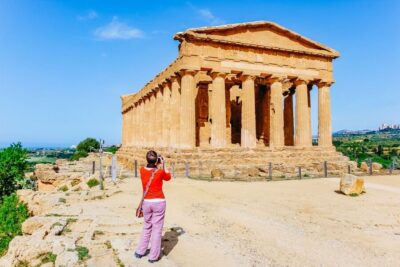
Palermo: Agrigento and the Valley of the Temples Day Tour
Read our review →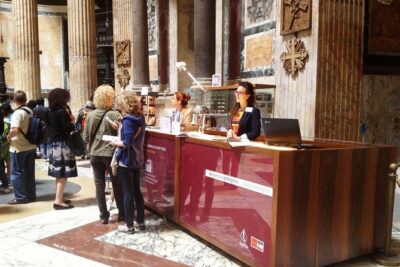
Rome’s Iconic Temple: Pantheon Audio Guided Tour with Fast Access
Read our review →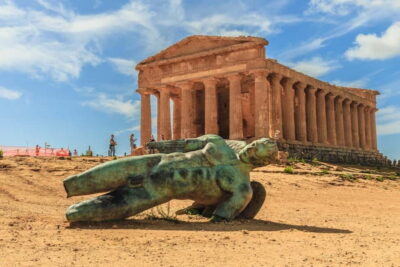
Agrigento: Valley of the Temples Ticket & App Audioguide
Read our review →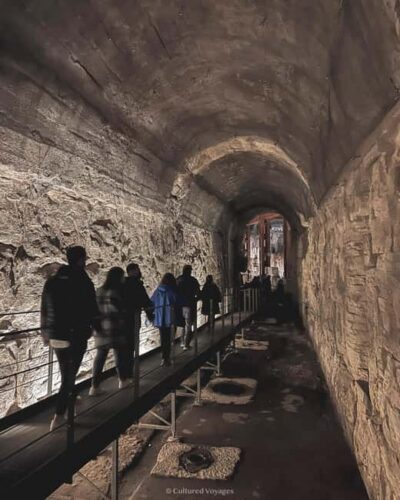
Colosseum Special Access Tour, with Ancient Temples & Tombs
Read our review →
Agrigento: Valley of the Temples E-Scooter Tour
Read our review →
Palermo: Valley of the Temples and Scala dei Turchi Day Trip
Read our review →This tour also ranks in