
Review · ITALY
Paestum: Temples and Museum Tour with Archaeologist Guide
Paestum gives you something rare in Italy: three remarkably preserved Greek temples set beside ancient streets, with far fewer layers of later construction than you find at many famous archaeological sites. On this private two-hour tour, an archaeologist guide connects the stonework, sculpture, and painted tombs into one clear story.
I like the expert-led pace and the fact that you visit both the Archaeological Park and the museum. I also like the skip-the-line entry, which keeps a short visit focused on the site rather than the ticket queue. Guides Angelo, Angela, and Luciana have each earned praise for clear explanations, thoughtful answers, and a pace that lets you look closely.
The main drawback is practical: transportation is not included, and the tour begins at the entrance to the Archaeological Museum on Via Magna Graecia 917. If you are staying away from Paestum, you must arrange your own way there. The listed price is $260.56 for a private group of up to one person, so check the exact booking total for your party before paying.
Key points at a glance
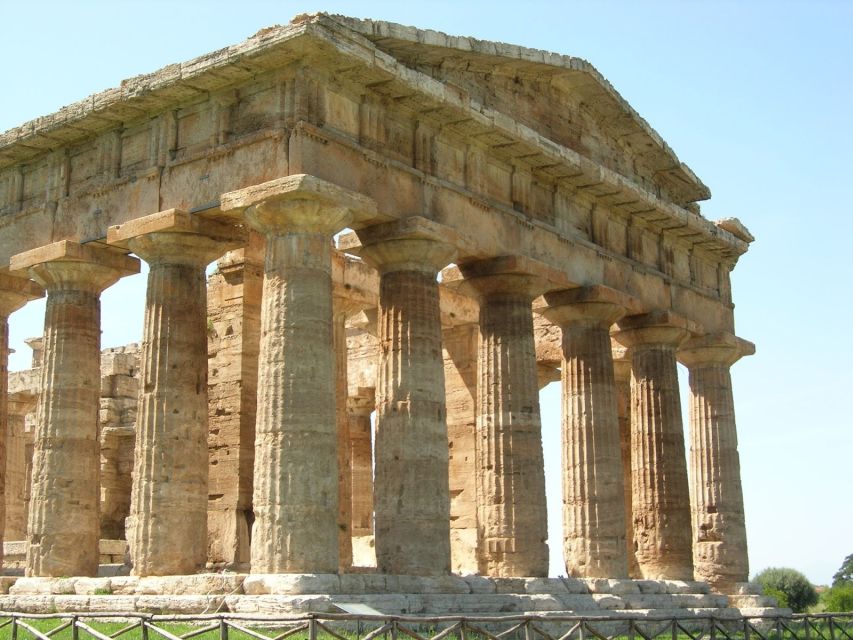
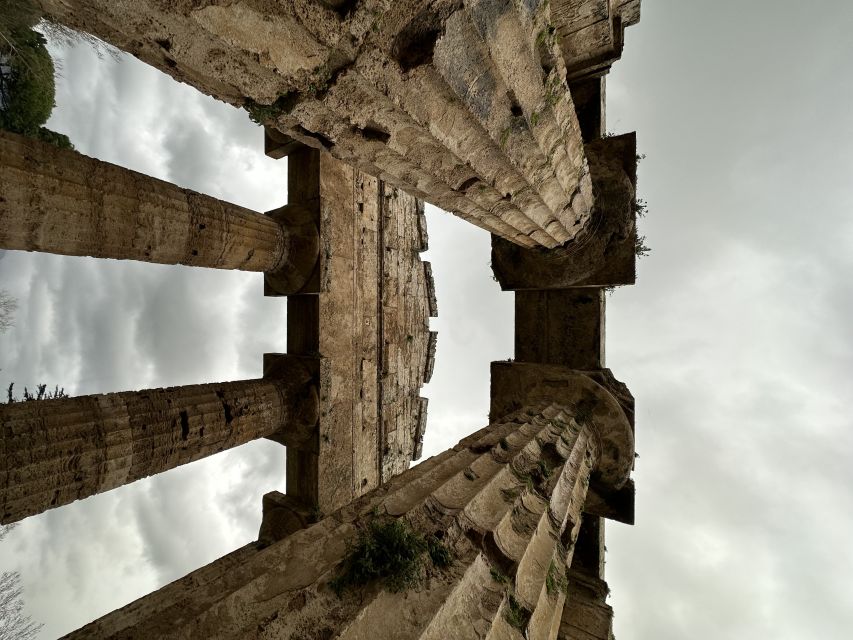
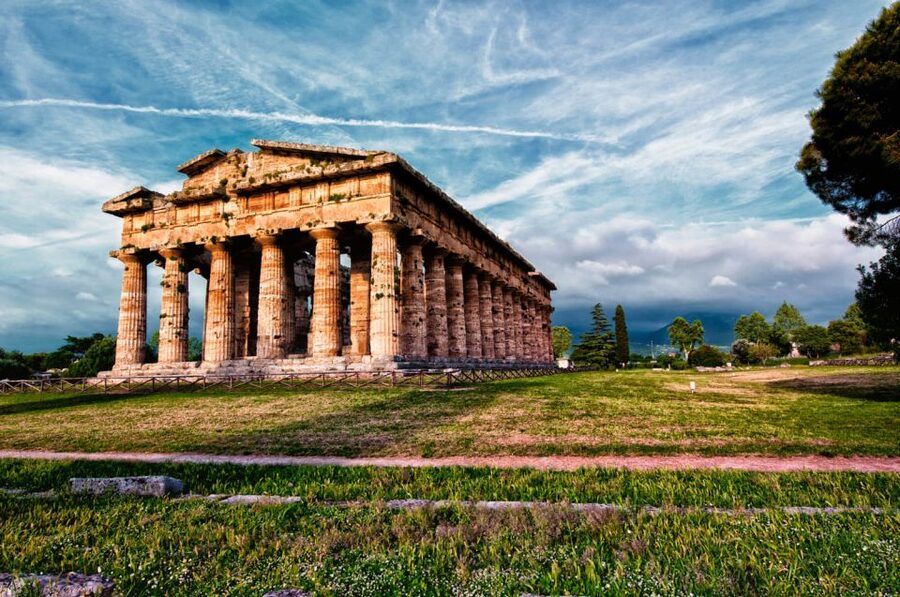
- Three Greek temples in one archaeological park: See the Temple of Neptune, Temple of Ceres, and Basilica, all built in the Doric style.
- A guide with an archaeology background: Your guide explains the ruins rather than leaving you to decode a field of columns on your own.
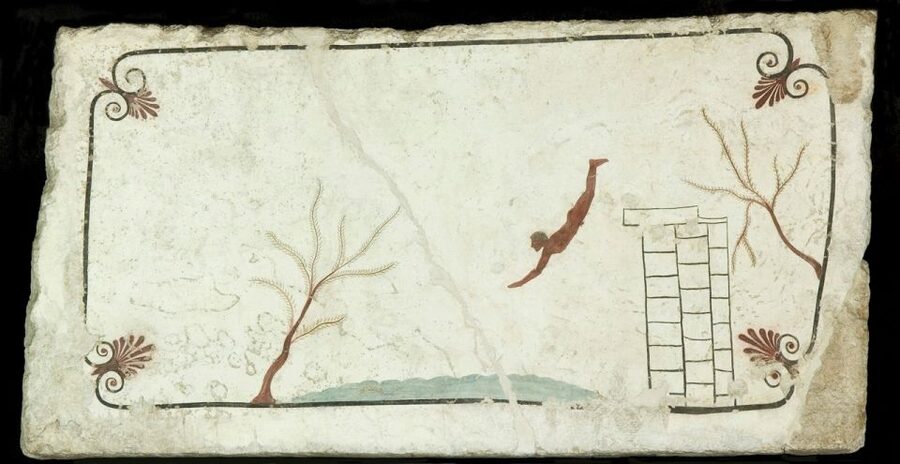
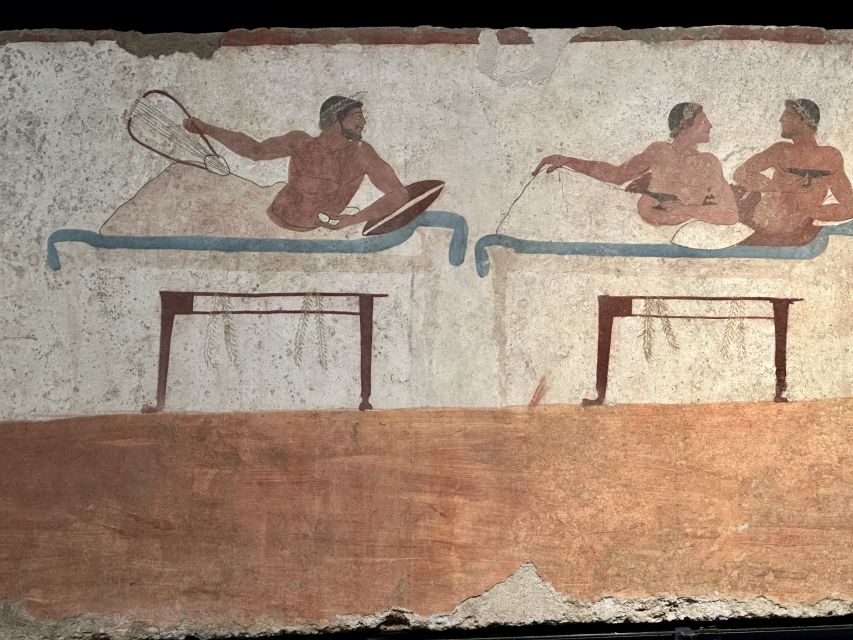
- The Tomb of the Diver: The National Archaeological Museum holds this famous painted tomb in remarkably complete condition.
- Park and museum together: The tour links the buildings with the sculpture, decoration, and tomb paintings now displayed indoors.
- Private group format: You can ask questions and keep the pace suited to your group.
- Four language choices: Tours are offered in English, Italian, Spanish, and French.
Why Paestum deserves two focused hours
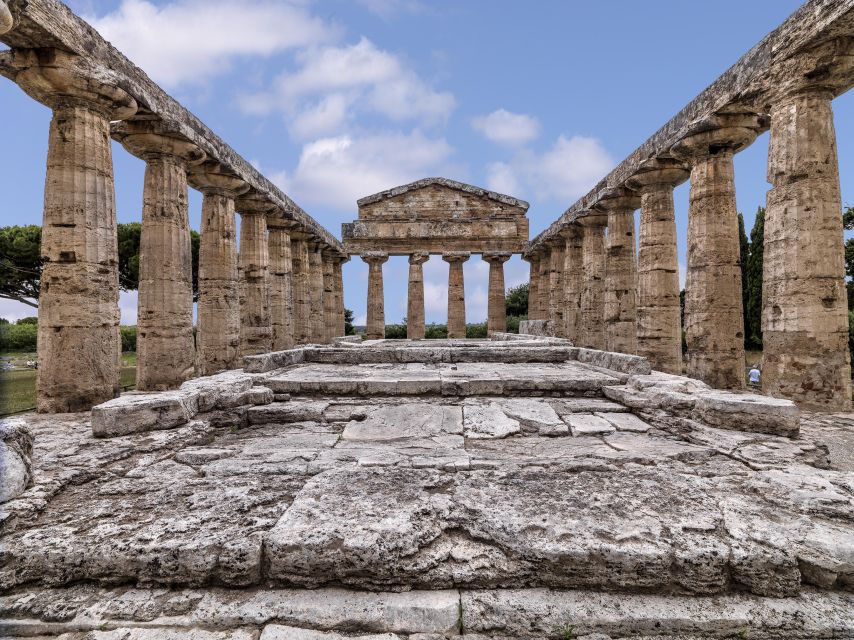
Paestum is one of those places that rewards context. The temples are impressive on their own, but their meaning becomes much clearer when an archaeologist points out the Doric features, explains how the buildings functioned, and separates the Temple of Neptune from the Temple of Ceres and the Basilica.
You will walk through an ancient settlement and stop at the major religious buildings. The experience is not simply a photo stop among old columns. It is a guided look at how Greek architecture took root in southern Italy and how much of that work has survived.
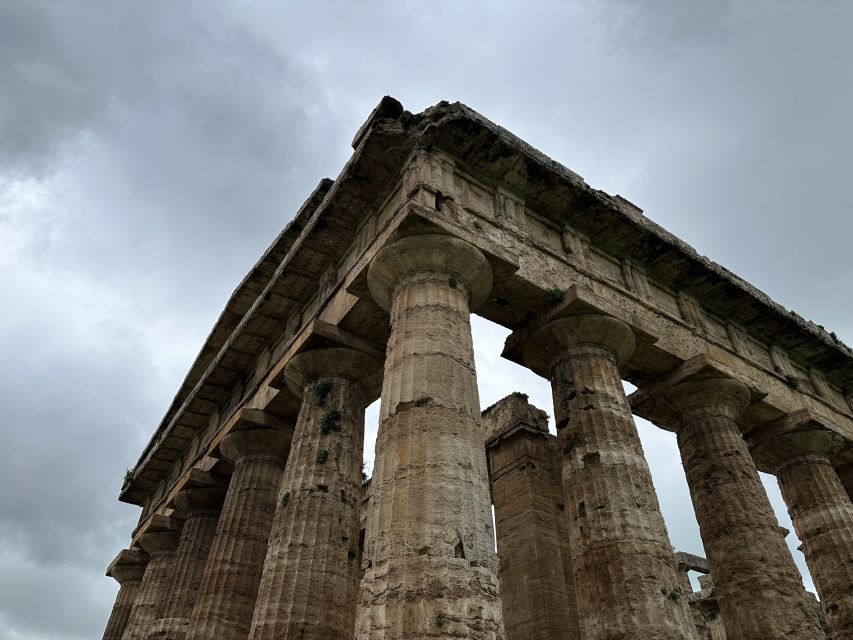
The three temples are the main reason to come. Their heavy columns, orderly spacing, and broad stone forms make the site easy to read, even if you have never studied classical architecture. Your guide can help you notice proportions and details that are easy to miss when you explore alone.
The park also gives you a sense of scale. You are not looking at one isolated monument behind a barrier. You move through an archaeological area with streets, temple remains, and open space between the buildings. That makes the visit feel like a place once used by a community, not just a collection of ruins.
More Valley of the Temples Tours in Italy:
- Agrigento: Valley of the Temples Skip-the-Line Sunset Tour
★ 4.5 · 1,512 reviews - Palermo: Agrigento and the Valley of the Temples Day Tour
★ 4.2 · 1,240 reviews - Agrigento: Valley of the Temples Ticket & App Audioguide
★ 4.3 · 1,160 reviews
The Temple of Neptune and Paestum’s Doric power
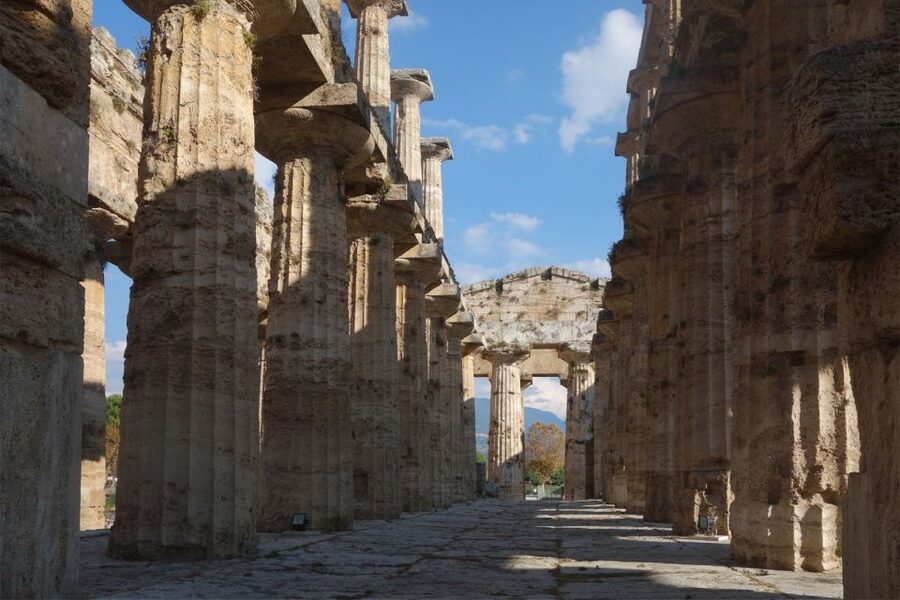
The Temple of Neptune is the park’s headline sight. Its strong Doric design gives it a solid, almost severe appearance, but the survival of so many columns and architectural elements makes it unusually easy to picture as a complete building.
Your guide’s role matters here. Without explanation, you might simply admire the rows of columns. With an archaeology guide, you can ask why the temple looks the way it does and how its design fits the Greek religious buildings at Paestum.
The tour description identifies the temples as roughly 2,500 years old. That age is difficult to grasp while standing in front of them, which is precisely why a good explanation helps. Angelo, Angela, and Luciana are specifically praised for clear introductions, answers to questions, and a comfortable pace.
This is also the point where the tour feels most valuable for visitors who want more than quick photographs. A guide can keep the architectural details from becoming a blur of columns and broken stone. You still have time to look and take pictures, but you have a framework for what you are seeing.
The Temple of Ceres and the Basilica
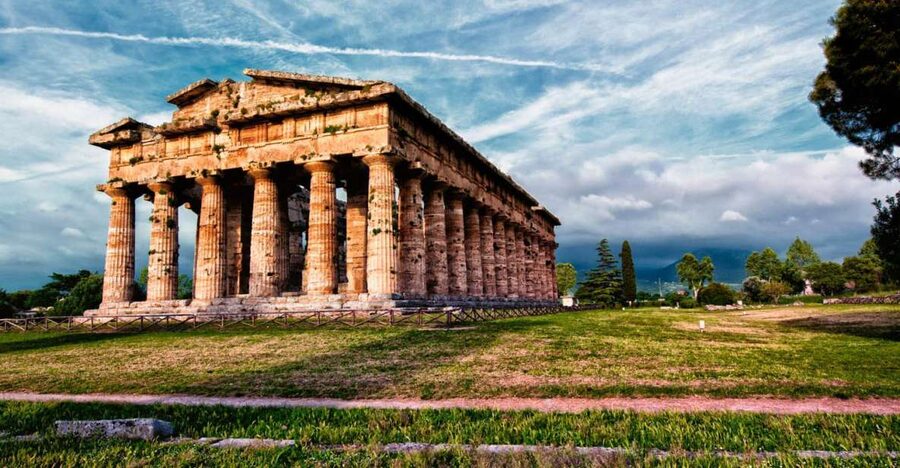
The Temple of Ceres offers another look at Doric architecture, while the Basilica adds a useful contrast within the same park. Seeing the buildings together lets you compare their forms instead of judging each one in isolation.
The name Basilica can be confusing to modern visitors. Here, it refers to an ancient building at Paestum, not a Christian church in the usual sense. This is a good example of why a guide can prevent misunderstandings with a short explanation at exactly the right moment.
At two hours, you should expect a focused visit rather than an exhaustive study of every corner of the archaeological area. That is a strength if you have a full Campania schedule. It is a limitation if you want to wander slowly, stop at every remaining wall, or spend a long time photographing the site.
I would treat the tour as a strong introduction. It gives you the major temples, the essential context, and the museum afterward. If Paestum is your central interest, you may want additional independent time, but the guided portion covers the highlights efficiently.
Inside the National Archaeological Museum
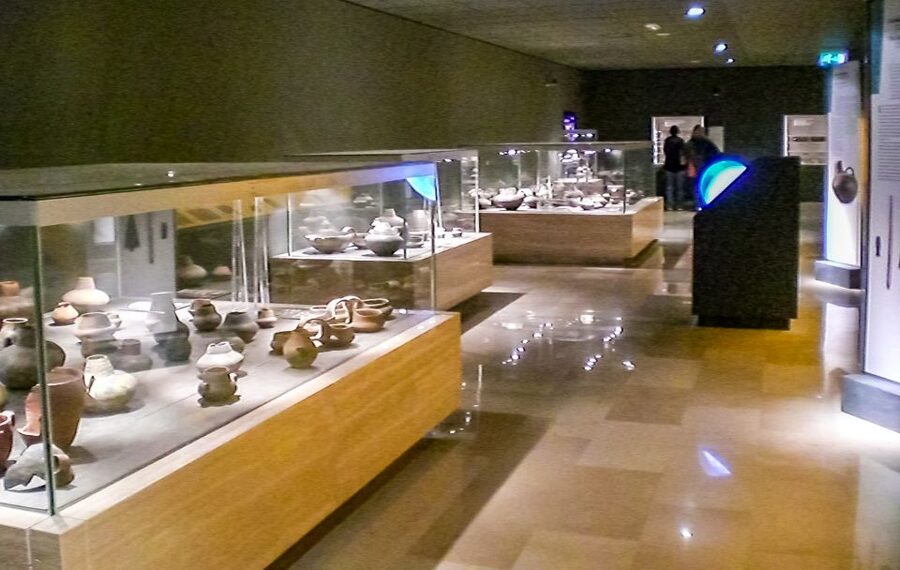
The museum is not an optional add-on in spirit, even though it comes after the outdoor ruins. It explains what the temples looked like when they were decorated and used, and it brings smaller objects close enough for you to study.
You can see relics that served as temple decoration, along with painted tombs from Campania. These pieces add color and human detail to the pale stone buildings outside. The park shows the architecture at full scale. The museum shows the art and objects that complete the picture.
The Tomb of the Diver is the museum’s most memorable piece. Its painted burial chamber has survived in remarkably complete condition, and the image has become one of Paestum’s defining treasures. The subject is unusual and visually striking, so it is worth listening carefully when your guide explains what you are looking at.
I especially like the order of this tour: temples first, museum second. You first see the structures in their setting, then encounter the decoration and painted tombs indoors. That sequence helps you connect the large outdoor remains with the smaller works in the collection.
More Museum Visits in Italy:
- Paestum: Private Tour of Greek Temples and Archaeological Museum
★ 5.0 · 60 reviews - Paestum: 2-Hour Greek Temples & Archaeological Museum
★ 4.8 · 19 reviews - Montserrat Museum and Monastery Entry Ticket
★ 4.5 · 1,740 reviews - Lisbon: Belem, Jeronimos Monastery, and Coach Museum Tour
★ 4.8 · 478 reviews
What the guide adds to the visit
An archaeologist guide changes the experience from a self-guided walk into a conversation. You can ask about construction, religious use, artistic details, or the relationship between the park and museum. The private format gives you a better chance to shape that conversation around your interests.
Angelo is praised for giving a strong introduction, answering questions, and keeping a pleasant pace. Angela is praised for her passion for history, while Luciana is singled out for making the information enjoyable and helping Paestum make a particularly strong impression.
Those details matter because guide quality is central to a short archaeological tour. A two-hour visit leaves little room for a long-winded lecture or a guide who rushes from one stop to the next. You want someone who can explain enough, pause when a question comes up, and keep the route moving.
The available languages are English, Italian, Spanish, and French. When booking, choose the language that lets you ask questions comfortably. That will make a bigger difference here than it would on a simple sightseeing walk.
A private group for travelers who like questions
The private format is useful for couples, solo visitors, and small parties who do not want to follow a large group. You can ask for clarification without waiting for a whole crowd, and the guide can adjust the pace to your level of interest.
If you already know Greek architecture, you can use the time to ask more specific questions. If the subject is new to you, you can request a basic explanation of the temples and tombs without feeling that you are holding up a group.
The price requires a careful look. The listed cost is $260.56 for a group up to one person. Since the price structure can be unusual for a private experience, check the final amount for your booking dates and party size. The value is strongest if you want a private archaeologist guide and plan to make good use of the museum and question time.
For a solo visitor, the cost may feel high compared with a standard shared tour. For someone who values private attention, a clear explanation, and an efficient route through two major sites, it may be a fair trade. Tickets are included, and skip-the-line entry removes one small but useful delay.
Meeting point and timing
The meeting point is at the entrance to the Archaeological Museum of Paestum, at Via Magna Graecia 917. The tour returns to the same meeting point, so you should plan your arrival and onward travel around that location.
Transportation is not included. You need to reach the museum entrance yourself, and you should allow enough time to find the meeting point before the scheduled start. The tour lasts two hours, with the archaeological park and museum both included.
Starting times vary, so check availability when you select your date. A morning visit may fit well before a longer afternoon plan, while another start time could work better if Paestum is one stop in a wider Campania itinerary.
Food and drinks are not included. That is not a major issue for a two-hour visit, but remember to plan refreshments separately if you are spending more time in the area.
Free cancellation is available up to 24 hours before the activity for a full refund. You can also reserve now and pay later, which is useful when your Campania schedule is still changing.
Who will enjoy this Paestum tour most
I would recommend this experience to you if you want the major sights explained clearly in a limited amount of time. It suits visitors who care about ancient architecture, Greek art, archaeology, or the story behind the monuments rather than only taking photographs.
It is also a good choice for first-time visitors to Paestum. You receive an introduction to the park, see the three main temples, and then visit the museum’s most important works. The route gives you a sensible foundation for exploring on your own later.
Families with older children may appreciate the private format and the ability to ask questions. The Tomb of the Diver also gives the museum visit a memorable focal point, especially for anyone who finds painted burial art more engaging than architectural remains.
I would hesitate if you mainly want unstructured wandering or need transportation from another town. The experience does not provide a transfer, and two hours may feel short if you want to examine every part of the archaeological area at leisure.
My booking recommendation
Book this tour if Paestum is important to your Campania plans and you want the temples and museum tied together by an archaeologist guide. The strongest reasons are the private group format, skip-the-line tickets, the four language choices, and the chance to see the Temple of Neptune, Temple of Ceres, Basilica, and Tomb of the Diver in one compact visit.
Before booking, confirm the price for your group, arrange your own transport to Via Magna Graecia 917, and choose a starting time that gives you room to arrive early. If those details work, this is a focused and worthwhile way to meet Paestum’s ancient Greek architecture without treating the site like a quick stop on a checklist.
FAQ
Where does the Paestum tour begin?
You meet at the entrance to the Archaeological Museum of Paestum on Via Magna Graecia 917.
Where does the activity end?
The tour ends back at the same meeting point.
How long does the tour last?
The activity lasts two hours.
What does the tour include?
The tour includes the guide’s services and skip-the-line entrance tickets.
Is transportation included?
No. Transportation is not included, so you must reach the museum meeting point independently.
Which languages are available?
The live tour guide is available in English, Italian, Spanish, and French.
Can I cancel the booking?
You can cancel up to 24 hours in advance for a full refund. Reserve now and pay later is also available.
Temple visits we reviewed lately in Italy
- Rome: Temples, Squares & Markets Guided Walking Tour★ 4.8 · 26 reviews
- Rome underground hidden temples, ruins, and secret basilicas★ 3.7 · 21 reviews
- Rome: Tour of St. Clement’s Basilica Underground Temples★ 4.8 · 242 reviews
- Palermo to Siracusa: stop al Valley of Temples & Roman Villa★ 5.0 · 5 reviews
- Paestum Tour: Best Preserved Temples in the World (UNESCO)★ 4.5 · 11 reviews
- Paestum: 2-Hour Greek Temples & Archaeological Museum★ 4.8 · 19 reviews
- Neustift Monastery: Admission with audio guide★ 4.6 · 9 reviews
- Monreale: Guided tour of Cathedral, Monastery and Mosaics★ 4.3 · 29 reviews
Italy Temple Tours, compared.
Agrigento: Valley of the Temples Skip-the-Line Sunset Tour
Read our review →
Pantheon Elite Guided Tour – Rome’s Iconic Ancient Temple
Read our review →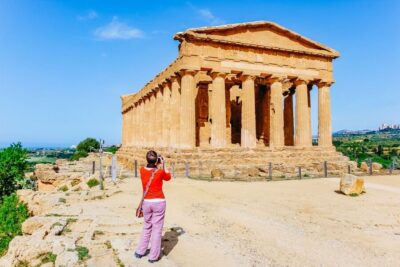
Palermo: Agrigento and the Valley of the Temples Day Tour
Read our review →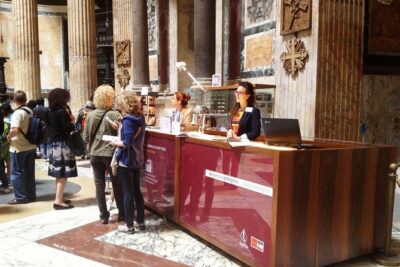
Rome’s Iconic Temple: Pantheon Audio Guided Tour with Fast Access
Read our review →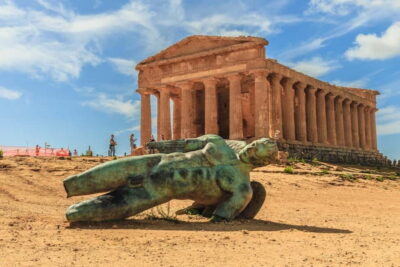
Agrigento: Valley of the Temples Ticket & App Audioguide
Read our review →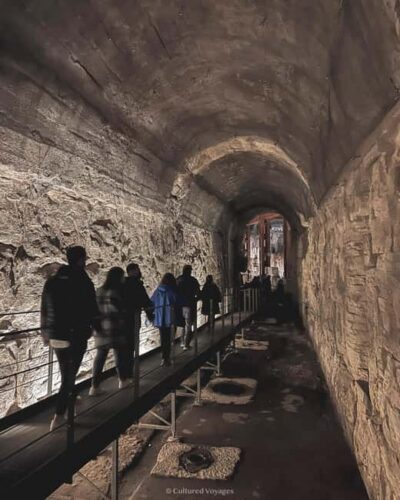
Colosseum Special Access Tour, with Ancient Temples & Tombs
Read our review →
Agrigento: Valley of the Temples E-Scooter Tour
Read our review →
Palermo: Valley of the Temples and Scala dei Turchi Day Trip
Read our review →This tour also ranks in