
Review · SEOUL
Danyang Tour:Guinsa Temple & Bobaljae & Cheongpung Cable Car
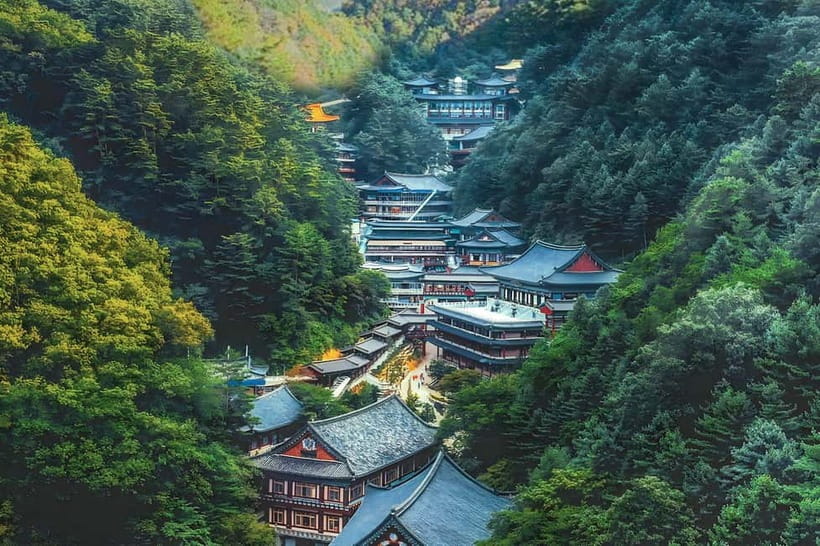
Guinsa Temple is the star here: a huge Buddhist complex tucked into a wooded valley, reached by a long day trip from Seoul. I like the contrast between quiet temple buildings and the more dramatic finish at Cheongpung Hoban Cable Car, where you glide above Cheongpungho Lake. I also like that the day includes Bobaljae Road, not just a quick stop at a famous building.
The tradeoff is simple: this is a full sightseeing day with a long road transfer and plenty of walking. Stairs are part of the temple visit, and the bus commentary can be hard to hear at times. If you want an easy, slow-paced outing, this may feel busy. If you want places that are awkward to reach without a car, the $105 price is easier to justify.
Key points to know before booking
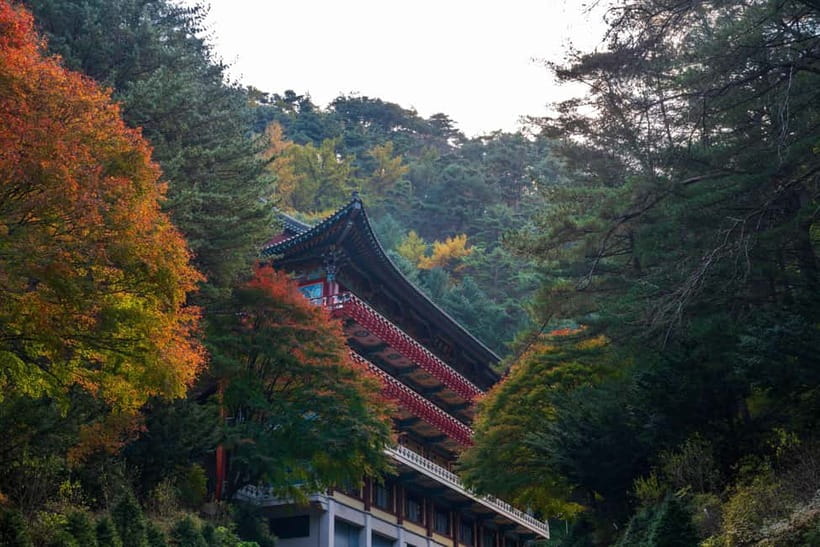
- Guinsa Temple is the cultural heart of the day, with monumental buildings, wooded paths, stairs, and free vegetarian temple food.
- Bobaljae Observatory adds a scenic road trip, especially in autumn when the trees change color.
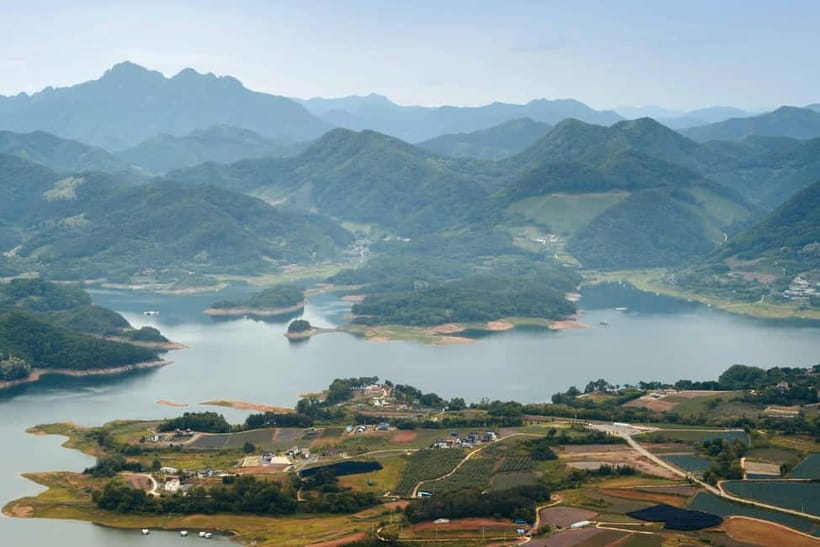
- Cheongpung Cable Car gives the day a strong finish, with wide views over Cheongpungho Lake.
- Guides can make a real difference, and past departures have included Yohan, Jun, Edward, Michael, Mario, Johann, and K.
- The $105 fare covers the important basics, including admission, round-trip Seoul transport, and an English or Chinese-speaking guide.
- Comfortable shoes are essential, and the tour needs at least four participants to operate.
Why this Danyang day trip is worth your time
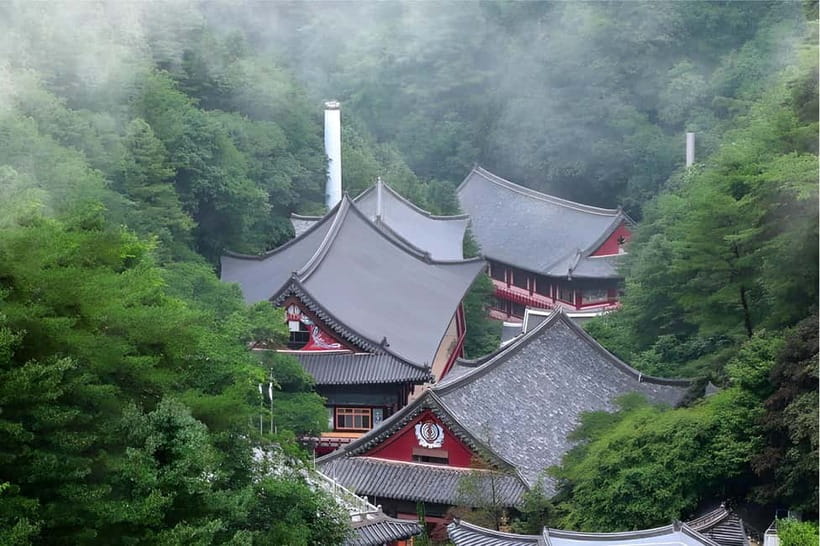
Danyang and the surrounding mountain country offer a very different side of South Korea from Seoul. Instead of apartment towers, shopping streets, and subway stations, you get forest roads, Buddhist architecture, lake views, and a slower rhythm.
What makes this outing useful is the transport. Guinsa Temple, Bobaljae, and Cheongpung are not easy places to link by public transportation from Seoul in one day. A guided vehicle removes the need to study rural bus schedules or work out transfers between scattered sights.
I would choose this trip for its range. You begin with culture, continue through mountain scenery, and finish with a cable car ride. That mix keeps the day from feeling like a series of similar viewpoints.
The setting also changes with the season. In autumn, Bobaljae Road is especially appealing, with colorful trees lining the drive. The cable car views should also be at their best when the surrounding hills are filled with fall color, although exact conditions depend on the date.
More Temple Tours around Seoul:
- Seoul: Palace, Temple and Market Guided Foodie Tour at Night
★ 4.9 · 750 reviews - Seoul: Mt Seorak + Naksansa Temple or Nami Island Group Tour
★ 4.7 · 422 reviews - Best Things to Do – Half Day Seoul Trip (Seoul Palace & Temple)
★ 5.0 · 190 reviews
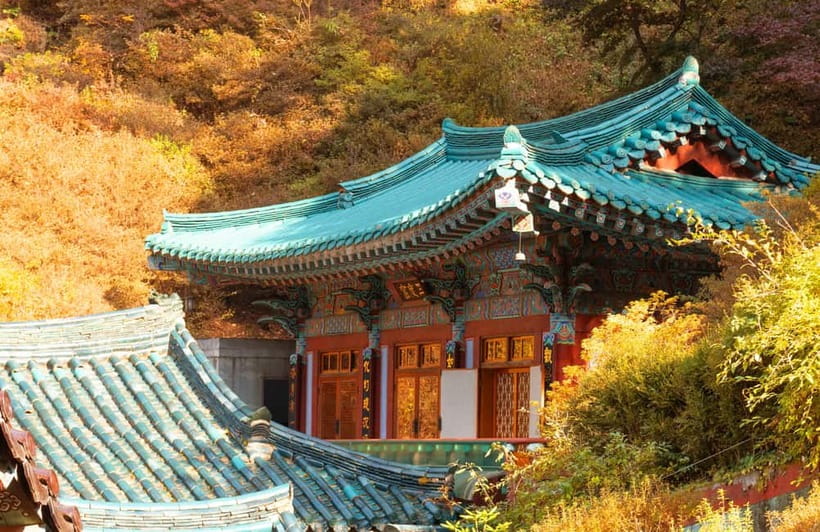
Entering Guinsa Temple, the day’s main attraction
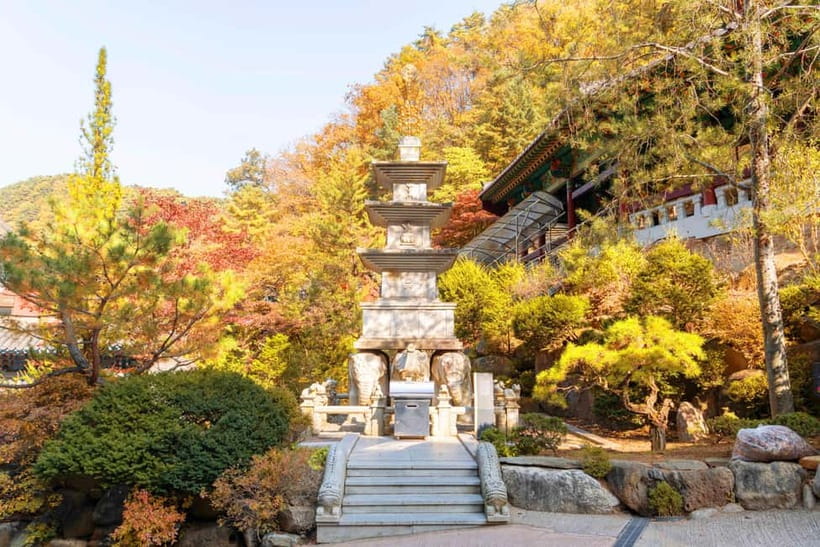
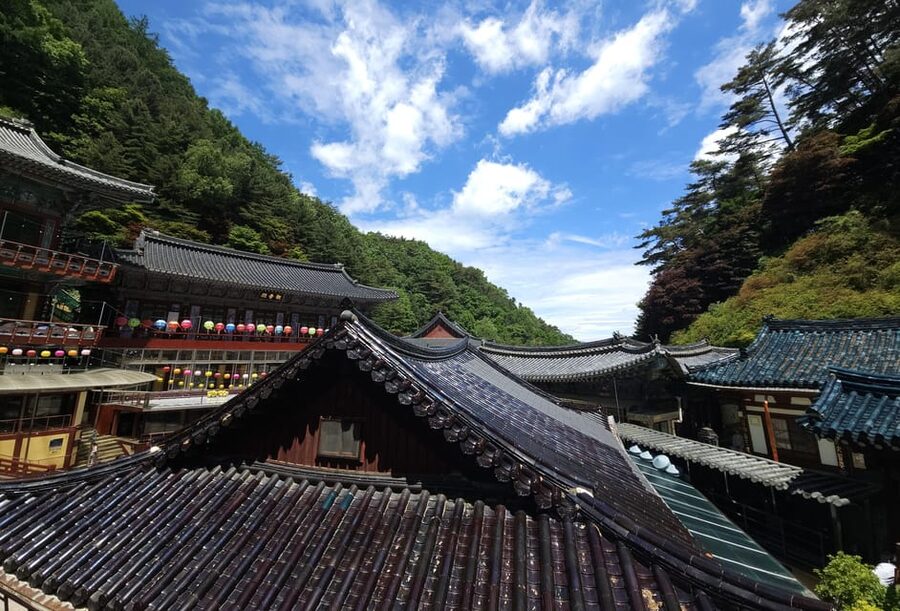
Guinsa Temple is described as Korea’s largest temple, and its scale is the first thing you notice. This is not a single small shrine beside a road. It is a substantial Buddhist complex extending into a wooded valley, with multiple buildings and long routes between them.
Your guide helps turn the visit from a photo stop into a cultural visit. Guides such as Yohan, Jun, Michael, and Mario have been praised for explaining the buildings and the places you pass. The guide roster can vary, so do not book expecting one particular person unless your departure specifically confirms that.
The temple’s setting is a major part of its appeal. The surrounding trees soften the large structures and give the visit a calm, secluded feel. You can take photographs, look at the arrangement of the buildings, and learn how the different parts of the complex fit together.
Allow yourself to pay attention to the practical feel of the site. You are not simply stepping off a bus, taking one picture, and leaving. The visit includes walking and stairs, so the temple is more rewarding if you are comfortable moving uphill and over uneven routes.
A particularly unusual touch is the chance to eat vegetarian temple food for free. This gives you a small taste of daily Buddhist practice rather than another standard restaurant meal. Do not expect a broad restaurant menu or a long dining experience. The value is in trying food connected with the temple setting.
I would make Guinsa the priority of the day. If weather or traffic affects the schedule, this is the stop I would want protected. Several guides have also helped people take photographs, which is useful at a large site where it can be hard to frame both the buildings and the valley.
The walking reality at Guinsa Temple
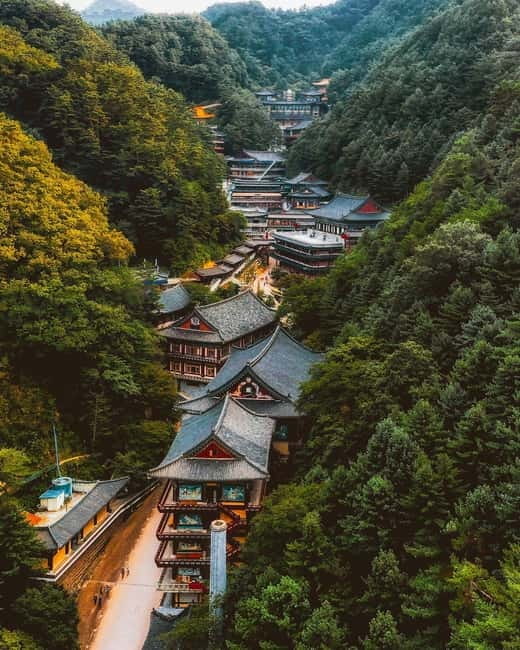
You should take the mobility warning seriously. The outing involves a considerable amount of walking and stairs, and the temple visit is not designed as a short, flat stroll.
Wear shoes with good support. Comfortable walking shoes matter more here than stylish footwear, especially if you plan to explore beyond the first buildings. You may also want to keep your day bag light, since carrying unnecessary weight will make the uphill sections less pleasant.
This is not necessarily a difficult hike, but it does require basic fitness. The tour information does not provide a precise walking distance, so I would not book it expecting a fully accessible sightseeing route.
The reward is that the walking helps you experience the temple as a place, not just an isolated monument. You see the buildings in sequence, with trees and slopes shaping the views. That sense of arrival is part of what makes Guinsa so memorable.
Following Bobaljae Road to the observatory
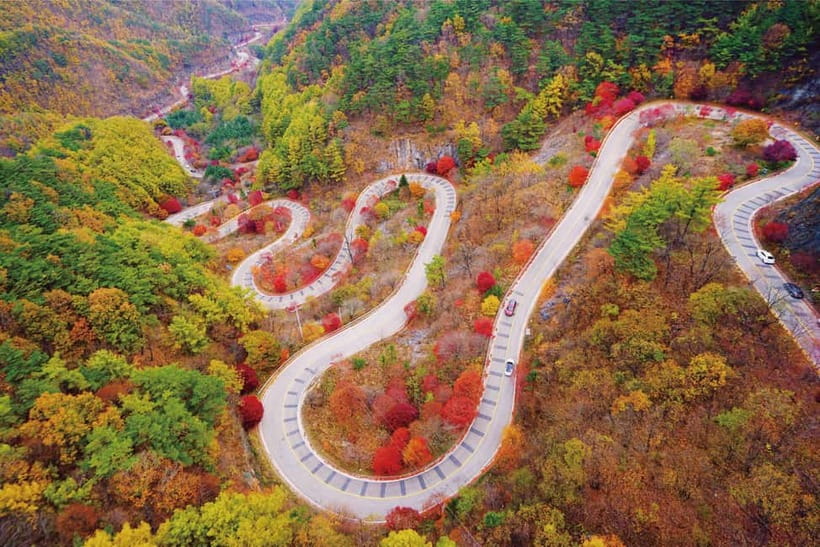
Bobaljae is both a road experience and a photo stop. The drive takes you through mountain scenery before reaching an observatory where you can take pictures.
That matters because the bus ride is not dead time. You get a chance to see the countryside between the major attractions, and the road itself becomes part of the tour. In autumn, Bobaljae Road is particularly attractive, with changing leaves adding color to the route.
At the observatory, expect a scenic pause rather than a large attraction with many facilities. The appeal is the view and the chance to photograph the surrounding countryside. Your guide can help with pictures, an especially welcome service for solo visitors and couples who want a photo together.
The timing of fall color is never guaranteed. If autumn scenery is your main reason for booking, keep your dates flexible and understand that nature does not follow a tour calendar. Even outside peak color, the road provides a useful change of pace after the temple.
Some descriptions of the day and guide comments also refer to a cave and a film location among the memorable sights. Since the exact order and inclusion can depend on the departure plan, ask your guide at the start what will be covered that day.
Same sacred ground, another way to see it:
- Seoul Night Palace & Market Food Tour with Vehicle
★ 5.0 · 275 reviews - Seoul: War Memorial, Jogyesa Temple & Tapgol Park Tour
★ 4.8 · 56 reviews - Seoul: Vegan Temple Food Class, Jogyesa & Changdeokgung Tour
★ 4.6 · 34 reviews - Seoul: UNESCO Sites tour: Palace, Shrine & Bukchon Village
★ 4.8 · 26 reviews
Crossing Cheongpungho Lake by cable car
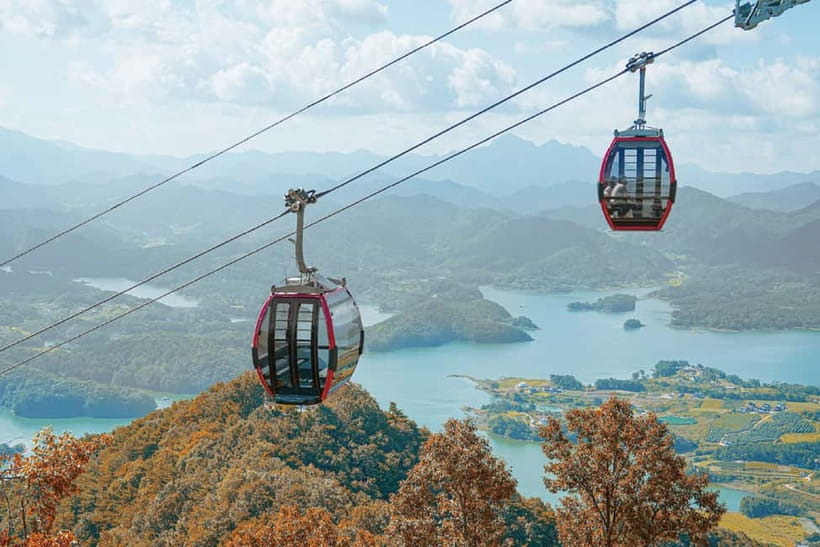
The Cheongpung Hoban Cable Car supplies the most dynamic part of the outing. You ride above Cheongpungho Lake, with views opening across the water and surrounding hills.
After the quieter temple visit and the road through the countryside, the cable car feels like a change of gear. You are no longer walking among buildings or watching scenery pass from a bus window. The elevated ride gives you a broader view and a clear sense of the scale of the lake country.
I would save a few minutes to look rather than photograph constantly. The views change as the cabin moves, and the best angle may not be the first one you see. Autumn should be particularly striking, with fall color spread across the hills around the lake.
The ride is included in the admission covered by the tour, so you do not have to budget separately for the main attractions. That helps the $105 cost feel more reasonable, especially because the cable car is one of the day’s main reasons to make the long journey from Seoul.
The cable car is also the part most likely to appeal to people who want a little excitement in a culture-focused day. It is not an extreme activity, but it gives the itinerary motion and height. If you dislike heights, keep that in mind before booking.
What the guides add to the day
A good guide is important on this route because the sights are spread out and the bus time is significant. The guide can explain what you are seeing, give context at Guinsa, help with photos, and keep the group moving between stops.
The guide teams connected with this experience have included Yohan and Jun, Yohan and Edward, Michael and Mario, and Johann with K. Feedback has repeatedly singled out the guides for useful explanations, friendly help, and good group spirit.
Do not assume every departure will have the same guide. The tour is offered in English and Chinese, and the guide assigned to your date may differ. At least one practical complaint is worth noting: it can sometimes be difficult to hear the commentary on the bus. Sit nearer the front when possible, and ask the guide to repeat anything important.
Small groups can make the experience better. One departure had a particularly small group, which allowed more personal attention and made it easier to ask questions. The published minimum is four participants, so the tour may be cancelled if that number is not reached 48 hours before departure.
Is $105 a fair price from Seoul?
At $105 per person, this is not a cheap local outing. It is a full regional day trip that includes round-trip transport from Seoul, admission to the attractions, and an English or Chinese-speaking guide.
The value comes from convenience. Trying to connect a large temple, a mountain observatory, and a lake cable car on your own would require careful planning, multiple transport legs, and enough time to avoid missing the return journey. The tour puts those pieces together in one day.
Meals and drinks are not included, apart from the opportunity to try the vegetarian temple food. You should budget for any other food, drinks, and personal purchases. The free temple meal is a pleasant cultural feature, but it should not be treated as a full meal plan for the day.
I think the fare is fairest for visitors staying in Seoul who want to see beyond the capital without renting a car. It is less compelling if you are already based near Danyang or Cheongpung and can visit these places independently.
The option to reserve now and pay later gives you some flexibility. You can also cancel up to 24 hours in advance for a full refund, according to the stated conditions. Read the final booking terms for your selected option, since meeting points can vary.
Who will enjoy this tour most?
I would recommend this day trip to you if you want several kinds of scenery in one outing. It suits people who enjoy temples, mountain roads, photography, autumn color, and a cable car ride.
It is also a good match for first-time visitors who want cultural context without arranging every transfer themselves. A guide can explain the temple buildings and help you understand the sequence of stops.
You should think twice if you need a slow schedule, have trouble with stairs, or dislike long time in a vehicle. The exact departure and return times are not provided here, but the distance from Seoul and the number of stops make this a substantial day.
Solo visitors may appreciate the guide’s help with photos and the social ease of a small group. Couples and families can also enjoy the mix, though younger children may find the temple walking and road time tiring.
Practical advice for a better day
Wear comfortable shoes and bring a light layer. The tour moves between a wooded temple, an open observatory, a bus, and a cable car, so conditions can feel different from stop to stop.
Keep your phone or camera ready for Bobaljae Road and the cable car, but do not spend the entire day looking through a screen. The best part of the route is the change from close-up temple details to wide views over the hills and lake.
At the start, confirm the order of the stops, meal arrangements, and where to meet after each visit. Since the meeting point depends on the option booked, check your booking details carefully before departure.
If you care strongly about autumn color, ask how conditions look when you book or contact the provider. The route is scenic year-round, but Bobaljae and the cable car should be especially attractive when the foliage is changing.
Should you book the Guinsa and Cheongpung tour?
Book it if your idea of a good day includes a major temple, scenic driving, a memorable cable car ride, and a guide who can handle the transport from Seoul. Guinsa Temple is the reason to go, while Bobaljae and Cheongpungho Lake give the day variety.
Skip it if you want a short excursion, dislike stairs, or prefer to control every stop and meal yourself. The $105 price buys convenience rather than luxury, and meals are extra.
For most visitors who want to see a less urban side of Korea without wrestling with rural connections, I think the tour is a strong choice. Start early, wear sensible shoes, sit close enough to hear the guide, and give Guinsa the attention it deserves.
FAQ
Where does the tour start and finish?
The meeting point can vary depending on the option you book. The activity ends back at the meeting point.
What does the $105 price include?
The price includes admission to the attractions, round-trip transfers from Seoul, and an English or Chinese-speaking tour guide.
Are meals and drinks included?
Meals and beverages are not included. You may have the opportunity to try vegetarian temple food for free at Guinsa Temple, but you should plan separately for other food and drinks.
Is the tour available in English?
Yes. The tour is offered with an English or Chinese-speaking guide.
How much walking is involved?
Some attractions involve considerable walking and stairs. Comfortable shoes are strongly recommended, and you should be fit enough for the walking required.
Can the tour be cancelled if too few people book?
Yes. At least four participants are required for the tour to depart. If the minimum is not met 48 hours before departure, the tour will be cancelled and you will be notified by email or message.
Temple visits we reviewed lately in Seoul
- Seoul Sunrise & Sunset Hike + Temple & K-Food Adventure★ 4.8 · 6 reviews
- Seoul: UNESCO Sites tour: Palace, Shrine & Bukchon Village★ 4.8 · 26 reviews
- Seoul: War Memorial, Jogyesa Temple & Tapgol Park Tour★ 4.8 · 56 reviews
- Seoul: Vegan Temple Food Class, Jogyesa & Changdeokgung Tour★ 4.6 · 34 reviews
- Seoul: Temple & Starfield COEX Mall Gourmet Tour in Gangnam★ 4.7 · 22 reviews
- Seoul: Night Bongeunsa Temple Guided Tour★ 5.0 · 11 reviews
- Seoul: 4-Hour Guided Tour to Palace, Bukchon, Jogyesa Temple★ 5.0 · 3 reviews
- Gyeongbokgung Palace, Jogyesa Temple and Bukchon village★ 5.0 · 12 reviews
Seoul Temple Tours, compared.
Seoul: Palace, Temple and Market Guided Foodie Tour at Night
Read our review →
Seoul: Mt Seorak + Naksansa Temple or Nami Island Group Tour
Read our review →
Seoul Night Palace & Market Food Tour with Vehicle
Read our review →
Best Things to Do – Half Day Seoul Trip (Seoul Palace & Temple)
Read our review →
Seoul: War Memorial, Jogyesa Temple & Tapgol Park Tour
Read our review →
Seoul: Vegan Temple Food Class, Jogyesa & Changdeokgung Tour
Read our review →
Seoul: UNESCO Sites tour: Palace, Shrine & Bukchon Village
Read our review →
Seoul: Temple & Starfield COEX Mall Gourmet Tour in Gangnam
Read our review →This tour also ranks in