
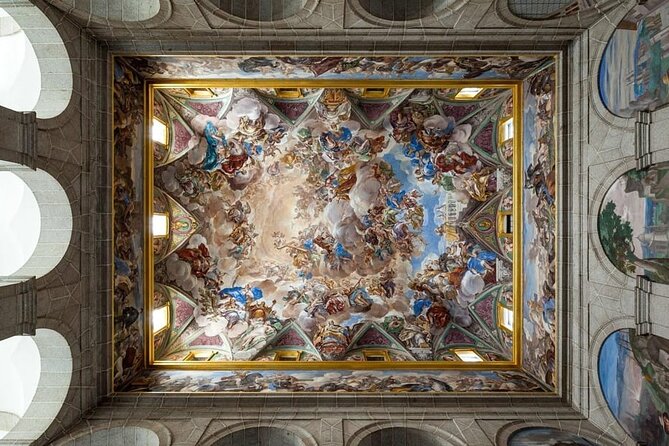
Review · MADRID
San Lorenzo de El Escorial Monastery Private Tour
The most striking part of this visit is the way El Escorial brings royal power, religious devotion, art, and death into one enormous complex. You move from Philip II’s library to the solemn Royal Pantheon, then into the rooms where the king lived and died. It is not just a grand building. It is a window into how Spain’s rulers wanted to be remembered.
I like the private format, since your group can stay together and ask questions without being lost in a large crowd. I also like the guide, Isabella Trébede, whose style is warm, direct, and full of stories about art, palace life, and the people behind the monument. The main drawback is practical: transport is not included, and the building has stairs and structural barriers that make the tour unsuitable for visitors with mobility impairments.
Key points to know before you book
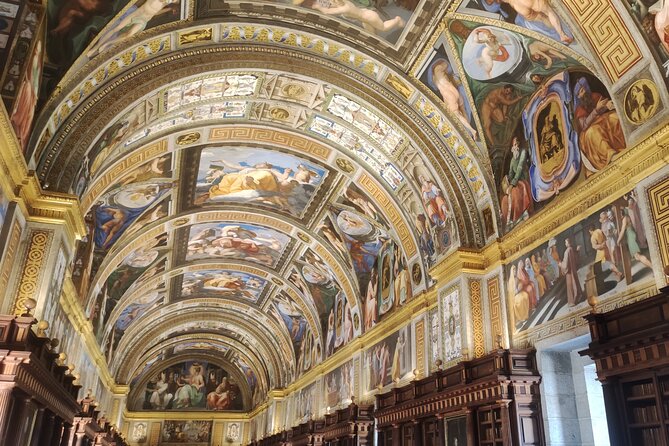
- Philip II’s library is a major highlight: Its books, design, and royal purpose give the tour an unusually personal connection to Spain’s past.
- The Royal Pantheon changes the mood: This underground burial site has a solemn, almost mysterious feel and contains the remains of Spanish kings and royalty from the 16th century onward.
- Isabella Trébede leads the English tour: Her approach mixes historical facts, art, cultural context, and personal stories without turning the visit into a lecture.
- The tour lasts about 2 hours 30 minutes: That gives you enough time for the main rooms, but the complex contains more than any single visit can cover.
- Admission and headsets are included: You do not need to manage the entry ticket, and the headset helps you hear the guide clearly.
- You must arrange your own transport: The meeting point is in San Lorenzo de El Escorial, not central Madrid, and the tour ends where it begins.
Why El Escorial deserves time outside Madrid
San Lorenzo de El Escorial is one of those places that can feel overwhelming if you arrive without a plan. The monastery is vast, its rooms serve very different purposes, and the building carries several layers of meaning at once. A guide helps you connect the architecture to Philip II, the Habsburg dynasty, the Catholic Church, and Spain’s royal burial traditions.
This is not a quick photo stop. The visit moves through religious spaces, royal rooms, art-filled halls, and the burial chambers beneath the complex. I like that range. You get grand public rooms, but also quieter spaces that show how a king lived and worked.
The tour is offered in English and is private for your group. That matters at a place with so much to take in. You can ask Isabella to explain a painting, repeat a point, or spend more time on the library or pantheon. The advertised duration is approximately two and a half hours, though one visit with Isabella ran close to three hours when the group stayed engaged.
The setting also gives you a reason to linger after the tour. San Lorenzo de El Escorial is described as pleasant for walking and eating, so you can make the monastery part of a half-day outing instead of rushing straight back to Madrid.
More Private Temple Tours in Spain
- Montserrat Monastery Small Group or Private Tour Hotel pick-up
★ 5.0 · 5,144 reviews - Barcelona: Montserrat Private Trip with Monastery Ticket
★ 5.0 · 74 reviews - Private tour: San Lorenzo de El Escorial Monastery
★ 5.0 · 20 reviews
Entering the Royal Basilica
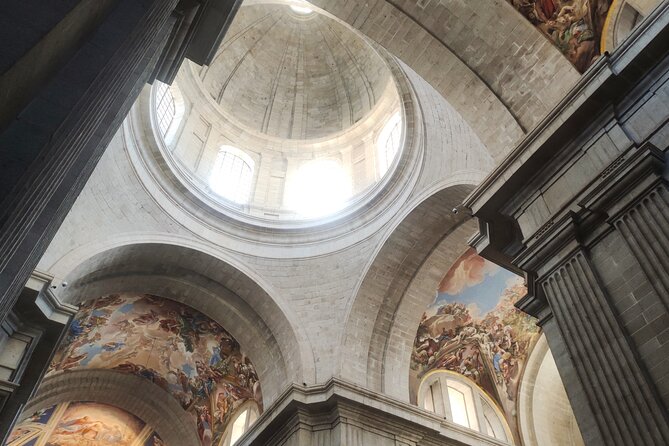
The Royal Basilica is one of the tour’s essential stops. It gives you the clearest sense of the monastery as a center of royal faith and ceremony. Expect a grand interior rather than an intimate chapel, with the scale and formality that fit a royal foundation.
Your guide explains the place within the wider story of El Escorial. That context is useful because a large basilica can otherwise become a blur of stone, decoration, and religious imagery. Isabella’s style, as described by her past clients, focuses on clear explanations and human stories rather than a long list of dates.
There is one important scheduling issue. The basilica closes during Mass. On Sundays and religious holidays, it is closed for the entire morning. If that happens during your visit, Isabella extends the tour in the Library or Chapter Rooms instead.
That substitution does not make the tour worthless, but it does change the balance of the experience. If the basilica is important to you, check the timing carefully before booking. A visit outside Sunday morning gives you a better chance of seeing all the main spaces listed for the tour.
Philip II’s library and the art-filled rooms
The library is likely to be the intellectual high point of the visit. Philip II created it as part of the monastery, and it offers a close look at the king’s interests and ambitions. You are not simply looking at a beautiful room. You are seeing how a monarch used books, scholarship, and learning to shape his world.
The library receives repeated praise for good reason. It gives the tour a more personal side, linking the building to Philip II as a working ruler rather than only a distant royal figure. Isabella is especially strong at turning that kind of detail into a story you can follow.
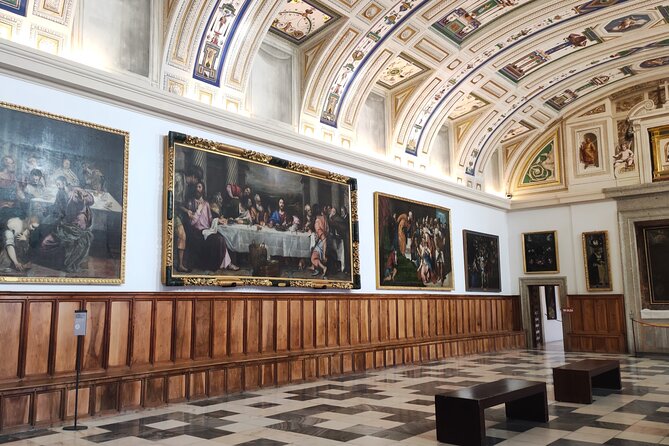
The Chapter Rooms add another layer. These rooms contain art by major figures including El Greco, Titian, and Velázquez. You may already know some of these names from Madrid’s museums, but seeing their work inside a royal monastery gives it a different setting and purpose.
The benefit of a private guide is especially clear here. A room filled with famous paintings can tempt you to move from one name to the next. Isabella instead connects the art to the setting and to the people who commissioned, used, or lived around it. That makes the collection easier to remember.
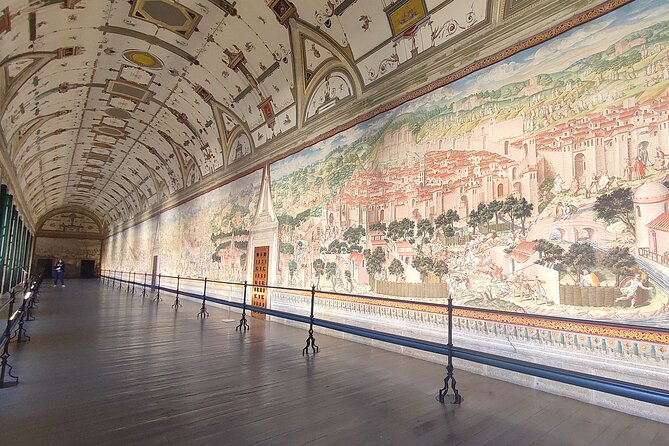
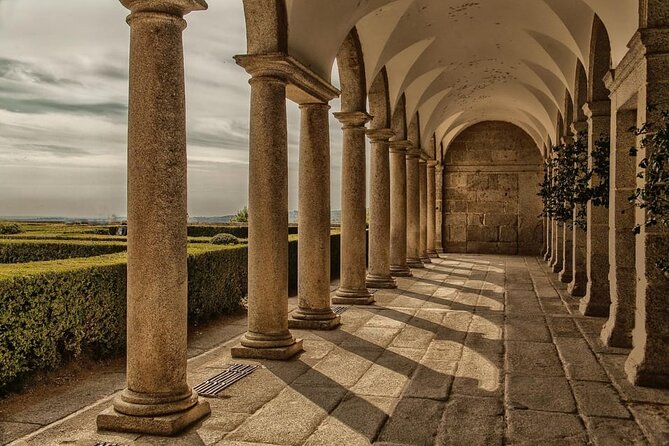
The cloister also forms part of the route. Its design offers a pause between the more formal rooms and lets you appreciate how the monastery functions as a connected whole. The tour is not only about individual sights. It is about seeing how worship, scholarship, royal life, and ceremony fit together under one roof.
The Royal Pantheon, where the mood turns solemn
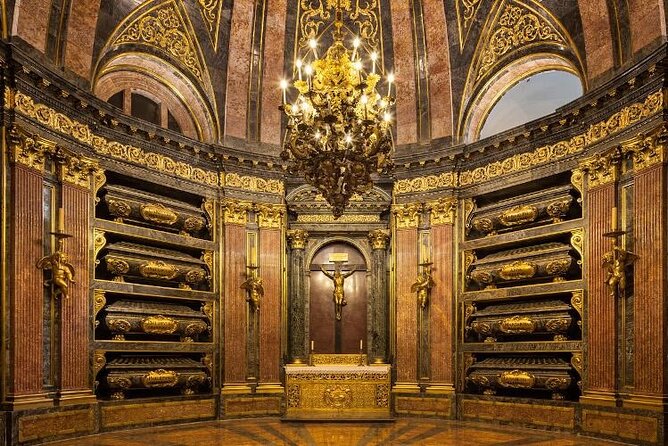
The Royal Pantheon is the most atmospheric stop. It is the burial place of Spanish kings and royalty from the 16th century onward, and the room carries a strong sense of ceremony and finality. Even if you arrive mainly for the architecture, the purpose of the space changes the way you see it.
This is where a guide can add real value. The pantheon contains names, dynasties, and family connections that are difficult to sort out alone. Isabella explains the royal story in a way that keeps it connected to the rooms you have already seen.
The pantheon has been described as having a mysterious air, and that is a fair expectation. It is not a light or casual part of the visit. Give yourself time to take in the atmosphere instead of treating it as one more stop on a checklist.
For many people, this will be the emotional center of the tour. The basilica shows royal devotion, the library shows royal thought, and the pantheon shows the final destination of that power. El Escorial becomes more understandable when you see those parts together.
Same sacred ground, another way to see it:
- Montserrat Monastery Half Day Experience from Barcelona
★ 5.0 · 6,014 reviews - Escorial Monastery and the Valley of the Fallen Tour from Madrid
★ 5.0 · 2,494 reviews - Montserrat Museum and Monastery Entry Ticket
★ 4.5 · 1,740 reviews - Montserrat Small Group: Monastery, Black Madonna & Natural Park
★ 5.0 · 1,690 reviews
Philip II’s rooms and the Habsburgs Palace
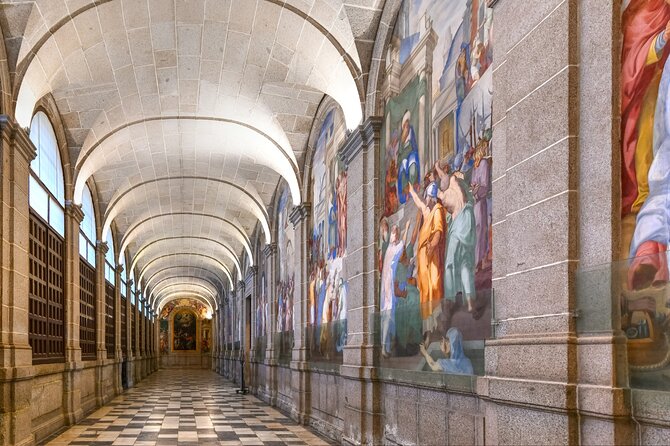
The route ends in the Habsburgs Palace, including the rooms where Philip II lived and died. This final section brings the king down to a more human scale. After the ceremonial basilica, impressive library, and royal burial site, you see the private spaces connected to his daily life and final days.
I find this ending well chosen. It gives the visit a narrative shape. You begin with the public face of monarchy, pass through its intellectual and religious world, confront its burial traditions, and finish in the rooms of the man who commissioned the complex.
The palace rooms also help explain why the building is more than a monastery. El Escorial served several roles at once, and the Habsburgs Palace makes that clear. You are moving through a place of worship, government, art, study, burial, and residence.
Expect Isabella to add stories about palace life here. Her past clients particularly valued the anecdotes about how people lived inside the complex, and those details can make the rooms easier to picture. The best guiding does not merely tell you what a room is called. It helps you imagine why it mattered.
Isabella’s guiding style
Isabella Trébede is the named guide for this experience, and her approach is one of its strongest features. She leads in English and is also described as comfortable guiding in Spanish. Her style is friendly, spontaneous, and serious about historical accuracy without sounding like a classroom lecture.
That balance matters at El Escorial. The subject includes royal succession, religious policy, art, architecture, and burial customs. A guide can easily overload you with information. Isabella instead uses anecdotes and plain explanations to keep the visit moving.
Her work also suits different kinds of groups. A family can follow the stories without needing a background in Spanish history. A group of friends can ask questions and keep the pace relaxed. Someone who already knows Madrid’s museums can still find value in the connections between the monastery, its art, and the royal world.
The private format gives her room to adjust. You are not sharing the visit with a large crowd, so your questions can shape the conversation. That is a real advantage in a complex building where different people may care about different things.
One caution: Isabella may have more to tell than can fit into a single visit. That is a good problem, but it means you should decide what interests you most. If the library, pantheon, art, or palace rooms matter especially to you, say so at the start.
Is $114.39 per person a good value?
At $114.39 per person, this is not a budget sightseeing stop. The value depends on how much you want from El Escorial and how many people are in your group.
The price includes skip-the-line admission, a licensed guide, and an individual headset. Standard adult admission is listed as €12, with a reduced €7 fare for seniors over 65, students under 25, and children under 16. Children under 5 enter free. That means the tour price is paying mostly for the private service and guide, not for an expensive entrance ticket.
For a private group that wants a focused explanation of the monastery, the cost can make sense. You are paying for help with a complicated site, a private conversation, and a planned route through the major rooms. If you would rather wander quietly and read limited information at your own pace, the price may feel high.
The headsets are a small but useful touch. Large historic interiors can make it hard to hear, especially when other groups are nearby. You can focus on the room instead of standing shoulder to shoulder with the guide.
Reduced admission also brings a practical detail. Seniors, students, and children under 16 must show valid identification, or a photo or copy of it, at the ticket office. Bring the proper proof so the reduced fare can be applied.
Getting there and planning the timing
The meeting point is at Av. de Juan de Borbón y Battenberg, 6, in San Lorenzo de El Escorial. The activity ends back at that meeting point. Hotel pickup and private transportation are not included, so you must arrange your own way to the town.
The site is near public transportation, but the tour information does not specify a particular route or travel time from Madrid. Check your route before booking and leave enough room for delays. Arriving late could cut into a tightly timed visit.
The tour is booked, on average, well ahead of the date, around 92 days in advance. That suggests you should not assume a last-minute place, especially if your Madrid dates are fixed or you need a particular time in English.
Free cancellation is available up to 24 hours before the start time for a full refund. Changes or cancellations made less than 24 hours before the visit are not accepted for a refund. The cut-off follows local time.
Accessibility and who should choose this tour
The tour is not accessible because of staircases and structural elements. This is not a minor footnote. If anyone in your group has mobility limitations, check the physical demands carefully before booking.
Service animals are allowed, and most people can participate. The tour is best suited to people who can manage the stairs and who want a detailed visit rather than a quick look at the exterior.
I would recommend it most for:
- First-time visitors to El Escorial who want the main rooms explained clearly
- Families and friends who prefer a private guide
- Art lovers interested in El Greco, Titian, and Velázquez
- Visitors drawn to royal history, palace life, and burial traditions
- People who enjoy stories and context more than a basic audio-style visit
It may not suit you if you want hotel pickup, a short visit, or a completely self-guided experience. It is also a poor fit if Sunday morning is your only available time and seeing the basilica is essential.
Should you book this El Escorial tour?
Book it if you want El Escorial to make sense, not merely to look impressive. The private setting, headsets, included admission, and Isabella’s lively storytelling give you a strong way to handle a huge and complicated monument.
The best reasons to choose it are the library, the Royal Pantheon, the Habsburgs Palace, and the chance to connect major artworks with the people and rooms around them. Plan your own transport, check the basilica schedule, and be realistic about the stairs.
If you can accept the price and the lack of transportation, this is a thoughtful choice for a half-day outing from Madrid. You leave with more than photographs of a grand monastery. You gain a clearer picture of Philip II, the Habsburg court, Spanish royalty, and the many lives of El Escorial.
FAQ
How long does the San Lorenzo de El Escorial tour last?
The tour lasts approximately 2 hours and 30 minutes. Some visits may run longer if the group spends extra time with the guide.
Is admission included?
Yes. Skip-the-line admission tickets are included in the tour price.
What places are visited inside El Escorial?
The route includes the Royal Basilica, Philip II’s Library, the Cloister, the Chapter Rooms, the Royal Pantheon, and the Habsburgs Palace, including the rooms where Philip II lived and died.
Is the tour offered in English?
Yes. The experience is offered in English and includes a licensed English-speaking guide.
Is transportation from Madrid included?
No. Private transportation, hotel pickup, and transportation to or from the meeting point are not included. The meeting point is at Av. de Juan de Borbón y Battenberg, 6, in San Lorenzo de El Escorial.
Can visitors with mobility impairments take the tour?
The tour is not accessible because of staircases and structural elements. Service animals are allowed.
What happens if the basilica is closed?
The basilica is closed during Mass. On Sundays and religious holidays, it is closed throughout the morning. If it is closed during your visit, the guide extends the tour in the Library or Chapter Rooms.
Temple visits we reviewed lately in Spain
- Santander: Picos, Santo Toribio Monastery and Potes Day Tour★ 4.8 · 261 reviews
- San Lorenzo de El Escorial: Monastery and Site Guided Tour★ 4.8 · 127 reviews
- Private Bécquer’s route, Trasmoz, Veruela’s Monastery +food★ 5.0 · 5 reviews
- Montserrat Monastery Ticket with Escolania Boys’ Choir★ 4.4 · 55 reviews
- Montserrat: PRIVATE TOUR – Monastery, Cable Car & Soft Hike★ 5.0 · 4 reviews
- Private Montserrat Monastery with pickup + Winery or Caves★ 4.9 · 4 reviews
- Món Sant Benet Monastery Tickets★ 5.0 · 7 reviews
- Medieval Route in Navarre: Olite, Ujué, Javier Castle, and Monastery of Leire★ 4.8 · 6 reviews
Madrid Temple Tours, compared.
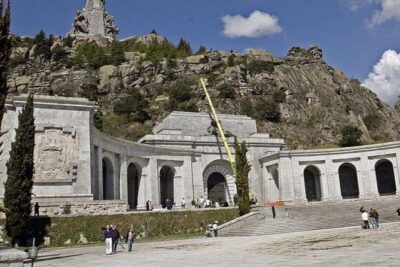
Escorial Monastery and the Valley of the Fallen Tour from Madrid
Read our review →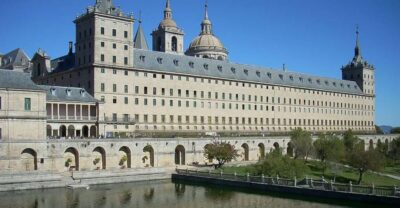
From Madrid: Escorial Monastery & Valley of the Fallen Trip
Read our review →
Madrid Must-see with Atardeder at the Debod Temple
Read our review →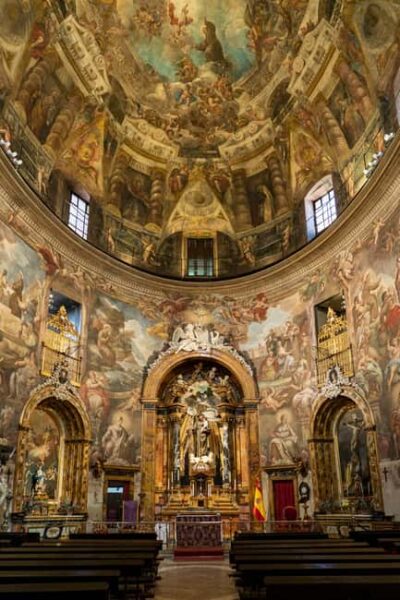
Combined admission to San Antonio de los Alemanes and the Monastery of San Plácido
Read our review →
Royal Monastery of the Barefoot nuns: Guided Tour + Tickets
Read our review →
Madrid: Entrance to the Monastery of Las Comendadoras de Santiago
Read our review →This tour also ranks in