
Review · SPAIN
Private tour: San Lorenzo de El Escorial Monastery
San Lorenzo de El Escorial is part palace, part monastery, part royal tomb, and part grand statement of Habsburg power. Built under Philip II, this vast stone complex brings together a basilica, library, royal pantheon, art collection, battle murals, and mountain views in one remarkable visit.
I like the private format, which lets your guide adjust the pace and explain the personalities behind the building, not just point out rooms. I also like the skip-the-line entry and individual headsets, useful in a large monument where a clear voice can save you from missing the story.
The main drawback is physical: this is not an accessible tour. You will climb many steps, and large bags must go into lockers before the security check. The monastery is also outside Madrid, so you must arrange your own way to the meeting point.
Key points to know before booking
- Follow Isabella Trébede through the Habsburg story: Her lively style focuses on Philip II, the royal family, and the people connected to the monastery.
- See more than a church: The tour covers the basilica, library, Royal Pantheon, Hall of Battles, and selected art.
- Expect a serious stair workout: The monument is not suitable for wheelchair users or people with mobility impairments.
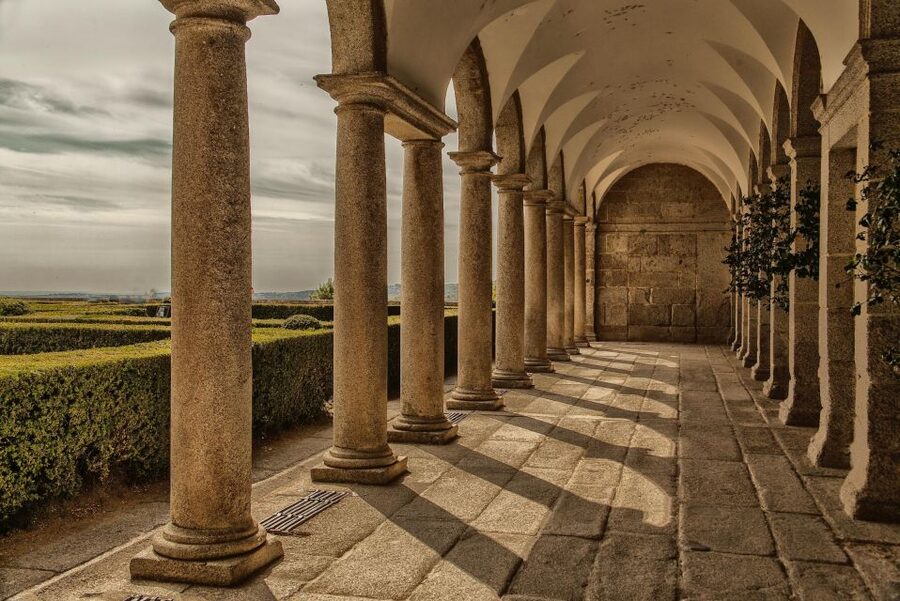
- Use the gardens as the final pause: Renaissance gardens offer views toward the Sierra de Guadarrama and may include a peacock sighting.
- Budget for more than the ticket: The $112 price covers the private licensed guide, priority entry, and headsets, but not transport, meals, or drinks.
- Plan around religious services: The basilica may be closed during Mass, and on Sunday mornings and religious holidays it can be closed for the entire morning.
Why El Escorial makes a strong Madrid day trip
Madrid is full of royal rooms and grand art, but El Escorial gives you a different view of Spain’s monarchy. Here, the palace is tied directly to religious life, royal burial, scholarship, military memory, and the immense reach of the Habsburg dynasty.
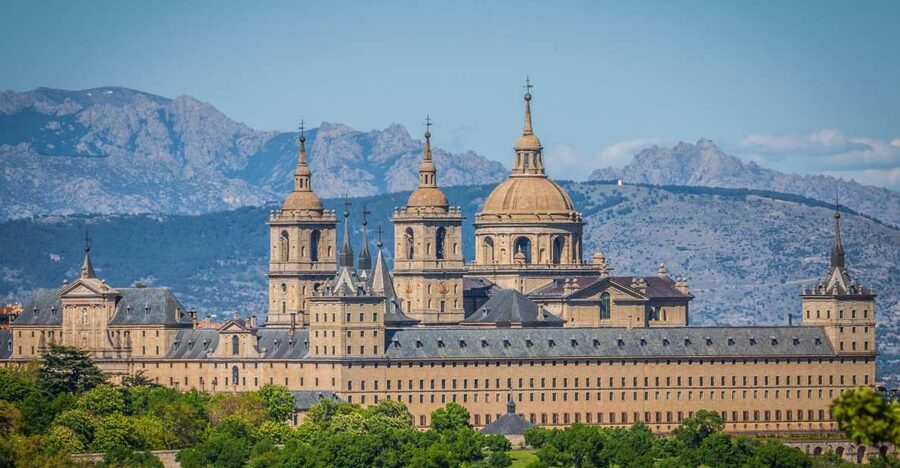
The building was created during the reign of Philip II, a king who wanted his power and Catholic faith expressed in stone. The result is not a light or playful palace. It is solemn, ordered, and huge. You get a sense of a ruler trying to bring politics, religion, science, art, and family memory under one roof.
The setting adds to the appeal. San Lorenzo de El Escorial sits near the Sierra de Guadarrama, surrounded by wooded hills and open mountain views. The combination makes this more than an indoor monument visit. You can spend the morning with dynasties and royal tombs, then finish among formal gardens and fresh mountain air.
The experience lasts about two and a half hours. That is enough time to cover the major rooms with context, though you should not expect to inspect every corner of the complex. A private guide helps here. Instead of trying to work out the building’s purpose from signs alone, you can ask why a room exists, how it relates to Philip II, and what happened to the people connected with it.
More Private Temple Tours in Spain
- Montserrat Monastery Small Group or Private Tour Hotel pick-up
★ 5.0 · 5,144 reviews - Barcelona: Montserrat Private Trip with Monastery Ticket
★ 5.0 · 74 reviews - San Lorenzo de El Escorial Monastery Private Tour
★ 5.0 · 12 reviews
Meeting Isabella at the Spanish-flag entrance
The meeting point is easy to identify if you know what to look for. Go to the entrance with a Spanish flag above it, directly opposite the Tourism Office. Isabella Trébede carries an Isabella Trébede tote bag, which gives you a clear visual marker.
Isabella is the licensed guide named for this experience, and she leads tours in English and Spanish. Her approach, based on the information available about the tour, is energetic and personal. She connects the architecture to individual figures, including Philip II, the Habsburgs, the later Bourbons, and John of Austria, the illegitimate son of Emperor Charles V.
That human focus matters. El Escorial can feel overwhelming if you only hear a list of dates and rooms. A good explanation gives you a way to follow the building through people and decisions. Isabella’s storytelling is especially useful for families and teenagers, since the tour is designed to make the political and personal drama easier to follow.
The private group setup also lets you ask questions without worrying about holding up a large crowd. Individual headsets are included, so you should be able to hear the guide clearly while moving through echoing halls.
The library and Philip II’s world of learning
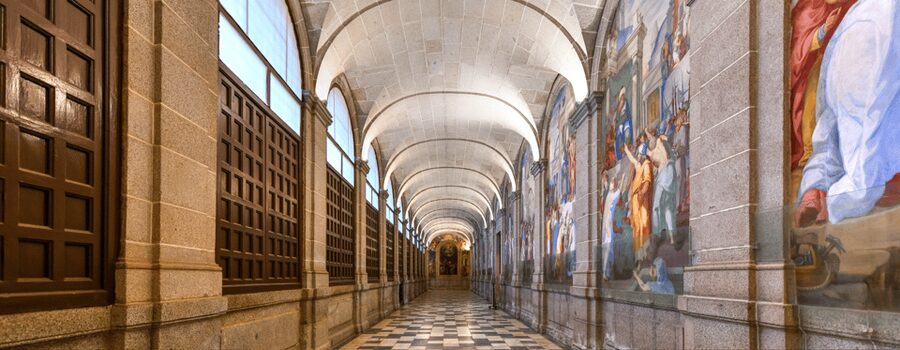
The library is one of the most memorable stops because it shows another side of Philip II. El Escorial was not only a religious foundation and royal residence. It was also linked to scholarship, science, and the arts.
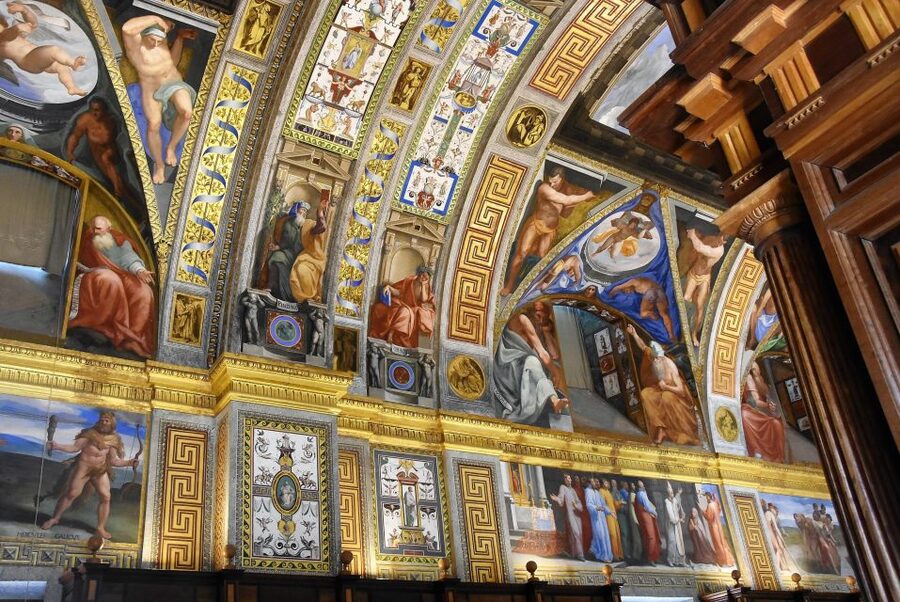
The library reflects Philip II’s interest in collecting and organizing knowledge. Look up as well as around you. The frescoes are a major feature, and the decoration gives the room a sense of purpose beyond storage. The visual program connects learning with the classical and religious ideas valued by the court.
This is a place where a guide adds real value. Without context, you might admire the painted ceiling and move on. With an explanation of Philip II’s humanist outlook, you can see why the library belongs in the center of this monument’s story.
The main staircase is another spot to watch closely. Its frescoes turn a route from one level to another into a ceremonial space. It is a good reminder that in royal architecture, even a staircase can carry a message about power, faith, and order.
You should be ready for steps throughout the visit. The library and staircase are visually rewarding, but they are not easy stops for anyone who struggles with climbing or standing.
The basilica and the religious heart of the complex
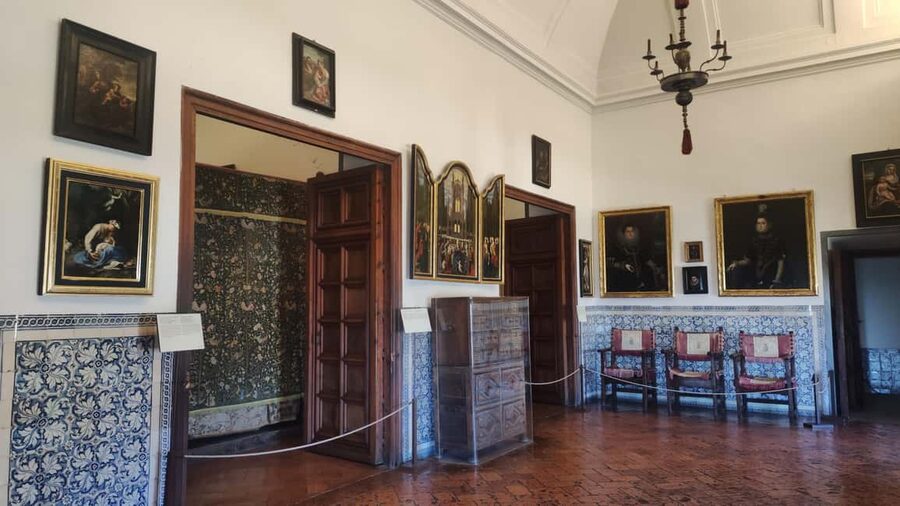
The basilica explains the monastery’s religious purpose. Its scale and formal design show how closely royal power and Catholic faith were joined during Philip II’s reign.
You can expect this part of the tour to be quieter and more solemn than the galleries or the Hall of Battles. The basilica is not simply another grand room. It is the spiritual center of the complex, and its position helps explain why El Escorial was built with such force and ambition.
There is one important scheduling issue. The basilica closes during Mass. On Sundays and religious holidays, it may be closed throughout the morning. If that happens, your guide extends the visit in the library or Chapter Rooms, so the tour does not simply lose that portion, but you should still check the day and starting time before booking.
All visitors pass through airport-style security. Food, bikes, pets, baby carriages, luggage, and large bags are not allowed inside. Backpacks and big bags must be placed in free individual lockers, which require a €1 coin. Pack light and bring a small bag if possible.
Same sacred ground, another way to see it:
- Montserrat Monastery Half Day Experience from Barcelona
★ 5.0 · 6,014 reviews - Escorial Monastery and the Valley of the Fallen Tour from Madrid
★ 5.0 · 2,494 reviews - Montserrat Museum and Monastery Entry Ticket
★ 4.5 · 1,740 reviews - Montserrat Small Group: Monastery, Black Madonna & Natural Park
★ 5.0 · 1,690 reviews
The Royal Pantheon and the people behind the monarchy
The Royal Pantheon is one of the strongest reasons to visit El Escorial with a guide. The rooms are not only impressive in themselves. They hold the remains of many Spanish monarchs and make the dynasty feel personal and finite.
Here, the tour can move away from broad political history and toward family relationships, succession, ambition, and death. The Pantheon gives a physical sense of how the royal line was remembered and presented.
John of Austria is one especially interesting figure to watch for in the story. He was the illegitimate son of Emperor Charles V and became a major military and political figure. His life helps show that royal history is not only about kings seated on thrones. It also includes unofficial children, powerful relatives, and people whose position depended on both birth and ability.
This is one of the places where the private format earns its keep. You can pause for clarification when the family tree becomes complicated. Habsburg history has plenty of repeated names and interlocking marriages, so a guide who can explain the connections in plain language is useful.
The Hall of Battles and Spain’s military memory
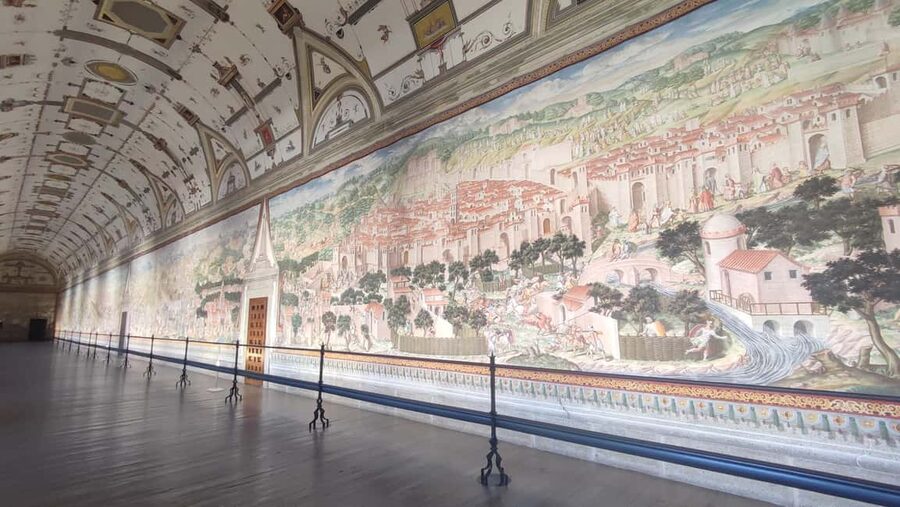
The tour ends inside the monument at the Hall of Battles, a long room decorated with large mural paintings. The scenes recall military victories and present Spain’s power through art.
The murals are not modest decoration. They are designed to make campaigns and triumphs feel immediate, filling the room with movement and scale. As you walk through, you can see how the monarchy used art to shape the memory of war.
This stop works well near the end because it brings together several themes from the tour: royal authority, empire, military success, and the need to control how history was remembered. The building’s religious spaces may feel restrained, while the Hall of Battles is more openly proud and theatrical.
The difference between these rooms is part of what makes El Escorial interesting. You move from scholarship to worship, from royal burial to military display. The tour is not just a parade of beautiful interiors. It shows how one institution could serve many purposes at once.
Titian, El Greco, Velázquez, and Luca Giordano
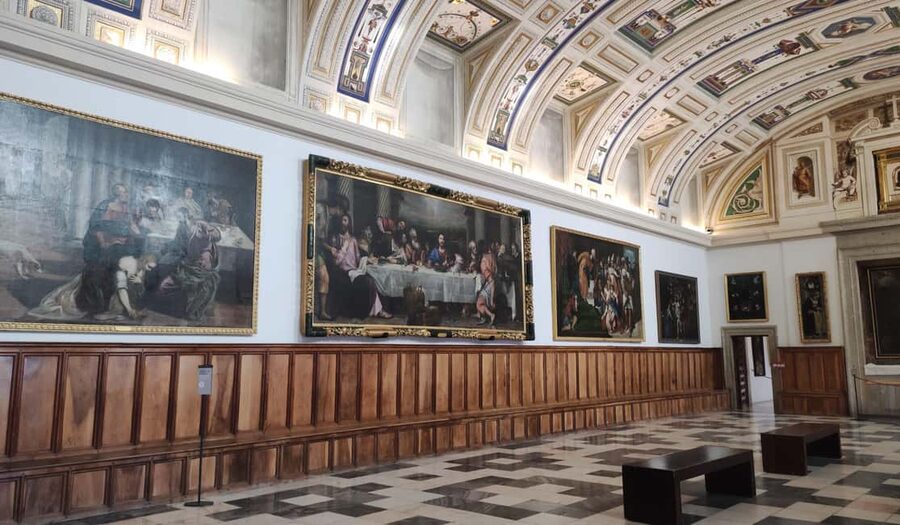
The art collection gives the monastery another layer. You will encounter works associated with major painters including Titian, El Greco, Velázquez, and Luca Giordano.
You do not need to be an art specialist to enjoy this part. The value is in seeing how celebrated painters fit into the royal and religious setting. These works were not gathered at random. They helped decorate sacred rooms, honor important figures, and express the taste and power of the court.
A private guide can help you decide what deserves your attention. In a monument with so many rooms, it is easy to rush past paintings simply because the building itself is so imposing. The guide’s job is to point out the works that matter and explain why they belong in this particular place.
If art is your main interest, keep in mind that this is a historical tour of the whole monument rather than a specialist gallery visit. You will see major works as part of a wider story that also includes architecture, religion, monarchy, and military history.
Renaissance gardens and Sierra de Guadarrama views
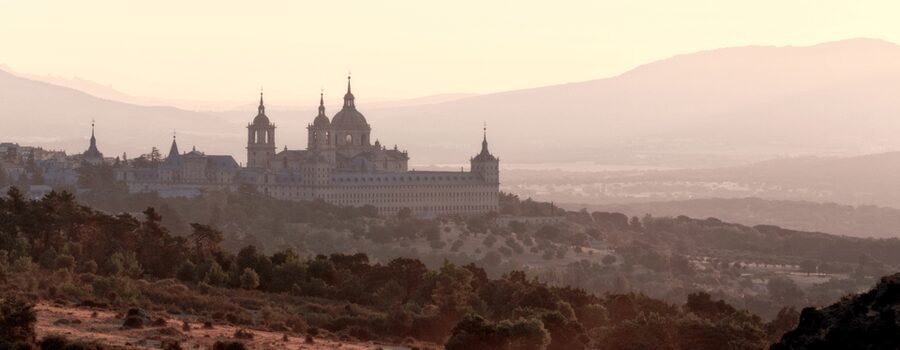
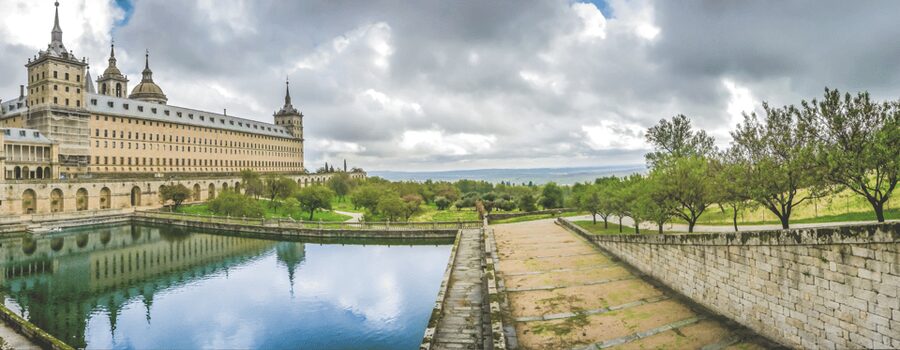
After the interior, you can finish in the Renaissance gardens created for the kings and monks. This is the calmer part of the visit and a welcome change after dark stone rooms, tombs, and densely decorated halls.
The gardens provide views of the forest and mountains around San Lorenzo de El Escorial. The Sierra de Guadarrama setting helps explain why the site works so well as a break from Madrid. You get culture inside and open air outside, without needing a separate excursion into the countryside.
Peacocks live in the gardens, so you might see one during the final part of the tour. They are an entertaining bonus, especially for children, but the real reward is the view and the chance to slow down.
The garden portion also depends on timing and conditions. Ask your guide how much time is available outdoors, especially if you are visiting in cold weather or on a day when the interior schedule has changed.
Is $112 per person good value?
At $112 per person, this is not the cheapest way to see El Escorial. You are paying for a private guide, priority entrance, individual headsets, and a focused two-and-a-half-hour visit. You are not paying for transport from Madrid, food, drinks, or a larger day-trip package.
The price makes the most sense for couples, families, or small groups who want personal attention and do not want to spend time piecing together the monument’s story alone. If your group includes teenagers, the guide’s storytelling can make the visit easier to follow. If you are traveling between Madrid and Salamanca, El Escorial can also work as a worthwhile stop, with time for lunch in town afterward.
The value is weaker if you prefer to wander at your own pace or already know the history well. You may also want more time than the scheduled two and a half hours if you like to study every painting or spend a long time in the gardens.
Skip-the-line access is useful, but security still takes place for everyone. The separate entrance saves time at admission, not every possible delay inside the monument.
Who should book this private visit?
I would choose this tour if you want the building explained through people, power, religion, and art rather than visited as a silent series of rooms. It is particularly suitable for first-time visitors to El Escorial, families with older children, and anyone who values the chance to ask questions.
The tour is also a good match if you want English or Spanish guidance and prefer a private group over a large shared outing. Isabella’s energetic delivery is a strong reason to consider this particular option, especially if a lively guide matters to you.
I would hesitate if you use a wheelchair, have a mobility impairment, or find many stairs difficult. The monument is explicitly not accessible, and the tour involves substantial climbing. I would also avoid carrying a large day bag, since lockers are required and need a €1 coin.
Practical planning for a smoother visit
Wear comfortable shoes. The building is large, the route includes many steps, and you will spend much of the visit on your feet.
Bring a passport or ID card. Children aged 12 to 16 must show valid identification, or a copy, at the entrance. All minors must be accompanied by an adult, and every participant, including infants under five, must appear on the booking.
Check opening hours before choosing your time. The tour is subject to the monument’s schedule, and the basilica is the key concern on Sundays and religious holidays.
Arrange transport to the meeting point yourself. Hotel pickup and transport to or from the site are not included, so allow enough time to reach the Spanish-flag entrance opposite the Tourism Office.
Should you book the El Escorial private tour?
Book it if you want a clear, human explanation of one of Spain’s grandest monuments and prefer personal attention over a self-guided visit. The combination of Isabella’s lively storytelling, priority entry, headsets, and access to the library, basilica, Pantheon, Hall of Battles, and gardens gives you a strong overview in a manageable time.
Skip it if stairs are a serious concern, if you need an accessible attraction, or if you want a cheap ticket with plenty of free time. For everyone else, $112 is a fair price for a private introduction to El Escorial, especially when the building’s royal family tree and many functions might otherwise blur together.
FAQ
Where does the tour meet?
Meet at the entrance with a Spanish flag above it, directly in front of the Tourism Office. Your guide carries an Isabella Trébede tote bag.
How long does the tour last?
The tour lasts approximately 2.5 hours.
Is transportation from Madrid included?
No. Hotel pickup and transportation to or from the meeting point are not included.
Which languages are available?
The tour is available in English and Spanish.
Is the tour private?
Yes. It is offered as a private group with a licensed guide.
What areas of El Escorial are included?
The visit includes the basilica, library, Royal Pantheon, Hall of Battles, and Renaissance gardens, subject to opening hours and access conditions.
Is the tour accessible for wheelchair users?
No. The monument is not accessible, and the tour is not suitable for wheelchair users or people with mobility impairments.
Are there many stairs?
Yes. You will climb many steps during the visit, although the pace is taken slowly.
Can I bring a large backpack or luggage?
No. Large bags, luggage, food, pets, bikes, and baby carriages are not allowed. Backpacks and big bags must be placed in free lockers, which require a €1 coin.
What happens if the basilica is closed for Mass?
Your guide extends the visit in the library or Chapter Rooms. On Sundays and religious holidays, the basilica may be closed for the entire morning.
Temple visits we reviewed lately in Spain
- San Lorenzo de El Escorial: Monastery and Site Guided Tour★ 4.8 · 127 reviews
- Santander: Picos, Santo Toribio Monastery and Potes Day Tour★ 4.8 · 261 reviews
- Private Bécquer’s route, Trasmoz, Veruela’s Monastery +food★ 5.0 · 5 reviews
- Montserrat Monastery Ticket with Escolania Boys’ Choir★ 4.4 · 55 reviews
- Montserrat: PRIVATE TOUR – Monastery, Cable Car & Soft Hike★ 5.0 · 4 reviews
- Private Montserrat Monastery with pickup + Winery or Caves★ 4.9 · 4 reviews
- Món Sant Benet Monastery Tickets★ 5.0 · 7 reviews
- Medieval Route in Navarre: Olite, Ujué, Javier Castle, and Monastery of Leire★ 4.8 · 6 reviews
Spain Temple Tours, compared.
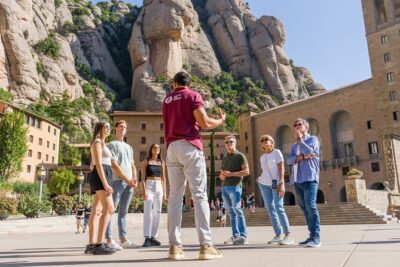
Montserrat Monastery Half Day Experience from Barcelona
Read our review →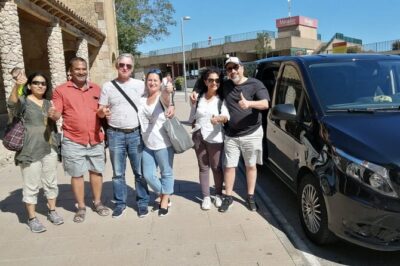
Montserrat Monastery Small Group or Private Tour Hotel pick-up
Read our review →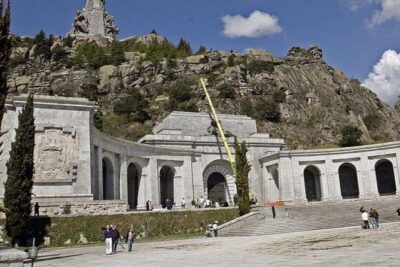
Escorial Monastery and the Valley of the Fallen Tour from Madrid
Read our review →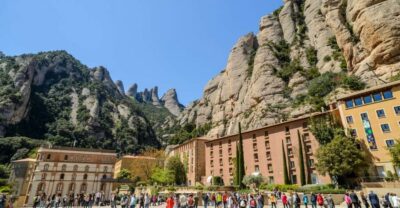
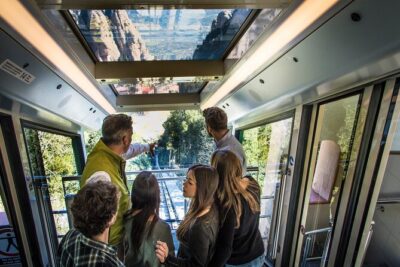
Montserrat Small Group: Monastery, Black Madonna & Natural Park
Read our review →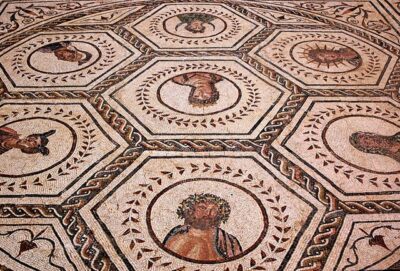
From Seville: Italica Roman City & Medieval Monastery Tour
Read our review →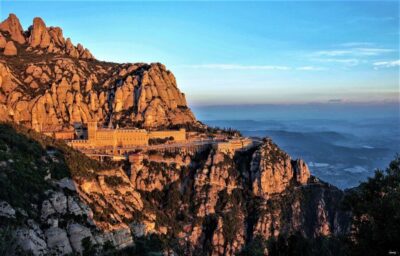
From Barcelona: Montserrat Monastery, Easy Hike, Cable Car
Read our review →
From Barcelona: Montserrat Monastery & Scenic Mountain Hike
Read our review →This tour also ranks in