
Review · MADRID
Combined admission to San Antonio de los Alemanes and the Monastery of San Plácido
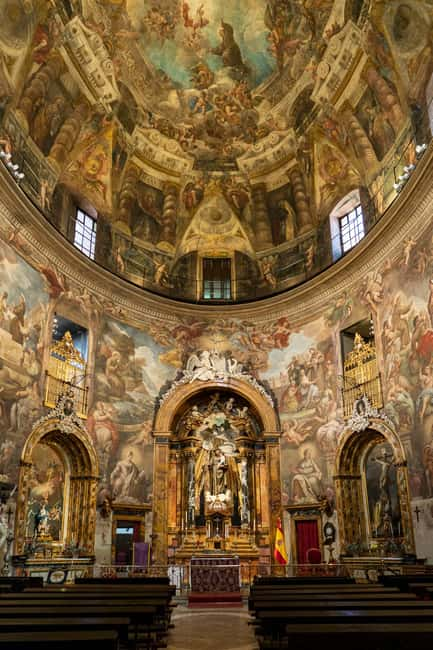
Madrid saves some of its finest Baroque art behind quiet doors. This admission brings you to San Antonio de los Alemanes, often called Madrid’s Sistine Chapel, and the Monastery of San Plácido, where Claudio Coello’s huge Annunciation fills the main altar.
I like the striking elliptical church at San Antonio and the chance to see an unusually large group of Coello works at San Plácido. The main drawback is that this is an audio-guided visit, not a live guided tour, and the spaces open for cultural visits may be more limited than some visitors expect.
Key points
- San Antonio’s oval interior: Look up at frescoes by Luca Giordano, Francisco Rizi, and Carreño de Miranda.
- Manuel Pereira’s sculpture: Statues add depth to the painted Baroque program.
- San Plácido after centuries of closure: The Benedictine church offers access to a place long unavailable for ordinary visits.
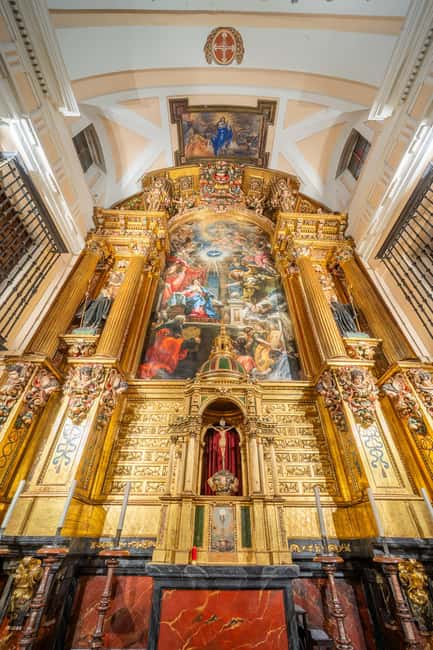
- Claudio Coello’s Annunciation: The nearly seven-meter-high canvas is the visual centerpiece of San Plácido.
- One ticket, two monuments: The $14 price covers both sites for one day.
- Audio in three languages: Choose Spanish, English, or French, with no live guide included.
Why these two Baroque churches matter
Madrid’s Baroque style is easy to miss if you stick to the major museums and royal sights. It often appears in churches tucked into ordinary streets, where a plain exterior gives little warning of what waits inside.
That contrast is the main appeal here. You are not heading to a broad museum complex with rows of galleries. You are entering two religious spaces where painting, sculpture, architecture, and devotion were designed to work together.
The first church is San Antonio de los Alemanes. Its most unusual feature is the elliptical floor plan. Instead of walking into a long rectangular nave, you find yourself in a compact, rounded setting that keeps the walls and ceiling visually close. That shape gives the painted decoration extra force.
San Plácido offers a different experience. It is tied to the Benedictine order and is described as one of Madrid’s important monasteries. After four centuries closed to the public, its opening for cultural visits gives the visit a sense of access to a part of Madrid that is normally easy to pass without seeing.
More Temple Tours around Spain:
- Montserrat Monastery Half Day Experience from Barcelona
★ 5.0 · 6,014 reviews - Montserrat Monastery Small Group or Private Tour Hotel pick-up
★ 5.0 · 5,144 reviews - Escorial Monastery and the Valley of the Fallen Tour from Madrid
★ 5.0 · 2,494 reviews
Entering San Antonio de los Alemanes
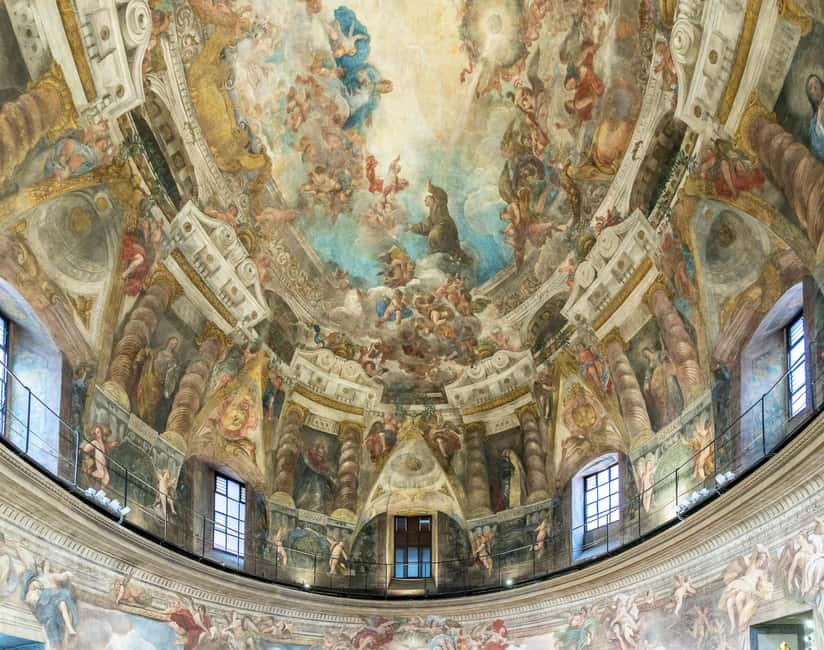
San Antonio de los Alemanes is the stronger stop if you care most about architecture and ceiling painting. The church is considered one of the finest examples of Madrid Baroque, and its nickname, the Sistine Chapel of Madrid, points to the visual impact rather than the building’s size.
Do not expect the vast scale of Rome’s Sistine Chapel. The comparison is about the concentration of painted decoration. Here, the curved interior lets the frescoes surround you. Your attention moves upward from the walls toward the dome and ceiling, where several leading painters of the period contributed to the overall design.
The names matter because they represent different strengths within Spanish and European Baroque painting. Luca Giordano was known for energetic compositions and a fluid touch. Francisco Rizi and Carreño de Miranda also played major roles in Madrid’s seventeenth-century art world. You do not need to know every artist before arriving, but the audio guide should help you notice how their work contributes to the whole.
Take a moment before moving on. In a church like this, it is tempting to look quickly, admire the color, and leave. I find it more rewarding to scan the space in sections: first the architecture, then the painted walls, then the ceiling, and finally the sculpture. The oval design means that small changes in your position can alter what catches your eye.
The sculptures by Manuel Pereira add a solid, physical counterpoint to the frescoes. Baroque churches often rely on the tension between painted illusion and real sculpture. Pereira’s work gives the interior weight and keeps it from becoming only a display of ceiling art.
The audio guide is especially useful here. Since there is no live guide included, you will need to manage your own pace and listen through the supplied commentary. That suits visitors who prefer quiet and flexibility, but you should not expect questions answered on the spot or a guide pointing out every detail in person.
Seeing San Plácido after four centuries
San Plácido is the more unusual part of the visit because access to the church has been restricted for so long. Its connection with the Benedictine order gives the space a different character from San Antonio de los Alemanes, even though both belong to Madrid’s Baroque tradition.
The central reason to visit is the art of Claudio Coello. The monastery church has what is described as the largest collection of his work in the world. That makes this more than a quick stop for one attractive painting. You are seeing a group of works by an important Spanish Baroque artist in a setting built for religious use.
The main altar is dominated by Coello’s Annunciation, a canvas nearly seven meters high. Its scale is important. A painting this large is not meant to be viewed like a small museum panel at eye level. Look at it as an architectural feature, one that completes the altar and directs your attention toward the front of the church.
The subject, the Annunciation, is familiar in European religious art, but the setting changes how you read it. The painting is part of a larger interior program, so its impact comes from its relationship with the altar, the church, and the surrounding works. The audio guide can help explain those connections in a way that a quick photograph cannot.
I would give San Plácido enough time to let the room settle. It may be the quieter of the two stops, and its importance is not always obvious in the first glance. Look for the way the artworks relate to the church’s devotional purpose rather than treating them as separate objects.
One practical point is worth keeping in mind: the description of the visit focuses on the Baroque church and its works. It does not promise access to every part of the monastery. If you are hoping to tour a full convent complex, ask at the ticket office what areas are open that day. One visitor specifically wished for access to more spaces at San Plácido and to a museum area at San Antonio, so expectations should remain realistic.
What the $14 admission buys you
At $14 per person, the admission is good value if you want Madrid art beyond the standard museum circuit. You receive entry to both San Antonio de los Alemanes and San Plácido, rather than paying separately for two small sights.
The value is strongest for three kinds of visitors. First, art lovers get major Baroque names, including Giordano, Rizi, Carreño de Miranda, Manuel Pereira, and Coello. Second, repeat visitors to Madrid get a way to see a less familiar side of the city. Third, travelers who enjoy religious architecture can compare two churches with different layouts and artistic programs in one outing.
The price is less compelling if you are looking for a full guided history of Madrid or a long sightseeing program. This is a focused cultural admission. It does not include a live guide, transport, meals, or a larger city tour.
The audio guide improves the value because it is included in Spanish, English, and French. That gives you context without adding another charge. Some content may be presented in its original language, so you may occasionally encounter material that is not fully translated or adapted to your preferred language.
You can use the admission over one day, subject to the available starting times. That matters because you can fit the two churches around other Madrid plans instead of committing an entire day to a single tour. Check availability before booking, since the exact start time is not fixed in the general description.
Same sacred ground, another way to see it:
- Montserrat Museum and Monastery Entry Ticket
★ 4.5 · 1,740 reviews - Montserrat Small Group: Monastery, Black Madonna & Natural Park
★ 5.0 · 1,690 reviews - From Madrid: Escorial Monastery and the Valley of the Fallen
★ 4.7 · 1,434 reviews - Madrid: Flamenco Show at Tablao Sala Temple with Drink
★ 4.8 · 1,206 reviews
How the visit works at the door
You need to go inside the building to find the ticket office. Show your electronic voucher to the staff there. This is not a street-side meeting point where a guide gathers a group and leads you away.
That arrangement is simple, but keep your voucher ready on your phone. It also helps to arrive with enough time to locate the entrance and ticket office, especially if you are working around a timed appointment.
The experience is described as valid for one day, not as a multi-day pass. The booking system allows you to reserve now and pay later, which can help if your Madrid schedule is still changing. Cancellation is free up to 24 hours in advance for a full refund.
These policies are practical, but they do not change the nature of the visit. You are buying access to two monuments with audio commentary, not joining a traditional walking tour. Plan to read, listen, and look at your own speed.
The best way to look at the art
Start with the structure before trying to identify every painter. At San Antonio, notice the oval layout and how the decoration follows the curves. Then look for the major fresco cycles and the contrast between the painted scenes and Pereira’s sculpture.
At San Plácido, begin at the main altar and take in the scale of the Annunciation. After that, let your attention move through the rest of the church and its Coello collection. The large canvas can dominate the room, but the surrounding works help explain why the church is valued as a complete Baroque interior.
The audio guide is your main source of interpretation, so use it with patience. You can pause between sections instead of trying to listen while walking quickly. If your interests are strongly focused on art history, consider taking notes on the artists and the relationship between the works.
Photography rules are not provided in the available information, so do not assume that every angle or flash is permitted. Follow the staff’s instructions once inside. Religious sites can have stricter rules than ordinary exhibition halls.
Who should book this experience
I would recommend this admission to you if you have already seen Madrid’s major attractions and want something more specialized. It is also a smart choice if Baroque painting, church interiors, and Spanish religious art are high on your list.
It suits independent visitors because the audio guide lets you set the pace. The multilingual format also makes it useful for international visitors who want information in English, French, or Spanish without joining a group.
It may be less suitable if you need a fully narrated tour with a historian present. It is also not the best match if you want broad access to monastery rooms or a large museum collection outside the churches. The experience centers on the two religious monuments and the art displayed within them.
The overall rating of 4.4 from 21 reviews reflects a strong response, and the most repeated praise focuses on the frescoes, the friendly staff, and the amount of information in the audio guides. One Madrid resident found it surprising that this heritage is not promoted more widely, which captures the appeal: the sites are important, yet easy to overlook.
Should you book San Antonio and San Plácido?
Book it if you want serious Baroque art in compact surroundings and prefer to explore without a live guide. For $14, the combination is especially fair because it joins two distinctive churches and includes audio in three languages.
Go with measured expectations. The visit is not a grand palace tour, and the available areas may not include every part of the monastery or related museum spaces. But if you give the frescoes time, study the oval design at San Antonio, and stand before Coello’s enormous Annunciation at San Plácido, you will see a side of Madrid that many sightseeing plans miss.
FAQ
What does the combined admission include?
It includes entry to San Antonio de los Alemanes and the Monastery of San Plácido.
How much does the experience cost?
The listed price is $14 per person.
How long is the admission valid?
The admission is valid for one day.
Is a live guided tour included?
No. A live guided tour is not included. An audio guide is provided instead.
Which audio guide languages are available?
The audio guide is available in Spanish, English, and French.
Where do I show my ticket?
Go inside the building to the ticket office and show your electronic voucher to the staff.
Can I cancel the booking?
Yes. You can cancel up to 24 hours in advance for a full refund.
What is the main artwork at San Plácido?
The main altar is presided over by Claudio Coello’s Annunciation, a canvas nearly seven meters high.
Temple visits we reviewed lately in Spain
- San Lorenzo de El Escorial: Monastery and Site Guided Tour★ 4.8 · 127 reviews
- Santander: Picos, Santo Toribio Monastery and Potes Day Tour★ 4.8 · 261 reviews
- Private Bécquer’s route, Trasmoz, Veruela’s Monastery +food★ 5.0 · 5 reviews
- Montserrat Monastery Ticket with Escolania Boys’ Choir★ 4.4 · 55 reviews
- Montserrat: PRIVATE TOUR – Monastery, Cable Car & Soft Hike★ 5.0 · 4 reviews
- Private Montserrat Monastery with pickup + Winery or Caves★ 4.9 · 4 reviews
- Món Sant Benet Monastery Tickets★ 5.0 · 7 reviews
- Medieval Route in Navarre: Olite, Ujué, Javier Castle, and Monastery of Leire★ 4.8 · 6 reviews
Madrid Temple Tours, compared.
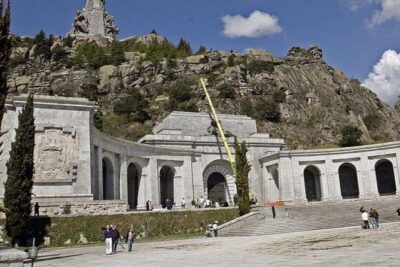
Escorial Monastery and the Valley of the Fallen Tour from Madrid
Read our review →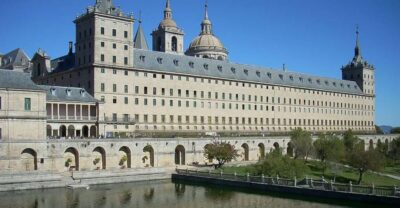
From Madrid: Escorial Monastery & Valley of the Fallen Trip
Read our review →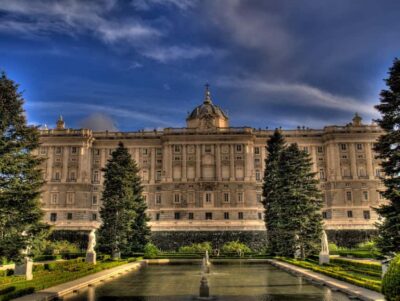
Madrid Must-see with Atardeder at the Debod Temple
Read our review →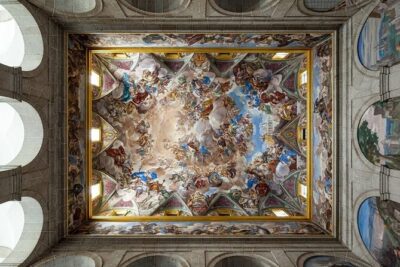
San Lorenzo de El Escorial Monastery Private Tour
Read our review →
Royal Monastery of the Barefoot nuns: Guided Tour + Tickets
Read our review →
Madrid: Entrance to the Monastery of Las Comendadoras de Santiago
Read our review →This tour also ranks in