
Review · KYOTO
KYOTO Tea Ceremony with kimono near by Imamiya Jinjya Shrine
Kyoto’s tea ceremony becomes much easier to understand when you are dressed for the occasion. This 90-minute experience begins with choosing an authentic kimono from a Nishijin collection, having your hair arranged, and learning how the many layers are put on. You then sit with a tea master who has practiced for 30 years and prepare tea yourself.
I like two things here. First, the dressing is treated as part of the culture, not just a quick costume change. Second, you do more than watch: you learn the meaning of the ceremony, taste matcha with a seasonal sweet, and make a cup of tea for someone else. The main consideration is that the dressing process can feel busy when everyone arrives at once, so arrive early if you can.
Key points to know before booking
- Three generations of tea-room tradition: The ceremony takes place in an older tea room near Daitoku-ji, an area closely linked with Japanese tea culture.
- Kimono and hair styling included: Staff help you select a kimono, arrange your hair, and dress you in the proper layers.
- A real hands-on ceremony: You watch the tea master first, then learn the manners and steps well enough to prepare your own tea.
- Photos are part of the experience: Staff help with poses and take pictures while you are dressed in kimono.
- Small-group setting: The maximum group size is 12 people, allowing room for explanations and individual turns.
- Good value for a cultural activity: At $99.49, the price covers the kimono, hair styling, instruction, tea, seasonal sweets, and about an hour and a half of guided activity.
Choosing a kimono near Daitoku-ji
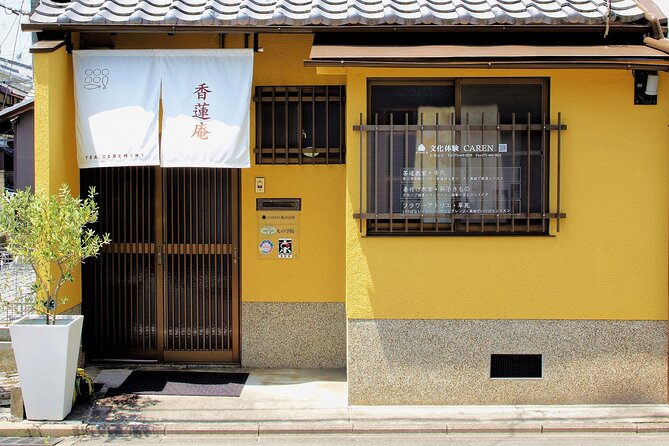
The experience starts at Tea Ceremony Caren, at 74-4 Murasakino Daitokujicho in Kyoto’s Kita Ward. It is near public transportation and close to Daitoku-ji, a temple area with strong ties to tea culture. The setting matters. You are not simply placed in a rented costume studio in the middle of a shopping district. You begin in a part of Kyoto where tea traditions feel at home.
You choose from a collection of kimono associated with Nishijin, Kyoto’s celebrated textile district. The available colors and patterns give you a personal choice, but the staff move efficiently, so it helps to have a general idea of the color you prefer before you arrive.
The dressing is more involved than putting on a robe over street clothes. Several layers and accessories are arranged carefully, and the process gives you a better sense of why wearing a kimono is a skill. It also explains why the experience takes 90 minutes even though the tea itself is not long.
Women can have their hair styled before the kimono is put on. The hair service is simple rather than a full salon appointment, but it helps the finished look. Men can also wear kimono, and the experience is suitable for couples, families, and solo participants.
One practical point: the dressing process can become hectic if the whole group arrives at the same time. Arrive a little early when possible. You will have more time to settle in, choose your kimono, and avoid feeling rushed at the start.
More Temple Tours around Kyoto:
- Kyoto: Tea Ceremony Ju-An at Jotokuji Temple
★ 4.9 · 3,207 reviews - Osaka/Kyoto:Kinkakuji,Arashiyama,FushimiInariShrine,NaraPark
★ 4.1 · 1,596 reviews - Arashiyama Bamboo, Temple, Monkeys, or Secret Sake Brewery
★ 4.8 · 886 reviews
Photos before the tea begins
Once you are dressed, staff arrange a short photo session. This is one of the most useful parts of the program for many people, since taking self-portraits in a formal kimono is awkward. Staff help with poses and take pictures so you can focus on the experience.
The photo time is not presented as a separate professional shoot with a long list of locations. It is a brief chance to record the moment before moving upstairs or into the tea-room setting. You may pose alone, with family, or with friends, depending on the group.
I like this order. You take pictures before the ceremony, then you can put your phone away and pay attention. The kimono also looks more natural after the hair and accessories are finished, rather than after a rushed change.
Keep in mind that the photo portion is shared within the group. With a maximum of 12 people, everyone should have a chance, but this is not a private portrait session. If you want many individual poses, you may need to keep them quick.
Watching a 30-year tea master
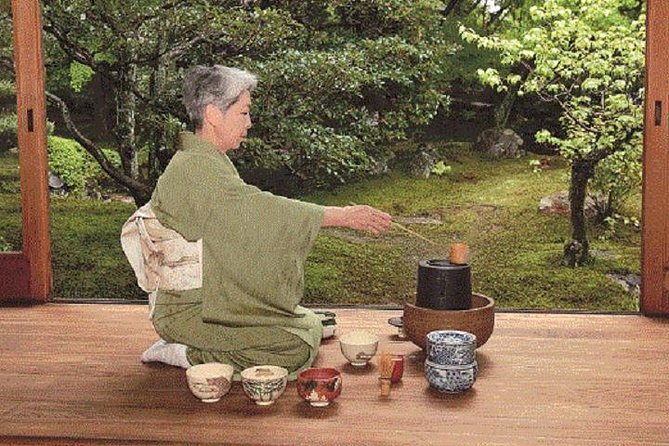
The central part of the activity is led by a tea master who has studied tea ceremony for 30 years. You first watch the traditional preparation, rather than being asked to copy movements without context.
The ceremony is built around small actions: how the tea is prepared, how it is presented, how you receive it, and how you show respect. The guide explains the meaning behind the steps and discusses the history of tea ceremony in Japan. An interpreter helps explain the presentation in English, and Akira is praised for making the history, customs, and photo session easy to follow.
This translation matters. Tea ceremony can look slow and formal from the outside. Without explanation, you might notice only the bowl, whisk, and careful movements. With commentary, you begin to see that the order of each action and the way you handle the tea are part of the lesson.
The presentation is formal, but the tone is welcoming. You can ask questions, and the staff explain the process rather than expecting you to know Japanese manners in advance. One particularly useful detail is learning how to appreciate the tea and seasonal sweet as part of the same ritual.
The tea room has been used by three generations. It is described as somewhat old, so do not expect a polished modern venue. That is part of the appeal for many people, but anyone seeking a sleek, staged studio should set expectations accordingly.
Preparing matcha yourself
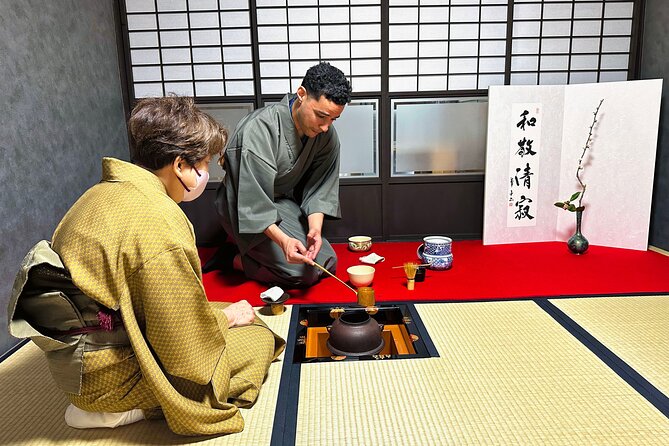
After watching the tea master, you get to try the process. You learn how to brew your own cup of Japanese tea and, in some sessions, serve it to another person in the group. This changes the activity from a performance into a lesson.
Your first attempt will not be as precise as the tea master’s. That is fine. The point is to learn the movements, understand the etiquette, and feel the care involved in preparing a simple bowl of tea.
The hands-on section is especially good for families and couples because you have something to do together. Teenagers who might find a long formal demonstration difficult have a clear role once they are invited to prepare tea. Solo participants are also included, with staff making sure they get a chance to take part.
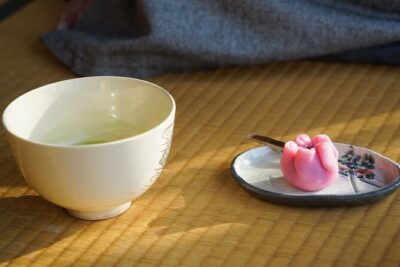
You receive matcha and a seasonal sweet. The food element is small, but it helps place the tea in its traditional setting. This is not a tea tasting with a wide menu or a meal. It is a focused introduction to one ceremony and its manners.
Same sacred ground, another way to see it:
- Kyoto Arashiyama Walking Tour: Bamboo, Monkeys, Gardens & Secrets
★ 5.0 · 1,216 reviews - Kyoto: Arashiyama Bamboo Forest, Monkeys, Matcha & Temple Tour
★ 5.0 · 759 reviews - Osaka/Kyoto: Arashiyama, Nara & Fushimi Inari Shrine w/Lunch
★ 4.4 · 754 reviews - Kyoto 1 Day Tour from Kyoto
★ 4.0 · 582 reviews
What makes the location useful
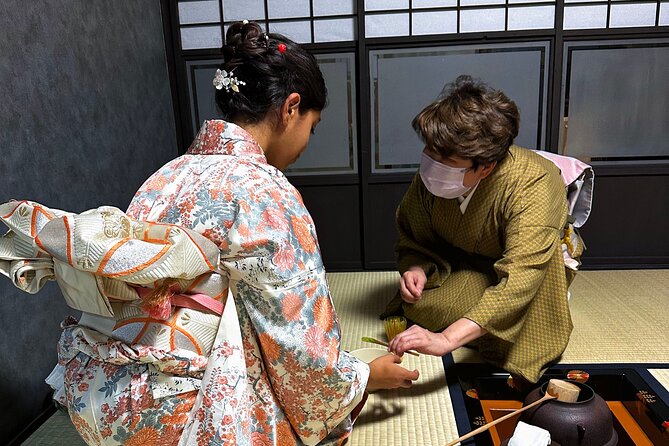
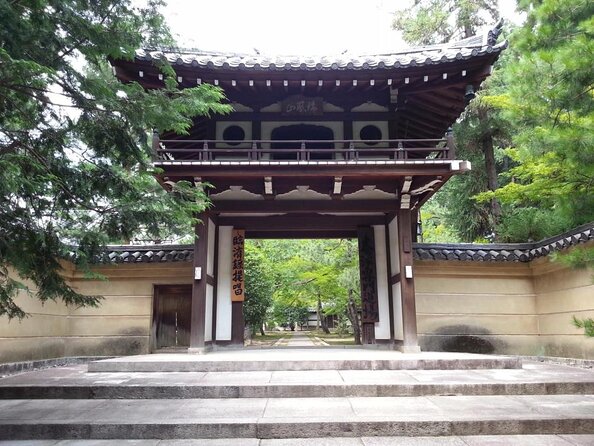
The meeting point is in Murasakino, near Daitoku-ji and Imamiya Jinjya Shrine. That puts the activity away from Kyoto’s busiest central shopping streets and close to an area tied to temples and tea culture.
The location can work well as part of a northern Kyoto day, especially if you already plan to visit Daitoku-ji or Imamiya Jinjya Shrine. The activity ends where it begins, so you do not need to arrange a separate ride back from the ceremony.
Private transportation is not included. You are responsible for reaching Tea Ceremony Caren, though the venue is near public transportation. Check the meeting address carefully and allow enough time for Kyoto’s streets and transit connections.
The experience may include a short walk connected with the nearby temple area, according to the way some sessions are conducted, so comfortable footwear is sensible. Once dressed in kimono, walking can feel less natural, and the traditional footwear may not suit a long day of sightseeing.
Is $99.49 a fair price?
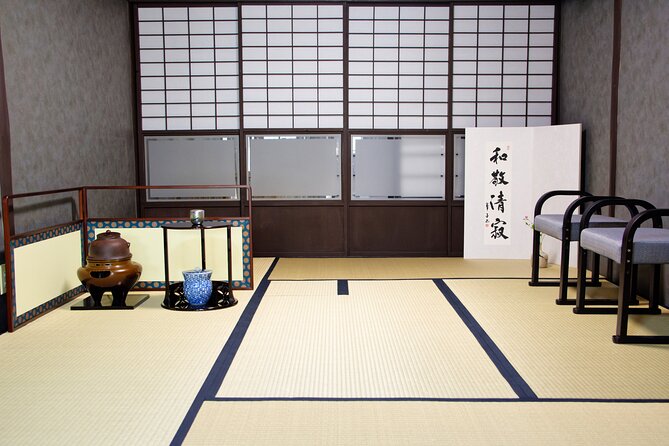
At $99.49 per person, this is not the cheapest way to drink matcha in Kyoto. You can find tea in many cafés for far less. That comparison misses what you are paying for here.
The fee includes access to an authentic kimono, help selecting and putting it on, hair styling, photographs, a professional tea master, an interpreter or guide, matcha, seasonal sweets, and the chance to prepare tea yourself. It also combines several activities that would cost more if booked separately: dressing, cultural instruction, and a hands-on ceremony.
The value depends on what you want from Kyoto. If your goal is simply to taste matcha, this is too elaborate. If you want a short cultural activity with a clear beginning and end, the price is reasonable, particularly for families or people who want photographs in traditional clothing.
The small group limit of 12 also helps. It is not a private ceremony, but it is small enough for explanations and individual turns. The strongest value comes from the staff attention: helping with the kimono, arranging hair, taking photos, translating the ceremony, and guiding your own tea preparation.
Who will enjoy this most?
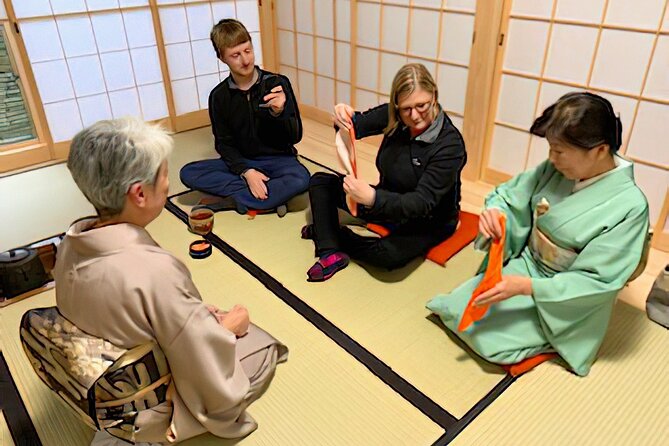
I would choose this experience for a first visit to Kyoto when you want an introduction to tea ceremony without committing to a highly formal, several-hour study. The program explains the basics in a friendly way and lets you participate before the 90 minutes begin to feel long.
It is also a good fit for:
- Couples who want photographs in kimono
- Families with teenagers
- Multigenerational groups
- Solo visitors who want a structured cultural activity
- Anyone curious about Japanese manners and tea preparation
- People who have never worn kimono or attended a tea ceremony
The experience is less suited to someone who dislikes being dressed by others, prefers a completely private activity, or wants an advanced tea-ceremony lesson. The group setting means you share attention and photo time. The tea room is older, not a luxury venue, and the activity focuses on one accessible introduction rather than a full course in tea ceremony.
Small details that improve the experience
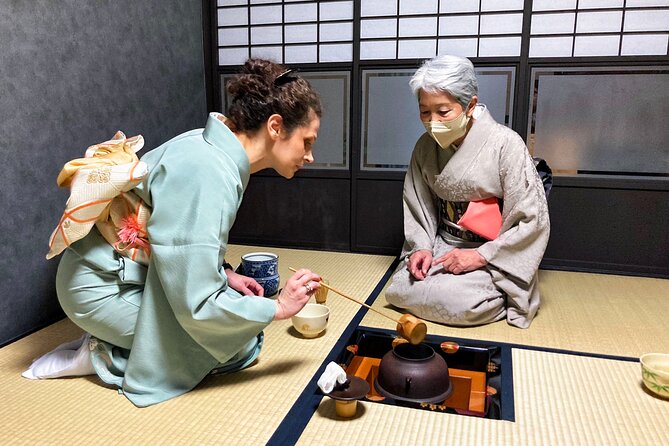
Choose your preferred kimono color early. Staff work quickly, and having a general choice in mind makes the dressing process smoother.
Arrive a little before the scheduled start if you can. The dressing and hair work are handled efficiently, but several people arriving at once can make the opening feel crowded.
Wear clothes that are comfortable under a kimono. The supplied information does not set out a specific dress code, but loose, simple clothing should make the layered dressing easier than bulky outfits.
Plan your day around the 90-minute duration. The activity ends at the meeting point, so it can fit before or after sightseeing around Daitoku-ji and Imamiya Jinjya Shrine. Do not schedule a tight connection immediately afterward, since the start includes dressing and preparation.
Remember that the kimono is not just a prop. Staff take time to arrange the layers and accessories, and the ceremony asks you to sit and move with care. The more you treat the clothing and room respectfully, the more meaningful the experience becomes.
Free cancellation is available if you cancel at least 24 hours before the local start time. Changes or cancellations within 24 hours are not refunded. The activity may also be rescheduled or refunded if poor weather affects it or if the minimum number of participants is not reached.
Should you book this Kyoto tea ceremony?
Book it if you want more than a cup of matcha. The combination of kimono dressing, hair styling, photographs, historical explanation, a demonstration by a long-practiced tea master, and your own turn preparing tea gives you a clear look at both the ceremony and the care behind it.
The best reason to choose it is the balance between participation and tradition. You are not left to perform a shallow costume photo session, but you also are not expected to sit silently through a ceremony you do not understand. Akira’s interpretation, the attentive dressing staff, and the chance to make tea yourself help bridge that gap.
Skip it if you want a private, high-end tea appointment or a serious advanced lesson. For most first-time visitors, couples, families, and solo visitors looking for a memorable cultural hour and a half near Daitoku-ji, the $99.49 cost is justified.
FAQ
Where does the tea ceremony take place?
It begins and ends at Tea Ceremony Caren, located at 74-4 Murasakino Daitokujicho, Kita Ward, Kyoto, 603-8231, Japan.
How long does the experience last?
The activity lasts approximately 1 hour and 30 minutes.
Is the kimono included?
Yes. You choose an authentic kimono from the available collection, and staff assist you with putting it on.
Is hair styling included?
Yes. The program includes help with setting your hair before you put on the kimono.
Can I take photographs?
Yes. The experience includes a simple photo session while you are dressed in kimono, and staff help take photographs.
Do I prepare tea myself?
Yes. After watching the tea master and learning about the ceremony, you have the opportunity to prepare your own cup of tea.
Is tea included?
Yes. Coffee and/or tea are included, along with a seasonal sweet during the ceremony.
How large is the group?
The activity allows a maximum of 12 participants.
Is transportation included?
No. Private transportation is not included. The meeting point is near public transportation.
Can I cancel for a refund?
You can cancel at least 24 hours before the local start time for a full refund. Cancellations or changes made within 24 hours are not refunded.
Temple visits we reviewed lately in Kyoto
- Kyoto: Zen Meditation at a Private Temple with a Monk★ 5.0 · 202 reviews
- Kyoto:Kiyomizu-dera Temple Rent a kimono and ride a rickshaw★ 4.8 · 7 reviews
- KYOTO: Tempio Kiyomizu Pagode Gion “Geisya” (Guida Italiana)★ 4.7 · 17 reviews
- Kyoto: Kiyomizudera, Sanjusangendo, Ginkakuji and Higashiyama.★ 5.0 · 3 reviews
- Kyoto:Quiet Arashiyama and Sagano Temples★ 4.8 · 5 reviews
- Kyoto: Shakyo & Matcha in Historic Temple Garden★ 5.0 · 4 reviews
- Kyoto: Samurai Sword & Kimono Action Filming Experience★ 4.8 · 78 reviews
- Kyoto: Nara, Todaiji, Kasuga Taisha Shrine Private Full Day★ 4.9 · 18 reviews
Kyoto Temple Tours, compared.
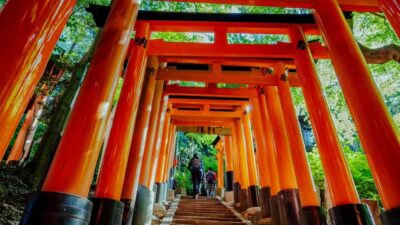
Osaka/Kyoto:Kinkakuji,Arashiyama,FushimiInariShrine,NaraPark
Read our review →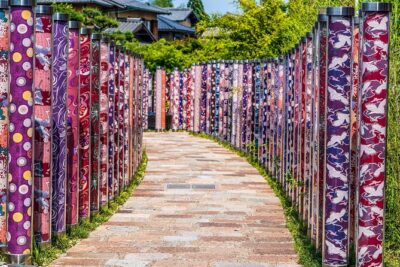
Kyoto Arashiyama Walking Tour: Bamboo, Monkeys, Gardens & Secrets
Read our review →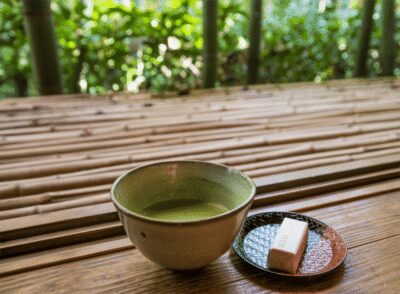
Arashiyama Bamboo, Temple, Monkeys, or Secret Sake Brewery
Read our review →
Kyoto: Arashiyama Bamboo Forest, Monkeys, Matcha & Temple Tour
Read our review →
Osaka/Kyoto: Arashiyama, Nara & Fushimi Inari Shrine w/Lunch
Read our review →
Kyoto Zen Meditation & Garden Tour at a Zen Temple with Lunch
Read our review →This tour also ranks in