
Review · ROME
Rome underground hidden temples, ruins, and secret basilicas
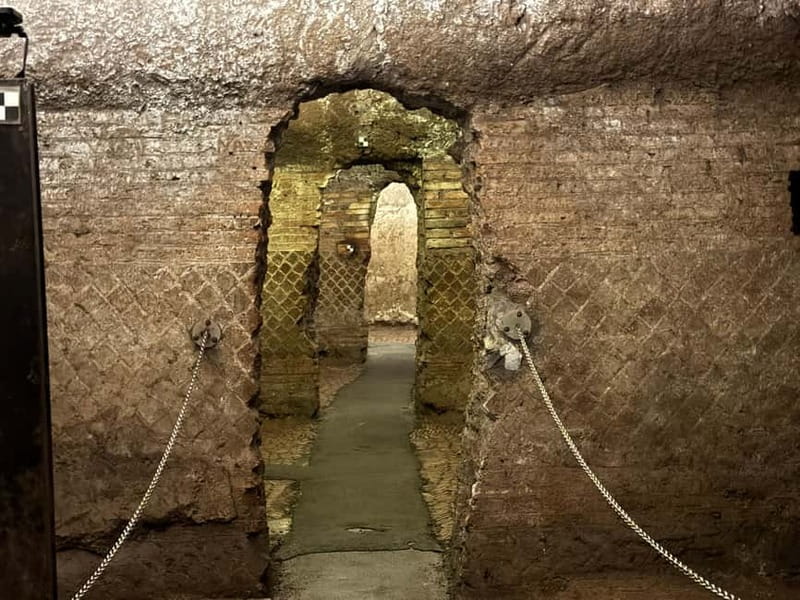
The most striking part of this Rome tour is the way the city keeps going downward. Beneath modern streets and a 12th-century church, you find an older basilica, a Roman house, and a secret Mithraic temple. You also see Michelangelo’s Moses and the chains said to have bound St. Peter, all within walking distance of the Colosseum.
I like the mix of major art and lesser-seen ruins. I also like the compact route: San Pietro in Vincoli, the Ludus Magnus, and San Clemente fit neatly into one to two and a half hours. The main drawback is physical. Stairs, uneven surfaces, and underground passages make this a poor choice for wheelchair users, and the churches strictly require covered knees and shoulders.
Key points at a glance
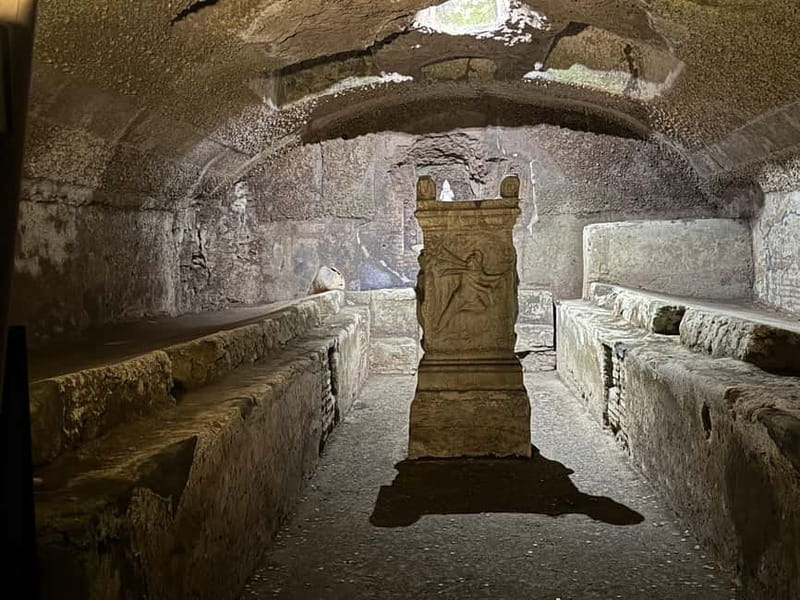
- Three layers beneath San Clemente: See a 12th-century basilica, a 4th-century church, and a 1st-century Roman house with a Mithraeum.
- Michelangelo’s Moses: Visit San Pietro in Vincoli for the famous sculpture and the paired chains associated with St. Peter.
- A gladiator training ground: Stop at the Ludus Magnus, once connected to the Colosseum by underground passages.
- Two ways to go: Choose a private guided tour or an audio-guided visit to San Clemente in five languages.
- Short walking route: The sites are linked on foot, with no vehicle transfer included.
- Plan for church rules: Bring comfortable shoes, cover your knees and shoulders, and leave large bags behind.
Why Rome’s underground layers matter
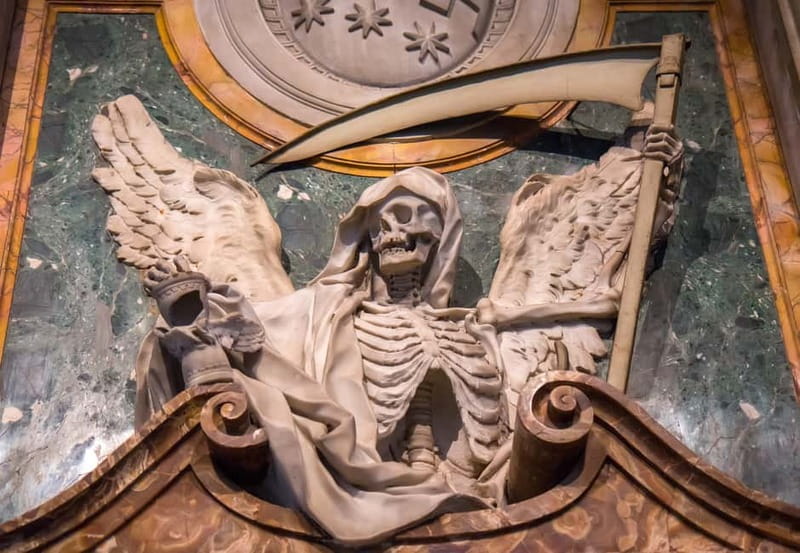
Rome is famous for its grand monuments, but its most useful history lesson often comes from looking below street level. Buildings were regularly repaired, rebuilt, or buried. As the city changed, older structures did not simply vanish. They became foundations, cellars, churches, and archaeological sites.
This experience gives you a clear way to read those layers. At San Clemente, you move backward through time as you go down. That physical movement makes the history easy to grasp. You are not just hearing that Rome was built over earlier Rome. You are seeing it happen, floor by floor.
The route also balances Christian and pagan sites. San Pietro in Vincoli brings in early Christian tradition and Renaissance art. The Ludus Magnus points to the world of gladiatorial training. San Clemente then brings together Christian worship, Roman domestic life, and the secret cult of Mithras.
At $31 per person, the price is reasonable if you want several historic stops with an expert guide and entrance tickets included. It is less of a bargain if you only want access to San Clemente and already prefer to read signs at your own pace. The audio option may suit you better in that case, especially if you want control over your timing.
The public score is 3.7 out of 5 from 21 ratings, so I would keep expectations sensible. This is not a polished theatrical production. Its value comes from the sites themselves, the small private format, and the unusual sequence beneath Rome.
More Temple Tours around Italy:
- Agrigento: Valley of the Temples Skip-the-Line Sunset Tour
★ 4.5 · 1,512 reviews - Pantheon Elite Guided Tour – Rome’s Iconic Ancient Temple
★ 5.0 · 1,447 reviews - Palermo: Agrigento and the Valley of the Temples Day Tour
★ 4.2 · 1,240 reviews
San Pietro in Vincoli and Michelangelo’s Moses
The route begins at San Pietro in Vincoli, also called St. Peter in Chains. Depending on the option you book, the meeting point may be on Via Labicana 96 or in Piazza di San Pietro in Vincoli. Confirm the exact location before setting out, since the starting point can vary.
Inside the church, the major draw is Michelangelo’s Moses. The sculpture was created for the tomb of Pope Julius II and is known for its forceful pose, detailed beard, and intense expression. You will have time to look closely rather than rushing past it as part of a huge museum circuit.
The church also holds two sets of chains traditionally linked to St. Peter. Their importance is religious, but the display also shows how Rome layers belief, art, and political power into the same small space.
This first stop is above ground, so it provides a useful pause before the more confined archaeological sections. It is also a reminder that the tour is not only about ruins. You get a famous Renaissance work, a church still used for worship, and a chance to see how Rome’s sacred places remain part of daily life.
Dress properly from the start. Knees and shoulders must be covered for both men and women, and the rule is strictly enforced. Smart casual clothing is required. If you arrive in summer clothing that leaves shoulders or knees bare, you may be refused entry.
The Ludus Magnus and Rome’s gladiators
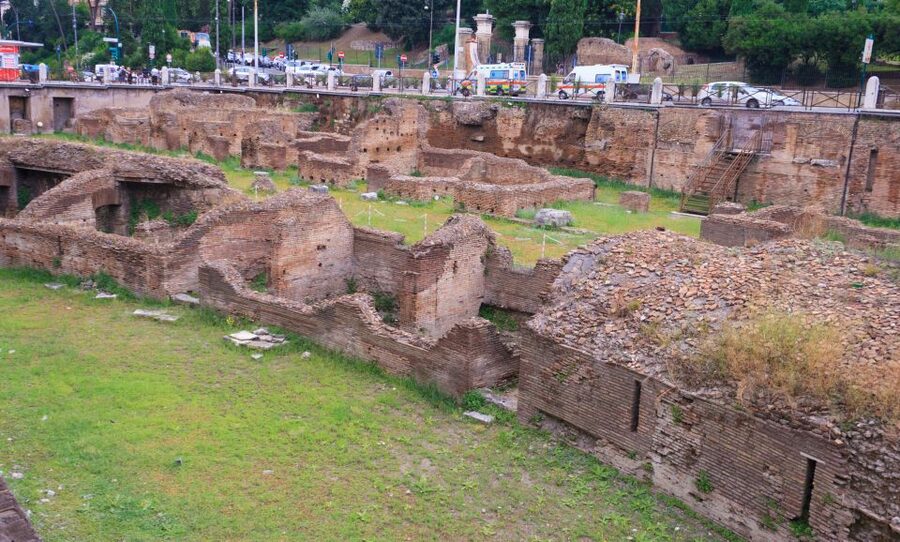
The next stop is the Ludus Magnus, the ancient gladiator training school near the Colosseum. The ruins are lower and quieter than the arena itself, but they help explain what happened before a fighter entered the famous amphitheater.
Gladiators trained, lived, and prepared for combat in facilities connected to the Colosseum by underground routes. Looking at the remains, you can picture the practical side of the spectacle: practice, storage, movement, and the organization needed to stage public fights.
The guided portion here lasts about 15 minutes. That is brief, but it works well as a focused stop between the church and San Clemente. You are not spending half a day at one archaeological site. Instead, you are building a picture of ancient Rome through several compact pieces.
The main limitation is that the Ludus Magnus is a ruin rather than a fully restored building. You will need some imagination. The guide’s explanation matters here, because bare stone walls and partial foundations do not tell their full story on their own.
This stop also adds useful contrast. San Pietro in Vincoli centers on a powerful sculpture and Christian relics. The Ludus Magnus takes you into the machinery of public entertainment in imperial Rome. Together, they make the later visit to San Clemente feel broader, not repetitive.
San Clemente, Rome’s best lesson in stacked time
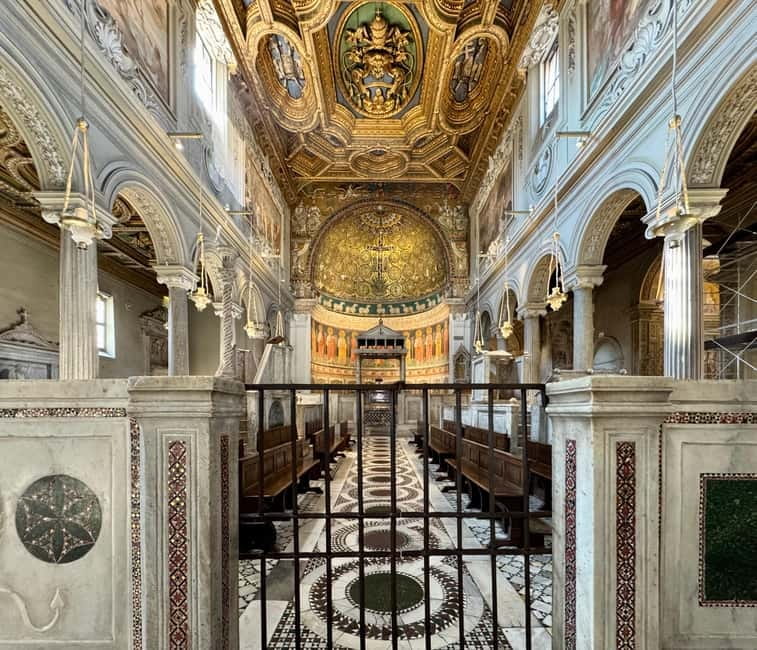
The high point of the experience is the Basilica of San Clemente al Laterano. It is one of Rome’s most unusual churches because the building is really a vertical archaeological record.
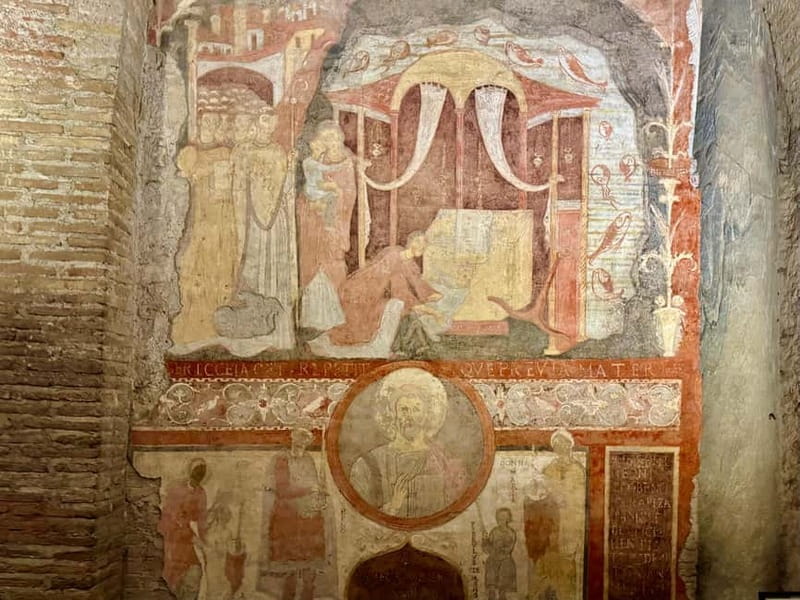
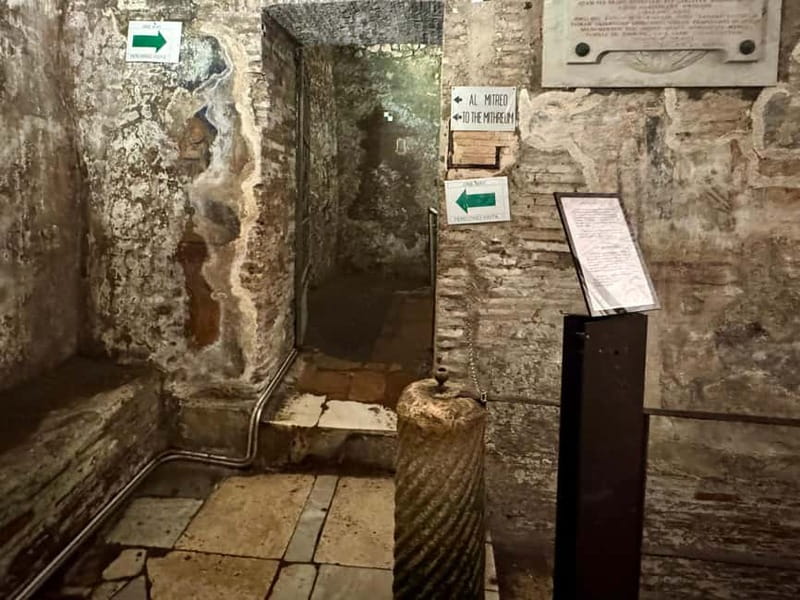
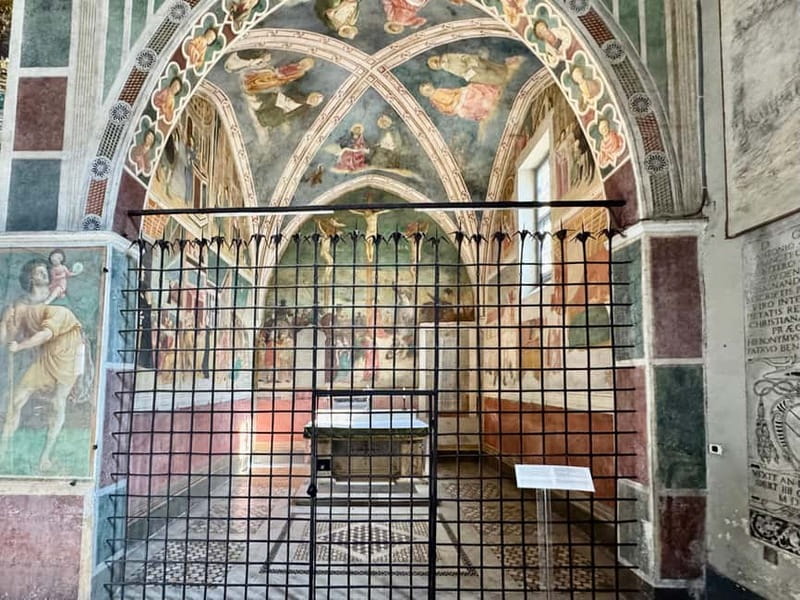
You begin in the 12th-century basilica, where the interior includes glittering mosaics and the atmosphere of a working church. From there, you descend to the 4th-century church beneath it. Finally, you reach a 1st-century Roman house and a Mithraeum, a temple connected with the ancient cult of Mithras.
The order matters. You are not simply walking through unrelated ruins. Each level explains how a later Rome was built over an earlier one. The church above did not erase the lower structures completely. It preserved them, buried them, and changed their meaning.
The 4th-century church gives you a sense of early Christian worship in a city still changing from pagan Rome to Christian Rome. The remains are more austere than the upper basilica, which makes the contrast easy to see.
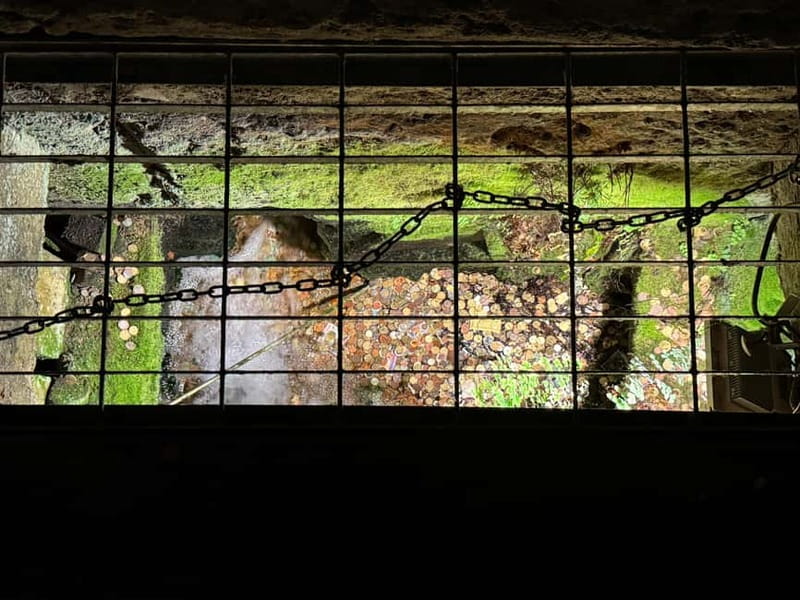
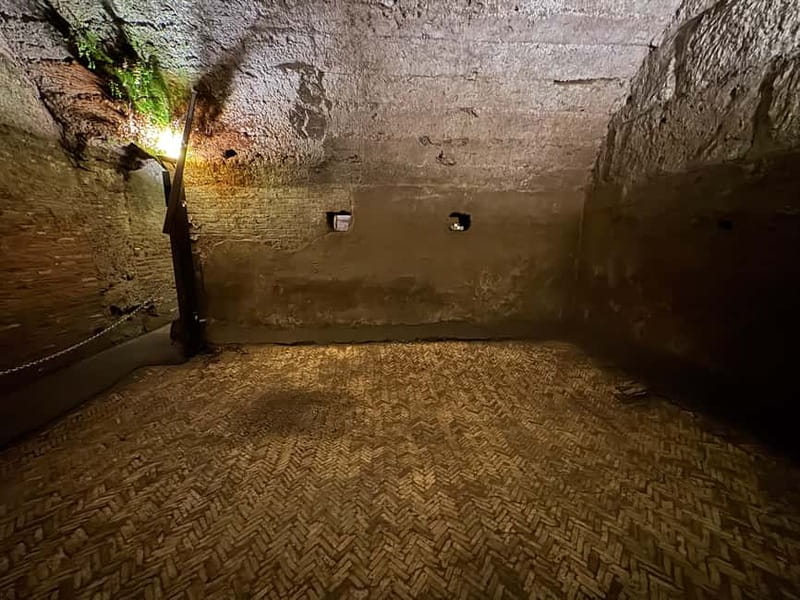
At the lowest level, the Roman house brings the story further back. You may find the space more atmospheric than visually grand, with dark passages and exposed ancient construction. The Mithraeum is especially interesting because it represents a private religious world that existed alongside Rome’s public temples and later Christian churches.
The underground areas are the reason to wear sturdy shoes. You will use stairs, and the surfaces can be uneven. The site is not wheelchair accessible and does not accommodate non-folding wheelchairs, walking frames, or electric wheelchairs.
The guided visit to San Clemente lasts about 45 minutes. That is enough time to understand the main levels, but not so long that the experience becomes tiring for most visitors. If you like archaeology and want more time to study details, the audio option lets you set your own pace.
Same sacred ground, another way to see it:
- Rome’s Iconic Temple: Pantheon Audio Guided Tour with Fast Access
★ 4.0 · 1,188 reviews - Agrigento: Valley of the Temples Ticket & App Audioguide
★ 4.3 · 1,160 reviews - Colosseum Special Access Tour, with Ancient Temples & Tombs
★ 4.8 · 747 reviews - Agrigento: Valley of the Temples E-Scooter Tour
★ 4.6 · 557 reviews
Private guide or audio app?
The private guided option is the fuller experience. It includes San Pietro in Vincoli, the Ludus Magnus, and all three underground levels at San Clemente. A private English-speaking guide is specified, while the activity information also lists live guiding in English, Spanish, Italian, and French. Check the language available for your chosen departure.
A private guide is most useful at the Ludus Magnus and in the lower levels of San Clemente. Ruins can be hard to read without context, and a guide can connect the physical remains to the people and practices that once used them. You also have a chance to ask questions as you go.
The audio-guided option focuses on San Clemente. It includes admission and access to the three underground levels, with audio available in English, Italian, Spanish, French, and German. This is the better choice if you prefer independence or want to linger at one section without keeping up with a group.
The app requires a smartphone produced in 2020 or later with a current operating system. Older devices may have compatibility or playback problems. Bring your own headphones, since they are recommended for clear listening.
Do not assume the audio option includes the full walking route. The information provided specifically describes it as an audio-guided tour of San Clemente, while the private guided version includes all three locations. If Moses and the gladiator school are essential to you, choose the private option.
Timing, walking, and meeting points
The total duration ranges from one to two and a half hours, depending on the option and schedule. All sites are within walking distance, but transportation between them is not provided. Wear comfortable shoes and leave room in your schedule for short walks through Rome’s streets.
The starting point can be Via Labicana 96 or Piazza di San Pietro in Vincoli. Because the meeting point varies, check your confirmation carefully rather than heading straight to the Colosseum and hoping to find the group.
The tour finishes at Piazza di San Clemente. That is useful if you plan to continue toward the Colosseum, Monti, or another central Rome sight. It also means you are not returned to your hotel, so plan your next stop from the final location.
The route operates in all weather. Most of the important sites are indoors or underground, but you still walk outside between them. Bring a light layer or rain protection when needed.
Large bags and luggage are not allowed. Pets and smoking are also not permitted. Bring a passport or identity card, as identification may be required.
The church dress code is not optional
The dress code deserves special attention because it can affect the whole outing. Knees and shoulders must be covered for everyone entering the churches. This rule is strictly enforced.
A practical approach is to wear long trousers or a longer skirt and a shirt that covers the shoulders. If you are visiting Rome in hot weather, carry a scarf or light overshirt, but do not rely on improvisation at the door.
San Pietro in Vincoli and San Clemente are religious buildings, not only archaeological attractions. Dress respectfully, keep your voice down inside, and remember that worship may still be taking place.
Who will enjoy this underground Rome experience?
I would recommend the private guided version to you if you have already seen the Colosseum’s main spaces and want a different angle on ancient Rome. It is also a good fit if you enjoy connecting art, religion, architecture, and archaeology in one compact outing.
Families with older children may appreciate the physical story of going down through successive eras. The gladiator connection provides an easy hook, while the Mithraeum adds a less familiar side of Roman life. Very young children may find the darker underground passages less engaging, and the stairs require care.
The audio option suits independent visitors who do not need the full route. It is also practical for anyone who wants to pause, replay information, or spend more time with San Clemente’s mosaics and lower ruins.
I would not choose this activity if you use a wheelchair, walking frame, or electric wheelchair. I would also skip it if you dislike stairs, confined archaeological spaces, or short outdoor walks in changing weather.
Is $31 a fair price?
At $31, the price sits in a useful middle ground for Rome. Admission to San Clemente is included, and the private guided option adds San Pietro in Vincoli, the Ludus Magnus, and a guide. That makes the guided version good value if you want several sites explained in one outing.
The audio option offers a different kind of value. You receive entry to San Clemente and an audio guide, but not the full private walking experience. Its strength is flexibility rather than the number of included stops.
The rating of 3.7 out of 5 suggests the experience will not suit everyone equally. That makes sense: some people want Rome’s headline monuments, while this route rewards patience, stairs, and interest in lesser-known archaeological layers. The strongest feedback points to the audio experience as clear and useful, and to the duration as manageable. You should book with those expectations.
Free cancellation up to 24 hours before the start and reserve-now, pay-later booking add useful flexibility. They do not change the physical demands of the route, so read the accessibility notes before paying.
Should you book this tour?
Book it if you want to see Rome from below street level, especially if you like churches, ancient ruins, and stories that connect several periods. The private route gives you the best overall value because it combines Moses, St. Peter’s chains, the gladiator school, and San Clemente’s three underground levels.
Choose the audio version if San Clemente is your main goal and you prefer to explore alone. Skip the experience if stairs and uneven ground are a problem, or if you want a broad, fast survey of Rome’s headline sights.
For the right visitor, this is a smart use of a short block of time. You leave the Colosseum area having seen not just imperial Rome, but the older houses, secret worship, early churches, and later basilicas that still sit beneath the city.
FAQ
How long does the underground Rome experience take?
The activity lasts between one and two and a half hours, depending on the option and starting time selected.
What sites are included in the private guided tour?
The private guided tour includes San Pietro in Vincoli, Michelangelo’s Moses, the chains associated with St. Peter, the Ludus Magnus, and all three underground levels of the Basilica of San Clemente.
What does the audio-guided option include?
The audio option includes entry to the Basilica of San Clemente, access to its three underground levels, and an audio guide in English, Italian, Spanish, French, or German.
What languages are available?
The private tour is specified in English, and live tour information also lists Spanish, Italian, and French. The audio guide is available in English, Italian, Spanish, French, and German.
Is the tour wheelchair accessible?
No. The underground areas include stairs and uneven surfaces, and the experience is not suitable for wheelchair users. Non-folding wheelchairs, walking frames, and electric wheelchairs are not allowed.
What should I wear and bring?
Wear comfortable shoes and clothing that covers your knees and shoulders. Bring a passport or identity card. For the audio option, bring your own headphones and use a smartphone from 2020 or later with the latest operating system.
Temple visits we reviewed lately in Italy
- Rome: Temples, Squares & Markets Guided Walking Tour★ 4.8 · 26 reviews
- Rome: Tour of St. Clement’s Basilica Underground Temples★ 4.8 · 242 reviews
- Palermo to Siracusa: stop al Valley of Temples & Roman Villa★ 5.0 · 5 reviews
- Paestum Tour: Best Preserved Temples in the World (UNESCO)★ 4.5 · 11 reviews
- Paestum: 2-Hour Greek Temples & Archaeological Museum★ 4.8 · 19 reviews
- Paestum: Temples and Museum Tour with Archaeologist Guide★ 5.0 · 14 reviews
- Neustift Monastery: Admission with audio guide★ 4.6 · 9 reviews
- Monreale: Guided tour of Cathedral, Monastery and Mosaics★ 4.3 · 29 reviews
Rome Temple Tours, compared.
Pantheon Elite Guided Tour – Rome’s Iconic Ancient Temple
Read our review →
Rome’s Iconic Temple: Pantheon Audio Guided Tour with Fast Access
Read our review →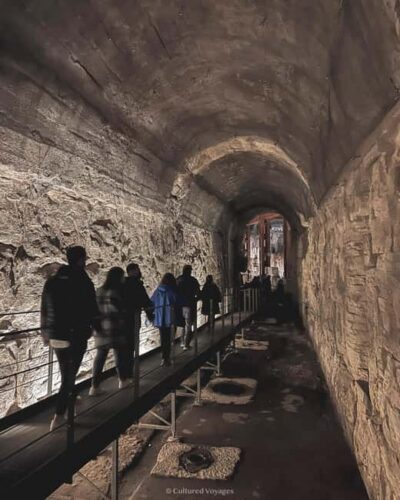
Colosseum Special Access Tour, with Ancient Temples & Tombs
Read our review →
Walking Guided Tour and Rome’s Iconic Temple Pantheon Entrance
Read our review →
Rome’s Iconic Ancient Temple: Pantheon Fast Track Entry Tickets
Read our review →
Rome: Tour of St. Clement’s Basilica Underground Temples
Read our review →
Pantheon: The Iconic Ancient Roman Temple – Semi-Private Tour
Read our review →
Rome: Temples, Squares & Markets Guided Walking Tour
Read our review →This tour also ranks in