
Review · KYOTO
KYOTO: Tour guidato tra i tesori della città (in italiano)
Kyoto packs a remarkable amount into one day here: the Sagano Bamboo Forest, the gold-covered Kinkaku-ji, Kiyomizu-dera, Gion, and Pontocho. The Italian-speaking Kyoto guide adds context as you go, explaining not only temples and imperial history but also daily life, the samurai class, and the work of Maiko and Geiko.
I like two things right away: all trains, buses, subway rides, and entrance fees are included, and the route covers both famous sights and old streets on foot. The main thing to consider is the pace. The published schedule is called half-day in one place and one day in another, but the sequence, including an hour break at Kyoto Station, reads like a long sightseeing day.
- Start at Kyoto Station: Meet by the taxi terminal, with Kyoto Tower visible to your upper left.
- Walk through Sagano: Spend about an hour among the famous bamboo paths.
- See Kinkaku-ji: Visit the Golden Pavilion and its grounds with your guide.
- Explore southern Kyoto: Visit Kiyomizu-dera, Sannenzaka, and Ninenzaka.
- Finish in Gion and Pontocho: Learn about Maiko, Geiko, and Kyoto’s traditional entertainment districts.
- Tour in Italian: The guide explains each site in fluent Italian and answers questions throughout the day.
From Kyoto Station to Sagano’s Bamboo Paths
Your day begins at Kyoto Station’s North Entrance, also called the Karasuma-guchi. The exact meeting place is in the open space between the two escalators in front of the taxi terminal, not the bus terminal. Kyoto Tower should be in front of you, toward the upper left.
That small detail matters. Kyoto Station is large, busy, and easy to misread when you first arrive. Take a moment to identify the taxi terminal before you start looking for the guide. You receive a message with final meeting instructions by the day before the tour, so check your email before leaving your hotel.
The first train ride takes about 20 minutes. This is a useful start because you can ask early questions and get a short introduction to Kyoto before the walking begins. The guide is a native Kyoto resident and speaks Italian, which gives you a chance to ask about local customs, food, family life, religion, or the parts of Japanese history that interest you most.
The first major stop is the Sagano Bamboo Forest. You have about an hour for a guided visit and walk. The tall bamboo makes this one of Kyoto’s most recognizable places, but its fame also means you should not expect a quiet private woodland. The value of having a guide here is not simply finding the path. It is understanding how the Sagano area fits into the older world of Kyoto, where aristocrats, imperial relatives, and literary figures came to enjoy the countryside.
The route also gives you a change of mood. The morning begins with natural scenery and a walk, rather than sending you straight into a line of temple gates. Wear shoes you can walk in comfortably. The overall schedule includes several short walks, station transfers, and visits where you will want to keep moving.
Kinkaku-ji, Kyoto’s Golden Pavilion
After the bamboo forest, you take another train for about 20 minutes, followed by a 15-minute bus ride to Kinkaku-ji. The transport connections are part of the appeal of this experience. Kyoto’s sights are spread across the city, and arranging trains and buses yourself can take time, especially on a first visit.
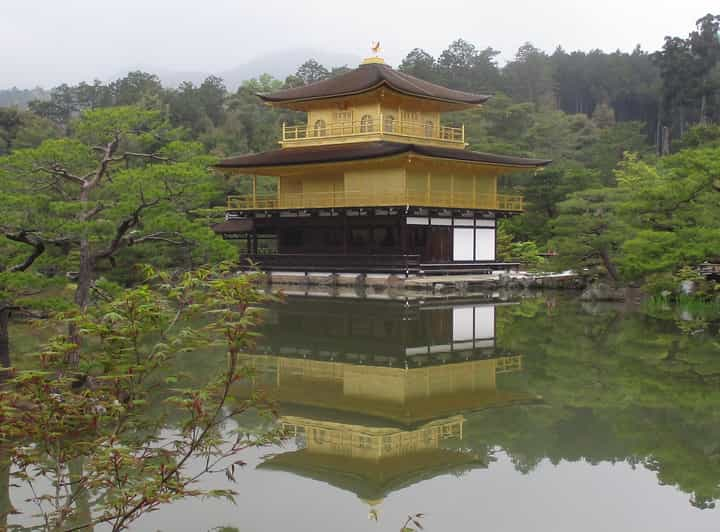
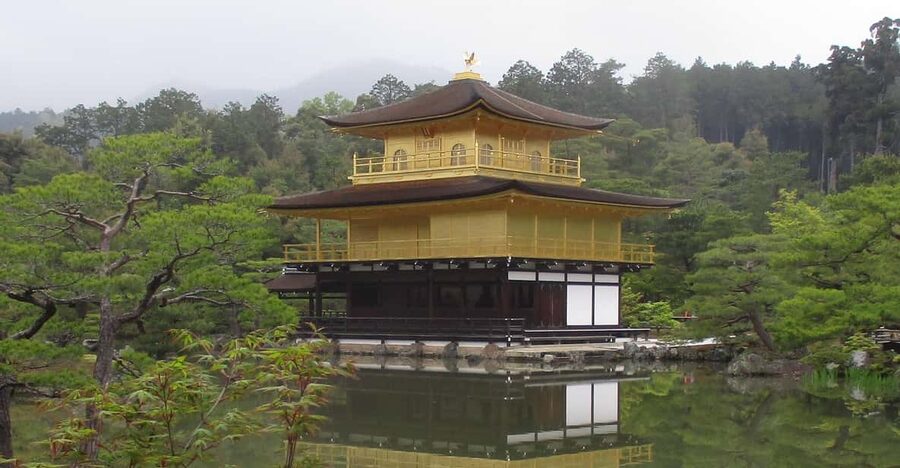
Kinkaku-ji is commonly called the Golden Pavilion. Its upper floors are covered in gold leaf, and the building is set beside a pond in carefully arranged temple grounds. You have about an hour for the visit, including guided sightseeing.
This is a place where a short explanation adds real value. The pavilion is not just a pretty building to photograph. It reflects the taste of powerful figures from Kyoto’s past and the close relationship between architecture, gardens, religion, and status. The guide also connects the site to the former vacationing and retirement places of aristocrats and members of the imperial family.
You should expect this stop to be visually strong but structured. You follow the established path through the grounds rather than wandering freely wherever you choose. An hour is enough to see the main views and hear the historical explanation, though you may wish you had extra time if photography is your main goal.
The tour provides the entrance fee, so you do not need to manage another payment at the gate. That may sound minor, but several admission fees and local transport fares can add up in Kyoto. At $153 per person, the included tickets and transportation help explain the cost, particularly when you also value a full day of Italian-language guiding.
More temples and shrines worth the early start around Kyoto:
- Kyoto: Tea Ceremony Ju-An at Jotokuji Temple
★ 4.9 · 3,207 reviews - Osaka/Kyoto:Kinkakuji,Arashiyama,FushimiInariShrine,NaraPark
★ 4.1 · 1,596 reviews - Kyoto Arashiyama Walking Tour: Bamboo, Monkeys, Gardens & Secrets
★ 5.0 · 1,216 reviews
A Break at Kyoto Station Before Southern Kyoto
From Kinkaku-ji, the group takes a bus for about 15 minutes, then a subway ride of roughly 15 minutes back to Kyoto Station. The schedule includes an hour-long break there before the afternoon portion begins.
This pause gives the day some breathing room. You can eat, use the station facilities, or simply sit down before the next set of temples and old streets. It also makes the schedule easier for people who want to leave the tour at this point. The experience allows you to depart partway through, though you should coordinate with the guide rather than simply disappearing during a transfer.
The break also reveals the shape of the day. This is not a short, two-hour introduction to Kyoto. Even though the experience is described as lasting half a day in the route information, the listed stops and transport times make it closer to a long day of sightseeing. Check the available start time when booking and keep the rest of your evening flexible.
Kiyomizu-dera and the Old Hillside Streets
The afternoon begins with a 15-minute bus ride from Kyoto Station to Kiyomizu-dera. You have about an hour for the temple and guided sightseeing.
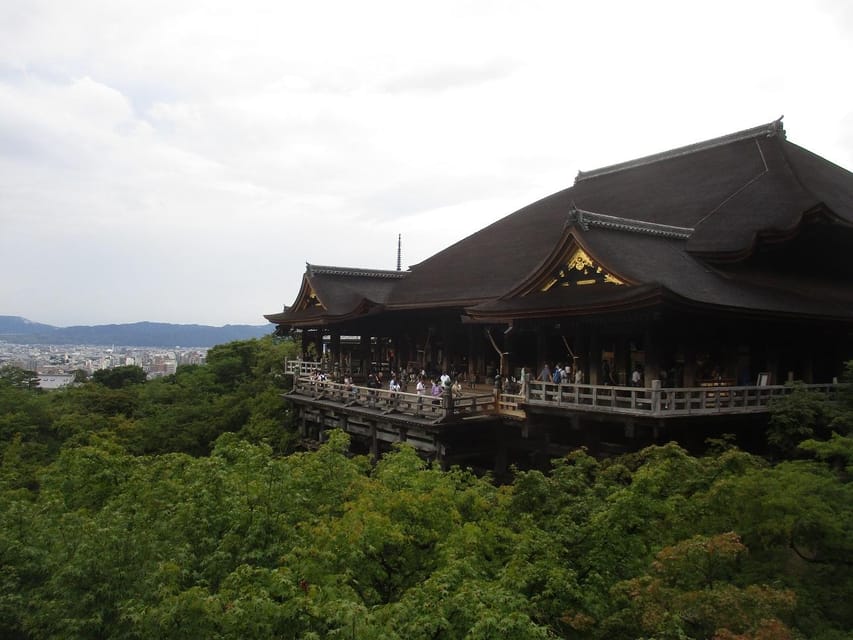
Kiyomizu-dera is one of Kyoto’s essential visits. Its setting on the eastern hills gives the temple a different feel from Kinkaku-ji, which is viewed mainly across its pond and garden. Here, the approach, the elevated temple structures, and the surrounding lanes all form part of the experience.
Your guide can place the temple in the wider story of Kyoto’s religious and civic life. You will hear about the beliefs, customs, and daily routines of people who lived in the ancient capital, rather than receiving only a list of construction dates. The tour is designed to answer questions, so this is a good place to ask about temple practices or the difference between Buddhist and Shinto sites if those subjects are new to you.
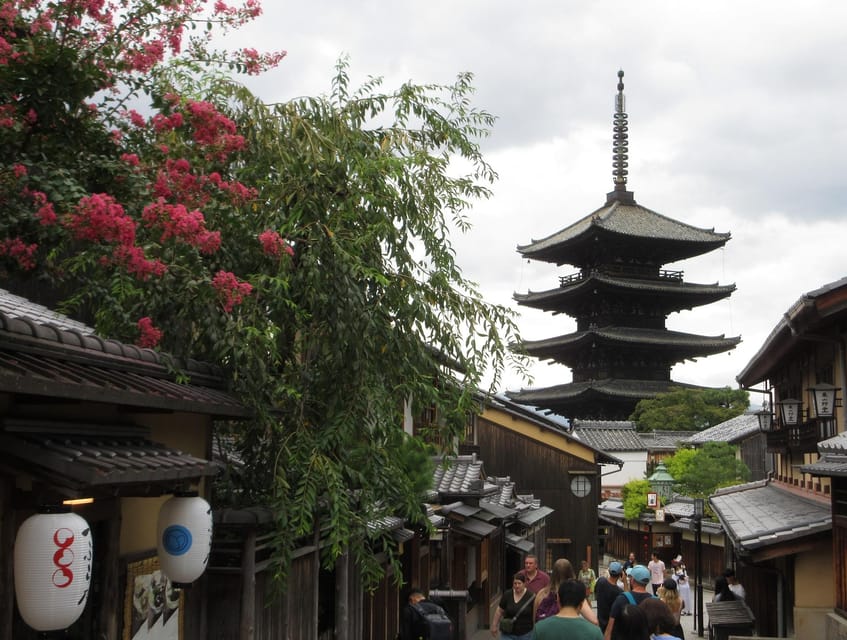
After Kiyomizu-dera, the route continues on foot through Sannenzaka and Ninenzaka. These traditional streets are short visits, about three minutes in Sannenzaka and two minutes in Ninenzaka according to the schedule, but they are important links between the temple and Gion. The tour then includes a further 15-minute walk toward Gion.
Do not read those very short stop times too literally. They indicate brief guided passages rather than full independent visits. You will see the streets, hear why they matter, and continue with the group. If you want long shopping stops, extensive photography, or time inside individual shops, this route may feel tight.
The old streets are also where comfortable footwear matters most. The tour involves walking between several nearby areas, and the day already includes the bamboo forest and temple grounds. The activity is listed as wheelchair accessible, but the route contains repeated walking sections and public transport transfers. If you use a wheelchair, ask for current route details before booking so the guide can confirm how each stop will be handled.
Gion, Maiko, Geiko, and Minami-za
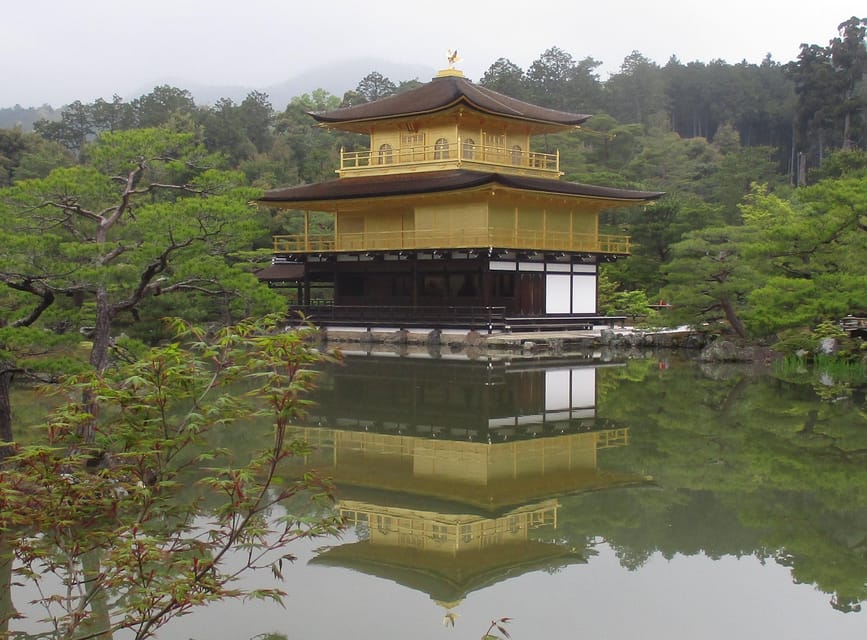
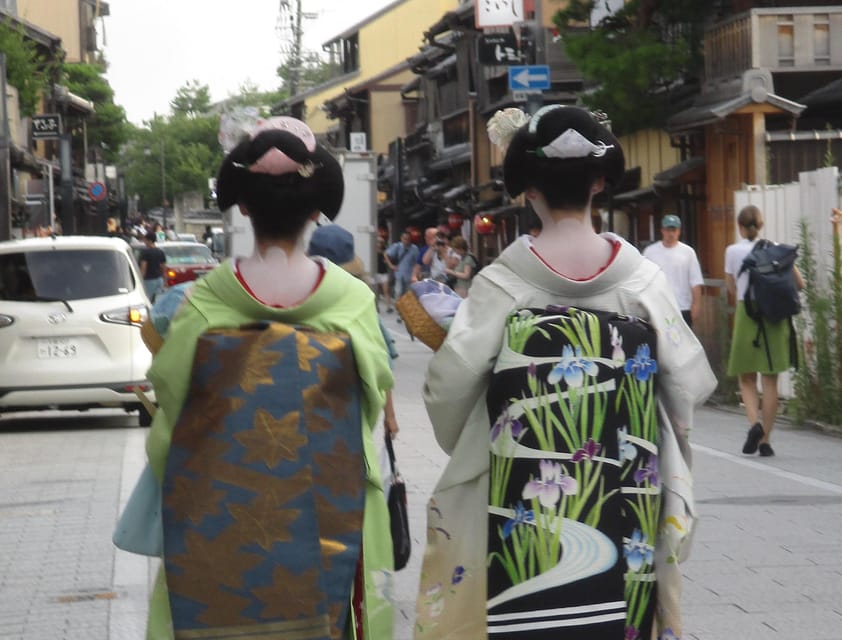
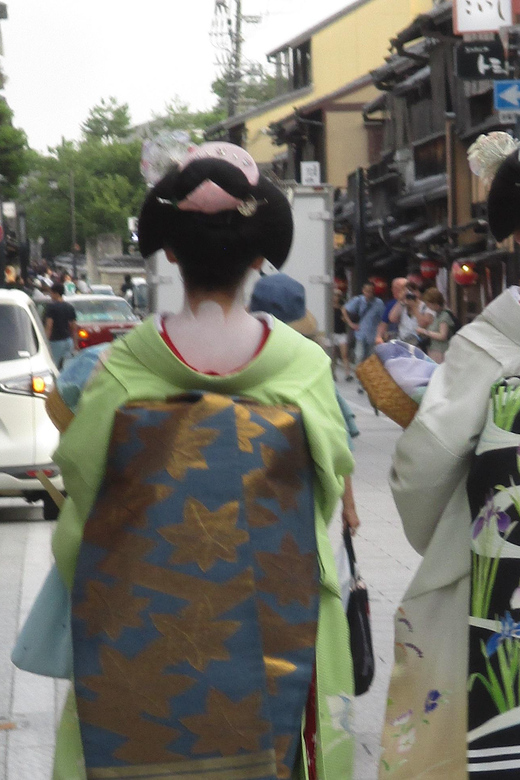
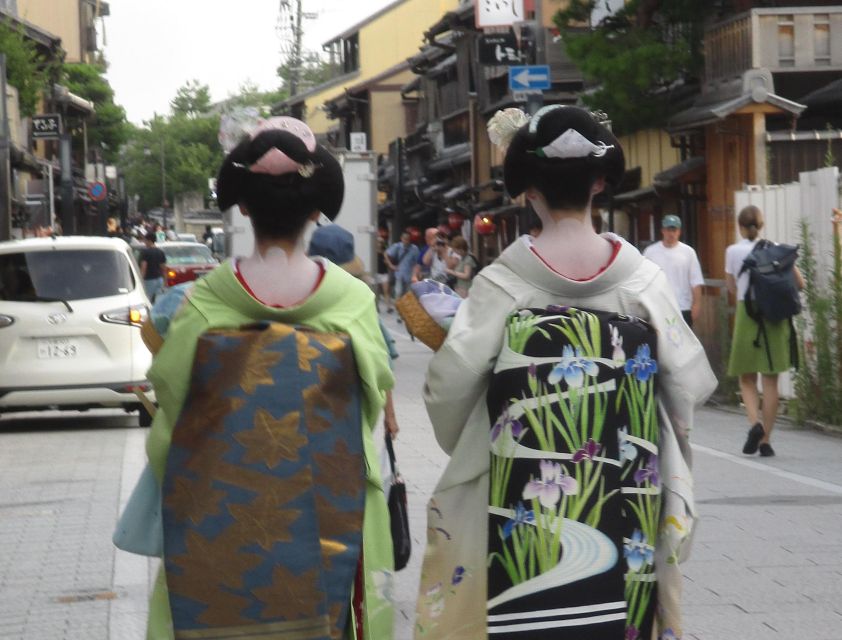
Gion is the cultural heart of the final part of the tour. You spend about 30 minutes in the district with the guide, learning about the workplace of professional artists known as Maiko and Geiko. The term geisha is often used in English, but Kyoto commonly uses Geiko for an established artist and Maiko for a young apprentice.
This explanation is especially useful because Gion can be misunderstood as a place where you simply hope to spot a traditionally dressed performer. The focus here is on the district’s role and the professional lives connected to it. Your guide can explain how these artists fit into Kyoto’s traditional entertainment culture and how the old neighborhoods function.
The route also passes Kyōto Minami-za, the city’s famous theater, with a short guided sightseeing stop. The schedule allows about three minutes there, so treat it as a quick orientation rather than a theater visit. The building helps show that traditional performance is not confined to museums. It remains part of Kyoto’s public identity.
The guide’s role is the strongest feature of this part of the route. The two available ratings give the experience a perfect five out of five, with specific praise for fluent Italian, patience, detailed explanations, and a friendly manner. One account describes learning the story of each temple and place in detail during a very full day. That is exactly the kind of benefit you should expect here: not a private lecture, but steady interpretation as you move.
Same sacred ground, another way to see it:
- Arashiyama Bamboo, Temple, Monkeys, or Secret Sake Brewery
★ 4.8 · 886 reviews - Kyoto: Arashiyama Bamboo Forest, Monkeys, Matcha & Temple Tour
★ 5.0 · 759 reviews - Osaka/Kyoto: Arashiyama, Nara & Fushimi Inari Shrine w/Lunch
★ 4.4 · 754 reviews - Kyoto 1 Day Tour from Kyoto
★ 4.0 · 582 reviews
Ending in Pontocho
The tour ends on foot in Pontocho, after a final five-minute walk from Minami-za and another short walk within the district. Pontocho is one of Kyoto’s best-known dining and evening areas, set along a narrow lane near the Kamo River.
Ending here is practical. You are not returned to Kyoto Station, so you can continue into the evening with dinner or a walk in central Kyoto. It also gives you a natural stopping point if you have another plan nearby.
Keep in mind that the tour does not appear to include a meal. The $153 price covers transportation and entrance fees during the itinerary, plus the Italian-speaking guide. You should plan your own food during the Kyoto Station break or after reaching Pontocho.
Pontocho is also where the experience feels less like a checklist. The morning has focused on bamboo, temple grounds, and scenic viewpoints. The final section turns toward entertainment, theater, streets, and the way Kyoto’s older traditions connect with modern city life.
What the $153 Price Gets You
At $153 per person, this is not a budget walking tour. You are paying for a full route across Kyoto, an Italian-speaking guide, public transportation throughout the day, and entrance fees to the monuments included in the schedule.
The value is strongest for you if you want structure. Kyoto’s major sights sit in different parts of the city, and the trip from Sagano to Kinkaku-ji to Kiyomizu-dera requires several changes. The guide takes care of that movement while giving you historical and cultural context in your own language.
It is less compelling if you prefer slow independent sightseeing. You will not have unlimited time at each temple, and the short visits to Sannenzaka, Ninenzaka, and Minami-za leave little room for personal detours. A self-guided day could cost less, but it would require planning transport, buying tickets, and learning the background yourself.
The excellent ratings, though based on only a small number of published scores, point to the guide as the main reason to choose this experience. The strongest praise is not about luxury or special access. It is about fluent Italian, clear explanations, detailed stories, and a personable style.
Who Should Choose This Kyoto Day
I would recommend this tour to an Italian-speaking visitor who wants to see Kyoto’s main sights without managing a complicated route. It is especially suitable for a first visit, when the names, districts, and transport connections can blur together.
It also suits you if you want more than photographs. The guide discusses the country’s past, the lives of ordinary people, aristocrats, imperial relatives, samurai, and the artists of Gion. That range gives the day a useful balance between famous monuments and everyday culture.
You should think twice if you want a relaxed temple day with long periods alone. The schedule is packed, and the route uses trains, buses, subway rides, and repeated walks. Families, older visitors, and anyone with limited mobility should review the accessible arrangements in advance, even though the activity is marked wheelchair accessible.
The tour can work well as a first full day in Kyoto because it covers several distinct sides of the city: countryside, temple gardens, hillside lanes, traditional performance districts, and a central evening neighborhood. You can then return to the places that interested you most with more time later.
Should You Book It?
Book this experience if Italian-language guidance is important and you want Kyoto’s major sights tied together in one carefully planned day. The detailed, friendly explanations and included transport make the price easier to justify, especially for a first visit.
Skip it if your ideal day means lingering at one temple, shopping slowly in Ninenzaka, or choosing every bus and stop yourself. The pace is brisk and the schedule description is inconsistent, so confirm the start time and expected duration before paying.
For most Italian-speaking first-time visitors, this is a strong practical introduction to Kyoto. Just bring good walking shoes, keep your evening open until Pontocho, and treat the day as a broad overview rather than an unhurried study of each site.
FAQ
Where does the tour start?
The meeting point is at Kyoto Station’s North Entrance, or Karasuma-guchi. Meet in the space between the two escalators in front of the taxi terminal, not the bus terminal. Kyoto Tower should be visible in front of you toward the upper left.
What language is the tour conducted in?
The tour is conducted in Italian by a live Italian-speaking guide. The guide explains Kyoto’s history, culture, monuments, and daily life and answers questions during the route.
Which major sights are included?
The route includes Sagano Bamboo Forest, Kinkaku-ji, Kiyomizu-dera, Sannenzaka, Ninenzaka, Gion, Kyōto Minami-za, and Pontocho. Kinkaku-ji and Kiyomizu-dera entrance fees are included during the itinerary.
Is transportation included?
Yes. The listed train, bus, and subway transportation during the itinerary is included, along with entrance fees to the monuments visited.
Can I leave the tour before the end?
Yes. You are free to leave partway through the tour. The planned ending point is Pontocho, so tell the guide if you intend to depart early.
Can I cancel the booking?
You can cancel up to 24 hours in advance for a full refund. A reserve-now-and-pay-later option is also available.
Temple visits we reviewed lately in Kyoto
- Kyoto: Zen Meditation at a Private Temple with a Monk★ 5.0 · 202 reviews
- Kyoto:Kiyomizu-dera Temple Rent a kimono and ride a rickshaw★ 4.8 · 7 reviews
- Kyoto: Kiyomizudera, Sanjusangendo, Ginkakuji and Higashiyama.★ 5.0 · 3 reviews
- KYOTO: Tempio Kiyomizu Pagode Gion “Geisya” (Guida Italiana)★ 4.7 · 17 reviews
- Kyoto:Quiet Arashiyama and Sagano Temples★ 4.8 · 5 reviews
- Kyoto: Shakyo & Matcha in Historic Temple Garden★ 5.0 · 4 reviews
- Kyoto: Samurai Sword & Kimono Action Filming Experience★ 4.8 · 78 reviews
- Kyoto: Nara, Todaiji, Kasuga Taisha Shrine Private Full Day★ 4.9 · 18 reviews
Kyoto Temple Tours, compared.
Osaka/Kyoto:Kinkakuji,Arashiyama,FushimiInariShrine,NaraPark
Read our review →
Kyoto Arashiyama Walking Tour: Bamboo, Monkeys, Gardens & Secrets
Read our review →
Arashiyama Bamboo, Temple, Monkeys, or Secret Sake Brewery
Read our review →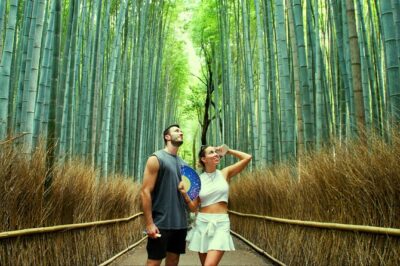
Kyoto: Arashiyama Bamboo Forest, Monkeys, Matcha & Temple Tour
Read our review →
Osaka/Kyoto: Arashiyama, Nara & Fushimi Inari Shrine w/Lunch
Read our review →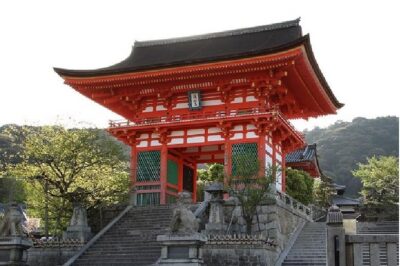
Kyoto Zen Meditation & Garden Tour at a Zen Temple with Lunch
Read our review →This tour also ranks in