
Review · KYOTO
KYOTO-NARA: Giant Buddha Deer Pagoda “Geisya” (Italian, full day)
The biggest draw here is the contrast between Nara’s giant Buddha and free-roaming deer and Kyoto’s old pilgrimage streets, temples, and Gion-kobu district. In one long day, you see two former capitals and get a guide’s explanation of the Buddhist customs, legends, and monuments that are easy to miss on your own.
I like the small group of up to 15 people, and I like that train, bus, and entrance costs are included. The Italian-language guidance is a major help if you want more than a quick photo stop. The drawback is the pace: with Nara, Kyoto, several rides, and plenty of walking in one day, you will need comfortable shoes and steady energy.
Key points to know before booking
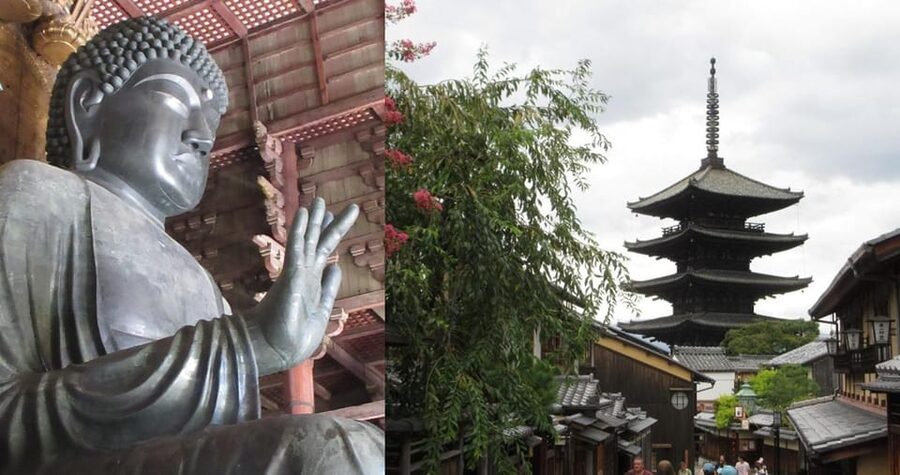
- Two historic cities in one day: Travel from Kyoto to Nara in the morning, then return to Kyoto for Kiyomizu-dera and Gion.
- Italian guidance throughout: The live guide speaks Italian, with guide Omae especially praised for clear explanations, humor, and strong knowledge of Japanese culture.
- Todai-ji and the Great Buddha: Spend about 90 minutes at one of Japan’s best-known Buddhist temples, with admission included.
- Deer in Nara Park: Buy special crackers from stalls and feed the tame deer roaming around the temple grounds.
- Pontocho finish: The day ends near one of Kyoto’s best-known dining and entertainment areas, useful if you want to continue your evening independently.
- Flexible support: The provider offers practical help during the tour and may adjust timing or plans when reasonable.
Why this Kyoto and Nara day works
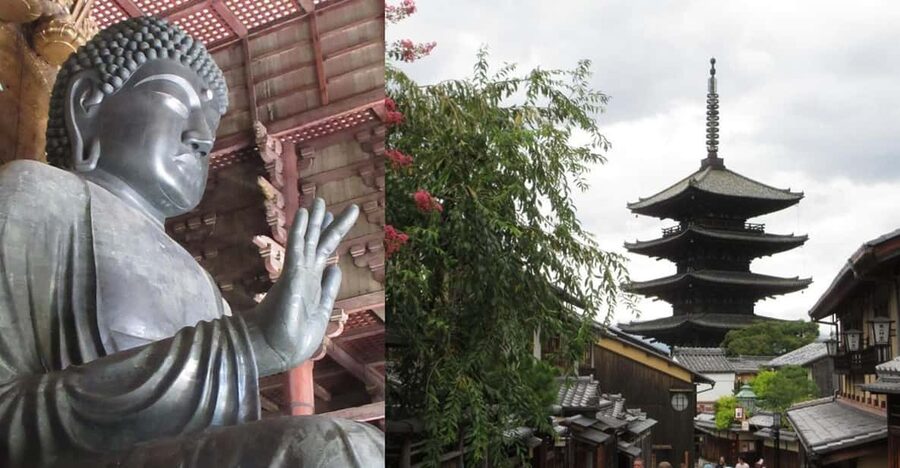
This is a strong choice if you have only one full day for Nara but also want to keep Kyoto on your schedule. Nara gives you a broad park, major Buddhist monuments, and the famous deer. Kyoto then shifts the mood to temple approaches, souvenir lanes, sweet shops, and the traditional Gion-kobu area.
You are not simply being driven from one sight to the next. The route uses ordinary trains and buses, so you get a brief feel for how the two cities connect. That also means you should expect public transport, walking, and a little coordination rather than a private vehicle waiting at every stop.
The tour is conducted in Italian and is limited to 15 participants. That is small enough for questions without requiring the price of a private guide. Guide Omae has been singled out for speaking polished Italian after living in Italy for more than a decade, as well as for using humor and explaining legends connected with the places you visit.
One point needs care. The experience details identify Italian as the tour language, while one itinerary description refers to questions being answered in English. If language is important to your booking decision, confirm the operating language before paying. The clearest information elsewhere identifies a live Italian guide and Italian explanatory material.
More Full-Day Tours in Kyoto:
- Kyoto: Nara, Todaiji, Kasuga Taisha Shrine Private Full Day
★ 4.9 · 18 reviews - Siem Reap: Full-Day Angkor Wat Guided Tour with Sunset
★ 4.9 · 3,803 reviews - Full-Day Angkor Wat Sunrise Private Tour with Guide from Siem Reap
★ 5.0 · 2,920 reviews
Meeting at Kyoto Station without a wrong turn
The meeting point is outside Kyoto Station, in the space between the four escalators in front of the taxi terminal. The taxi terminal is east of the north central entrance, not the bus terminal.
Look for Kyoto Tower in front of the station. From the meeting area, it should appear at the upper left rather than the right. That small visual clue matters because Kyoto Station is large and its surrounding transport areas can be confusing on a first morning.
You receive a confirmation email with detailed meeting instructions the day before the tour. I would still arrive with time to spare. The schedule begins with a 45-minute train ride, and a late start could cut into the already carefully packed Nara visit.
The morning train to Nara and Todai-ji
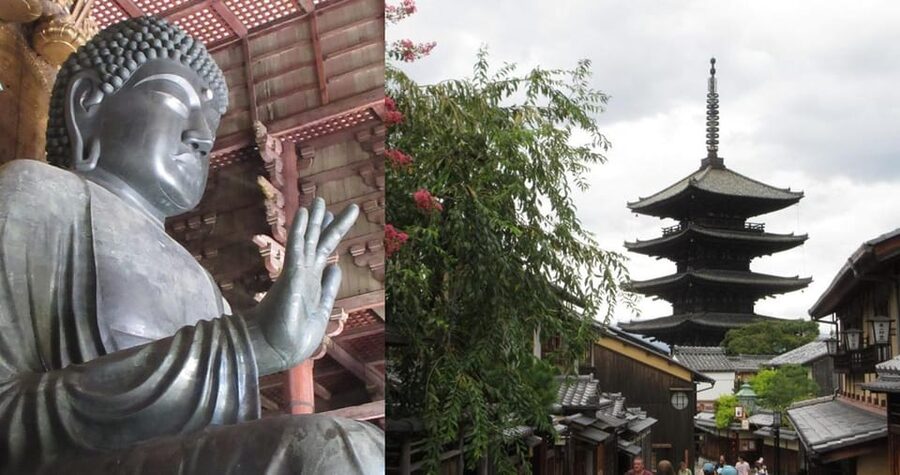
The first transport leg takes about 45 minutes by train from Kyoto Station to Nara Station. From there, a bus ride of roughly 15 minutes brings you toward the Great Buddha temple.
Nara was the imperial capital of Japan in the eighth century, and that setting gives the morning a different feel from central Kyoto. The temple area is surrounded by a large park, with deer moving freely among people. These animals have lived alongside local residents for centuries and are one of the defining sights of a Nara visit.
Special stalls sell crackers for feeding the deer. Feed only with the food sold for that purpose, and keep in mind that the animals are tame, not household pets. This is a short, memorable encounter, but the deer are not the main reason to come. The main event is Todai-ji.
You have about 90 minutes for the guided visit, sightseeing, and some shopping. That is enough for a focused introduction, but it is not an open-ended temple morning. If you like to linger at every statue or browse every shop, you may find the schedule tight.
Inside Todai-ji and the Great Buddha
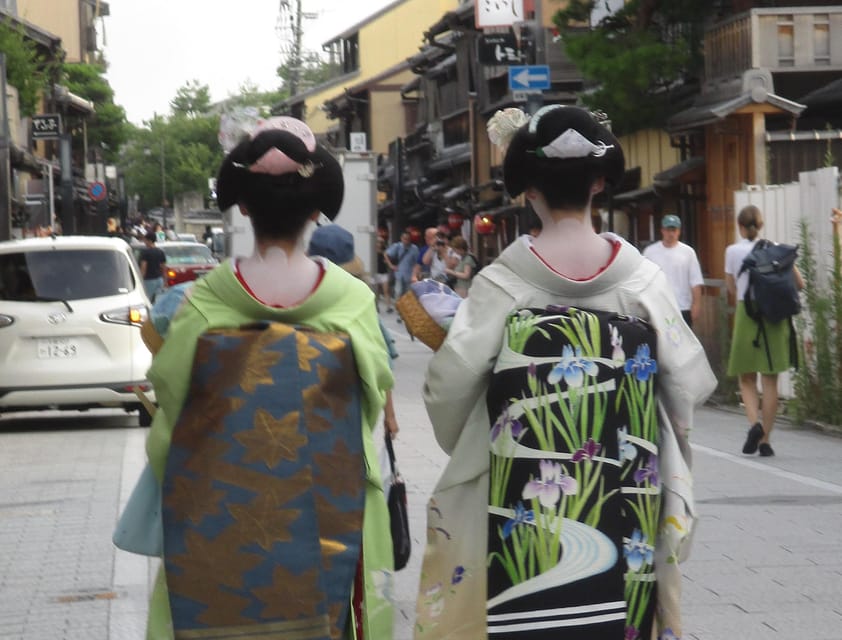
Todai-ji is famous for its enormous Buddha statue, one of Japan’s largest. The scale of the temple and statue is the kind of thing that photographs do not fully convey, so this is one stop where being there matters more than simply checking off a name.
Your guide explains the temple’s monuments, including works designated as national treasures of Japan. The emphasis is not only on dates and architecture. The tour also covers Buddhist devotion, local legends, and details about how ordinary people related to these sacred places.
That interpretive layer is one of the tour’s best features. A large temple can otherwise become a sequence of impressive but unfamiliar objects. An Italian-speaking guide can give you the vocabulary and context to understand what you are seeing, then answer questions while the details are still in front of you.
The 90-minute visit also includes time for shopping and personal looking around. The balance is useful for first-time visitors, though anyone seeking a long, quiet study of Todai-ji will want more time than this tour allows.
More Temple Tours around Kyoto:
- Kyoto: Tea Ceremony Ju-An at Jotokuji Temple
★ 4.9 · 3,207 reviews - Osaka/Kyoto:Kinkakuji,Arashiyama,FushimiInariShrine,NaraPark
★ 4.1 · 1,596 reviews - Arashiyama Bamboo, Temple, Monkeys, or Secret Sake Brewery
★ 4.8 · 886 reviews - Kyoto: Arashiyama Bamboo Forest, Monkeys, Matcha & Temple Tour
★ 5.0 · 759 reviews
Ukimido and a short walk through Nara Park
After Todai-ji, the group walks for about five minutes to Ukimido. The stop lasts roughly ten minutes and includes a visit, a walk, or a pass-by depending on the day’s flow.
This is a brief part of the route, not a second major temple visit. Its value is that you continue through Nara’s park rather than treating Todai-ji as an isolated building. You get a little more time among the park paths and water before walking another ten minutes toward the next transport connection.
Do not judge this section by its short duration. It works as a transition and a pause after the main temple visit. It also reinforces the difference between Nara and Kyoto: Nara’s famous sights are spread through a broad, open park, while Kyoto’s afternoon route is more built-up and closely lined with shops.
Returning to Kyoto for a real midday break
The return train takes about 45 minutes, bringing you back to Kyoto Station. A one-hour break follows before the afternoon route begins.
That pause is practical. You can use it to eat, rest, or handle personal needs before the final temple and Gion walk. It also prevents the day from becoming one unbroken chain of guided commentary.
Still, this is a long day. The morning includes a train, bus, temple visit, deer park walking, another walk, and a return train. Use the station break wisely rather than assuming you will have plenty of time later. The afternoon adds another bus ride and several walks.
The Kiyomizu-dera approach
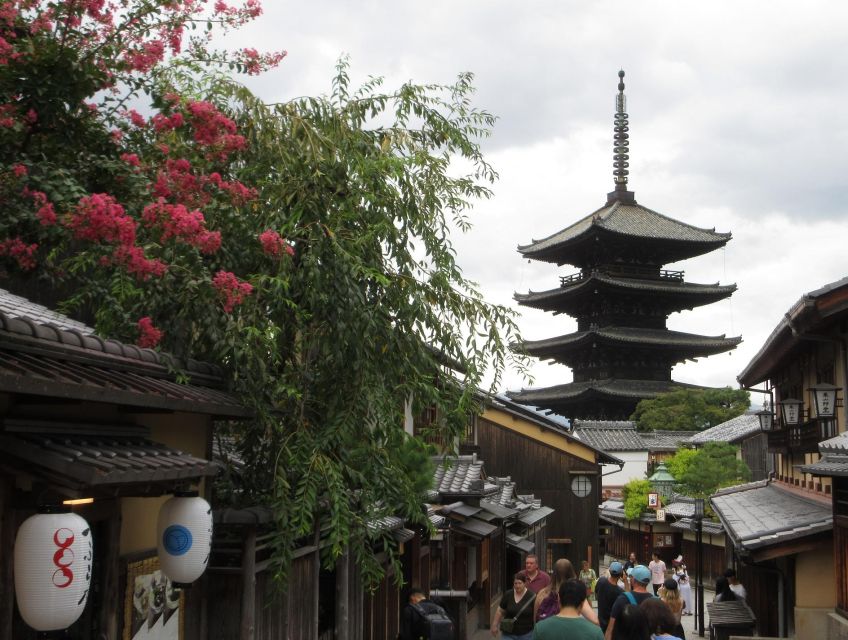
After the break, the group takes a bus for about 15 minutes, followed by a 15-minute walk to Kiyomizu-dera. The temple visit lasts about an hour.
The approach is part of the experience. The ancient pilgrimage routes leading toward Kiyomizu-dera have developed from the eighth century to the present day. Today, the streets are lined with souvenir shops, sweet shops, bars, and other places aimed at people coming to enjoy the temple area.
That mix can feel crowded and commercial, but it is also honest. This has long been a public destination, not a sealed museum. You see how religious travel, food, shopping, and entertainment share the same streets.
Your guide explains the historical, cultural, and religious details along the way and points out key sights. The hour inside or around Kiyomizu-dera gives you a focused visit, but again, the tour is not designed for slow solo wandering. If you want time for extensive shopping, you may need to return another day.
The bus and walking route also make this section more demanding than the simple wording of a temple visit suggests. Wear shoes that handle uneven streets and a full day on your feet. The activity is listed as wheelchair accessible, but the route still includes public transport and walking, so you should confirm the exact arrangements needed for your mobility requirements.
Gion-kobu and the meaning behind Geiko and Maiko
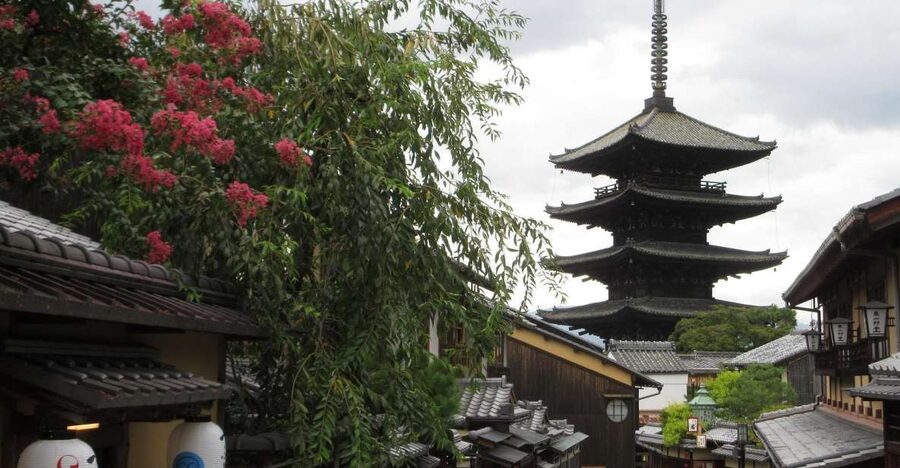
From Kiyomizu-dera, you walk for about 20 minutes before reaching Gion. The guided visit there lasts around 20 minutes, followed by another ten-minute walk to Pontocho.
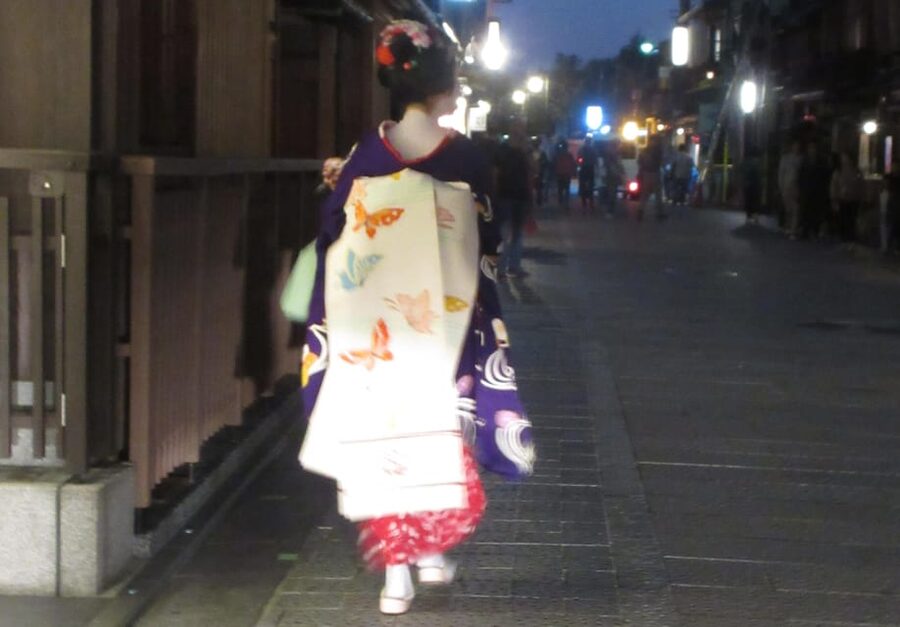
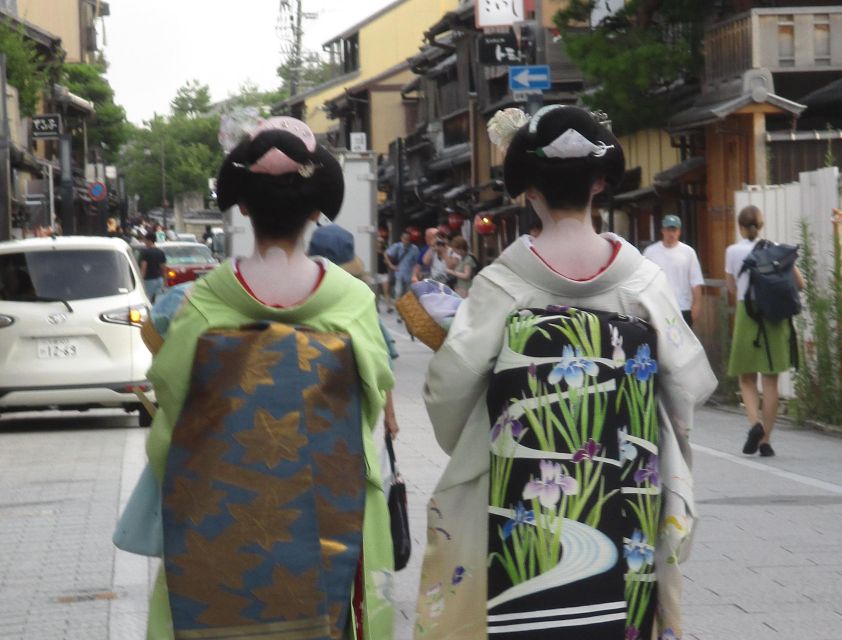
The tour focuses on the Gion-kobu area, where professional Maiko and Geiko artists work. The word Geisya is sometimes used in general descriptions, but Maiko and Geiko are the terms used for the traditional performers in this setting.
This is a short orientation rather than an arranged performance or private meeting. You should not book it expecting guaranteed sightings or a show. Instead, the guide helps you understand the district’s cultural role and points out what matters as you walk through it.
That distinction is important. Gion is a working area, not a theme park. A respectful visit means observing quietly, following local rules, and treating people going about their work with care. The guide’s explanations can make this brief passage more meaningful than simply taking pictures of traditional-looking streets.
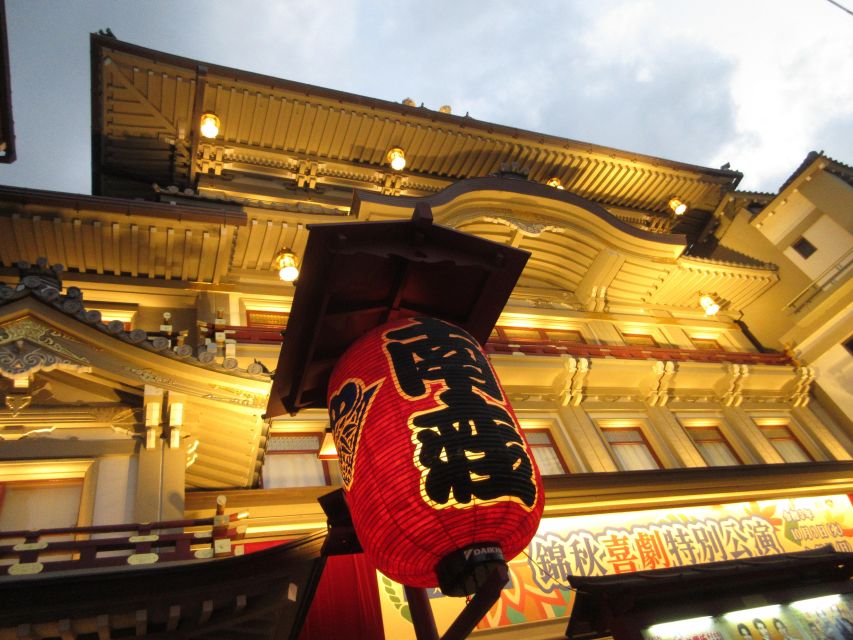
The day ends at Pontocho. No evening activity is included, so you can stop there, look for dinner, or continue elsewhere in Kyoto on your own.
What the guide adds to the day
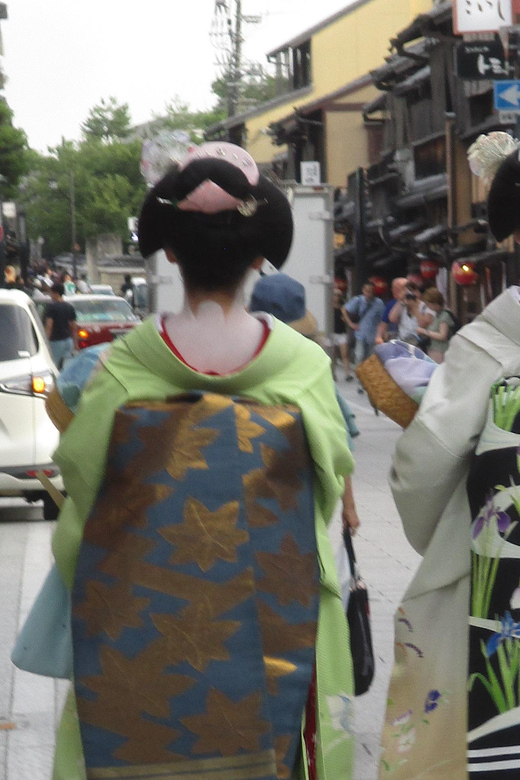
The guide is the main reason to choose this experience over handling the same route independently. You get help with the train and bus connections, entrance arrangements, and the practical details of moving between two cities.
The strongest praise has centered on Omae. Italian-speaking participants have described the guide as exceptionally prepared, friendly, and funny, with a very high level of Italian after years spent in Italy. The useful part is not simply language ability. Omae is also described as explaining monuments carefully, sharing mythological stories, answering questions, and allowing time for photographs and independent exploration.
That last point matters. A guide who talks constantly can make a full-day tour tiring. The best balance is explanation at the right places, then space to look around. The available feedback suggests that this balance has often been handled well, though one assessment felt the tour could have covered more given the time and price.
The provider also offers assistance during the itinerary and practical information about travel in Japan at no extra cost when requested. This can be useful if you are unfamiliar with Japanese transport or want help beyond the basic sightseeing route.
Is $176 a fair price?
At $176 per person, this is not a budget day out. The value comes from the combination of an Italian-speaking guide, included train and bus fares, included entrance fees, a small group, and a route that links two major destinations without asking you to plan every transfer yourself.
If you already feel comfortable using Japanese trains and buses, and you are happy to research Todai-ji and Kiyomizu-dera on your own, you can likely spend less independently. You would also control the pace more closely.
The tour makes better financial sense if you want interpretation in Italian, prefer transport help, and have only one day to combine Nara with Kyoto. It also helps if you value stories about Buddhist devotion and local legends rather than simply arriving, taking a picture, and moving on.
The full day has a high sightseeing yield, but the cost does not buy a private car or unlimited time at each stop. Think of it as a guided public-transport day with the key admission costs covered.
Who should book this full-day tour?
I would recommend it to Italian-speaking visitors who want a strong first look at Nara and Kyoto without building the transport plan themselves. It suits couples, families, and small groups that enjoy asking questions and walking through historic districts.
It is especially useful for first-time visitors to Japan. The guide can explain cultural details that are easy to misread, while the practical support reduces stress around trains, buses, tickets, and meeting points.
You should think twice if you dislike fixed schedules, want long periods alone, or plan to spend half a day shopping around Kiyomizu-dera. The route is full, and the group must keep moving. It is also less suitable for anyone who finds a full day of public transport and walking too tiring, even though wheelchair access is offered.
Free cancellation is available up to 24 hours before the tour, and you can reserve while paying later. Availability and start times should be checked for your date.
Should you book it?
Book this tour if you want Italian explanations, dependable route support, and two major destinations in one day. Todai-ji, Nara’s deer, Kiyomizu-dera, and Gion give you a useful cross-section of Japan’s religious and cultural traditions.
Skip it if your top priority is a relaxed pace or the lowest possible cost. At $176, the tour earns its price through the guide, included transport and entrances, and the convenience of linking Nara and Kyoto. For an Italian-speaking visitor with limited time, that is a sensible trade.
FAQ
What language is the tour conducted in?
The live tour guide speaks Italian, and explanatory material about the monuments is provided in Italian.
Where does the tour begin?
It begins at Kyoto Station, in the space between the four escalators in front of the taxi terminal east of the north central entrance.
How can I identify the meeting point?
Kyoto Tower should be visible in front of the station, toward the upper left from the meeting area. Detailed meeting instructions are sent by email the day before the tour.
How long is the tour?
The experience lasts one full day. The listed program includes morning and afternoon sightseeing, transport between Kyoto and Nara, and a finish at Pontocho.
Is transportation included?
Yes. The scheduled train and bus fares listed for the tour are included.
Are entrance fees included?
Yes. Entrance fees for the monuments included in the program are covered.
What places are visited?
The route includes Todai-ji in Nara, Ukimido, Kiyomizu-dera in Kyoto, and the Gion-kobu area, ending at Pontocho.
How large is the group?
It is a small-group tour limited to 15 participants.
Temple visits we reviewed lately in Kyoto
- Kyoto: Zen Meditation at a Private Temple with a Monk★ 5.0 · 202 reviews
- Kyoto:Kiyomizu-dera Temple Rent a kimono and ride a rickshaw★ 4.8 · 7 reviews
- KYOTO: Tempio Kiyomizu Pagode Gion “Geisya” (Guida Italiana)★ 4.7 · 17 reviews
- Kyoto: Kiyomizudera, Sanjusangendo, Ginkakuji and Higashiyama.★ 5.0 · 3 reviews
- Kyoto:Quiet Arashiyama and Sagano Temples★ 4.8 · 5 reviews
- Kyoto: Shakyo & Matcha in Historic Temple Garden★ 5.0 · 4 reviews
- Kyoto: Samurai Sword & Kimono Action Filming Experience★ 4.8 · 78 reviews
- Kyoto: Nara, Todaiji, Kasuga Taisha Shrine Private Full Day★ 4.9 · 18 reviews
Kyoto Temple Tours, compared.
Osaka/Kyoto:Kinkakuji,Arashiyama,FushimiInariShrine,NaraPark
Read our review →
Kyoto Arashiyama Walking Tour: Bamboo, Monkeys, Gardens & Secrets
Read our review →
Arashiyama Bamboo, Temple, Monkeys, or Secret Sake Brewery
Read our review →
Kyoto: Arashiyama Bamboo Forest, Monkeys, Matcha & Temple Tour
Read our review →
Osaka/Kyoto: Arashiyama, Nara & Fushimi Inari Shrine w/Lunch
Read our review →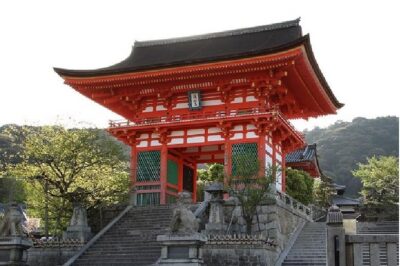
Kyoto Zen Meditation & Garden Tour at a Zen Temple with Lunch
Read our review →This tour also ranks in