
Review · OSAKA
Osaka/Kyoto: Arashiyama, Nara Park, Fushimi Shrine Tour
Few day trips pack Japan’s most recognizable sights into one day like this one. You’ll walk beneath the red torii gates of Fushimi Inari, watch deer roam freely in Nara Park, and follow the bamboo paths of Arashiyama without changing trains between every stop.
I like the efficient route and the generous free time at each major stop. I also like that the price includes transport, tolls, parking, and fuel, which keeps the $51 cost easy to understand. The catch is the long bus day, and basic commentary rather than a full guided tour.
Key points at a glance
- Three famous places in one day: Arashiyama, Nara Park, and Fushimi Inari Taisha all fit into a single outing.
- About two hours in Arashiyama: Enough for the bamboo forest, Togetsukyo Bridge, and a quick look around the area.
- Free-roaming Nara deer: You’ll have about 80 minutes in the park, where more than 1,000 deer move through the grounds.
- A flexible self-guided format: You explore each stop on your own rather than following a guide from site to site.
- Shared transport from Osaka or Kyoto: The bus removes the need to plan several train connections, though traffic can stretch the day.
- Basic rather than in-depth commentary: Chinese is the main language, with English, Japanese, and Korean assistance depending on the booking arrangements.
Why this route works for a first look at Kansai
Kyoto and Nara are packed with temples, shrines, gardens, and old streets. Trying to connect three major sights by public transport in one day takes planning, and each stop lies in a different direction. This tour solves that problem with one bus and a fixed schedule.
The route is especially useful if you are staying in Osaka and want to see several Kyoto-area sights without changing hotels. It also works from Kyoto, where the pickup is at the Kyoto Station Hachijo-guchi sightseeing bus area.
You should know what kind of day you are buying. This is a sightseeing sampler, not a slow cultural tour. You will see a lot, but you will also spend a large part of the day on the road. One detailed account described the route as Osaka, Kyoto, Nara, Kyoto, then Osaka, with roughly 75 percent of the day spent traveling. That estimate may be blunt, but it captures the main tradeoff.
The reward is convenience. The cost is time.
More Fushimi Inari Shrine Tours in Osaka:
- Full Day Kyoto Tour : Bamboo Forest, Golden Temple, Fushimi Inari
★ 5.0 · 84 reviews - Osaka/Kyoto:Kinkakuji,Arashiyama,FushimiInariShrine,NaraPark
★ 4.1 · 1,596 reviews - Osaka/Kyoto: Arashiyama, Nara & Fushimi Inari Shrine w/Lunch
★ 4.4 · 754 reviews
Arashiyama: bamboo paths and Togetsukyo Bridge
The day begins in Arashiyama, usually with departure from Osaka at 8:00 a.m. or Kyoto at 9:20 a.m. Arrival is scheduled for around 10:00 a.m., giving you two hours to explore on your own.
Arashiyama is best known for its bamboo forest trails. The tall green stalks create a narrow walking route with a very different feel from Kyoto’s stone lanes and temple grounds. You will likely spend part of your time taking photos, but try to keep moving through the paths so you have time for the rest of the area.
Togetsukyo Bridge is another key stop. From the bridge, you can look across the river and see the seasonal scenery that makes Arashiyama popular throughout the year. The tour description highlights the changing views from this classic crossing, so make it one of your first targets rather than leaving it until the final minutes.
Two hours is useful but limited. You can see the bamboo forest and bridge, but you should not expect to cover every temple, garden, and shop in Arashiyama. Since the visit is self-guided, decide before arrival what matters most to you. If bamboo is your priority, head there first. If the bridge and river views matter more, walk that way immediately.
The early timing is a plus. The tour notes that morning air is fresh and crowds are lighter, though no popular Kyoto sight stays empty for long. You’ll get the best use from this stop by arriving with a simple plan and keeping an eye on the meeting time.
Nara Park: deer, open space, and a short visit
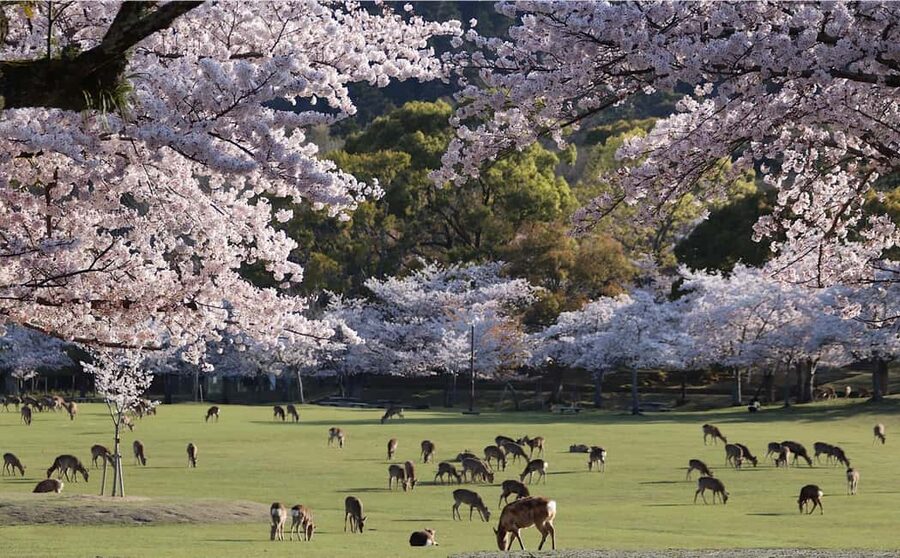
The bus reaches Nara at about 1:15 p.m. You get roughly 80 minutes, sometimes described as one hour and 30 minutes. That is enough for a focused visit to Nara Park, but not enough for an unhurried tour of every nearby temple.
Nara Park is a broad green area beside Kasuga Taisha. More than 1,000 deer roam freely here, and the animals are regarded as messengers of the gods. They have been connected with the area for more than 1,300 years and are protected as a national natural monument.
The deer are the main event, and you will not need to search hard to find them. They move through the park rather than staying behind fences, which gives the visit its memorable character. Keep your attention on your food and belongings, and follow local instructions around the animals. The tour does not include meals or drinks, so any personal purchases are your responsibility.
The short stop favors a direct walk through the park. You can see the deer, take photos, and get a sense of the setting around Kasuga Taisha. If you want an extended shrine visit, detailed architecture study, or a long meal, this schedule will feel tight.
That limitation is worth accepting if your aim is variety. Nara adds something that the Kyoto stops do not: open space, animals, and a more relaxed encounter with an old religious center. It breaks up the shrine-and-bamboo rhythm of the day.
Fushimi Inari: thousands of gates on Inariyama
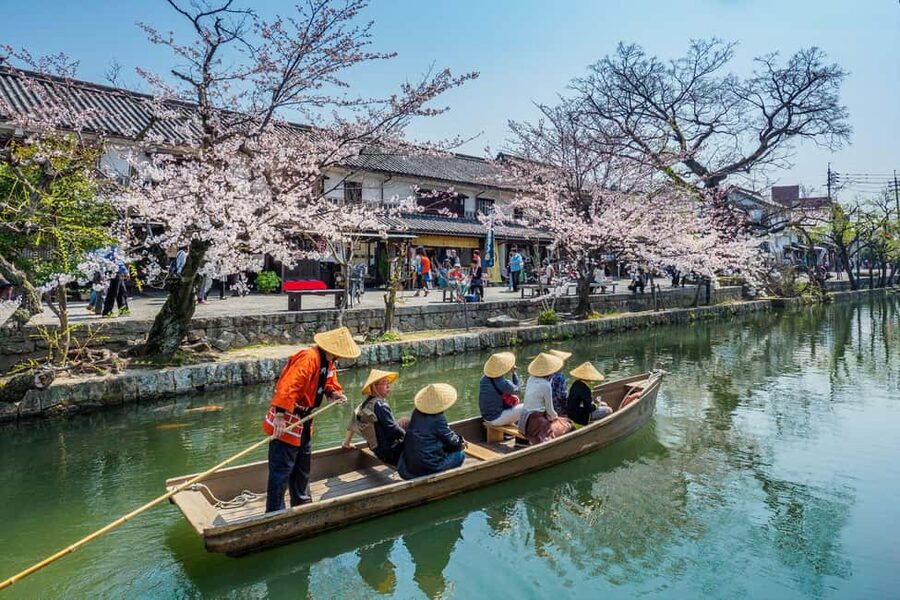
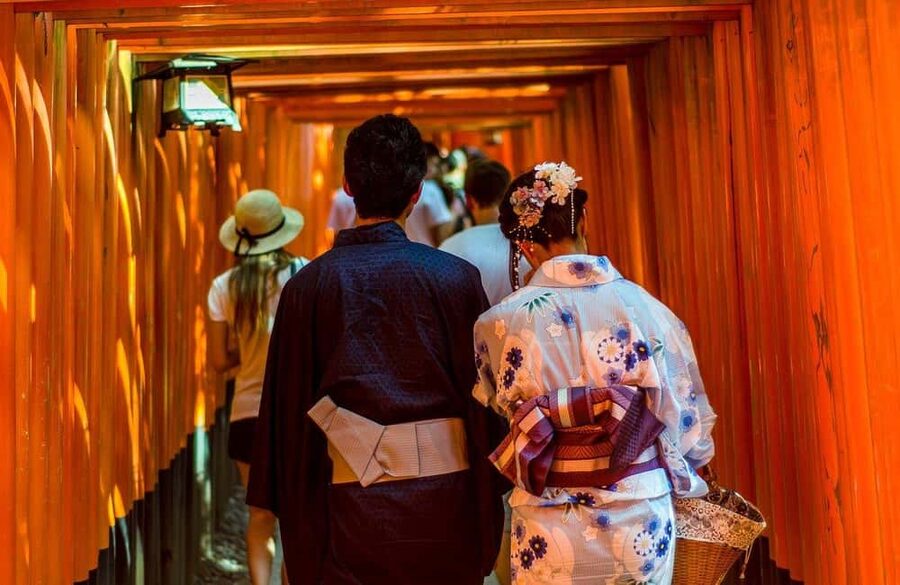
The final major stop begins around 3:20 p.m. at Fushimi Inari Taisha, with about 1 hour and 20 minutes available. This is the most visually striking part of the route, but the schedule only lets you sample the mountain.
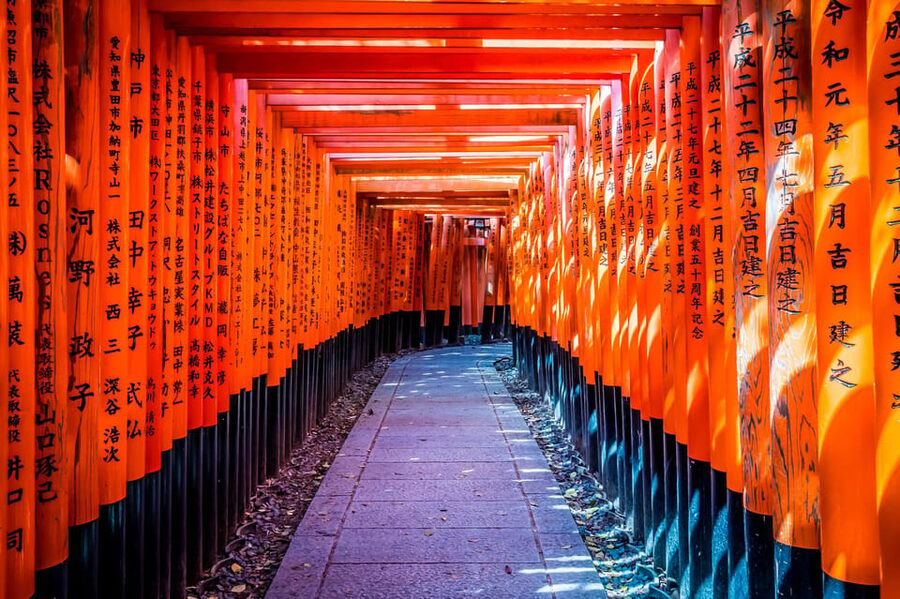
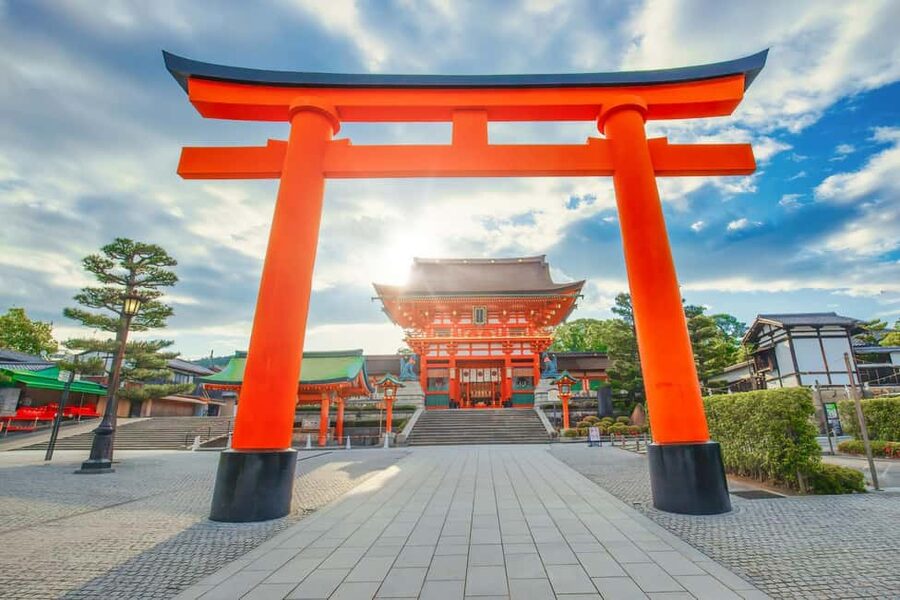
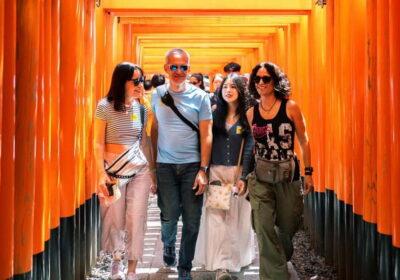
Fushimi Inari is the head shrine of roughly 30,000 Inari shrines across Japan. Its origins are dated to 711, and the shrine’s sacred area covers Inariyama. The famous torii gates form long passages up the hillside, shifting the experience from a quick photo stop into a walk with a sense of distance and movement.
You do not need to reach the upper mountain to enjoy the visit. The lower gates are the most accessible part of the route and offer the classic view. If you want to walk farther, watch the clock carefully. The return bus will not wait for a late arrival.
The late-afternoon timing can be attractive because the day is beginning to cool, but weather and crowd levels may change the feel of the stop. You will have enough time for the main shrine grounds and a section of the torii route. You will not have time to explore every path on the mountain.
Fushimi Inari works well as the finale because it leaves you with a strong image of Kyoto. It is also the stop where self-guided visitors benefit most from knowing their limit. Walk at a comfortable pace, turn back with time to spare, and do not let one more gate make you miss the bus.
More Temple Tours around Osaka:
- Osaka: Minoh, Katsuoji Temple, & Minoh Falls Full-day Tour
★ 4.9 · 172 reviews - Osaka Temple Cool Foot Bath & Matcha Experience〈45min〉
★ 4.9 · 82 reviews - Osaka: Mind & Spirit Balance Temple Reiki Healing
★ 5.0 · 41 reviews - Osaka: Minoh Waterfall & Katsuo-ji Temple Half-Day Tour
★ 4.7 · 27 reviews
What the bus service adds, and what it cannot fix
The included coach transport is the main reason to choose this experience. You avoid arranging separate train and local bus journeys between Osaka, Arashiyama, Nara, and Fushimi Inari. Toll fees, parking fees, and fuel are also included, so the listed $51 price covers the core transport costs.
That value depends on how much you dislike logistics. If you are comfortable using Japanese trains and are staying near convenient stations, public transport may be faster, cheaper, and more flexible. One account specifically noted that the same places can be reached independently without the pressure of a bus departure.
The coach also introduces traffic risk. The schedule can change because of congestion, bad weather, the number of participants, or conditions at the attractions. You might arrive early at the next stop or finish earlier than planned if a facility closes or limits entry.
Food is not allowed inside the vehicle. Meals and drinks are not included, so plan purchases around the stops and keep the bus rule in mind.
This is shared transportation, and the vehicle may include people from several countries. In a small group, the driver may also act as the guide. That means you should expect basic onboard information, not a long lecture about every shrine and historical detail.
The guide and language setup
The tour is mainly conducted in Chinese. English, Japanese, and Korean-speaking staff may be available if requested when booking, but language service is not guaranteed. Confirm this before paying if detailed English guidance is important to you.
The guide’s role can vary. Some departures may have a separate host or greeter, while a small group may rely on the driver for both driving and basic commentary. The strongest praise in the available feedback went to guides Levi and CC, who were described as helpful, polite, and good at pointing out where to go. HuaHua also received positive notice for keeping the day organized.
That personal help can matter in a self-guided tour. A guide who clearly explains the meeting points and return time can save you from wasting minutes at a crowded site. Still, you should not book this expecting a private historian. The written conditions make clear that professional guided commentary is not part of the standard format.
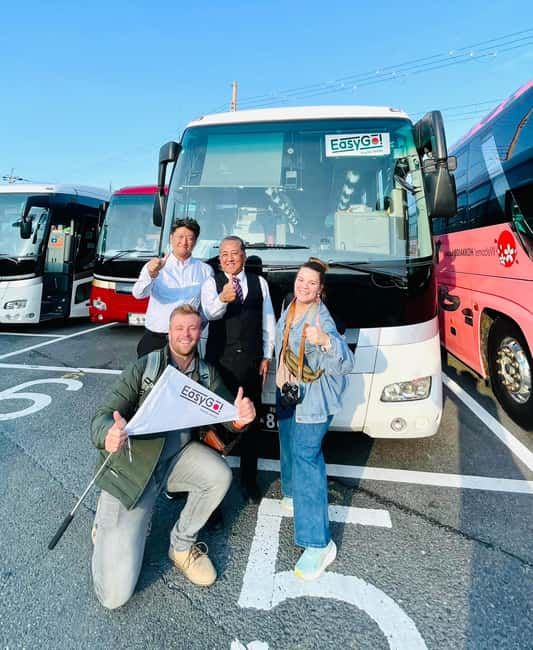
The meeting process deserves care. The guide may not contact you before the tour. Go directly to the stated pickup point and look for staff wearing an EASY GO vest or holding an EASY GO flag. Check the exact departure time on your booking, since one serious complaint involved conflicting instructions and a missed bus. That kind of problem is avoidable if you arrive early, confirm the location, and do not rely on a last-minute message.
Who will get the most from this $51 day trip
I would consider this tour if you have limited time in Kansai and want to cover three headline sights with minimal planning. It also suits families and first-time visitors who prefer a fixed route, provided everyone can manage a long day and brisk transitions.
The tour is a good fit for you if:
- You are staying in Osaka or Kyoto and want one organized day.
- You want photographs and a first look at major sites rather than detailed study.
- You prefer a bus to several independent train connections.
- You are comfortable exploring without a guide beside you.
- You can keep track of time and return promptly to the bus.
I would choose public transport instead if you want to linger at one place, stop for a proper lunch, climb far up Inariyama, or spend a full half-day around Nara’s temples. Independent travel also gives you more control when traffic is heavy.
The tour is wheelchair accessible, but the attractions themselves include walking routes and, at Fushimi Inari, hillside paths. The supplied information confirms vehicle accessibility but does not describe the exact accessible route at every stop, so ask for details before booking if that affects your decision.
Practical planning for a smoother day
Wear shoes suitable for walking. You will be on your feet at three large sites, and Fushimi Inari’s torii route rises up a mountain. Keep your belongings light, since you will be moving between the bus and outdoor paths.
Save the pickup details offline. The guide may not call ahead, and the bus follows a schedule that can be difficult to recover from if you miss it. Arrive early at the meeting point, find the EASY GO staff, and confirm the return location before walking away.
Build your own mini-plan for every stop:
- At Arashiyama, choose bamboo or Togetsukyo Bridge first.
- At Nara, go directly toward the deer and leave time to return to the bus.
- At Fushimi Inari, decide how far you want to walk before you start.
Free cancellation is available up to 24 hours before departure, and you can reserve now and pay later. Severe weather or a natural disaster can cancel the outing, while traffic and poor weather can also alter the schedule.
Should you book it?
Book this tour if your priority is coverage and convenience. For $51, you get transport between Osaka or Kyoto and three major sights, along with tolls, parking, and fuel. The guides can help with basic directions, and the itinerary gives you enough time to see the signature parts of each place.
Skip it if you want a relaxed Kyoto day or detailed cultural guidance. The bus route can take much of the day, the language support may not match your preference, and the stops are self-guided. If you can manage trains and plan your own timing, public transport may give you more freedom.
My practical verdict: this is a useful first-pass tour for a busy schedule, not the best choice for slow exploration. Arrive early, confirm your language and pickup details, and treat each stop as a focused sample rather than a complete visit.
FAQ
Where does the tour start?
You can choose a departure from the Kyoto Station Hachijo-guchi sightseeing bus area or 1-chōme-1-3 Dōtonbori in Osaka. The exact meeting point depends on the option booked.
How long does the tour last?
The advertised duration is 10 hours. The schedule lists departure from Osaka at 8:00 a.m., departure from Kyoto at 9:20 a.m., return to Kyoto around 5:00 p.m., and return to Osaka around 6:00 p.m.
How much time do I get at each attraction?
You get about two hours in Arashiyama, about 80 minutes in Nara Park, and about 1.5 hours at Fushimi Inari Taisha. Actual times can change because of traffic, weather, group size, or site conditions.
Is the tour fully guided?
No. Each attraction is mainly self-guided. Small groups may have a driver who also provides basic onboard commentary, but professional guided commentary is not included.
What languages are available?
The tour is mainly conducted in Chinese. English, Japanese, and Korean support may be available depending on arrangements made at booking, but availability is not guaranteed.
Are meals included?
No. Meals, drinks, and other personal expenses are not included. Food is also not allowed inside the vehicle.
Temple visits we reviewed lately in Osaka
- Osaka Temple :Warm Bamboo Oil Massage – Deep Restore〈60min〉★ 4.9 · 19 reviews
- Osaka: Temple Tour and Traditional Calligraphy Lesson★ 4.9 · 24 reviews
- Osaka Temple Head Spa &Matcha Facial – Refresh & Glow〈90min〉★ 5.0 · 24 reviews
- Osaka: Sumiyoshi, Osaka’s Most Iconic Shrine – Private Tour★ 4.7 · 4 reviews
- Osaka Temple :Warm Bamboo Oil Massage – Deep Restore〈90min〉★ 5.0 · 14 reviews
- Osaka: Mind & Spirit Balance Temple Reiki Healing★ 5.0 · 41 reviews
- Osaka: Private Tour of Shitennoji, Osaka’s Oldest Temple★ 4.5 · 6 reviews
- Osaka Morning Tour: Shitennoji Temple, Shinsekai &Doutonbori★ 5.0 · 23 reviews
Osaka Temple Tours, compared.
Kyoto: Full-Day English Guided Tour of Kyoto’s Highlights
Read our review →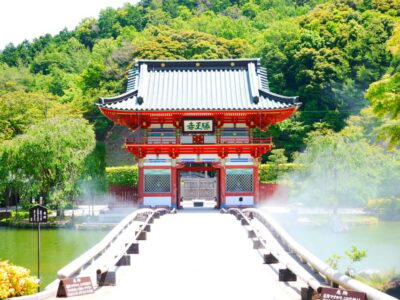
Osaka: Minoh, Katsuoji Temple, & Minoh Falls Full-day Tour
Read our review →Full Day Kyoto Tour : Bamboo Forest, Golden Temple, Fushimi Inari
Read our review →
Osaka Temple Cool Foot Bath & Matcha Experience〈45min〉
Read our review →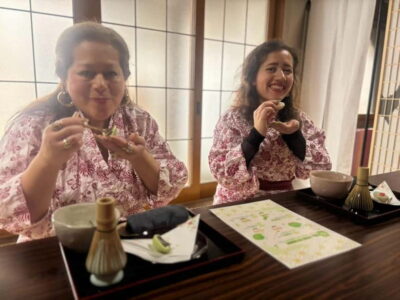
Osaka: Mind & Spirit Balance Temple Reiki Healing
Read our review →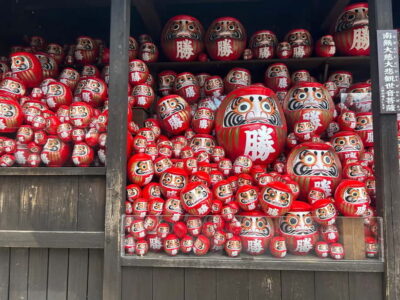
Osaka: Minoh Waterfall & Katsuo-ji Temple Half-Day Tour
Read our review →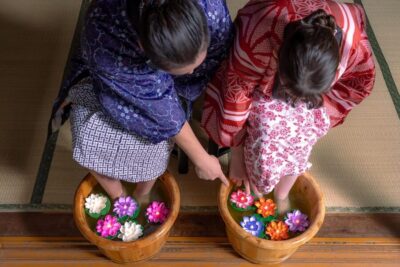
Osaka Temple Head Spa &Matcha Facial – Refresh & Glow〈90min〉
Read our review →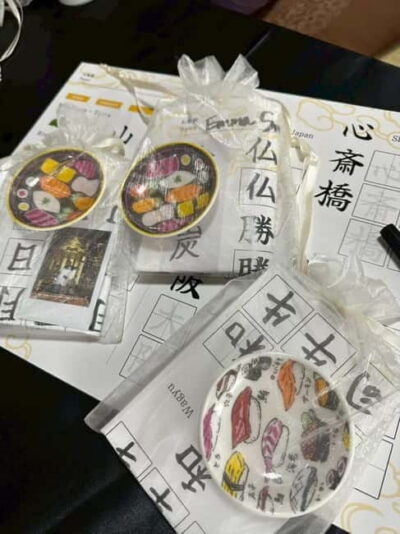
Osaka: Temple Tour and Traditional Calligraphy Lesson
Read our review →This tour also ranks in