
Review · PERU
Cusco City Sightseeing, San Pedro Market, Cathedral and Qorikancha Temple
Cusco’s best first look comes in a compact route that links a food market, Inca stonework, colonial churches, and grand city views. You’ll begin at San Cristóbal Plaza, pass through San Blas and Hatun Rumiyoc, then finish around Plaza de Armas. The Twelve-Angled Stone and Qorikancha, once covered in gold, give the afternoon its strongest historical moments.
I like the way this tour connects daily life at San Pedro Market with Cusco’s major monuments. I also like the small-group format, capped at 15 people, and the included entry to the Cathedral and Qorikancha. The main caution is timing: some tours have finished well before the advertised three-and-a-half hours, and bilingual commentary may favor Spanish when most of the group speaks it.
Key points to know before booking
- Qorikancha is the historical high point: See the former Temple of the Sun, whose Inca stonework later supported the Santo Domingo church and convent.
- San Pedro Market adds real local life: You’ll see potatoes, corn, bread, cheese, groceries, handicrafts, and the everyday trade that keeps central Cusco supplied.
- The route mixes walking and vehicle transfers: This saves effort across town, though traffic can eat into sightseeing time.
- The group stays relatively small: The maximum is 15 people, giving you a better chance to hear the guide than on a large coach tour.
- The tour is bilingual: English and Spanish are both offered, but the balance can depend on the makeup of your group.
- Altitude affects the experience: A relaxed pace helps, but arriving in Cusco without time to adjust can make even a short outing tiring.
Why this afternoon route works in Cusco
Cusco is compact in the center, but its streets rise and twist, and traffic can slow a short transfer. This tour gives you a planned route instead of asking you to arrange transport between San Cristóbal, San Pedro Market, Qorikancha, San Blas, and Plaza de Armas yourself.
I see the greatest value in the range of experiences. You are not spending three hours inside churches. You get a viewpoint, a market, an Inca religious site, a colonial cathedral, and a walk through old streets. That makes this a useful orientation tour for a first afternoon in town.
The guide is an important part of the experience. Past visitors have singled out guides named Henry, Jose Marie, Gabriel, Robin, Marcelo, Manuel, and others for clear explanations of Cusco’s past and present. A good guide can explain how Inca stonework, Spanish colonial buildings, Catholic worship, local food, and present-day city life fit together.
At $59 per person, the tour is not the cheapest way to walk around central Cusco. You could visit several exterior sights on your own. The price makes more sense if you want hotel pickup, transport between stops, admission to the Cathedral and Qorikancha, and a person who explains what you are seeing.
More Market Visits in the world:
- Bangkok: City Highlights Temple and Market Walking Tour
★ 4.5 · 3,990 reviews - Mini Group Xian Day Tour to Terracotta Army, City Wall, Pagoda and Muslim Bazaar
★ 5.0 · 1,320 reviews - Bangkok: Railway and Floating Market Tour with Dragon Temple
★ 4.6 · 1,225 reviews
San Cristóbal Plaza gives you the opening view
The tour begins at San Cristóbal Plaza, where you get a broad view over Cusco. It is a smart first stop because the city’s shape becomes easier to understand from above. You can see the old center below and get your bearings before heading into its tight streets.
The nearby San Cristóbal church belongs to the artisans’ quarter of San Blas. The church is noted for its carved woodwork, and this opening section introduces the craft tradition that continues through the neighborhood.
Do not expect a long stop here. The value is the combination of viewpoint, church, and orientation. Bring your camera, but also listen to the explanation. The view helps you understand why moving around Cusco can take longer than the map suggests.
San Pedro Market shows Cusco at work
San Pedro Market is one of the most useful stops for anyone who wants more than polished monuments. The market carries groceries, potatoes, varieties of corn, cheese, Oropesa bread, and handicrafts. You’ll see the food and goods that serve local households, not only items arranged for sightseeing.
I like having the market placed early in the route. It gives you a first taste of Cusco’s food culture before the tour turns toward formal religious buildings. The smells and close-packed stalls can be a lot to take in, so stay near your guide if you want the commentary to continue.
You have about 45 minutes here. That is enough to look around and make small purchases, but not enough for a slow market study. The tour does not appear to be designed as a food tasting, so do not book it expecting a meal or a long list of samples.
Use this stop to notice ordinary details: the produce, the regional products, the way goods are arranged, and the mix of residents and shoppers. If you want to return later for more time, the central location makes that easy after the tour.
Qorikancha explains Inca power and Spanish change
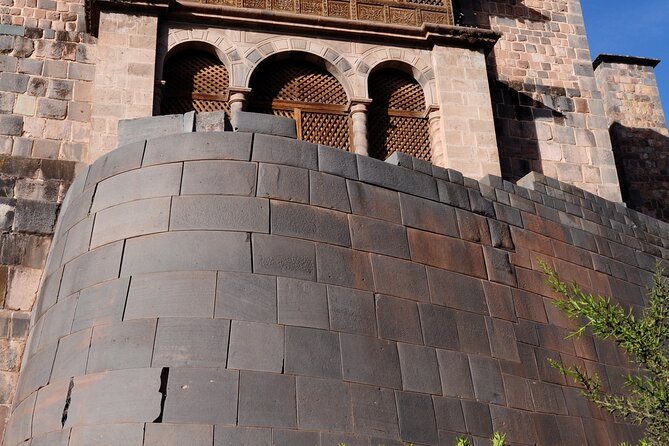
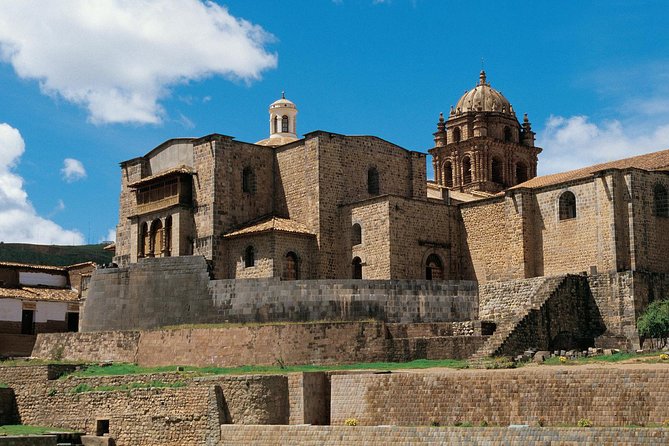
Qorikancha is the strongest archaeological stop on the route. Originally called Intikancha or Intiwasi, it was dedicated to Inti, the sun deity. The temple was a major religious center in the Inca capital, and its walls were once covered in gold according to the historical tradition explained at the site.
Much of the original complex was destroyed after the Spanish conquest. The remaining Inca stonework became the base for the Santo Domingo church and convent. That physical layering is what makes the visit so worthwhile. You are not looking at two separate monuments. You are seeing how the Spanish colonial city was built directly over the Inca one.
Admission is included, and the planned stop is about an hour, though the actual time can vary. One past account described roughly 30 minutes inside Qorikancha, so I would not assume every group gets the full scheduled period. The guide’s explanation matters here, since the surviving walls and later church do not explain themselves at a glance.
If you care most about Inca engineering and religious history, this is likely the tour’s main attraction. If you want a long archaeological visit, you may prefer to return independently and allow more time.
More temple and market days in the world:
- Bangkok: Night Bike Tour with Temples & Flower Market Visit
★ 4.8 · 751 reviews - Seoul: Palace, Temple and Market Guided Foodie Tour at Night
★ 4.9 · 750 reviews - Old Delhi Food-Spice Market-Temples Tour Soon Featured on NETFLIX
★ 5.0 · 304 reviews - Chiang Mai: Elephants, Sticky Waterfalls, Market and Temple
★ 4.9 · 227 reviews
San Blas and Hatun Rumiyoc make the walk personal
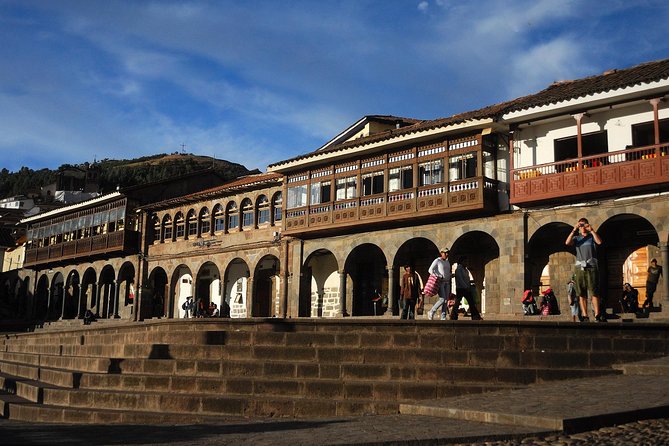
After the market and Qorikancha, the route continues through San Blas, known here as the artisans’ quarter. The walk links the San Blas church and its woodwork with the old streets leading toward the Cathedral.
Hatun Rumiyoc Street is a short but memorable section. The Inca Roca Palace now functions as the Archbishop’s Palace, and the famous Twelve-Angled Stone is set into the wall along the street. Its carefully fitted edges show the precision of Inca masonry without mortar.
This is also where the tour becomes more of a walking experience. The streets can be uneven or sloped, and altitude can make a normal city walk feel harder. A leisurely pace is helpful, but you should still wear shoes with a firm sole and avoid assuming that a three-hour tour will feel physically light.
The Twelve-Angled Stone is a quick stop, not a large museum visit. You may have only a few minutes for photographs and explanation. Its importance comes from the larger wall around it, where the tight stone joints show the standard of construction used across Cusco.
Cusco Cathedral brings the route to Plaza de Armas
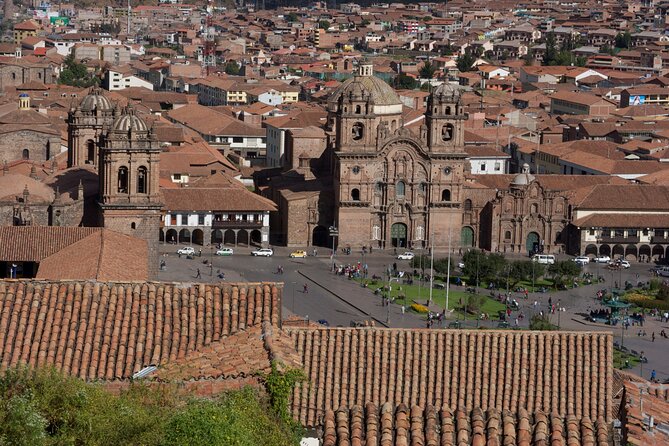
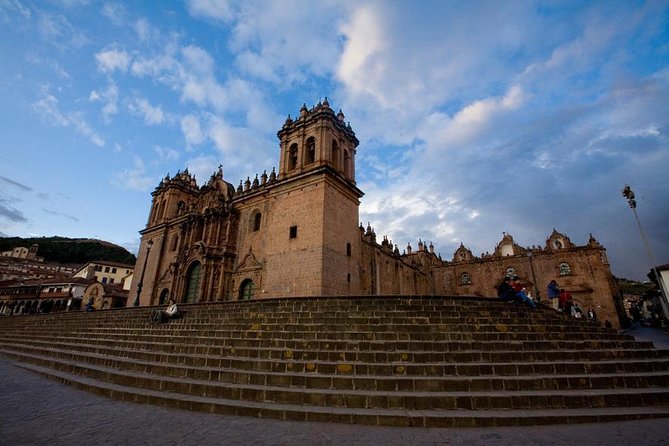
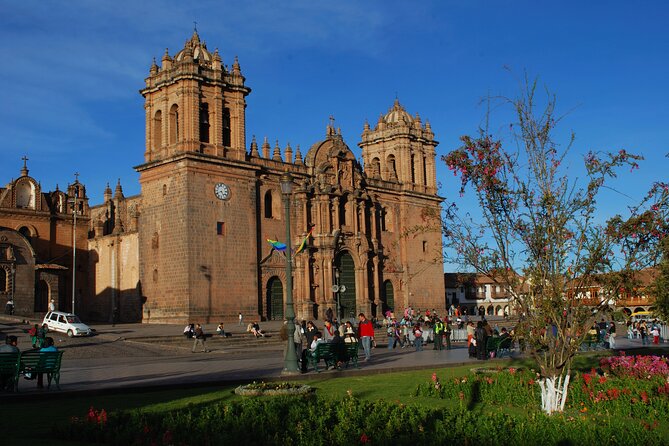
The Cathedral of the Assumption of the Virgin sits on Plaza de Armas and was built between 1560 and 1654. It is the mother church of the Roman Catholic Archdiocese of Cusco and the grandest colonial interior on this route.
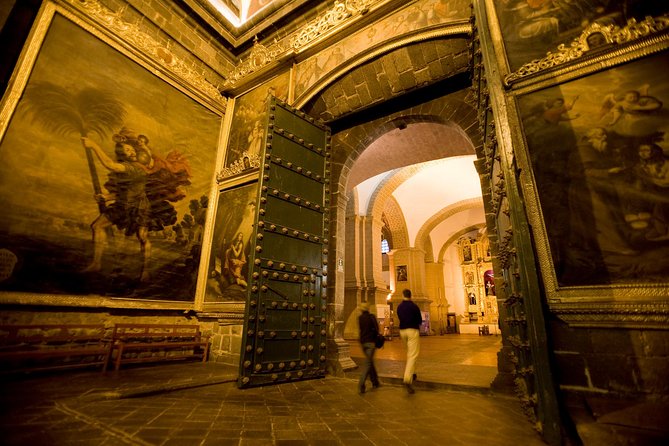
Inside, you can see carved woodwork and colonial paintings. The church also holds important works from the colonial period, making it more than a quick photo stop from the square. Entry is included, and the planned visit is about an hour.
The Cathedral is where the tour’s themes meet. You have seen Inca religious architecture at Qorikancha, local life at the market, and Spanish colonial power in the old center. Here, the guide can help you understand the visual and religious blend that shaped Cusco.
The drawback is that the visit may feel rushed. Some past accounts describe a brief Cathedral stop, while others found the guide’s historical explanation especially useful. Your experience may depend on traffic, group delays, and how much time remains after earlier stops.
The tour ends around Plaza de Armas. This is useful because you can continue on foot for dinner, shopping, or another look at the square. It also means hotel drop-off may come later or require a short walk, especially if your hotel sits in a pedestrian-only area.
Transport, walking, and the real pace
Hotel pickup and drop-off are included from select hotels, but vehicles cannot reach every street. Some hotels sit in areas where access by car is not allowed, so confirm the meeting arrangement before the afternoon begins.
The tour uses a vehicle and walking. That can be a good choice in Cusco, where crossing town on foot may take time and uphill streets can sap energy. At the same time, traffic has caused problems for some departures. A late pickup or an extra hotel stop can cut into the time available at the sights.
The advertised duration is about three hours and 30 minutes. The listed stop lengths add up to longer than that, so treat the schedule as an approximate outline rather than a promise of four or five hours inside the attractions. Some past experiences ended in about two and a half hours, while others felt properly paced.
If you have dinner plans, leave a generous buffer. One badly delayed departure led to a proposed shortened tour, even though the operator refunded the booking. That appears to be an exception rather than the normal pattern, but it is a good reason not to schedule something important immediately afterward.
Bilingual guiding can shape your experience
The service is provided in English and Spanish. This is convenient for mixed groups, but you should understand how bilingual tours work in practice. If most of the group speaks Spanish, the guide may speak at greater length in Spanish and offer shorter English explanations.
Some English-speaking participants still received excellent historical context, while one person found the language balance disappointing. If detailed English commentary is essential to you, ask about the expected group makeup before booking.
The strongest guide experiences have included clear explanations of history, food, culture, and the way Catholic and local beliefs meet in Cusco. Guides such as Jose Marie and Gabriel were praised for a calm pace and useful context. A good guide can also help you notice small details you would likely pass without understanding.
The group limit of 15 is a practical advantage. It is not a private tour, but it should feel more manageable than a large bus group. If you are traveling solo, the format also gives you an organized way to see the center without arranging taxis or navigating unfamiliar streets alone.
Altitude and small practical details
Cusco sits at high altitude, and this tour begins soon after arrival for some people. I would not make it your first activity immediately after landing unless you already know how your body handles altitude. Giving yourself a day to adjust is sensible advice from past experience with this outing.
A relaxed pace helps, but it does not remove the effect of altitude. Rest when needed, drink fluids, and ask a local pharmacy or medical professional about altitude sickness medication rather than treating a bad reaction as a minor inconvenience. Tea and soup are commonly suggested in the supplied guidance, but serious symptoms deserve proper medical attention.
Carry a little Peruvian currency. Bathrooms at some stops may cost one or two soles, and free toilets are not always available. This is a small point, but it prevents an awkward search when the group is ready to move.
You should also bring water, comfortable walking shoes, and a light layer. The tour combines a market, open viewpoints, church interiors, streets, and vehicle transfers, so conditions can change during the afternoon.
Who will get the most from this tour?
I would choose this tour if you have only one afternoon in Cusco and want a guided introduction rather than a self-guided checklist. It suits first-time visitors, solo travelers, couples, and anyone who wants transport and entry tickets handled together.
It is also a good match if you enjoy history but want to see how it connects to daily life. San Pedro Market keeps the afternoon from becoming a string of monuments, while Qorikancha and the Cathedral provide the strongest historical content.
I would be more cautious if you want a slow, in-depth visit at every site. The tour covers a lot, and that means some stops may be brief. It may also disappoint you if you expect a dedicated food tour, a private guide, or a fully English-only experience.
The $59 price is fair when you use the included entries, hotel transport, and guide. It is less attractive if you are comfortable walking the center alone and plan to visit only the market, Plaza de Armas, and exterior stonework.
Should you book this Cusco city tour?
Book it if you want an efficient first look at Cusco with the main cultural stops in one afternoon. Qorikancha, San Pedro Market, and the Cathedral give you a strong mix of Inca, colonial, and present-day Cusco, while San Cristóbal and Hatun Rumiyoc add memorable views and stonework.
Before paying, confirm your pickup point, ask how English and Spanish will be handled, and leave room after the tour in case traffic slows the route. If you have just arrived at altitude, consider waiting a day.
For a first orientation, I would book it. For a slow archaeological study or a guaranteed private English tour, I would choose something more focused.
FAQ
How long is the Cusco city tour?
The advertised duration is approximately three hours and 30 minutes. Actual timing can vary because the route uses both vehicles and walking, and traffic or group delays may shorten time at individual sites.
What time does the tour start?
The stated start time is 2:00 pm.
What places does the tour visit?
The route includes San Cristóbal Plaza, San Blas, Hatun Rumiyoc Street, the Twelve-Angled Stone, Qorikancha, San Pedro Market, Plaza de Armas, and Cusco Cathedral.
Are entrance tickets included?
Yes. Admission to Cusco Cathedral and Qorikancha Temple is included. San Cristóbal Plaza, San Blas, Hatun Rumiyoc Street, and San Pedro Market are listed without an admission charge.
Is hotel pickup included?
Hotel pickup and drop-off are included from select hotels. Some hotels are in areas where vehicles are not allowed, so you may need to meet the guide at an accessible location.
Is the tour offered in English?
Yes. The guide service is bilingual in English and Spanish. The amount of commentary in each language can depend on the group.
How many people can join the tour?
The maximum group size is 15 people.
Can I cancel for a full refund?
Yes, if you cancel at least 24 hours before the experience starts. Cancellations or changes made less than 24 hours before the start time are not accepted for a refund.
Temple visits we reviewed lately in the world
- Shanghai: Yuyuan, City God Temple Old City Tour-Tip Based★ 5.0 · 10 reviews
- Seoul Sunrise & Sunset Hike + Temple & K-Food Adventure★ 4.8 · 6 reviews
- Seoul: UNESCO Sites tour: Palace, Shrine & Bukchon Village★ 4.8 · 26 reviews
- Seoul: War Memorial, Jogyesa Temple & Tapgol Park Tour★ 4.8 · 56 reviews
- Seoul: Vegan Temple Food Class, Jogyesa & Changdeokgung Tour★ 4.6 · 34 reviews
- Seoul: Temple & Starfield COEX Mall Gourmet Tour in Gangnam★ 4.7 · 22 reviews
- SEMARANG SHORE TOURS: BOROBUDUR TEMPLE EXCURSIONS★ 5.0 · 3 reviews
- Seoul: Night Bongeunsa Temple Guided Tour★ 5.0 · 11 reviews
Peru Temple Tours, compared.
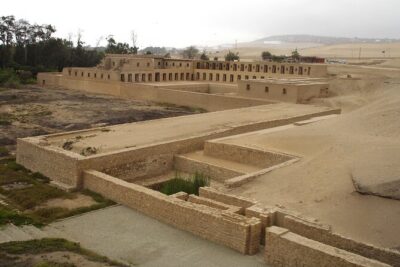
Pre Inca Temple of Pachacamac Half-Day Tour from Lima
Read our review →
Cusco: 3-Hour Horse Riding Tour to the Temple of the Moon
Read our review →
Horse Riding Chacan Mountain And Temple Of The Moon
Read our review →
Arequipa: Walking Tour and Santa Catalina Monastery
Read our review →
From Trujillo: Temple of the Moon and Sun and Chan Chan
Read our review →
This tour also ranks in