
Review · ITALY
Benedictine Monastery of Catania – English Guided Tour
Catania’s Benedictine Monastery is not just a quiet religious building. It is a sprawling record of 2,000 years of city life, with Roman remains below a modern university library and lava forming part of its cellar. I like that the tour reaches rooms you would be unlikely to understand or find on your own, especially the kitchens, novices’ garden, and underground spaces.
I also like the way the tour connects grand late-baroque architecture with modern student life. The monastery is now part of the University of Catania, so you see students using spaces that once served monks. The main consideration is time: 75 minutes gives you a strong introduction, but the complex is large enough to leave you wanting more, and access to every area may vary by tour time.
Key points to know before you go
- Roman remains beneath the university: See a Roman house directly below a modern mezzanine used by students in the library.
- Lava-built cellar: The lower levels reveal how Catania’s volcanic setting became part of the monastery itself.
- Two cloisters and a novices’ garden: These quieter spaces help explain daily monastic life beyond the grand rooms.
- 18th-century kitchens: The large kitchens offer a practical look at the wealth and organization of the Benedictine order.
- Guides who make the history approachable: Carmen, Giovanni, and Nicola are among the guides praised for clear English, humor, and lively storytelling.
- Excellent value at $11: A 75-minute guided visit with access to areas not normally open is inexpensive by Catania sightseeing standards.
Why Catania’s monastery is worth your time
The Benedictine Monastery of San Nicolò l’Arena gives you a different view of Catania. The city is often approached through its cathedral, fish market, Roman theater, and volcanic setting. This tour adds the story of an institution that occupied an enormous space, gathered serious wealth, survived major changes, and eventually became part of modern university life.
That mixture is the real attraction. You are not walking through a building frozen at one date. You move from Roman remains to the monastery’s grand baroque expansion, then into a contemporary university setting shaped by architect Giancarlo De Carlo’s restoration work.
I especially like that the experience does not reduce the monastery to ornate walls and decorative details. The guide explains how people used the building. You see where monks ate, cooked, studied, prayed, moved through the corridors, and managed a large religious community.
At $11 per person, the tour is easy to recommend for most first-time visits to Catania. The price is low enough that you do not need to build your whole day around it, yet the guided access adds far more than a quick look inside an attractive old building.
More Temple Tours around Italy:
- Agrigento: Valley of the Temples Skip-the-Line Sunset Tour
★ 4.5 · 1,512 reviews - Pantheon Elite Guided Tour – Rome’s Iconic Ancient Temple
★ 5.0 · 1,447 reviews - Palermo: Agrigento and the Valley of the Temples Day Tour
★ 4.2 · 1,240 reviews
Finding the meeting point at Piazza Dante
The monastery’s main entrance is on Piazza Dante. Once you pass through the main gate, look for the information point in the courtyard on the right. This detail matters because the complex is large, and you do not want to wander around looking for the start of the tour.
The visit returns to the same monastery complex, so there is no transport between stops. Baggage storage is available at the meeting point, which is helpful if you are carrying a day bag or have luggage with you.
The tour is offered in English with a live guide. If English is not your first language, written translations in French or Spanish can be provided. The site is wheelchair accessible, though the monastery’s historic layout may still make some areas feel less straightforward than a modern museum.
The cloisters: a calm start to a vast complex
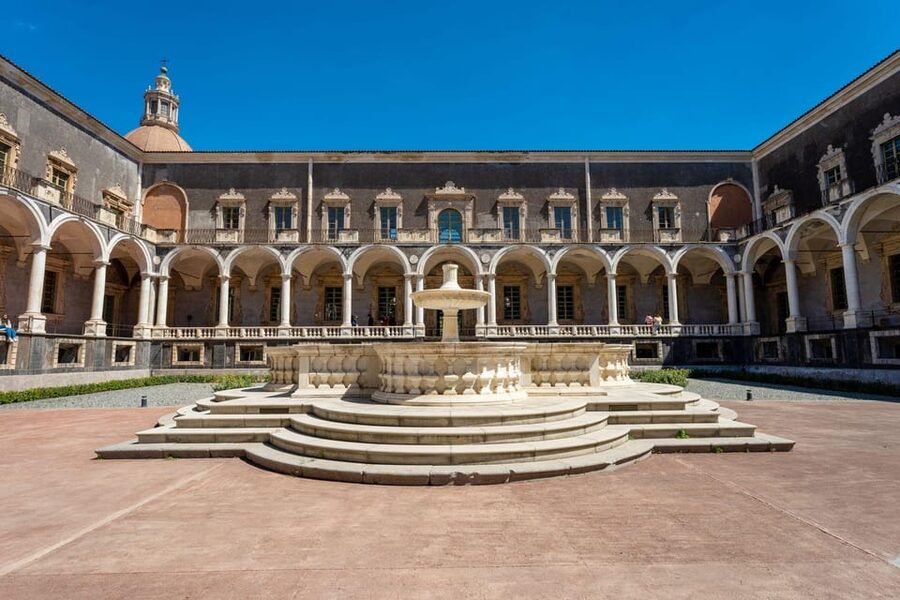
The cloisters are among the first places that help you understand the scale of San Nicolò l’Arena. These open courtyards organize the surrounding rooms and corridors, giving you a sense of how the monastery functioned as a self-contained world.
Look closely at the contrast between the open courtyards and the heavy stone architecture around them. Catania’s late-baroque style can feel grand and theatrical, but the cloisters also provide a calmer rhythm. They are places to pause while the guide explains how the complex changed over time.
You should not expect a simple, symmetrical museum route. The monastery has a slightly maze-like quality, and that is part of the appeal. The route takes you through connected areas rather than a neat line of galleries. A clear guide makes a real difference here, especially when a room’s meaning depends on what came before and what lies above or below it.
Roman houses beneath a modern university library
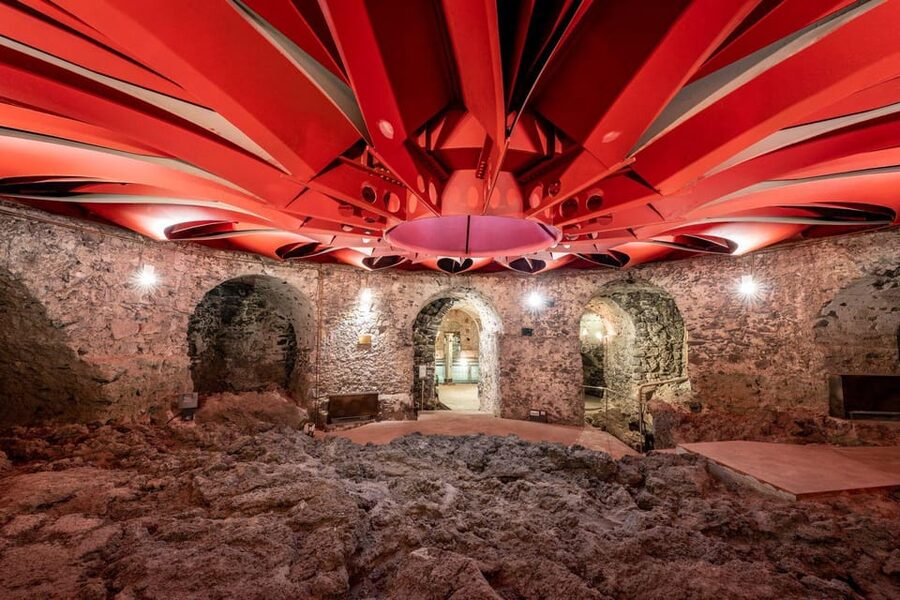
One of the most striking parts of the tour is the Roman House. It is visible below a modern mezzanine used by students as part of the university’s library.
This is a powerful visual reminder that Catania is built in layers. The Roman remains are not isolated in a separate archaeological park. They exist within a working academic building, beneath desks and study areas. You see ancient construction and contemporary education occupying the same space.
The tour describes a journey from the Roman age to the present, and this stop explains that idea better than any broad statement could. The monastery itself was built and altered across centuries, while the ground beneath it preserves an even older city.
If you have visited archaeological sites where ancient remains are carefully separated from modern life, this arrangement will feel different. The juxtaposition is less polished and more revealing. It shows how the city has repeatedly adapted old structures instead of simply abandoning them.
Same sacred ground, another way to see it:
- Rome’s Iconic Temple: Pantheon Audio Guided Tour with Fast Access
★ 4.0 · 1,188 reviews - Agrigento: Valley of the Temples Ticket & App Audioguide
★ 4.3 · 1,160 reviews - Colosseum Special Access Tour, with Ancient Temples & Tombs
★ 4.8 · 747 reviews - Agrigento: Valley of the Temples E-Scooter Tour
★ 4.6 · 557 reviews
The two cloisters and the garden of novices
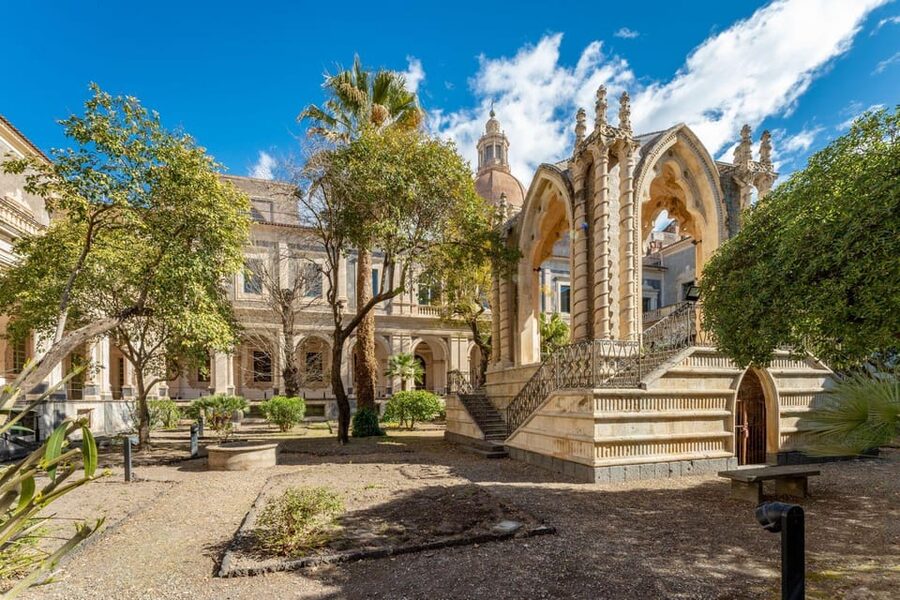
The Garden of the Novices offers another useful change of mood. The monastery was not only a place of worship or formal ceremony. It was also a place where young members of the order lived, learned, worked, and followed a daily routine.
The garden helps you picture that quieter side of monastic life. Your guide can place the space within the wider structure of the monastery and explain how different parts served different groups and purposes.
The two cloisters also help you read the building as a community rather than as a palace. The order’s wealth is visible in the size and design of the complex, but these courtyards and gardens bring the focus back to ordinary movement through the building.
I find this balance useful. The tour does not only show you the most impressive architecture. It also points toward the daily routines that made such a large institution function.
The 18th-century kitchens and dining rooms
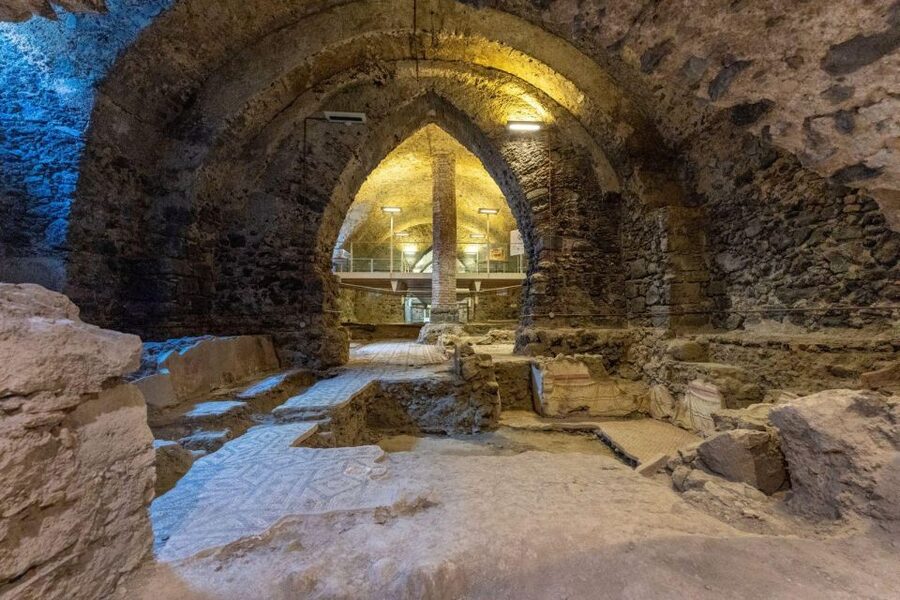
The famous 18th-century kitchens are a highlight because they make the monastery’s scale practical and tangible. A grand staircase or decorated facade can impress you, but kitchens reveal what it took to feed a large religious community.
Here you get a better sense of the resources behind the Benedictine order. The monastery’s wealth was not simply a matter of fine architecture. It supported large rooms, staff, food preparation, storage, and a complex daily operation.
The dining rooms add to that picture. As you move through the spaces, listen for the difference between ceremonial areas and service areas. The kitchen and dining rooms tell you about the people who kept the monastery running, not only the senior religious figures whose names may appear in the formal history.
This is also one of the places where a guide’s storytelling matters most. Carmen has been praised for explaining clearly while keeping the pace lively. Giovanni and Nicola have also been singled out for humor and engaging accounts of the rooms. The best moments here are likely to come from the small explanations that connect a plain work area to the wider life of the monastery.
The lava-built cellar and Catania’s volcanic setting
The cellar is one of the tour’s most unusual stops. It was built on lava, giving you a direct physical link between the monastery and the volcanic ground beneath Catania.
You do not need a separate geology lesson to appreciate the point. The building is shaped by its location. Lava is not just a distant feature associated with Mount Etna. It forms part of the material reality beneath the monastery.
The lower level can also be welcome during Catania’s hot weather. One visitor specifically appreciated the cooler underground area, and you may find it a refreshing break in summer. The cellar gives the tour a different texture from the bright courtyards and large formal rooms above.
The underground spaces are also where the monastery feels most mysterious. They are not presented as a theatrical attraction. Their value comes from showing how old structures, volcanic material, and later construction fit together.
The former cellar that now houses a university library
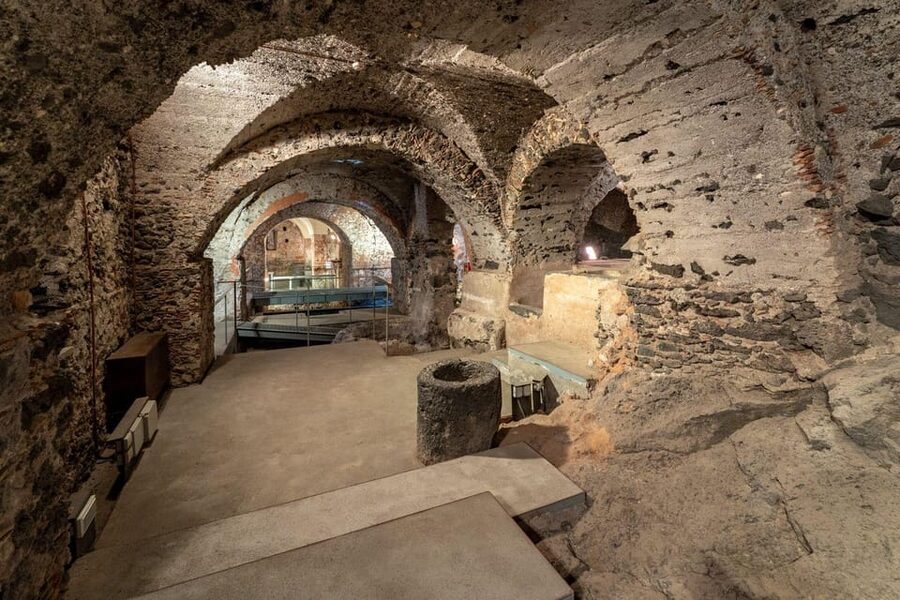
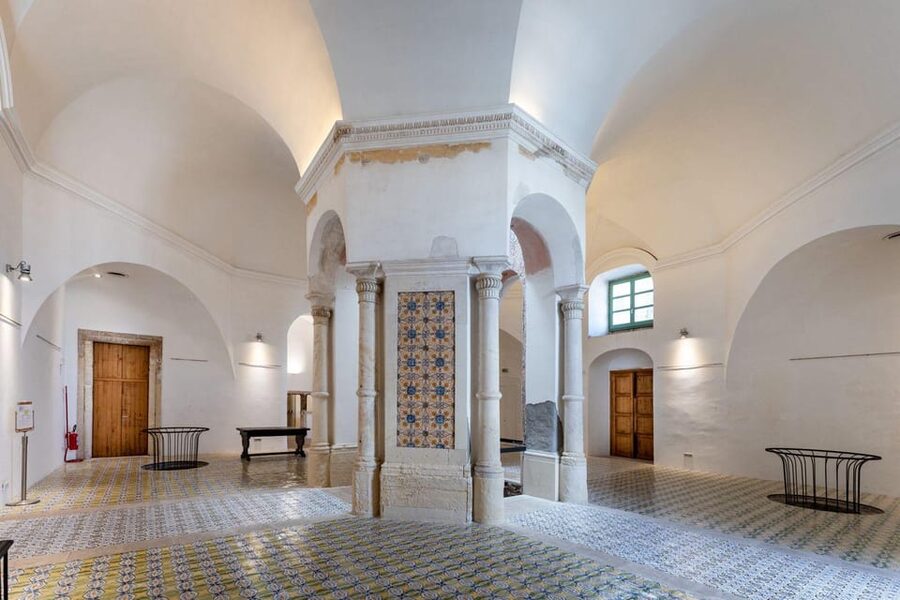
A 16th-century cellar is now used as the Library of the Department of Humanities at the University of Catania. This is another strong example of the building’s present life.
You are not looking at a preserved monastery that exists only for sightseeing. Students use parts of the complex today. A room built for one purpose has been adapted for study, while Roman remains sit below a modern mezzanine.
That contrast gives the tour an honest sense of continuity. The building has changed because the city changed. The former monastery is no longer functioning as a monastery, but it still serves a public and educational role.
The library also helps explain why you need a guided visit. Without context, you might see a beautiful old room with shelves or tables and miss the importance of its former use. The guide links the architecture to the building’s earlier life and to the restoration work that made modern use possible.
Vaccarini, the monumental staircase, and late-baroque scale
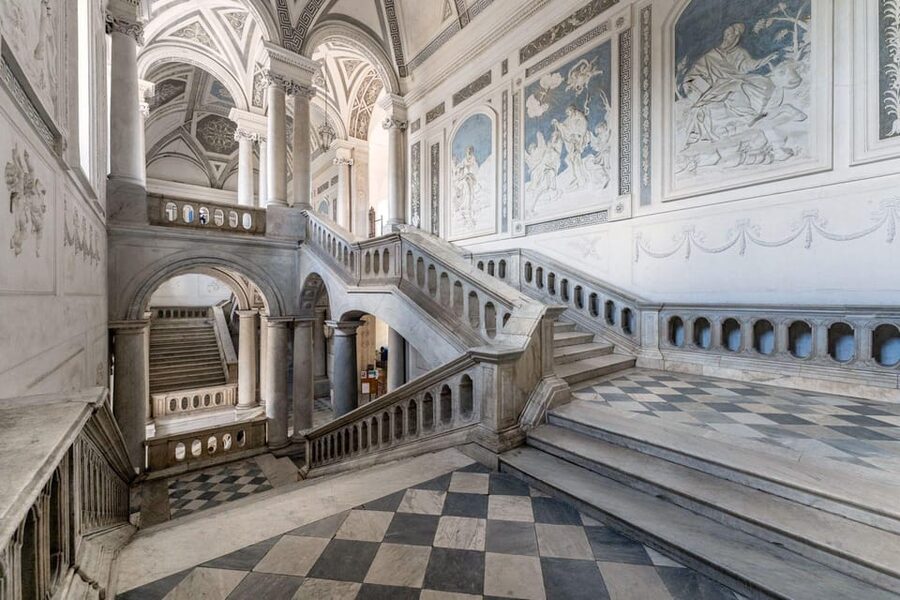
The work of architect Vaccarini and the monumental staircase reveal the monastery at its most formal. These spaces show the confidence and ambition of the Benedictine order, as well as the artistic language of Catania’s late-baroque period.
The staircase is not just a practical route between floors. Its size and design help communicate status. When you stand in such a large complex, you can understand why the monastery is described as one of Europe’s biggest.
Still, do not expect a single uninterrupted baroque masterpiece. The building has been altered, restored, and adapted. That mix is more interesting than perfect uniformity, but it means the experience includes modern interventions alongside historic architecture.
The restoration lasted more than 30 years. Architect Giancarlo De Carlo’s contemporary refurbishment project allowed the complex to function as a university while preserving and exposing its older layers. The tour explains this process as part of the building’s story, not as a technical footnote.
What the guide adds to the visit
I would not choose to see this monastery without the guided tour if your schedule allows one. The building is too large, layered, and actively used to read easily on your own.
The strongest guide feedback centers on three things: clear English, a lively pace, and the ability to answer questions without turning the visit into a lecture. Carmen has been praised for giving just the right amount of information. Giovanni has been described as funny and engaging, while Nicola has been praised for stories about the rooms and for making the route feel like a special access visit.
That does not mean every tour will have the same guide or exactly the same tone. It does mean the experience depends heavily on the person leading it. The format is short enough to stay focused, and the 75-minute length works well for a morning or afternoon in Catania.
Some areas may not be available on every departure. One visitor was disappointed not to reach the viewing platform and noted that it may be possible only on a later tour. If that viewpoint matters to you, ask when booking or at the information point rather than assuming it is included.
Is 75 minutes enough?
Seventy-five minutes is enough to cover the major spaces and understand the monastery’s basic story. You should see the two cloisters, the Roman House, the novices’ garden, the kitchens, dining areas, cellar, library, staircase, and other parts of the complex.
It is not enough for a slow architectural study. You may want more time for details, photographs, or simply standing in the courtyards. The tour keeps you moving through a large building, so listen closely and take photographs when the guide gives you a pause.
The short format is an advantage if you are fitting the monastery between other Catania sights. It is also useful on a hot day, when the cooler lower levels provide a welcome change from the streets.
Who should book this Catania tour?
I would recommend it to you if you enjoy architecture, archaeology, religious history, or buildings that have been reused over time. It is also a good choice if you want a quick introduction to Catania’s history beyond the usual central sights.
Families with older children may appreciate the Roman remains, underground spaces, and stories about how the rooms were used. The tour is not built around hands-on activities, so very young children may find the explanations less gripping.
You will get the most from it if you are curious about how a city’s past remains part of its present. The monastery is now tied to university life, and that living connection is one of its strongest features.
The tour is wheelchair accessible. English is the main language, with written French or Spanish translations available when needed. Free cancellation up to 24 hours in advance and reserve-now, pay-later booking make it easier to fit into a changing itinerary.
Should you book the Benedictine Monastery tour?
Yes, especially at $11. The price buys access to a huge and unusual part of Catania, along with the explanation needed to make sense of its Roman remains, monastic rooms, lava-built cellar, and university spaces.
Book it if you want more than pretty baroque architecture. Skip it only if your time in Catania is extremely limited or if you prefer to explore historic buildings without a scheduled guide. For most people, the guided format is the better choice because the monastery’s best details are hidden in its layers and uses.
FAQ
Where does the Benedictine Monastery tour start?
The meeting point is at the Benedictine Monastery of San Nicolò l’Arena. After entering through the main gate on Piazza Dante, find the information point in the courtyard on the right.
How long does the guided tour last?
The English guided tour lasts 75 minutes and returns to the Benedictine Monastery of San Nicolò l’Arena.
What areas are included?
The tour includes the monastery’s two cloisters, the 16th-century cellar now used as a university library, the Roman House, Garden of the Novices, 18th-century kitchens and cellars, dining rooms, Vaccarini’s work, and the monumental staircase. Access to areas not normally open is included.
Is the tour conducted in English?
Yes. The tour has a live English-speaking guide. Written translations in French or Spanish can be provided if English is not your main language.
Is the monastery wheelchair accessible?
Yes, the activity is listed as wheelchair accessible.
How much does the tour cost?
The price is $11 per person. Booking also allows you to reserve now and pay later, and cancellation is free up to 24 hours before the tour for a full refund.
Temple visits we reviewed lately in Italy
- Rome underground hidden temples, ruins, and secret basilicas★ 3.7 · 21 reviews
- Rome: Tour of St. Clement’s Basilica Underground Temples★ 4.8 · 242 reviews
- Rome: Temples, Squares & Markets Guided Walking Tour★ 4.8 · 26 reviews
- Palermo to Siracusa: stop al Valley of Temples & Roman Villa★ 5.0 · 5 reviews
- Paestum Tour: Best Preserved Temples in the World (UNESCO)★ 4.5 · 11 reviews
- Paestum: 2-Hour Greek Temples & Archaeological Museum★ 4.8 · 19 reviews
- Paestum: Temples and Museum Tour with Archaeologist Guide★ 5.0 · 14 reviews
- Neustift Monastery: Admission with audio guide★ 4.6 · 9 reviews
Italy Temple Tours, compared.
Agrigento: Valley of the Temples Skip-the-Line Sunset Tour
Read our review →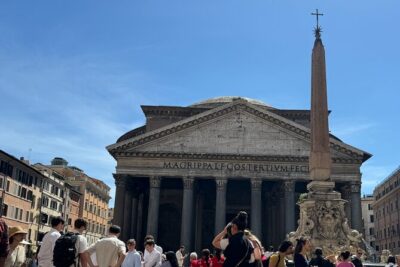
Pantheon Elite Guided Tour – Rome’s Iconic Ancient Temple
Read our review →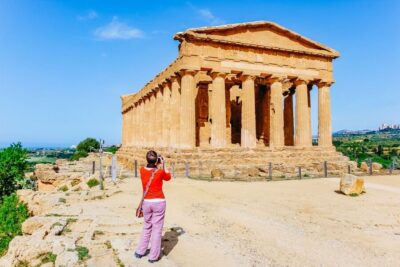
Palermo: Agrigento and the Valley of the Temples Day Tour
Read our review →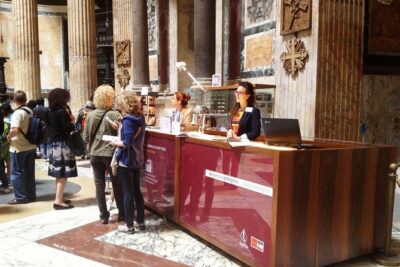
Rome’s Iconic Temple: Pantheon Audio Guided Tour with Fast Access
Read our review →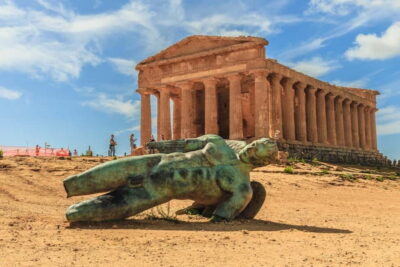
Agrigento: Valley of the Temples Ticket & App Audioguide
Read our review →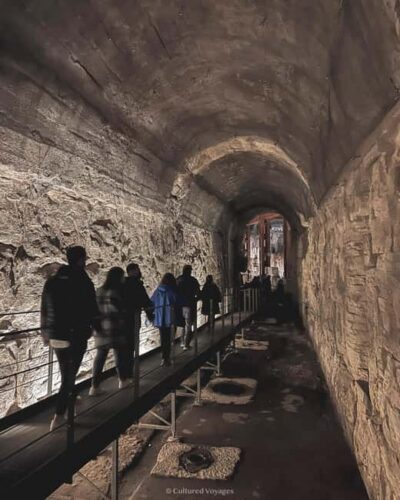
Colosseum Special Access Tour, with Ancient Temples & Tombs
Read our review →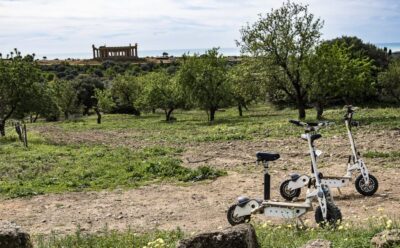
Agrigento: Valley of the Temples E-Scooter Tour
Read our review →
Palermo: Valley of the Temples and Scala dei Turchi Day Trip
Read our review →This tour also ranks in