
Review · TOKYO
Tokyo: Imperial Palace, Sensō-ji Temple, & Tokyo Tower Tour
Tokyo’s old imperial center, its oldest major temple, and its famous red-and-white tower are spread across the city. This four-hour bus tour links all three without asking you to decode Tokyo’s rail system on your first afternoon. You see the Imperial Palace outer grounds, walk through Sensō-ji and Nakamise Street, then look over the city from Tokyo Tower.
I like the practical route and the human touch from guides such as Junko, Kiki, Saiko, and Haruki, who explain sights during the bus rides as well as at the stops. I also like the price: $40 includes transportation, guiding, and Tokyo Tower admission, which is fair for a short introduction to Tokyo.
The main caution is simple: this is not an Imperial Palace interior tour. You see the outer garden, walls, statue, and Nijubashi Bridge area, but not the palace buildings or East Gardens. Time is also tight, especially at Sensō-ji.
Key points to know before booking
- Three very different Tokyo sights: Imperial symbolism, Buddhist tradition, and a high city viewpoint all fit into one afternoon.
- The Imperial Palace stop is exterior only: You walk around the outer area and Nijubashi Bridge, with no entry to the palace or East Gardens.
- Sensō-ji gets the longest stop: Expect about one hour for the temple, Nakamise Street, snacks, shopping, and independent wandering.
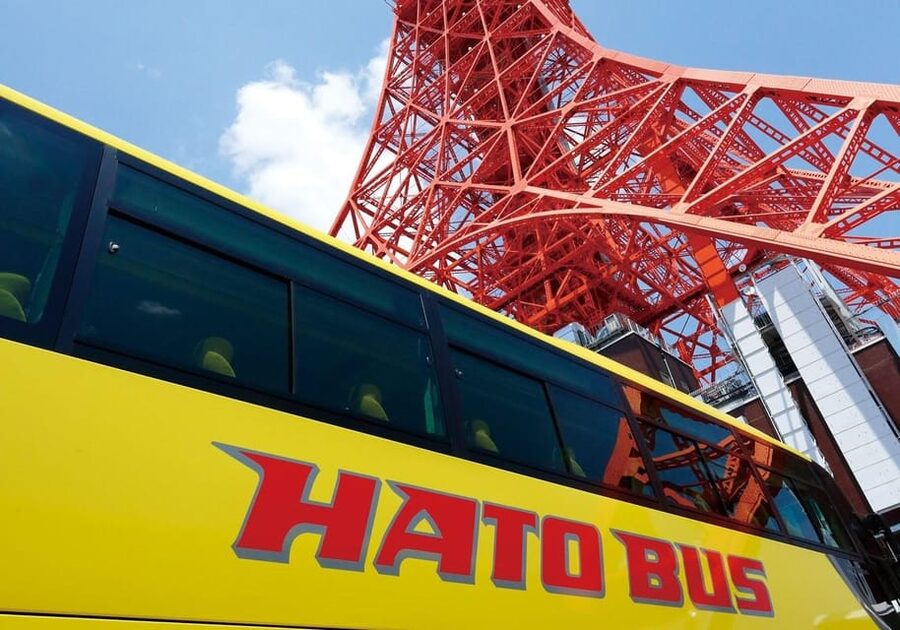
- Tokyo Tower admission is included: The main observatory sits 150 meters above the ground.
- The guide matters: English-speaking guides such as Junko and Kiki have been praised for explaining sights during the drives, not just at the stops.
- The tour begins near Tokyo Station: The Hato Bus office is about two minutes from the Marunouchi South Exit.
What this half-day Tokyo route does well
This is a sightseeing sampler, not a slow cultural walk. That distinction matters. Tokyo is enormous, and these three stops sit far apart. By using a hybrid bus, you spend less energy changing trains and more time looking out the window as the city shifts from palace grounds to old Asakusa to central Tokyo’s skyline.
The route also gives you a useful first look at Tokyo’s different identities. The Imperial Palace represents the capital’s formal and political center. Sensō-ji brings you into an older religious district filled with ritual, food, and small shops. Tokyo Tower finishes with a broad view over the modern city.
I would use this tour early in a Tokyo stay if you want to get your bearings. It can also work well at the end of a short visit, when you want one final sweep of the major sights without arranging three separate trips.
The bus is described as an eco-friendly hybrid vehicle. You still need to manage a few steps when boarding and leaving, though the activity is listed as wheelchair accessible. Hotel pickup is not included, so you make your own way to the Hato Bus Tokyo office.
More Temple Tours around Tokyo:
- Tokyo: Asakusa Walking Tour with Sensoji Temple Visit
★ 4.8 · 1,583 reviews - Nikko: Kegon Falls, Lake Chuzenji & Toshogu Temple
★ 4.6 · 1,577 reviews - Tokyo: Nikko Toshogu Shrine and Kegon Waterfall Tour
★ 4.5 · 1,266 reviews
Starting near Tokyo Station
The meeting point is convenient for most visitors staying near Tokyo Station or arriving there by train. From the JR Tokyo Station Marunouchi South Exit, the Hato Bus boarding point and office are about a two-minute walk.
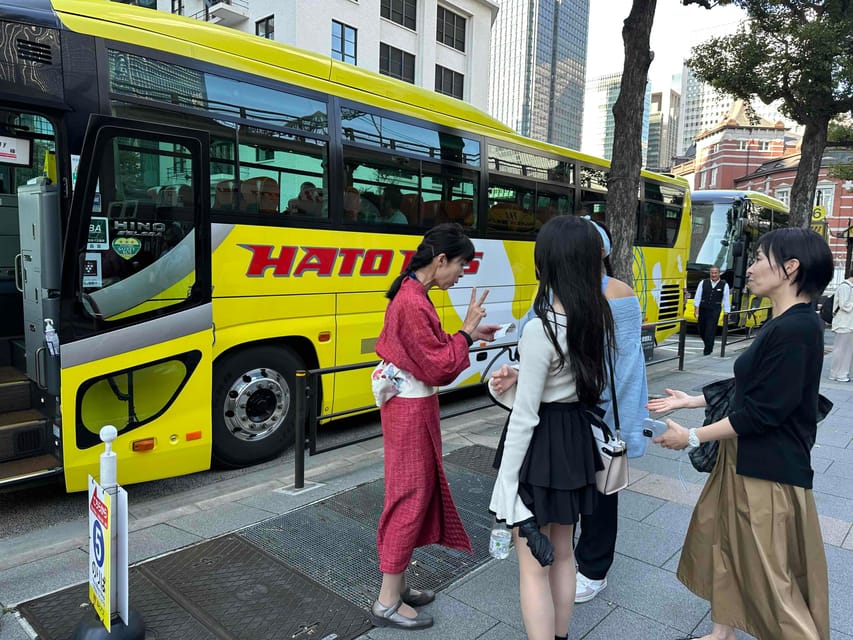
Give yourself enough time to find the office rather than treating those two minutes as a race. Tokyo Station is large, and the right exit matters. Once you reach the meeting point, you board the bus and meet the English-speaking guide who stays with the group through the afternoon.
One of the best features of this format is the commentary between stops. Guides including Junko, Kiki, and Padmini’s guide have been praised for sharing information about Japanese customs, language, daily life, and Tokyo’s past while the bus moves through the city. That turns transfer time into part of the tour instead of dead time.
The exact guide varies, of course. Some guides are especially strong storytellers, while others focus more on clear practical information. Either way, the English-language format makes this easier for first-time visitors who want context without arranging a private guide.
The Imperial Palace outer grounds and Nijubashi Bridge
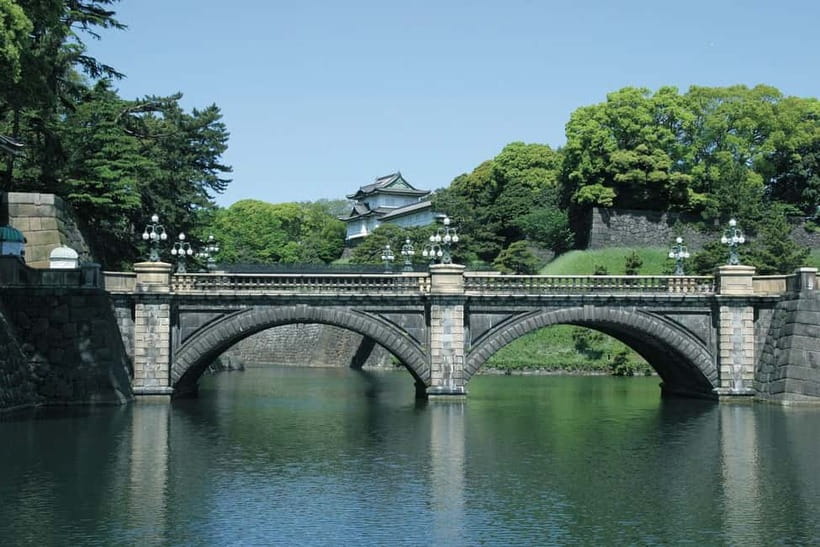
The first sightseeing stop lasts about 40 minutes. You get off near the Imperial Palace Outer Area and walk toward the Nijubashi Bridge area, with time for photographs and a look at the statue of Masashige Kusunoki.
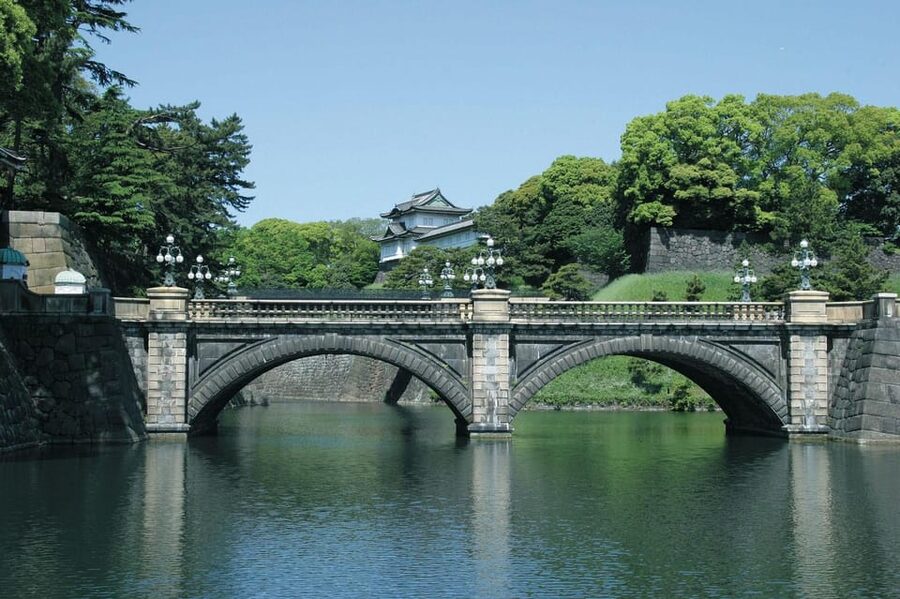
Nijubashi is one of the palace district’s most familiar views. The bridge, stone walls, trees, and carefully maintained open space give you a sense of the imperial compound’s scale, even though the palace itself remains out of reach. The setting is calm and formal, a sharp contrast to the traffic and tall buildings around it.
This stop works best if you understand what you are getting. You do not enter the Imperial Palace, and you do not visit the East Gardens. The tour gives you the outer garden and exterior views only. Several people found this disappointing because the palace buildings are not visible in the way they expected.
If you specifically want palace gardens, plan a separate visit to the Imperial Palace East Gardens. The tour does not include them, and the gardens are closed on Mondays and Fridays according to the practical guidance included with this experience. Do not book this afternoon tour expecting a full palace visit.
Still, the stop has value. You get a quick look at an important part of Tokyo’s ceremonial center without spending half a day on palace logistics. For a first overview, 40 minutes is enough for a walk, photographs, and a clear explanation of the bridge and outer grounds. For palace enthusiasts, it will feel too brief.
Sensō-ji and one hour in Asakusa
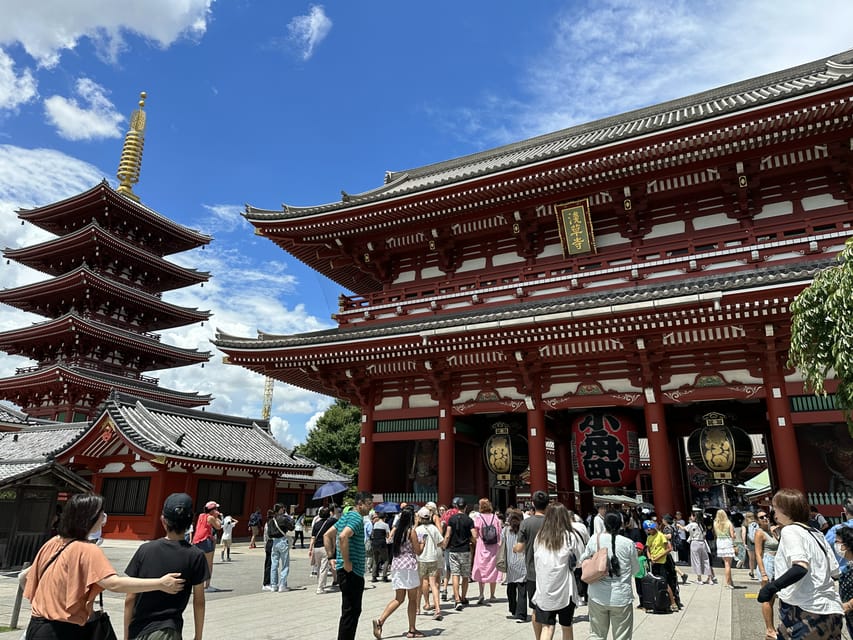
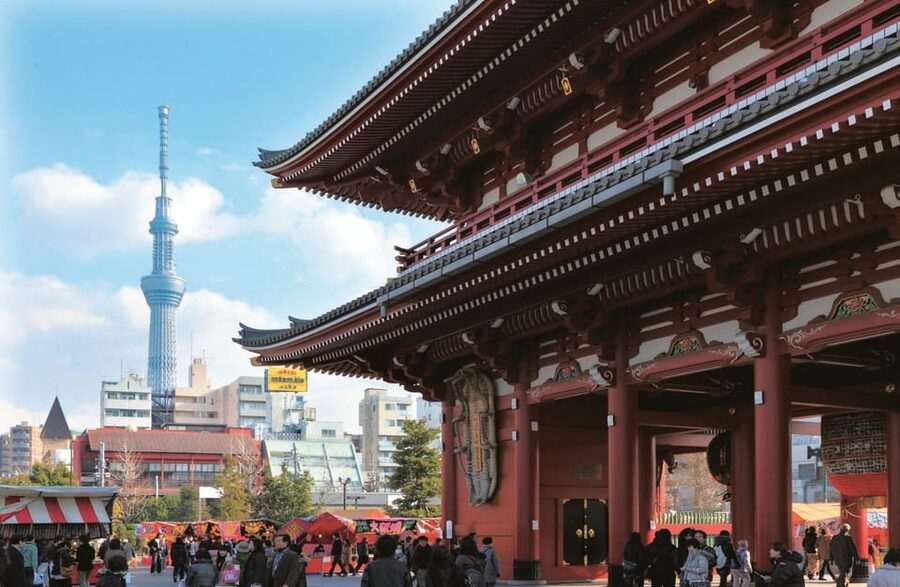
The Asakusa stop is the heart of the afternoon. Sensō-ji, also called Asakusa Kannon Temple, is Tokyo’s oldest temple, and the approach is much more active than the Imperial Palace area.
Your guide introduces the temple and explains details of its traditional craftsmanship and religious setting. After that, you have free time to look around on your own. This split is useful: you get the basic context first, then you can choose how to spend the remaining minutes.
The temple complex includes Nakamise Street, a roughly 200-meter shopping lane leading toward the temple. This is where you can buy souvenirs, browse traditional goods, and try local snacks or meals at your own expense. The street is part of the experience, not merely a corridor to the temple.
You should watch the clock here. One hour sounds reasonable, but Sensō-ji and Nakamise offer more than you can comfortably cover at a relaxed pace. One person specifically wished for more time at the temple, and that is the likely trade-off. The tour gives you a taste of Asakusa, not a full neighborhood visit.
Crowds can also change the experience. Sunday visits may feel packed, and a rainy afternoon can limit your enjoyment. Still, Sensō-ji is the stop with the most room for personal discovery. You can focus on the temple, browse shops, seek out snacks, or simply watch the steady flow of people through one of Tokyo’s best-known old districts.
Wear comfortable shoes. The tour involves walking at each stop, and there is free time rather than a fully guided path from one door to the next. Keep your group’s meeting instructions in mind so shopping does not turn into a frantic dash back to the bus.
Same sacred ground, another way to see it:
- Tokyo:Mt.Fuji,Kawaguchiko Oishi Park,Arakurayama Sengen Park
★ 4.4 · 2,682 reviews - Tokyo Panoramic 1 Day: Meiji Shrine, Asakusa, Odaiba and SKYTREE®
★ 4.5 · 1,222 reviews - Tokyo: Zen Meditation at a Private Temple with a Monk
★ 5.0 · 510 reviews - Mt. Fuji Heritage Tour: Traditional Villages, Lakes & Shrine
★ 4.5 · 509 reviews
Tokyo Tower at 150 meters
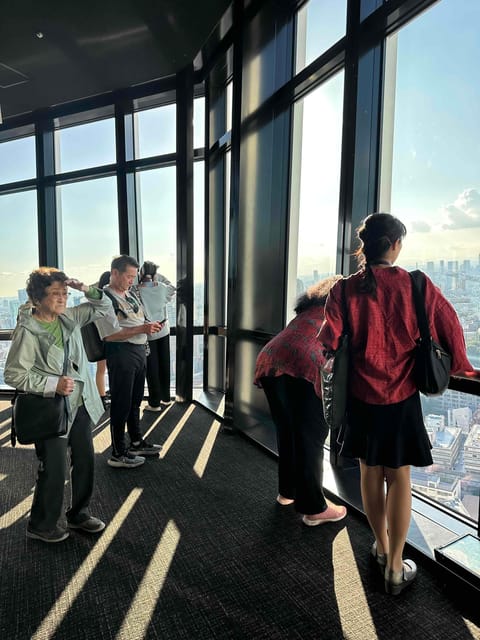
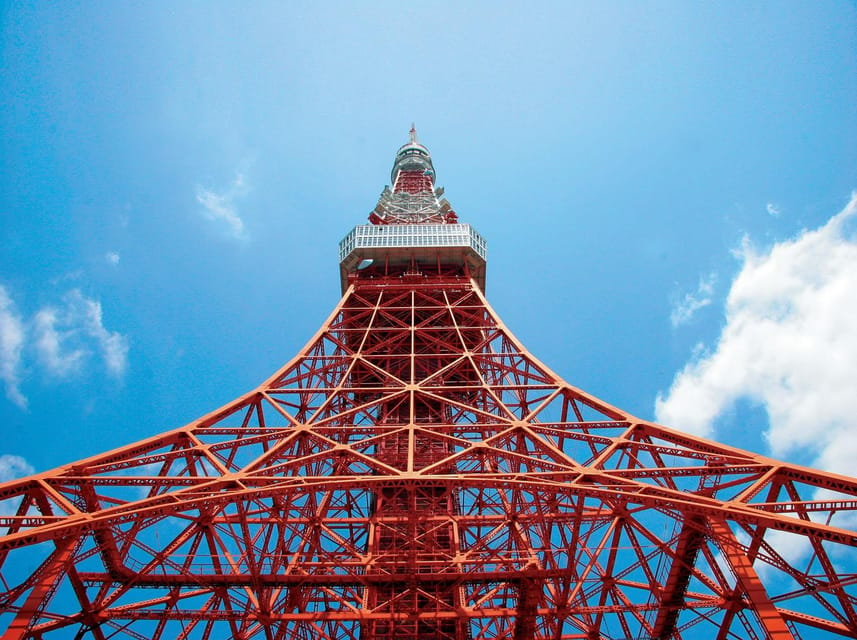
The final major stop is Tokyo Tower, where your included ticket takes you to the main observatory, 150 meters above the ground. This is a strong finish because it changes the scale of the day. At street level, you have seen walls, temple roofs, shops, and bridges. From the tower, Tokyo spreads out in every direction.
On a clear day, you may even spot Mount Fuji. That is a bonus, not a guarantee. Rain, haze, and low visibility can reduce the view considerably. One rainy visit produced a disappointing outlook, while clear weather made the tower a highlight.
If you can influence the start time, think about the light. A guidebook tip from one visitor was to reach Tokyo Tower around sunset rather than after the sun has already gone down. That timing can give you both daylight and evening city lights, though the available tour schedule controls what you can choose.
The tower visit is fairly quick, about 40 minutes. That is enough for the observatory and photographs, but not for an extended tower experience. If Tokyo Tower is your main reason for booking, you may want a separate, slower visit. On this tour, it is a well-chosen final stop rather than a full evening outing.
Why the guide can make or break the afternoon
The sights are famous enough to fill a camera roll on their own, but the guide gives the route its real value. Strong guides explain what you are seeing, keep the group together, and use the bus rides to connect the stops.
Junko has been praised for staying informative and on schedule. Kiki has been noted for clear English, stories, and extra explanations about Japanese language. Saiko brought humor and historical detail, while Haruki was described as friendly and informative. These names are examples from past departures, not a promise of who will lead your bus.
The best guides also help with small practical matters. They can point out good photo positions, explain local customs, and offer ideas for places to visit later. One guide gave extra city tips, while another helped the group stay comfortable during a hot and humid afternoon.
That said, this is a group tour, so the tone depends partly on the individual guide and the size of the departure. You should expect shared commentary rather than a private conversation tailored to your interests. If you already know Tokyo well, the information may feel basic. If this is your first visit, it can save you a lot of preparation.
Price, comfort, and the value of four hours
At $40 per person, this is a good-value orientation tour. The fee includes hybrid bus transportation, the guide, the Imperial Palace outer area and Nijubashi walk, Sensō-ji, and the Tokyo Tower ticket. You pay separately for food, drinks, and anything you buy at Nakamise.
The strongest value comes from the transport. These sights are not next door to one another, and navigating them independently takes planning. You could spend less by using public transit, but you would need to arrange the route, manage transfers, time the temple and tower visits, and provide your own historical context.
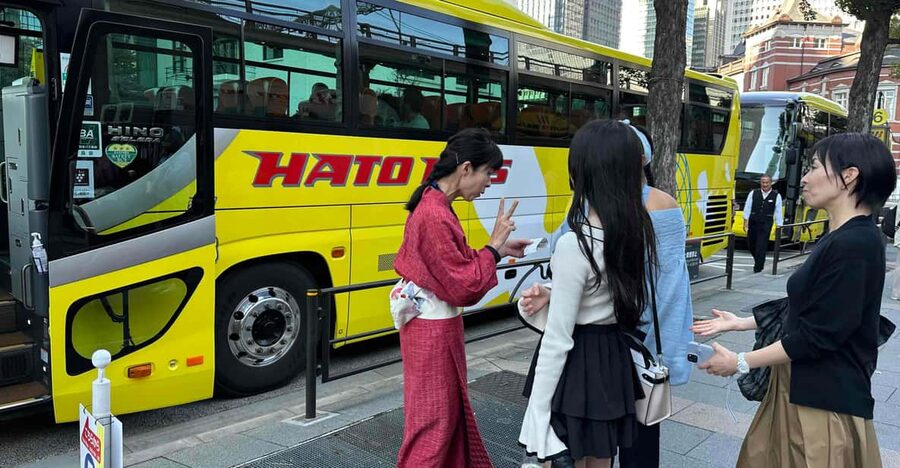
You are paying for convenience and structure, not luxury. The bus is comfortable enough for the transfers, but you need to climb a few steps. There is no hotel pickup or drop-off, and the tour returns to the original Hato Bus office near Tokyo Station.
The four-hour length is both an advantage and a limit. It fits neatly into an afternoon and leaves your evening free. It also means each sight gets only a quick treatment. The Imperial Palace stop is about 40 minutes, Sensō-ji about one hour, and Tokyo Tower about 40 minutes, with the remaining time used for travel and commentary.
The overall rating is 4.5 from 339 ratings, and the strongest pattern is clear: people value the guide, the simple transport, and the chance to see three major sights in one outing. The less favorable comments focus on the same two points: limited time and the fact that the palace visit is exterior only.
Who should book this tour
I would recommend it to first-time visitors, families, cruise passengers, and anyone with only a short stay in Tokyo. It is also useful if you have just arrived and want a guided introduction before exploring neighborhoods independently.
The tour suits you especially well if you want:
- A straightforward first afternoon in Tokyo
- English commentary from a live guide
- Transport between widely separated sights
- Time at Sensō-ji without planning every detail
- A Tokyo Tower ticket included in the price
- A return to the same central meeting point
I would think twice if you want a slow temple visit, a full Imperial Palace experience, or a long stay at Tokyo Tower. Independent visitors with strong rail confidence can spend more time at each place on their own.
Weather deserves attention. Rain can affect the palace walk, temple visit, and tower view. The tour still runs, and good guides do their best to keep the afternoon moving, but clear skies make the final stop far more rewarding.
Should you book it?

Book this tour if you want three major Tokyo sights with minimal planning and understand that the Imperial Palace portion is an exterior look. For $40, the combination of transport, guiding, and Tokyo Tower admission is hard to fault.
Skip it if you want to enter the palace, explore the East Gardens, or linger at Sensō-ji. For everyone else, this is a sensible first look at Tokyo, especially when a guide such as Junko, Kiki, or Saiko turns the bus rides into useful city lessons rather than empty travel time.
FAQ
How long does the Tokyo tour last?
The tour lasts four hours. Starting times vary, so you need to check availability when booking.
Where does the tour begin and end?
It begins and ends at the Hato Bus Tokyo office and boarding point near Tokyo Station. The office is about a two-minute walk from the JR Tokyo Station Marunouchi South Exit.
Does the tour enter the Imperial Palace?
No. You visit the Imperial Palace Outer Area, see the statue of Masashige Kusunoki, and walk around the Nijubashi Bridge area. Entry to the palace and the East Gardens is not included.
Is Tokyo Tower admission included?
Yes. The tour includes entry to Tokyo Tower’s main observatory, located 150 meters above the ground.
How much free time do you get at Sensō-ji?
The Sensō-ji visit lasts about one hour and includes guided information plus free time for independent sightseeing, shopping, snacks, or meals.
Is the tour conducted in English?
Yes. A live English-speaking guide accompanies the tour.
Can children and wheelchair users join?
The activity is listed as wheelchair accessible, though you need to manage a few steps when boarding and leaving the bus. Children from age zero to under six can travel free, but no seat is provided for them.
Temple visits we reviewed lately in Tokyo
- From Asakusa: Old Tokyo, Temples, Gardens and Pop Culture★ 4.6 · 15 reviews
- Tokyo: Nagano Snow Monkeys and Zenkoji Tour with Temples★ 4.9 · 19 reviews
- Nagano: Snow Monkeys, Zenkoji Temple & Sake Day Trip★ 5.0 · 4 reviews
- From Tokyo: Nagano, Zenkoji Temple, Snow Monkeys Day Trip.★ 4.3 · 4 reviews
- Tokyo/Nagano: private Tour with Snow Monkey Park & Temples★ 4.8 · 13 reviews
- Make a temple stamp book with artist★ 4.9 · 10 reviews
- Kamakura Temples Private Guided Tour from Tokyo★ 4.8 · 21 reviews
- Join a Unique Cultural Ceremony at Tokyo’s Meiji Shrine★ 5.0 · 9 reviews
Tokyo Temple Tours, compared.
Nikko: Kegon Falls, Lake Chuzenji & Toshogu Temple
Read our review →
Tokyo: Nikko Toshogu Shrine and Kegon Waterfall Tour
Read our review →
Tokyo Panoramic 1 Day: Meiji Shrine, Asakusa, Odaiba and SKYTREE®
Read our review →
Tokyo: Zen Meditation at a Private Temple with a Monk
Read our review →
Mt. Fuji Heritage Tour: Traditional Villages, Lakes & Shrine
Read our review →
Tokyo: Samurai Entertainment Night Show in Kanda Shrine
Read our review →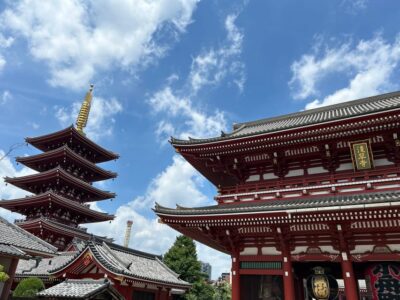
Tokyo: Asakusa and Tokyo’s Oldest Temple Senso-ji Tour
Read our review →
Tokyo: Meiji Shrine Walking Tour — Shinto & Imperial System
Read our review →This tour also ranks in