
Review · ROME
Pantheon: The Iconic Ancient Roman Temple – Semi-Private Tour
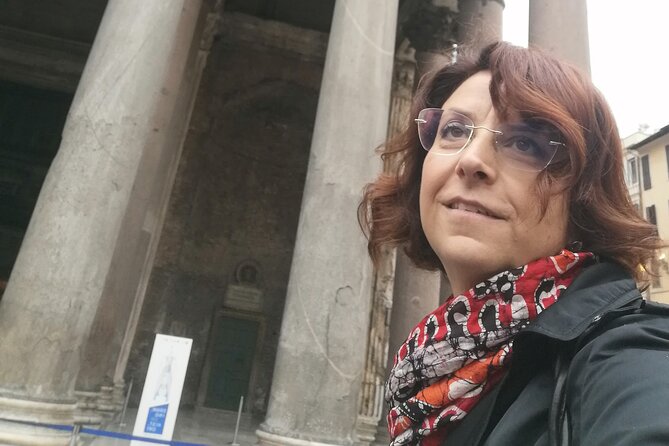
The most rewarding part of this Pantheon tour is the chance to look beyond the famous dome and understand how the building works. Olga, an archaeologist, explains Roman engineering, changing religious use, and the symbols tucked into this remarkable space.
I like the easy meeting point in Piazza della Rotonda and the small-group format. I also like that Olga uses archaeological drawings and iPad images, which can help you picture parts of the Pantheon that are no longer visible. The main consideration is time: 50 minutes to one hour is enough for a focused visit, but not for a long exploration of every detail.
Key points at a glance
- Archaeologist guide Olga: Expect detailed explanations of Roman architecture, construction, religion, and the Pantheon’s later Christian role.
- Small group setting: The activity information gives a maximum of 10 people, though another description mentions up to 15, so confirm the exact group size when booking.
- One focused monument: The tour stays at the Pantheon, making it a good choice if you want depth rather than a rushed tour of several sights.
- Helpful visual material: Olga may use an iPad and archaeological drawings to explain the building’s original appearance and structure.
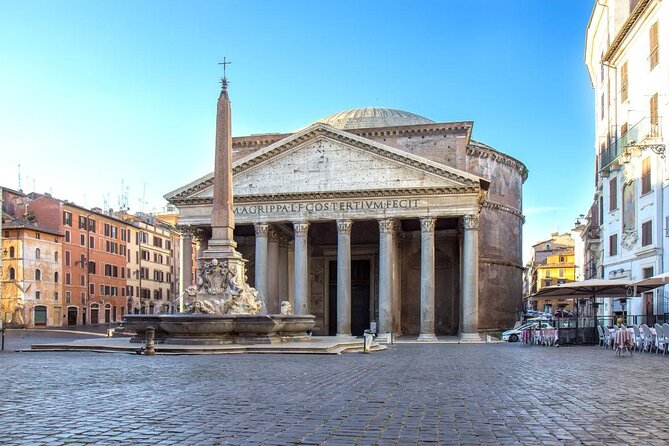
- Simple central meeting point: You meet at Piazza della Rotonda and return there when the visit ends.
- Practical clothing rule: Your shoulders must be covered because the Pantheon functions as a church.
Why the Pantheon deserves a guided visit
Rome gives you no shortage of grand buildings, but the Pantheon has an unusual advantage: much of the ancient structure remains intact. You can enter a space first created for Roman religious life and still read its basic architectural idea today.
That does not mean the building explains itself. A quick look can leave you admiring the dome, taking a photograph, and moving on. A guide gives you a reason to look upward, sideways, and backward. You begin to notice how the entrance, walls, dome, light, and religious symbols work together.
I especially like this tour for that reason. It does not treat the Pantheon as a pretty stop between coffee and shopping. It treats the building as a working piece of Roman design, shaped by engineering, politics, religion, and later changes.
The tour lasts roughly an hour, so it is not a full study session. Instead, it gives you a compact explanation of the monument’s main ideas. That suits a busy Rome schedule, especially if you want to place the Pantheon early in your visit and return later for a quiet look on your own.
More Private Temple Tours in Italy
- Agrigento; Valley of the Temples, Scala dei Turchi from Palermo, Private Tour
★ 5.0 · 68 reviews - Agrigento: Valley of the Temples Private Tour
★ 4.6 · 66 reviews - Paestum: Private Tour of Greek Temples and Archaeological Museum
★ 5.0 · 60 reviews
Meeting Olga at Piazza della Rotonda
The tour begins at Piazza della Rotonda, the square directly outside the Pantheon. This is a practical meeting point because you do not need to search for a distant office or make your way through a complicated transport connection.
Give yourself enough time to find the square and identify your guide. The activity is offered in English, and confirmation is normally issued at booking. If you book within one day of the start time, confirmation arrives as soon as possible and depends on availability.
The central location also makes this a useful add-on to a day in Rome’s historic center. You can combine it with other nearby sights, but do not schedule something that forces you to leave immediately. The Pantheon deserves a few extra minutes before or after the guided portion simply to take in the exterior and the busy square around it.
The meeting point is also the end point. That makes the tour easy to fit into a walking day, since you are not left at an unfamiliar neighborhood or separate exit.
Inside the Pantheon, look up first
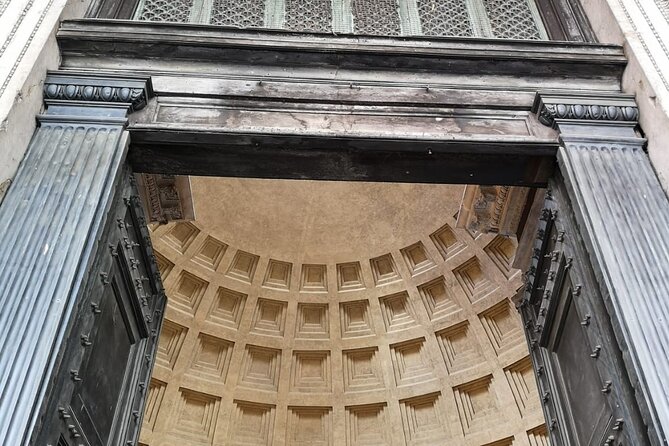
The dome is the obvious star, and rightly so. Its scale and open central oculus make the interior feel larger and stranger than the outside suggests. The oculus admits daylight and links the inside to the sky, giving the room a changing quality as the light moves.
A good guide helps you understand that this is not just a dramatic visual trick. It is part of the building’s design and meaning. Olga’s explanations focus on Roman architectural traditions and the way Roman builders handled monumentality. You learn to see the dome as a problem of weight, balance, materials, and planning, not only as a beautiful ceiling.
The reviews supplied for this experience repeatedly praise Olga’s explanations of construction and architecture. Several people also note that she uses drawings and iPad images. That matters because a surviving building can sometimes hide its own past. A visual aid can show how the Pantheon may have looked at another point in time or clarify a feature that is hard to understand from floor level.
The tour also covers the Pantheon’s religious meaning. Its original Roman identity and later Christian use give it more than one layer of interpretation. The building is not frozen in a single ancient moment. Its purpose changed, and those changes form part of what you are seeing.
Roman symbols, changing faiths, and later meaning
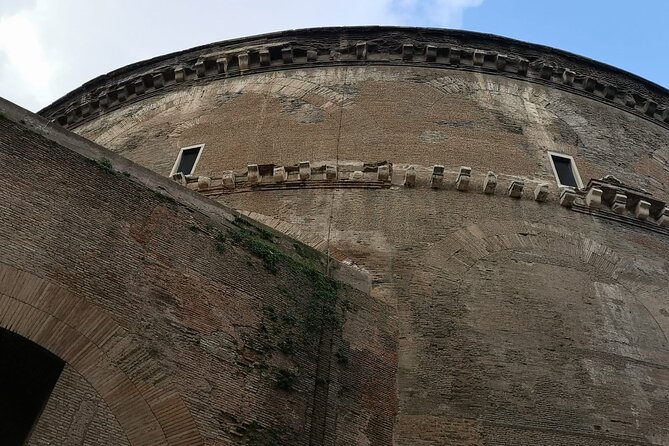
The Pantheon’s story is not only about brick, concrete, and geometry. It is also about how societies reuse important buildings. The tour explains Roman symbols and the traditions behind the temple, then places the building within its later Catholic setting.
That wider view is one of the strongest reasons to choose a guide with an archaeology background. Olga’s work, as described for the tour, includes Roman architecture, the construction of the Pantheon, Roman culture, and the Catholic Church. You are not limited to a list of dates.
I like the idea of seeing the Pantheon as a living monument. The building has carried different meanings over time, and the tour encourages you to change your viewpoint rather than assume that its purpose has always been the same. That approach gives the visit more value than a single explanation of the dome.
It is also useful for visitors who have already read about ancient Rome. You can ask questions and go beyond the basic facts. At the same time, the tour is designed for adults and children, so the explanation should work for a mixed-age group rather than only for architecture specialists.
Same sacred ground, another way to see it:
- Agrigento: Valley of the Temples Skip-the-Line Sunset Tour
★ 4.5 · 1,512 reviews - Pantheon Elite Guided Tour – Rome’s Iconic Ancient Temple
★ 5.0 · 1,447 reviews - Palermo: Agrigento and the Valley of the Temples Day Tour
★ 4.2 · 1,240 reviews - Rome’s Iconic Temple: Pantheon Audio Guided Tour with Fast Access
★ 4.0 · 1,188 reviews
A small group, with one important size detail
The experience is described as semi-private and limited to a small number of people. The additional details give a maximum of 10, while another part of the information says 15. That discrepancy is worth noting. Either limit is smaller than a large coach group, but the exact number may affect how personal the visit feels.
A small group matters inside a monument like the Pantheon. You can stay closer to the guide, hear explanations more clearly, and ask questions without trying to compete with a crowd. It also gives Olga more room to adjust her explanation to different ages and interests.
Some bookings may be even smaller. One person described having Olga as the only guide and participant, though you should not assume that level of privacy when booking. The listed product is a small-group experience, not a guaranteed private tour.
For families, this format is helpful. Children can lose interest when a guide talks for too long, but the limited duration and visual material may keep the visit moving. Adults who want architectural detail will also have a chance to ask about construction, symbols, and religious change.
What the 50 to 60 minutes include
The listed itinerary has one stop: the Pantheon. The guided visit lasts about 50 minutes to one hour, and admission is shown as included at no separate ticket cost.
That short duration is both a strength and a limit. It keeps the experience easy to fit into a packed day. You will not spend half a morning on one monument, and you can still see other central Rome sights afterward.
The trade-off is that the guide must stay focused. You should expect a concentrated explanation of the Pantheon rather than a broad tour of Roman history or several nearby churches. If you want a slow architectural survey, time for lengthy questions, or a full neighborhood walk, this will feel brief.
The most useful way to approach it is to treat the tour as an introduction with substance. Listen closely, ask your main questions, and then take another look inside on your own if time allows. The guided portion gives you the framework. Your second look lets you enjoy the room without trying to follow a talk at the same time.
Why Olga’s style is important
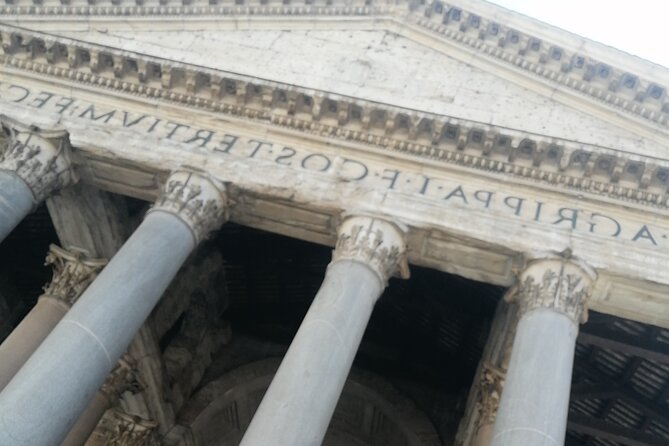
The strongest praise for this experience focuses on Olga’s passion, warmth, and ability to explain difficult subjects clearly. Those qualities matter more than a long list of facts. A guide who cares about the building can point out why a detail matters, not simply tell you that it exists.
Her archaeology background adds a useful angle. You can expect attention to structure, materials, design, and evidence, along with the wider religious and cultural story. The supplied feedback also describes her as friendly, engaging with several age groups, and willing to answer questions.
The iPad visuals are a practical bonus. Rome’s monuments often require a bit of imagination. A drawing can show lost decoration, earlier forms, or construction ideas far more clearly than spoken words alone.
English is the offered language. If you are comfortable learning in English, this is a good fit for a detailed explanation. If you need another language, this particular experience does not list one.
Price and value at $66.54
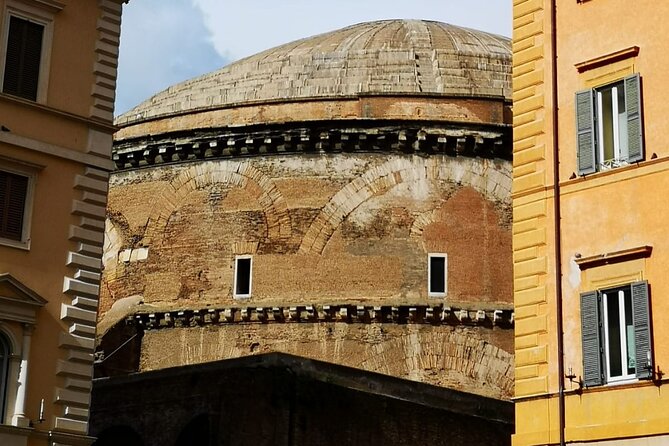
At $66.54 per person, this is not a cheap walk-in visit. The value depends on what you want from the Pantheon.
If your plan is simply to enter, look at the dome, and leave, the price may feel high for an hour at one building. The Pantheon is a place you can see without booking this tour, so nobody needs a guide just to cross the threshold.
The calculation changes if you want context. You are paying for Olga’s time, a focused explanation, a small-group setting, and visual material that may make the architecture easier to understand. For someone interested in Roman engineering, archaeology, or the Pantheon’s religious changes, that added explanation can turn a short stop into one of the more memorable parts of a Rome visit.
The tour can also save you preparation time. Instead of reading several sources before arriving, you receive a guided account on site and can ask questions as they arise. I would consider it a fair value for a first-time visitor who wants depth but does not want a long city tour.
Practical details before you book
Cover your shoulders. This is an important requirement because the Pantheon is also a church. Dress accordingly, especially if you are planning to visit other religious sites on the same day.
The location is near public transportation, and most people can participate. Service animals are allowed. The information does not describe special access arrangements, so if you have specific mobility needs, contact the provider before booking rather than relying on general participation guidance.
Free cancellation is available up to 24 hours before the start time for a full refund. Changes or cancellations made less than 24 hours before the start time are not accepted for a refund. The activity also requires a minimum number of participants, so if that minimum is not reached, you are offered another date or experience, or a full refund.
The activity is usually booked well in advance, with an average lead time of 53 days. That does not guarantee that every date sells out, but it suggests you should not leave a preferred time until the last minute, especially during a busy Rome trip.
Who should choose this Pantheon tour?
I would recommend it to you if you want more than a quick photograph and prefer a guide who can explain how the monument was built and used. It is a particularly good match for people interested in archaeology, architecture, Roman culture, or the relationship between ancient and Christian Rome.
Families may also find the format manageable. The tour is short, the group is limited, and the guide uses images to support the explanation. That gives children something concrete to look at while adults follow the larger story.
You might skip it if you have a very tight budget or already have a strong plan for learning about the Pantheon. You might also want a longer tour if you hope to cover many nearby monuments in one booking.
Should you book it?
Book this experience if you want the Pantheon explained by a guide with an archaeology background, not simply pointed out. Olga’s focus on construction, symbols, Roman architecture, and the building’s Christian use gives the visit real substance.
I would make the booking after checking the group-size detail, since the information gives both 10 and 15 as possible maximums. Also plan your clothing and allow a little time around the one-hour tour. At $66.54, it is best for you if understanding the building matters as much as seeing it.
FAQ
Where does the Pantheon tour begin?
The tour begins at Piazza della Rotonda, 00186 Roma RM, Italy.
Where does the tour end?
The activity ends back at the meeting point in Piazza della Rotonda.
How long does the tour last?
The tour lasts approximately 50 minutes to one hour.
What language is the tour offered in?
The tour is offered in English.
Who guides the experience?
The experience provider is Olga Di Cagno. Olga is described as an archaeologist with expertise in the Pantheon, Roman architecture, Roman history, and Catholic history.
How many people can join the tour?
The additional information gives a maximum of 10 people, while the tour description says it is limited to 15. Confirm the exact group limit when booking.
Is the tour suitable for children?
Yes. The experience is described as suitable for adults and children.
Do I need to cover my shoulders?
Yes. You need to cover your shoulders for this visit.
Is admission included?
The itinerary lists admission to the Pantheon as free, with no separate admission ticket cost shown for the tour.
What is the cancellation policy?
You can cancel at least 24 hours before the start time for a full refund. Cancellations or changes made less than 24 hours before the start time are not accepted for a refund. If the minimum number of participants is not reached, you are offered another date or experience, or a full refund.
Temple visits we reviewed lately in Italy
- Rome: Temples, Squares & Markets Guided Walking Tour★ 4.8 · 26 reviews
- Rome underground hidden temples, ruins, and secret basilicas★ 3.7 · 21 reviews
- Rome: Tour of St. Clement’s Basilica Underground Temples★ 4.8 · 242 reviews
- Palermo to Siracusa: stop al Valley of Temples & Roman Villa★ 5.0 · 5 reviews
- Paestum Tour: Best Preserved Temples in the World (UNESCO)★ 4.5 · 11 reviews
- Paestum: 2-Hour Greek Temples & Archaeological Museum★ 4.8 · 19 reviews
- Paestum: Temples and Museum Tour with Archaeologist Guide★ 5.0 · 14 reviews
- Neustift Monastery: Admission with audio guide★ 4.6 · 9 reviews
Rome Temple Tours, compared.
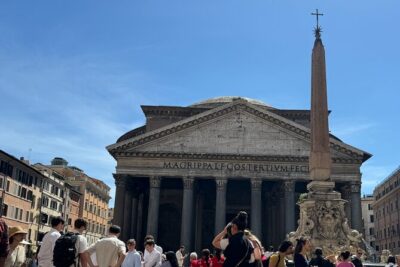
Pantheon Elite Guided Tour – Rome’s Iconic Ancient Temple
Read our review →
Rome’s Iconic Temple: Pantheon Audio Guided Tour with Fast Access
Read our review →
Colosseum Special Access Tour, with Ancient Temples & Tombs
Read our review →
Walking Guided Tour and Rome’s Iconic Temple Pantheon Entrance
Read our review →
Rome’s Iconic Ancient Temple: Pantheon Fast Track Entry Tickets
Read our review →
Rome: Tour of St. Clement’s Basilica Underground Temples
Read our review →
Rome: Temples, Squares & Markets Guided Walking Tour
Read our review →
Rome underground hidden temples, ruins, and secret basilicas
Read our review →This tour also ranks in