
Review · MALTA
Prehistoric Temples of Malta Tour
Malta’s oldest monuments are not tucked away in a museum. They sit out on a stark southern ridge, where huge limestone blocks form temples built around 3150 BC. This tour pairs Hagar Qim and Mnajdra with Ghar Dalam Cave and Museum, giving you a useful short course in Malta’s prehistoric past.
I like the way entry fees and transport are included, and I especially like having a guide explain what you are seeing instead of trying to decode bare stones alone. Guides such as Mark, Mario, Marco, and Marlon have earned praise for clear storytelling, archaeology knowledge, and handling several languages. The tradeoff is time: hotel pickups can take a while, and some visitors want another 20 minutes at the temples.
Key points to know before booking
- Hagar Qim and Mnajdra sit on a dramatic southern ridge: Expect open Mediterranean scrub, sea views, and large limestone structures rather than a polished indoor museum visit.
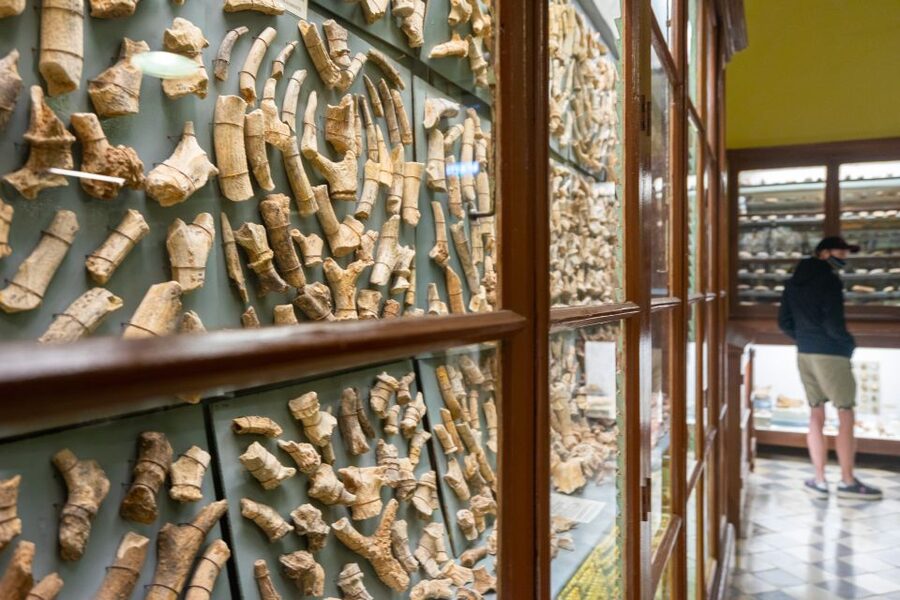
- Ghar Dalam adds a different side of prehistory: The small cave and museum focus on bones, fossils, and animals that lived on Malta long before the temples.
- A guide makes the stones easier to understand: Mark, Mario, Marco, and other guides have been praised for clear explanations and lively archaeological detail.
- The walk between the temples matters: You will cover open ground, with an uphill return, stairs, and enough walking to make comfortable shoes and water worthwhile.
- Pickup covers much of Malta: Collection points include Valletta, Sliema, St. Julian’s, St. Paul’s Bay, Mellieha, Cirkewwa, and other resort areas.
- It is good value for a half-day if convenience matters: At $59, you pay for transport, a guide, and three admission tickets, though independent visitors may spend less.
Why Malta’s prehistoric temples deserve your morning
The Megalithic Temples of Malta date back about 5,500 years. That places them among the oldest free-standing stone structures in the world, older than many famous monuments people instinctively associate with ancient civilization.
That age is the first surprise. The temples are not grand ruins in the Roman sense. You will not see towering columns or intact walls. Instead, you see massive curved blocks, chambers, doorways, altars, and surviving carvings that hint at a carefully organized ritual world.
A guide helps turn those fragments into something readable. The best guides on this outing, including Mark and Marco, explain how archaeologists interpret the sites and what remains uncertain. That distinction matters. Prehistory offers fewer written records, so a good explanation should leave room for questions rather than present every theory as fact.
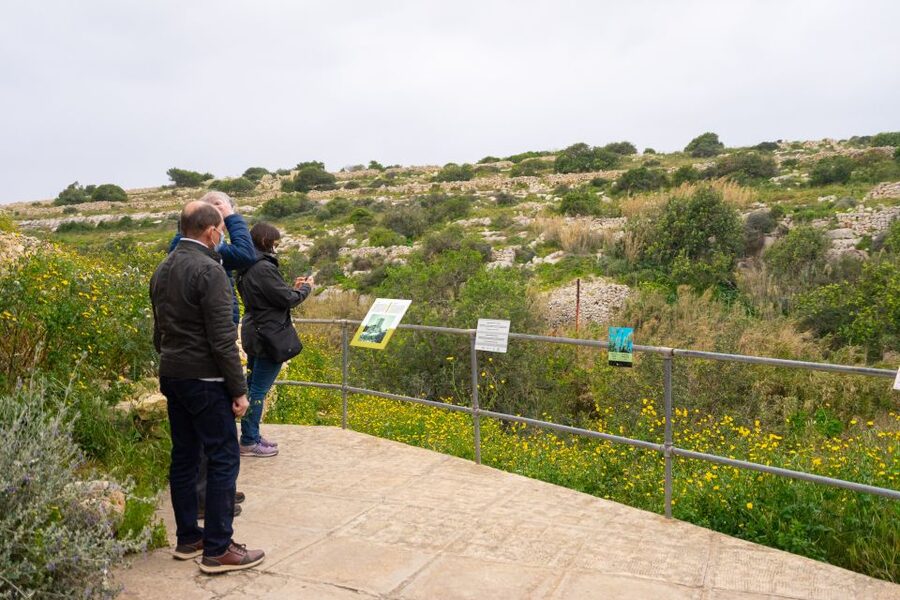
The setting also carries much of the appeal. Hagar Qim and Mnajdra lie in Mediterranean garrigue, a low scrub environment that feels dry, exposed, and wonderfully uncluttered. From the ridge, you can look toward the sea and the small island of Filfla. The open setting makes the temples feel connected to sky, stone, and coast rather than sealed inside an archaeological park.
More Temple Tours around the world:
- Lisbon: Jerónimos Monastery Entrance Ticket
★ 4.1 · 14,164 reviews - Angkor Wat Sunrise or Sunset Tour with Guide from Siem Reap
★ 5.0 · 12,109 reviews - Teotihuacan, Guadalupe Shrine & Tlatelolco Day Tour with Lunch
★ 5.0 · 11,603 reviews
Ghar Dalam Cave puts the temples in a longer story
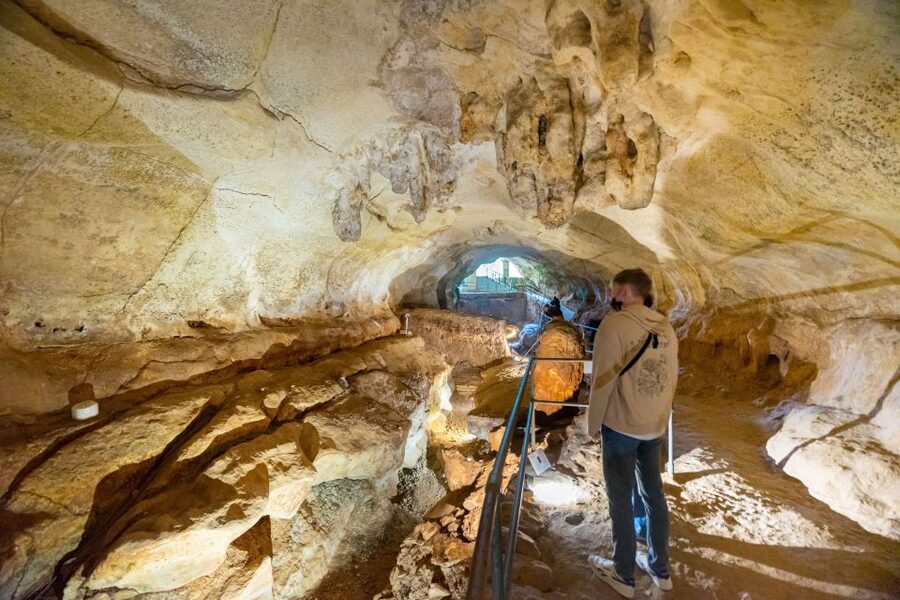
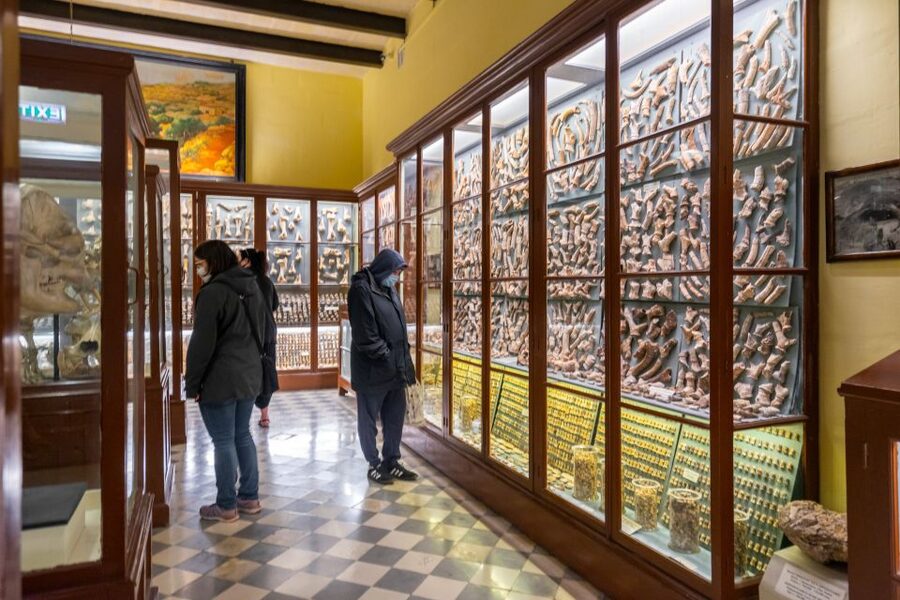
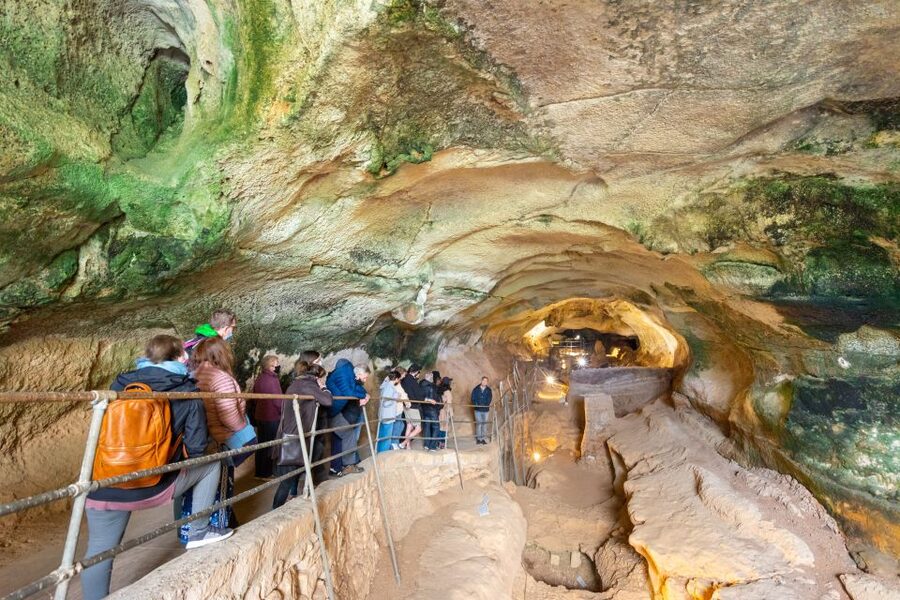
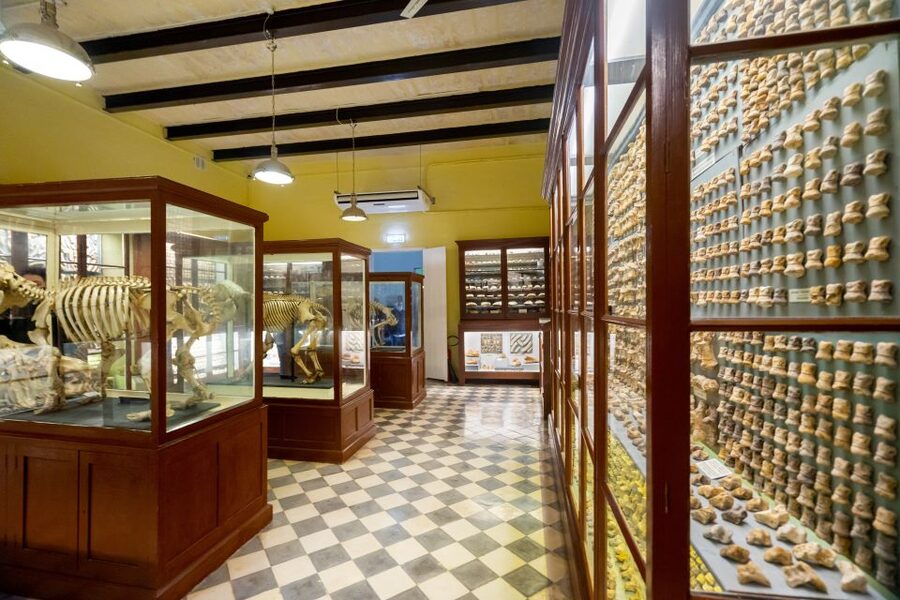
Ghar Dalam Cave and Museum usually comes early in the visit. It is not a cave of dramatic stalactites, underground lakes, or grand chambers. Set your expectations accordingly. The cave itself is relatively small, and the attraction is more archaeological than geological.
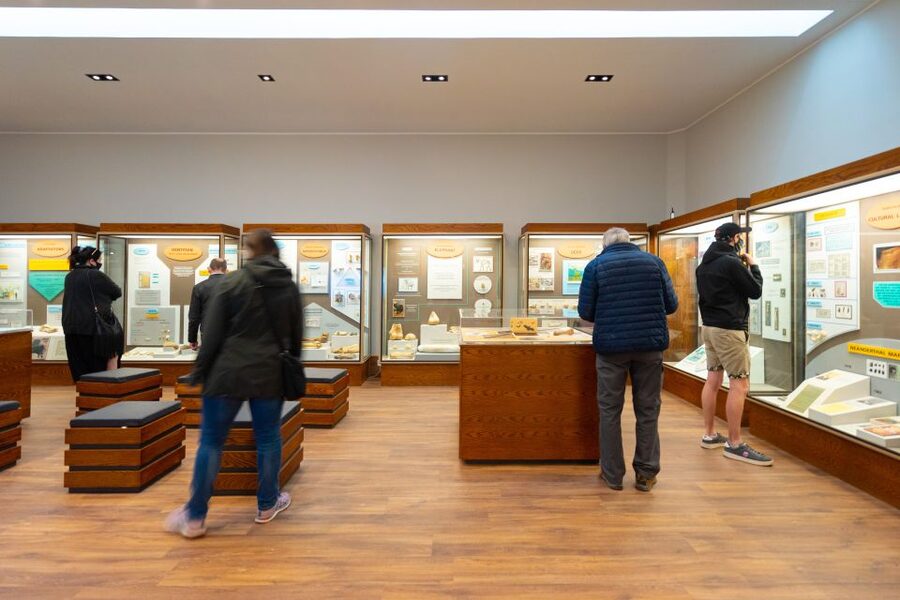
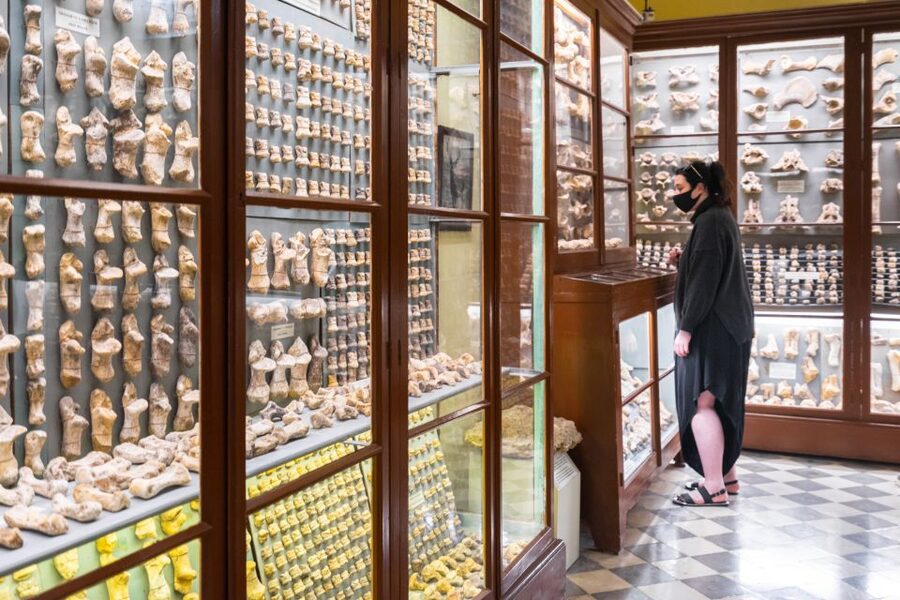
The museum is the stronger part for many visitors. Displays include bones and remains from prehistoric animals that once lived on Malta. This gives you a useful time scale before you reach the temples. Human building activity is only one chapter in the island’s past, and the cave helps show what Malta was like long before the temple builders arrived.
You may have only a short period in the museum, so use it carefully. Look for the animal remains and the evidence of changing life on the island, then save a little attention for the cave itself. One visitor wished for a longer exploration underground, but that is not what this stop provides.
Ghar Dalam also makes a good contrast with the temples. At the cave, the focus is on natural deposits and animal life. At Hagar Qim and Mnajdra, the focus shifts to human planning, labor, belief, and stoneworking. The three stops work best when you see them as parts of one broad story, rather than three unrelated attractions.
Hagar Qim reveals the scale of the builders’ work
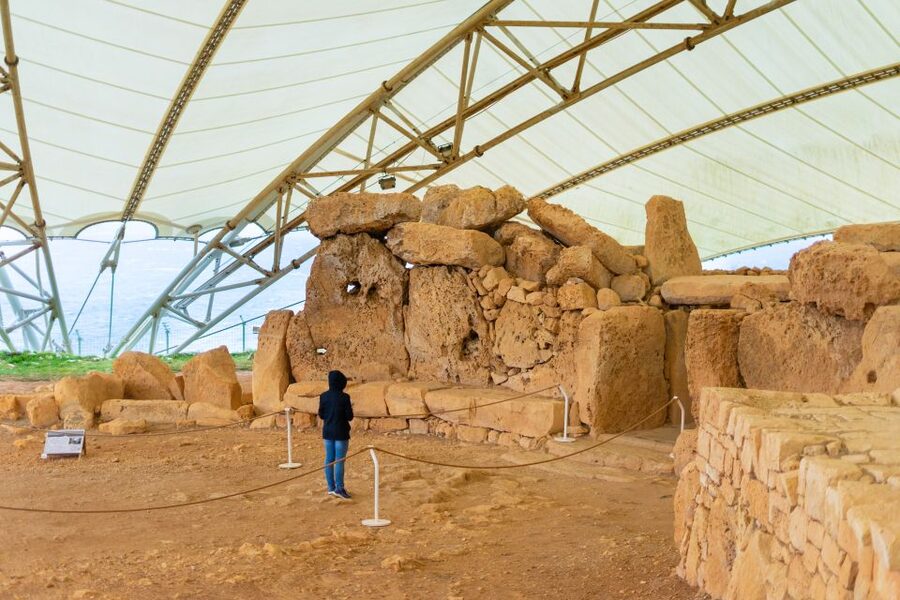
Hagar Qim is built from soft globigerina limestone, the warm honey-colored stone found in Malta. The site sits on a ridge at the southern edge of the island, and the setting is as important as the masonry.
The surviving blocks are enormous. Even when walls are incomplete, the size of the stones makes you stop and consider the work involved. You can inspect rounded forms, doorways, and carved details at close range. The shelter helps protect the fragile remains, but you still get a direct view of the original stonework.
This is where the guide earns the fee. Without context, Hagar Qim can look like a collection of weathered walls. With a clear explanation, you begin to notice the layout and repeated shapes. Guides have discussed temple culture, construction, the people who built the sites, and the problems archaeologists face when interpreting them.
Some visitors want more free time here. The tour gives you a planned visit rather than an open-ended afternoon, and the pace depends partly on traffic and group organization. If you like stopping at every carved surface or reading every display, you may feel hurried. If you want a strong introduction without spending a full day on one site, the timing is more useful.
Do not miss the view beyond the stones. Hagar Qim’s exposed position is part of its character. You are looking at architecture that has survived thousands of years while facing the same sea and weather that shaped the island around it.
Mnajdra offers the clearest sense of temple design
A short walk brings you to the Mnajdra Temples. This is one of the tour’s most rewarding sections, but it is also where your footwear and fitness matter most.
The route between the sites includes an uphill return. The ground is open and can feel demanding in strong sun. One visitor described the outing as a 10,000-step day, which may be an exaggeration for some people but gives the right warning: this is not a bus-to-door sightseeing stop.
Mnajdra is often described as the finest surviving example of Maltese megalithic architecture. Here, the arrangement of the buildings is easier to appreciate. You can see how the spaces relate to one another and how the builders worked with large blocks to create enclosed chambers and curved forms.
The guide’s explanation adds another layer. You hear about temple culture, possible uses of the spaces, and the way modern interpretation is built from archaeology rather than written accounts. Guides also point out details that are easy to miss when you are moving through a large group.
Take your time with the surroundings as well as the walls. The low scrub, rough ground, and distant sea give Mnajdra a quiet, almost severe beauty. It is not a lush park, and there is little shade in the exposed areas. Bring water, wear shoes with a firm sole, and consider a hat in warm weather.
For anyone with limited mobility, ask for clear information before booking. A few guides have been good about explaining stairs, walking distances, and available choices. The sites are not equally easy, and knowing the physical demands in advance lets you decide which parts you can enjoy comfortably.
Same sacred ground, another way to see it:
- From Bangkok: Ayutthaya Temples Guided Tour with Lunch
★ 4.7 · 10,535 reviews - Siem Reap: Angkor Wat: Small-Group Sunrise or Sunset Tour
★ 5.0 · 9,444 reviews - Athens: Cape Sounion & Poseidon Temple Sunset Half-Day Trip
★ 4.8 · 8,241 reviews - Ubud: Monkey Forest, Jungle Swing, Rice Terrace, and Water Temple
★ 5.0 · 7,160 reviews
Hamrija Tower adds a later chapter
A few hundred meters from the temples, you can see Hamrija Tower, one of Malta’s 13 coastal watchtowers. Grand Master Martin de Redin built the towers as part of the island’s defensive system.
The tower is not the main reason to book this outing, and the available information does not suggest a separate interior visit. Its value is in the historical layering. Within a short area, you move from prehistoric ritual buildings to the defensive Malta of the Knights.
That change in time is easy to miss if you focus only on the temples. Look toward the coast and consider how the same southern position that made the prehistoric site meaningful also mattered to later military planners. The stop is brief, but it broadens the story.
The guide can make or break the half-day
The strongest part of this tour is usually the live explanation. Mark has been singled out repeatedly for his clear, lively command of the subject. Mario and Marco have also been praised for enthusiasm, archaeology detail, and keeping groups organized. Marlon, a retired archaeologist and lecturer, brought a particularly strong academic background to the subject.
The tour operates in English, German, Italian, and French. This can work well for mixed groups. One guide explained each stop in three languages for an English, Italian, and French-speaking group, which is impressive but naturally takes time.
Language ability can vary from one departure to another. One visitor found the English difficult to follow and felt the guide repeated phrases. That appears to be an exception among the feedback provided, but it is a fair reason to keep expectations sensible. If you want a private scholar-led visit with long discussions, this is not that. It is a shared coach excursion with a live guide.
The better guides do more than list dates. They explain how the sites were found, how people interpret the evidence, and what daily life may have looked like. That storytelling is especially valuable at Hagar Qim and Mnajdra, where the stones cannot explain themselves.
Transport is convenient, but pickup takes patience
Hotel pickup and drop-off are included, with collection points across Malta. Listed times begin around 08:30 from Cirkewwa and Attard, with later pickups around Mellieha, St. Paul’s Bay, Bugibba, Qawra, St. Julian’s, Sliema, and Valletta.
The exact meeting point and pickup time are sent by email the day before. Check your messages carefully. Past bookings have sometimes received the final pickup information late, and a Valletta pickup can involve a short walk from a hotel to the actual meeting point.
The pickup network is useful, but it can stretch the morning. You may spend substantial time collecting people before the main sightseeing begins. Several visitors would have preferred a smaller group and less time on the road.
The bus is generally described as comfortable and air-conditioned. Still, transport quality can vary. One return journey used an older bus with missing seats, while another person found the driving unsettling on Malta’s roads. Most descriptions are positive, but you should think of this as practical group transport, not a luxury vehicle.
The schedule usually gives enough time at the main sites, though not everyone agrees. Some people felt comfortably unhurried, while others wanted about 20 more minutes at the temples. Traffic is one reason the timing can shift, especially on a busy morning.
Is $59 a fair price?
At $59 per person, the tour is not the cheapest way to see southern Malta. The price includes transportation, hotel pickup and drop-off, a live guide, and admission to Ghar Dalam Cave and Museum, Hagar Qim, and Mnajdra.
That bundle has real value if you are staying in Valletta, Sliema, St. Julian’s, or a northern resort and do not want to coordinate buses, entrance tickets, and site directions. You also gain a guide who can explain the archaeology in real time.
The calculation changes if you already have a rental car, enjoy planning independently, or want hours at each site. The group format and pickup circuit limit your flexibility. One person considered the tour expensive for what it covered, while another found it a good value because it made the whole morning easy.
I would call it a fair convenience price rather than a bargain. You are paying to reduce planning and add interpretation. That is worthwhile for a first Malta visit, especially if prehistoric archaeology is new to you.
Who will enjoy this tour most?
I would choose this outing if you have only a few days in Malta and want a guided introduction to the island’s earliest major monuments. It also suits anyone who prefers a planned half-day over arranging several southbound connections.
History fans will get the most from guides who explain temple culture and archaeological evidence. Families can enjoy the scale of the stones and the animal remains at Ghar Dalam, though young children may find the explanations long if they are not interested in ancient sites.
You should be comfortable with outdoor walking, stairs, uneven ground, and an uphill return from Mnajdra. Bring water and comfortable shoes. If walking is difficult, ask for details before you go and listen closely when the guide explains the route.
This is less suitable if your priority is solitude, photography at a slow pace, or a detailed museum study. It is also not the right choice if you want to go inside a large, dramatic cave. Ghar Dalam is compact, with the museum display doing much of the work.
Should you book the prehistoric temples tour?
Book it if you want three major prehistoric stops in one organized morning, with admissions and transport handled for you. The temples are remarkable, and a strong guide can make the difference between seeing old stones and understanding an ancient culture.
Skip it if you dislike pickup circuits, shared buses, or a fixed schedule. In that case, an independent visit may give you more time and control. For most first-time visitors, though, $59 is defensible when you value convenience and explanation. Wear proper shoes, carry water, check the pickup email the day before, and leave room in your expectations for Malta’s roads and a little waiting.
FAQ
How long does the tour last?
The stated duration is 4.5 hours. Some descriptions also refer to it as a five-hour archaeological tour, so allow roughly half a day.
What sites are included?
The tour includes Ghar Dalam Cave and Museum, Hagar Qim Temples, and Mnajdra Temples. It also includes a view of Hamrija Tower near the temples.
Are entrance fees included?
Yes. Admission to Ghar Dalam Cave and Museum, Hagar Qim, and Mnajdra is included.
Is hotel pickup included?
Yes. Pickup and drop-off are included from listed areas around Malta, including Valletta, Sliema, St. Julian’s, St. Paul’s Bay, Mellieha, Cirkewwa, Attard, and nearby resort areas.
What languages are available?
The live guide service is available in English, German, Italian, and French.
When will I receive my exact pickup details?
You should receive an email one day before the tour with the pickup point and pickup time.
What should I bring?
Bring comfortable shoes. Water is also a sensible choice because the temple sites are exposed and the walk includes an uphill section.
Is the tour suitable for someone with limited mobility?
The route includes walking, stairs, and an uphill return between the temples. Some guides explain the physical demands and possible choices, but you should ask for specific details before booking.
Can I cancel for a full refund?
You can cancel up to 24 hours before the tour for a full refund.
Do I have to pay when I book?
The reserve-now, pay-later option lets you secure a place without paying immediately.
Temple visits we reviewed lately in the world
- Shanghai: Yuyuan, City God Temple Old City Tour-Tip Based★ 5.0 · 10 reviews
- Seoul Sunrise & Sunset Hike + Temple & K-Food Adventure★ 4.8 · 6 reviews
- Seoul: UNESCO Sites tour: Palace, Shrine & Bukchon Village★ 4.8 · 26 reviews
- Seoul: War Memorial, Jogyesa Temple & Tapgol Park Tour★ 4.8 · 56 reviews
- Seoul: Vegan Temple Food Class, Jogyesa & Changdeokgung Tour★ 4.6 · 34 reviews
- Seoul: Temple & Starfield COEX Mall Gourmet Tour in Gangnam★ 4.7 · 22 reviews
- SEMARANG SHORE TOURS: BOROBUDUR TEMPLE EXCURSIONS★ 5.0 · 3 reviews
- Seoul: Night Bongeunsa Temple Guided Tour★ 5.0 · 11 reviews
Malta Temple Tours, compared.
From Malta: Gozo Day Trip Including Ggantija Temples
Read our review →
From Malta: Gozo Full-Day Tour with Guide, Temples, & Train
Read our review →
Malta: Prehistoric Temples, Limestone Heritage & Blue Grotto
Read our review →
Valletta: Monastery and Secret Garden Entry Ticket
Read our review →
Gozo Guided Day Trip Incl. Ggantija Temples and Lunch
Read our review →
Malta: Prehistoric Temples and Highlights of the South
Read our review →
Gozo Full Day visiting Ggantija Temples, Salt Pans & Dwejra
Read our review →
Malta: Valletta, Marsaslokk, Blue Grotto, Hagar Qim & Mdina
Read our review →This tour also ranks in