
Review · SPAIN
Granada: Monastery of San Jerónimo Entry Ticket
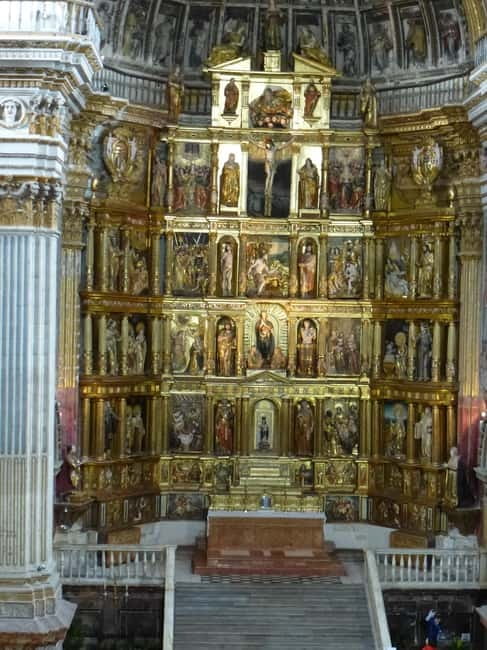
Granada’s Monastery of San Jerónimo offers a quieter, more intimate look at the city’s religious art than the big Alhambra crowds. I like the chance to trace the monastery’s story from its founding by the Catholic Monarchs in 1492, and I especially like the church, with its grand Renaissance chapel and striking Mannerist altarpiece.
I also like that the ticket lets you set your own pace through the Compass, cloister, refectory, chapter rooms, sacristy, and church. The main drawback is value: the online price is listed at $11, while a booking made on site was reported to cost about €3 less, with no wait.
Key points to know before you go
- Diego de Siloé’s church facade gives the visit its strongest first impression.
- The Gothic Processional Cloister shows where the Hieronymite monks lived and worked.
- The Great Captain’s chapel turns the church into a monument to one of Spain’s famous military figures.
- The Empress Cloister is not open because it remains part of the nuns’ cloistered area.
- An audio guide app is included, but the rules also say cellphones are not allowed, so clarify how the guide is used.
- The ticket is valid for one day, not for an all-day guided tour or a fixed-length group visit.
Why San Jerónimo deserves time in Granada
Granada is famous for the Alhambra, but the city’s Christian monuments tell a different chapter of its story. The Monastery of San Jerónimo was founded by the Catholic Monarchs in 1492, the same year Granada was taken from the Nasrid kingdom. The first site was in the nearby town of Santa Fe, where the monarchs had established their military camp.
That location did not suit the monks, so the monastery moved to Granada. Construction began at its present site in 1503, and the monastery took the name Real Monasterio de la Concepción de Nuestra Señora de Granada.
The Hieronymite monks began living here in 1521. They remained until the disentailment of Mendizábal in 1835, when church property was taken and sold or reassigned. The monastery then served as a barracks, a practical use that must have felt far removed from its original purpose.
The site later returned to religious use. In the 1960s it was given back to the Order of St. Jerome, and after restoration it again became a monastery. Hieronymite mothers moved here from the nearby Monastery of Santa Paula in 1977. That fact still shapes what you can see today: part of the building is open to the public, while part remains private and cloistered.
I find that background useful because San Jerónimo is not just a collection of old rooms. You are seeing a place that changed function several times, survived a period as a barracks, and still serves a religious community.
More Entry Tickets in Spain:
- Montserrat Museum and Monastery Entry Ticket
★ 4.5 · 1,740 reviews - Mallorca: Carthusian Monastery Valldemossa Entrance Ticket
★ 4.2 · 93 reviews - Barcelona: Montserrat Private Trip with Monastery Ticket
★ 5.0 · 74 reviews
The Compass and the facade by Diego de Siloé
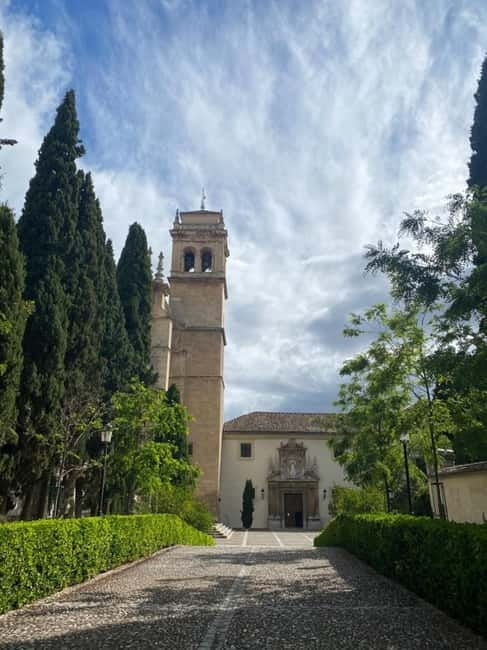
Your visit begins in the Compass, the open transition area between the city and the monastery. It was designed as a threshold, moving you from Granada’s street noise into the quieter world behind the walls.
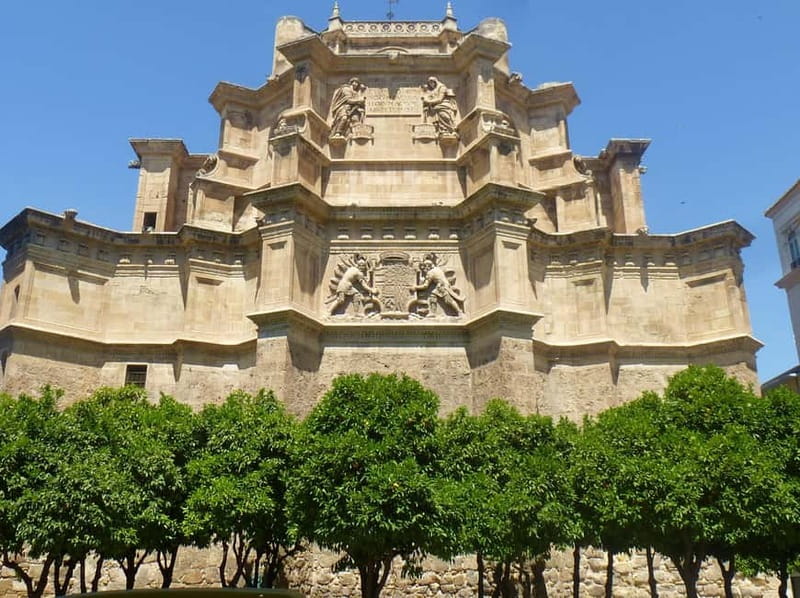
The Compass also gives you a good view of the church facade. Diego de Siloé is the best-known name connected with the design, joined by Martín Díaz de Navarrete and Pedro de Orea. Look for the detailed decorative work and the strong Renaissance character. This is not a plain monastic entrance. It announces that the church was built for important patrons and powerful religious figures.
I recommend taking a moment here before moving on. The facade is one of the easiest parts to rush past, especially if you are focused on finding the next room. It sets up what follows inside: a monastery that combines Gothic forms, Renaissance planning, and later Mannerist decoration.
The visit is self-guided rather than led by a person. An audio guide app is included, which can help you understand the names and roles of the spaces. Since the rules also list cellphones as not allowed, check the current instructions about using the audio guide before you arrive. That point is worth clearing up because the phone app and the no-cellphone rule do not sit comfortably together.
The Processional Cloister and the life of the monks
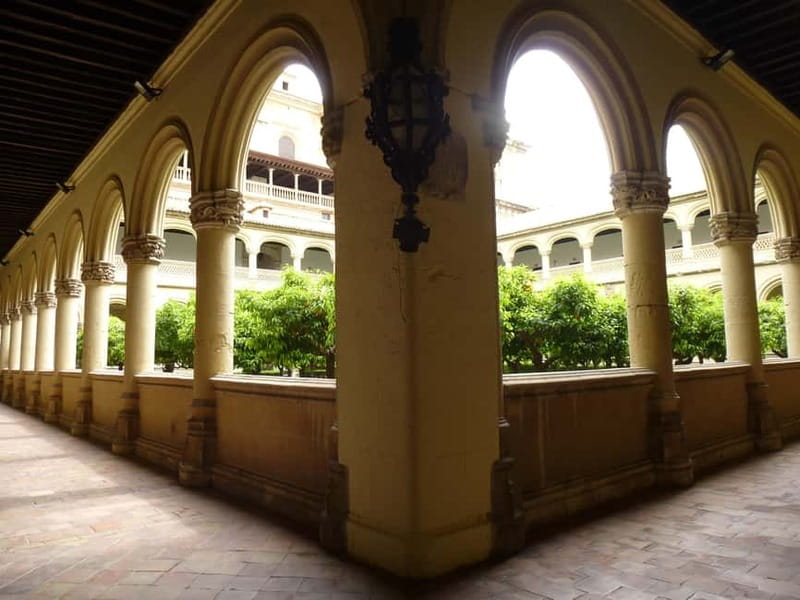
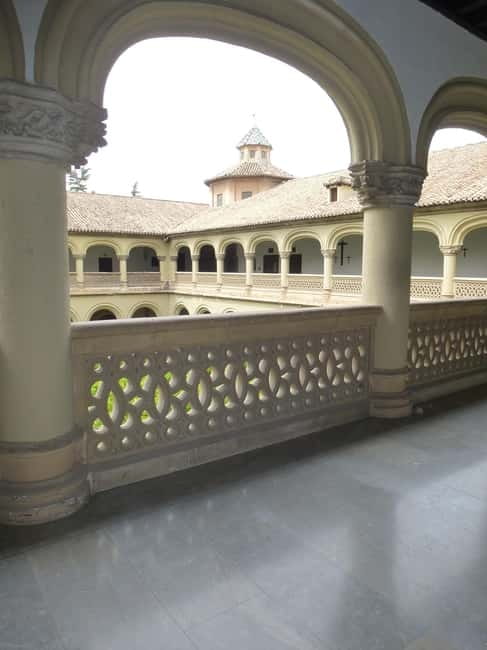
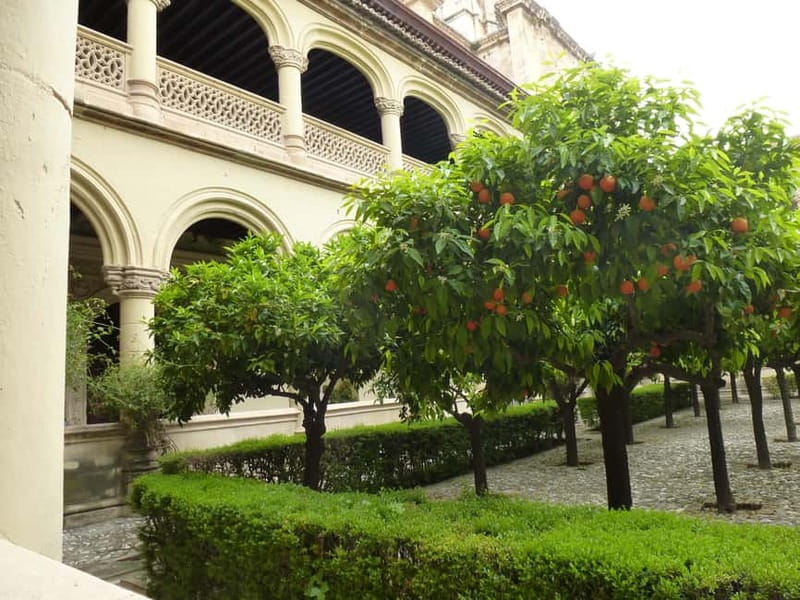
The Processional Cloister, also called the Main Cloister, is the heart of the visit. It is Gothic in style and was the area where the monks carried out much of their daily life.
A cloister can seem simple at first: four sides, a central open space, and covered walkways. But here the layout helps you picture the rhythm of monastic life. The walkways connected important rooms and gave the monks a sheltered route through the complex. The central space brought light and air into the building while keeping the monastery turned inward.
The cloister also gives you a glimpse toward the Empress Cloister. You cannot enter that area because it remains cloistered and is occupied by the Hieronymite mothers. Even without access, its name adds an unusual royal connection to the site.
In 1526, Isabel of Portugal, wife of Charles I of Spain and V of Germany, lived there for much of her time in Granada. That makes the Empress Cloister more than a decorative name on a plan. It points to a short period when a royal household shared space with the religious community.
Do not expect to see every corner of the monastery. The closed area is a real limitation, especially if you arrive expecting complete access. Still, the Processional Cloister gives you the clearest sense of the building as a working monastery rather than simply a historic monument.
Refectory, profundis room, and the quieter rooms
The route continues through the refectory, the room where the monks ate, and the profundis room. These spaces are less visually dramatic than the church, but they help make the visit feel complete.
The refectory is important because it shows the practical side of monastic life. A monastery was not only a place for prayer and ceremony. It needed rooms for meals, administration, study, and community routines. The profundis room adds another piece to that religious setting, connected with prayers for the dead.
You also visit two chapter rooms. Chapter rooms were used for meetings, decisions, and the reading of religious rules. In a monastery, these rooms could carry as much institutional weight as the church. Their presence gives you a better idea of how the community governed itself.
The appeal of these rooms depends on how much context you enjoy. If you only want grand art and big architectural moments, they may feel modest. If you like seeing how people actually used a historic building, they are worthwhile. The audio guide should be especially useful here, since the purpose of a plain room is not always obvious from its appearance alone.
More Temple Tours around Spain:
- Montserrat Monastery Half Day Experience from Barcelona
★ 5.0 · 6,014 reviews - Montserrat Monastery Small Group or Private Tour Hotel pick-up
★ 5.0 · 5,144 reviews - Escorial Monastery and the Valley of the Fallen Tour from Madrid
★ 5.0 · 2,494 reviews - Montserrat Small Group: Monastery, Black Madonna & Natural Park
★ 5.0 · 1,690 reviews
The sacristy and the Child Jesus of the Battles
The sacristy contains the Child Jesus of the Battles, an image said to have accompanied the Great Captain during his military campaigns. The Great Captain was Gonzalo Fernández de Córdoba, a celebrated commander associated with the Catholic Monarchs and the wars that shaped Spain at the end of the fifteenth century.
This object brings together the monastery’s religious and political sides. The church was not isolated from the power struggles of its time. Important families supported its construction, and military leaders became part of its devotional memory.
The sacristy itself is also a useful stop before the church. Sacristies served as working rooms where clergy prepared for services and kept liturgical objects. It is a more functional space than the main chapel, but the presence of the Child Jesus gives it a strong focal point.
I would not plan the whole visit around this one object. The church and cloister are the major reasons to come. But if you are interested in the Great Captain, the Catholic Monarchs, or the way religious images were tied to personal devotion, this is one of the more distinctive details in the route.
The church and the chapel of the Great Captain
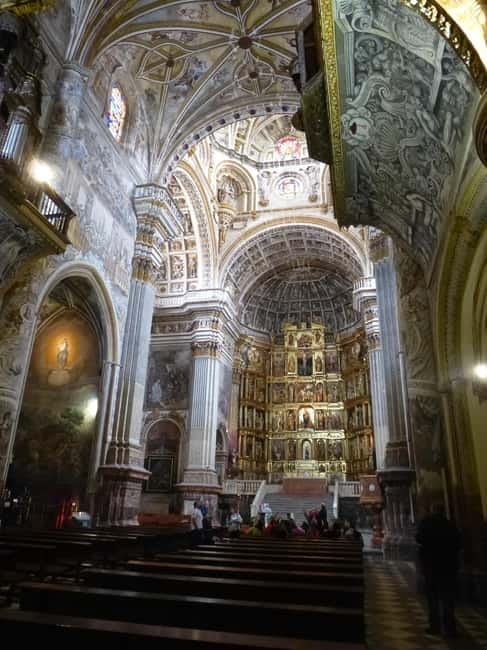
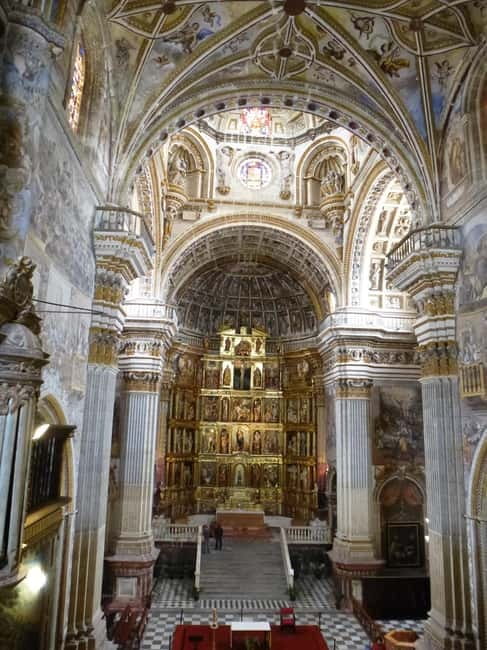
The Church of the Monastery is dedicated to the Immaculate Conception, and it is the high point of the visit. The scale and decoration make it feel more formal than the quieter monastic rooms.
The Main Chapel was built in Renaissance style by Doña María de Manrique, Duchess of Sessa. She intended it as the burial chapel of her husband, the Great Captain. Diego de Siloé built it according to lines first proposed by Jacobo Florentino.
That connection gives the chapel a clear purpose. It was not simply added to make the church more impressive. It was designed as a pantheon for a powerful family and as a lasting memorial to a major military figure.
Spend time looking at how the chapel changes the mood of the church. The monastic setting is restrained in some areas, but the main chapel carries ceremony, patronage, and memorial ambition. This is where the monastery’s religious function and its connection to Spain’s ruling class come together most clearly.
The church also contains a Mannerist altarpiece created by several important artists. The list includes Juan de Aragón, Lázaro de Velasco, Pedro de Orea, Pedro de Raxis, Bernabé de Gaviria, Vázquez el Mozo, and Rojas.
You do not need to identify every artist to enjoy the altarpiece. Instead, look at the overall effect: its layered structure, decorative detail, and carefully arranged religious scenes. The altarpiece is one of the reasons the church can feel far more impressive than the modest outside entrance route might suggest.
One practical point is worth noting: the church may be the stop that makes the $11 ticket feel worthwhile, especially if you enjoy sculpture, painted decoration, and Renaissance architecture. If your interest is limited to medieval cloisters, you may find the visit less rewarding because the church is such a large part of its appeal.
How much time should you allow?
The ticket is valid for one day, and you should check the available starting times when booking. The information provided does not set a fixed visit length, so you can approach it as a flexible self-guided stop rather than a timed guided tour.
Your pace will depend on how closely you study the church and whether you use the audio guide app. A quick architectural visit will take less time than a careful look at the altarpiece, chapel, cloister, and historical displays. Since there is no guided group moving you from room to room, you can pause where the building interests you most.
I would give the church and Main Cloister priority if your schedule is tight. Add the Compass, sacristy, refectory, profundis room, chapter rooms, and the rest of the route if you want a fuller picture of monastic life.
There is no transportation included, and the ticket covers entry rather than a city tour. Plan it as one Granada sight among several, not as a full-day activity in itself.
Price, booking value, and practical limits
The listed price is $11 per person and includes the entry ticket, booking fee, and audio guide app. That is a reasonable price for access to a major historic monastery and its church, particularly if you value the freedom to move at your own pace.
The online price is not automatically the cheapest option. A purchase made at the monastery was reported as about €3 less and had no wait at the time. Another person calculated the online booking as roughly 30 percent more than buying directly.
That makes the decision simple for many people: if you are already near San Jerónimo, check the on-site price first. If advance booking matters to you, or if you prefer having your admission arranged before your visit, the extra cost may be acceptable. The main point is to compare prices instead of assuming the online ticket is the best deal.
The visit is not refundable, so check your plans before purchasing. It is also not suitable for wheelchair users, and smoking, food, drinks, pets, and cellphones are listed as not allowed. Assistance dogs are allowed.
The cellphone rule deserves special attention because an audio guide app is included. Bring the booking details you need, but confirm the current method for accessing the guide. You should not assume that using your own phone inside is permitted simply because the app is part of the ticket.
Who will enjoy San Jerónimo most?
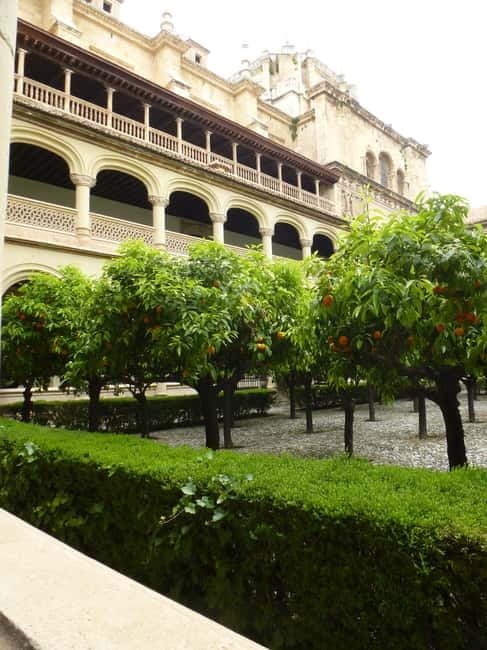
I recommend this for you if you enjoy churches, monastic architecture, Spanish history, and art connected to royal or military figures. The church, Main Chapel, and Mannerist altarpiece give the visit real visual weight, while the cloister and working rooms provide useful context.
It also suits people who prefer a calm, self-guided stop. You are not tied to a guide’s pace, and you can give the cloister or church as much attention as you like.
You may want to skip it if your Granada schedule is already packed with major sights and you are not especially interested in religious buildings. One rating described the site as having little interest, which reflects a fair point: the visit depends heavily on your interest in architecture and church art.
I would also think twice if accessibility is essential, since the activity is specifically listed as unsuitable for wheelchair users. The unavailable Empress Cloister may disappoint anyone expecting full access to the monastery.
Should you book this ticket?
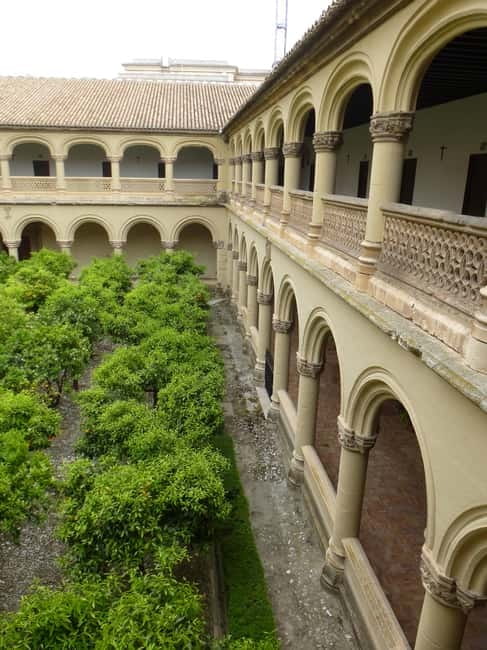
Book it if you want to see a beautiful church tied to the Catholic Monarchs, the Great Captain, and Granada’s transition into Christian Spain. The Main Cloister and Church are the strongest reasons to go, and the self-guided format gives you useful freedom.
Before paying online, compare the price with the ticket office. If the local difference is still about €3, buying there may offer better value. If you want the convenience of arranging admission ahead of time, $11 remains a fair price, but do not expect a guided tour or access to every part of the monastery.
FAQ
What does the Monastery of San Jerónimo ticket include?
It includes entry to the Monastery of San Jerónimo, an audio guide app on your smartphone, and the booking fee.
How long is the ticket valid?
The ticket is valid for one day. You should check availability for the available starting times.
Is a guided tour included?
No. The ticket includes an audio guide app, but not a guided tour with a person.
Can I enter the Empress Cloister?
No. The Empress Cloister is a cloistered area and is not included in the public visit.
What parts of the monastery can I see?
The route includes the Compass, Processional Cloister, refectory, profundis room, two chapter rooms, sacristy, and Church.
What is the church dedicated to?
The Church of the Monastery is dedicated to the Immaculate Conception.
Is the monastery suitable for wheelchair users?
No. The activity is listed as unsuitable for wheelchair users.
Are food, drinks, pets, or smoking allowed?
No. Smoking, food, drinks, and pets are not allowed. Assistance dogs are allowed.
Can I cancel the ticket?
No. This activity is non-refundable.
Temple visits we reviewed lately in Spain
- San Lorenzo de El Escorial: Monastery and Site Guided Tour★ 4.8 · 127 reviews
- Santander: Picos, Santo Toribio Monastery and Potes Day Tour★ 4.8 · 261 reviews
- Private Bécquer’s route, Trasmoz, Veruela’s Monastery +food★ 5.0 · 5 reviews
- Montserrat Monastery Ticket with Escolania Boys’ Choir★ 4.4 · 55 reviews
- Montserrat: PRIVATE TOUR – Monastery, Cable Car & Soft Hike★ 5.0 · 4 reviews
- Private Montserrat Monastery with pickup + Winery or Caves★ 4.9 · 4 reviews
- Món Sant Benet Monastery Tickets★ 5.0 · 7 reviews
- Medieval Route in Navarre: Olite, Ujué, Javier Castle, and Monastery of Leire★ 4.8 · 6 reviews
Spain Temple Tours, compared.
Montserrat Monastery Half Day Experience from Barcelona
Read our review →
Montserrat Monastery Small Group or Private Tour Hotel pick-up
Read our review →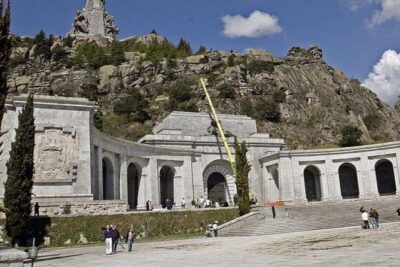
Escorial Monastery and the Valley of the Fallen Tour from Madrid
Read our review →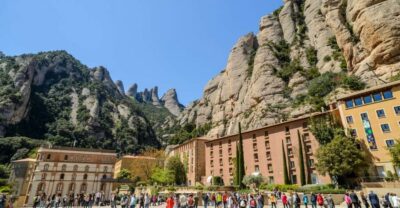
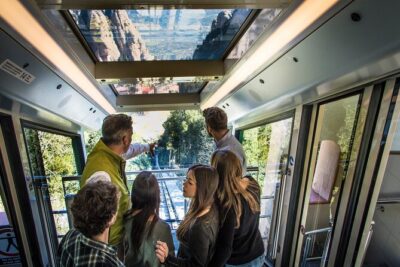
Montserrat Small Group: Monastery, Black Madonna & Natural Park
Read our review →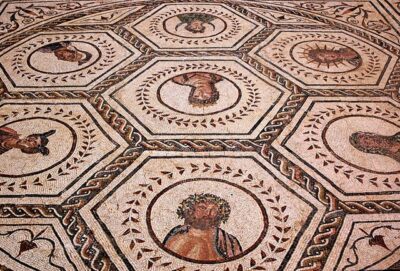
From Seville: Italica Roman City & Medieval Monastery Tour
Read our review →
From Barcelona: Montserrat Monastery, Easy Hike, Cable Car
Read our review →
From Barcelona: Montserrat Monastery & Scenic Mountain Hike
Read our review →This tour also ranks in