
Review · SPAIN
Mallorca: Carthusian Monastery Valldemossa Entrance Ticket
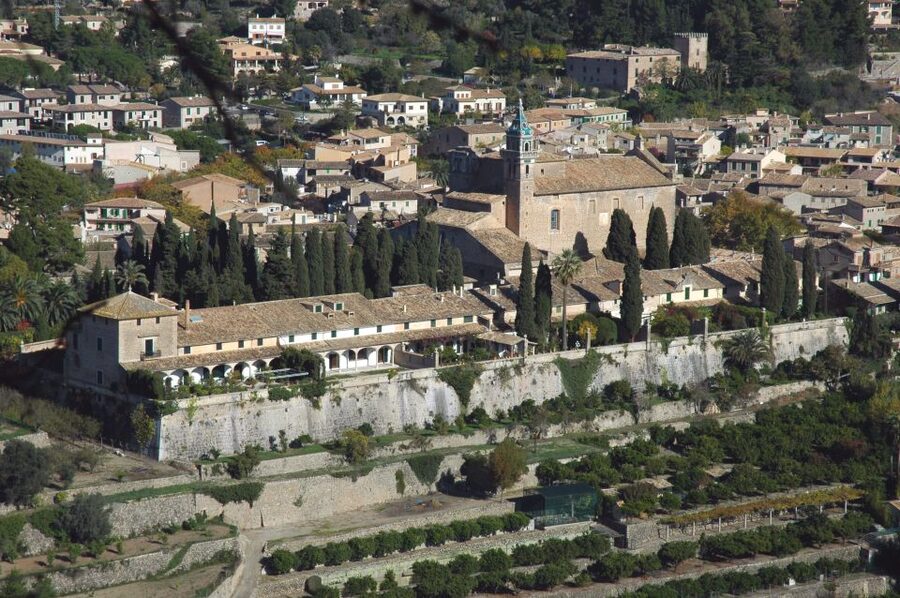
The most memorable part of this visit is the mix of royal rooms, monastic cells, and music. In one compact complex, you move from the former palace of King Sancho of Majorca to a quiet corridor once used by Carthusian monks, then finish with a 15-minute piano recital. The setting also connects strongly with Frédéric Chopin and the artists who came here for inspiration.
I like the freedom to explore with a downloadable audio guide rather than follow a fixed group. I also like the low $14 price, especially since the ticket includes the recital, gardens, art displays, and historic rooms. The main caution is that the complex can feel confusing, and some areas connected with Chopin and the museum may require separate payment, so check exactly what your ticket covers.
Key points to know before you go
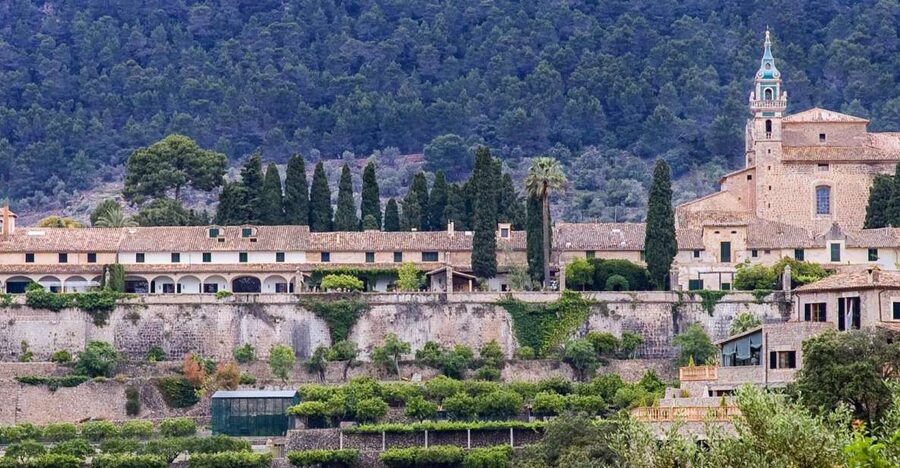
- King Sancho’s former palace: See a royal residence dating from 1309 before entering the later monastic complex.
- A 15-minute piano recital: Music is included and gives the visit a clear highlight.
- Monk cells and Cell No. 2: Follow the long white-arched corridor and visit the cell linked with the site’s best-known artistic story.
- Gardens above the Valldemossa valley: Terraces provide some of the finest views included in the visit.
- Art, printing, and pharmacy collections: Expect paintings, a 16th-century press, woodcuts, and old medical objects.
- Self-guided and easy to reach: Go directly to the entrance on Valldemossa’s main square, about 20 minutes from Palma.
Why Valldemossa’s monastery is worth your time
Valldemossa is not simply a church visit. It is a layered historic complex that brings together a royal palace, a Carthusian monastery, gardens, art rooms, and a strong musical connection. That variety makes the $14 admission feel reasonable, particularly if you appreciate places that tell several stories at once.
The site is in the mountain town of Valldemossa, around 20 minutes from Palma. You enter from the main square, so there is no hotel pickup, transfer, or guided coach service built into the ticket. That is useful if you are already visiting the town, but you need to arrange your own transport.
Allow about an hour for the main visit. You can move faster if you only want the headline sights, but the audio guide, paintings, pharmacy, printing press, and gardens reward a slower pace. The official duration is one hour, with starting times depending on availability.
More Entry Tickets in Spain:
- Montserrat Museum and Monastery Entry Ticket
★ 4.5 · 1,740 reviews - Barcelona: Montserrat Private Trip with Monastery Ticket
★ 5.0 · 74 reviews - Montserrat Monastery Ticket with Escolania Boys’ Choir
★ 4.4 · 55 reviews
Entering the former palace of King Sancho
The visit begins with the Royal Charterhouse and the former residence of King Sancho of Majorca. The palace dates to 1309, giving you a starting point well before the later artistic associations that made Valldemossa famous.
I like beginning here because it gives the site a clear sense of time. You are not walking into a single-purpose museum. The rooms belong to different chapters of the building, and the royal connection helps explain why this location mattered before it became a Carthusian retreat.
The palace section is also a useful reminder that Valldemossa’s story did not begin with Chopin. The king’s former residence gives the complex a political and royal past, while the monastery rooms show how the site later became a place of prayer, routine, and seclusion.
Use the audio guide to add context as you go. It is available through the free Cartoixa de Valldemossa app in Catalan, English, French, German, and Spanish. Bring your own headphones and a charged smartphone. Free WiFi is available in Valldemossa, but installing the app before arrival is the safer plan.
The church and Bayeu’s frescoes
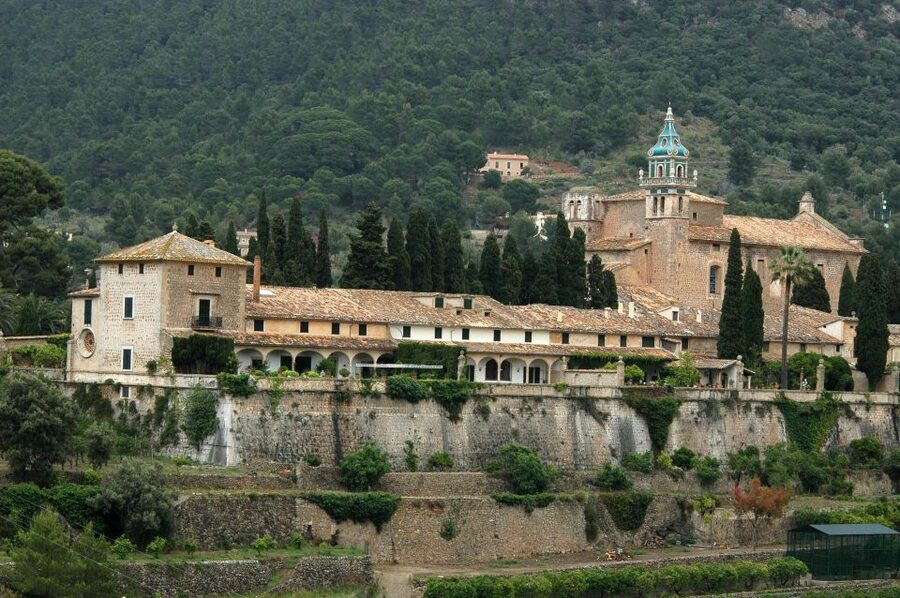
The church is one of the most visually important stops. Its frescoes are by Francisco Bayeu, the brother-in-law of Francisco Goya, so the decoration connects this relatively small Mallorcan site with major Spanish art.
You do not need to be an art specialist to enjoy this section. Look up and give yourself time to take in the painted surfaces, then use the audio guide for the names and background. The church offers a change of mood after the palace rooms, with a more formal and devotional atmosphere.
The visit works best when you resist the urge to rush from one room to the next. The complex is compact, but each part has a different purpose. The palace explains royal power, the church expresses religious life, and the monastery corridors show how the monks lived.
Walking the long corridor of monk cells
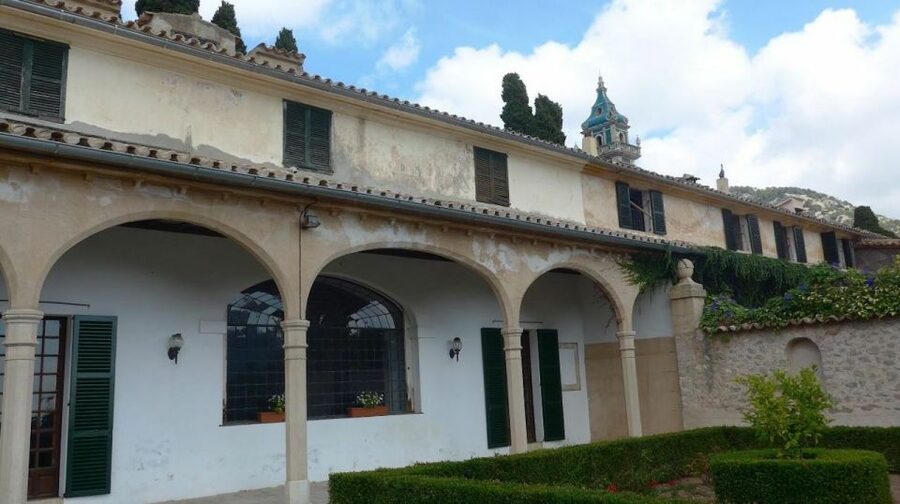
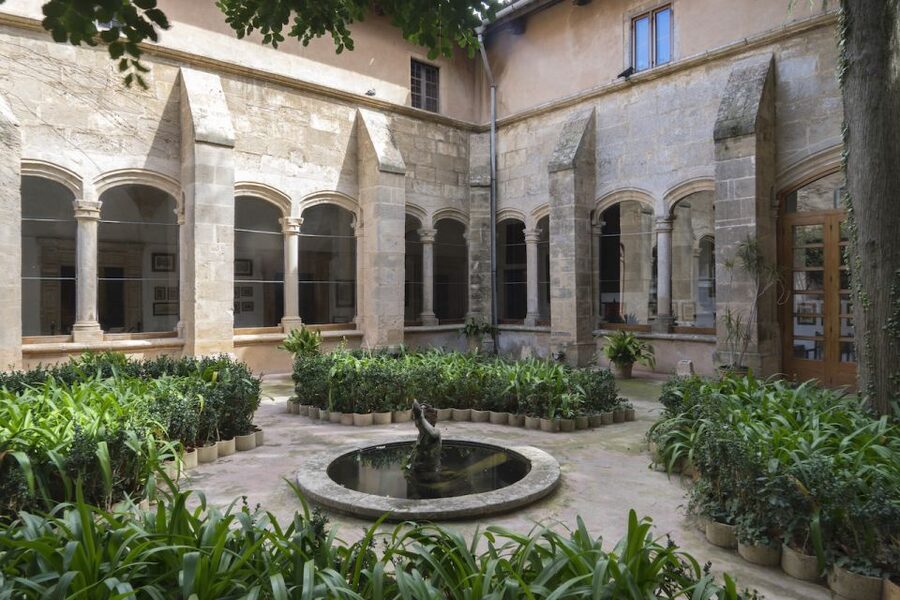
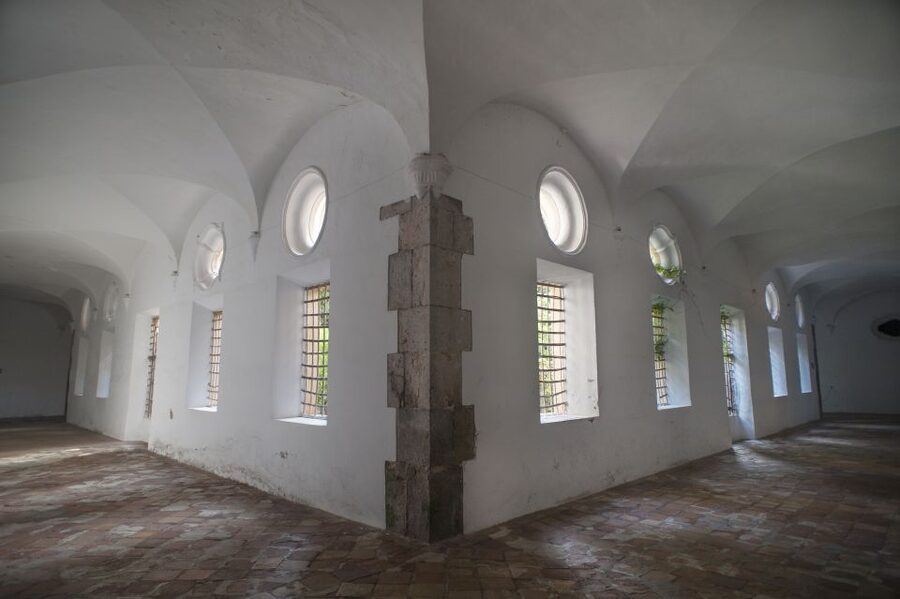
One of the most distinctive features is the long corridor with white arches leading to the cells once occupied by Carthusian monks. The monks lived here for about 400 years, seeking peace and rest away from ordinary life.
The corridor makes the monastery easy to picture. Rather than seeing only grand rooms, you get a sense of repeated, private spaces arranged along a shared passage. The simplicity of the white arches contrasts with the more decorated church and the formal palace.
This is a good section for the audio guide. Without some explanation, a row of cells can seem similar. With context, you begin to understand how the layout supported a life built around separation, quiet, and routine.
The complex is not presented as a full live reenactment of monastic life. You are seeing rooms, objects, and architecture, then using the guide to connect them. That format suits independent visitors who prefer to pause when they want rather than keep up with a group.
More Temple Tours around Spain:
- Montserrat Monastery Half Day Experience from Barcelona
★ 5.0 · 6,014 reviews - Montserrat Monastery Small Group or Private Tour Hotel pick-up
★ 5.0 · 5,144 reviews - Escorial Monastery and the Valley of the Fallen Tour from Madrid
★ 5.0 · 2,494 reviews - Montserrat Small Group: Monastery, Black Madonna & Natural Park
★ 5.0 · 1,690 reviews
Cell No. 2 and the Chopin connection
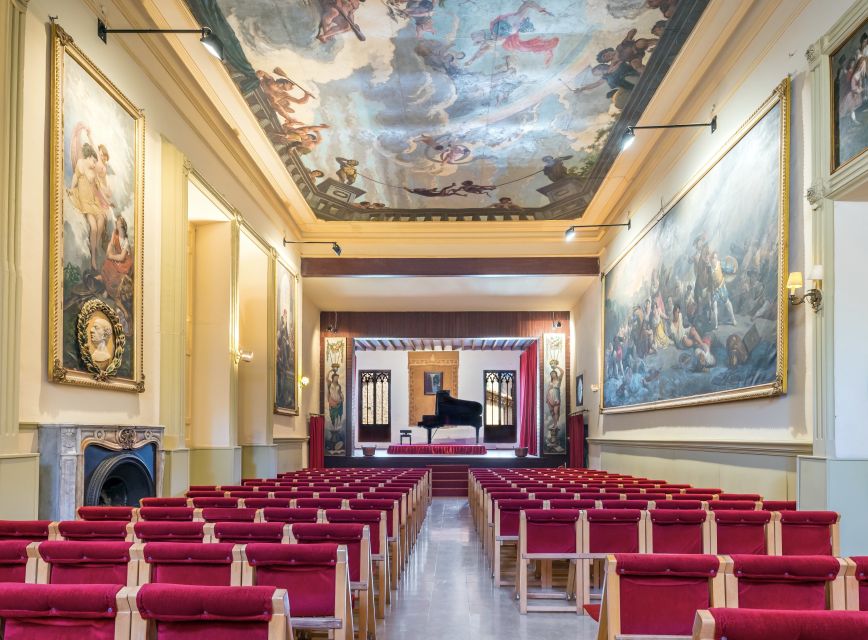
Cell No. 2 is one of the most anticipated stops because of the site’s connection with Frédéric Chopin and George Sand. The visit gives you a direct link to the artists who stayed in Valldemossa and found creative energy in the town and monastery setting.
This part can be especially meaningful if you already know Chopin’s music. It helps turn an abstract artistic connection into a physical place: a particular cell within the former monastery complex rather than a general story about an entire town.
There is an important practical point here. The basic ticket information includes the monastery visit and piano recital, but one visitor specifically found that the Chopin room and a museum required separate payment. For that reason, check the current ticket details at booking and at the entrance if seeing every Chopin-related room is important to you.
That possible extra charge does not erase the value of the main admission, but it can affect your budget and expectations. You should not assume that every room associated with the monastery’s famous residents is included automatically.
The 15-minute piano recital
The piano recital is included in the admission and lasts about 15 minutes. It gives the visit a natural centerpiece, especially after seeing the rooms connected with music and artists.
I like this feature because it adds something you cannot get from architecture alone. A short performance changes the pace of the visit and gives the Chopin connection a more direct emotional pull, even though the recital should not be treated as a full concert.
Check the available starting time when you book, since the activity duration is one hour but the exact entry schedule can vary. If the recital matters most to you, plan your visit around it rather than treating it as a bonus you might catch by chance.
The performance is also helpful if you are visiting with someone who is less interested in historic rooms. A 15-minute musical break gives the experience wider appeal for families, couples, and mixed-interest groups.
Gardens, terraces, and views over the valley
The gardens and terraces are a major part of the visit. From here, you get views across the Valldemossa valley, giving you a chance to step outside the rooms and see why the setting has drawn artists and other visitors for generations.
The outdoor areas balance the more enclosed monastery sections. After looking at frescoes, cells, old medicines, and paintings, the terraces give you space to pause and look outward. I would save a few minutes for this rather than treating the gardens as a quick passage between rooms.
The views are also one reason the visit works well as part of a wider stop in Valldemossa. The monastery is in the center of the town, so you can combine the ticket with time on the main square and nearby streets. This activity itself does not include food, drinks, or transportation, so plan those separately.
The old pharmacy and everyday objects
The old pharmacy contains ancestral utensils and medicines. This is a small but valuable part of the complex because it shows a practical side of monastic life.
Grand architecture often gets the attention, but ordinary tools can tell you how people actually managed their days. The pharmacy adds that human scale. You are not only seeing royal rooms and church decoration. You are also seeing objects connected with care, illness, and daily routine.
Do not expect a modern medical exhibit. The interest here lies in the age and purpose of the utensils and medicines, along with the way the collection fits into the former monastery. The audio guide should help you understand what you are looking at without needing a specialist background.
Paintings, local artists, and the printing press
The art collection includes Spanish and local painters, including Joan Fuster. These works show how artists responded to Valldemossa, rather than presenting the monastery only as a religious or royal monument.
The collection is useful for visitors who want to understand the site’s artistic reputation. You can look at the architecture first, then see how painters interpreted the same atmosphere through color, shape, and composition.
The 16th-century printing press and woodcut collection add another layer. They move the visit away from paintings alone and show older ways of producing and sharing images and written material.
The displays are not likely to occupy as much time as a large art museum. That is part of the attraction for many people. You can see a focused collection without committing half a day, then return to the gardens or the town.
Archduke Ludwig Salvator and Mallorca’s wider story
Another collection belongs to Archduke Ludwig Salvator of Austria, a cousin of Empress Sissi. He came to Mallorca by steamship and became fascinated with this part of the island.
His story broadens the visit beyond the monastery itself. Valldemossa was not only important to kings, monks, and musicians. It also attracted an Austrian archduke who recorded and studied the island that had captured his attention.
This collection is a useful reminder that Mallorca’s appeal has long reached beyond its beaches. The monastery visit gives you architecture and art, but it also introduces the outsiders who helped shape the island’s wider cultural story.
Is the $14 ticket good value?
At $14 per person, the ticket is fairly priced for an hour of historic rooms, a church, gardens, art collections, and a piano recital. The value is strongest if you plan to use the audio guide and see several parts of the complex rather than make a quick entrance and exit.
The recital is the clearest value boost because it is included rather than sold as a separate concert. The palace, monk cells, pharmacy, printing press, and gardens also give you more variety than a single-room museum.
The main limitation is the possibility of extra charges for the Chopin room and museum. If those are essential to you, confirm the current arrangements before paying. A visit can still be worthwhile with the standard admission, but you should know that the advertised experience may not cover every related room.
How to plan your visit from Palma or within Valldemossa
You meet directly at the entrance on the main square of Valldemossa. The activity ends at the same place, and no accommodation pickup or drop-off is provided.
The monastery is about 20 minutes from Palma, making it practical as a short outing from the capital. If you are driving, take parking seriously. One visitor found that parking in Valldemossa is restricted to residents in some areas. You need to check the local parking situation rather than assume you can leave a car anywhere near the entrance.
Install the audio guide app before arriving. Search for Cartoixa de Valldemossa in the Play Store or Apple Store, then bring headphones and a fully charged phone. WiFi is available in Valldemossa, but relying on a connection at the last moment adds needless stress.
The ticket allows free cancellation up to 24 hours in advance, and you can reserve now and pay later. Those terms help if your Mallorca plans are still shifting, though you should check the booking conditions attached to your chosen time.
Who will enjoy this visit most?
I would recommend this experience to you if you like historic buildings with several layers, short cultural visits, music, or art. It works particularly well for people already exploring Valldemossa and wanting a structured way to see its main monument.
It also suits independent visitors. The app lets you choose your own pace, and the one-hour format fits neatly into a wider day. You do not need to commit to a long guided tour.
You may want to reconsider if you dislike self-guided visits or want every Chopin-related room included in one simple ticket. The complex can feel confusing, and the separate-payment issue may frustrate you if you expect one admission to cover every exhibit.
Should you book the Carthusian Monastery ticket?
Book it if you want a compact, reasonably priced visit that combines a royal palace, a working monastic layout, art, gardens, and live piano music. The recital and the terrace views are the strongest reasons to make room for it in your Valldemossa plans.
Before booking, decide how important the Chopin rooms and museum are to you. Confirm whether they are included or charged separately, install the audio guide in advance, and allow enough time to find parking if you are driving. With those points handled, the $14 ticket offers a satisfying look at one of Mallorca’s most distinctive cultural sites.
FAQ
How much does the entrance ticket cost?
The ticket costs $14 per person.
How long does the visit take?
The stated duration is one hour. Starting times depend on availability.
Where do I meet for the visit?
Go directly to the entrance on the main square of Valldemossa.
Is transportation from Palma included?
No. Accommodation pickup and drop-off are not included. The monastery is about 20 minutes from Palma.
Is an audio guide included?
Yes. A free downloadable audio guide app is included. It is available in Catalan, English, French, German, and Spanish.
What should I bring?
Bring headphones and a charged smartphone. It is best to install the Cartoixa de Valldemossa app before arriving.
Is the piano recital included?
Yes. The ticket includes a 15-minute piano recital.
Can I cancel the booking?
You can cancel up to 24 hours in advance for a full refund. A reserve-now-and-pay-later option is also available.
Temple visits we reviewed lately in Spain
- San Lorenzo de El Escorial: Monastery and Site Guided Tour★ 4.8 · 127 reviews
- Santander: Picos, Santo Toribio Monastery and Potes Day Tour★ 4.8 · 261 reviews
- Private Bécquer’s route, Trasmoz, Veruela’s Monastery +food★ 5.0 · 5 reviews
- Montserrat Monastery Ticket with Escolania Boys’ Choir★ 4.4 · 55 reviews
- Montserrat: PRIVATE TOUR – Monastery, Cable Car & Soft Hike★ 5.0 · 4 reviews
- Private Montserrat Monastery with pickup + Winery or Caves★ 4.9 · 4 reviews
- Món Sant Benet Monastery Tickets★ 5.0 · 7 reviews
- Medieval Route in Navarre: Olite, Ujué, Javier Castle, and Monastery of Leire★ 4.8 · 6 reviews
Spain Temple Tours, compared.

Montserrat Monastery Half Day Experience from Barcelona
Read our review →
Montserrat Monastery Small Group or Private Tour Hotel pick-up
Read our review →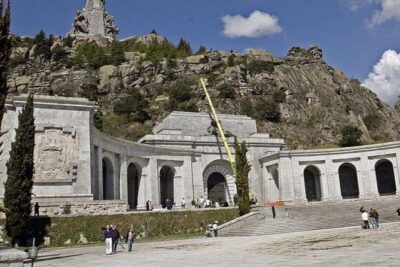
Escorial Monastery and the Valley of the Fallen Tour from Madrid
Read our review →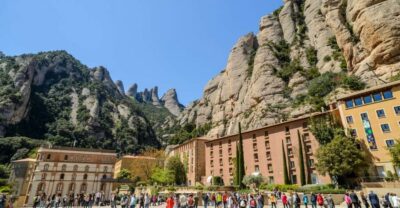

Montserrat Small Group: Monastery, Black Madonna & Natural Park
Read our review →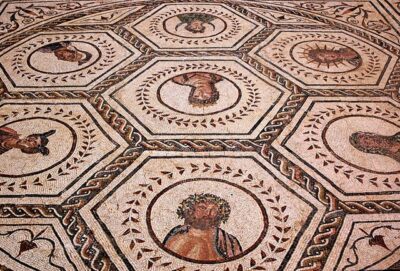
From Seville: Italica Roman City & Medieval Monastery Tour
Read our review →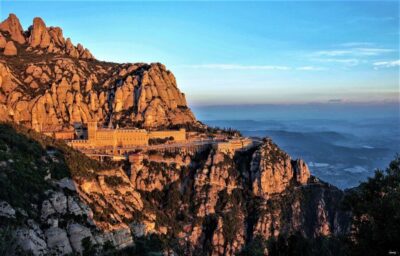
From Barcelona: Montserrat Monastery, Easy Hike, Cable Car
Read our review →
From Barcelona: Montserrat Monastery & Scenic Mountain Hike
Read our review →This tour also ranks in