
Review · SPAIN
Granada: Monastery of La Cartuja Entry Ticket
Granada’s La Cartuja is not a simple old monastery. It is a lavish Baroque showpiece wrapped around quiet courtyards, with sculpture, fresco, gilding, and architectural detail competing for your attention. I like the way the visit moves from the plain historic entrance into increasingly ornate rooms, and I especially like the Sancta Sanctorum and its dramatic ceiling paintings. The audio guide app also gives you useful context without tying you to a group.
The main drawback is that this is a self-guided visit, so you need to use your phone and read the space at your own pace. The monastery is also listed as unsuitable for wheelchair users, and the non-refundable ticket leaves little room for a change of plans.
Key points at a glance
- A 1516 foundation with three centuries of change: The monastery lets you see Plateresque, Baroque, and neoclassical work in one compact visit.
- Francisco Hurtado’s Sancta Sanctorum: This is the artistic high point, with frescoes by Antonio Palomino showing the triumph of the Church Militant.
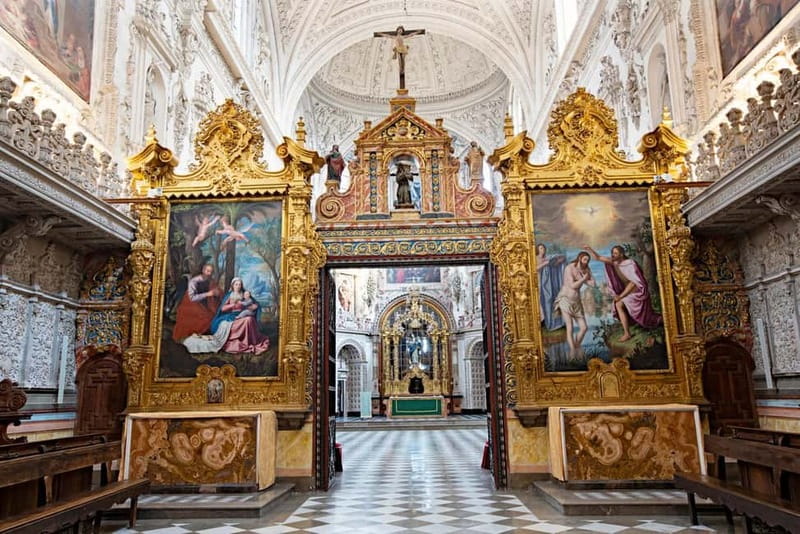
- Sánchez Cotán’s altarpieces: Look for the Rest in the Flight into Egypt and Baptism of Christ inside the church.
- A richly decorated monastic world: The sacristy, refectory, and chapter house reveal how art shaped Carthusian religious life.
- A quiet courtyard pause: The peaceful outdoor spaces offer a needed break after the intense decoration indoors.
- Good value for art lovers: At $11 per person, admission plus the audio guide app costs less than many guided attractions, though you guide yourself.
Why La Cartuja deserves a place on your Granada list
The Alhambra gets Granada’s headlines, but La Cartuja offers a very different lesson in the city’s art. Here, military strength and palace gardens give way to religious drama. The monastery is quiet, controlled, and intensely decorated, especially inside the church and its adjoining rooms.
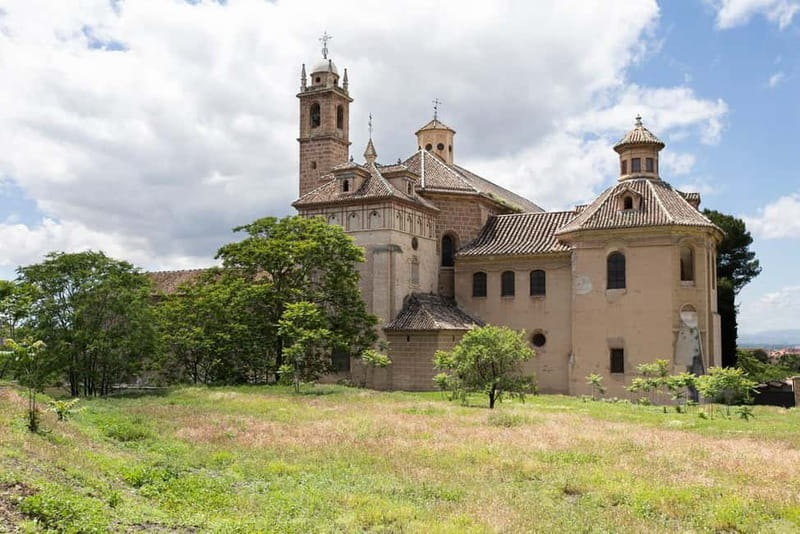
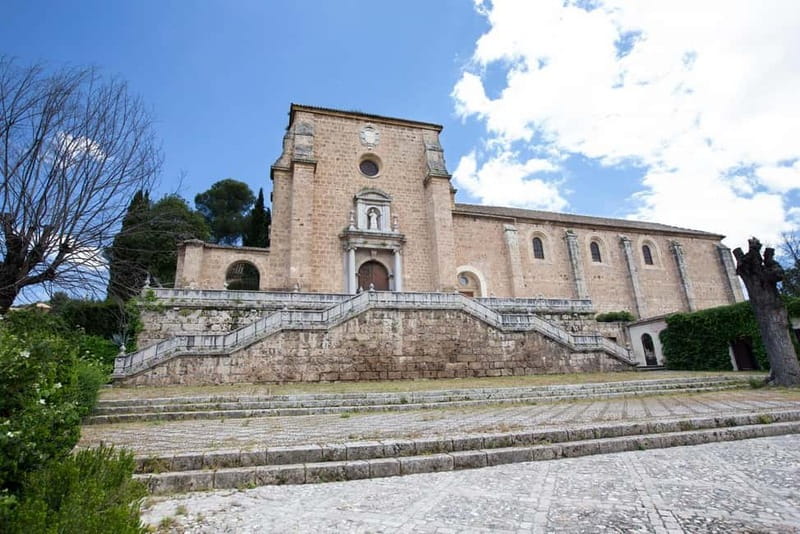
The Carthusian order founded the monastery in 1516. What you see today reflects work carried out across roughly three centuries, so the building does not follow one clean style. Its entrance has a Plateresque character, the church carries strong Baroque decoration, and some elements show a neoclassical taste.
That mix is part of the appeal. You can watch Spanish architecture change from one room to the next without leaving the complex. I find this more rewarding than a building that offers one polished style from start to finish.
At $11, the ticket is fairly priced for the amount of art packed into the visit. Admission includes the smartphone audio guide app and booking fee, so you are not paying extra for a separate guide. You do need your own phone, and the activity does not include food, drinks, or personal guiding.
More Entry Tickets in Spain:
- Montserrat Museum and Monastery Entry Ticket
★ 4.5 · 1,740 reviews - Mallorca: Carthusian Monastery Valldemossa Entrance Ticket
★ 4.2 · 93 reviews - Barcelona: Montserrat Private Trip with Monastery Ticket
★ 5.0 · 74 reviews
Entering through Juan García de Pradas’s doorway
Your visit begins at the monastery’s Plateresque doorway, created by Juan García de Pradas. This entrance sets up an interesting contrast: it is formal and carefully worked, but it does not prepare you for the extravagant decoration farther inside.
Take a moment here before rushing through. The doorway is not just a way into the building. It marks the shift from modern Granada into a monastic setting shaped by prayer, art, and strict daily routines.
The audio guide app should help explain the building as you move through it. This is useful because many of the details are easy to miss when you look only at the main altar or the largest fresco. If you like to pause, compare styles, and study small features, a self-guided format gives you plenty of freedom.
The tradeoff is that you must manage the visit yourself. There is no personal guide leading you from room to room, and the available information says nothing about a fixed group size or a named guide. Think of this as an independent cultural visit with digital support.
The church and its neoclassical doorway
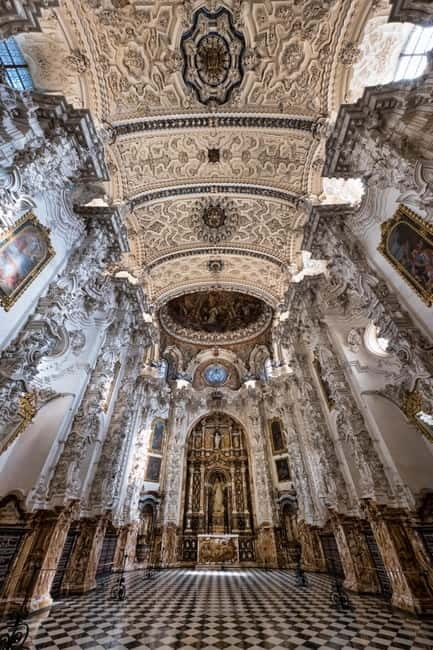
The church provides the monastery’s central visual shock. Its doorway is neoclassical, with Ionic columns and an image of Saint Bruno, the founder of the Carthusian order. The clean lines of the entrance lead into interiors that are far more theatrical.
Inside, look for the altarpieces by Francisco de Zurbarán? No, the material supplied here identifies the works as being by Sánchez Cotán, so keep your eye on those pieces rather than trying to attach every painting to a famous name. The listed works include the Rest in the Flight into Egypt and Baptism of Christ.
These scenes matter because they bring the monastery’s religious purpose into focus. The decoration is not there only to impress you. It tells stories intended for prayer and reflection, while also showing the artistic ambition of the institution.
The elliptical vault of the presbytery pulls your eyes upward. Below it, the gilded altar-baldachin creates a strong vertical effect, drawing the church toward its most sacred area. You will notice how the architecture, paintings, and gold work are designed to work together rather than as isolated pieces.
This is a good place to use the audio guide. It can help you separate the major works from the surrounding decoration and understand why the presbytery receives so much attention.
The Sancta Sanctorum and Palomino’s ceiling frescoes
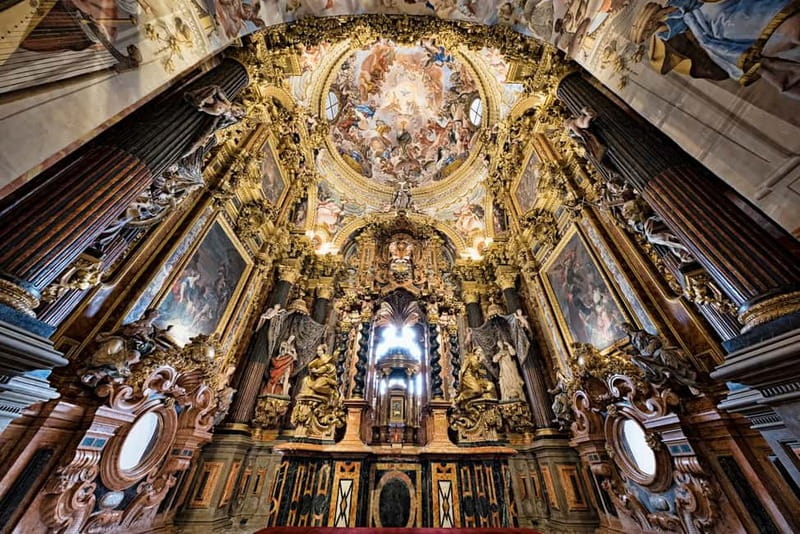
The Sancta Sanctorum is one of the most important rooms in the complex. Francisco Hurtado created it, and Antonio Palomino painted frescoes showing the triumph of the Church Militant.
The name points to a highly sacred space, and the decoration matches that role. Expect a room where structure and painting are closely joined, with the ceiling and walls directing your gaze through a large religious program.
This is not the place to hurry. Look upward, then step back and examine how the painted scenes relate to the architecture. The scale can make it hard to take in everything at once, so a short pause helps.
For many people, this room will be the artistic peak of the visit. It has the drama of the Baroque at full strength, but it remains part of a working religious setting rather than a public theater. That connection between devotion and display gives the room its force.
If your interest is mainly in quiet spaces and plain monastic architecture, the heavy decoration may feel like too much. If you enjoy frescoes, sculpture, and elaborate religious interiors, the Sancta Sanctorum justifies the ticket on its own.
More Temple Tours around Spain:
- Montserrat Monastery Half Day Experience from Barcelona
★ 5.0 · 6,014 reviews - Montserrat Monastery Small Group or Private Tour Hotel pick-up
★ 5.0 · 5,144 reviews - Escorial Monastery and the Valley of the Fallen Tour from Madrid
★ 5.0 · 2,494 reviews - Montserrat Small Group: Monastery, Black Madonna & Natural Park
★ 5.0 · 1,690 reviews
The sacristy, refectory, and chapter house
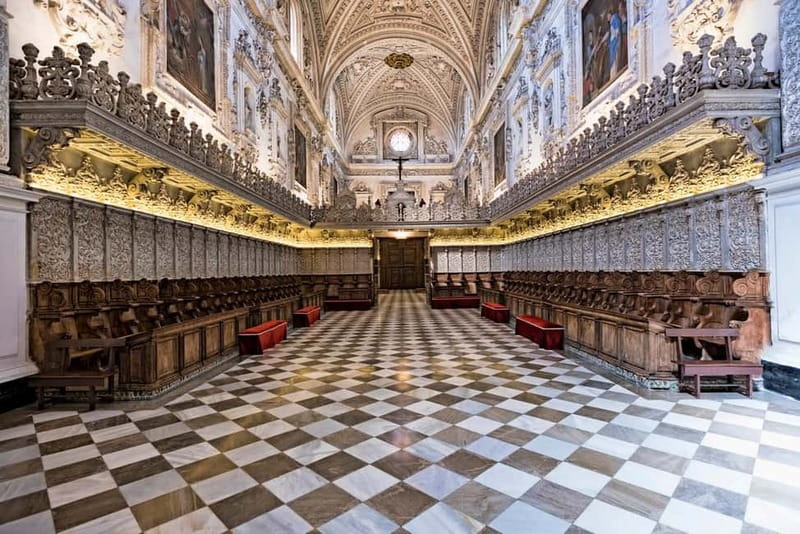
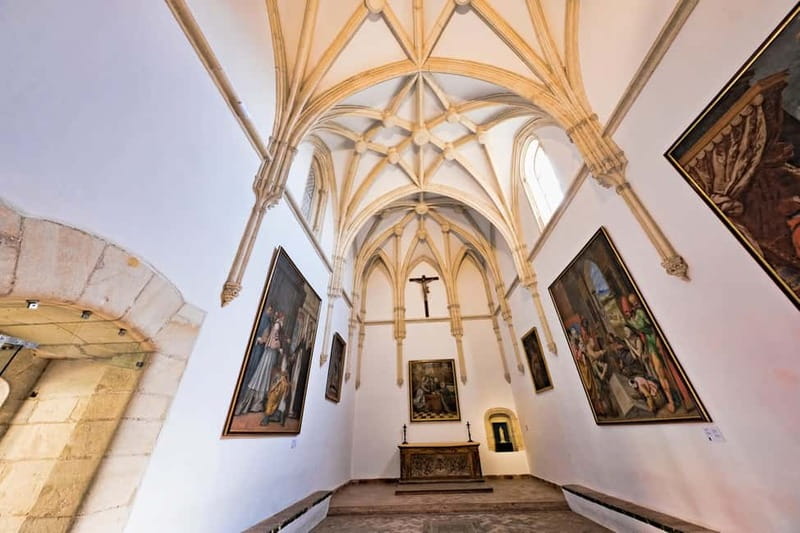
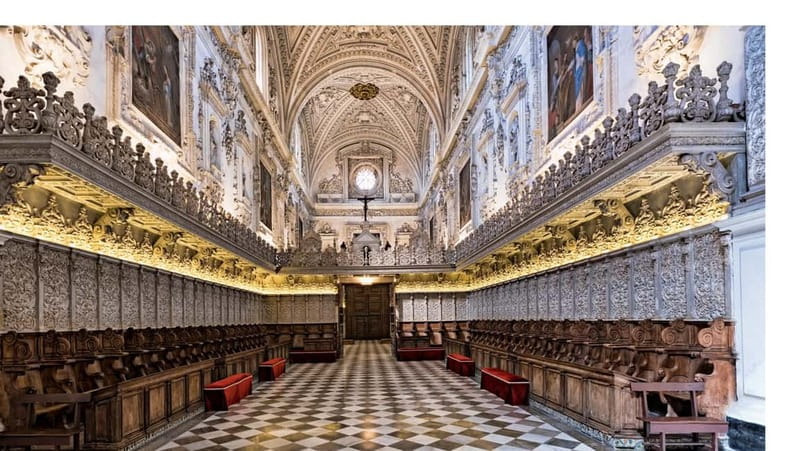
The monastery’s supporting rooms give you a better sense of Carthusian life. The sacristy, refectory, and chapter house are not merely extra stops after the church. Each one shows how the monks’ religious routine was supported by carefully designed spaces and a large body of art.
The sacristy is especially notable for its decoration and its connection to the church’s liturgical life. It is a place where the practical work of worship met the monastery’s artistic ambitions.
The refectory offers a different view. This was tied to communal meals and the daily rhythm of the monks, so it helps ground the visit in ordinary monastic routine. Art can make a monastery seem distant and ceremonial. A room linked to eating and daily discipline brings the people who lived here back into view.
The chapter house adds another layer. It was connected to the order’s internal life and decisions. Artworks by Vicente Carducho and Sánchez Cotán appear among the monastery’s major holdings, giving these rooms weight beyond their architectural detail.
I like this part of the visit because it prevents La Cartuja from becoming only a collection of grand rooms. You see both the spectacle and the structure behind it. The building was designed for a community with strict habits, not simply for public admiration.
Courtyards that give your eyes a rest
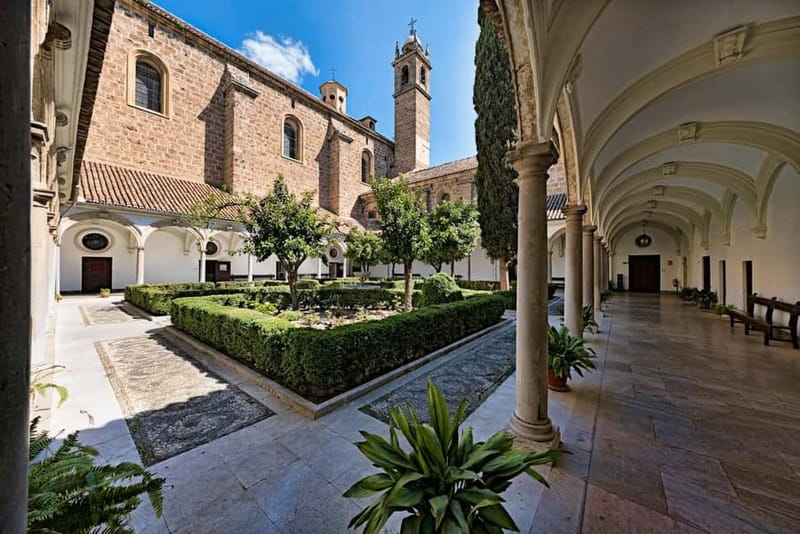
After the intense church interiors, the courtyards provide a welcome change. Their calm atmosphere is one of the monastery’s most appealing features, especially if you have just spent time looking at gilded surfaces and crowded frescoes.
Use the courtyard as a pause rather than a quick passage. The quiet helps you compare the monastery’s two moods: inward, elaborate religious art and open, restrained spaces where light and air take over.
The courtyards are also useful if you prefer a slower cultural visit. You can stop, check the audio guide, and think about what you have seen without trying to absorb another wall of decoration immediately.
Do not expect the courtyards to be the main reason for your visit. The strongest artistic material is indoors. Their value comes from balance. Without these calmer areas, the interiors could feel visually exhausting.
A self-guided visit, not a standard tour
The ticket includes an audio guide app on your smartphone. This format suits you if you prefer to set your own pace, replay information, and spend longer in rooms that interest you.
It is less suitable if you want a human guide to answer questions or point out small details in real time. No personal tour guide is included, and no individual guide name is provided. You should think of the app as an aid for independent exploration, not a replacement for a specialist-led tour.
The activity is valid for one day, with starting times dependent on availability. That gives you a simple visit window, but the ticket is non-refundable. Check your date carefully before confirming.
There is one practical warning worth taking seriously. A booking issue in February 2026 showed a barcode dated for 2025, although the entrance staff allowed admission. That is not a reason to avoid the monastery, but it is a reason to check the date printed on your ticket and the barcode before you arrive. If anything looks wrong, address it early rather than waiting at the door.
Smoking, pets, flash photography, and cellphones are not allowed. Assistance dogs are permitted. The restriction on cellphones may affect how you use the audio guide app, so check the site’s instructions about phone use before beginning. Flash photography is prohibited, which helps protect the art and keeps the rooms calmer.
Who will get the most from the $11 ticket
I would recommend this visit to you if you enjoy:
- Spanish Baroque painting and sculpture
- Religious architecture and sacred art
- Historic interiors with many small details
- Quiet cultural sights away from Granada’s busiest attractions
- Independent visits supported by an audio guide app
- Seeing several architectural styles in one building
The ticket offers good value for art-focused visitors. For $11, you receive entry, the audio guide app, and the booking fee. You are paying less for a guided performance and more for access to a serious collection of spaces and artworks.
Families with younger children may find the visit harder to pace if the children are not interested in religious art. The information provided does not describe a child-focused program, so plan on a quiet, attentive visit.
The monastery is listed as unsuitable for wheelchair users. If accessibility is essential for you, confirm current conditions before booking rather than assuming every area can be reached.
How much time should you allow?
The ticket is valid for one day, but no fixed visit length is stated. You can build the stop into a day of Granada sightseeing without treating it as an all-day excursion.
Your ideal length depends on how closely you study the paintings and architecture. A quick visit will show you the main church, Sancta Sanctorum, and courtyard atmosphere. A slower visit gives you time with the sacristy, refectory, chapter house, and audio explanations.
I would avoid squeezing La Cartuja into a rushed gap between other appointments. The art is dense, and the building rewards a measured pace. You do not need to linger in every room, but you should allow enough time to look up, step back, and notice how the rooms differ.
Should you book La Cartuja?
Book it if you want Granada beyond its most famous palace, and if Baroque interiors are your idea of a good hour or two. The Sancta Sanctorum, Sánchez Cotán’s works, the gilded presbytery, and the peaceful courtyards give the monastery a clear identity.
Skip it if you need a live guide, guaranteed wheelchair access, or a flexible refundable ticket. Also check the date on your barcode carefully, since a past-date ticket caused a problem at the entrance even though staff ultimately admitted the holder.
For $11, La Cartuja is a strong choice for independent art lovers. Bring a charged phone for the audio app, follow the no-flash and no-cellphone rules, and give yourself enough time to move from the restrained entrance into the monastery’s full Baroque spectacle.
FAQ
Where is the Monastery of La Cartuja?
The Monastery of La Cartuja is in Granada, in Spain’s Andalusia region.
How much does admission cost?
The listed price is $11 per person.
How long is the ticket valid?
The ticket is valid for one day. Starting times depend on availability.
Is a personal guide included?
No. The ticket includes an audio guide app for your smartphone, but not a personal tour guide.
What can you see inside the monastery?
You can see the Plateresque entrance, neoclassical church doorway, Baroque frescoes and sculptures, Sánchez Cotán’s altarpieces, the Sancta Sanctorum, sacristy, refectory, chapter house, and courtyards.
Is photography allowed?
Flash photography is not allowed. Cellphones are also listed as prohibited, so check the venue’s instructions before using your phone for the audio guide app.
Is the monastery wheelchair accessible?
The activity is listed as unsuitable for wheelchair users.
Temple visits we reviewed lately in Spain
- San Lorenzo de El Escorial: Monastery and Site Guided Tour★ 4.8 · 127 reviews
- Santander: Picos, Santo Toribio Monastery and Potes Day Tour★ 4.8 · 261 reviews
- Private Bécquer’s route, Trasmoz, Veruela’s Monastery +food★ 5.0 · 5 reviews
- Montserrat Monastery Ticket with Escolania Boys’ Choir★ 4.4 · 55 reviews
- Montserrat: PRIVATE TOUR – Monastery, Cable Car & Soft Hike★ 5.0 · 4 reviews
- Private Montserrat Monastery with pickup + Winery or Caves★ 4.9 · 4 reviews
- Món Sant Benet Monastery Tickets★ 5.0 · 7 reviews
- Medieval Route in Navarre: Olite, Ujué, Javier Castle, and Monastery of Leire★ 4.8 · 6 reviews
Spain Temple Tours, compared.
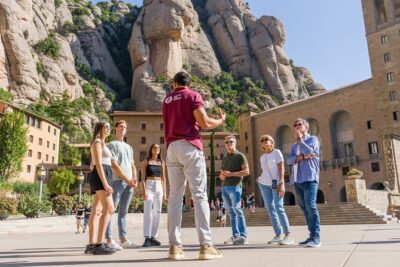
Montserrat Monastery Half Day Experience from Barcelona
Read our review →
Montserrat Monastery Small Group or Private Tour Hotel pick-up
Read our review →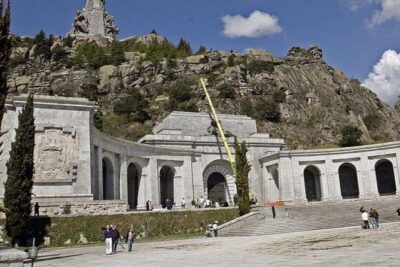
Escorial Monastery and the Valley of the Fallen Tour from Madrid
Read our review →

Montserrat Small Group: Monastery, Black Madonna & Natural Park
Read our review →
From Seville: Italica Roman City & Medieval Monastery Tour
Read our review →
From Barcelona: Montserrat Monastery, Easy Hike, Cable Car
Read our review →
From Barcelona: Montserrat Monastery & Scenic Mountain Hike
Read our review →This tour also ranks in