
Review · TEMPLES WORLDWIDE
From Belgrade: Studenica monastery & Zica monastery
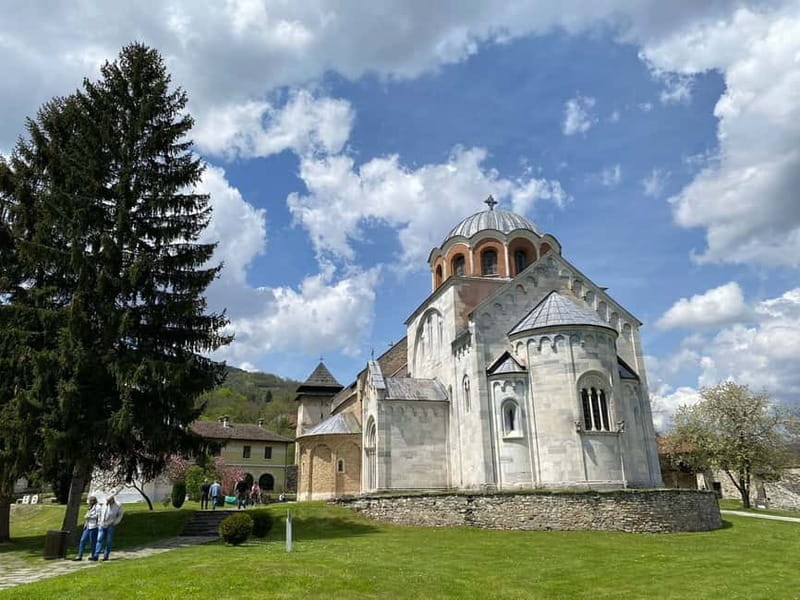
The real prize here is Studenica Monastery, a 12th-century Serbian Orthodox sanctuary with priceless Byzantine paintings and a place in Serbia’s Valley of the Kings. You also visit Žiča, the red-and-white coronation church where seven Serbian kings were crowned. Together, the two monasteries give you a strong introduction to medieval Serbia without requiring you to plan a complicated trip into the mountains.
I like the small group of no more than 10, which leaves room for questions and a more personal guide. I also like the mountain scenery along the Ibar gorge, especially the view toward Maglič fortress. The catch is the long road time: this is a 12-hour day, with roughly 2.5 hours to reach the first monastery and more than three hours returning to Belgrade.
Key points to know before booking
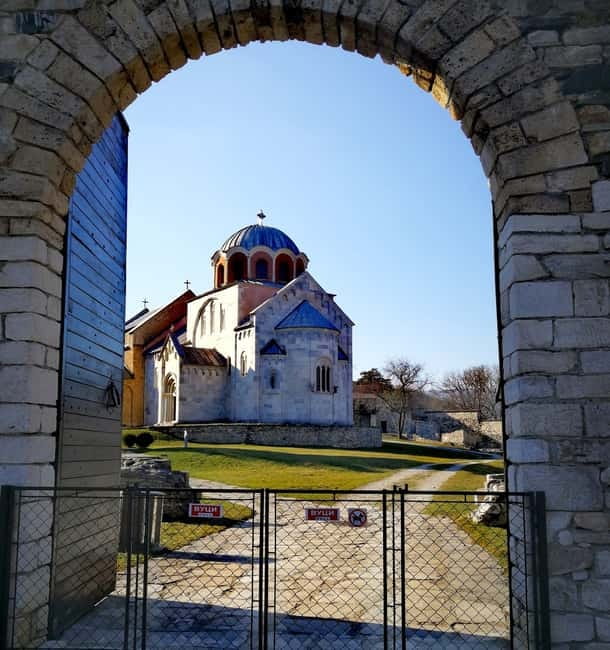
- Studenica is the main event: See a UNESCO-listed monastery founded in the late 12th century, known for its 13th and 14th-century Byzantine paintings.
- Žiča connects royal history: Visit the church where seven kings were crowned and where several Serbian dynasties meet.
- The drive is part of the experience: Mountain roads, the Ibar gorge, and views toward Maglič add scenic value, but the day is long.
- Guiding is a major strength: Guides including Jovana, Milos, and Stefan are associated with warm, detailed explanations of Serbian history and Orthodox culture.
- Lunch is on your own: You get about an hour in Kraljevo, but food and drinks are not included in the $152 price.
- Dress for sacred places: Bring comfortable shoes, cover your shoulders, and leave flash photography equipment switched off.
Why these monasteries are worth a full day from Belgrade
Belgrade is an excellent base for Serbian history, but its city streets do not tell the whole story. To understand the medieval Serbian state, you need to get into the central Serbian countryside, where royal foundations and Orthodox monasteries still shape the cultural map.
This trip takes you to two very different religious sites. Žiča gives you the royal and political story. Studenica gives you the spiritual, artistic, and architectural story. The connection is the Nemanjić family, founders of the medieval Serbian state and important saints of the Serbian Orthodox Church.
I would not choose this outing simply to collect two more sightseeing stops. I would choose it if you want to understand why Serbian medieval history remains closely tied to monasteries, dynasties, and Orthodox worship. The guide matters here because the painted walls and royal references mean more once someone explains who built them and why.
The price is $152 per person. That is not a bargain bus ride, but it covers hotel pickup and drop-off, private transportation, a professional English-speaking guide, and a very full day outside Belgrade. For a small group capped at 10 people, the value is fairly strong, especially if you would otherwise need to arrange a private driver and separate visits yourself.
More Temple Tours around the world:
- Lisbon: Jerónimos Monastery Entrance Ticket
★ 4.1 · 14,164 reviews - Angkor Wat Sunrise or Sunset Tour with Guide from Siem Reap
★ 5.0 · 12,109 reviews - Teotihuacan, Guadalupe Shrine & Tlatelolco Day Tour with Lunch
★ 5.0 · 11,603 reviews
The long road from Belgrade into central Serbia
The first drive takes about 2.5 hours. That sounds like a lot on paper, and it is. Still, the road time is not dead time if you enjoy seeing Serbia beyond the capital. As the city gives way to hills and wooded mountain country, you get a clearer sense of the setting that helped protect and sustain medieval monasteries.
You should treat the drive as part of the day, not as a quick transfer between attractions. Bring water, wear comfortable clothing, and expect a full excursion rather than a relaxed half-day outing. The total return journey is listed as about 3.33 hours, so anyone who dislikes long car rides should think carefully before booking.
The benefit of private transportation is flexibility within the planned route. You are not worrying about public buses, missed connections, or finding remote monastery entrances on your own. The small group also makes it easier to ask the guide about Serbian history, religion, and the places you pass.
Žiča Monastery and the road to seven coronations
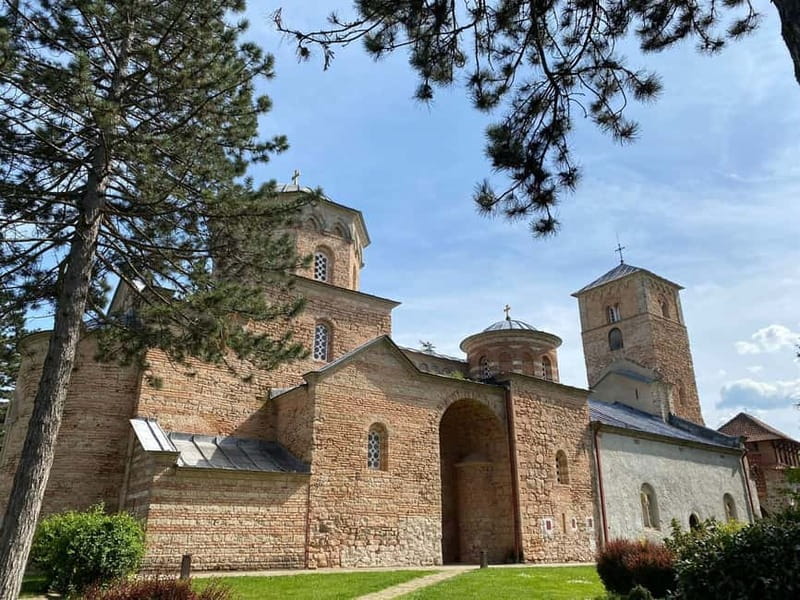
Žiča is the first major visit, with about 1.5 hours for sightseeing, walking, and a guided tour. It is known as Serbia’s coronation church because seven kings were crowned there. That single fact gives the site unusual weight: this was not only a place of prayer, but also a setting where royal power was publicly confirmed.
The monastery connects different royal dynasties and centuries. Your guide can help sort out that complicated story, since Serbian medieval history includes family ties, shifting power, and the close relationship between church and state. Without that context, the church can look like a quiet historic building. With it, Žiča becomes part of the story of how medieval Serbia organized itself.
Allow yourself time to notice the calm of the site. This is a religious place, not a museum built only for sightseeing. Sleeveless shirts are not allowed, so dress respectfully from the start. Flash photography is also prohibited. Those rules are simple, but they matter when you are entering an active spiritual setting rather than only viewing old art.
The stop is long enough for a meaningful visit, though not so long that you can explore every corner at a slow pace. If you like extended photography sessions or detailed architectural study, you may wish for more time. If you prefer a focused explanation followed by a walk around the grounds, the schedule should suit you.
Kraljevo gives the day a practical pause
After Žiča, the tour stops in Kraljevo for about an hour. This is your lunch and free-time break, and food is not included in the tour price. That arrangement gives you choice, but it also means you should budget separately for a meal and drinks.
Kraljevo is useful as a pause in a long day. You can sit down, eat, and reset before the second monastery. Do not expect this part to feel like another major guided attraction. The value is practical: after a morning on the road and a concentrated historic visit, you get time to take care of yourself.
I would avoid making lunch too ambitious. With one hour available, you need enough time to eat without turning the rest of the schedule into a rush. The tour details do not specify a particular restaurant, so your meal arrangements may depend on the group and guide on the day.
Same sacred ground, another way to see it:
- From Bangkok: Ayutthaya Temples Guided Tour with Lunch
★ 4.7 · 10,535 reviews - Siem Reap: Angkor Wat: Small-Group Sunrise or Sunset Tour
★ 5.0 · 9,444 reviews - Athens: Cape Sounion & Poseidon Temple Sunset Half-Day Trip
★ 4.8 · 8,241 reviews - Ubud: Monkey Forest, Jungle Swing, Rice Terrace, and Water Temple
★ 5.0 · 7,160 reviews
Maglič and the Ibar gorge viewpoint
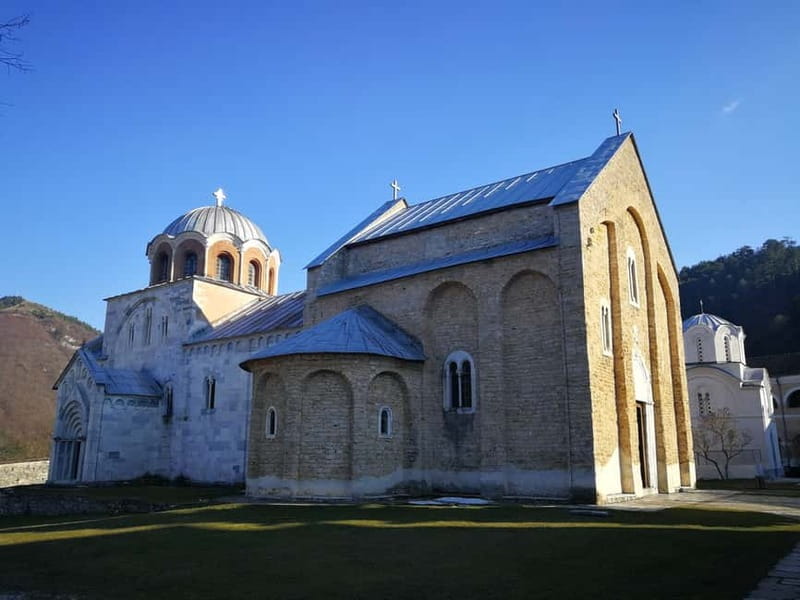
The route includes a short viewpoint stop of about 10 minutes. From the road, you can see the hills around Maglič, one of the best-preserved and most attractive medieval fortifications in Serbia, dating from the 13th century. You also get views of the Ibar gorge.
Ten minutes is enough for a quick photograph and a look, but not for a full visit to the fortress. This is important when setting expectations. Maglič is a scenic bonus on the route, not a separate castle tour with time to climb around the ruins.
The viewpoint adds variety to the day. Žiča and Studenica ask you to focus on religious art and royal history. The Ibar gorge and Maglič remind you that geography mattered too. Fortifications, monasteries, and royal centers were connected by the roads and valleys of central Serbia.
Bring shoes that are comfortable for walking and standing. The activity specifically recommends comfortable footwear, and that advice makes sense for monastery grounds and viewpoint stops. The tour runs rain or shine, so a light rain layer is sensible even though no special weather equipment is included.
Studenica, Serbia’s great monastery visit
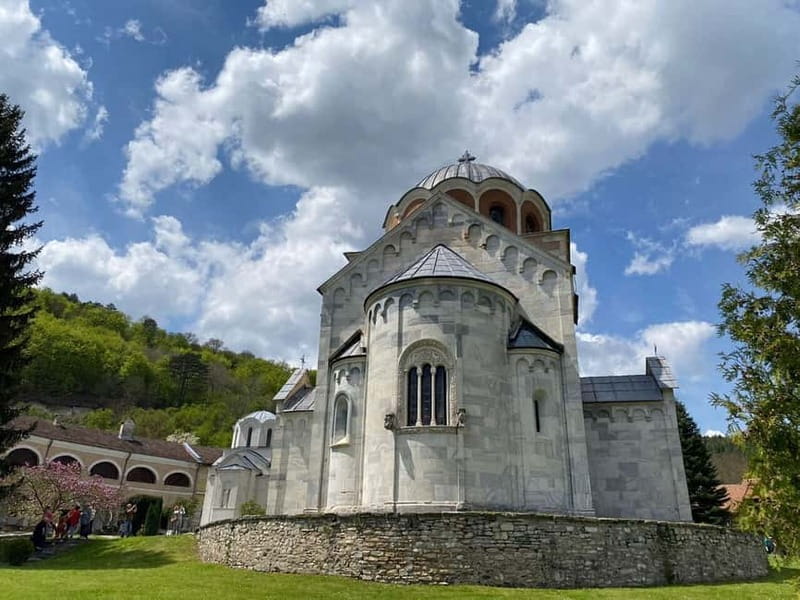
Studenica is the longest stop, with about two hours for a visit, guided tour, sightseeing, and photographs. Founded in the late 12th century, it is one of Serbia’s most important Orthodox monasteries and a UNESCO-listed site.
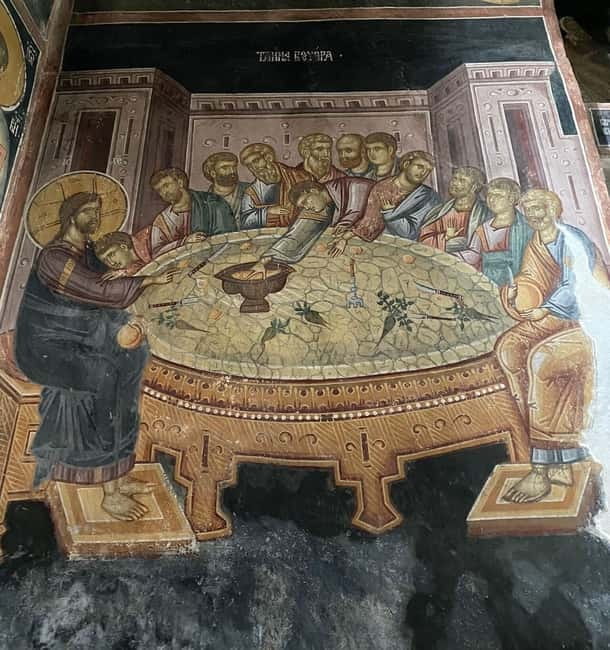
This is where the day reaches its high point. Studenica belongs to the Valley of the Kings, a group of Serbian royal and religious sites connected with the medieval state. It is also described as the largest and richest of Serbia’s Orthodox monasteries, with priceless collections of 13th and 14th-century Byzantine painting.
The paintings are the reason to slow down. Medieval church art can be difficult to read if you are unfamiliar with Orthodox traditions, symbolism, or the difference between a fresco and a later repainting. An English-speaking guide gives you a way into the images, rather than leaving you to glance at them and move on.
Two hours should give you time for a guided explanation and some personal looking. I would use the first part to listen closely, then take a quiet circuit of the site on your own. The monastery’s importance is not only visual. Its age, royal connections, and role in Serbian spiritual life make it a place where art and national history are tied together.
Dress with the same care you would use at Žiča. Sleeveless clothing is not permitted, and flash photography is not allowed. You may take photographs where permitted, but do not let the camera distract you from the paintings or from the atmosphere of the church.
What the guide adds to a complicated subject
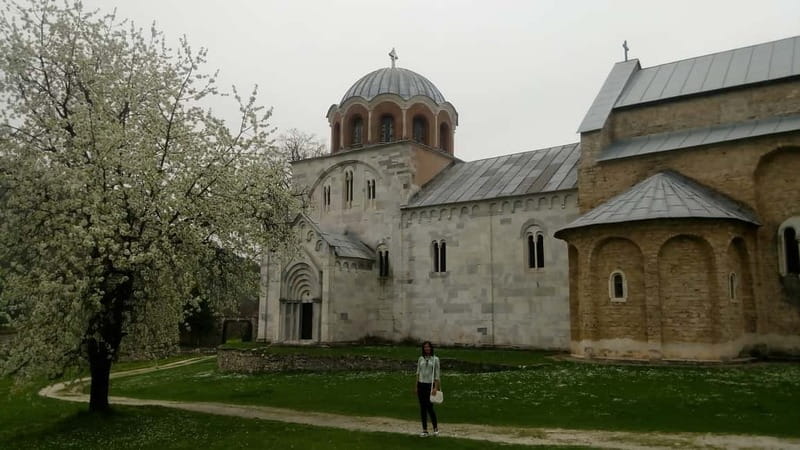
The strongest part of this experience is the human explanation. Serbian medieval history includes the Nemanjić dynasty, royal succession, Orthodox saints, monastery foundations, and Byzantine artistic influence. These subjects can become a blur if you are reading labels quickly.
The guides connected with this experience include Jovana, Milos, and Stefan. Their roles are not limited to pointing out buildings. The best use of your time is to ask questions about the Nemanjić family, the meaning of Žiča’s coronations, and the place of Studenica in Serbian Orthodox life.
Past guide feedback highlights warmth, care, and clear explanations. One guide, Stefan, is noted for being especially helpful and enjoyable company, while Jovana and Milos are praised for combining personal warmth with strong explanations. That matters on a long drive. A guide who can keep conversation interesting makes the hours in the van feel less like a commute.
The small-group format helps. With no more than 10 people, you are less likely to feel lost in a crowd, and you have a better chance of asking a question at the right moment. It may occasionally be a private or nearly private outing, depending on bookings, but you should not assume that every departure will be private.
The real cost of a $152 day trip
At $152, this is an investment in convenience and access rather than a cheap outing. The price includes pickup and drop-off at your Belgrade hotel, private transport, and a professional guide. It does not include lunch, drinks, or other food.
Compare that with arranging a driver for a remote monastery route, planning the order of stops, and finding someone to explain the sites in English. The tour removes that work. It also gives you a planned route that combines two major monasteries with Kraljevo and a scenic viewpoint.
The tradeoff is time. You spend a large part of the day in the vehicle, and you cannot customize the schedule freely. If your priority is seeing as much of Belgrade as possible, a 12-hour excursion may feel like too much. If you have several days in Serbia and want to see the country beyond the capital, the cost is easier to justify.
The full-day format also means you should not schedule another important activity for the evening. The return to Belgrade is expected after a long drive, and the day may feel tiring even if the sightseeing itself is peaceful.
Who should book this monastery tour?
I would recommend it most strongly to you if you like history, religious art, royal stories, and countryside scenery. It is also a good choice if this is your first visit to Serbia and you want one substantial day that explains the country beyond Belgrade.
You will get the most from it if you are willing to listen. The buildings and paintings are worth seeing on their own, but the guide’s historical context turns the route into a coherent story. English is the tour language, and the experience is designed for a small group.
This may be less suitable if you want an easygoing outing with little time in the car. The monasteries are not close to Belgrade, and the return journey is long. It is also not the right fit if you want a dedicated visit to Maglič, since the fortress appears as a viewpoint stop rather than a full excursion.
The tour runs in all weather. Comfortable shoes are essential, and modest clothing is required at the monasteries. Those are small preparations that make the day more pleasant.
Should you book it?
Book this tour if you want to connect Serbian royal history with Orthodox art and mountain scenery, and you are comfortable giving up a full day to do it. Studenica is the main reason to go, while Žiča, Maglič, and the Ibar gorge make the route feel broader and more complete.
Skip it if long road days drain you or if your time in Belgrade is very limited. For everyone else, the combination of UNESCO heritage, seven royal coronations, Byzantine paintings, and a small English-speaking group makes $152 a reasonable price for a difficult route to arrange independently.
FAQ
How long is the tour from Belgrade?
The experience lasts 12 hours, including transportation, monastery visits, lunch time, and the return to Belgrade.
What monasteries does the tour visit?
You visit Žiča Monastery and Studenica Monastery. Studenica is a UNESCO-listed heritage site, while Žiča is known as the coronation church where seven kings were crowned.
Is hotel pickup included?
Yes. Hotel pickup and drop-off in Belgrade are included.
Is lunch included in the price?
No. Food and drinks are not included, but the schedule provides about one hour in Kraljevo for lunch and free time.
What language does the guide speak?
The live tour guide speaks English.
How large is the group?
The tour is limited to 10 participants and includes private transportation.
What should I wear or bring?
Bring comfortable shoes and wear clothing that covers your shoulders, since sleeveless shirts are not allowed. Flash photography is prohibited, and the tour operates rain or shine.
Temple visits we reviewed lately in the world
- Shanghai: Yuyuan, City God Temple Old City Tour-Tip Based★ 5.0 · 10 reviews
- Seoul Sunrise & Sunset Hike + Temple & K-Food Adventure★ 4.8 · 6 reviews
- Seoul: UNESCO Sites tour: Palace, Shrine & Bukchon Village★ 4.8 · 26 reviews
- Seoul: War Memorial, Jogyesa Temple & Tapgol Park Tour★ 4.8 · 56 reviews
- Seoul: Vegan Temple Food Class, Jogyesa & Changdeokgung Tour★ 4.6 · 34 reviews
- Seoul: Temple & Starfield COEX Mall Gourmet Tour in Gangnam★ 4.7 · 22 reviews
- SEMARANG SHORE TOURS: BOROBUDUR TEMPLE EXCURSIONS★ 5.0 · 3 reviews
- Seoul: Night Bongeunsa Temple Guided Tour★ 5.0 · 11 reviews