
Review · TRAIN EXPERIENCES
Bamboo train. Phnom Sampove cave. Bat cave and Banan Temple
Battambang’s famous Bamboo Train is only the opening act. This nine-hour trip takes you southwest of the city by tuk-tuk, through vegetable farms, fruit plantations, fishing villages, rice fields, old bridges, caves, temples, and finally to Phnom Sampov for the evening flight of bats.
I like the way the day links major sights with ordinary Cambodian life. You get more than a quick temple stop: Rich can explain local fruit, farming, village life, and history as you go. I also like the timing, which leaves room for the bats to emerge around sunset rather than treating Phnom Sampov as a rushed photo stop.
The main consideration is stamina. You are out from about 9:30 a.m. to 6:30 p.m., much of it in an open tuk-tuk, with walking and steps at the cave and temple sites. The $24 price is good value, but the Bamboo Train costs an extra $5 per person, and food is not included.
Key points to know before booking
- The Bamboo Train is one stop in a much bigger day: You also visit Banan Temple, Phnom Sampov, villages, farms, caves, and the bat cave.
- Rich brings more than a driver’s route: He has guided in Battambang for over 10 years and can adjust the day to suit your schedule.
- The countryside is part of the experience: Expect rice fields, fruit and vegetable farms, fishing areas, bridges, and village roads between the headline sights.
- Sunset timing matters: The schedule is arranged so you can reach Phnom Sampov in time for the bat flight.
- The group is small: A maximum of five participants makes it easier to ask questions and request a practical adjustment.
- Budget for the extras: Bring cash for the $5 Bamboo Train fee, meals, and drinks.
A full day beyond Battambang’s city streets
Battambang is Cambodia’s second-largest city, yet it has a calmer feel than its size suggests. The city works well as a base for a countryside day because the attractions are spread across the area rather than packed into one tourist compound.
This tour makes good use of that setting. The route is not simply a list of famous stops. You move through working villages and agricultural areas, then pause at temples, caves, and viewpoints. That mix gives you a clearer sense of the province than a short transfer from one monument to another.
Rich has more than a decade of experience guiding around Battambang. His role matters here because the appeal of the day is partly in the spaces between the official sights. He can explain what you are seeing at a farm or village, and the itinerary can be adjusted around your schedule within the limits of a nine-hour day.
Pickup and return are included from your hotel in Krong Battambang. The tour runs from roughly 9:30 a.m. until 6:30 p.m., so you should keep the day free rather than planning another fixed activity afterward.
More temple trips by train in the world:
- Bangkok: Railway and Floating Market Tour with Dragon Temple
★ 4.6 · 1,225 reviews - From Malta: Gozo Full-Day Tour with Guide, Temples, & Train
★ 4.1 · 567 reviews - From Thessaloniki: Train Trip to Meteora & Monastery Tour
★ 4.7 · 26 reviews
The Bamboo Train: fun, simple, and extra-cost
The Bamboo Train is the best-known stop on this route. Its appeal is simple: you ride on a small bamboo platform along the railway, making it a lighthearted contrast to the temples and caves later in the day.
The ride fee is not included in the tour price. Set aside $5 per person, and bring cash. Food and drinks are also separate, so you should not treat the $24 price as an all-inclusive day rate.
The train itself is brief compared with the whole excursion, but it gives the morning a lively start. You are not spending the entire day inside museums or temples. The stop adds motion, fresh air, and a very different kind of Cambodian sightseeing.
Keep your expectations in the right place. This is not a luxury railway trip or a long scenic train journey. It is a modest local attraction, and its value comes from the unusual ride and the memory of doing something distinctively associated with Battambang.
Villages, farms, and the road through Kampong Pil
One of the strongest parts of the route is the countryside between the headline stops. You pass vegetable farms, fruit farms, rice fields, and a fishing village, with Rich explaining the food and daily work connected to these places.
This section is useful because it gives context to what you eat and see elsewhere in Cambodia. A booking account specifically praised the fruit explanations and the route through the rice fields. You may also be offered chances to taste local food, but that should not be treated as a guaranteed part of the formal inclusions.
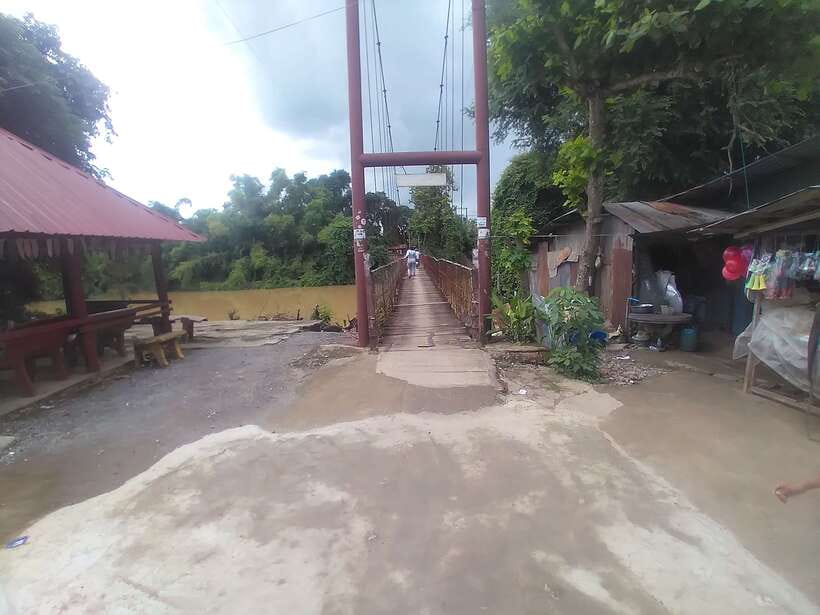
The Kampong Pil suspension bridge adds another change of pace. It is not presented as a major monument, but it helps show how the area is connected and gives you a short stop away from the roads. The old house in Wat Kor Village adds another local detail, taking the day beyond the standard tourist circuit.
These stops are best for travelers who like seeing how a place works. If you want only major ruins and dramatic viewpoints, parts of the morning may feel slow. If you enjoy farms, village roads, and small details, this is where the tour earns much of its value.
Banan Temple and the payoff of the climb
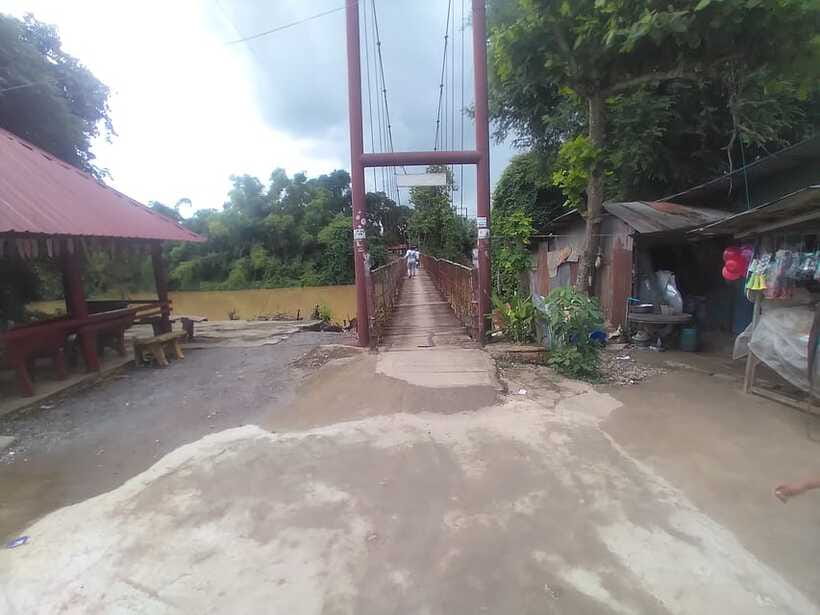
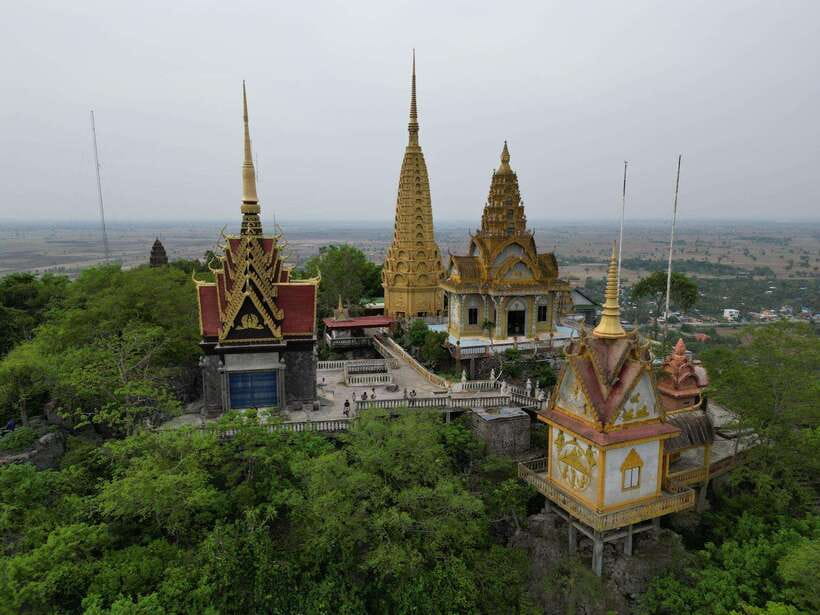
Banan Temple is one of the day’s major historic stops. The site is reached by walking, and the visit adds a temple setting before the later caves and sunset at Phnom Sampov.
The practical information gives no exact step count or walking time, so you should be prepared for some effort without planning around a precise figure. Wear shoes that can handle uneven ground, and bring water even though bottled water is provided.
Banan Temple works well as part of this route because it breaks up the day. You have already seen countryside and the Bamboo Train, and you still have Phnom Sampov ahead. The temple gives you time to slow down and look at the structure rather than rushing through several similar monuments in a row.
The attraction may be less suitable if stairs or extended walking are difficult for you. The tour notes that it is not suitable for people with high blood pressure, so take that warning seriously, especially with the heat, outdoor transport, and walking involved.
More Temple Tours around the world:
- Lisbon: Jerónimos Monastery Entrance Ticket
★ 4.1 · 14,164 reviews - Angkor Wat Sunrise or Sunset Tour with Guide from Siem Reap
★ 5.0 · 12,109 reviews - Teotihuacan, Guadalupe Shrine & Tlatelolco Day Tour with Lunch
★ 5.0 · 11,603 reviews - From Bangkok: Ayutthaya Temples Guided Tour with Lunch
★ 4.7 · 10,535 reviews
Phnom Sampov: caves, monkeys, and a wide view
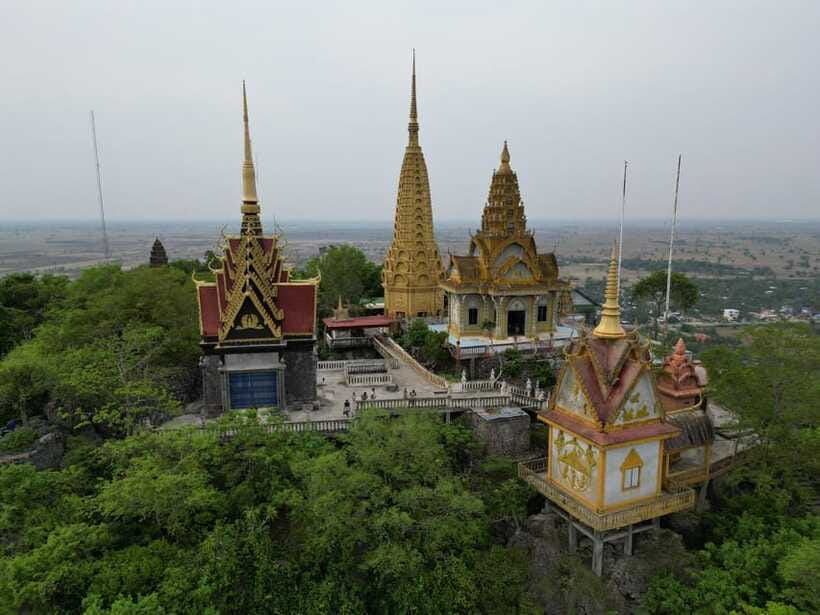
Phnom Sampov is the most varied stop on the afternoon route. The mountain area includes the Killing Cave, a natural cave, a monkey forest, large cannon guns, and broad views from the hill.
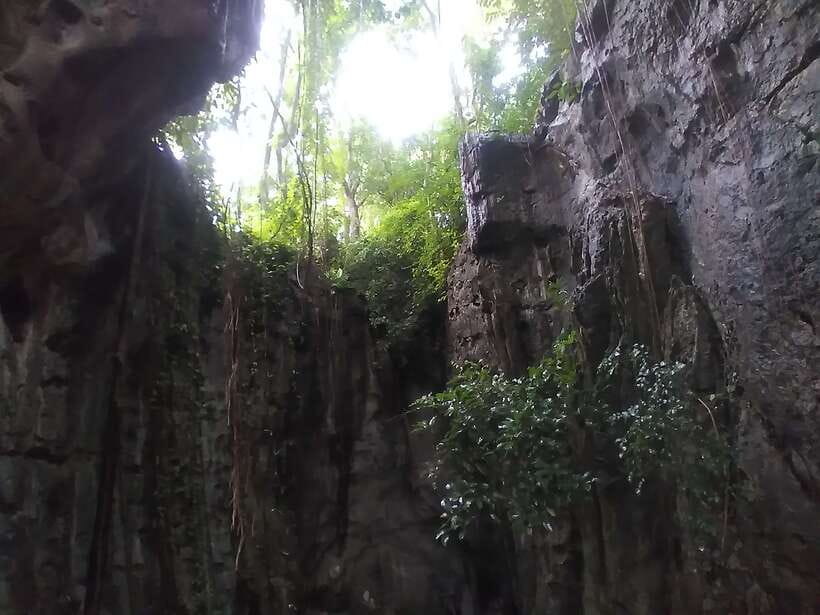
The Killing Cave carries serious historical weight. It is not just another photo stop, and you should give yourself time to take in the site respectfully. The tour also includes a natural cave, which provides a different experience from the historical cave and adds to the sense that Phnom Sampov is a whole mountain complex rather than one isolated attraction.
The monkeys are another memorable feature, though you should follow Rich’s instructions around them. The large guns and the view from the hill show different sides of the area, linking Cambodia’s difficult past with its geography and military history.
The word landscape is often used too loosely, but here the literal view from the hill is part of the point. From higher ground, you can look out across the countryside, rice fields, and surrounding areas. This is one of the places where having a guide helps, since the view becomes more meaningful when you know what you are looking at.
There is also a ride up to the Killing Caves that costs extra. Walking is free, so you have a choice, but the available details do not state the price of the ride. Bring cash if you think you may prefer not to walk.
The bat cave at sunset
The final major event is the bat cave, where thousands of bats emerge around sunset. The timing is one of the tour’s smartest features. You are not simply dropped at Phnom Sampov early in the day and left to fill time. The schedule is designed to get you there with enough time to see the bats leave the cave.
This is a natural spectacle, not a staged performance, so the exact rhythm belongs to the animals and the light. You should expect a wait and keep your camera ready. A camera is specifically recommended, and the changing light can make this the most striking image of the day.
The bat flight also gives the full itinerary a clear ending. After temples, village roads, caves, and farms, you finish outdoors as the day cools. You then return to Battambang, arriving around 6:30 p.m.
Do not book this tour if you need to be back in town much earlier. The sunset timing is central to the experience, and leaving early would mean missing one of its most distinctive parts.
What the $24 price really covers
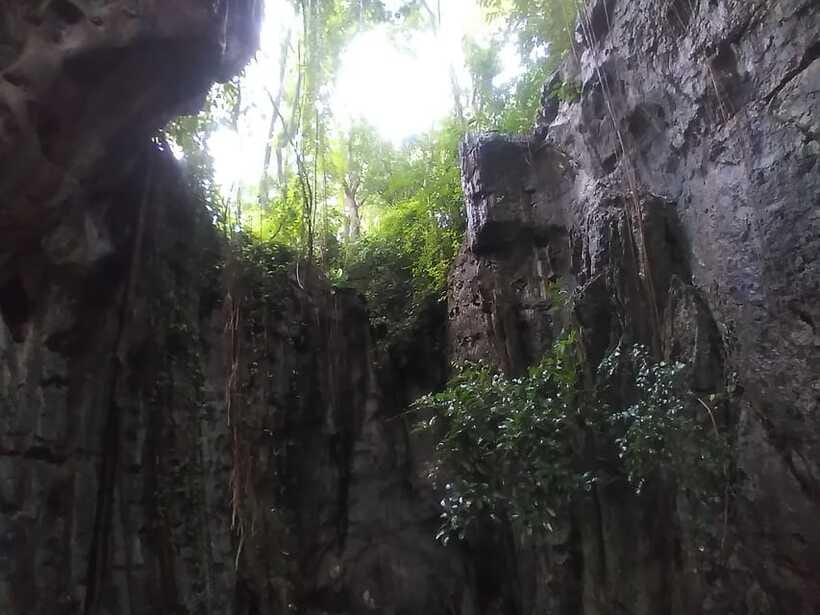
At $24 per person, the tour offers solid value for a private-feeling day in a small group. The fee includes hotel pickup and drop-off, an English-speaking tuk-tuk driver, site entrance fees, water, and a cold towel.
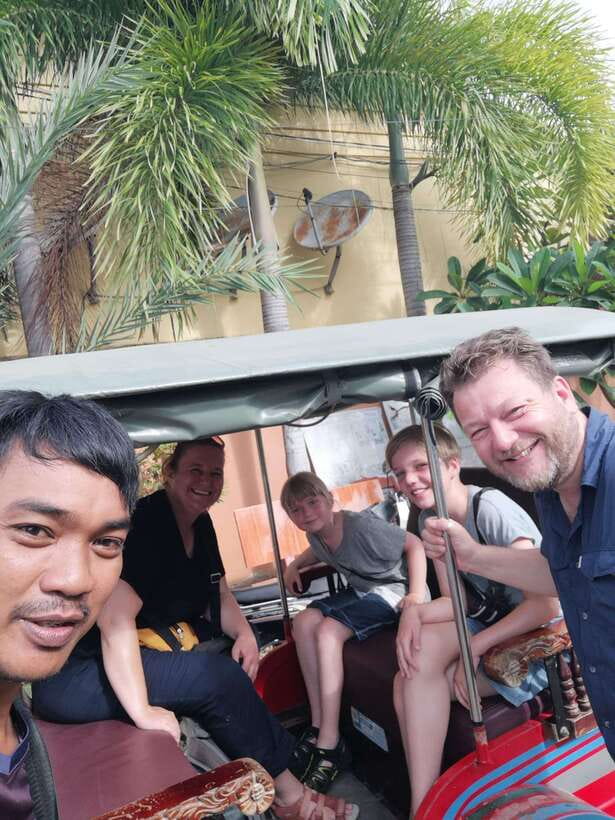
The group limit is five participants. That is small enough to make questions easier and gives Rich some room to tailor the pace or route to your schedule. It also means the experience should feel less rigid than a large coach excursion.
You still need to budget for the $5 Bamboo Train fee, food, and drinks. The ride up to the Killing Caves is another possible cost, although walking is free. Bring cash, since these smaller expenses are easier to handle that way.
For a full day covering several separate areas, the price is attractive. It is especially good value if you want transport between scattered sights and a guide who can explain the countryside rather than only drive you from gate to gate.
Comfort, fitness, and what to bring
This is an outdoor day in a tuk-tuk, with several stops and some walking. You should be comfortable spending many hours on the road and should not expect air-conditioned transport between every attraction.
Bring a camera and cash. Water and a cold towel are included, but you still need money for the Bamboo Train, meals, drinks, and possibly the ride up to the Killing Caves.
The tour is not suitable for people with high blood pressure. The information does not give a detailed accessibility plan, so ask before booking if you have concerns about stairs, cave access, uneven ground, or the length of the day.
A flexible attitude helps. The most rewarding parts may be short roadside stops, food explanations, or a village view rather than a famous monument. Rich can tailor the trip to your schedule, but the day still has a fixed shape because the bat cave needs to be visited at sunset.
Who will enjoy this Battambang day most
I would recommend this tour to you if you want to see several sides of Battambang in one outing. It suits first-time visitors who want the Bamboo Train and Phnom Sampov, but also want farms, villages, temples, and local context around those headline attractions.
It is a good match for couples, friends, and solo visitors who prefer a small group. The English-speaking guide gives you someone to ask about fruit, rice farming, village life, and the area’s history. Several people praised Rich’s friendly manner, clear explanations, and willingness to share local foods.
Families should think about the full nine-hour length and the walking involved. The route includes caves, monkeys, a temple, and a dramatic bat flight, but it is not a short, low-effort outing.
You may want a different plan if you prefer slow temple study, luxury transport, or a tightly controlled schedule. This day covers a lot of ground, and its character comes from variety rather than long periods at one site.
Should you book the Bamboo Train and Phnom Sampov tour?
Book it if you want the most rounded introduction to Battambang’s surrounding area in one day. The best reasons are the small group, the local guide, the countryside route, and the careful timing for the bats at Phnom Sampov.
The $24 cost is fair once you remember the included transport, guide, water, cold towel, and entrance fees. Add $5 for the Bamboo Train and bring extra cash for food, drinks, and any optional ride to the caves.
Skip it if you have limited energy, high blood pressure, or only a few free hours. For everyone else, this is a strong choice for seeing the quiet side of Battambang, especially when Rich’s local explanations matter as much to you as the famous stops.
FAQ
Where does the tour start and finish?
Pickup and drop-off are included from your hotel in Krong Battambang. You return to Krong Battambang at the end of the day.
How long does the tour last?
The tour lasts nine hours, approximately from 9:30 a.m. to 6:30 p.m.
What attractions are included?
The route includes the Bamboo Train, Wat Kor Village, the Kampong Pil suspension bridge, villages, farms, rice fields, Banan Temple, Phnom Sampov, the Killing Cave, a natural cave, the monkey forest, large cannon guns, and the bat cave.
Is the Bamboo Train included in the price?
No. The Bamboo Train costs an additional $5 per person.
Are food and drinks included?
No. Food and drinks are not included. Water and a cold towel are provided.
Is transport included?
Yes. Hotel pickup and drop-off are included, with transport by tuk-tuk.
Who is the guide?
Rich is the named guide and has guided in Battambang for more than 10 years. The tour is conducted in English.
How many people can join the tour?
The group is limited to five participants.
What should I bring?
Bring a camera and cash. Cash is useful for the Bamboo Train fee, food, drinks, and the optional ride up to the Killing Caves.
Temple visits we reviewed lately in the world
- Shanghai: Yuyuan, City God Temple Old City Tour-Tip Based★ 5.0 · 10 reviews
- Seoul Sunrise & Sunset Hike + Temple & K-Food Adventure★ 4.8 · 6 reviews
- Seoul: UNESCO Sites tour: Palace, Shrine & Bukchon Village★ 4.8 · 26 reviews
- Seoul: War Memorial, Jogyesa Temple & Tapgol Park Tour★ 4.8 · 56 reviews
- Seoul: Vegan Temple Food Class, Jogyesa & Changdeokgung Tour★ 4.6 · 34 reviews
- Seoul: Temple & Starfield COEX Mall Gourmet Tour in Gangnam★ 4.7 · 22 reviews
- SEMARANG SHORE TOURS: BOROBUDUR TEMPLE EXCURSIONS★ 5.0 · 3 reviews
- Seoul: Night Bongeunsa Temple Guided Tour★ 5.0 · 11 reviews
Train Experiences, compared.
Bangkok: Railway and Floating Market Tour with Dragon Temple
Read our review →
Busan’s Cultural Wonders with Beach Train & Gamcheon Village etc
Read our review →
From Malta: Gozo Full-Day Tour with Guide, Temples, & Train
Read our review →
From Thessaloniki: Train Trip to Meteora & Monastery Tour
Read our review →
Beijing:Bullet Train Tour to Hanging Temple&Yungang Grottoes
Read our review →
Full-day: Original bamboo train, Wat Banan, Phnom Sampov
Read our review →
Private Floating & Train Market + DRAGON Temple + Thai Cafe
Read our review →
This tour also ranks in