

Review · CHIANG MAI
Chiangmai : Doi Inthanon unseen spot , Rice terrace & temple
The best part of this Doi Inthanon day trip is that it looks beyond the park’s headline sights. You’ll see Wachirathan Waterfall, but you’ll also reach a quiet mountain temple, Karen villages, coffee shops, woven textiles, a lesser-known waterfall, and rice terraces that change from green to gold.
I like the balance between nature and local life. I also like the flexible guiding style shown by Eddie, who adjusted the route during poor weather and added extra stops rather than pushing ahead with a wet, disappointing plan. The main drawback is a long day with mountain roads, walking, and a short trek, plus food and entrance fees are not included.
Key points at a glance
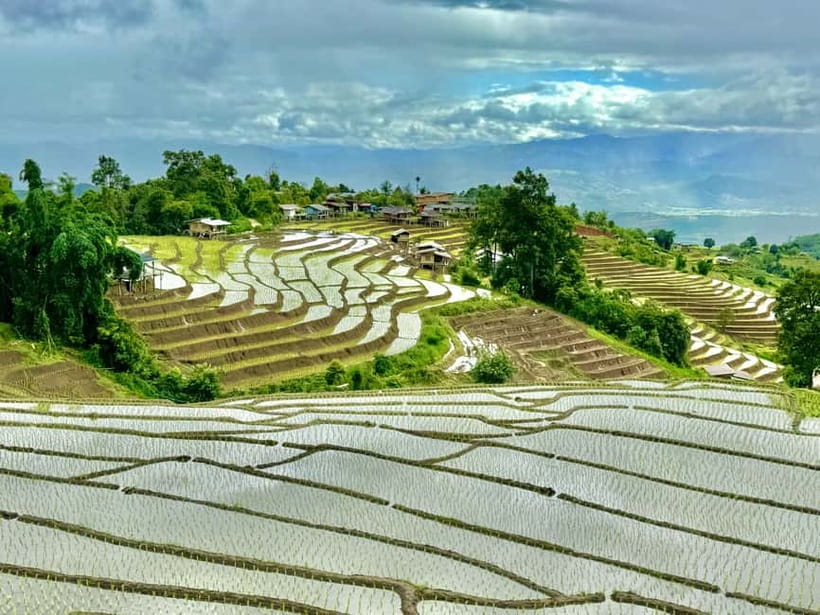
- Seasonal rice terraces: See the fields near Doi Inthanon in lush green or harvest gold, especially from July through October.
- Karen culture: Visit Ban Mae Klang Laung, try homemade coffee, and see traditional woven textiles.
- Three waterfall experiences: Wachirathan is the major stop, while Huay Sai Laung offers a quieter walk near the summit.
- A flexible guide matters: Eddie has adapted plans around bad weather and checked what families wanted to see.
- Good full-day value: At $70 per person, transport and a guide are included, but lunch, drinks, and some entrance fees are extra.
Why this Doi Inthanon day trip feels different
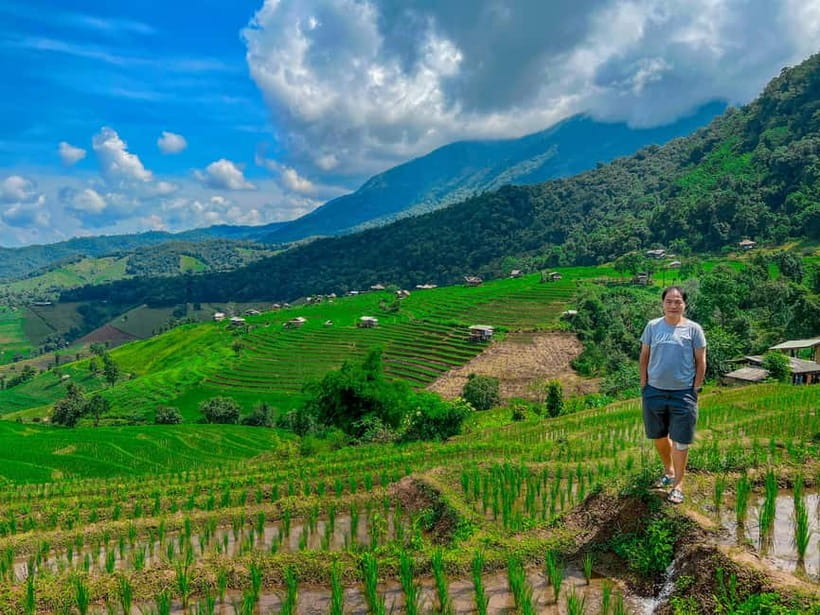
Doi Inthanon is Chiang Mai Province’s big mountain escape, but many day trips reduce it to a waterfall, a viewpoint, and a rushed meal. This experience takes a broader approach. You get the familiar beauty of the national park, then spend time in places where mountain agriculture and Karen culture are part of daily life.
I especially like the way the day moves between large natural sights and smaller human-scale stops. One hour you may be watching spray rise from a waterfall. Later, you may be drinking locally made coffee or looking closely at woven cloth. That variety keeps the day from feeling like a string of roadside photo stops.
The route is also weather-sensitive. Rain is common in the mountains, and the rice terraces look their best during the rainy season, from July through October. At the same time, heavy rain can affect roads, views, and walking conditions. A guide willing to adjust the plan is a real advantage here.
The guide Eddie received especially strong praise for organization, friendliness, photography, and using extra stops to keep the day enjoyable in bad weather. Another family appreciated his habit of checking their preferences and taking photos, including drone footage. Those touches are not guaranteed with every departure, but they show what a good guide can add to this kind of rural trip.
More Rice Terrace and Temple Tours in Chiang Mai:
- Ubud: Monkey Forest, Jungle Swing, Rice Terrace, and Water Temple
★ 5.0 · 7,160 reviews - Ubud: Waterfalls, Water Temple & Rice Terraces Private Tour
★ 5.0 · 5,484 reviews - Full-Day Tour to Water Temples and UNESCO Rice Terraces in Bali
★ 5.0 · 2,539 reviews
8:00 AM pickup and the road into the mountains
Pickup begins at about 8:00 AM. You can arrange collection in Chiang Mai, at Central Chiangmai Airport, or near the Three Kings Monument. The same areas are available for the return, which makes this useful if you are staying in the old city or using the airport area as your base.
The drive takes you away from Chiang Mai’s urban streets and toward Doi Inthanon National Park. Since this is a full-day trip, the transport is not just a minor detail. You will spend a good part of the day on the road, so the value depends partly on how much you enjoy watching the scenery change and stopping along the way.
The experience can run as a private tour or in a small group. Private travel gives you more control over photo stops and walking pace. A small group may cost less per person and still feel more personal than a large coach tour, but the exact group size is not specified.
Bring water, comfortable walking shoes, and clothing that can handle spray or rain. The route includes waterfalls, mountain paths, and rice terraces, so this is not a polished city sightseeing day.
Wachirathan Waterfall and the chance of a rainbow
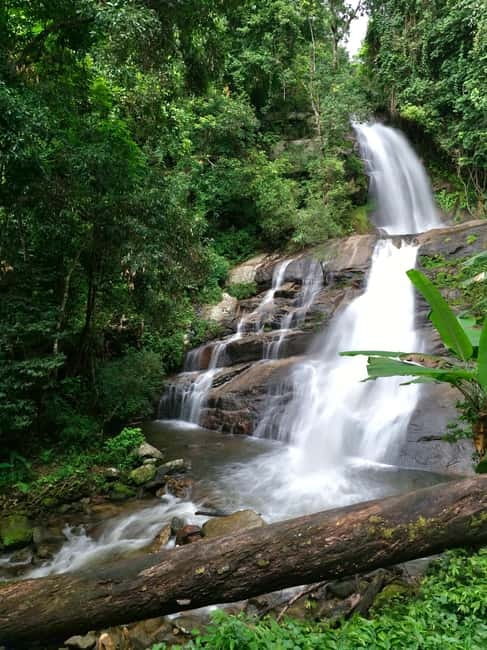
Wachirathan Waterfall is the first major nature stop and one of the park’s most impressive sights. Water drops forcefully over rock, producing a broad curtain of spray and a cool, wet atmosphere around the viewing area.
The guide points out the best views, but the weather does much of the work. In bright conditions, you may catch a rainbow in the mist. In wet weather, the waterfall can feel even more powerful, though your photos may be harder to manage.
Allow yourself time to enjoy the sound and scale of the fall rather than treating it as a quick picture stop. You may want a waterproof phone case or a way to protect your camera. The exact amount of time at the waterfall is not provided, so the pace can depend on the day’s conditions and the rest of the route.
This stop is accessible in spirit, but the full day is not suitable for wheelchair users. Wet surfaces and later walking sections make sturdy footwear a sensible choice.
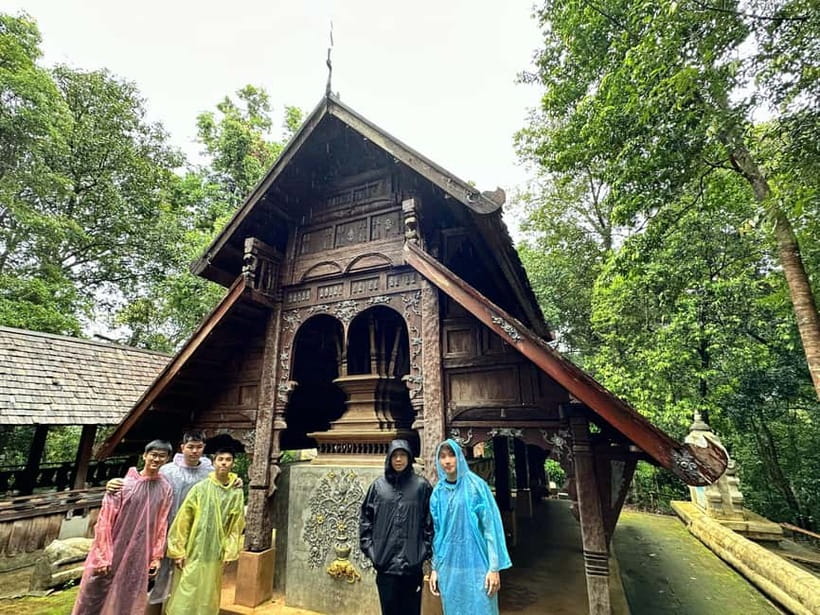
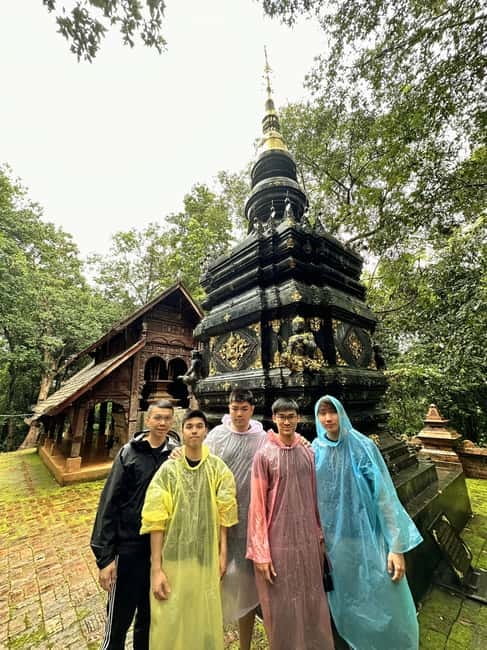
Wat Pgageyo Ram, a quiet temple in the hills
Wat Pgageyo Ram offers a calmer change of mood after the waterfall. It is a mountain temple away from Chiang Mai’s busy temple circuit, and its appeal comes from the setting and sense of quiet rather than from a long list of major monuments.
Your guide can provide context about the temple, its surroundings, and local culture. That matters because a small religious site can be easy to pass through without understanding what you are seeing. Keep your clothing respectful and follow normal temple manners.
The temple is also a useful pause in the day. Waterfalls are loud and dramatic. A mountain temple asks you to slow down, look around, and notice the setting. If you prefer large, famous religious complexes with extensive decoration, this stop may feel modest. If you like less crowded places, it should fit well.
More Temple Tours around Chiang Mai:
- Chiang Mai: Chiang Rai Temples, Karen Tribe and Hot Springs
★ 4.7 · 5,401 reviews - Chiang Rai White Temple and Blue Temple Day Tour
★ 4.6 · 3,366 reviews - Chiang Mai: White, Red/Black & Blue Temples Tour with Lunch
★ 4.2 · 2,017 reviews - Chiang Mai: Doi Suthep and Wat Umong Enchanting Evening Tour
★ 4.6 · 1,811 reviews
Ban Mae Klang Laung and Karen coffee
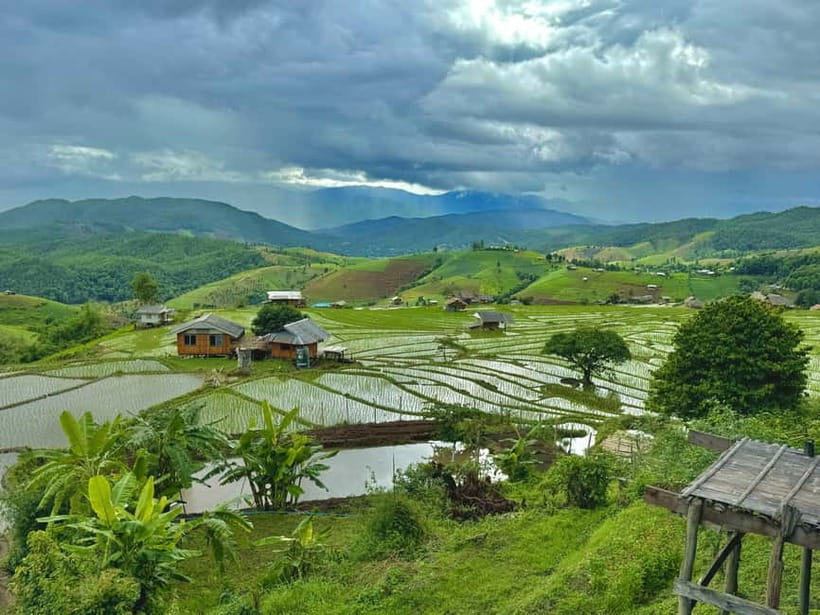
At Ban Mae Klang Laung, the focus shifts from scenery to community life. You’ll see aspects of Karen culture, including traditional woven textiles, and have a chance to try homemade coffee.
This is one of the most worthwhile parts of the day because it gives a human connection to the mountain region. The rice fields and coffee are not just pretty additions to the route. They relate to how people live and work in this area. Look closely at the textiles, ask your guide about the patterns and materials, and take time with the coffee rather than treating the village as a quick shopping stop.
The coffee is homemade, and it may not resemble the polished café drinks you find in Chiang Mai. That is part of the point. You are sampling a local product in the place where it belongs.
Lunch comes after or around the village portion of the route, depending on the day’s timing. Lunch is not included, and neither are drinks, so budget extra. The information provided does not specify the restaurant or menu, which means you should not book this expecting a particular meal or dietary arrangement.
Huay Sai Laung Waterfall and the short trek
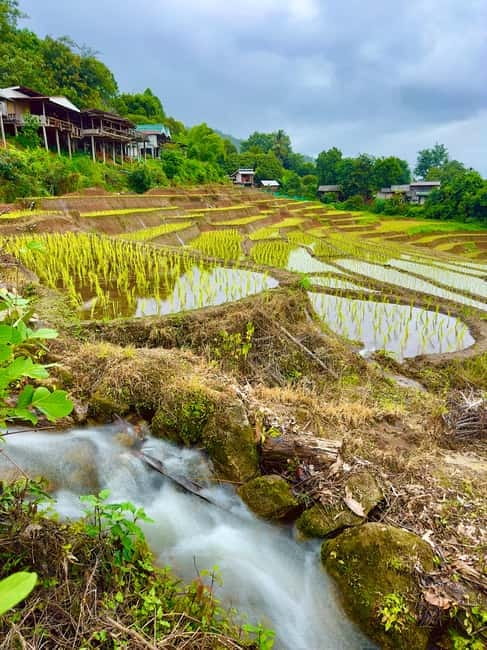
After lunch, the route continues toward Huay Sai Laung Waterfall near the mountain’s summit. Reaching it involves an exhilarating trek, so this is the most active part of the day.
The walk gives you a different waterfall experience from Wachirathan. The first is the big, forceful park attraction. Huay Sai Laung is presented as a quieter natural stop reached on foot. You’ll need comfortable shoes and enough energy for uneven ground.
The exact trek length and difficulty are not stated, so ask the guide at the start of the walk if you have concerns. This section may not suit anyone with limited mobility, and people prone to altitude sickness should avoid the activity. The tour specifically says it is not suitable for people with altitude sickness.
You should also keep your expectations flexible. Mountain waterfalls depend on recent rain, and access conditions can change. The walk is valuable because it gets you away from the main road, but it is not a guaranteed easy stroll.
Rice terraces from green season to harvest gold
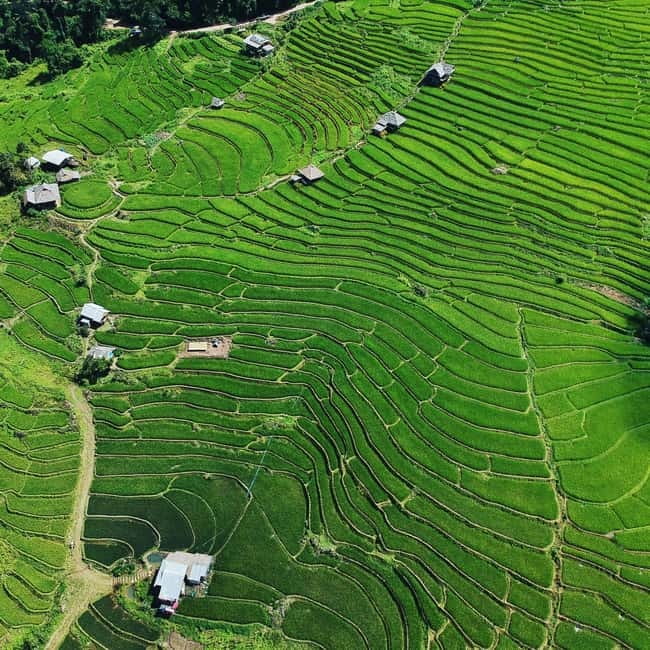
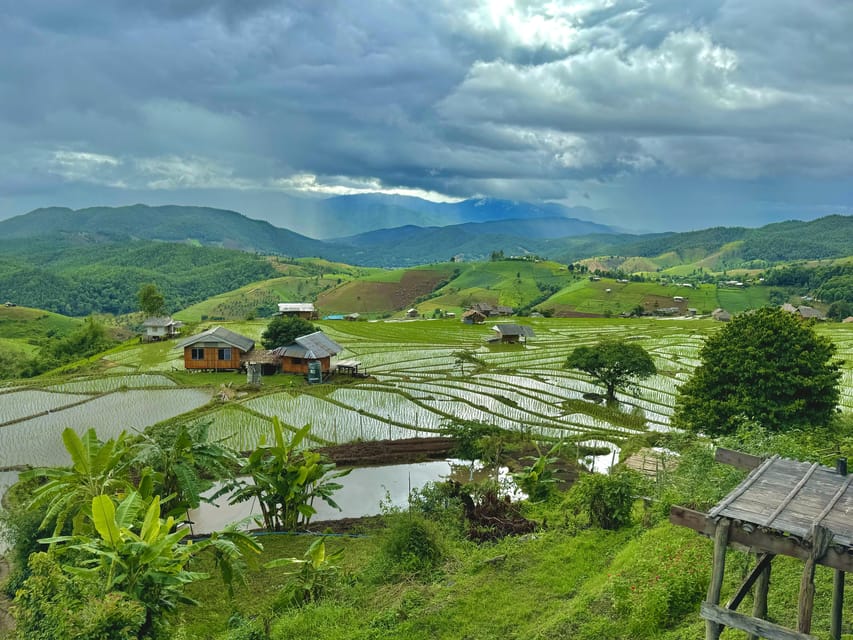
The rice terraces are the visual highlight for many people. Near Doi Inthanon, fields step across the hills and create broad views that are very different from the dense streets of Chiang Mai.
The color changes with the farming calendar. From July through October, you may see bright green fields during the rainy season, followed later by warmer golden tones around harvest. If terrace color is your main reason for booking, choose your travel dates carefully. Nature does not follow a fixed photo schedule.
The stroll through the terraces is leisurely, but it still takes place outdoors and may involve uneven paths. Rain can make the ground muddy. The trade-off is clear: wetter weather may mean less comfortable walking, but it can also bring the freshest green fields and stronger waterfall flow.
I like that the route does not treat the terraces as a single viewpoint. Walking through them helps you understand their scale and gives you changing angles for photographs. A guide who knows the area can also help you stop at better points and avoid rushing the scene.
How the guiding can shape your day
This tour’s strongest feature may be the guide rather than any single stop. Mountain weather can spoil a rigid plan. In one case, Eddie changed the route because conditions were poor and used extra locations to protect the quality of the day.
That flexibility is valuable, but it is worth understanding what it means. You are buying a guided day in a region where rain, road conditions, and visibility can affect the order of stops. You are not buying a fixed guarantee that every view will look like a sunny brochure photo.
Eddie was also praised for explaining local history, culture, and the surrounding area, as well as taking high-quality photographs and drone videos for one family. Another guest noted that the guide and driver spoke limited English, so communication quality may vary by guide and departure.
The advertised guide languages are Chinese, English, and Thai. If detailed English explanation is important to you, confirm the language arrangement when booking. A private option may also make it easier to clarify your interests and ask for a slower pace.
Is $70 good value?
At $70 per person, this is a fair price for a full-day outing that includes transportation and a guide. The day combines a national park, multiple waterfalls, a temple, a Karen village, coffee, textiles, rice terraces, and a trek. Booking each element separately would be more work and could cost more once transport is added.
The price is not all-inclusive. You pay for lunch and drinks yourself, and entrance tickets for additional places along the way may also cost extra. The information does not state a fixed entrance fee, so keep a little spare money with you rather than assuming $70 covers every expense.
Value is strongest for people who want a full day outside Chiang Mai and care about variety. If you only want the main Doi Inthanon sights, a shorter or more standard park trip may be enough. If you want local culture, quieter stops, and a guide who can adjust the plan, this package gives you more for the day.
Who should book it?
I would choose this for couples, families with older children, and small groups that want nature without giving up cultural stops. The family feedback is especially useful here: the guide checked preferences, helped with photos, and showed less obvious places.
It also suits photographers and anyone who likes changing scenery. Waterfalls, temple details, village life, coffee, textiles, and rice fields give you plenty to work with. The chance of a rainbow at Wachirathan and drone footage with a guide such as Eddie are appealing extras, though neither should be treated as guaranteed.
I would think twice if you dislike long day trips, mountain roads, rain, or walking on uneven paths. It is not suitable for wheelchair users, people with altitude sickness, or babies under one year old. You also need to be comfortable paying separately for lunch, drinks, and possible extra entrance fees.
Should you book this Doi Inthanon experience?
Book it if you want more than a famous waterfall and a quick mountain viewpoint. The combination of rice terraces, Karen coffee and textiles, Wat Pgageyo Ram, two different waterfall stops, and flexible guiding gives the day a strong sense of place.
The best booking window is likely July through October if the rice fields matter most to you, but expect rain and changing conditions. Choose comfortable footwear, carry protection for your phone, and leave room in your schedule for the guide to adjust the route.
At $70, this is a good-value choice for an active, varied day from Chiang Mai. It is not the simplest option for travelers seeking a short, effortless outing, but it is a rewarding pick if you want mountain scenery and local life in the same package.
FAQ
What time does the tour start?
Pickup begins at approximately 8:00 AM.
When does the tour return to Chiang Mai?
You can expect to return to your hotel or selected drop-off point at approximately 5:00 PM.
Where can I be picked up?
Pickup is available in Chiang Mai, at Central Chiangmai Airport, or at the Three Kings Monument.
Where can I be dropped off?
Drop-off is available at Three Kings Monument, in Chiang Mai, or at Central Chiangmai Airport.
Is lunch included?
No. Lunch is at your own expense, and drinks are also not included.
Are entrance tickets included?
No. Entrance tickets for additional places along the way may cost extra.
What languages are available for the guide?
The available guide languages are Chinese, English, and Thai.
Can I book a private tour?
Yes. Private and small-group options are available.
Is the tour suitable for everyone?
No. It is not suitable for wheelchair users, people with altitude sickness, or babies under one year old. The route also includes walking and a trek to Huay Sai Laung Waterfall.
Temple visits we reviewed lately in Chiang Mai
- Red, Blue, White Temples & Hot Spring Trip from Chiang Mai★ 4.4 · 143 reviews
- Monk trails hike, Wat Phalat, Monk chanting, Wat Doi Suthep.★ 5.0 · 3 reviews
- Long Neck Village, Silver Temple & Chiang Mai Top Sites★ 4.7 · 17 reviews
- Lalita Cafe & Chiang Rai Temple(White+Blue) from Chiangmai★ 4.8 · 5 reviews
- Private : Sticky Waterfall & Secret Temple & Karen Village.★ 5.0 · 9 reviews
- Chiang Mai: Temples & Culture Tour★ 4.7 · 64 reviews
- Half Day Morning Wat Pha Lat & Wat Phra That Doi Suthep Tour★ 4.8 · 269 reviews
- From Chiang Mai: White Temple, Blue Temple & Black House★ 4.5 · 15 reviews
Chiang Mai Temple Tours, compared.
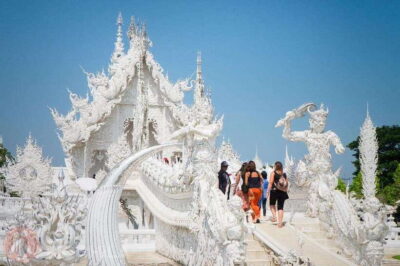
Chiang Mai: Chiang Rai Temples, Karen Tribe and Hot Springs
Read our review →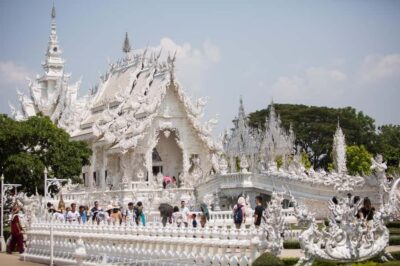
Chiang Rai White Temple and Blue Temple Day Tour
Read our review →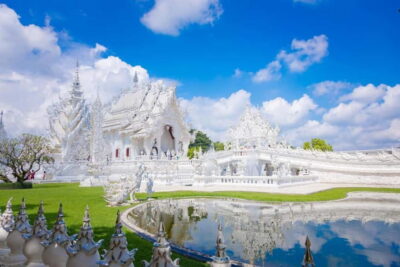
Chiang Mai: White, Red/Black & Blue Temples Tour with Lunch
Read our review →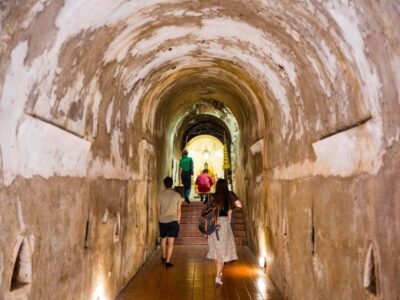
Chiang Mai: Doi Suthep and Wat Umong Enchanting Evening Tour
Read our review →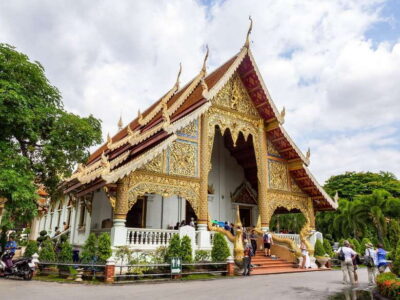
Chiang Mai: 3 Hour Old City and Temples Guided Walking Tour
Read our review →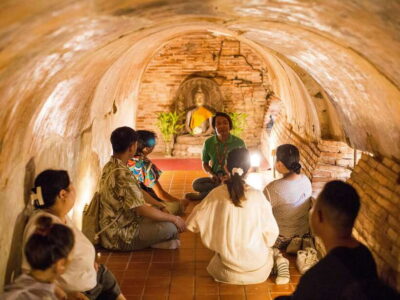
Chiang Mai: Doi Suthep, Wat Umong, and Pha Lat Sunrise Tour
Read our review →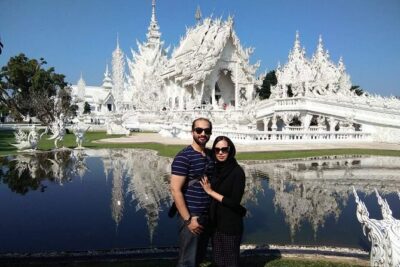
Chiang Rai Temples: Private Tour from Chiang Mai
Read our review →
Chiang Mai: Wat Pha Lat & Wat Phra That Doi Suthep Tour
Read our review →This tour also ranks in