
Review · CHIANG MAI
Chiang Mai: Temple & City Tour Part II
Chiang Mai’s best temple experience may be the one that takes you away from the usual postcard stops. This walking tour visits four temples, including Wat Chiang Man, the city’s oldest, then moves into Shan and Burmese religious traditions at Wat Chiang Yuen, Wat Pa Pao, and Wat Ku Tao. Guides such as Katoon and Big bring personal experience of monastic life to the walk.
I like the careful explanations of Buddhism, especially the chance to ask about meditation, prayer, temple art, and daily life as a monk. I also like that the route reaches places you might easily miss on your own. The main drawback is simple: this is a long walk in Chiang Mai heat, and even enthusiastic walkers may feel it by the end.
Key points to know before you go
- Four temples, not just the usual highlights: The route covers Wat Chiang Man, Wat Chiang Yuen, Wat Pa Pao, and Wat Ku Tao.
- A guide with personal Buddhist experience: Katoon is a former monk, while other guides such as Big, Eddy, and Son bring their own teaching styles.
- Strong cultural focus: You can ask about prayer, meditation, Buddhist beliefs, temple etiquette, and monk life.
- A walking tour with real physical demands: The route is described as relatively easy, but it lasts for hours and offers limited relief from heat.
- Good choice for a second temple day: It works on its own, but pairs especially well with the same operator’s first temple tour.
- Small groups or private bookings: English, Chinese, and Thai guidance is available, with hotel pickup and drop-off included only for the private option.
Four temples, four different views of Chiang Mai
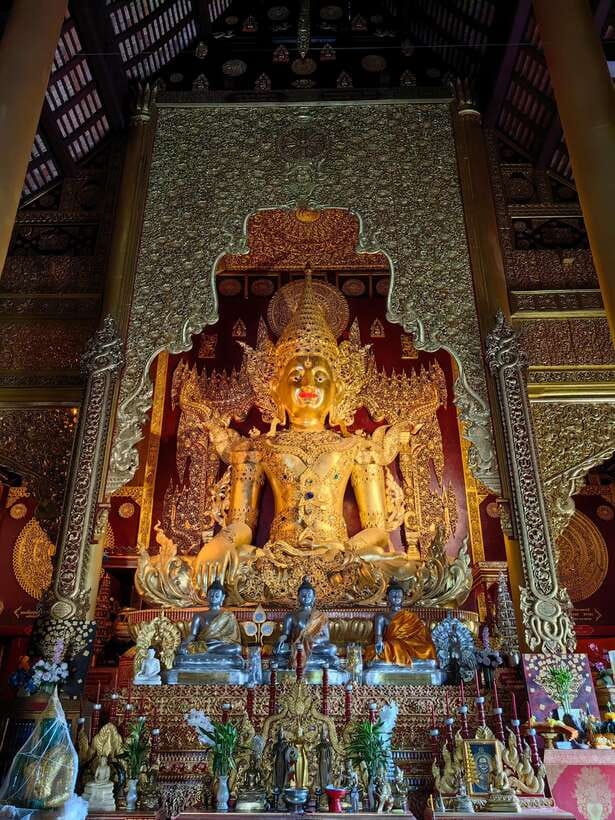
This is not a quick photo stop at one famous monument. It is a walking route that links four religious sites and uses them to explain how Chiang Mai grew as a city, how Shan and Burmese communities shaped local culture, and how Buddhism fits into everyday Thai life.
The advertised start is 8:20 am, though some departures may be listed at different times, so check the schedule when booking. The walk lasts much of the day. You should bring water, cash, an umbrella, and clothing suitable for entering temples.
The order gives the day a useful rhythm. Wat Chiang Man introduces Chiang Mai’s founding period. Wat Chiang Yuen and Wat Pa Pao turn your attention toward Shan traditions. Wat Ku Tao finishes with one of the route’s most unusual structures and a link to Burmese rule.
More Temple Tours around Chiang Mai:
- Chiang Mai: Chiang Rai Temples, Karen Tribe and Hot Springs
★ 4.7 · 5,401 reviews - Chiang Rai White Temple and Blue Temple Day Tour
★ 4.6 · 3,366 reviews - Chiang Mai: White, Red/Black & Blue Temples Tour with Lunch
★ 4.2 · 2,017 reviews
Wat Chiang Man and the founding of Chiang Mai
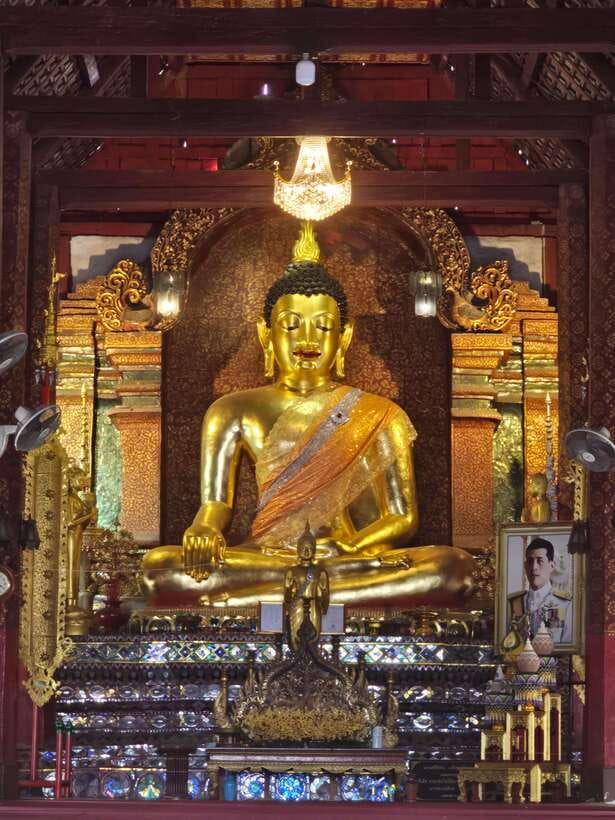
Wat Chiang Man is the natural first stop. Built in 1296 by King Mengrai, it is considered the oldest temple in Chiang Mai town. That date matters because it places the temple close to the beginning of the city itself, rather than treating it as a later religious ornament.
The temple is also associated with a crystal Buddha statue. A guide can help you understand why particular Buddha images matter, how they are treated, and how temple art carries stories beyond decoration.
I would pay close attention here to the connection between religion and city building. Chiang Mai was not simply founded with walls, roads, and houses. Temples helped give the new city its spiritual center and political meaning.
This stop is familiar enough to orient you, but the guided explanation gives it more weight than a quick independent visit. If you have already seen Wat Chiang Man, the value comes from asking focused questions about the statue, the temple’s age, and the role of King Mengrai.
Wat Chiang Yuen and the Shan community
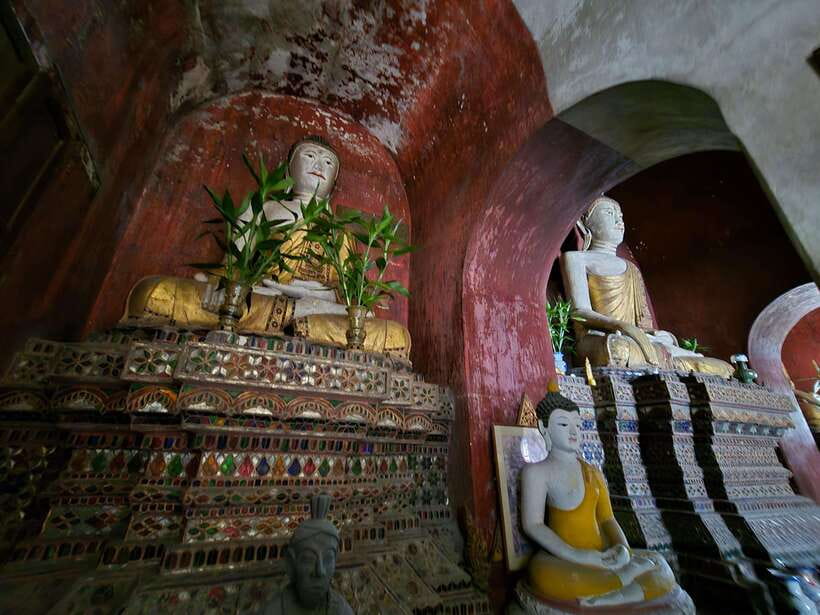
Wat Chiang Yuen offers a different angle. It is described as a 16th-century temple in an area that once served as a residential district for the Shan people.
That detail makes this more than another stop on a temple checklist. You are looking at a place connected to migration, community, and the way different cultural groups made a home in Chiang Mai. The guide can help you notice how the temple fits into that story.
The Shan are closely linked with northern mainland Southeast Asia, and their traditions have influenced architecture, religious practice, and local life. You do not need a specialist background to appreciate this stop. The important point is that Chiang Mai’s identity did not come from one group alone.
This is also the kind of place where a private or small group can help. You have more room to ask why the temple looks different, how Shan practice relates to Thai Buddhism, and what changed as communities moved through the region.
Wat Pa Pao and Shan Burmese design
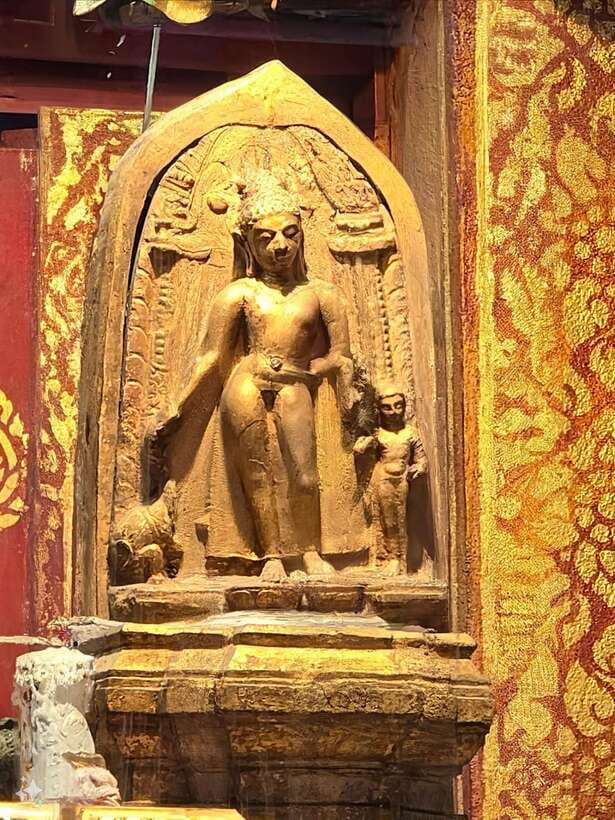
Wat Pa Pao is a Shan Burmese style temple outside Chiang Mai’s old city walls and moat. Its location helps make the point that cultural history does not always fit neatly inside the old center.
The architecture gives you a visual break from the more familiar northern Thai temple forms. Rather than rushing through for a single picture, listen for the details your guide draws out. The tour is designed to explain differences in temple styles and the communities behind them.
This is one reason I prefer a guided walk here. From the street, you can see that a building looks different. A guide can add the names, background, and religious meaning that turn visual contrast into understanding.
The stop may appeal most to you if you have already visited Chiang Mai’s major temples and want something less predictable. It is also useful early in your stay because it gives you a better frame for noticing Shan and Burmese influences elsewhere in northern Thailand.
Same sacred ground, another way to see it:
- Chiang Mai: Doi Suthep and Wat Umong Enchanting Evening Tour
★ 4.6 · 1,811 reviews - Chiang Mai: 3 Hour Old City and Temples Guided Walking Tour
★ 4.6 · 1,568 reviews - Chiang Mai: Doi Suthep, Wat Umong, and Pha Lat Sunrise Tour
★ 4.7 · 1,425 reviews - Chiang Rai Temples: Private Tour from Chiang Mai
★ 5.0 · 1,267 reviews
Wat Ku Tao and a Burmese ruler’s ashes
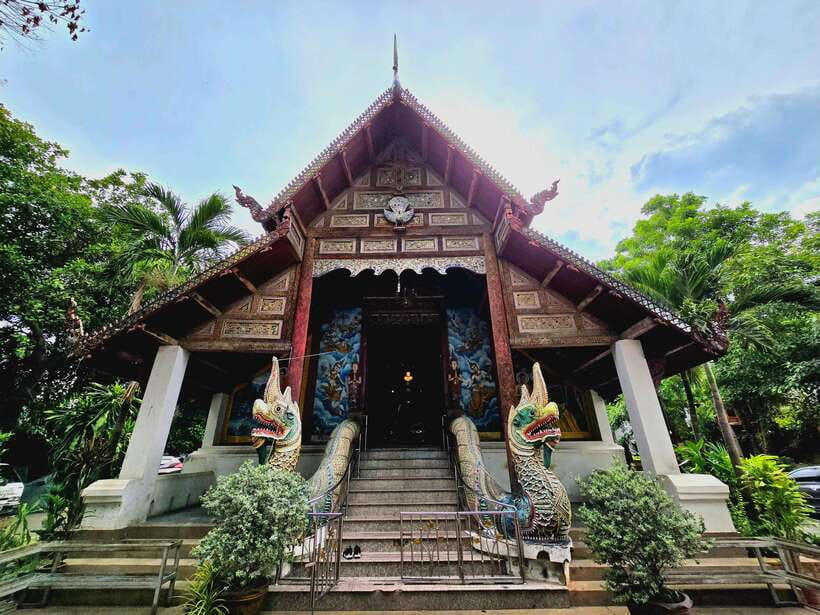
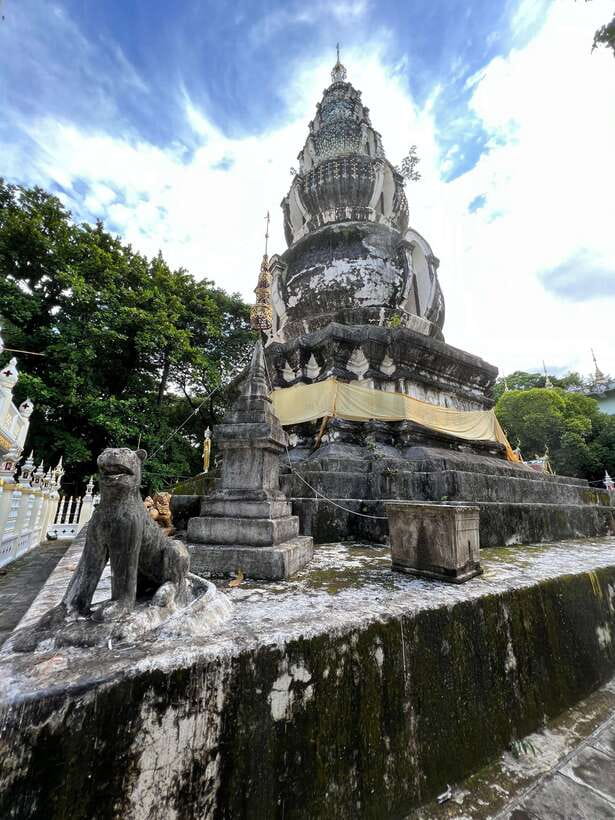
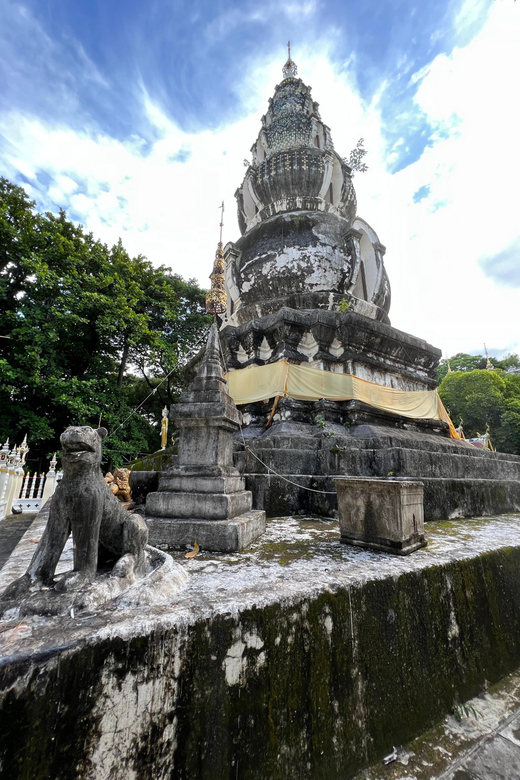
Wat Ku Tao is perhaps the most unusual stop on the route. Its chedi is thought to have been built in 1613 to hold the ashes of Prince Saravadi, who lived from 1578 to 1607 and was the first Burmese overlord of Chiang Mai.
The site links religion and political history in a direct way. A temple is not only a place for prayer. It can also mark power, memory, leadership, and the movement of ruling families across borders.
The chedi’s unusual appearance is worth examining slowly. This is where a guide’s explanation can save you from seeing only an attractive structure without understanding why it was built and whom it commemorates.
The wording about the chedi is careful: it is thought to have been built for this purpose. That is useful historical honesty. You are getting an interpretation supported by tradition and history, not a claim that every detail is beyond question.
Why the guides make the difference
The strongest feature of this tour is the guide’s role. The walk is not simply transportation between temples. It is built around conversation and explanation.
Katoon is repeatedly identified as a former monk, with one account describing 18 years in monastic life. That background allows him to discuss Buddhist practice from personal experience. He has explained prayer, meditation, monk routines, Buddha stories, temple art, and the differences between types of temples.
Big has also been described as a former monk and an enthusiastic guide. Eddy is noted for being friendly, attentive, and good at taking photographs. Son has led relaxed discussions about Buddhist belief, Thai culture, and the historical setting of each temple.
Guide assignments can change, so you should not assume one particular person is guaranteed. Still, the range of names and descriptions suggests that the operator’s strongest asset is its human side.
You can make the experience better by arriving with questions. Ask how to enter a shrine respectfully, what different gestures mean, why monks follow certain routines, or how meditation is practiced. The guides appear comfortable spending time on these subjects rather than pushing you quickly from one photo stop to the next.
A closer look at Buddhism and monk life
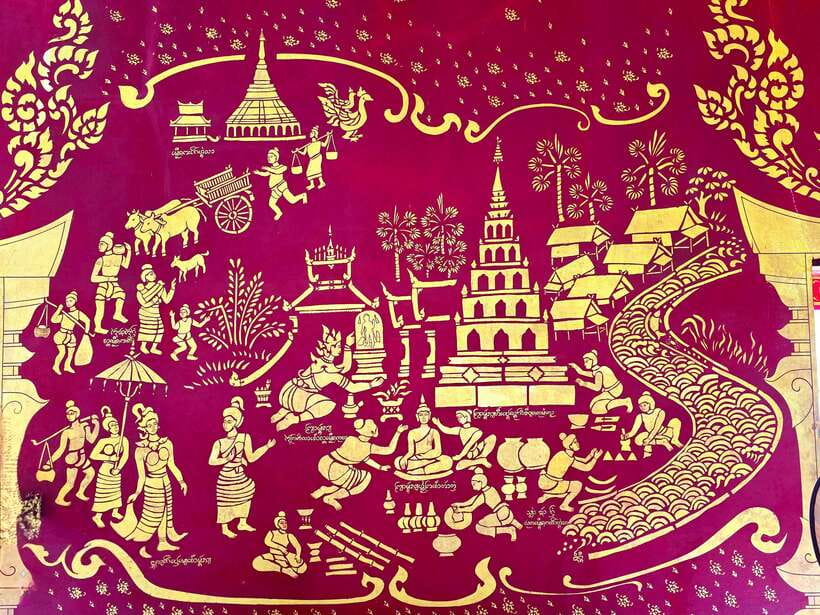
This tour suits you best if you want more than architecture. The central subject is Buddhism as a living part of Thai society.
You may learn basic temple etiquette, including how to behave when entering a sacred space. You may also receive an introduction to meditation or guidance on how to pray. These are practical details, but they help you avoid treating a temple like a museum.
The personal stories about monk life add another layer. You can ask about food, routines, study, meditation, and the place of monks in Thai communities. The tour does not turn you into a Buddhist practitioner in one day, but it can give you a clearer idea of how religion shapes ordinary life.
I especially like this focus because many temple tours explain dates and architectural styles but stop short of discussing belief. Here, the questions you bring can guide the conversation. If you are curious about Buddhism but do not know where to start, this is a comfortable introduction.
How hard is the walking?
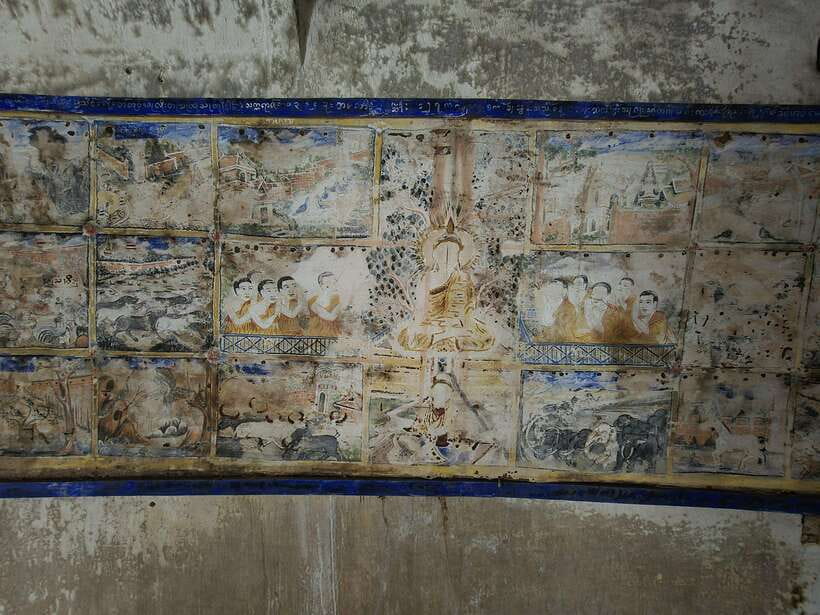
The route is described as relatively easy, but easy does not mean effortless. You will be on your feet for hours, and one participant specifically warned about the heat if you are not used to it.
Bring water and an umbrella. Wear light, respectful clothing and comfortable walking shoes. Short skirts are not allowed, and temple etiquette generally calls for covered shoulders and knees. Cash is also recommended for the day.
The most demanding factor is likely the combination of distance, warmth, and standing while listening. If you have mobility limits, this is not a good fit. The activity is not suitable for wheelchair users, children under two, or babies under one, and electric wheelchairs are not allowed.
Pregnant participants may also find the length and heat uncomfortable, and the activity is listed as unsuitable for pregnant women. If you are unsure about your fitness for a long walk, ask before booking rather than relying on the phrase easy walking tour.
Small groups, private time, and practical value
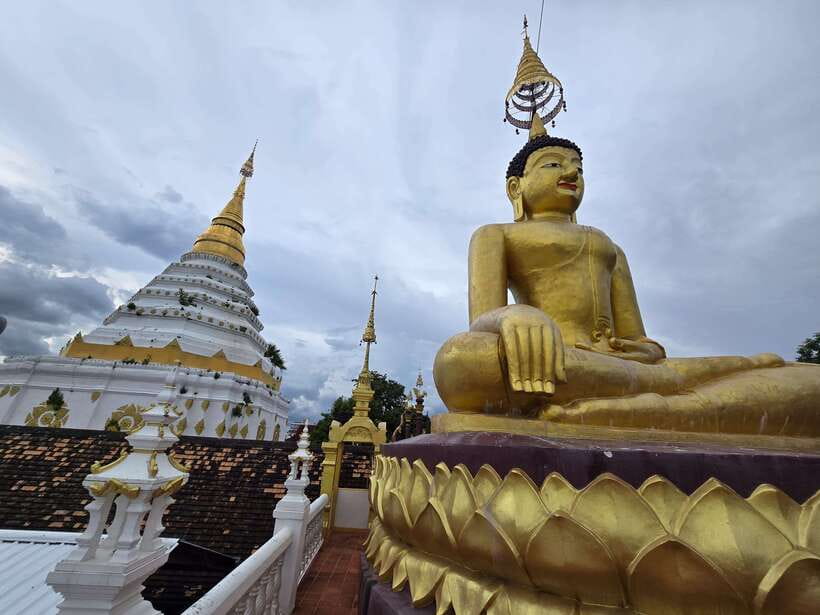
The price is $31 per person, which is fair if you use the guide actively. You are paying for a full day of walking, temple access and interpretation, rather than a simple ride past several monuments.
The real value depends on the group size and your interests. A private tour should give you more control over questions, pacing, and photo stops. Small groups can offer a good middle ground, with some social energy but enough time to speak with the guide.
Hotel pickup and drop-off are included only with the private option. The standard experience is a walking tour, so do not assume transport is part of every booking.
One practical issue deserves attention: the meeting location has caused confusion. The listed plus-code style address was difficult for some people to explain to taxi drivers and even local residents. Confirm the meeting point carefully, check the map before leaving, and allow extra time. A landmark such as the Three Kings Monument may be easier to recognize, but you should verify the exact arrangement with the operator.
The activity offers free cancellation up to 24 hours before departure and allows you to reserve now and pay later. Those terms are useful if your Chiang Mai schedule is still moving around.
When to book Part II
This tour works particularly well after a first temple tour. The same operator offers a Part I route, and taking both can give you a fuller look at Chiang Mai’s religious sites. The tradeoff is stamina. Doing both in one day, even with a lunch and rest break, can leave your feet exhausted.
I would book Part II on a separate morning if you want time to think, ask questions, and take photographs. If your schedule is short, it also works as a stand-alone introduction, especially because the four stops cover founding history, Shan culture, Burmese influence, and Buddhist practice.
The tour is best for adults and older children who can walk for hours and enjoy listening. It is less suitable if you want a relaxed sightseeing day with frequent transport, restaurants, or long rest periods.
What to bring and how to dress
Keep your packing simple:
- Water or other drinks
- An umbrella for sun or rain
- Cash
- Comfortable walking shoes
- Clothing that covers shoulders and knees
Pets, drones, weapons, sharp objects, alcohol, drugs, smoking indoors, and loud behavior are not allowed. Baby strollers and explosive substances are also prohibited.
These rules are not unusual for temple visits, but they matter here because the route enters active religious places rather than staged attractions. Dress and behave as you would in a place of worship.
Should you book this Chiang Mai temple walk?
Book it if you want context, conversation, and less familiar temples, not just a few impressive photographs. The route reaches four significant sites and gives you a useful story about Chiang Mai’s founding, Shan communities, Burmese influence, and modern Buddhist life.
I would be especially keen to book if Katoon or another guide with monastic experience is available, though the assigned guide may vary. The personal insight into meditation, prayer, monk routines, and temple etiquette is what gives the day its value.
Skip it if heat, long walks, or standing for extended periods will make the day unpleasant. Also take care with the meeting location and confirm it before departure.
At $31, the tour is a good buy for an active visitor who wants to understand what they are seeing. It is not the easiest way to sightsee, but it can be one of the most useful.
FAQ
Where does the tour take place?
The tour takes place in Chiang Mai Province, Thailand, and visits Wat Chiang Man, Wat Chiang Yuen, Wat Pa Pao, and Wat Ku Tao.
What time does the tour start?
The listed start time is 8:20 am. Check availability when booking because starting times may vary.
How long does the tour last?
The activity is valid for one day and is described as a full-day walking tour.
Which languages are available?
Live guidance is available in English, Chinese, and Thai.
Is the tour private or shared?
You can choose a private tour or a small group option.
Is hotel pickup included?
Hotel pickup and drop-off are included if you select the private option.
What is included in the price?
The price includes a tourist guide and walking tour. Food and additional drinks are not included.
What should I bring?
Bring an umbrella, drinks, and cash. Comfortable, respectful clothing and walking shoes are also sensible for the temple visits.
Is the tour suitable for wheelchair users or very young children?
No. The activity is not suitable for wheelchair users, children under two, or babies under one. Pregnant women are also listed as unsuitable for this experience.
Temple visits we reviewed lately in Chiang Mai
- Red, Blue, White Temples & Hot Spring Trip from Chiang Mai★ 4.4 · 143 reviews
- Monk trails hike, Wat Phalat, Monk chanting, Wat Doi Suthep.★ 5.0 · 3 reviews
- Long Neck Village, Silver Temple & Chiang Mai Top Sites★ 4.7 · 17 reviews
- Lalita Cafe & Chiang Rai Temple(White+Blue) from Chiangmai★ 4.8 · 5 reviews
- Private : Sticky Waterfall & Secret Temple & Karen Village.★ 5.0 · 9 reviews
- Chiang Mai: Temples & Culture Tour★ 4.7 · 64 reviews
- Half Day Morning Wat Pha Lat & Wat Phra That Doi Suthep Tour★ 4.8 · 269 reviews
- From Chiang Mai: White Temple, Blue Temple & Black House★ 4.5 · 15 reviews
Chiang Mai Temple Tours, compared.
Chiang Mai: Chiang Rai Temples, Karen Tribe and Hot Springs
Read our review →
Chiang Rai White Temple and Blue Temple Day Tour
Read our review →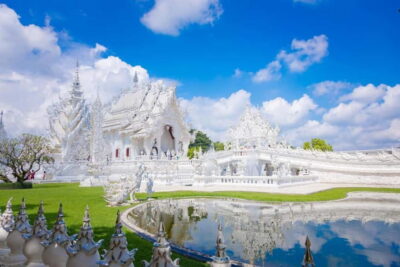
Chiang Mai: White, Red/Black & Blue Temples Tour with Lunch
Read our review →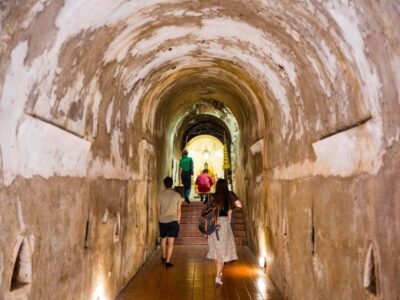
Chiang Mai: Doi Suthep and Wat Umong Enchanting Evening Tour
Read our review →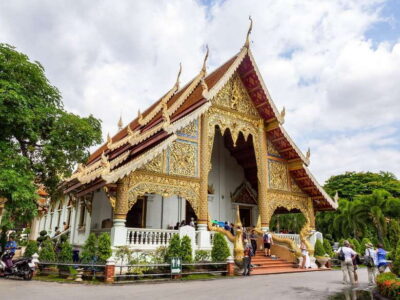
Chiang Mai: 3 Hour Old City and Temples Guided Walking Tour
Read our review →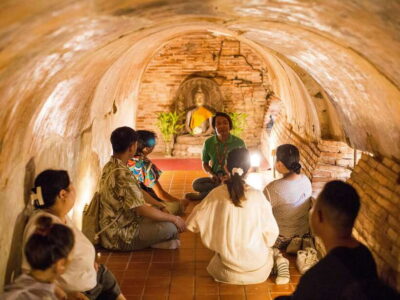
Chiang Mai: Doi Suthep, Wat Umong, and Pha Lat Sunrise Tour
Read our review →
Chiang Rai Temples: Private Tour from Chiang Mai
Read our review →
Chiang Mai: Wat Pha Lat & Wat Phra That Doi Suthep Tour
Read our review →This tour also ranks in