
Review · ROMANIA
Snagov Monastery, Ceaușescu Mansion, & Village Museum – 6h
Snagov Monastery is the surprise here: a small island church about 40 minutes outside Bucharest, tied to the legend of Dracula’s tomb. Then the tour swings back into the capital for two very different looks at Romania: the polished private world of the Ceaușescu family and the modest wooden homes of the Village Museum. That contrast is the main reason to book.
I like the private car and flexible route, especially if you want a guide who can explain rather than simply point. I also like the mix of city sights, communist-era history, folk buildings, and a peaceful lake setting. The catch is the price, $254 per person, before roughly 17 euros in entrance fees, and six hours is a brisk stretch for so many stops.
Key points to know
- Snagov Monastery sits on an island: Reach the church for a memorable break from Bucharest and learn about its connection to Dracula.
- The Village Museum puts Romania’s regions in one place: See traditional homes made from wood, adobe, stone, and other local materials.
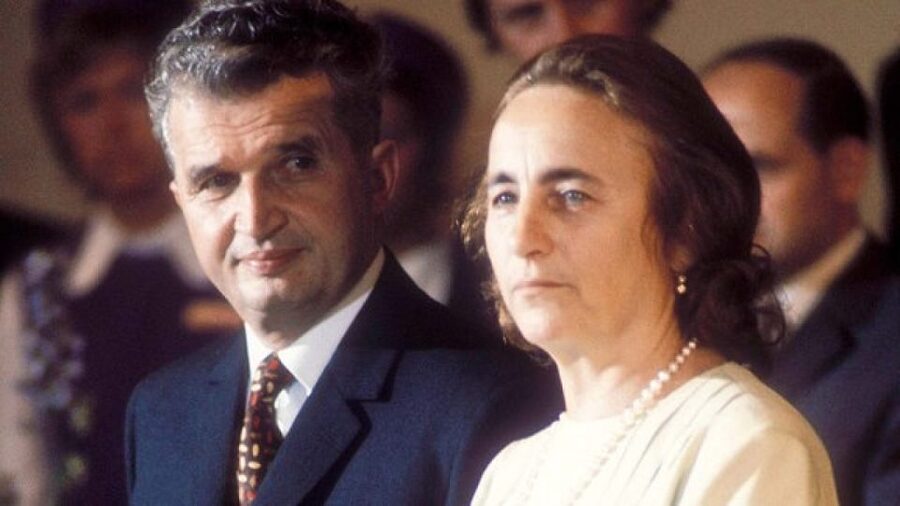
- Ceaușescu Mansion reveals private excess: Tour the former Spring Palace, home to Nicolae, Elena, and their children from 1965 to 1989.
- Revolution Square gives the communist story a precise setting: See where the December 1989 uprising forced Ceaușescu from power.
- A private guide makes the packed route workable: Your driver-guide stays with you and can adjust the day after it begins.
- The price reflects private transport, not admission: Fuel, parking, tolls, and guiding are included, while entrance fees and food are extra.
From an island monastery to a dictator’s private home
This six-hour outing works because it places Romania’s contrasts side by side. You begin with rural traditions at the National Village Museum, leave Bucharest for Snagov Monastery, then return to the capital for Ceaușescu’s residence and the central streets where the monarchy, communism, and 1989 revolution meet.
I would not choose this tour if you want a slow museum day or long periods at each sight. The route covers a lot. I would choose it if you have limited time in Bucharest and want a private guide to connect the pieces. The private format matters here: a guide can explain why a wooden church belongs in the same day as the Palace of Parliament, and why a quiet monastery has such a strong place in Romanian folklore.
Pickup is in Bucharest. The driver holds a sign with your last name, and transport is by private car or minibus for you and your companions. Gasoline, parking, and road tolls are included. Food, drinks, and admission tickets are not.
More Museum Visits in the world:
- Montserrat Museum and Monastery Entry Ticket
★ 4.5 · 1,740 reviews - Lisbon: Belem, Jeronimos Monastery, and Coach Museum Tour
★ 4.8 · 478 reviews - From Sofia: Rila Monastery and Optional Museum, Cave or Spa
★ 4.6 · 270 reviews
The Village Museum: Romania in wooden houses and windmills
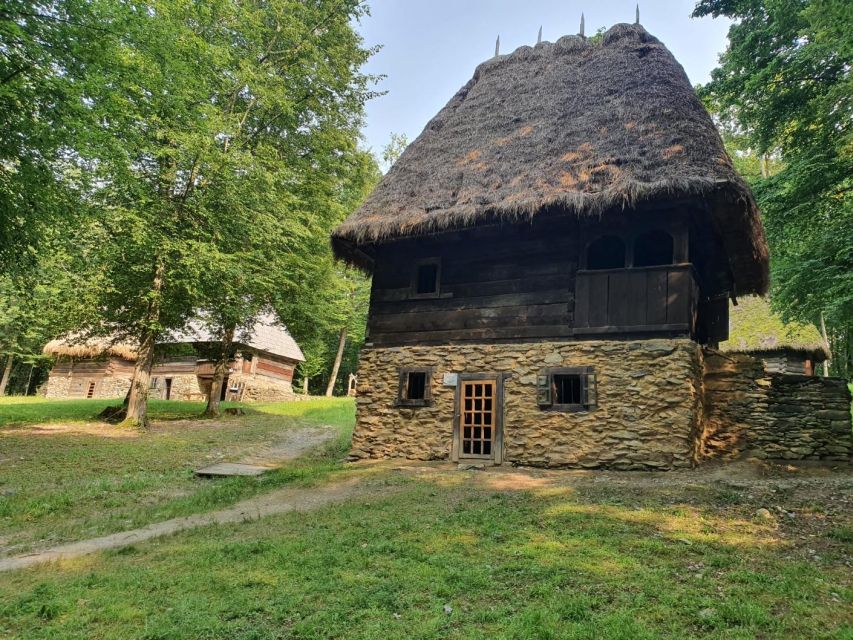
The Dimitrie Gusti National Village Museum is an open-air collection designed to show how people lived in different parts of Romania. In about an hour, you can see traditional houses built from wood, adobe, stone, and other local materials, along with examples such as mills and wooden churches.
The value of this stop is not only the buildings. It gives you a useful introduction to the practical side of village life. Homes, work spaces, religious buildings, and tools reflect how families used what was available around them. The museum also presents village life as a social and spiritual system, tied to the land, family, craft, and community.
I like starting here because it gives the rest of the day a human scale. The Ceaușescu Mansion can feel grand and controlled. The Village Museum points to a much older way of living, where the home and workplace were closely connected.
The visit is listed at about one hour, so you should expect a guided overview rather than an exhaustive look at every building. If traditional architecture interests you, you may wish you had more time. Still, the compact visit is useful for a first Bucharest trip, especially when paired with a guide who can explain the differences between regional building styles.
Snagov Monastery and the Dracula connection
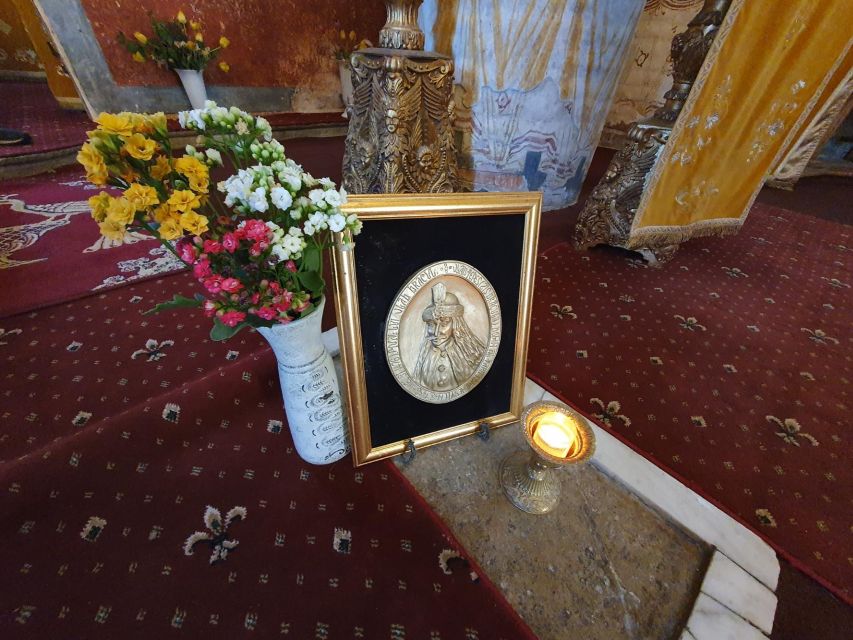
After the museum, the tour heads roughly 40 minutes outside Bucharest to Snagov Monastery. The church sits on an island, giving this stop a different mood from the city museums and grand avenues.
The monastery is linked to the tomb of Dracula, a claim that brings a strong dose of legend to the day. The tour presents Snagov as the place associated with Dracula’s burial, so you get both a scenic stop and a chance to hear how Romanian history and folklore overlap.
The planned visit lasts about an hour and includes a photo stop, guided sightseeing, and time to see the monastery. You should think of it as a focused visit, not a full countryside excursion. The trip out of Bucharest is part of the appeal, since the setting offers a quiet change of pace.
This is also the stop most likely to depend on your personal interests. If you enjoy old churches, local legends, and unusual settings, Snagov may be the highlight. If you care only about major city monuments, the drive may seem like a lot for one church. The private format helps because you are not tied to the needs of a large group.
Ceaușescu Mansion and the private side of communist power
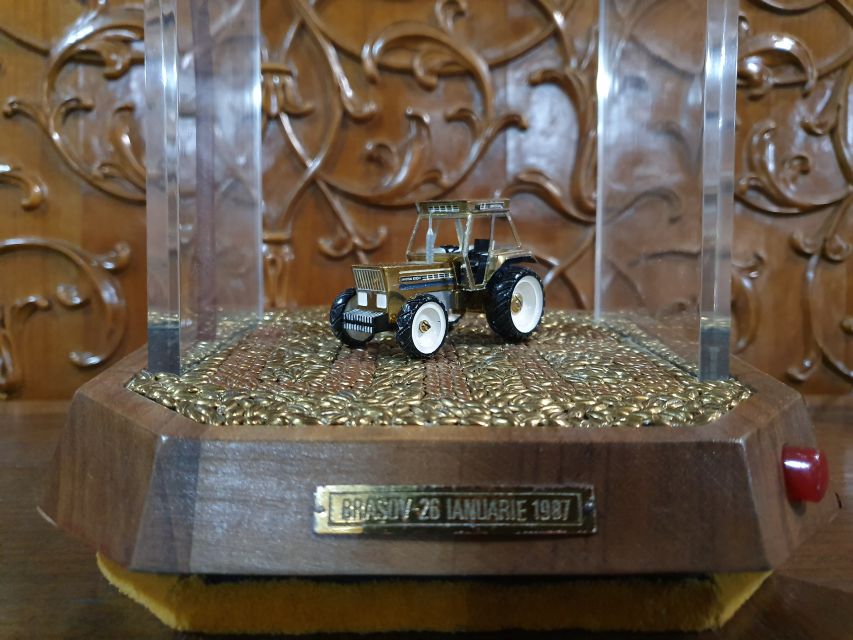
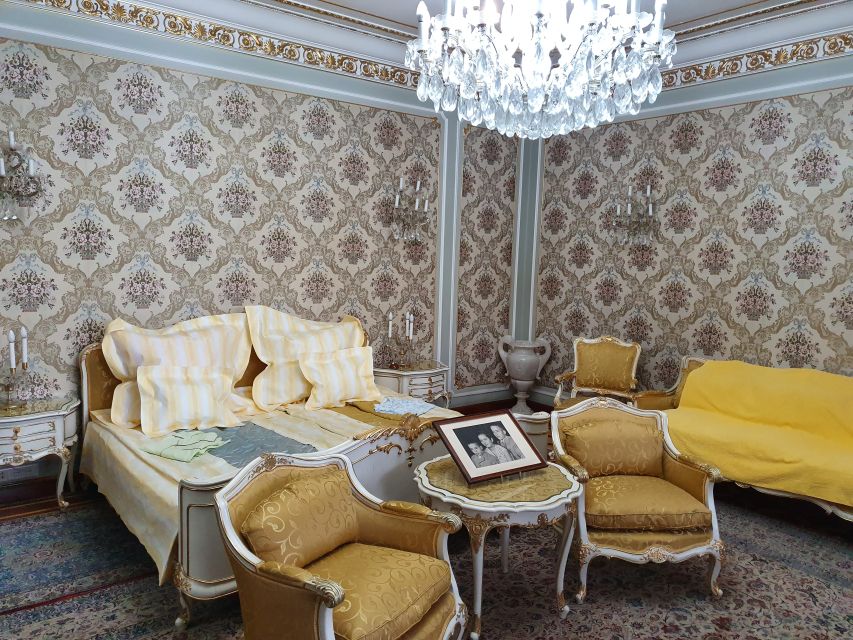
Back in Bucharest, the former Ceaușescu residence provides a sharp contrast with the village houses. Nicolae and Elena Ceaușescu lived here with their children, Nicu, Zoia, and Valentin, for nearly a quarter century, from 1965 until 1989.
The house was built in the mid-1960s and was known as the Spring Palace. It was enlarged between 1970 and 1972. Aron Grimberg-Solari designed the residence, while Robert Woll worked on the gardens and furniture, with Teodosiu serving as landscape engineer.
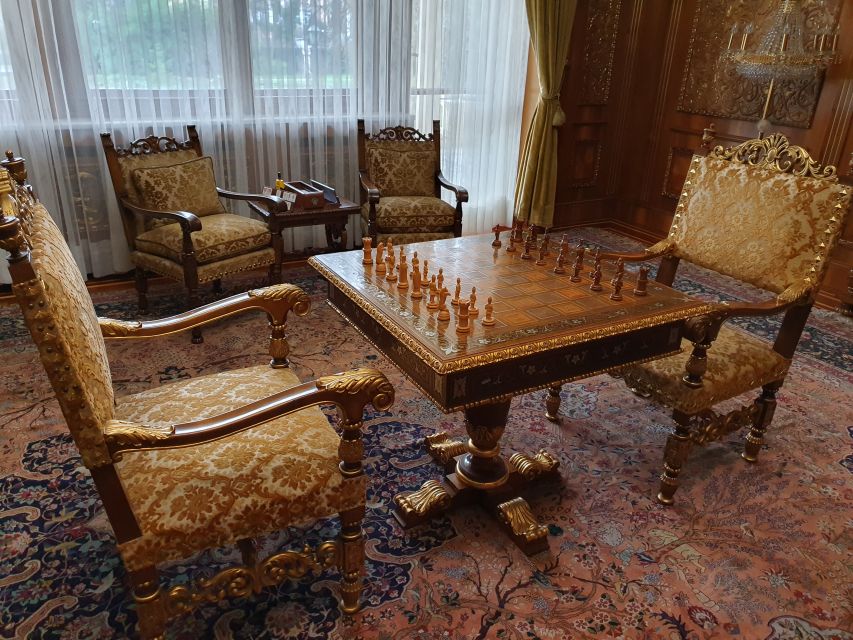
The mansion is worth seeing because it shows the private setting of a political family whose public image stressed discipline and national sacrifice. Inside, you are looking at a residence designed for comfort, privacy, and status. The contrast with ordinary Romanian life is the key point, not simply the decoration.
About an hour is set aside for the visit, including guided sightseeing and a walk through the property. That gives you enough time to understand the house, though visitors with a strong interest in design or communist-era politics may want to linger longer than the schedule allows.
I would pay close attention to the guide here. The building itself can tell you what the family owned, but the explanation gives those rooms their meaning. The best part of a private tour is being able to ask how the mansion fit into Ceaușescu’s public rule and the final years before his fall.
More Temple Tours around the world:
- Lisbon: Jerónimos Monastery Entrance Ticket
★ 4.1 · 14,164 reviews - Angkor Wat Sunrise or Sunset Tour with Guide from Siem Reap
★ 5.0 · 12,109 reviews - Teotihuacan, Guadalupe Shrine & Tlatelolco Day Tour with Lunch
★ 5.0 · 11,603 reviews - From Bangkok: Ayutthaya Temples Guided Tour with Lunch
★ 4.7 · 10,535 reviews
Calea Victoriei: Bucharest’s changing face
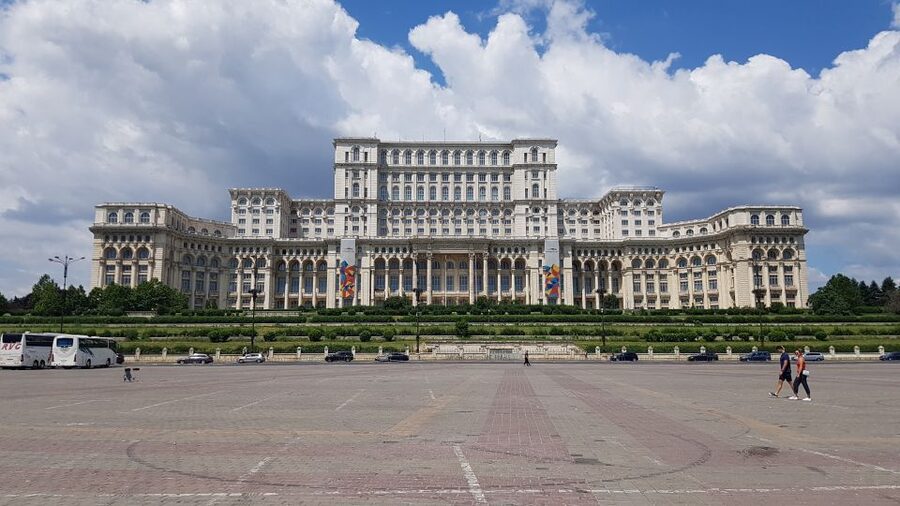
Calea Victoriei is the main central stretch of the city portion. The route presents an unusual set of neighbors: the Royal Palace on one side and the former Central Committee of the Romanian Communist Party near Revolution Square on the other.
Along the avenue, you can see old Orthodox churches, museums, theatres, shops, restaurants, tea rooms, casinos, music stores, and gift shops. The National History Museum, Romanian Athenaeum, and CEC Palace also add major architectural stops.
The point is not to inspect every building in 90 minutes. It is to read the street as a record of changing power and taste. Royal buildings, religious sites, commercial addresses, and communist institutions all share the same city center. Your guide can help you notice those layers instead of treating the avenue as a simple drive between attractions.
The schedule includes guided sightseeing and free time for shopping. That makes this the most adjustable part of the day. You can focus on photographs, architecture, souvenirs, or a short look at the shops, depending on what matters most to your group.
Revolution Square and the December 1989 turning point
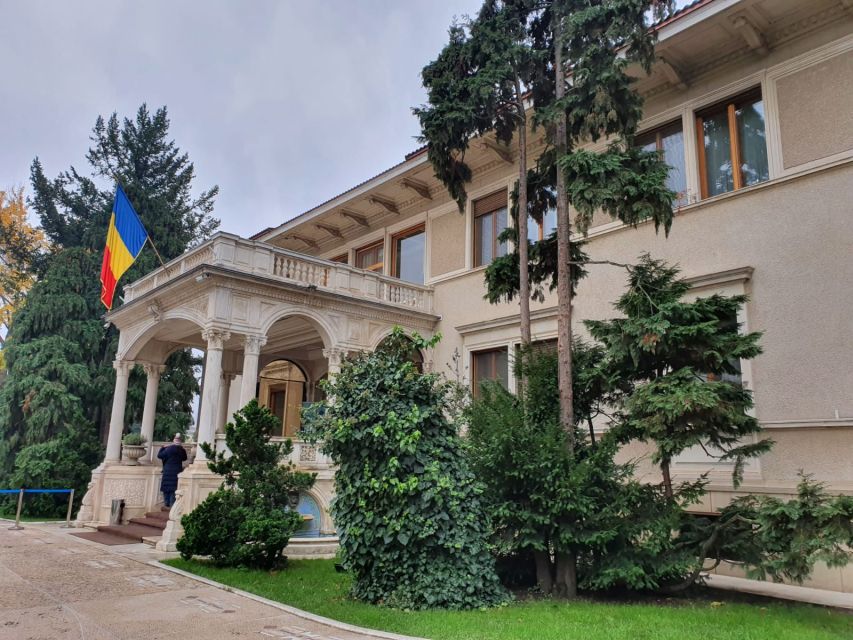
Revolution Square gives the political story a physical location. The former Central Committee building, now associated with the Senate Palace, is identified as the place where the December 1989 revolution began.
This is where the tour moves from general communist history to the moment Ceaușescu lost control. The route explains that he fled by helicopter after the uprising, a dramatic end to decades of rule. The square also carries the memory of the human cost of that change.
The planned stop is about 30 minutes. That is enough for a guided explanation and photos, but not a long museum visit. I would treat it as a context stop. The guide’s storytelling matters more here than the amount of time spent walking around.
This stop also prepares you for the mansion. At the house, you see how the Ceaușescu family lived. At Revolution Square, you see the public setting where that system began to break apart. Together, the two places make a stronger lesson than either one alone.
The Romanian Athenaeum and CEC Palace
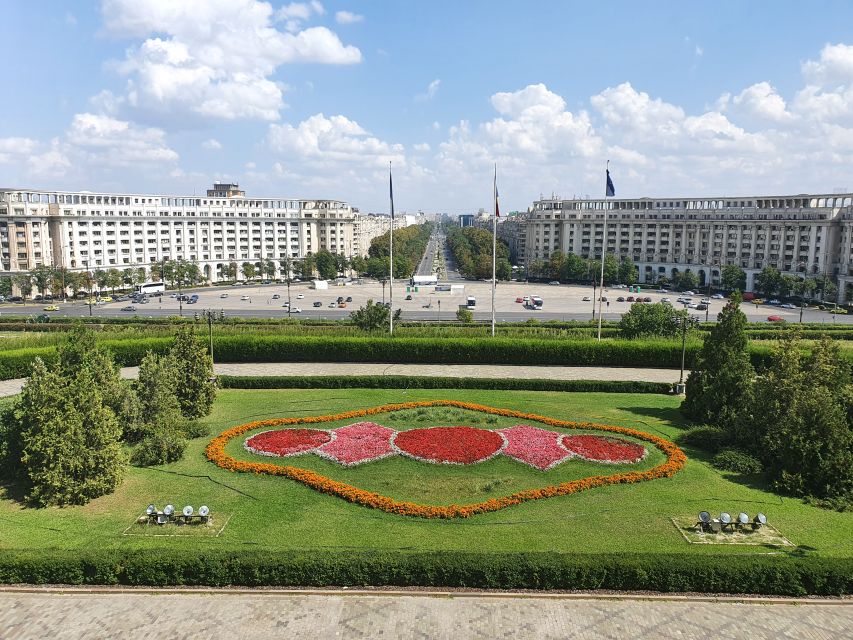
The Romanian Athenaeum is one of Bucharest’s major architectural landmarks, and the tour includes a short guided walk and scenic views. The stop lasts about 30 minutes, so expect an exterior-focused visit unless access is available as part of the day’s arrangements.
The Athenaeum adds a cultural note to a route that can otherwise feel heavy with politics. It also helps show the formal, European face of central Bucharest alongside the older churches and state buildings.
CEC Palace receives about 15 minutes for a break, photos, a visit, and guided sightseeing. That is a brief stop, but useful for seeing another landmark on Calea Victoriei. The schedule favors breadth over a long interior tour, so keep your expectations practical.
You are not getting a full architectural study of each central building. You are getting a guided introduction to several of the city’s key landmarks in one sweep. For a first visit, that can be good value in time, especially if you plan to return later to explore one area at a slower pace.
The Palace of Parliament and the final Bucharest segment
The Palace of Parliament appears near the end of the route, with time for a break, photos, a visit, guided sightseeing, and a walk. The building is essential to understanding Ceaușescu’s Bucharest. Its scale makes the political system feel concrete in a way that a lecture cannot.
The stop is listed at about 30 minutes, so this is not a promise of a full interior tour through the entire building. The exact balance between photos, walking, and guiding can change during the day. Ask your guide how much time is available when you arrive, especially if the palace is a top priority for you.
The final Bucharest portion allows about 45 minutes for more sightseeing, shopping, photos, and free time before returning to your pickup area. Since the tour is private, this is another point where your group’s interests can guide the pace. You may prefer more shopping, a final look at central architecture, or a shorter finish after a full day of stops.
Is $254 per person a fair price?
At $254 per person, this is not a budget sightseeing tour. You also pay about 17 euros per person for entrance fees, and food and drinks are extra. For one person or a couple, the cost may feel high beside a standard group tour.
The value improves if you are traveling with friends or family and want the entire vehicle reserved for your group. You are paying for private transport, a licensed guide-driver, fuel, parking, tolls, language choice, and the ability to change the route after the tour starts.
The price also covers a difficult combination of stops. Snagov is outside Bucharest, while the Village Museum, mansion, Revolution Square, Calea Victoriei, Athenaeum, CEC Palace, and Parliament are spread across the capital. A private car saves you from piecing those locations together by taxi or public transport.
I would compare the cost with your priorities. If you want just the city center, you can likely find a less expensive option. If you want Snagov and the Ceaușescu sites in one day, the private format is easier to justify.
Who will enjoy this six-hour route?
I would recommend this tour to first-time visitors who want a broad introduction to Bucharest and nearby Ilfov County. It is especially useful if you enjoy political history, architecture, folklore, and guided storytelling more than long meals or unstructured wandering.
It also suits families and small groups that value a private vehicle. The guide can speak English, French, Italian, Romanian, Spanish, or German, which makes the day easier for multilingual groups.
The tour is less suitable if you prefer to spend half a day at one museum. The schedule is full, and several central sights receive short visits. You should also be comfortable with a day built around contrasts: rural traditions, a monastery legend, communist privilege, revolutionary history, and grand city architecture.
The three short ratings associated with this experience are all five out of five, with comments in German, Italian, and French praising the guide, the overall organization, and the range of contrasts. One especially useful point comes through clearly: the day works best when the guide connects the huge communist buildings, Art Deco and baroque center, the lake setting, and Dracula’s tomb into one story.
Should you book it?
Book this tour if you want maximum variety in six hours and prefer a private guide to handle the driving and connections. Snagov Monastery gives the day its unusual setting, while the Village Museum and Ceaușescu Mansion supply the strongest contrasts.
Skip it if you want a slow, museum-heavy day or if $254 per person plus admission fees exceeds your budget. If you do book, go in knowing that the reward is range, not long stays at every sight. For a first Bucharest visit, that trade can be worthwhile.
FAQ
How long is the tour?
The tour lasts six hours, including pickup in Bucharest and return to Bucharest.
Is transportation private?
Yes. You travel by a private car or minibus reserved for you and your friends or family.
Is pickup included?
Yes. Pickup in Bucharest is included, and the driver holds a sign with your last name.
Which languages are available?
The private guide or driver-guide can provide the tour in Romanian, English, Italian, French, Spanish, or German.
Are entrance fees included?
No. Entrance fees are separate and cost about 17 euros per person. Food and drinks are also not included.
What is the connection between Snagov Monastery and Dracula?
Snagov Monastery is presented as the place associated with Dracula’s tomb. It sits on an island about 40 minutes outside Bucharest.
Can the daily route be changed?
Yes. The private format allows flexibility for changes to the day’s route, including changes after the tour has started.
What is the cancellation policy?
You can cancel up to 24 hours in advance for a full refund. You can also reserve now and pay later.
Temple visits we reviewed lately in the world
- Shanghai: Yuyuan, City God Temple Old City Tour-Tip Based★ 5.0 · 10 reviews
- Seoul Sunrise & Sunset Hike + Temple & K-Food Adventure★ 4.8 · 6 reviews
- Seoul: UNESCO Sites tour: Palace, Shrine & Bukchon Village★ 4.8 · 26 reviews
- Seoul: War Memorial, Jogyesa Temple & Tapgol Park Tour★ 4.8 · 56 reviews
- Seoul: Vegan Temple Food Class, Jogyesa & Changdeokgung Tour★ 4.6 · 34 reviews
- Seoul: Temple & Starfield COEX Mall Gourmet Tour in Gangnam★ 4.7 · 22 reviews
- Seoul: Night Bongeunsa Temple Guided Tour★ 5.0 · 11 reviews
- SEMARANG TOURS : GEDONGSONGO TEMPLE/TRAIN MUSEUM AMBARAWA★ 4.8 · 11 reviews
Romania Temple Tours, compared.

3-Castle: Peles,Bran,Rasnov,Sinaia Monastery from Brasov w pickup
Read our review →
Peles Castle, Bran Castle, Rasnov Fortress and Sinaia Monastery Tour from Brasov
Read our review →
Princely Court of Târgoviște and Curtea de Argeș Monastery
Read our review →
Small Group Tour to Mogosoaia Palace & Snagov Monastery
Read our review →
Brasov: Transfagarasan Highway, Balea Lake & Carta Monastery
Read our review →
Private Half Day Trip to Snagov Monastery & Mogosoaia
Read our review →This tour also ranks in