
Review · BAKU
Gobustan-Mud Volcan-Fire Temple and Mountain Tour/Entrance inc
The day’s most striking contrast comes in Gobustan, where ancient carvings and bubbling mud volcanoes give way to sacred fire sites on the Absheron Peninsula. I like the mix of natural oddities and old cultures, and I like that guides such as Elshad, Rosi, and Dinara have been praised for making a long day lively and informative. The main drawback is time: traffic and long transfers can stretch a planned 7 to 8 hours.
I also like the small-group format, capped at 15 people, and the convenience of hotel pickup, drop-off, bottled water, and an air-conditioned vehicle. Be sure to check which ticket option you choose, since the listed inclusions cover Gobustan rock art, Ateshgah, and Yanardag only when that option is selected, while the mud-volcano ride may involve a separate cash fee unless you join the group tour.
Key points at a glance
- Gobustan combines rock art and mud volcanoes: You get two very different sights in the same area, from prehistoric carvings to bubbling gray mud.
- The off-road ride is part of the fun: A cash fee may apply for the 4-wheel-drive transfer to the volcanoes, unless it is included with the group tour.
- Fire is the day’s main theme: Ateshgah’s historic flame site and Yanardag’s burning hillside show two very different links between Azerbaijan and natural gas.
- Guides can shape the day: Elshad, Rosi, and Dinara have each been singled out for warm, engaging guiding, though guide assignment is not guaranteed.
- Expect a long day on the road: Two to three hours may be spent moving between stops, and city traffic can push the finish well past schedule.
- The $30 starting price can be good value: It is strongest when your selected option includes the major entrance tickets and the mud-volcano transfer.
Why this tour works as a Baku day trip
Azerbaijan is easiest to understand when you see its odd contrasts side by side. This excursion moves from a mosque overlooking the Caspian Sea to prehistoric rock carvings, then on to mud volcanoes, fire worship, a natural gas flame, and Zaha Hadid’s futuristic cultural center.
That range is the tour’s greatest strength. You are not spending the whole day on one museum or one archaeological site. Instead, you get a broad look at the Baku region and the Absheron Peninsula, with a guide providing the connecting stories.
The group limit of 15 is useful. It is large enough to keep the price low but small enough for a guide to answer questions and manage stops without the feel of a full coach excursion. The available guiding languages are English, Arabic, Russian, Spanish, and Turkish.
The cost begins at $30 per person, which is appealing for a 7 to 8-hour outing with hotel transportation. Value depends on the option you book. Some entrance tickets are included only if selected, and the rough-road vehicle used for the mud volcanoes can require cash payment. Read the ticket details carefully before paying, especially if the low headline price is your main reason for booking.
More Temple Tours around Baku:
- Baku: Gobustan, Mud Volcano, Fire Mount, Temple Lunch Entry
★ 4.9 · 3,246 reviews - Baku: Gobustan, Volcanoes, Fire Temple and Yanardag Day Trip
★ 4.7 · 433 reviews - Gobustan & Mud, Fire Temple, Burning Mountain (Group & Private)
★ 4.5 · 418 reviews
Bibi-Heybat Mosque sets the tone
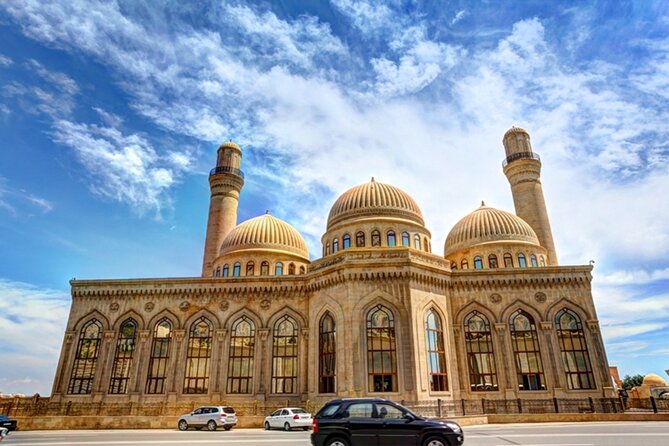
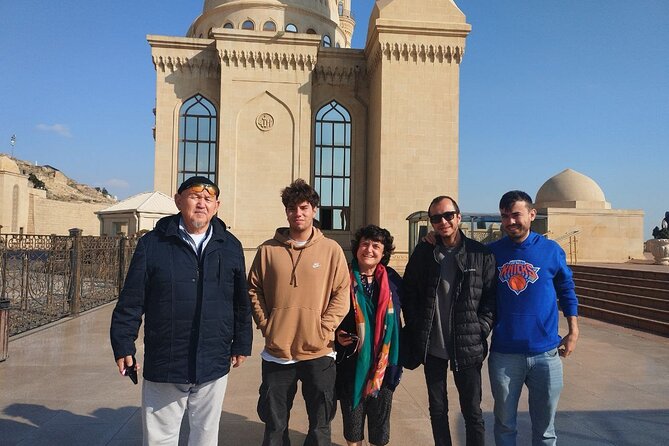
The first stop lasts about 30 minutes at Bibi-Heybat Mosque. You can see the building’s exterior and interior, walk through its gardens, and look toward the Caspian Sea.
This is a short visit, but it gives the day a calm start. The mosque is also a useful introduction to Azerbaijan’s religious and architectural traditions before the tour turns toward prehistoric art and natural gas fires.
Your guide explains the cultural importance of the site, which matters here because a quick photo stop alone would not tell you much. Allow for respectful behavior inside and around the mosque, and dress in a way suitable for a religious site.
There is no admission charge listed for this stop. Since the visit is only about half an hour, I would treat it as an orientation stop rather than a full mosque tour.
Gobustan’s mud volcanoes require a rough ride
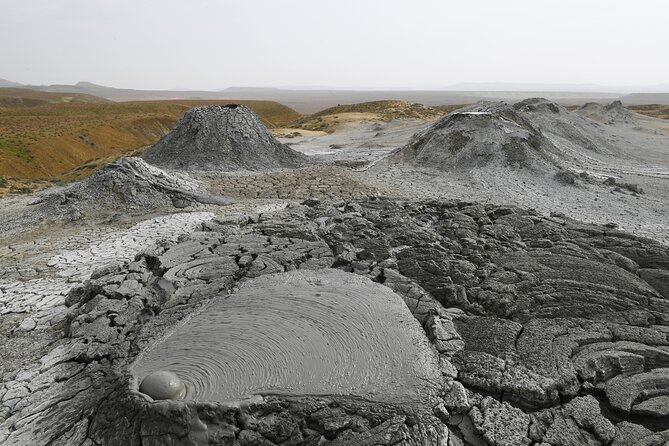
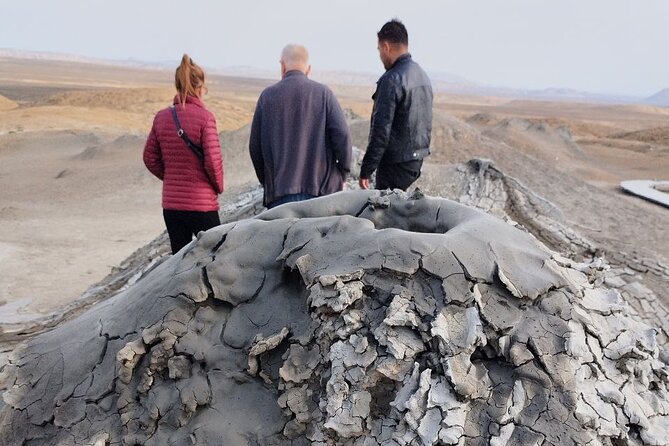
Gobustan is one of the unusual parts of the day. Azerbaijan and the Caspian region contain an estimated 300 of the world’s roughly 700 mud volcanoes, and the Gobustan area is known for these small cones and pools of gray mud.
They are not fiery volcanoes in the usual sense. Mud, gas, and mineral material push up from below, creating a strange, almost otherworldly setting. Some people associate the mud with medicinal benefits, but this tour does not promise a bathing experience, so you should come prepared mainly to see the formations.
The ride to the site is part of the attraction. A rugged off-road vehicle is used for the final approach, and one account described the experience as a ride with the Lada Rally Club. That suggests a bumpy, memorable transfer rather than a polished sightseeing drive.
A separate cash fee may be required for the off-road car. The supplied details say this is included in the group tour, but not necessarily in every booking option. Confirm this point before departure, and carry cash in case it is needed.
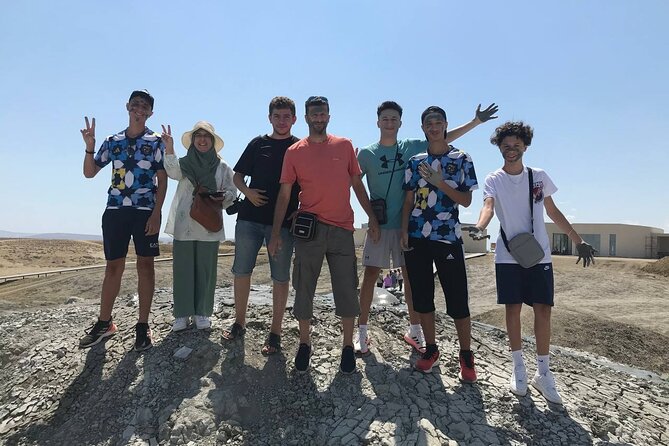
You will have about an hour at the volcanoes. Wear shoes that can handle dirt and uneven ground, and do not expect shade or polished paths. This is a raw outdoor stop. If you prefer formal monuments and smooth walkways, it may feel underwhelming. If you enjoy strange geology and a bit of rough travel, it can be one of the day’s most memorable moments.
Gobustan rock art brings the ancient past closer
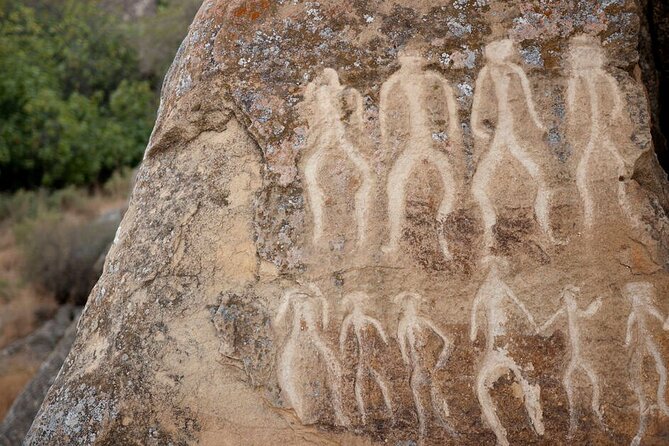
The Gobustan rock art site gives the day more historical weight. Petroglyphs carved into rock show human figures, animals, hunting scenes, and details of daily life from thousands of years ago.
An hour is enough to see the main displays with a guide, though it is not enough for a slow archaeological study. The value here comes from interpretation. A cluster of simple lines and figures can seem hard to read on your own, but a guide can point out the subjects and explain what the carvings reveal about early communities.
The setting also helps. You are not looking at isolated objects in a glass case. The carvings remain connected to the rock surfaces and open surroundings where they were made. That link between object and place gives the visit more force.
The entrance ticket is included only with the appropriate option. Check this when booking. Since Gobustan is one of the central reasons to choose the excursion, it makes little sense to assume admission is covered without confirming it.
Same sacred ground, another way to see it:
- Baku:Gobustan Mud Volcanoes Temple & Entry tickets included
★ 4.8 · 178 reviews - Gobustan & Mud, Fire Temple, Burning Mountain, H.A. Center
★ 4.6 · 46 reviews - Ateshgah Fire temple and Burning mountain tour
★ 4.5 · 42 reviews - Baku: Gobustan, Mud Volcanoes, Fire Temple, & Yanar Dag Tour
★ 4.8 · 36 reviews
Ateshgah explains Azerbaijan’s fire traditions
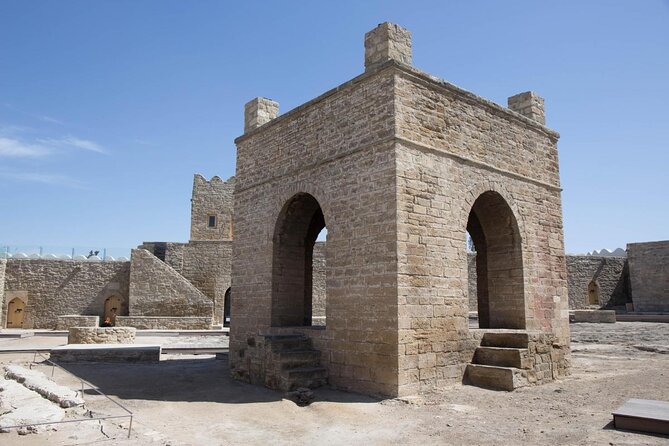
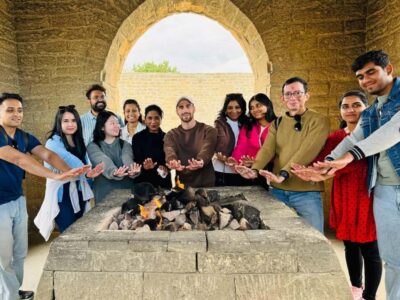
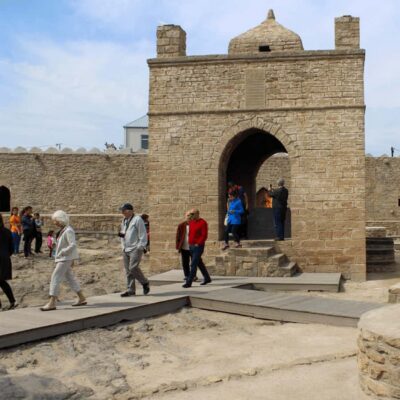
Ateshgah, often called the Fire Temple of Baku, is one of the strongest cultural stops. The site was built around a natural gas vent, where flames once burned from the ground.
Its story reaches across several religious traditions, including Hindu, Sikh, and Zoroastrian connections. The temple’s central fire area and surrounding structure make it easy to see why natural flames held such power for people who encountered them.
You get about an hour here. That gives you time to examine the architecture and listen to the guide rather than simply take a quick picture at the entrance. It is also a good place to ask questions about how natural gas shaped local belief and later tourism.
The entrance ticket is included if you select the relevant option. One useful practical point is that lunch may be arranged during the day, and one account praised the lunch stop near the temple. Lunch itself is not included in the tour price, so budget separately.
Ateshgah was the favorite stop for some people on the excursion, and I can see why. It offers a clear story, a distinctive structure, and a direct connection to the fire sites that follow.
Yanardag is a natural flame with a modern story
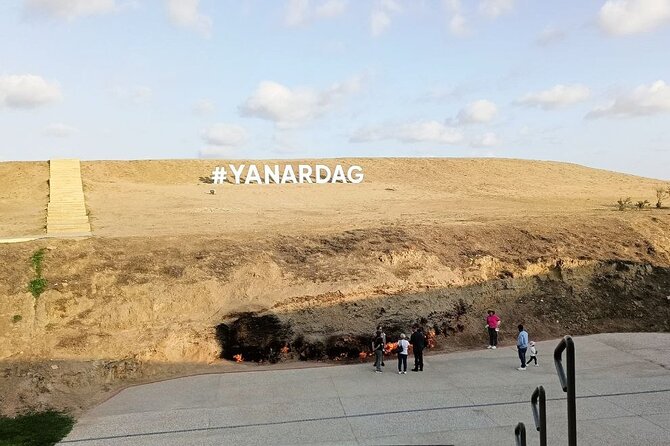
Yanardag, or Burning Mountain, is located in Digah village. Natural gas rises from the ground and burns at the surface, creating a flame that has continued for centuries.
The fire is not as large as it once was. Extensive gas extraction in the Absheron area reduced its size, but the site remains an unusual sight. You can watch the flames, hear the explanation, and take a short break at a nearby cafe with a view toward the fire.
Expect about an hour here. The stop is less about walking through a large complex and more about observing a natural event in a managed setting. I would not judge it by the size of the flame alone. Its interest comes from the link between geology, local beliefs, and the region’s gas industry.
Yanardag can be especially effective after Ateshgah. At the temple, fire is framed by human worship and architecture. At Yanardag, it comes directly from the ground. Seeing both in one day gives you a clearer picture of why fire became such an important part of Azerbaijan’s identity.
The Heydar Aliyev Center gives the day a sharp finish
The final listed stop is the Heydar Aliyev Center in Baku, designed by architect Zaha Hadid. Its broad curves and lack of right angles make it a dramatic contrast to the mosque, rock carvings, and temple buildings seen earlier.
You have about an hour at the center. The building itself is the main attraction, and it is well suited to exterior photographs. Cultural exhibitions and concerts are held there, but the tour details do not guarantee an interior visit or admission to a particular event.
This is where timing can become an issue. Some people wanted more time inside the center, but starting earlier was not considered appealing because the day was already long. If the interior exhibits are important to you, ask the operator in advance how much of the hour is planned for the building and whether an admission ticket is included.
Even with limited interior time, the stop works as a visual finale. After ancient petroglyphs and old fire traditions, you finish with one of Baku’s most modern architectural statements.
Transport and timing need realistic expectations
The tour lasts about 7 to 8 hours on paper, but transport between sites can take 2 to 3 hours in total. Baku traffic is the main reason the schedule may stretch. A delayed start of around 30 minutes has also been reported, followed by a finish several hours later than planned.
That matters if you have an evening flight, a dinner reservation, or a second activity booked. I would keep the rest of the day open.
The air-conditioned vehicle, hotel pickup, hotel drop-off, bottled water, and small-group arrangement make the long driving periods easier. Still, vehicle comfort can vary. One account raised concerns about bus comfort, while other experiences praised the transport and the general organization.
The tour includes photo shoots, so you should have plenty of chances to take pictures at the major stops. The best views come in very different forms: the Caspian Sea near Bibi-Heybat, open Gobustan rock, mud formations, temple courtyards, natural flames, and the sweeping curves of the Heydar Aliyev Center.
Guides can make the long day much better
The strongest guiding comments focus on personality as much as information. Elshad has been described as fun, informative, and entertaining. Rosi was praised for being welcoming and full of information, while Dinara was noted for keeping the group interested and explaining Azerbaijan clearly.
These names are useful examples, not a promise that one particular guide will lead your departure. Guide assignment depends on the day and language requested.
A good guide matters here because the stops are spread out and some are visually subtle. Mud volcanoes need context. Rock carvings need help with interpretation. Ateshgah benefits from an explanation of its religious connections, and Yanardag becomes more interesting when you understand how gas extraction affected the flame.
There is one warning to keep in mind. A private booking can cost much more and may not provide the same group-tour experience. One unhappy account involved a private car, limited information, no available water, and extra entrance payments. If you book privately, confirm the guide language, water, admissions, and vehicle before departure.
What to bring and what to confirm
A few simple checks will make the day smoother:
- Confirm whether your price includes the Gobustan rock-art, Ateshgah, and Yanardag tickets.
- Ask if the off-road mud-volcano transfer is included or requires cash.
- Bring money for lunch and any cafe stop.
- Wear sturdy shoes for Gobustan.
- Carry sun protection and a light layer for exposed outdoor stops.
- Keep your evening free in case traffic causes a late return.
- Confirm whether you will have interior time at the Heydar Aliyev Center if that matters to you.
Most people can participate, and the tour is near public transportation, though hotel pickup and drop-off are included. The experience requires good weather. If poor weather cancels the trip, you can receive a different date or a full refund.
Free cancellation is available up to 24 hours before the start time. Cancellations or changes inside that window are not refunded or accepted.
Who should book this Baku excursion?
I would choose this tour if you want to see the main sights outside central Baku in one day and prefer having transport arranged. It suits first-time visitors who want a broad introduction to Azerbaijan’s geology, archaeology, religious sites, and modern design.
It is also a good fit if you enjoy variety more than slow sightseeing. You will see many places, but most stops last about an hour, and the driving takes a large share of the day.
I would hesitate if you dislike long road journeys, rough vehicle transfers, strict timing, or outdoor sites with limited shade. It is not the best choice for someone who wants a relaxed afternoon at one museum or a deep visit inside the Heydar Aliyev Center.
At $30 per person, it can be excellent value when the selected entrance tickets and group mud-volcano transfer are included. The real decision is not the headline price. It is whether the inclusions, guide language, and timing match your booking. If they do, this is a practical way to connect several very different sides of the Baku region in one memorable day.
FAQ
How long does the tour last?
The tour is scheduled for approximately 7 to 8 hours. Transport between sites can take 2 to 3 hours, and traffic may cause the day to finish later than planned.
Is hotel pickup included?
Yes. Hotel pickup and hotel drop-off are included.
What languages are available for the guide?
Guiding is available in English, Arabic, Russian, Spanish, and Turkish.
Are entrance tickets included?
Tickets for Gobustan rock art, Ateshgah, and Yanardag are included when the appropriate option is selected. Check your chosen option because admissions are not automatically included in every price.
Is the mud-volcano vehicle included?
The off-road car fee may require cash. It is included in the group tour, but you should confirm the arrangement for your specific booking.
Is lunch included?
No. Lunch is not included in the tour price.
What happens if bad weather cancels the tour?
You will be offered a different date or a full refund if poor weather causes the experience to be canceled.
Temple visits we reviewed lately in Baku
- Gobustan, Mud Volcano, Burning Land and Fire Temple Tour★ 5.0 · 4 reviews
- Gobustan & Mud, Fire Temple, Burning Mountain, H.A. Center★ 4.6 · 46 reviews
- Gobustan and Fire temple Tour with Polish speaking guide★ 5.0 · 5 reviews
- Gobustan and Fire temple Tour with Italian speaking guide★ 5.0 · 4 reviews
- Baku: Atashgah Fire Temple & Burning Mountain Half-Day Tour★ 4.0 · 35 reviews
- Baku: Gobustan, Mud Volcanoes, Fire Temple, & Yanar Dag Tour★ 4.8 · 36 reviews
- Baku:Gobustan Mud Volcanoes Temple & Entry tickets included★ 4.8 · 178 reviews
- Baku: Burning Mountain & Zorastrian Temple Private Tour★ 4.9 · 34 reviews
Baku Temple Tours, compared.
Baku: Gobustan, Mud Volcano, Fire Mount, Temple Lunch Entry
Read our review →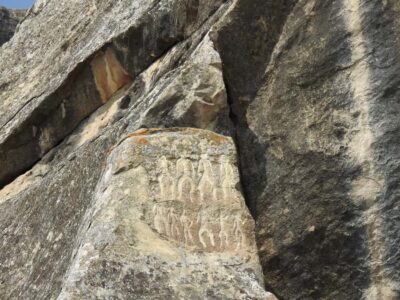
Baku: Gobustan, Volcanoes, Fire Temple and Yanardag Day Trip
Read our review →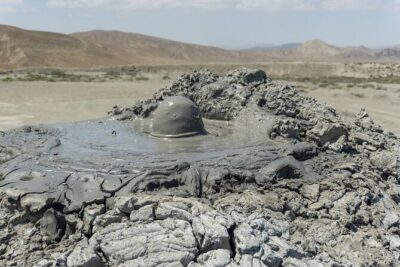
Gobustan & Mud, Fire Temple, Burning Mountain (Group & Private)
Read our review →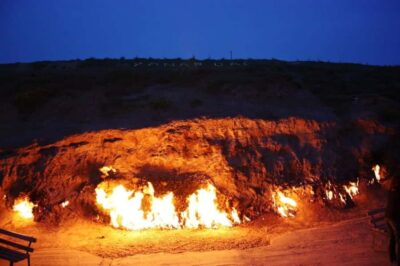
Baku:Gobustan Mud Volcanoes Temple & Entry tickets included
Read our review →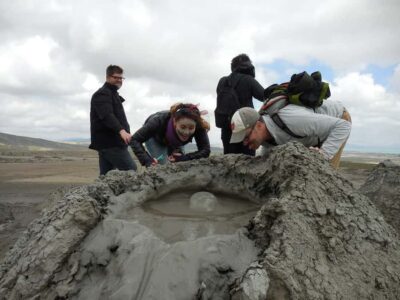
Gobustan & Mud, Fire Temple, Burning Mountain, H.A. Center
Read our review →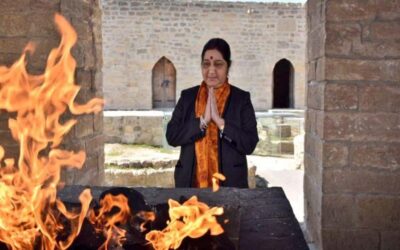
Baku: Gobustan, Mud Volcanoes, Fire Temple, & Yanar Dag Tour
Read our review →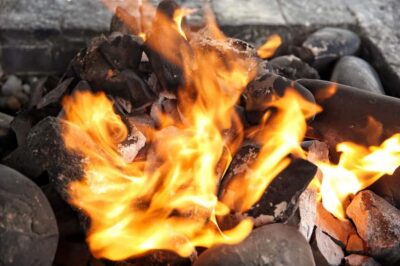
Baku: Atashgah Fire Temple & Burning Mountain Half-Day Tour
Read our review →This tour also ranks in