
Review · TEMPLES WORLDWIDE
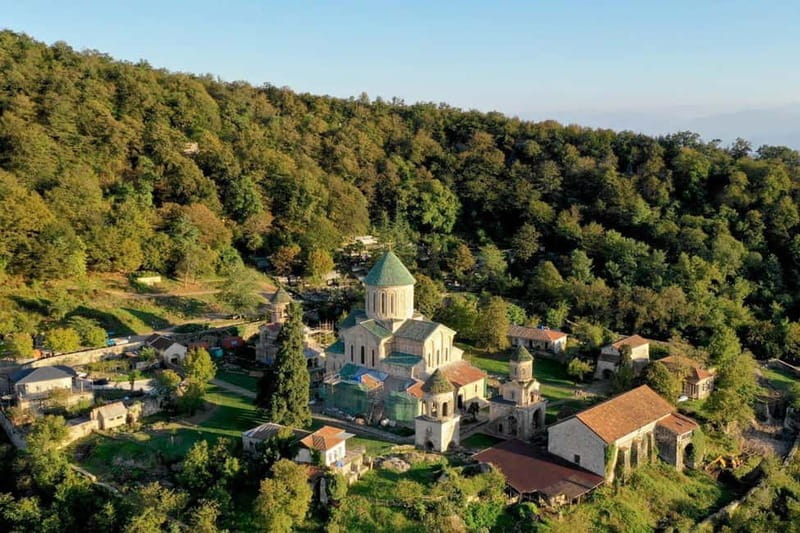
Gelati Monastery, Motsameta Monastery & Bagrati Cathedral
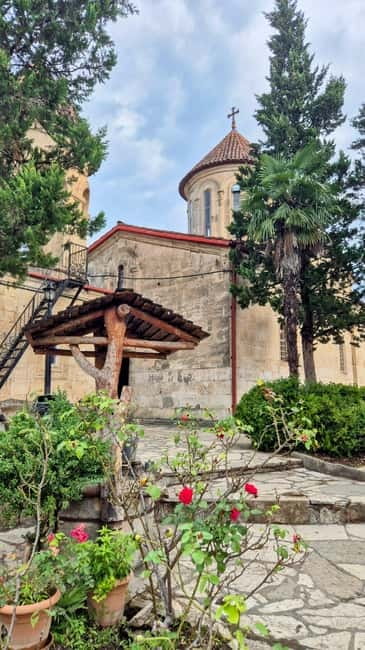
Motsameta’s hilltop setting is the first big surprise here: a small monastery surrounded by rocky slopes and forest, close to Kutaisi but far from the city’s bustle. Then you move on to Gelati Monastery, founded in 1106, and finish at Bagrati Cathedral, a key work of Georgian medieval church architecture.
I like this tour for two clear reasons. You see three major religious monuments without arranging taxis, and the small group makes the short visits feel personal. A guide such as Archil can add useful context about both the monasteries and Georgia itself. The main drawback is Gelati’s restoration work, which may limit what you can see.
Key points to know
- Three major sites in about three hours: Motsameta, Gelati, and Bagrati fit neatly into a short Kutaisi outing.
- Motsameta comes with the most dramatic setting: The monastery sits on a rocky, wooded mountain site.
- Gelati brings UNESCO recognition and medieval art: Its buildings mainly date from the 12th and 13th centuries.
- The group is capped at seven people: That is a useful size for asking questions and moving between sites.
- Gelati may be partly restricted: Restoration was expected to continue for several years after a February 2026 visit.
- The price is low for private transport: At $18 per person, the minivan, guide, water, and Wi-Fi make this good value.
Three Georgian monuments, one short outing
This tour gives you a quick introduction to the religious and architectural heritage around Kutaisi. You visit Motsameta Monastery first, then Gelati Monastery, and finally Bagrati Cathedral before returning to the See Georgia Tour Agency office.
The advertised duration is three hours. The detailed schedule includes 30-minute drives, three 30-minute site visits, and a final 15-minute ride back, so the timing on the road adds up to roughly three hours and 15 minutes. Treat the schedule as a guide rather than a stopwatch, especially if the group needs a little extra time at one of the churches.
You travel in a comfortable minivan with a professional guide. The group limit of seven matters here. These are short visits, so you benefit from a guide who can explain the main points without wasting time. English, Georgian, and Russian are available.
More Temple Tours around the world:
- Lisbon: Jerónimos Monastery Entrance Ticket
★ 4.1 · 14,164 reviews - Angkor Wat Sunrise or Sunset Tour with Guide from Siem Reap
★ 5.0 · 12,109 reviews - Teotihuacan, Guadalupe Shrine & Tlatelolco Day Tour with Lunch
★ 5.0 · 11,603 reviews
Motsameta Monastery and its mountain setting
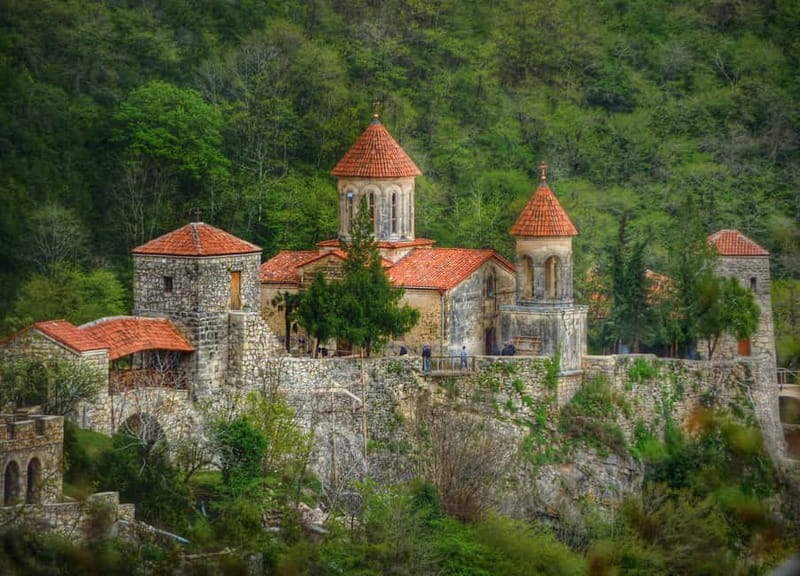
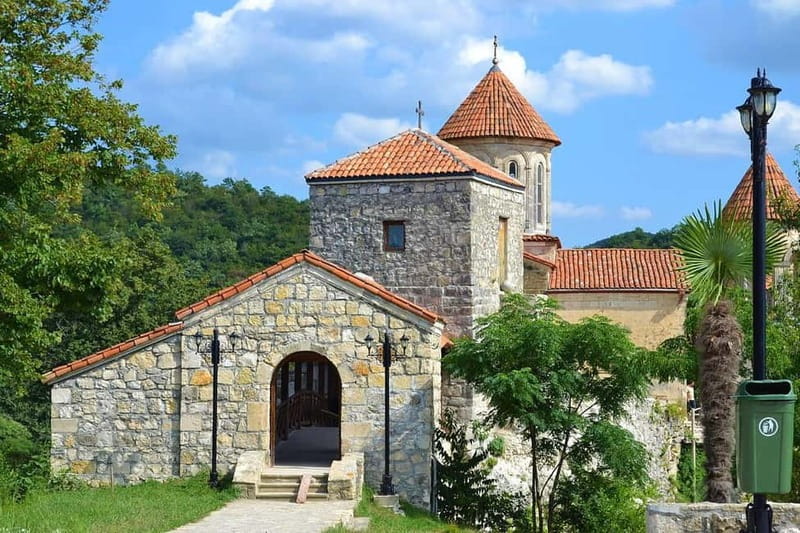
Motsameta is the first stop after about 30 minutes in the van. You have around 30 minutes for a guided visit and walking, which is enough to see the monastery and take in its setting, though not enough for an unhurried wander.
The monastery is built on a rocky and forested mountain site. That setting gives Motsameta a different character from the larger, more formal Gelati complex. You approach an enclosed religious site with stone walls, steep ground, and views shaped by the surrounding hills.
I would pay attention to the location as much as the building itself. Motsameta feels tied to the terrain. The rock, trees, and elevated position help explain why this place has such a strong sense of seclusion even though it is near Kutaisi.
The walk is described as moderate, so wear shoes with a firm sole. You do not need specialist hiking gear, but sandals or smooth-soled shoes may be awkward on uneven ground. The tour does not include a separate long walk, yet you should still expect steps and outdoor surfaces.
This stop is likely to appeal most if you enjoy atmosphere and setting. If your main interest is detailed architecture, the 30-minute visit may feel brief. Your guide can give you the historical frame, but you will not have the time of a full study visit.
Gelati Monastery and the long shadow of David the Builder
The next drive takes about 30 minutes. Gelati is the tour’s major historical stop and the site most closely tied to Georgia’s medieval cultural achievements.
David Agmashenebeli, also known as David the Builder, founded the monastery in 1106. The complex developed over time, with much of the surviving architecture dating from the 12th and 13th centuries. That range of dates helps you read Gelati as a living complex rather than a single building completed in one campaign.
The guide leads you through the site during a 30-minute visit. Look for changes in building style and construction across the complex. The point is not only to photograph a famous monastery, but to understand why Gelati is treated as one of the key monuments of ancient Georgian culture.
Gelati is also a UNESCO World Heritage Site, which gives it international importance. That label is useful, but it should not replace looking closely. Notice the scale of the buildings, the stonework, and the way the monastery occupies its hilltop setting.
There is one important condition to check before you book. Information from February 2026 indicated that Gelati was under restoration and that work could continue for about five more years. Access and visibility may change as work progresses. If the monastery is partly closed, you may see less than the full complex.
That issue affects the value of the visit. The tour still gives you transportation and a guide to the surrounding monuments, but Gelati is one of the central reasons to book. Check the current access situation if seeing the interior or major decorative features is especially important to you.
One useful feature of a small group is flexibility within the fixed schedule. With no more than seven people, it should be easier to hear the explanation and ask whether a particular area is open. Still, the operator controls the route, so do not expect a long independent visit.
Bagrati Cathedral above Kutaisi
The final major stop is Bagrati Cathedral, about 30 minutes after Gelati. You spend another 30 minutes walking and listening to the guide before the short return ride to the agency office.
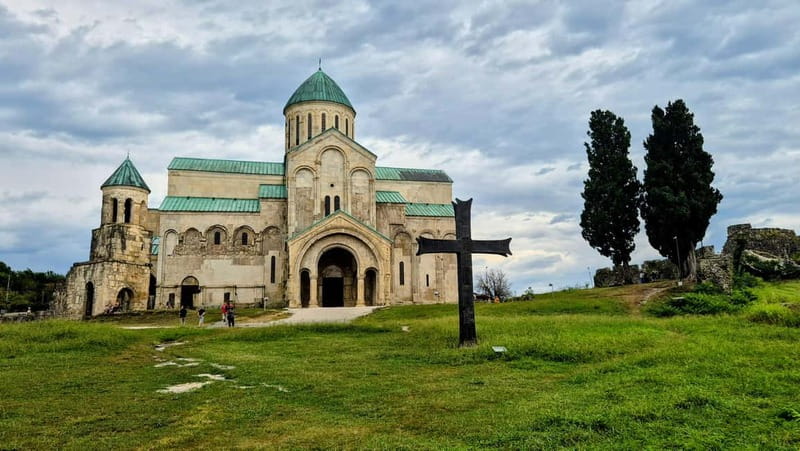
The Assumption Cathedral was built in 1003 during the reign of Bagrat III, who ruled from 975 to 1014. It sits on Uchimerion Hill in Kutaisi and is an important example of Georgian medieval church architecture.
Bagrati is especially useful as the final stop because it brings you back toward the city. Unlike Motsameta, which feels remote because of its mountain position, Bagrati has a direct connection with Kutaisi. You can better understand the cathedral as both a religious monument and a city landmark.
The cathedral matters for more than age. Its design has architectural importance, and its history gives it symbolic weight in Georgia. A good guide can connect the building’s form with the wider story of medieval Georgian church construction.
Your visit is short, so use the time with purpose. Listen to the explanation, study the structure, and take in the position above Kutaisi. If you want a long photography session or quiet time inside, the fixed 30-minute stop may feel tight.
Bagrati is also a practical reason to choose this trip instead of arranging three separate rides. You could reach the cathedral more easily from the city, but the tour links it with Motsameta and Gelati in one route.
Same sacred ground, another way to see it:
- From Bangkok: Ayutthaya Temples Guided Tour with Lunch
★ 4.7 · 10,535 reviews - Siem Reap: Angkor Wat: Small-Group Sunrise or Sunset Tour
★ 5.0 · 9,444 reviews - Athens: Cape Sounion & Poseidon Temple Sunset Half-Day Trip
★ 4.8 · 8,241 reviews - Ubud: Monkey Forest, Jungle Swing, Rice Terrace, and Water Temple
★ 5.0 · 7,160 reviews
What the guide adds to a short schedule
A three-hour cultural tour can easily become a rushed checklist. The guide is what keeps it from feeling that way. The advertised languages are English, Georgian, and Russian, so confirm your preferred language when booking.
Archil is one guide associated with this experience. He received specific praise for making the visit both informative and enjoyable. If your departure is led by him, you can expect explanations about the monasteries as well as broader information about Georgia.
You should still keep your expectations realistic. The tour gives you a guided introduction, not an academic lecture or a full day at each monument. The best use of the guide is to ask focused questions: what period a building belongs to, why the site matters, and what restoration work affects access.
Small groups help here. With a maximum of seven people, the guide can speak to the whole group without needing a microphone, and you have a better chance of asking something between stops. A three-person departure is also possible, based on a recent trip, and that can feel almost private while retaining the low group-tour price.
Minivan transport, water, and Wi-Fi
The included transportation is a comfortable minivan. That matters because the tour has several short road sections, including the 30-minute journeys to Motsameta and Gelati and the return route after Bagrati.
You do not need to arrange separate local transport or work out the order of the sites yourself. The minivan also keeps the day simple if you are visiting Kutaisi without a car.
A bottle of water is included, along with Wi-Fi on board. These are small extras, but useful on a compact sightseeing trip. Meals are not included, and the tour is too short to build in a proper meal stop, so eat beforehand if you need more than a drink.
Smoking is not allowed. Bring comfortable walking shoes and check the weather forecast before you leave. The walking is moderate, and you will be moving between indoor and outdoor areas, so dress for conditions rather than assuming the minivan will cover every part of the visit.
Is $18 a fair price?
At $18 per person, this is strong value if you want the three sites in one outing. The price includes a professional guide, minivan transportation, bottled water, and Wi-Fi. It does not include meals or personal spending.
The value comes mainly from saving time and transport planning. Motsameta and Gelati are not as simple to combine independently as Bagrati Cathedral, and the guide gives you historical context at each stop. Even if you could arrange a cheaper ride for one site, matching the full route and adding a guide would be harder.
The price is even more attractive for a small departure. A group of three can receive a more personal experience without paying for a private vehicle. The group limit of seven also keeps the tour from becoming a large coach excursion.
The main value warning is Gelati’s restoration. If access remains limited, part of the tour may not match your expectations. In that case, the low price and the other two sites still make the outing worthwhile, but you should not book it solely for a complete Gelati visit without checking current conditions.
Who should book this Kutaisi tour?
I would choose this tour if you have a short stay in Kutaisi and want a clear introduction to the area’s major religious monuments. It suits first-time visitors, people without a car, and anyone who prefers a guide to explain what they are seeing.
It also fits visitors who want a small group rather than a large bus. The 7-person limit, included minivan, and three-language guide make it easy to ask questions and keep the outing moving.
You may want a different plan if you prefer slow travel. Thirty minutes at each site is enough for an overview, but not for extended photography, quiet reflection, or detailed architectural study. You should also reconsider if the current restoration status at Gelati is the main reason you are going.
For most people, the route works because the sites complement one another. Motsameta gives you the mountain setting, Gelati provides the strongest medieval and UNESCO connection, and Bagrati links the experience back to Kutaisi.
Should you book it?
Book this tour if you want three important monuments, a guide, and transport for $18 without spending a full day on the road. The strongest reasons are the small group, the practical route, and the setting at Motsameta.
Before paying, check whether Gelati’s restoration will restrict access. If you are happy with a compact introduction and can accept that possible limitation, this is an inexpensive and sensible way to see the religious heritage around Kutaisi. If you want long visits or guaranteed full access at Gelati, arrange a slower private visit instead.
FAQ
How long does the tour last?
The advertised duration is three hours. The detailed schedule includes several 30-minute drives, three 30-minute visits, and a 15-minute return ride, so the actual timing may be slightly longer.
Where does the tour start?
It starts at the See Georgia Tour Agency office.
Where does the tour finish?
The tour returns to the See Georgia Tour Agency office.
Which sites are included?
The tour includes Motsameta Monastery, Gelati Monastery, and Bagrati Cathedral.
Is transportation included?
Yes. Transportation is provided in a comfortable minivan.
How many people can join the group?
The group is limited to seven participants.
Which languages are available?
The live guide is available in English, Georgian, and Russian.
Is food included?
No. Meals are not included, and personal expenses are also excluded.
Is water provided?
Yes. A bottle of water is included.
What should I bring?
Bring comfortable walking shoes and dress appropriately for the weather. Smoking is not allowed during the activity.
Temple visits we reviewed lately in the world
- Shanghai: Yuyuan, City God Temple Old City Tour-Tip Based★ 5.0 · 10 reviews
- Seoul Sunrise & Sunset Hike + Temple & K-Food Adventure★ 4.8 · 6 reviews
- Seoul: UNESCO Sites tour: Palace, Shrine & Bukchon Village★ 4.8 · 26 reviews
- Seoul: War Memorial, Jogyesa Temple & Tapgol Park Tour★ 4.8 · 56 reviews
- Seoul: Vegan Temple Food Class, Jogyesa & Changdeokgung Tour★ 4.6 · 34 reviews
- Seoul: Temple & Starfield COEX Mall Gourmet Tour in Gangnam★ 4.7 · 22 reviews
- SEMARANG SHORE TOURS: BOROBUDUR TEMPLE EXCURSIONS★ 5.0 · 3 reviews
- Seoul: Night Bongeunsa Temple Guided Tour★ 5.0 · 11 reviews